

Ranakpur Temple Rajasthan India: A 15th-Century Jain Marble Masterpiece
The Ranakpur Jain temple in Rajasthan, India is one of the most remarkable achievements of 15th-century marble architecture. Spread across 48,000 square feet, the Chaturmukha shrine features 1,444 individually carved pillars, 29 halls, 80 domes, and a complex geometric logic rooted in the Maru-Gurjara tradition. This guide examines its structure, materials, craftsmanship, and lasting place in Indian temple design.
 Furkan Sen27 April 202612 Mins read187

Table of Contents Show
The Ranakpur temple Rajasthan India is a 15th-century Śvetāmbara Jain temple dedicated to Tirthankara Rishabhanatha, located near Sadri in the Pali district and nestled in the Aravalli hills. Built across 48,000 square feet of light-coloured marble, it houses 1,444 individually carved pillars, 29 halls, and 80 domes in a structural and artistic programme considered one of the five holiest Jain shrines in India.
Where Is the Ranakpur Temple Rajasthan India Located?
The Ranakpur Jain temple sits in the village of Ranakpur, tucked into a quiet valley on the western slopes of the Aravalli mountain range. It lies in Pali district, Rajasthan, near the small town of Sadri, and is positioned roughly halfway between the cities of Udaipur (about 90 kilometres to the south) and Jodhpur (around 160 kilometres to the north-west). The site rests near the Maghai River, surrounded by dense forest that gives the complex a remarkable sense of isolation.
The remoteness is part of the reason the temple has survived as intact as it has. Unlike monuments built on open plains or in major cities, the Ranakpur temple was shielded by both geography and a patronage network strong enough to rebuild it after damage in later centuries. The fact that Rajasthan’s state tourism authority lists it among the region’s premier heritage sites reflects its continued cultural weight, not just as a pilgrimage destination but as an architectural landmark worth studying on its own terms. For a broader picture of how sites like this fit into the global catalogue of heritage architecture, see our overview of architectural wonders around the world.
The Chaturmukha Adinatha temple is the principal structure within the wider campus, which also includes the Parshvanatha, Suparshvanatha, Neminath, Surya, and Amba Mata temples. Together, these buildings form one of the most important temple complexes on the Indian subcontinent, and part of the Gorwad Panch Tirth pilgrimage circuit.
💡 Pro Tip
If you are documenting the Ranakpur temple for research or photography, plan your visit for mid-morning. The marble shifts perceptibly in tone as daylight moves through the open courtyards and pillared halls, and the oblique angles around 10 to 11 AM reveal the depth of carving far better than flat midday light. Architects studying stone surfaces often miss this by arriving at noon.
The History Behind the Ranakpur Jain Temple India

The Ranakpur jain temple india was commissioned in the first half of the 15th century by Dharna Shah, a Jain merchant and minister, under the patronage of Rana Kumbha, the Sisodia ruler of Mewar from 1433 to 1468 CE. Local tradition records that Dharna Shah received a vision of a Nalini-gulma vimana, a celestial flying palace, and sought to translate that vision into stone. The township and temple are named after Rana Kumbha, who granted the land for the project.
The construction is well documented by a 1436 CE copper-plate inscription discovered within the temple complex and by the Sanskrit text Soma-Saubhagya Kavya. A pillar inscription near the main shrine records that in 1439 an architect named Deepaka (also rendered as Depa or Deepak) began construction at the direction of Dharanka, the devout Jain patron. Work continued for several decades, and different sources place completion at 1458, 1496, or across a span of roughly fifty years involving 2,785 workers.
The temple suffered damage during periods of regional conflict in the 17th century. Priests are said to have hidden the sacred idols in the 84 bhonyra (underground chambers) built beneath the complex specifically to protect them from Mughal incursions. For a time the site fell into disuse, and the surrounding forest became difficult to approach. A major restoration campaign carried out by the Anandji Kalyanji Pedhi trust at the beginning of the 20th century was noted approvingly in the Archaeological Survey of India‘s 1907-08 annual report, and the trust continues to manage the temple today. This broader pattern of loss, hiding, and recovery is a recurring theme in architectural heritage across the Indian subcontinent.
📌 Did You Know?
The Ranakpur temple contains 84 underground chambers (bhonyra) built specifically to hide Jain idols during times of invasion. Priests used these vaults during 17th-century conflicts to protect sacred images from destruction. The chambers are rarely accessible to visitors today, but they remain structurally integrated into the basement level of the complex.
Maru-Gurjara Architecture: The Style of the Jain Temples of Ranakpur
The jain temples of ranakpur are built in the Maru-Gurjara style (also known as the Solanki style), a regional tradition of Western Indian temple architecture that developed in Gujarat and Rajasthan between the 11th and 13th centuries under the Chaulukya dynasty. The style originated in Hindu temple architecture but became especially associated with Jain patronage, and the Ranakpur temple is widely regarded as one of the finest 15th-century revivals of the tradition.
Two external features define the Maru-Gurjara approach. The first is the treatment of walls as a rhythmic sequence of projections and recesses, with carved statues placed in niches and continuous bands of horse riders, elephants, and kirttimukhas running along lower mouldings. The second is the heavy use of urushringa, smaller subsidiary spirelets that cluster around the main shikhara tower, creating a sculpted silhouette that reads as a miniature mountain range.
Inside, the style is even more decorative. The ranga-mandapa (central pillared hall) can be multi-storeyed (the meghanada-mandapa variant), and ceilings are organised as deeply carved domical compositions set on brackets springing from the column capitals. At Ranakpur these ceilings reach their fullest expression. Scholarly work on Jain temple architecture, including research published by the University of Michigan’s Ars Orientalis journal, identifies the Adinatha temple at Ranakpur as a defining example of the 15th-century Maru-Gurjara revival, a moment when the style re-emerged after a period of reduced activity in the region.
Comparison: Ranakpur vs Other Major Jain Temples of India
The Ranakpur temple is sometimes confused with the Dilwara temples at Mount Abu, since both are celebrated examples of Jain marble architecture in Rajasthan. The two sites actually represent different priorities within the same broad tradition.
| Feature | Ranakpur Temple | Dilwara Temples |
|---|---|---|
| Primary focus | Structural complexity and scale | Fine sculptural detail |
| Main period | 15th century (begun 1439 CE) | 11th-13th centuries |
| Footprint | Approximately 48,000 sq ft | Smaller individual shrines |
| Number of pillars | 1,444 (all unique) | Fewer, but extraordinarily carved |
| Plan type | Chaumukha (four-faced) | Axial sanctum with mandapa |
| Architectural reputation | Engineering marvel in marble | Pinnacle of relief carving |
Both complexes share the Maru-Gurjara vocabulary, but Ranakpur pushes scale and spatial complexity while Dilwara pushes surface craft. Each rewards a different kind of attention.
How Is the Ranakpur Jain Temple Structured?

The ranakpur jain temple follows the Chaumukha (four-faced) plan, a layout in which four equal entrances open from the cardinal directions and converge on a central sanctuary. Inside the garbhagriha, the principal image is a 6-foot white marble chaumukha idol of Adinath with four heads facing the four compass points, symbolising the Tirthankara’s conquest of the four directions and, by extension, the entire cosmos.
The complex is organised as a three-storeyed marble structure raised on a stone platform and covering roughly 48,000 square feet. Within this footprint sit 29 halls, 80 domes, and a pillared armature that includes 1,444 carved columns and an additional 426 support columns distributed around 24 pillared halls. The main shikhara is flanked by smaller subsidiary spires, giving the roofline its characteristic stepped profile. The whole building is set on a raised platform approximately five metres high, with the dome tier rising well above the surrounding forest canopy.
The 1,444 figure is partly literal and partly traditional. Various counts have been made over the centuries, and local custom holds that the pillars are impossible to count consistently. What is not in dispute is that no two pillars are carved identically. Each column carries its own programme of figures, scrollwork, and geometric patterning, and the overall effect is a forest of marble where every tree has its own bark. This density of individually worked elements is part of what distinguishes the temple from other large religious buildings in India and elsewhere, and it places the complex in interesting conversation with the wider evolution of sacred architectural spaces that rely on repetition and variation as spiritual tools.
🔢 Quick Numbers
- Total footprint: approximately 48,000 square feet (4,500 m²) (Rajasthan Tourism, 2024)
- Carved pillars: 1,444, each with a unique design (Anandji Kalyanji Pedhi trust records, cited by Wikipedia, 2025)
- Halls: 29; domes: 80; support columns: 426 (Rajasthan Tourism, 2024)
- Construction period: begun 1439 CE, continued for roughly 50 years (pillar inscription; Soma-Saubhagya Kavya, 15th century)
The 1,444 Marble Pillars: Structural Complexity in Stone
The 1,444 marble pillars are the single most discussed feature of the temple. Each column is individually carved, and the total layout forms a rational structural grid despite the visual variety on the surface. One pillar carries a carving of the mother of a Tirthankara lying on a cot, and one pillar is traditionally considered “incomplete,” a local legend holding that whenever it is finished, it breaks again overnight, a reminder of human imperfection inserted into an otherwise disciplined geometry.
The structural logic is consistent even though the decorative programme is not. Pillars are arranged to support the 80 domes and the multi-storeyed mandapa halls above, and the columns are tall enough (around three metres) to allow sightlines across the complex from any one of the four entrances. Because the layout is symmetrical around the central sanctum, a visitor entering from any cardinal direction ends up in the main courtyard, and the four faces of Adinath are visible from any approach.
Light is the other organising material. The ancient layout of halls, domes, and pillared corridors admits daylight from above in ways that shift through the day. The marble has a translucent quality that picks up warm tones at dawn, cool blues at dusk, and near-pure white at midday. No artificial lighting is needed during the visiting hours, and this quality of shifting internal light is part of the reason the temple has been studied so often as a historic structure that continues to inspire today’s architects.
📐 Technical Note
The Chaumukha plan is a specific Jain temple typology in which four shrines face the cardinal directions and share a central axis. In the Ranakpur temple, this produces a near-square footprint with four symmetrical entrances, each opening onto a mandapa sequence that converges on the central garbhagriha. The arrangement is one reason the pillared halls read as four quadrants joined at the centre, and it differs from the axial sanctum-plus-mandapa layout typical of Nagara-style Hindu temples across northern India.
Stone Carving, Iconography, and Material Choices

The Ranakpur temple is built almost entirely from light-coloured marble quarried from the surrounding Aravalli region. The choice was not incidental. Rajasthan’s Makrana and allied marble quarries have supplied stone for major Indian monuments across several centuries, and the region’s pale marble is prized for its ability to shift in tone with changing light, the same quality that gives the nearby Taj Mahal its celebrated chromatic play through the day.
The carved iconography at Ranakpur is extensive. The Parshvanatha idol, carved from a single marble slab, is surrounded by 1,008 snake heads and a tangle of serpent tails in a composition that is a famous test of stone-carver skill. Ceiling reliefs depict episodes from Jain cosmology, including the story of Marudevi, the mother of Rishabhanatha, and the depiction of akichaka, a five-bodied figure representing the five elements. One ceiling sculpture uses interlocking shapes and knots to diagram the connection between karma and life itself.
These carvings are not decorative overlays on a separately designed building. They are part of the architecture. The toranas (ornamental archways), pillar capitals, and ceiling slabs were conceived together, and the overall effect is closer to a continuous carved interior than to a building with applied sculpture. The programme runs across the Chaumukha Temple, the Parshvanatha Temple (known locally as Patriyon Ka Mandir for its engraved windows), the Suparshvanatha Temple (dedicated to the seventh Tirthankara), and the older Surya Temple. Any serious treatment of the Ranakpur temple’s stone surfaces has to consider both the craft economy that produced them and the conceptual ambition that organised them.
🏗️ Real-World Example
The Parshvanatha Idol (Ranakpur, 15th century): Carved from a single marble slab, the idol shows the Tirthankara protected by a canopy of 1,008 snake heads drawn from Jain iconography, in which the serpent king Nagaraja is said to have shielded Parshvanatha during meditation. The piece is cited in scholarly and tourism sources alike for its technical achievement: the serpent tails are carved into an open network in which no single end can be clearly traced, and the entire composition reads as one continuous block despite its complexity.
Why Is the Ranakpur Temple Important to Jain Architecture?

The ranakpur temple india is one of the five holiest shrines of the Śvetāmbara Jain community, alongside Mount Shatrunjaya, Mount Girnar, Mount Abu, and a handful of other major sites. Its architectural importance is separate from, though intertwined with, its religious significance. The 15th century was a period in which the Maru-Gurjara tradition was being deliberately revived after a hiatus during earlier regional upheavals, and Ranakpur sits at the centre of that revival.
The building also shaped subsequent Jain architecture. Later temples across Rajasthan and Gujarat drew on the Chaumukha plan, the dense pillared halls, and the use of white marble as a visual signature of Śvetāmbara religious practice. When Jain merchant families moved further afield in the 18th and 19th centuries, they took versions of this architectural language with them, and elements of it now appear in diaspora temples from London to Antwerp. The 19th-century Hutheesing Jain Temple in Ahmedabad, for example, shows clear continuities with the Ranakpur idiom.
In that sense, the Ranakpur Jain temple is not only a great 15th-century building. It is also a template. The balance of scale, symmetry, repeated pillar motifs, and concentrated iconographic programme became a model that other Jain communities referenced long after the original was complete. It remains a key touchstone for understanding how a religious building can encode both a theology and a stylistic commitment at the same time.
🎓 Expert Insight
“The Adinatha temple at Ranakpur, founded in 1439 CE, is typical of the 15th century, built in a Maru-Gurjara revival style.”
Dr. Julia A. B. Hegewald, Chair of Oriental Art History, University of Bonn
Hegewald’s research, published in the University of Michigan’s Ars Orientalis journal, positions Ranakpur within a deliberate architectural revival. The temple was not simply a 15th-century Jain building; it was a conscious recovery of a stylistic tradition that had paused during regional conflict, and it re-established the Maru-Gurjara vocabulary as the visual language of Śvetāmbara Jain identity for centuries to come.
Video: Inside the Chaturmukh Temple at Ranakpur
This short documentary from HISTORY TV18 walks through the engineering and craftsmanship of the Ranakpur temple, including the legend of the single intentionally crooked pillar and the role of the architect Deepa in realising Dharna Shah’s vision.
Proportion, Symmetry, and Sacred Geometry in the Ranakpur Jain Temple Sadri Rajasthan
The ranakpur jain temple sadri rajasthan is often described as an engineering marvel, and the reason has as much to do with its proportional logic as with its carved surfaces. The four-fold symmetry of the Chaumukha plan means that the entire building is organised around two perpendicular axes running through the central sanctuary. The four entrances mirror one another, the halls radiate outward in four quadrants, and the spires step up from the outer edges toward the central dome in a controlled hierarchy.
This kind of axial and rotational symmetry is common in sacred architecture across cultures, but few buildings execute it at the scale of Ranakpur. The temple’s proportional relationships, between pillar height and dome diameter, between hall width and spire height, reward sustained attention. This is why the complex is often studied alongside other major buildings where geometry is doing theological work; our look at the role of math in architecture and at proportion and scale offers additional context for reading these relationships in any religious structure, not only in a Jain one.
Even more striking is the way the geometry supports the ritual. A worshipper entering from any side of the temple arrives at the central Adinath idol along a path identical in length and experience to that of a worshipper entering from any other side. The four-faced idol then meets that worshipper on the same terms regardless of direction. The architecture is, in a sense, doing the liturgical work of affirming the universal, direction-independent nature of Jain cosmology.
Visiting the Ranakpur Temple Today

The ranakpur temple remains an active pilgrimage site managed by the Anandji Kalyanji Pedhi trust. It is open daily, though non-Jain visitors are typically admitted during set hours in the afternoon to preserve space for prayer in the morning. There is a dharmshala (pilgrim accommodation) and a bhojanashala (community kitchen) within the complex. The official Rajasthan Tourism page gives the most reliable up-to-date information on timings, entry conditions, and photography rules.
The temple is accessible from both Udaipur (around 90 kilometres) and Jodhpur (about 160 kilometres) by road, and the nearest railway station is Falna, roughly 35 kilometres away. The surrounding landscape, including the Ranakpur wildlife sanctuary, the Maghai River, and the hills leading toward Kumbhalgarh Fort, makes it a major stop on heritage-focused travel through Rajasthan. For visitors interested in pre-visit reading, the encyclopaedic summary on the Ranakpur Jain temple Wikipedia entry is a useful starting point, and the Maru-Gurjara architecture article provides important stylistic context. For a narrative account of the temple’s 1,444 pillars and their legends, the Ancient Origins feature on the white temple of Ranakpur is a well-sourced long read.
⚠️ Common Mistake to Avoid
Travellers often assume the Ranakpur temple is a Hindu site because of its location in Rajasthan and its Maru-Gurjara stylistic vocabulary, which originated in Hindu temple architecture. The temple is a Śvetāmbara Jain shrine dedicated to the Tirthankara Adinath, and the iconography, rituals, and idols are specifically Jain. Understanding this distinction matters for interpreting the imagery inside and for respecting the protocols expected of visitors.
✅ Key Takeaways
- The Ranakpur temple is a 15th-century Śvetāmbara Jain complex in the Aravalli hills of Pali district, Rajasthan, dedicated to the Tirthankara Adinath.
- It was commissioned by the merchant Dharna Shah under the patronage of Rana Kumbha and designed by the architect Deepaka around 1439 CE.
- The Chaumukha plan, with four symmetrical entrances converging on a central four-faced idol, is the temple’s defining spatial idea.
- The 1,444 individually carved marble pillars, 29 halls, and 80 domes sit within roughly 48,000 square feet of structured marble space.
- Architecturally, the complex is a key 15th-century revival of the Maru-Gurjara (Solanki) tradition and influenced Jain temple design for centuries afterwards.
- It is considered one of the five holiest Jain pilgrimage sites in India and is managed today by the Anandji Kalyanji Pedhi trust.
Final Thoughts on the Ranakpur Temple Rajasthan India
The Ranakpur temple repays repeated study. On a first visit it reads as a vast field of carved marble, almost impossible to take in. On closer attention, the structural discipline becomes clear: the four-fold symmetry, the hierarchy of domes and spires, the careful coordination of pillar placement and dome support, the choreography of light across translucent stone. What looks like ornamental excess is actually a rigorous application of geometry, material, and iconography in the service of a specific religious idea.
For architects, the building is a case study in how a structural grid can carry near-infinite variation on its surface without losing clarity. For historians, it is evidence of how a stylistic tradition can pause, revive, and then travel across continents. For visitors, it is simply one of the most atmospheric sacred interiors anywhere in the world, a place where the play of light through carved pillars does most of the talking. Few buildings hold all these roles at once, and that is why the Ranakpur Jain temple in Rajasthan continues to reward the attention it receives.







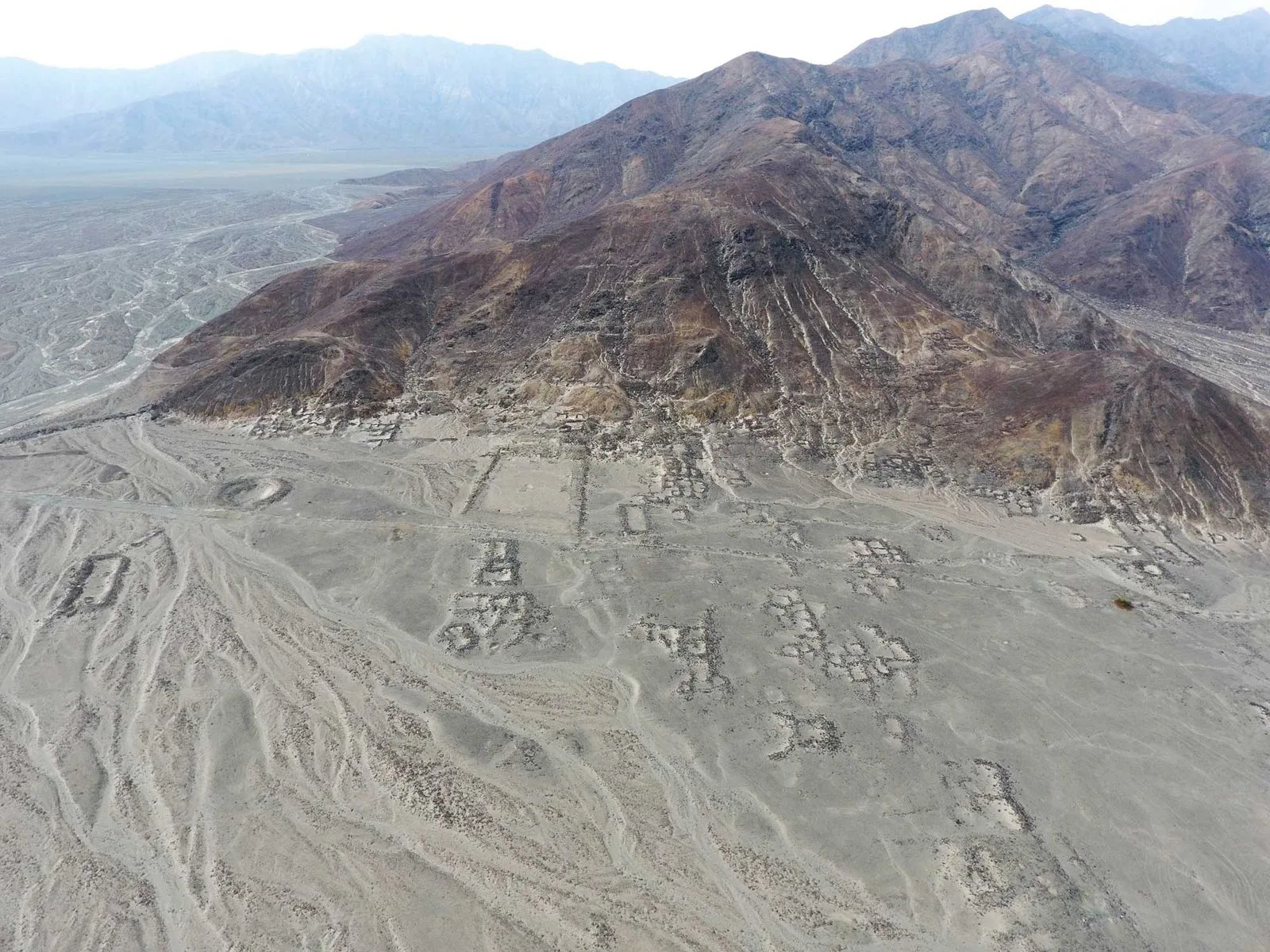
A Record El Niño Threatens More Than 10,000 Adobe Heritage Sites on Peru’s Coast
With a possibly record-breaking El Niño under way, Peru's coastal adobe heritage...
 illustrarch Editoral Team2 Mins read
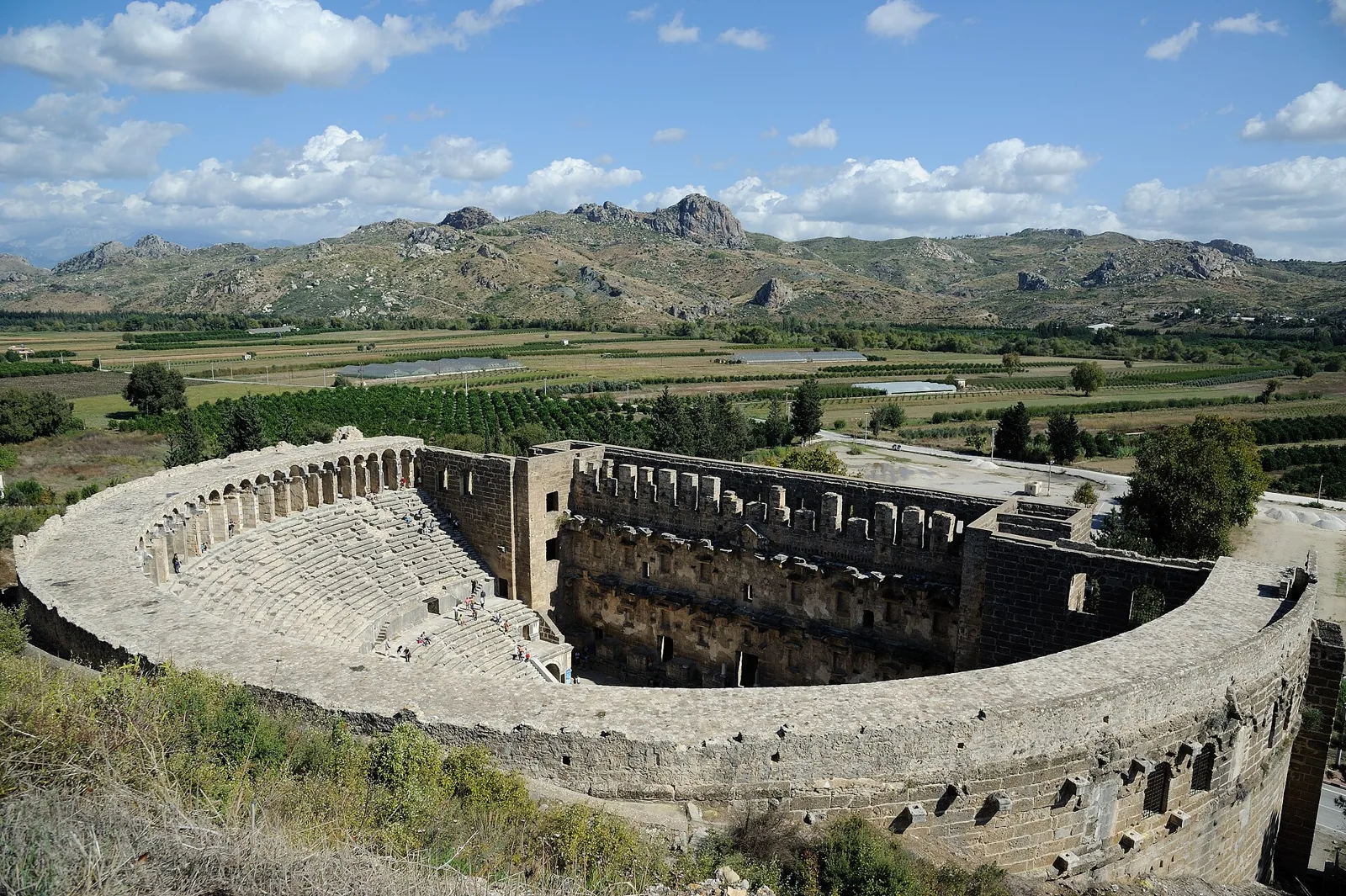
Aspendos Excavation Uncovers 6,000-Year-Old Settlement Traces Near Antalya
Digs beneath Aspendos shop floors turned up Chalcolithic pottery and tools, pushing...
illustrarch Editoral Team2 Mins read
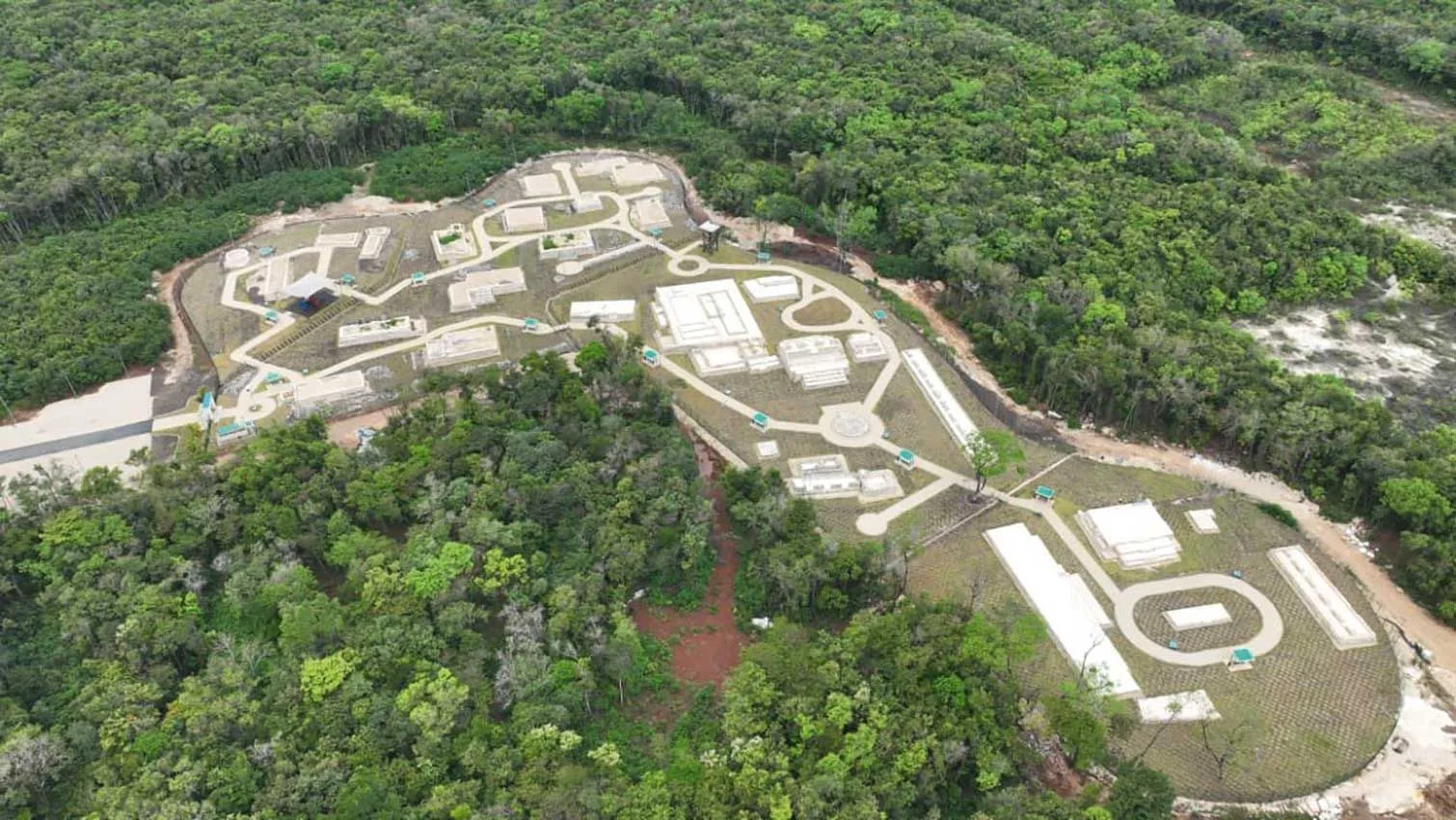
Relocated Maya Structures at Mexico’s Balam Tun Memory Park Face Legal Challenge
INAH archaeologists have filed a complaint against 26 officials over Balam Tun...
illustrarch Editoral Team2 Mins read
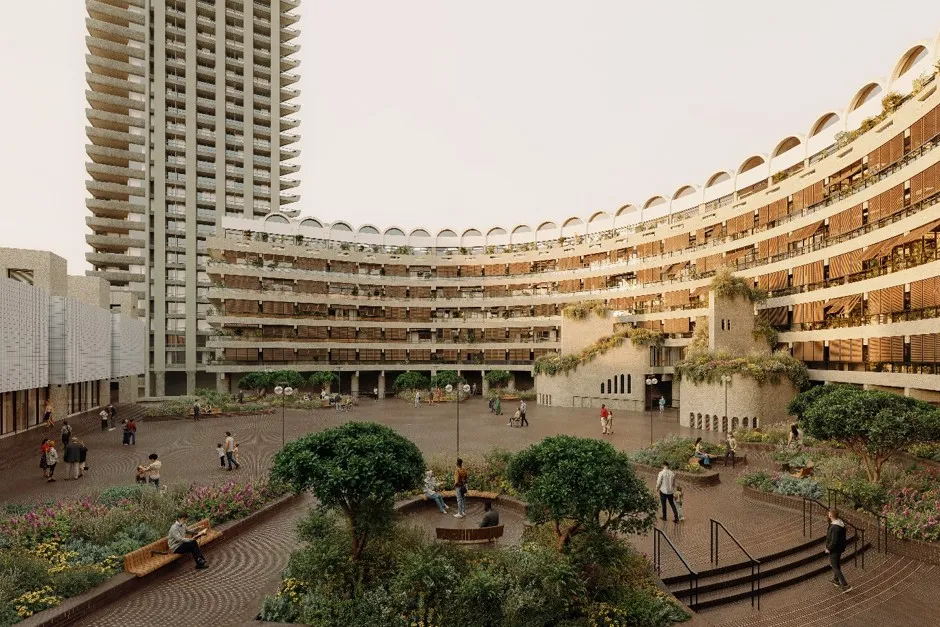
Allies and Morrison Win Approval to Restore Barbican Sculpture Court
City of London Corporation approves Allies and Morrison's plan to restore the...
illustrarch Editoral Team2 Mins read


Leave a comment