

Who Built Mosque Al-Aqsa: Architecture at the Heart of Sacred Geography
Al-Aqsa Mosque in Jerusalem stands on the Temple Mount and represents over 1,300 years of Islamic architectural history. Originally commissioned by Umayyad caliphs Abd al-Malik and al-Walid I, the mosque has been shaped by Abbasid, Fatimid, Crusader, Ayyubid, and Ottoman interventions. Its hypostyle prayer hall, silver dome, and 45-column interior make it one of the most architecturally layered sacred buildings in the world.
 Furkan Sen23 April 202612 Mins read207
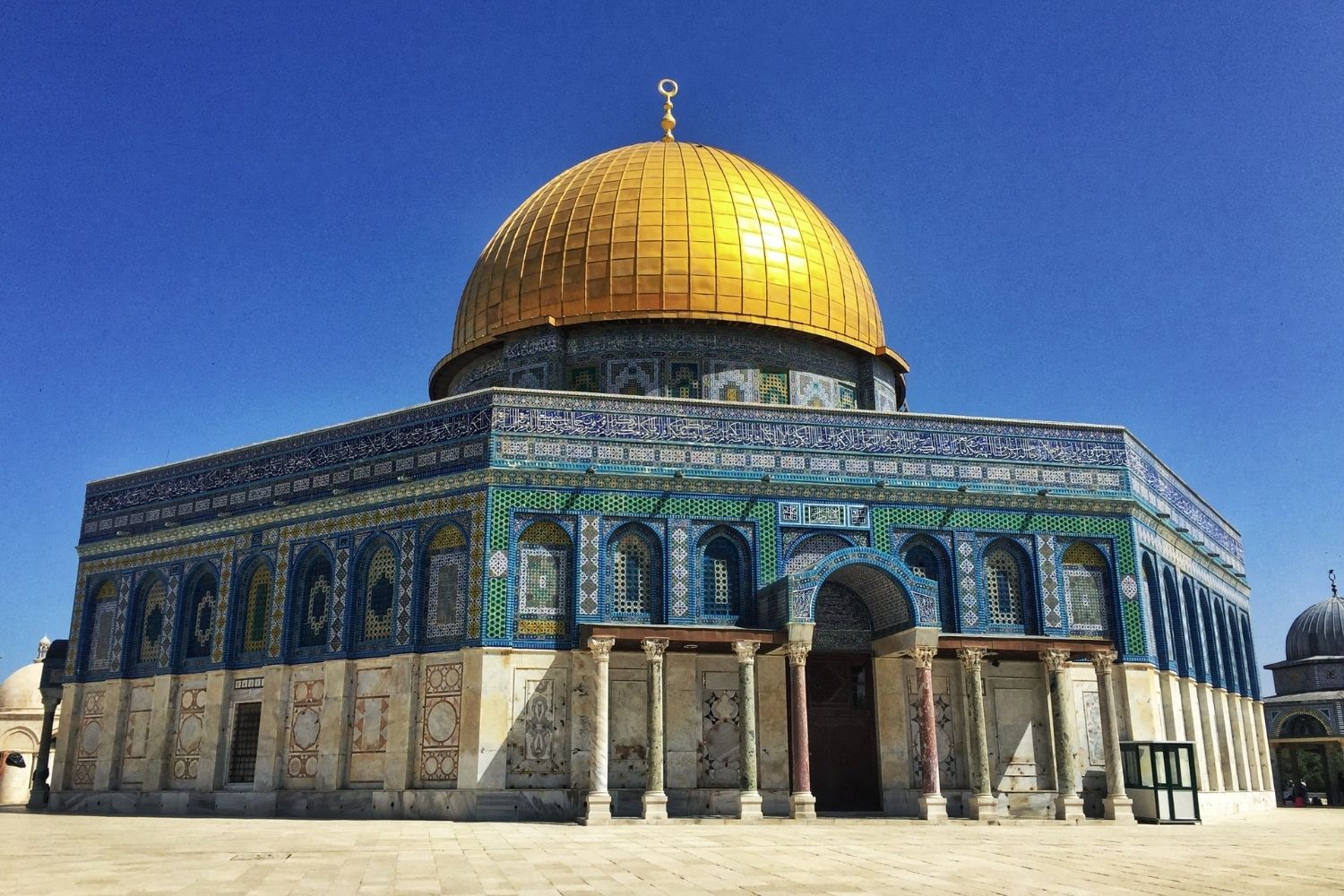
Table of Contents Show
Mosque Al-Aqsa, known formally as al-Masjid al-Aqsa or the “Furthest Mosque,” was originally built by Umayyad Caliph Abd al-Malik beginning around 691 CE and completed by his son al-Walid I in 705–715 CE. Located on the Temple Mount in Jerusalem, it is Islam’s third holiest site and one of the most architecturally layered religious buildings in the world, shaped by over thirteen centuries of earthquakes, renovations, and successive ruling dynasties.
Where Is the Al-Aqsa Mosque Located?
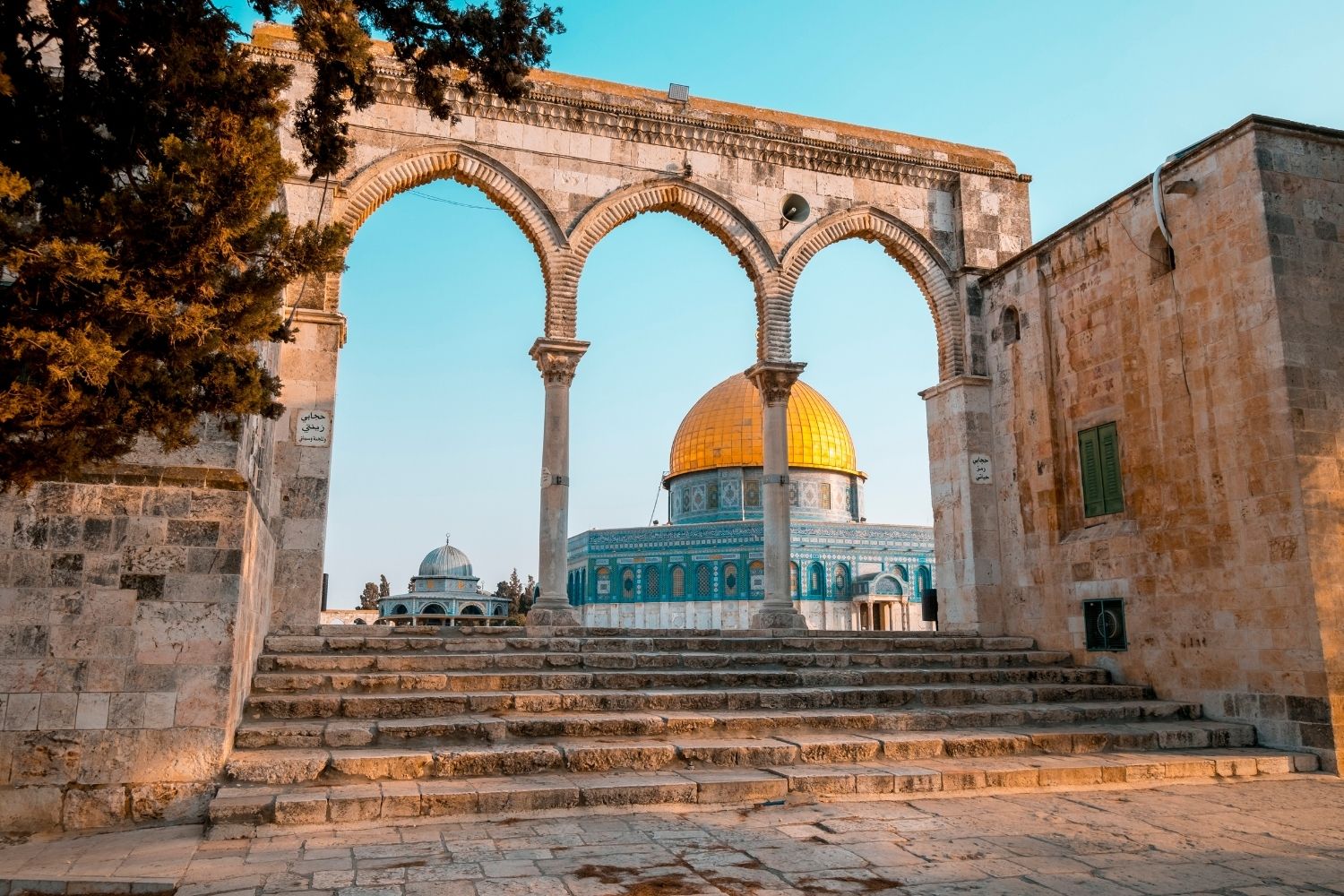
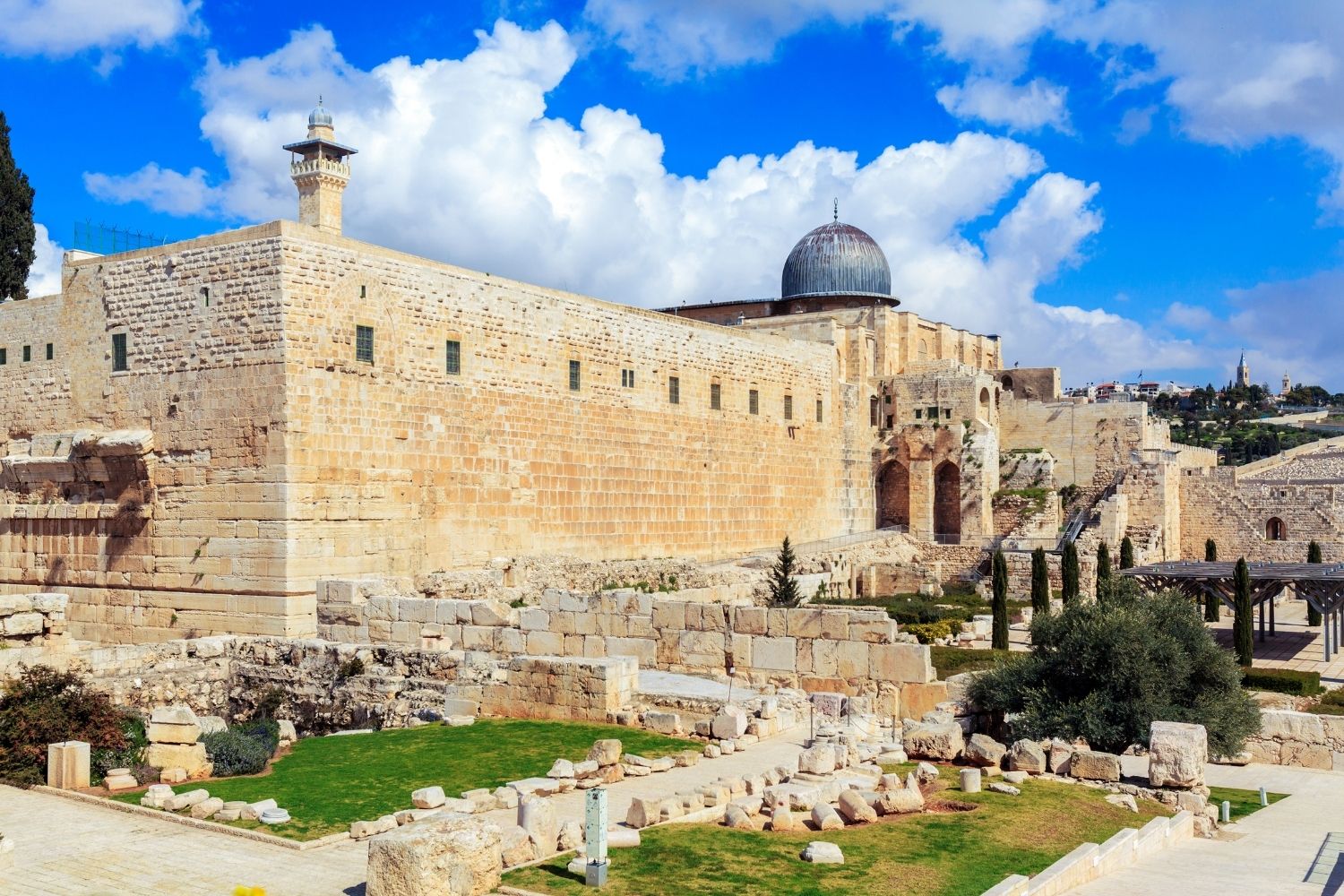
The al-Aqsa mosque sits on the southern end of the Haram al-Sharif, a 144,000-square-meter walled compound in the Old City of Jerusalem known in English as the Temple Mount. This elevated stone platform occupies the southeastern corner of Jerusalem’s Old City and is among the most contested sacred landscapes on Earth. The compound is revered by all three Abrahamic faiths: Jews regard it as the site of the ancient Temple of Solomon; Christians connect it to the ministry of Jesus; and for Muslims, it is the location of the Prophet Muhammad’s miraculous Night Journey as described in the Quran (Surah Al-Isra 17:1).
The mosque building itself occupies the southern portion of the Haram, directly aligned on the same north-south axis as the Dome of the Rock to its north. This intentional axial relationship was not accidental. Art historian Oleg Grabar described the two structures as “part of an architecturally thought-out ensemble comprising a congregational and a commemorative building” — the mosque as the active place of prayer, the Dome of the Rock as the monument marking the sacred rock beneath. Together they define the spatial logic of the entire compound.
The platform itself measures approximately 480 meters from north to south and 300 meters from east to west. It slopes slightly from north to south, and the mosque is elevated on a substructure that addresses this topographic change. The compound is entered through a series of historic gates, each with its own architectural and historical identity, accumulated across Umayyad, Mamluk, and Ottoman building campaigns.
💡 Pro Tip
See also our guide to the architectural styles that shaped history.
When studying the spatial organization of the Haram al-Sharif compound, pay close attention to how the al-Aqsa Mosque and the Dome of the Rock relate to each other not just visually but liturgically. The mosque faces south toward Mecca (the qibla direction), while the Dome of the Rock commemorates the Foundation Stone. Understanding this distinction — congregational prayer versus commemorative shrine — is key to reading the entire compound as a unified architectural program rather than a collection of separate buildings.
When Was the Al-Aqsa Mosque Built?
The question of when the al-Aqsa mosque was built requires separating the physical building from the sacred site itself. In Islamic tradition, the site has been holy since the time of the Prophet Ibrahim (Abraham), and was the first qibla — the direction of prayer — before Muslims reoriented toward Mecca. The first communal prayer space on the Temple Mount is associated with the Rashidun Caliph Umar ibn al-Khattab, who entered Jerusalem peacefully in 637–638 CE and reportedly cleared debris from the area to establish a simple place of worship on the southern end of the mount.
The pilgrim Arculf, visiting around 670 CE during the reign of Caliph Mu’awiya I, recorded seeing a rectangular wooden prayer house on the Temple Mount capable of accommodating approximately 3,000 worshippers. This document is the earliest eyewitness account of a structure at the site.
The permanent stone mosque — the building that forms the basis of what stands today — was commissioned by the Umayyad Caliph Abd al-Malik (r. 685–705 CE) and completed by his son al-Walid I (r. 705–715 CE). Several architectural historians, including K.A.C. Creswell and Robert Hamilton, attribute the original Umayyad construction primarily to al-Walid, while scholars including Jere Bacharach and Yildirim Yavuz argue that Abd al-Malik initiated the project. The Aphrodito Papyri — letters between al-Walid’s Egyptian governor and a government official dated 708–711 CE — document the dispatch of craftsmen and laborers from Egypt to help construct what the documents call the “Mosque of Jerusalem,” providing some of the earliest direct historical evidence for al-Walid’s involvement.
📌 Did You Know?
The al-Aqsa Mosque compound covers approximately 144,000 square meters and contains more than 200 historical monuments spanning multiple Islamic eras. According to Islamic scholar Mahdi Abdul Hadi, all buildings and open courtyards within the compound walls — including underground structures — share the same degree of religious sacredness under Islamic law, regardless of whether they are designated prayer halls or open plazas. This means the entire compound, not just the silver-domed prayer hall, constitutes al-Aqsa in theological terms.
Who Built Mosque Al-Aqsa: The Umayyad Foundation
The Umayyad caliphate (661–750 CE) transformed the architecture of the Islamic world through ambitious building programs in Syria, Palestine, and beyond. The Temple Mount in Jerusalem was one of their most significant projects. Abd al-Malik initiated construction of the Dome of the Rock around 691 CE, and the al-Aqsa Mosque was built on the same axis to form a paired architectural ensemble — the commemorative shrine to the north, the congregational prayer hall to the south.
The original Umayyad mosque was substantially larger than the building that exists today. Architectural historians estimate its dimensions ranged from 112 by 39 meters to 114.6 by 69.2 meters, depending on the source. According to historian Grabar, the layout was “a modified version of the traditional hypostyle mosque of the period,” though with the unusual characteristic that its aisles ran perpendicular to the qibla wall rather than parallel to it. Historical sources suggest the original building had as many as fifteen aisles; the current structure has seven. The central aisle, double the width of the others, was likely topped by a dome from the beginning.
Craftsmen from Egypt, Syria, and other regions of the Umayyad empire contributed to the construction, bringing with them skills in stone carving, mosaic work, and woodworking that defined early Islamic architecture. Numerous materials from earlier buildings on the site were reused — ancient Roman and early Byzantine columns and capitals, and cedar roof beams from the sixth century, some inscribed in Greek — embedding layers of pre-Islamic history directly into the fabric of the mosque.
How Did Earthquakes Shape the Building?
The al-Aqsa Mosque has been repeatedly damaged and rebuilt following major seismic events. An earthquake in 746 CE during the late Umayyad period ruined the building. The Abbasid Caliph Abu Ja’far al-Mansur undertook the first major post-Umayyad restoration, followed by Caliph al-Mahdi (r. 775–785 CE), who substantially rebuilt the mosque in a reduced form. It was al-Mahdi’s reconstruction that narrowed the building from its original fifteen aisles down to the seven that survive today. A second major earthquake in 1033 CE again caused severe damage, prompting the Fatimid Caliph al-Zahir (r. 1021–1036 CE) to undertake another significant rebuilding campaign. Al-Zahir’s reconstruction also introduced the elaborate mosaic program that still adorns the drum and interior of the dome, reviving a decorative tradition established by the Umayyads in the Dome of the Rock.
🎓 Expert Insight
“The alignment of the rectangular al-Aqsa with the Dome of the Rock seems to have echoed that of the Holy Sepulcher complex, which combined a basilica with the Anastasis Rotunda.” — Art and Architecture of the Middle Ages: Exploring a Connected World
This observation points to something rarely discussed in popular accounts of the mosque: the Umayyad architects were working in a city already defined by major Christian sacred complexes. The pairing of a congregational hall with a commemorative rotunda directly mirrors the spatial grammar of the Church of the Holy Sepulcher visible below. The Umayyad builders were not ignoring the existing sacred landscape — they were responding to it and reframing it within an Islamic architectural vocabulary.
The Al-Aqsa Mosque Under the Crusaders and Saladin
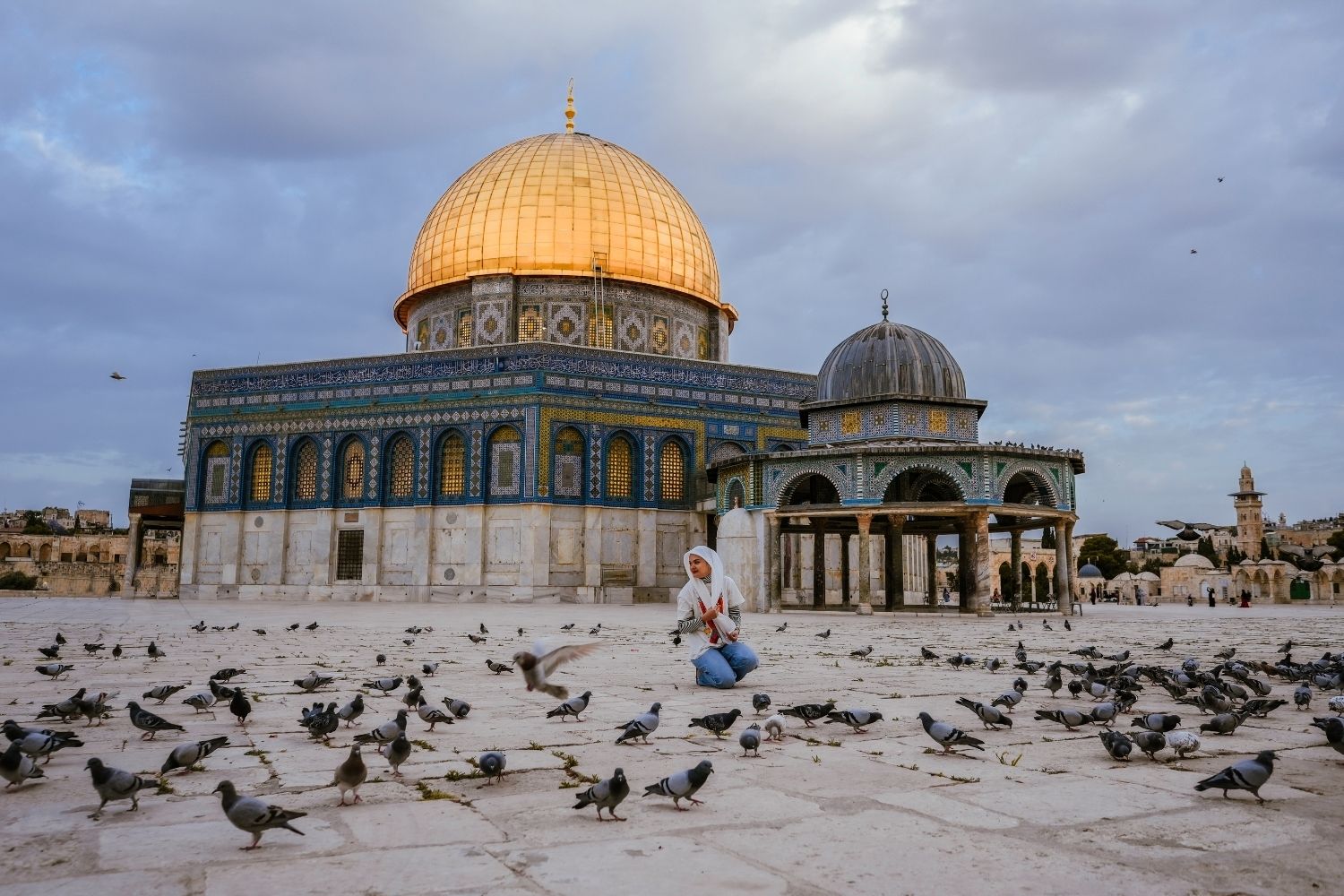
In 1099, Crusader forces captured Jerusalem following the First Crusade and converted the mosque al-Aqsa into a royal palace for the Christian kings of Jerusalem. Later, it became the headquarters of the Knights Templar, who named it Templum Solomonis — Solomon’s Temple — and added Romanesque architectural elements to the facade, including arches and columns that remain embedded in the building today. The intertwined columns that flank what is now a side mihrab (known as the “mihrab of Umar”) are twelfth-century Christian works; the animal heads on the capitals were deliberately removed because figurative decoration is prohibited in mosque architecture.
Saladin (Salah al-Din al-Ayyubi) recaptured Jerusalem from the Crusaders in 1187 CE and restored the mosque to Islamic worship. He commissioned the installation of a celebrated wooden minbar (pulpit) that had been ordered years earlier by the Zengid ruler Nur al-Din in anticipation of the reconquest. The original minbar was destroyed in the 1969 arson attack; a replica was later installed. Saladin also commissioned the principal mihrab that still occupies the qibla wall today, its rich coloring a visual counterpoint to the older architectural elements around it.
📐 Technical Note
The current mosque building occupies a rectangular plan measuring approximately 50 meters east-west by 80 meters north-south. It is organized into seven hypostyle aisles running north to south, with the central aisle being the widest. The interior is supported by 45 columns — a mix of ancient stone columns from earlier periods and marble columns imported from Italy during the 20th-century restoration by the Supreme Muslim Council. The dome sits at the intersection of the central aisle and the qibla wall, rising approximately 35 meters in height with a diameter of approximately 20 meters (concrete construction, completed 1969). The facade features 14 arches, some of Romanesque origin from the Crusader period, along with seven entrance portals on the northern wall.
Mamluk and Ottoman Contributions to the Mosque of Al-Aqsa
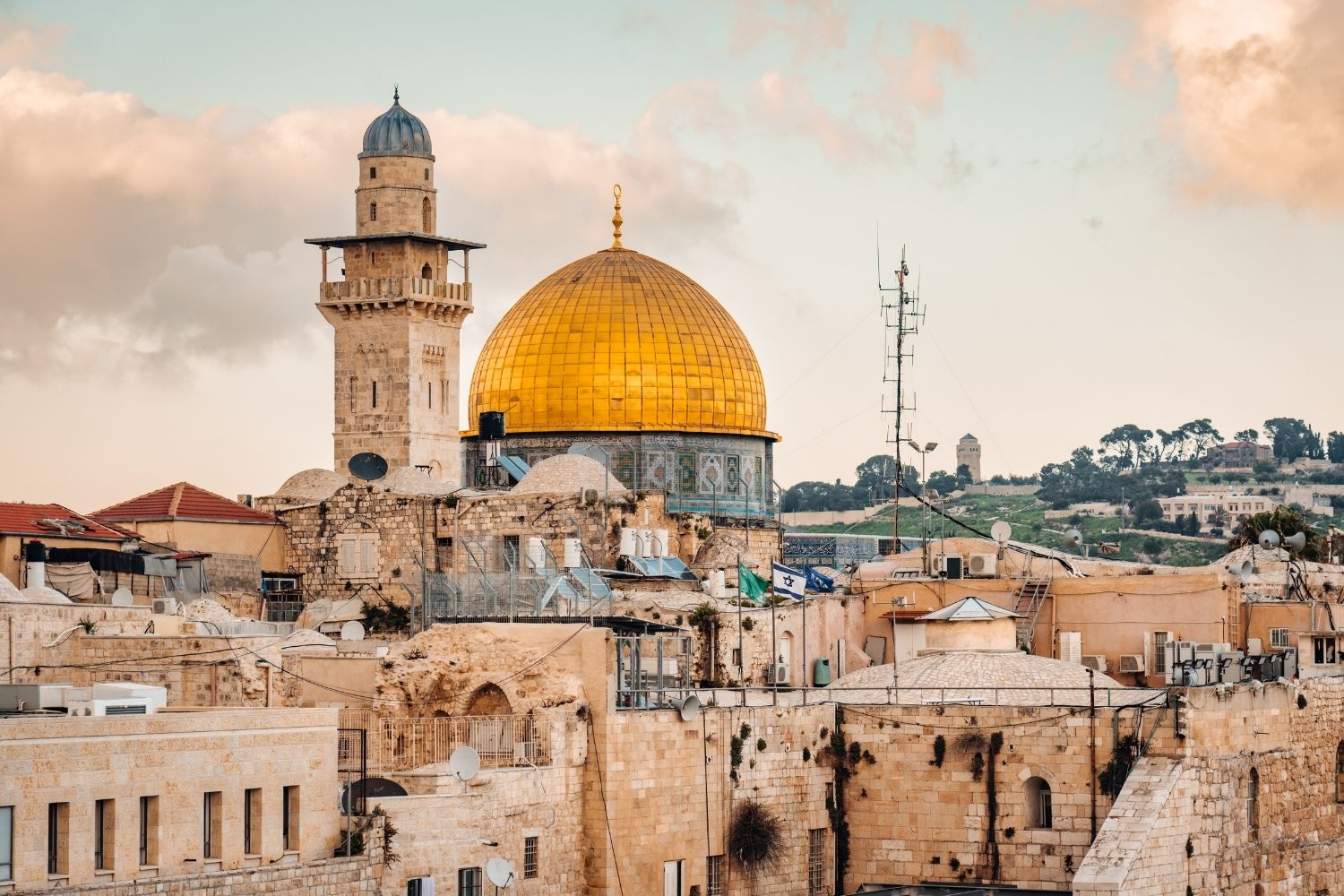
Following the Ayyubid period, the Mamluk Sultanate (1260–1517 CE) contributed significantly to the architectural fabric of the Haram al-Sharif without necessarily altering the mosque building itself. Mamluk patronage focused on building and refining the gates, arcades, and surrounding structures of the compound, including the elaborately carved stone portals and the arcaded colonnade (riwaq) along the compound’s perimeter. The madrasa buildings constructed along the western edge of the platform during the Mamluk period remain some of the finest examples of late medieval Islamic stonework in Jerusalem.
The Ottoman Empire took control of Jerusalem in 1517 CE under Sultan Selim I, and subsequent sultans made contributions to the compound. Sultan Suleiman the Magnificent (r. 1520–1566) is credited with rebuilding the city’s defensive walls, refacing the exterior of the Dome of the Rock with its now-iconic Iznik tile cladding, and adding various structures within the compound including fountains and domes. The Ottoman architectural vocabulary — with its emphasis on tile decoration, muqarnas vaulting, and refined stonework — is visible in several additions to the compound, though the mosque’s core spatial structure remained consistent with its earlier configurations.
The Jordanian Hashemite custodianship, established formally by agreement in 1994, continues to oversee maintenance and preservation of the mosque and compound today. Early twentieth-century restorations under the Supreme Muslim Council introduced the Italian marble columns visible in the eastern portion of the prayer hall, replacing earlier supports that had deteriorated.
Temple Mount and Al-Aqsa Mosque: Understanding the Compound
One of the most common sources of confusion about the masjid al-Aqsa mosque is the boundary of what the name actually describes. In common Western usage, “Al-Aqsa Mosque” typically refers to the silver-domed congregational prayer hall at the southern end of the compound. In Islamic theological and legal tradition, however, al-Aqsa designates the entire walled compound — the Haram al-Sharif — including the Dome of the Rock, all smaller mosques and prayer halls, the open plazas, the historic gates, and the subterranean structures beneath the platform.
This distinction matters architecturally because the palestine al-Aqsa mosque compound is not a single building but an accumulated urban landscape of religious structures built across more than a millennium. The compound contains, among other things: the Qibli Mosque (the main silver-domed prayer hall most often identified simply as “Al-Aqsa”), the Dome of the Rock, the Marwani Mosque (occupying the vaulted substructures at the southeastern corner of the platform, built by Herod), the Buraq Mosque along the western wall, and numerous smaller domes, arcades, and prayer spaces distributed across the platform.
⚠️ Common Mistake to Avoid
Many visitors and readers confuse the Dome of the Rock with the Al-Aqsa Mosque. The Dome of the Rock is the structure with the prominent golden dome, completed in 691 CE, built over the Foundation Stone. The Al-Aqsa Mosque (Qibli Mosque) is the silver-domed congregational prayer hall to the south — a completely separate building used for the five daily prayers and Friday sermons. The Dome of the Rock is a commemorative shrine, not a mosque designed for congregational prayer. Tour guides frequently point to the golden dome when referring to “Al-Aqsa,” which is architecturally and functionally incorrect.
Architectural Features of the Al-Aqsa Mosque Interior
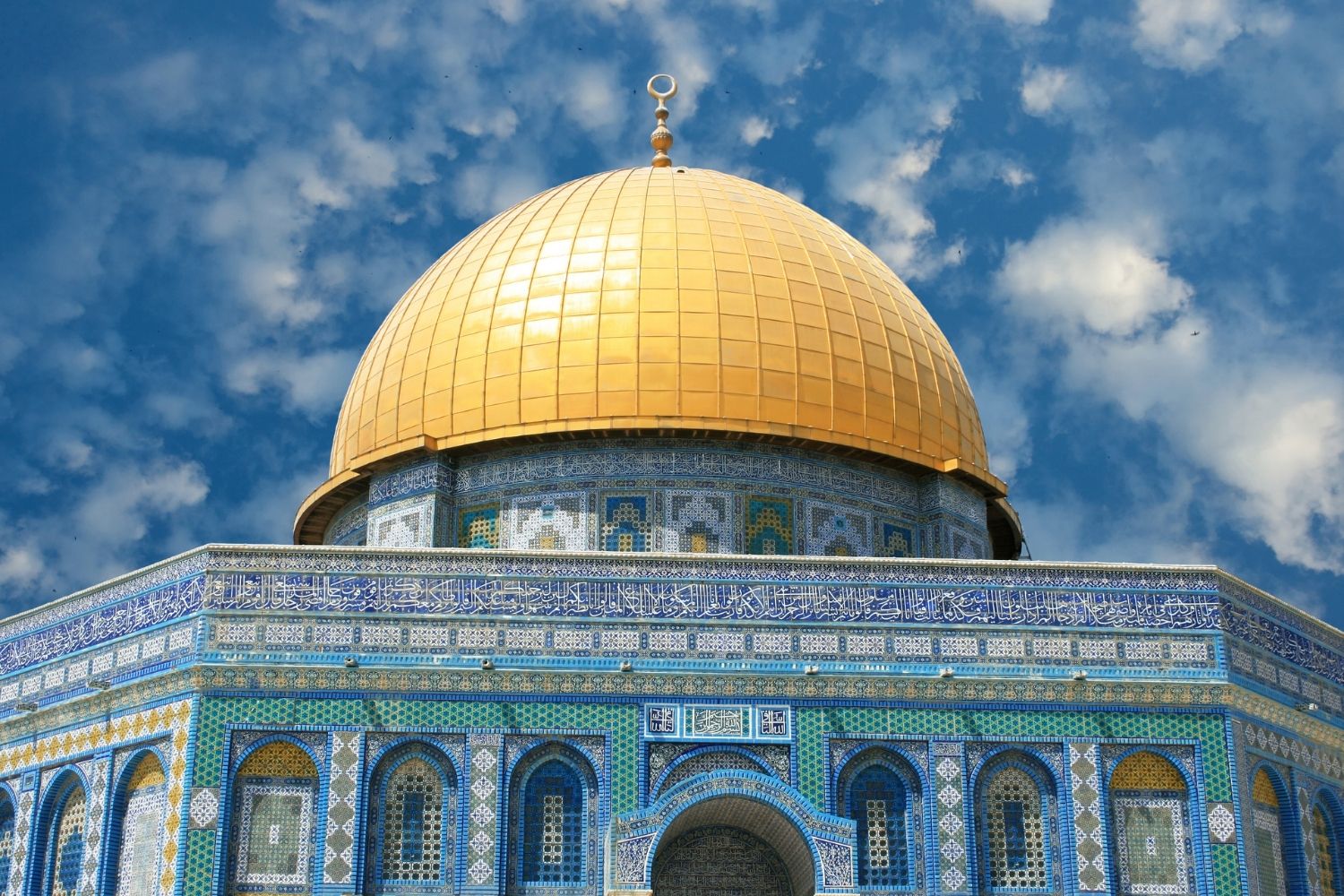
The interior of the Jerusalem al-Aqsa mosque reflects the accumulated decisions of more than a dozen building campaigns. The seven aisles run north to south, with the widest central aisle rising higher than the flanking colonnades and punctuated by the dome above the space in front of the mihrab. This spatial hierarchy — a wider, taller central nave terminating in a domed bay before the qibla wall — was an innovation of the Umayyad period that would become highly influential in later mosque design, particularly in the Great Mosque of Damascus.
The 45 columns supporting the interior represent multiple historical layers. The historic stone columns date to pre-Islamic and early Islamic periods; the marble columns in the eastern colonnades were installed during the early twentieth-century restoration. Above, 121 stained glass windows — from Abbasid and Fatimid building campaigns — filter light into the prayer hall, creating the kind of diffuse, atmospherically rich interior light that characterizes the finest medieval religious architecture regardless of tradition. The floor is carpeted throughout to accommodate prayer.
The principal mihrab on the qibla wall was commissioned by Saladin in 1187 CE and remains one of the most refined pieces of medieval Islamic decorative stonework in Jerusalem. The drum of the central dome carries a mosaic program commissioned by the Fatimid Caliph al-Zahir in the eleventh century, depicting a luxurious garden in the Umayyad or classical style with gold pendentives, peacock’s eyes, eight-pointed stars, and palm frond patterns — reviving the mosaic tradition of the earlier Umayyad Dome of the Rock.
How Has the Dome Changed Over Time?
The dome of the al-Aqsa Mosque has been rebuilt multiple times. The original Umayyad dome was likely made of wood. Over subsequent centuries, it was rebuilt in different materials following earthquake damage and other interventions. The current dome, completed in 1969 following an arson attack that destroyed the earlier wooden dome and the Minbar of Saladin, is made of reinforced concrete covered with lead sheeting — a pragmatic modern construction that maintains the visual profile from the compound’s exterior while providing a structurally durable enclosure. The interior of the dome retains the Fatimid-era mosaic decoration that survived the fire.
💡 Pro Tip
When analyzing the architectural history of al-Aqsa, it is useful to separate the compound (Haram al-Sharif) from the mosque building (Qibli Mosque) from the dome structure above the prayer hall. Historians often mean different things when they say “al-Aqsa was rebuilt” — they may be referring to the compound’s gates and arcades, the prayer hall itself, or just the dome. Cross-referencing the Aphrodito Papyri, K.A.C. Creswell’s archaeological surveys, and Robert Hamilton’s structural history provides the clearest picture of which elements belong to which campaign.
The Architectural Legacy of the Masjid Al-Aqsa Mosque
The influence of the al-Aqsa mosque on subsequent Islamic religious architecture is substantial. The Umayyad innovation of placing a dome above the bay in front of the mihrab, first realized at al-Aqsa and the Great Mosque of Damascus, became a standard feature of congregational mosque design across the Islamic world for centuries. The hypostyle plan — a grid of columns supporting a flat or slightly elevated roof, organized around a central nave — remained the dominant spatial model for large mosques from Spain to Central Asia through the early medieval period.
The compound itself represents one of the most studied examples of what might be called sacred urban accumulation: the layering of built form over a single sacred site across multiple religious traditions and political regimes. The Temple Mount contains structural traces of the Herodian platform, Roman occupation, early Byzantine presence, Umayyad foundation, Abbasid and Fatimid reconstruction, Crusader adaptation, Ayyubid restoration, Mamluk embellishment, and Ottoman refinement — all legible, at different scales of analysis, in the fabric of the present compound.
For contemporary architects studying how historic structures inspire design, al-Aqsa offers a particularly rich case study in the architecture of continuity — how a building and its surrounding landscape absorb, adapt, and survive across radically different political and cultural regimes while maintaining spatial coherence and sacred significance. The compound’s ability to accommodate hundreds of thousands of worshippers during major Islamic occasions, while also functioning as a site of intense scholarly and archaeological scrutiny, reflects an architectural resilience that few sacred sites in the world can match.
The evolution of religious architecture over centuries is nowhere more concentrated or more contested than here. Every stone in the compound carries multiple histories, and the architecture of the mosque itself is inseparable from the geography, theology, and geopolitics of Jerusalem al-Aqsa mosque as a whole.
✅ Key Takeaways
- Mosque al-Aqsa was originally built by Umayyad Caliph Abd al-Malik (beginning c. 691 CE) and completed by his son al-Walid I (705–715 CE) on Jerusalem’s Temple Mount, though the site had hosted a simpler prayer space since at least the 630s under Caliph Umar.
- The Dome of the Rock and the al-Aqsa Mosque are two separate buildings, positioned on the same axis to form a single architectural ensemble — the Dome commemorates the Foundation Stone; the mosque serves as the congregational prayer hall.
- The current seven-aisle prayer hall is smaller than the original Umayyad structure, which had approximately fifteen aisles before being reduced during Abbasid rebuilding after the 746 CE earthquake.
- Every major Islamic dynasty that governed Jerusalem left architectural traces in the compound: Umayyad, Abbasid, Fatimid, Ayyubid (Saladin’s mihrab and minbar), Mamluk (gates and arcades), and Ottoman (tile cladding on the Dome, fountains, compound walls).
- In Islamic legal and theological tradition, “al-Aqsa” refers to the entire 144,000 m² compound (Haram al-Sharif), not only the silver-domed Qibli Mosque building — a distinction that carries significant implications for understanding debates about the site’s significance and status.
For further reading on Islamic sacred architecture, the Wikipedia entry on Al-Aqsa Mosque offers a documented overview of the building’s structural history. The Museum with No Frontiers — Discover Islamic Art database provides scholarly architectural documentation. The Archnet Digital Library at MIT holds extensive primary and secondary source material on Islamic architecture and the Haram al-Sharif specifically. For the broader context of early Islamic architectural development, the Aga Khan Trust for Culture documents conservation and scholarship relating to Islamic heritage sites. The UNESCO World Heritage listing for the Old City of Jerusalem, inscribed in 1981, provides the international conservation framework within which al-Aqsa is understood today.




Relocated Maya Structures at Mexico’s Balam Tun Memory Park Face Legal Challenge
INAH archaeologists have filed a complaint against 26 officials over Balam Tun...
 illustrarch Editoral Team2 Mins read
Allies and Morrison Win Approval to Restore Barbican Sculpture Court
City of London Corporation approves Allies and Morrison's plan to restore the...
illustrarch Editoral Team2 Mins read
The Great Wall of China: History, Architecture, and Enduring Legacy
A detailed architectural exploration of the Great Wall of China covering its...
Furkan Sen7 Mins read
Prague Architecture: How Charles Bridge and Prague Castle Built Bohemian Gothic
Charles Bridge and Prague Castle explained as architecture: the 1357 bridge under...
Furkan Sen6 Mins read


Leave a comment