

Himeji Castle: How Japan’s White Heron Castle Mastered Defensive Architecture
Himeji Castle in Japan stands as the most complete surviving example of feudal castle architecture, combining a sophisticated multi-layer defense network with refined wooden construction across 83 buildings. This article examines its history, architectural logic, structural details, and why it earned UNESCO World Heritage recognition in 1993.
 Sinan Ozen25 April 20268 Mins read208
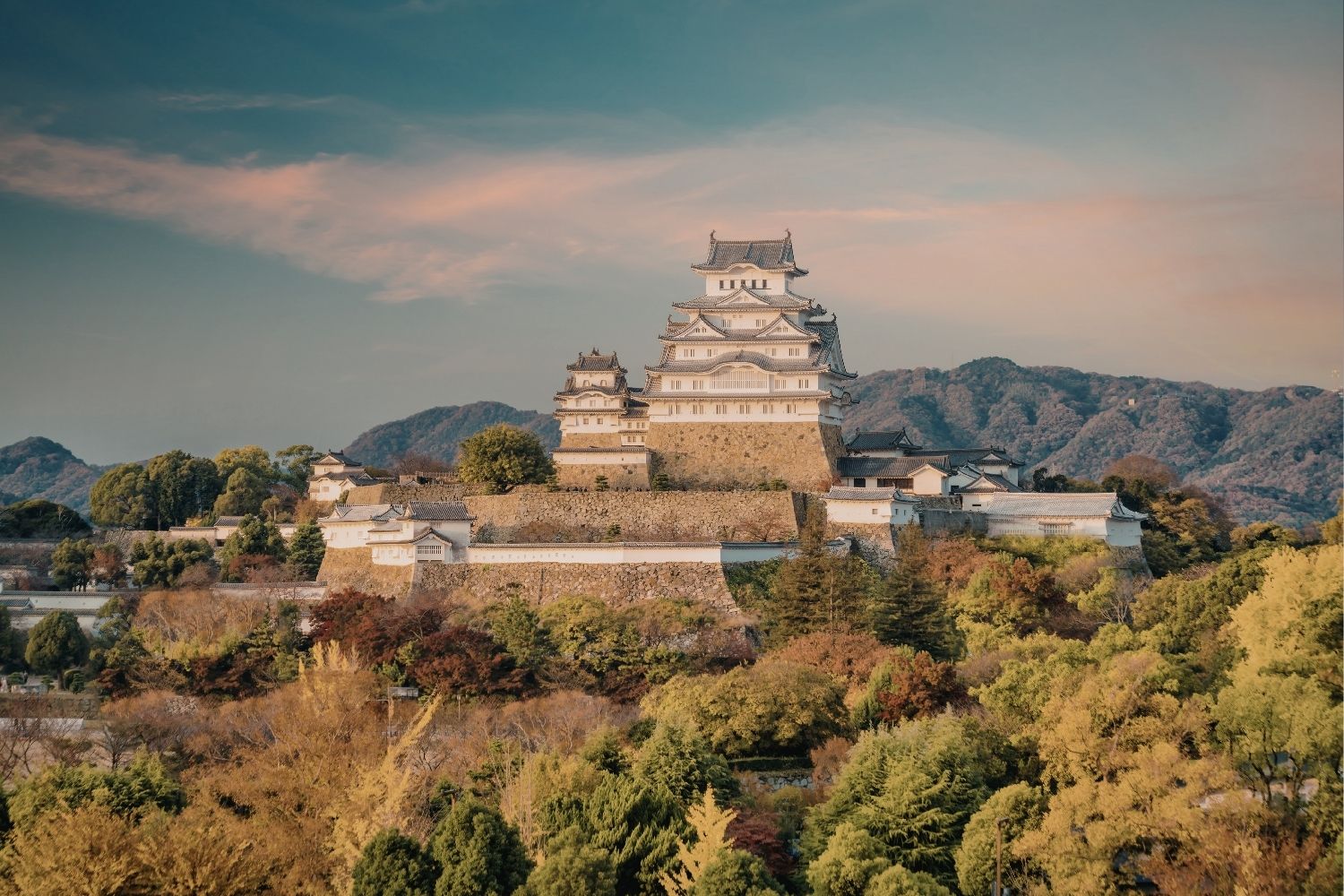
Table of Contents Show
Himeji Castle is the finest surviving example of early 17th-century Japanese castle architecture, comprising 83 structures with advanced defensive systems built during the Shogun period. Located in Hyogo Prefecture, Japan, the castle combines military precision with refined wooden construction, earning UNESCO World Heritage status in December 1993 alongside recognition as a Japanese National Treasure.
What Is Himeji Castle and Why Does It Matter?
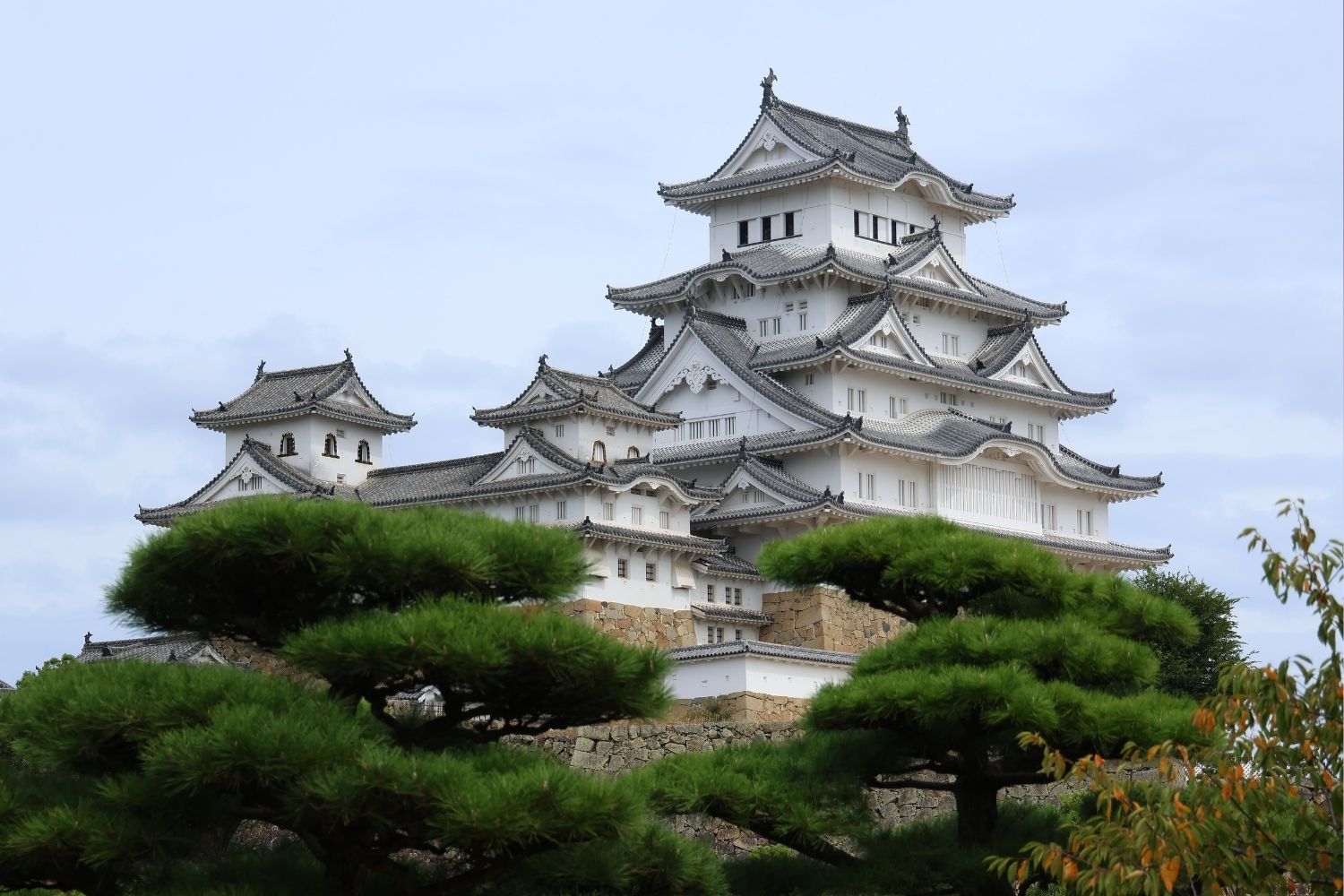
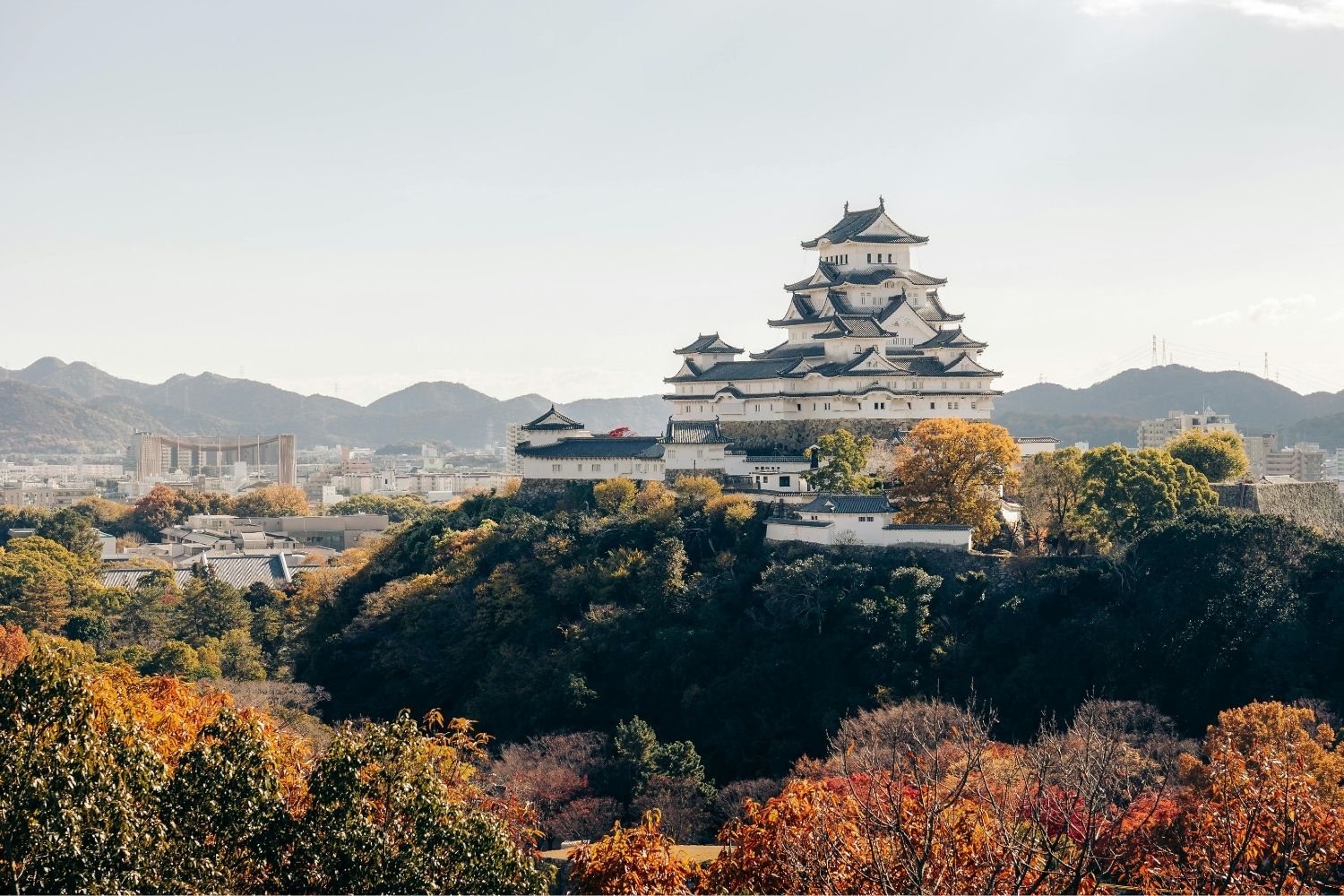
Known as Shirasagi-jo (“White Heron Castle”) for its brilliant white plastered exterior and the graceful silhouette of its layered roofs, Himeji Castle in Japan sits atop Himeyama Hill in the center of Himeji City. The hill was first fortified in 1333 by Akamatsu Norimura during the Genkō War. The castle itself took its defining form between 1601 and 1609 under the feudal lord Ikeda Terumasa, who expanded the site across an estimated 2.5 million man-days of labor.
What sets castle himeji apart from other surviving Japanese fortifications is the degree to which it remains intact. The main keep, three subsidiary towers, connecting corridors, stone walls, gates, and moats all date substantially to the early Edo period. According to the UNESCO World Heritage Centre, the complex preserves both the interior and exterior characteristics of a 17th-century castle in a way that no comparable structure has managed.
📌 Did You Know?
Himeji Castle received over 2.86 million visitors in 2015 alone, the year it reopened after a five-year roof restoration project that stripped decades of grime from the main keep and returned it to the original brilliant white visible today. It is the most visited castle in Japan by a significant margin (Japan National Tourism Organization, 2015).
The History of Himeji Castle in Japan
The site’s military history spans more than six centuries. After Akamatsu Norimura’s initial fortification in 1333, his son Sadanori built a proper castle on the hill in 1346. Control changed hands repeatedly across the Sengoku period. In 1580, the Kuroda clan transferred the castle to the military ruler Toyotomi Hideyoshi, who built a three-story keep in 1581. Following the decisive Battle of Sekigahara in 1600, Tokugawa Ieyasu granted the site to his son-in-law Ikeda Terumasa, who demolished Hideyoshi’s earlier structure and rebuilt the complex entirely between 1601 and 1609 into the form seen today.
The castle functioned as the administrative center of a feudal domain for nearly three centuries, until 1868 when the Meiji Restoration ended the Shogun era. It narrowly escaped demolition during the subsequent military-use period and survived World War II bombing raids on Himeji City entirely unscathed, an outcome still described locally as a near-miracle. Conservation work began formally in 1934 and has continued in careful phases since, using traditional timber joinery techniques to maintain authenticity.
For broader context on how Japanese feudal architecture developed, the illustrarch article on traditional Japanese architecture traces the structural and cultural principles that underpin the castle’s design, from post-and-beam framing to the logic of overhanging eaves.
💡 Pro Tip
When studying Japanese castle architecture, pay close attention to how the approach paths were designed before examining the keep itself. The strategic value of Himeji’s layout becomes clear only when you trace the route an attacker would need to take from the outer gate to the main tower: nine heavily fortified gates, spiral movement, and multiple 180-degree turns that broke up any organized assault force. The defense starts at ground level, not at the walls of the keep.
Himeji Castle Architecture: Defensive Systems and Structural Logic
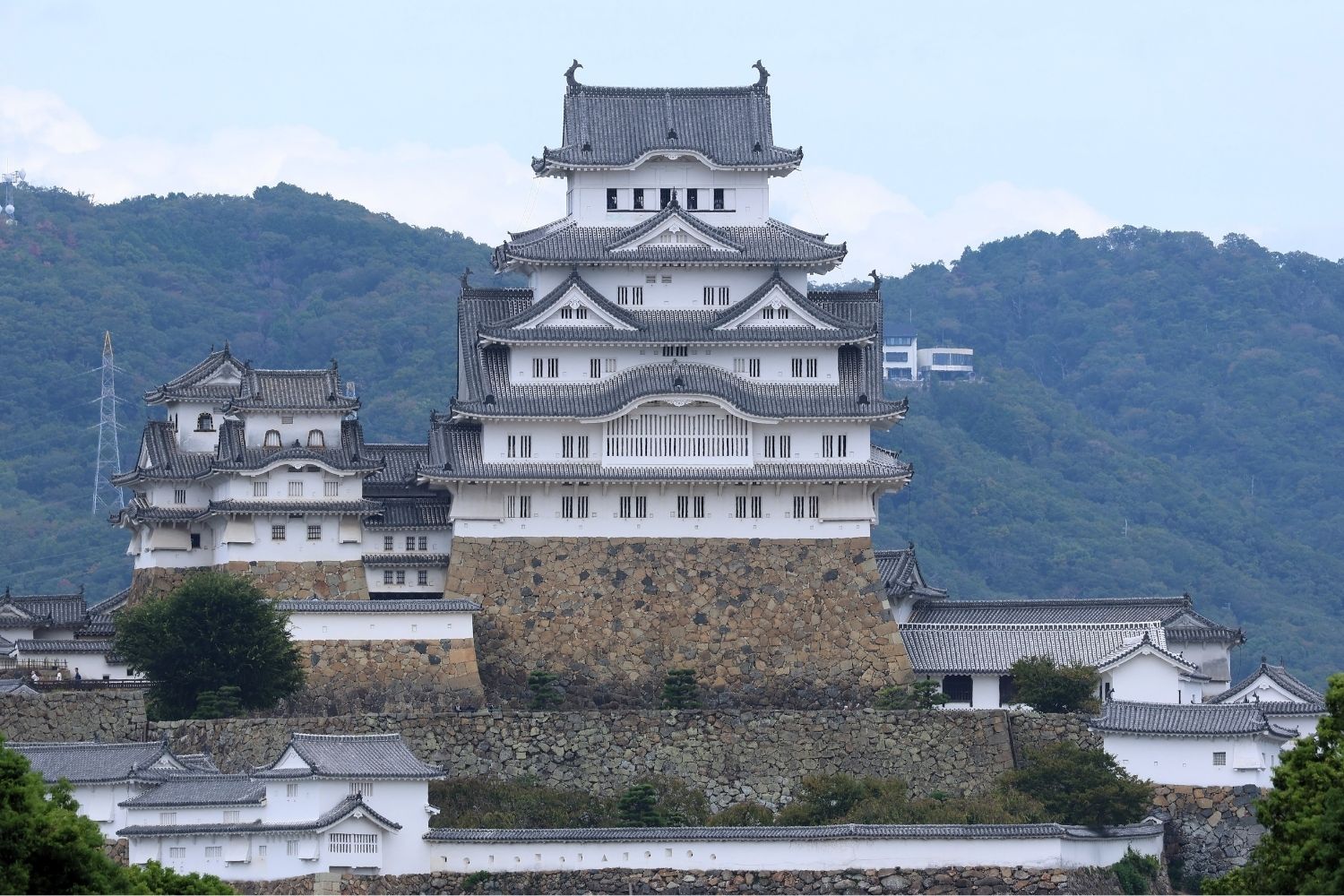
The architectural achievement of himeji castle japan lies in how thoroughly military function shaped every element of the complex. The site is not a single building but a network of 83 structures organized around a central main keep (daitenshu) that rises six stories from a 45-meter stone foundation. Three subsidiary keeps are connected to the main tower via corridors, creating the connected-tower (rengotenshu) configuration that is rare among surviving Japanese castles.
The approach to the main keep was deliberately labyrinthine. From the outer gate (otemon), attackers faced nine heavily fortified gates before reaching the tower, with paths that spiraled inward, doubled back, and in two places compressed to a narrow corridor with walls on both sides from which defenders could shoot freely. Some passages ended in dead ends. This maze-like layout is one of the castle’s most studied features among scholars of cultural architecture and military design.
📐 Technical Note
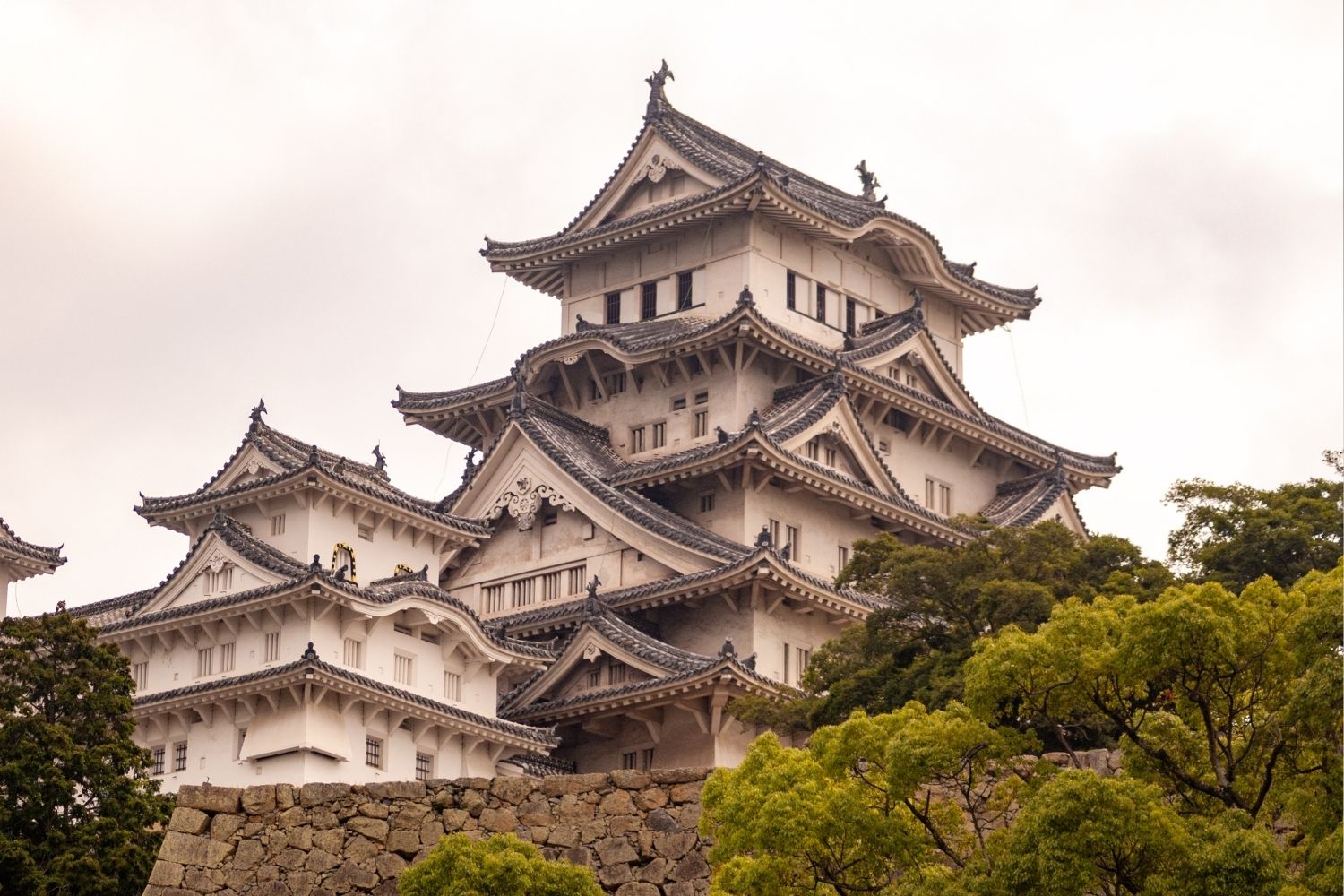
The main keep at Himeji stands 31.5 meters tall from the stone foundation to the ridge of the roof, with six internal floors and a basement. The structure rests on two massive wooden pillars running its full height, anchored into the stone plinth below. The white finish on the exterior walls is a plaster compound mixing lime, seaweed extract, plant fibers, and clay, applied in multiple layers to achieve fire resistance and the characteristic appearance. The thickness of this plaster coating was one of the primary fire-suppression strategies of the period.
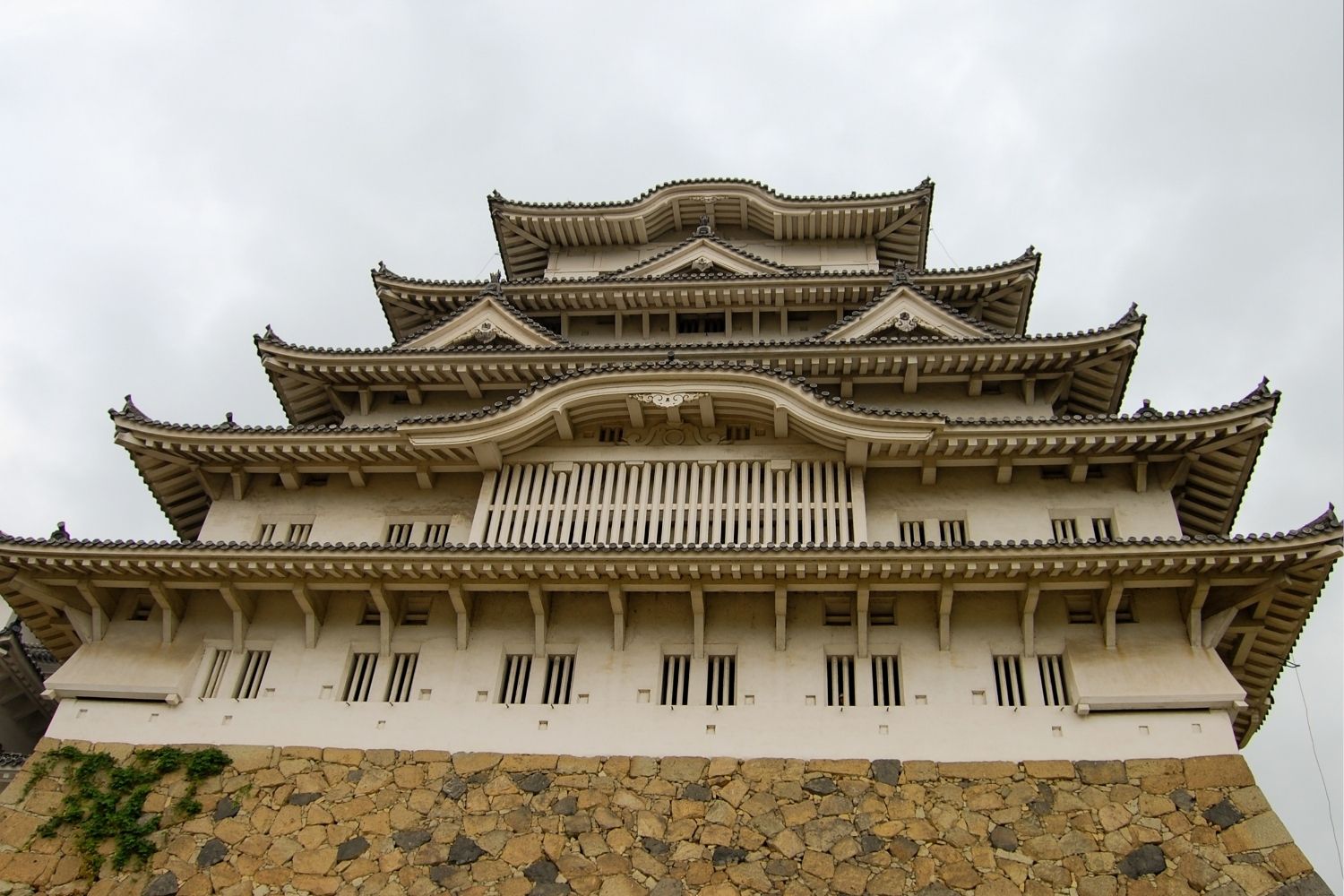
The castle’s defensive details extend to the micro scale. The walls are perforated with loopholes (sama) in three shapes: circular (for muskets), square (for arrows), and triangular. Large overhangs at the corners of the lower floors contained drop holes through which defenders could release stones or boiling liquid on attackers directly below. The gates, always the weakest point of any fortification, were protected by flanking earthen walls from which archers and gunners could fire on attackers who had already entered the gate passage.
Structurally, the castle uses the standard Japanese post-and-beam framework in timber, without load-bearing walls. This allows the interior layout to be flexible while the exterior walls serve only as weather protection and visual surfaces. The roof forms combine two traditional gable types: the curved kara-hafu and the triangular chidori-hafu. Their layered arrangement across the main keep and subsidiary towers produces the profile that gives the castle its bird-in-flight appearance from a distance.
Himeji Castle Facts: Scale, Materials, and Construction
The castle complex covers 107 hectares within its property boundary. The 83 buildings include the main keep, three subsidiary towers (kotenshu), corridors connecting them, turrets (yagura), gates, stone walls, and two surviving moats of the original three. Of these 83 structures, five are designated National Treasures of Japan: the main keep, the northwest small keep, the west small keep, the east small keep, and the connecting corridors. A further 74 buildings within the site hold Important Cultural Asset status.
🔢 Quick Numbers
- 83 total structures within the complex (UNESCO World Heritage Centre, 1993)
- 107 hectares: total property zone area (UNESCO World Heritage Centre)
- 2.5 million estimated man-days of labor for the 1601-1609 reconstruction (World History Encyclopedia)
- 21 surviving gates of an original 84 (World History Encyclopedia)
The construction scale of the 1601-1609 rebuild was immense for its era. Ikeda Terumasa’s project required excavating and laying extensive stone foundations, sourcing timber across a region still recovering from decades of civil war, and coordinating a workforce large enough to complete a full castle complex in under a decade. The stone walls (ishigaki) surrounding the complex were constructed without mortar, using carefully shaped and fitted stones in a technique that proved highly resistant to seismic stress.
The white plaster finish, which gives the castle its iconic appearance, was not merely aesthetic. The compound resisted fire from incendiary projectiles and was also impermeable to musket shot at certain distances. It required regular reapplication and became one of the ongoing maintenance commitments of successive feudal lords throughout the Edo period.
Himeji Castle Garden: Koko-en and the Surrounding Site
Adjacent to the western bailey of the castle, the himeji castle garden known as Koko-en occupies the former site of samurai residences. Opened in 1992 to mark the 100th anniversary of Himeji City, the garden comprises nine separate enclosed spaces in the traditional Japanese walking-garden style, each with a different character: a pond garden, a tea garden, a pine garden, a bamboo garden, and others. The design references the layout patterns documented in Edo-period records of the residential grounds that once stood here.
Koko-en connects to the castle’s heritage interpretation in a practical way. While the castle’s interior conveys military and structural history, the garden addresses the residential and cultural life that existed alongside the fortification. The two sites together give a more rounded picture of what a feudal castle complex actually functioned as on a daily basis. The Japan National Tourism Organization maintains current information on the combined ticket option and visiting access.
Why Himeji Castle Became a Cultural Heritage Landmark
Himeji Castle received UNESCO World Heritage inscription in December 1993 as one of Japan’s first two World Heritage Sites, alongside the Buddhist monuments of the Horyuji Temple area. The designation was based on two criteria under the UNESCO convention: the castle’s value as a masterpiece of human creative achievement, and its role as an outstanding example of a building type that illustrates a significant stage in human history.
The case for inscription rested heavily on the degree of preservation. Most Japanese castles were destroyed during the Meiji Restoration, when the new national government dismantled symbols of feudal power. Others burned during the bombing campaigns of World War II. Himeji survived both. The 1934-onward conservation program, conducted using techniques specifically developed for the preservation of historic Japanese wooden structures, maintained authenticity of materials and methods in a way that aligns with the international principles established for heritage conservation.
🎓 Expert Insight
“It represents the culmination of Japanese castle architecture in wood, and preserves all its significant features intact.”
UNESCO World Heritage Committee, Criterion iv evaluation, 1993
This language from the original inscription record identifies what makes Himeji exceptional rather than merely historic: it is not a fragment or a reconstruction, but a complete architectural statement that still communicates the full range of techniques, materials, and spatial strategies that defined Japanese castle design at its peak.
The cultural architecture significance of Himeji also extends to its representation in global popular culture. The castle has served as a filming location for Akira Kurosawa’s Kagemusha (1980) and Ran (1985), and as the Japanese stand-in for Osaka Castle in the 1980 television adaptation of Shōgun. This visibility has made the castle recognizable to international audiences who may have encountered it without knowing its name, which in turn sustains public interest in its preservation.
The broader question of how historic structures carry cultural identity and why preservation matters for architecture is explored in the illustrarch piece on architectural heritage and its future, which addresses the social, educational, and economic dimensions of conservation beyond the physical structure itself.
Conservation Challenges and Ongoing Stewardship
Maintaining a 400-year-old timber complex in a high-seismic zone requires continuous active management. The Himeji City Management Office for the castle area operates under a formal management plan last revised in 2008, covering daily inspection, traffic restriction, fire prevention, and disaster response. All 83 buildings are fitted with automatic fire alarms, security cameras, and fire hydrants. A dedicated Disaster Control Centre monitors these systems around the clock.
Seismic risk is the primary structural concern. In 2006, the city established an expert committee to develop a seismic strengthening program for the main donjon. The challenge is to improve earthquake performance without introducing materials or interventions that would compromise the historical character of the structure. The only permanent modern intervention in the complex to date is a reinforced concrete foundation raft inserted beneath the main keep to address subsoil deformation in a region of known seismic activity.
💡 Pro Tip
Conservation architects working with historic timber structures often reference Himeji as a case study in balancing seismic intervention with heritage authenticity. The reinforced concrete raft beneath the main keep is a documented example of a “minimal intervention” approach: a modern structural solution buried below the historic fabric and invisible from any public vantage point. This strategy, now standard in Japanese cultural property conservation, is worth studying before approaching similar projects in high-seismic historic contexts.
The 2010-2015 restoration of the main keep’s roof was the most recent major conservation project. The work stripped away the grey weathering that had accumulated over decades and restored the original white plaster finish. The castle’s reopening in March 2015 was widely covered in the Japanese and international press, and visitor numbers that year reflected renewed public interest in the site.
For those studying how historic structures inform contemporary architectural practice, the illustrarch article on how historic structures inspire today’s architects addresses the design and technical lessons that modern practitioners draw from heritage buildings, including the question of honest intervention versus restoration to an idealized original state.
✅ Key Takeaways
- Himeji Castle comprises 83 buildings on a 107-hectare site in Hyogo Prefecture and is the most complete surviving Japanese castle complex from the early Edo period.
- Its defensive architecture is built around a maze-like approach requiring attackers to pass nine fortified gates before reaching the main keep, with paths designed to expose, slow, and divide any assault force.
- The white plaster exterior was both a fire-suppression measure and a visual statement of feudal authority, not a purely decorative choice.
- UNESCO inscribed the castle in December 1993 on the basis of its authenticity and its status as the culmination of Japanese wooden castle construction.
- Active conservation has managed seismic risk through minimal, reversible interventions, setting a model that informs heritage practice in Japan and internationally.
Further reading on the principles of cultural architecture and how Japan’s built heritage has influenced contemporary design worldwide can be found in the illustrarch guides to vernacular Japanese architecture and modern Japanese architecture. For a broader view of how architecture expresses and preserves cultural identity, the article on architecture and cultural identity provides a useful comparative framework. Additional authoritative reference on the site is maintained by the official Himeji Castle website and the Wikipedia entry which documents the castle’s construction history and architectural details in depth.




Restorers Uncover 16th-Century Murals Hidden by Nuns in Villa Silvestri Rivaldi
Conservators in Rome are uncovering 16th-century murals hidden for 300 years inside...
 illustrarch Editoral Team3 Mins read
A 2,500-Year-Old Solar Observatory in Puebla Is the First Group E Complex Found Outside the Maya Area
Archaeologists working for Mexico's INAH have confirmed that two platforms at Teteles...
illustrarch Editoral Team2 Mins read

Donald Insall, the Conservation Architect Who Led Windsor Castle’s Restoration, Dies at 100
Donald Insall, the British architect who turned conservation into a planning discipline...
illustrarch Editoral Team2 Mins read
New Digging Season at the Mieza Gymnasium Uncovers Alexander’s School Complex
New digs at Mieza uncover teaching halls and mosaic banquet rooms at...
illustrarch Editoral Team2 Mins read


Leave a comment