

Why You Might Need a Smart Home Security System
A smart home security system integrates various devices like cameras and sensors to provide real-time monitoring and alerts, enhancing safety and convenience for homeowners.
 Bahattin Duran19 September 20235 Mins read362

Table of Contents Show
A smart home security system is a connected set of cameras, motion sensors, smart locks, and video doorbells that you watch and control from your phone. It guards your property whether you are at home or away, sends real time alerts the moment something changes, and keeps a clear record of who arrives at your door.
The Internet of Things (IoT) has advanced to the point where smart home devices can learn your daily habits, turning a conventional house into a connected one. There are many types of devices with different features, and you do not need to buy them all at once. The one thing that ties everything together is a stable internet connection, since every sensor, camera, and lock relies on it to talk to your phone.
This is why a reliable provider such as Xfinity Internet is a sensible starting point. Xfinity Home Security services are offered alongside it, so you can pair monitoring hardware with the connection that powers it in a single plan.
What Is a Smart Home Security System?
A smart home security system replaces the old idea of a single alarm box with a layered network of devices that share data. A typical setup includes door and window sensors, motion detectors, indoor and outdoor cameras, a smart lock or two, and a hub or app that brings them under one dashboard. Because the parts communicate over Wi-Fi or a cellular backup, you can check any of them in real time rather than waiting to get home to find out something went wrong.
If you are wondering where to start when building a smart home, a security setup is often the most practical first step. It delivers an immediate, daily benefit, and it gives you a foundation you can grow. Below are the reasons a smart home security system earns its place, and why it might be the right investment for you.
Why You Might Need a Smart Home Security System
Real-Time Updates
Picture being home alone and hearing strange noises late at night. Your first instinct is to check the windows and lock the bedroom door, all while wondering whether whoever is outside knows you heard them. A connected system removes most of that uncertainty. Motion sensors push instant notifications to your phone the moment they detect unusual movement, so you know what is happening before you go looking.
The same logic applies to small mistakes. If you leave the front door open or unlocked, the app flags it right away. Visible cameras on the porch also work as a deterrent, since a would be intruder who spots them usually moves on rather than risk being recorded. You can add more sensors over time, and most cameras include night vision and detection so no corner of the property goes unwatched after dark.
💡 Pro Tip
Mount your main entry camera at roughly head height, around 7 to 9 feet, angled slightly down. Place it too high and you capture the tops of heads instead of faces, which makes footage far less useful if you ever need to identify someone.
Remote Access
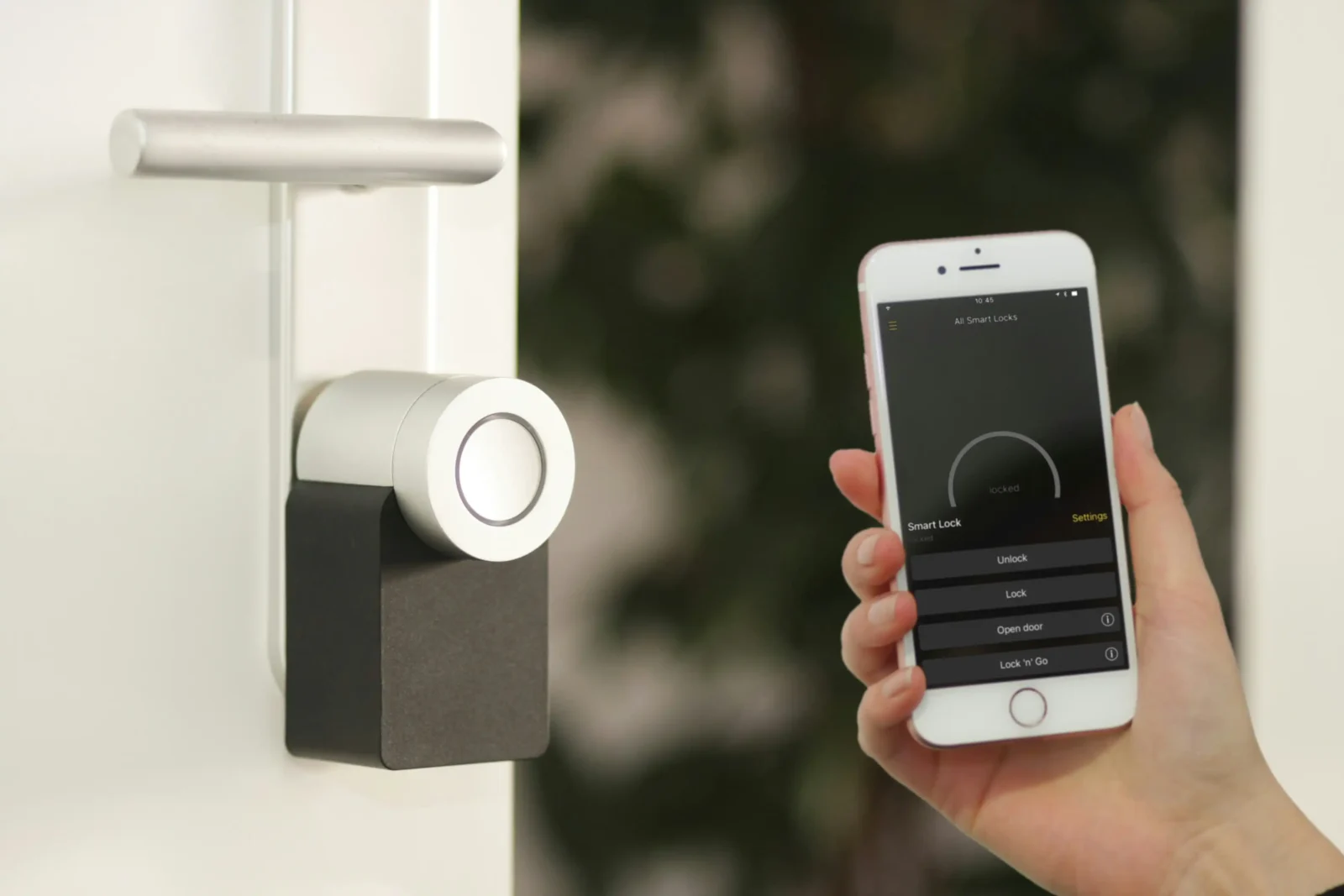
One of the biggest advantages is that you can manage the whole setup from anywhere, as long as you have an internet connection. Smart doorbells, smart locks, and cameras all tend to ship with remote access built in, which lets you check on your home from another city or another country.
That matters if you travel often, leave the house empty for long stretches, or have aging parents or pets at home while you are out. You can unlock the door for a trusted visitor, confirm a delivery arrived, or simply look in and confirm everything is calm. The result is not only real time alerts but the ability to see and respond from a distance.
Enhanced Security
Most smart home devices run wirelessly, which closes off a classic weak point. An intruder cannot simply cut a phone line or a power cable to disable the system. Many devices carry battery backup alongside Wi-Fi, and some can fall back to mobile data, so a power outage does not leave your home exposed.
The practical effect is steady coverage no matter what happens to the grid. A video doorbell or smart lock lets you see exactly who is standing at the entrance, and if it is someone you do not recognise, you are under no pressure to open the door. That visibility is another quiet deterrent, since few intruders want their face on camera.
📌 Did You Know?
In a study titled Understanding Decisions to Burglarize from the Offender’s Perspective, researcher Joseph B. Kuhns at the University of North Carolina at Charlotte found that most convicted burglars would avoid a home with a visible alarm or camera, and many said they would look for an easier target if they spotted one. Visible deterrents change behaviour before a break in is ever attempted.
Peace of Mind
Knowing your home and the people in it are safe is hard to put a price on. That sense of security is valuable when you are constantly on the move, and it lets you stay focused on work or travel instead of worrying about what is happening back home. You can also keep adding devices as your needs change, since most systems are built to be flexible and easy to extend.
⚖️ Pros & Cons at a Glance
Pros: Real time phone alerts, remote control from anywhere, strong visual deterrent, expandable over time, battery and cellular backup.
Cons: Relies on a steady internet connection, ongoing subscription costs for some features, and devices need occasional updates and battery checks.
How to Start Building Your Smart Home
Begin with the entry points that matter most, usually the front door and any ground floor windows. A video doorbell, one or two cameras, and a smart lock cover the highest risk areas and give you immediate value. From there you can add motion sensors, indoor cameras, or environmental sensors for smoke and water as your budget allows.
Compatibility is worth checking before you buy. Devices that work with a common standard or a single app are easier to manage than a mix of brands that each demand their own login. If you are exploring how connected technology shapes modern living, our look at smart outdoor technology for future ready homes and the wider shift toward architectural technology and design both offer useful context on where homes are heading.
For trustworthy background reading, the home security overview on Wikipedia covers the history and core hardware, while the home automation entry and the smart lock explainer break down how individual devices work. The U.S. EPA also publishes practical Energy Star smart home tips that help you keep a connected setup efficient as it grows.
Where to Go From Here
A smart home security system gives you four things at once: instant updates, remote access, stronger protection that resists tampering, and genuine peace of mind. Those benefits compound as you add devices, and they start working from the first day you switch the system on.
Your Next Step: Map out your home’s entry points on paper, mark the two you would worry about most if you left for a week, and start there with a single camera or smart lock before expanding the rest of the system.









The Evolution of Modern Interior Architecture: From Bauhaus to Smart Homes
Modern interior architecture has transformed dramatically — from the handcrafted ideals of...
 Elif Ayse Sen10 Mins read

How to Arrange Furniture in a Small Room: Smart Space Solutions
Arranging furniture in small rooms requires strategic planning, the use of multifunctional...
Bahattin Duran3 Mins read

Preventing Cyber Threats in Smart Buildings by Design
Integrating IoT technologies in smart buildings necessitates a focus on security by...
Bahattin Duran3 Mins read
Step-by-Step Smart Home Setup Checklist
A step-by-step checklist for setting up a smart home includes establishing goals,...
 Furkan Sen3 Mins read


Leave a comment