

Voloport
The Voloport is a conceptual transport hub designed to facilitate flying taxi services while integrating community engagement and urban mobility in Abu Dhabi.
 illustrarch Editoral Team28 July 20191 Mins read311
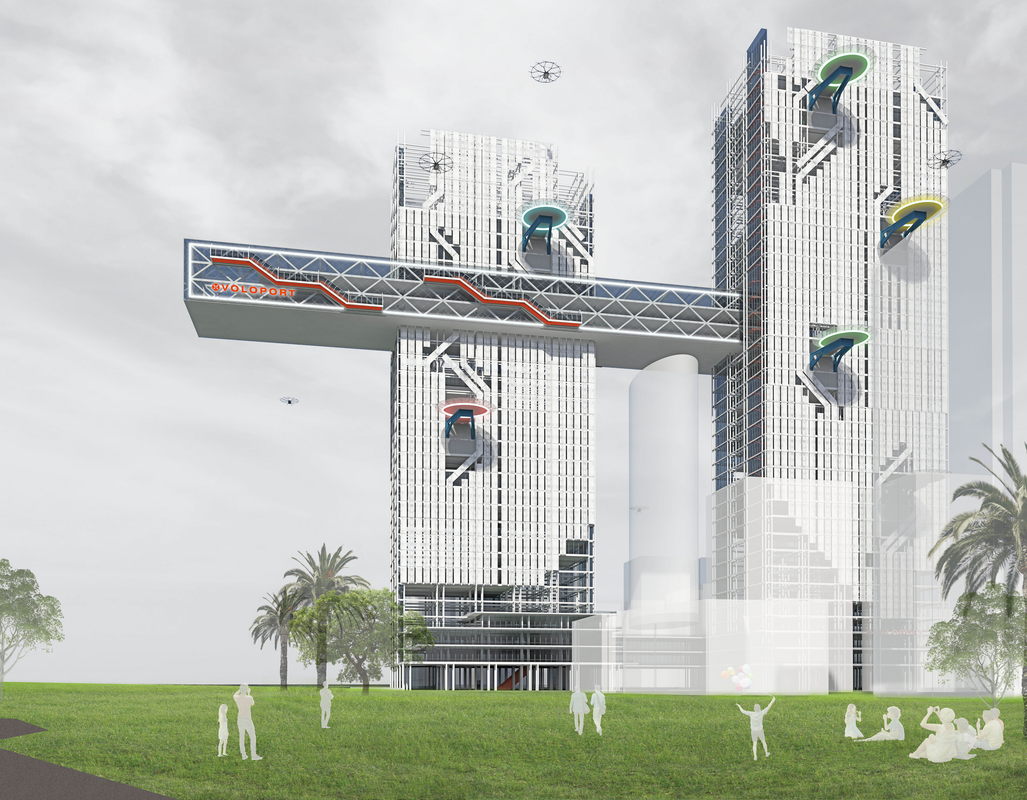


The Voloport is a conceptual transport hub designed to host flying taxi services, replacing parts of urban driving with a faster, cleaner, and more integrated form of mobility. Conceived by Hebah Abdulhameed in Abu Dhabi, United Arab Emirates, the project imagines a place where the community can engage, entertain, and connect to their Volocopter aircraft, forming the essential link between the urban mobility of today and the mobility of tomorrow.
The proposal sits at the meeting point of architecture and emerging air mobility. As cities grow denser, the ground plane carries more traffic than it was ever meant to hold, and concepts like the Voloport explore how the air above a city can absorb some of that movement. The Volocopter is an electric vertical take-off and landing craft, so the building that serves it must combine the calm of a transit lounge with the operational clarity of a small airfield.
Designing for a New Kind of Arrival
Buildings of this type face a particular set of design challenges. They must move people smoothly between street level and a take-off deck, manage clear sightlines and safe approach paths, and keep waiting passengers comfortable and oriented. Abdulhameed’s scheme treats the Voloport not only as a piece of infrastructure but as a social space, somewhere people gather rather than simply pass through. That ambition gives the project a civic character closer to a station or a public terminal than to a private heliport.
Abu Dhabi is a fitting setting for such a vision. The capital of the United Arab Emirates has built much of its recent identity around forward-looking architecture and ambitious transport planning, making it a natural testing ground for ideas about future cities. Placing a flying-taxi hub here connects the concept to a wider conversation about how the region is preparing for shifts in urban planning and daily movement.
By framing air mobility as a shared, welcoming experience rather than a purely technical service, the Voloport offers a hopeful picture of how everyday journeys might change. It is a reminder that the architecture around new technology can shape whether people accept it, and Abdulhameed’s design leans toward openness, connection, and a sense of arrival.



Residential Architecture Face-Off: Co-Living vs Traditional Apartment for Urban Housing
Co-living and traditional apartments represent two distinct approaches to residential architecture in...
 Furkan Sen8 Mins read
Designing a Liminal Space Where Urban Meets Coastal
The Liminal House by Mcleod Bovell Modern Houses in West Vancouver is...
 Elif Ayse Sen5 Mins read
House in Nakano: A 96 m² Tokyo Architecture Marvel by HOAA
House in Nakano, designed by HOAA, creatively addresses urban density challenges by...
 Bahattin Duran6 Mins read

Bridleway House by Guttfield Architecture
Bridleway House by Guttfield Architecture is a barn-inspired timber extension that reframes...
 Begum Gumusel3 Mins read


Leave a comment