

Museum of the Amazon by Guá Arquitetura & be.bo. arquitetos
The Museum of the Amazon in Belém transforms a former warehouse into an immersive cultural space that celebrates the region’s biocultural diversity through architecture, craft, and collective knowledge.
 Begum Gumusel17 January 20264 Mins read237
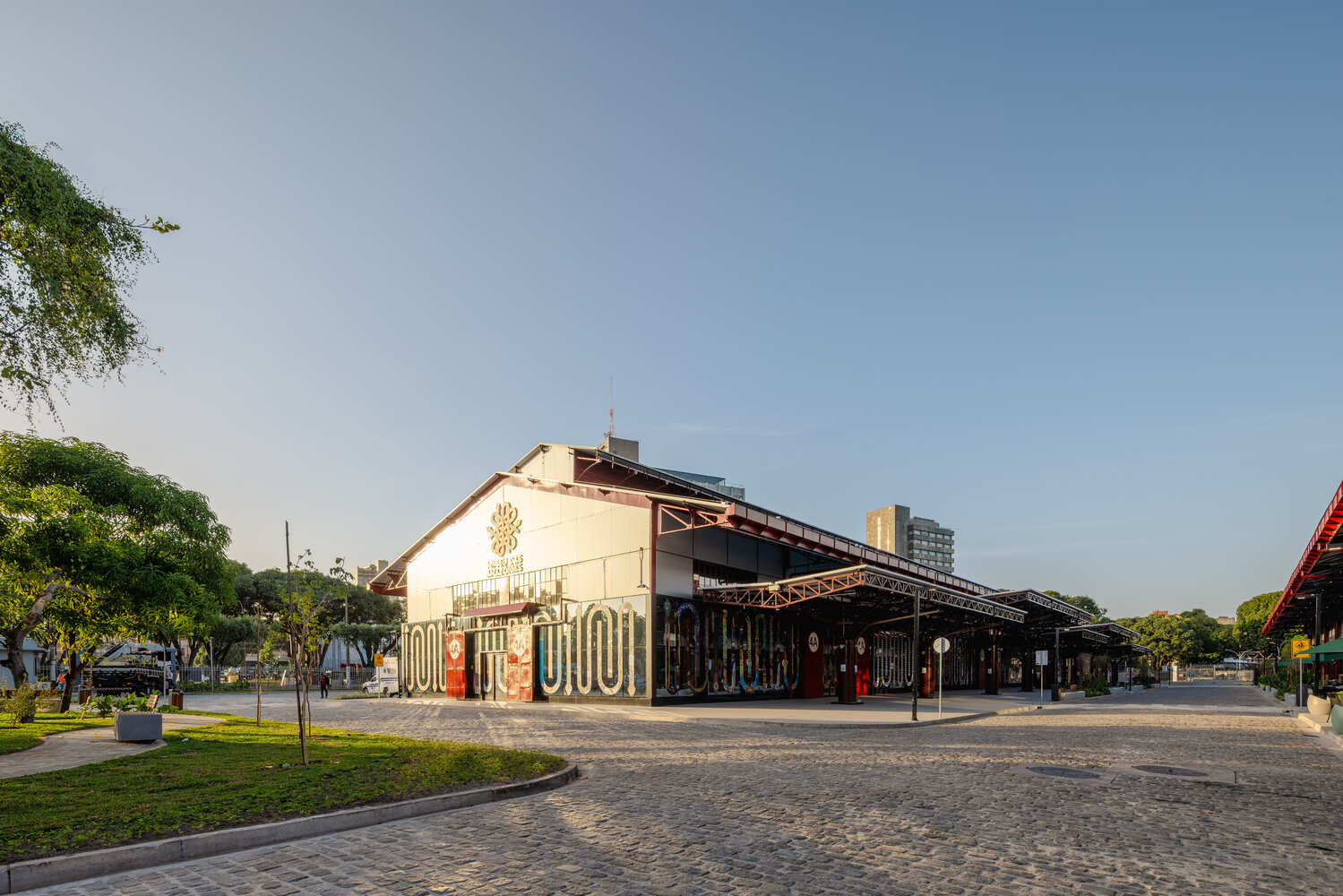
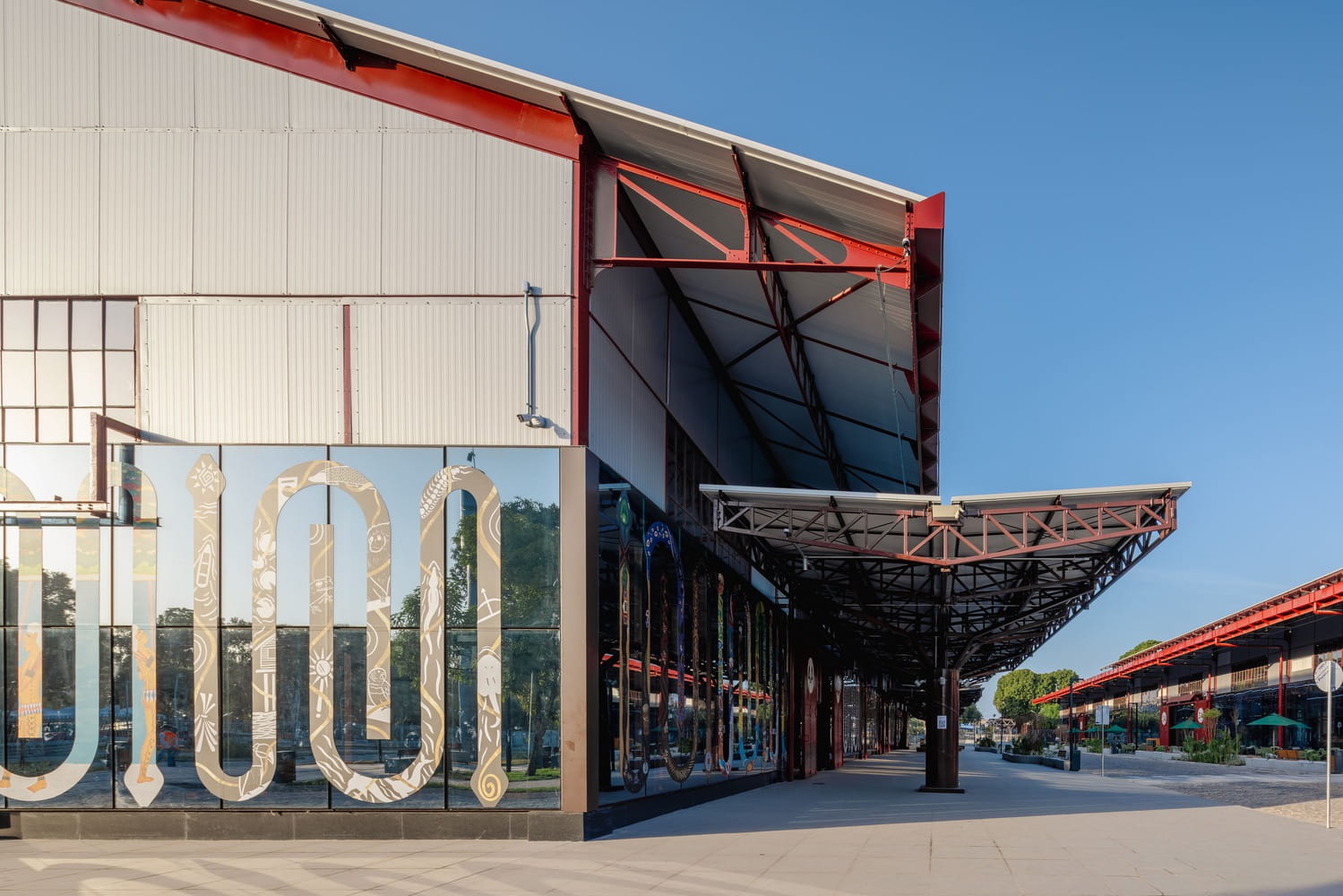
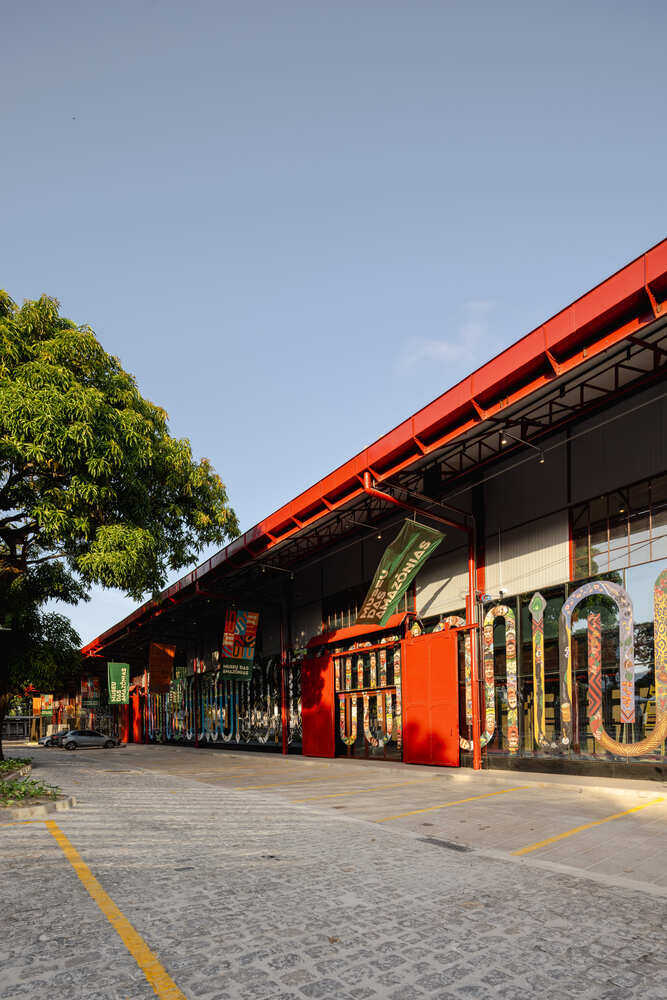
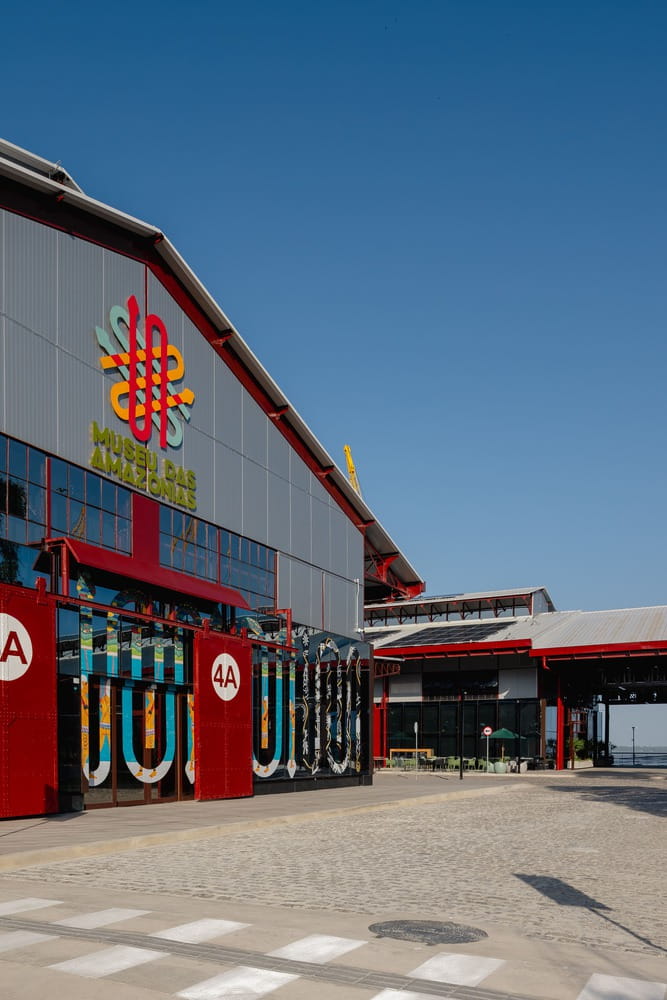
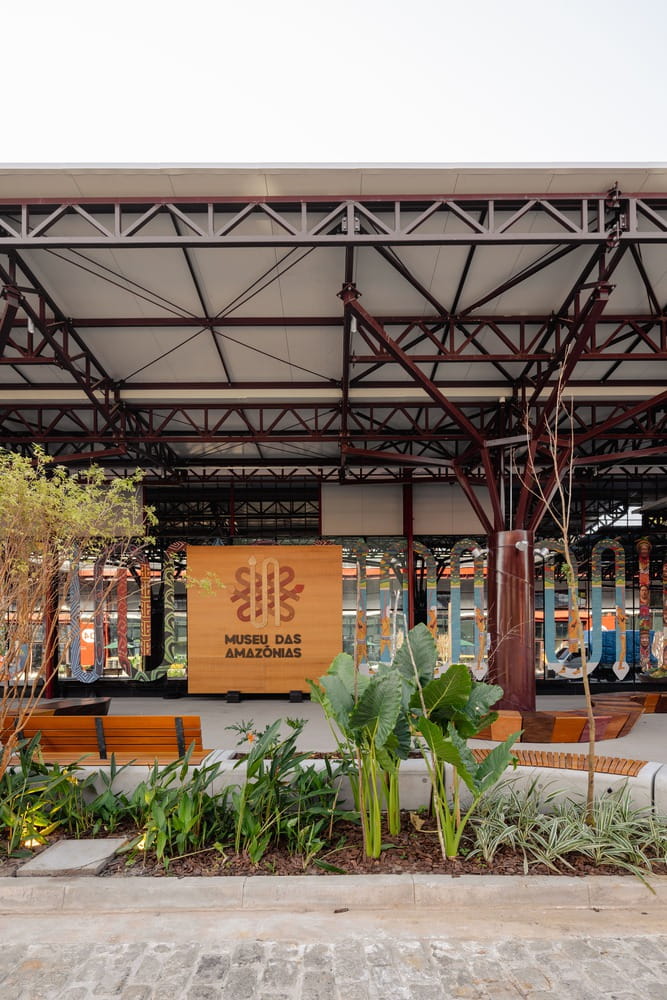
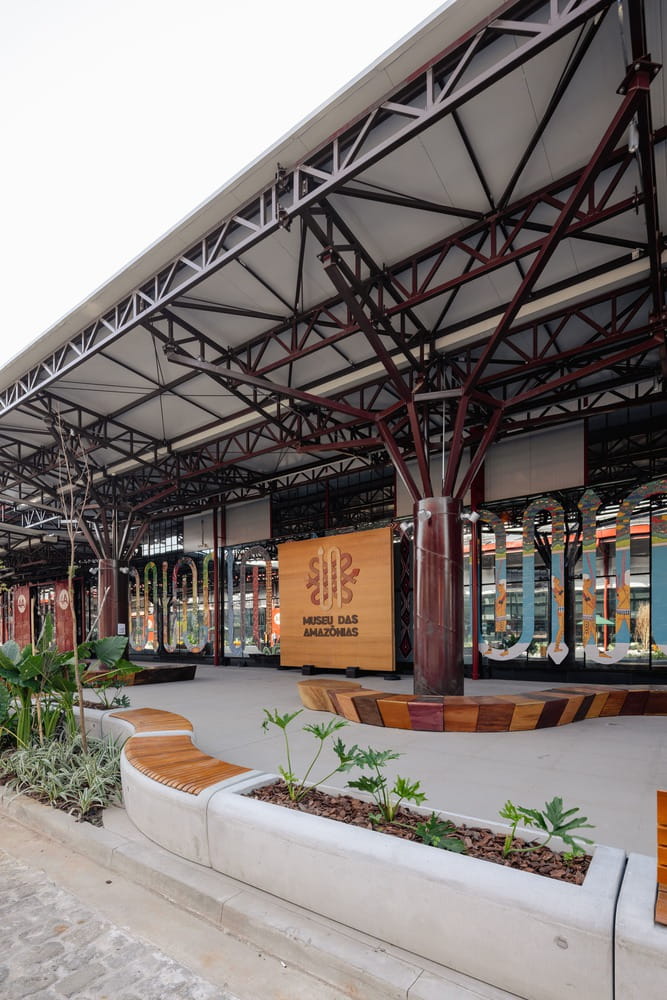
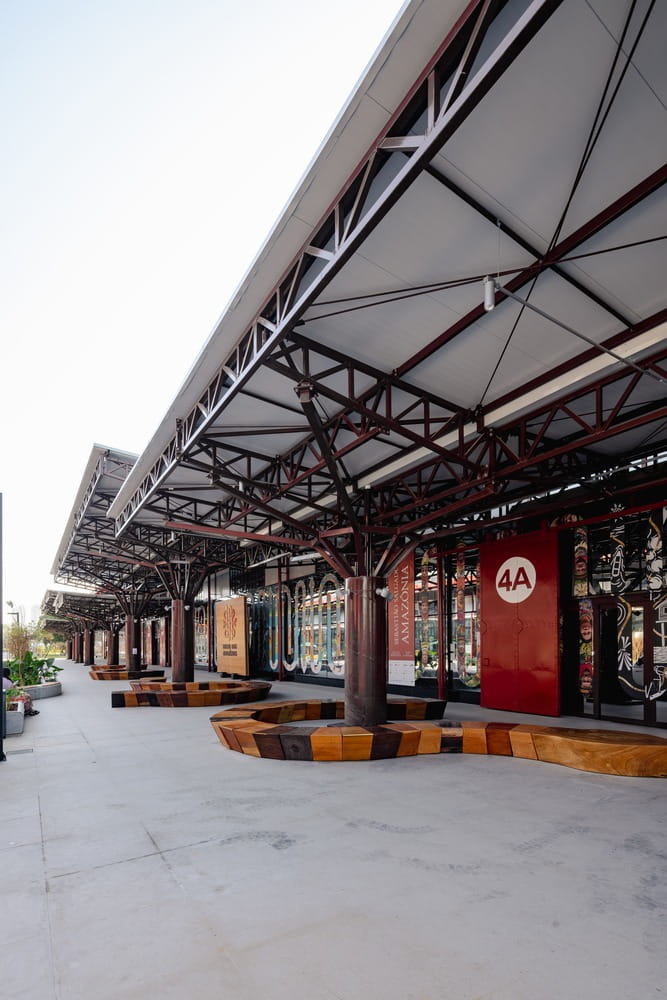
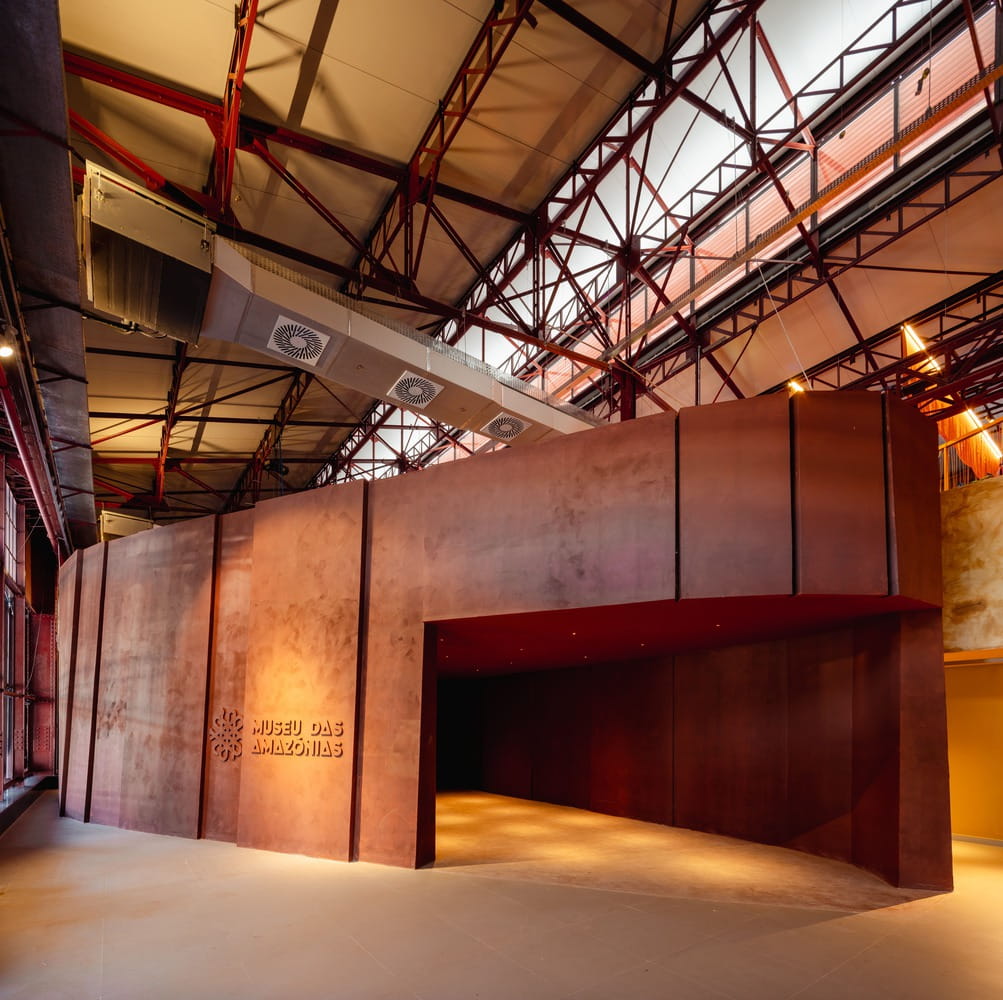
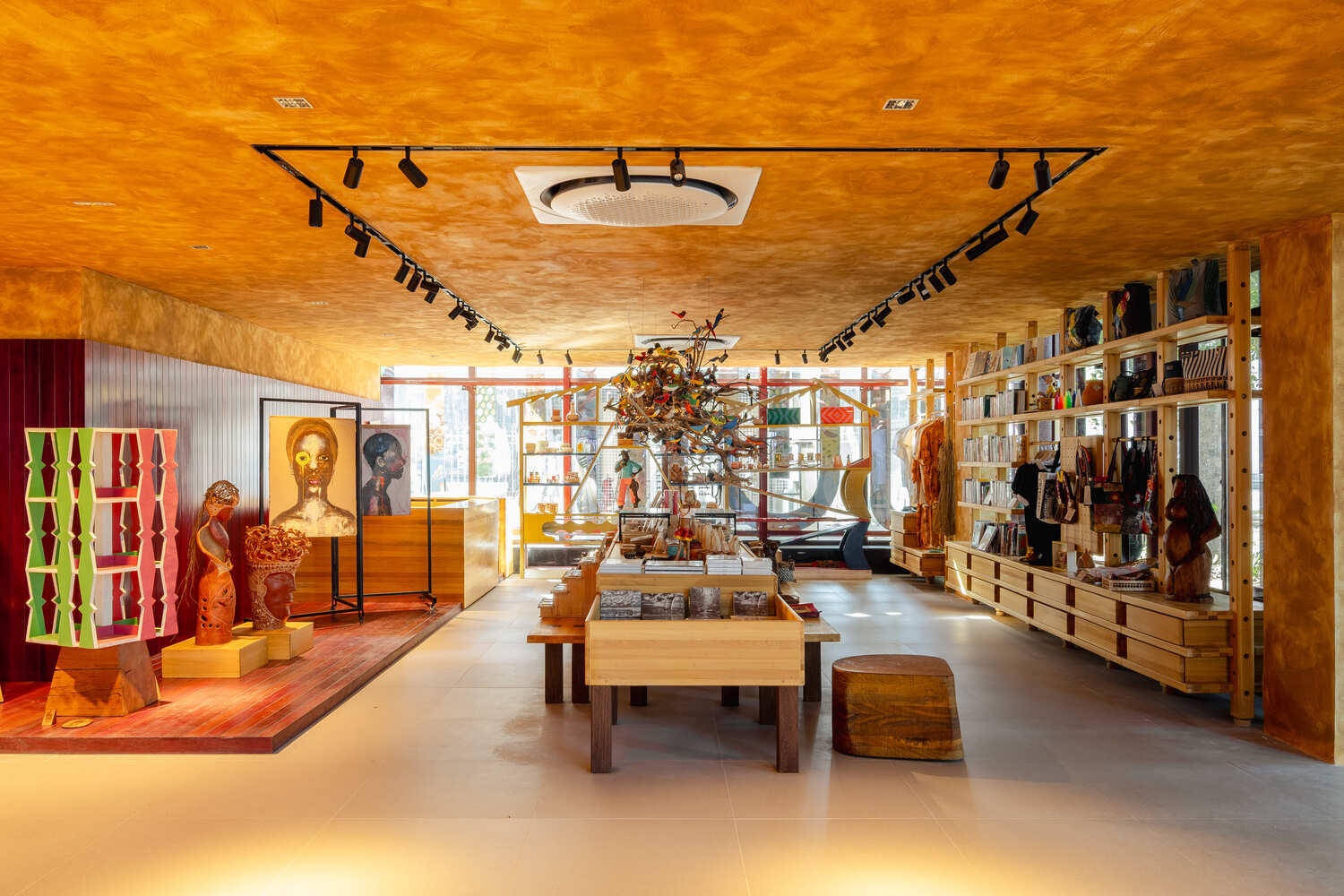
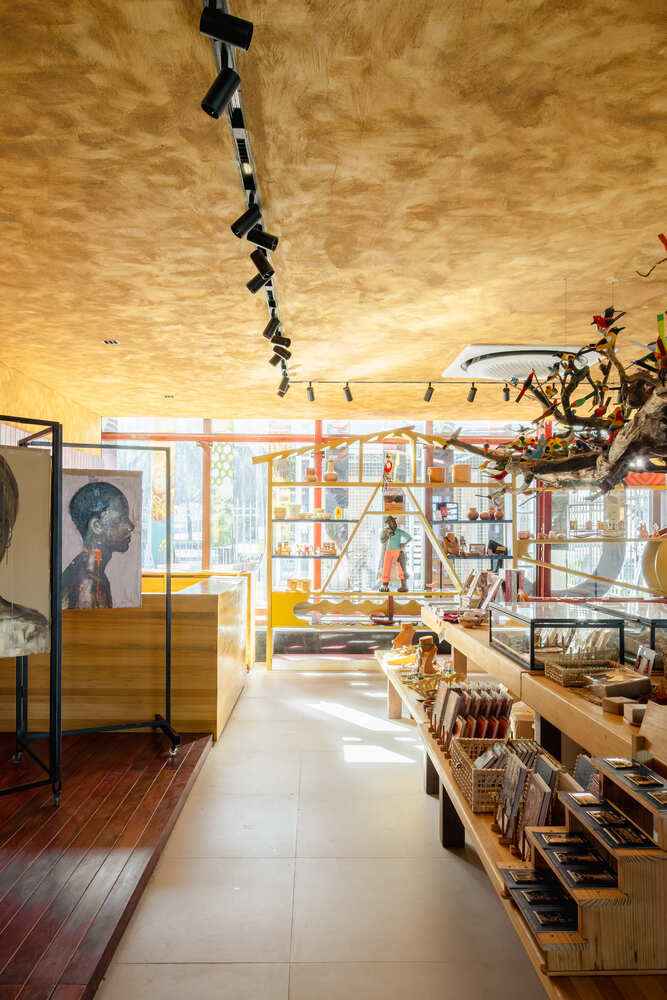
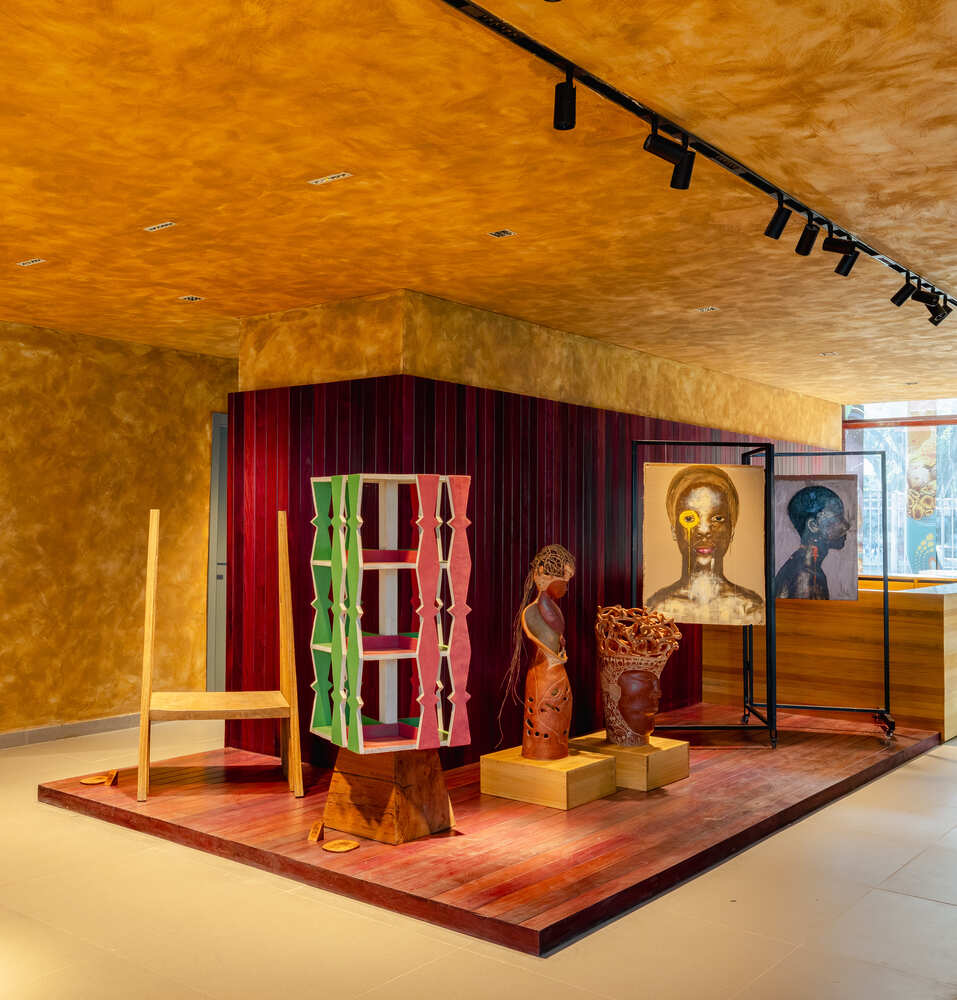
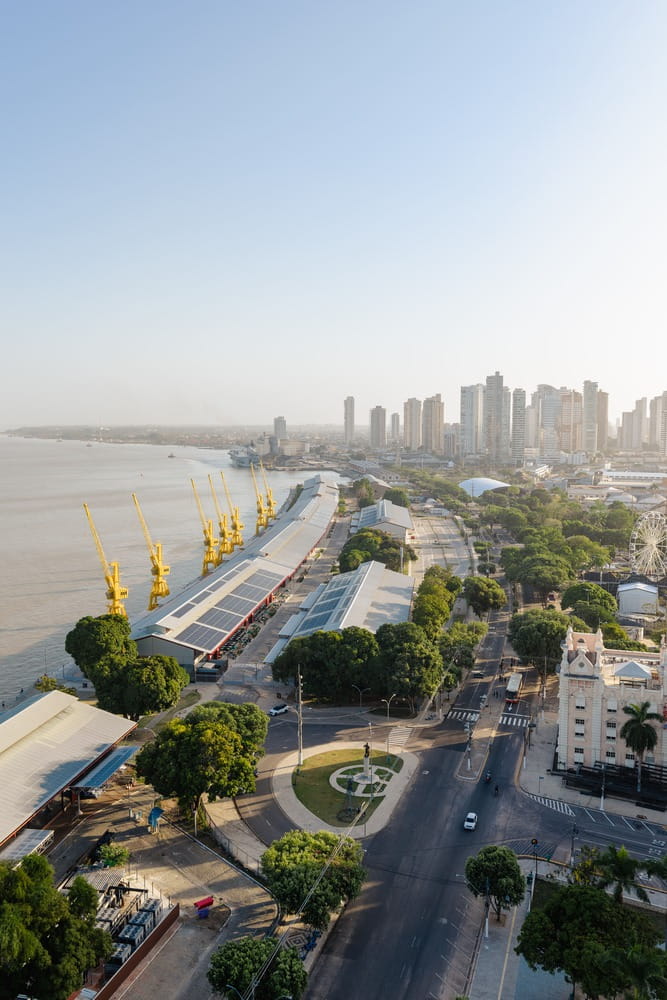
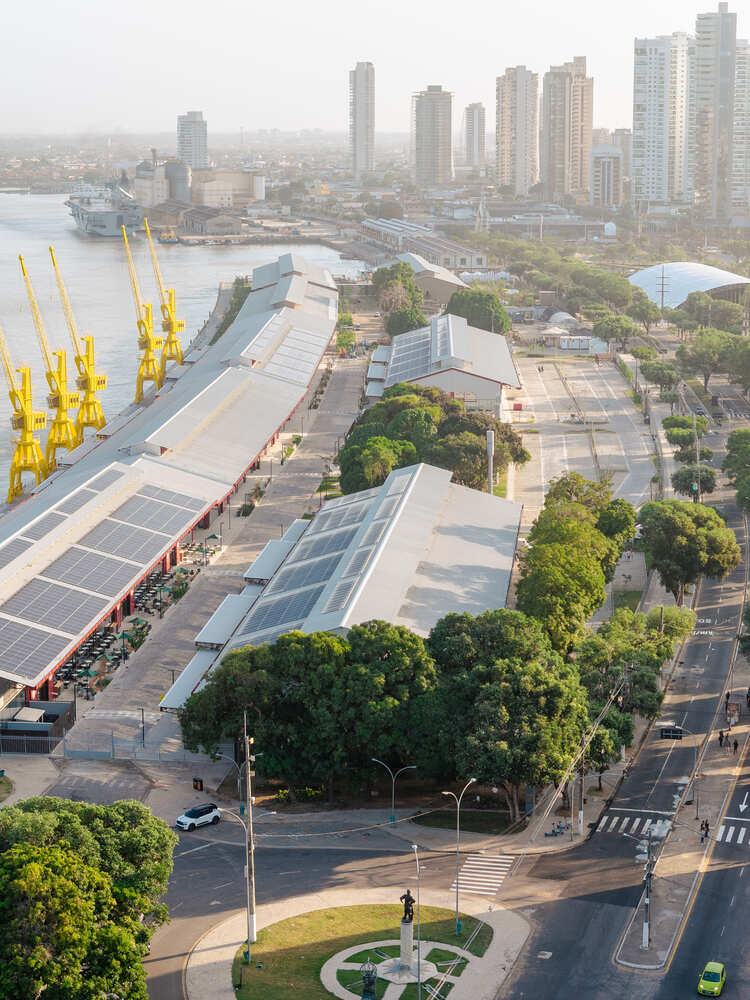
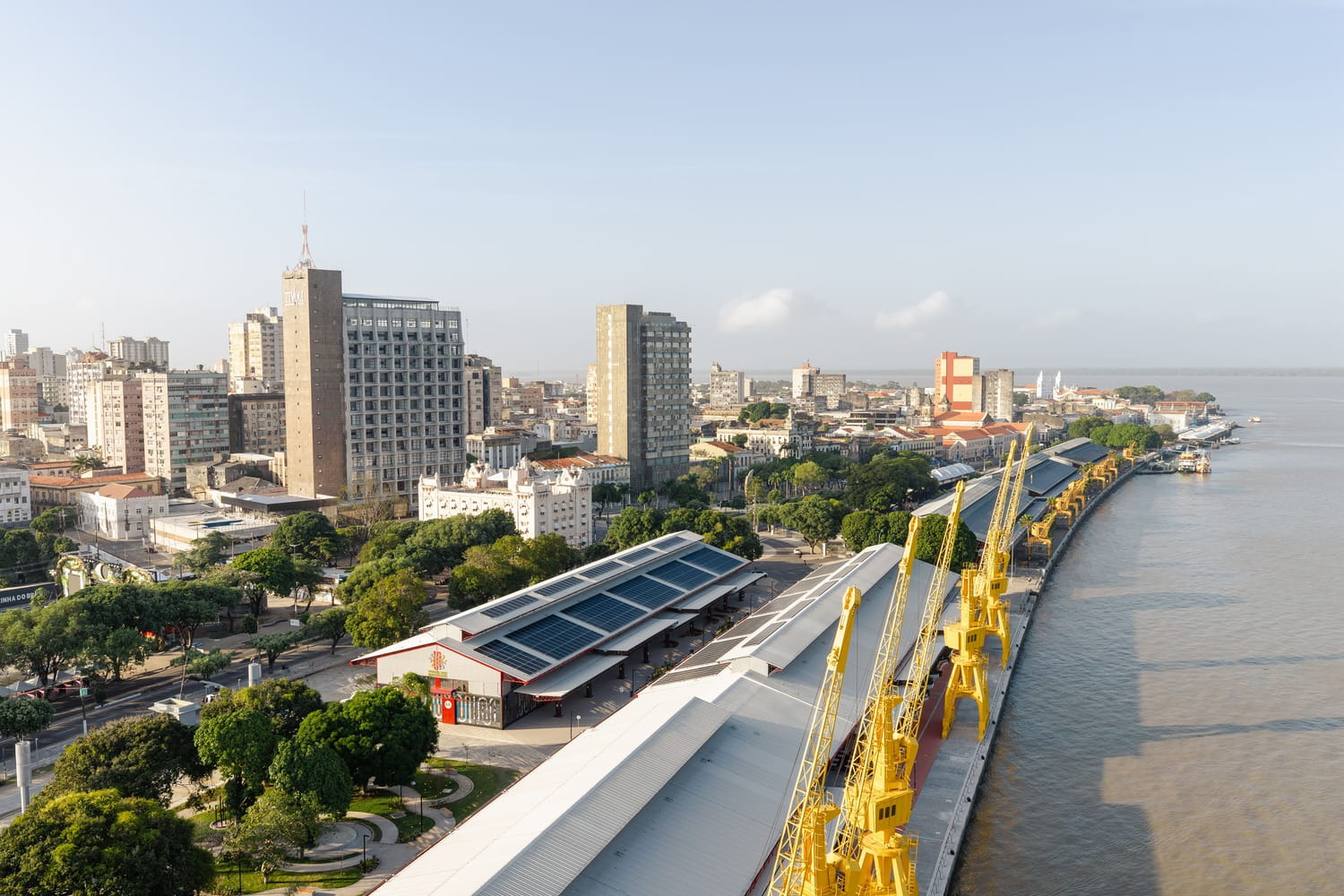
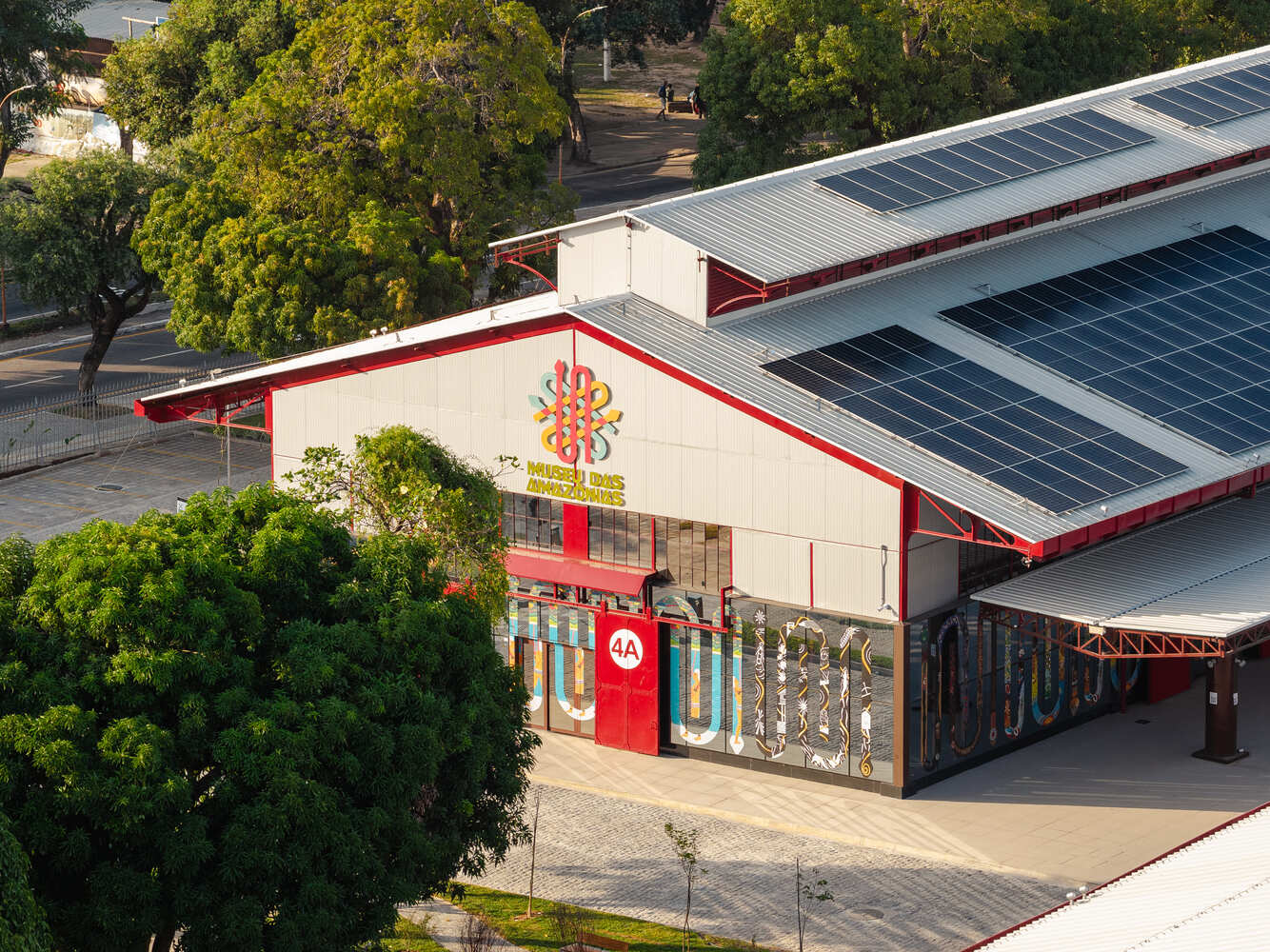
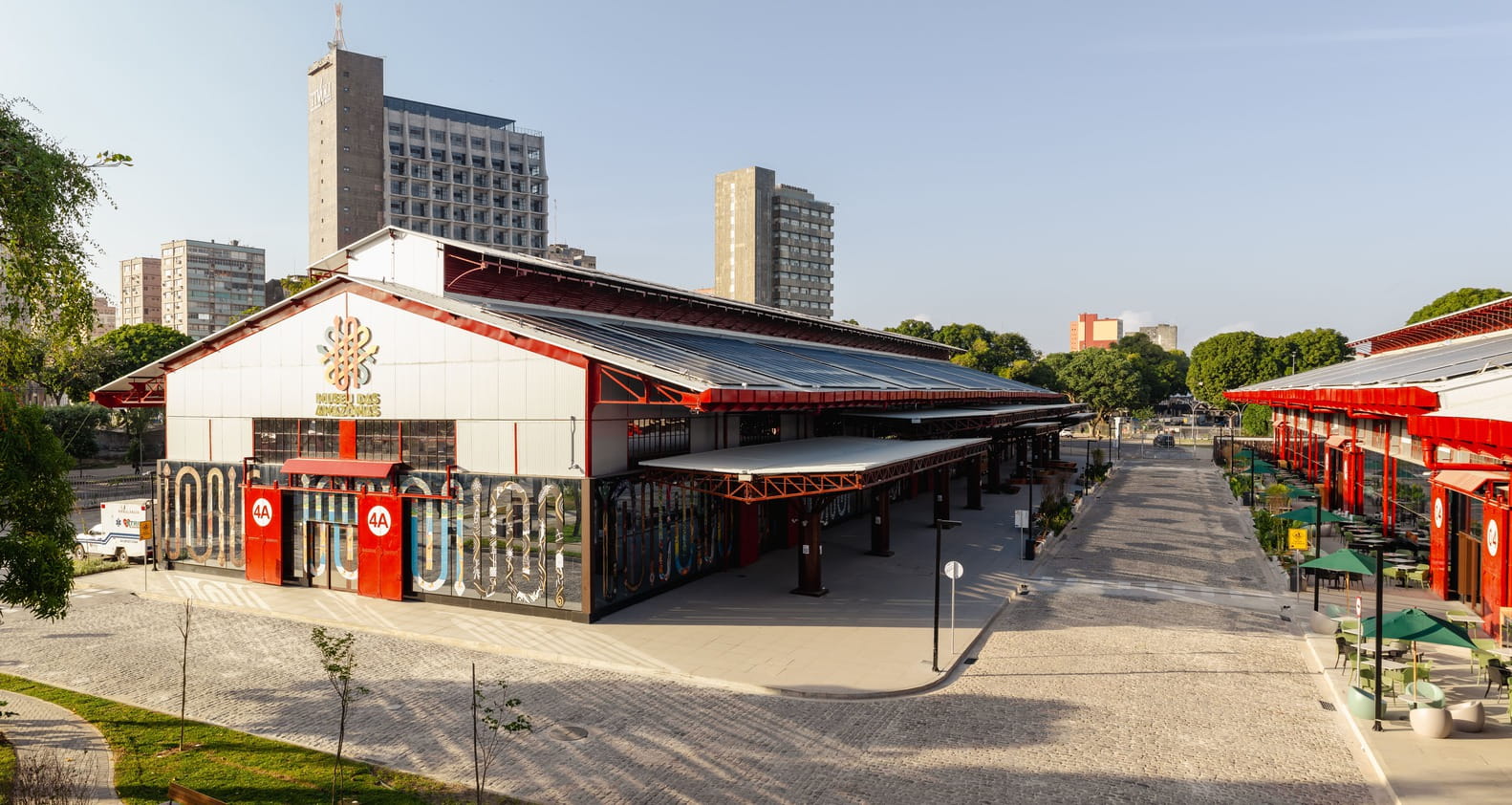
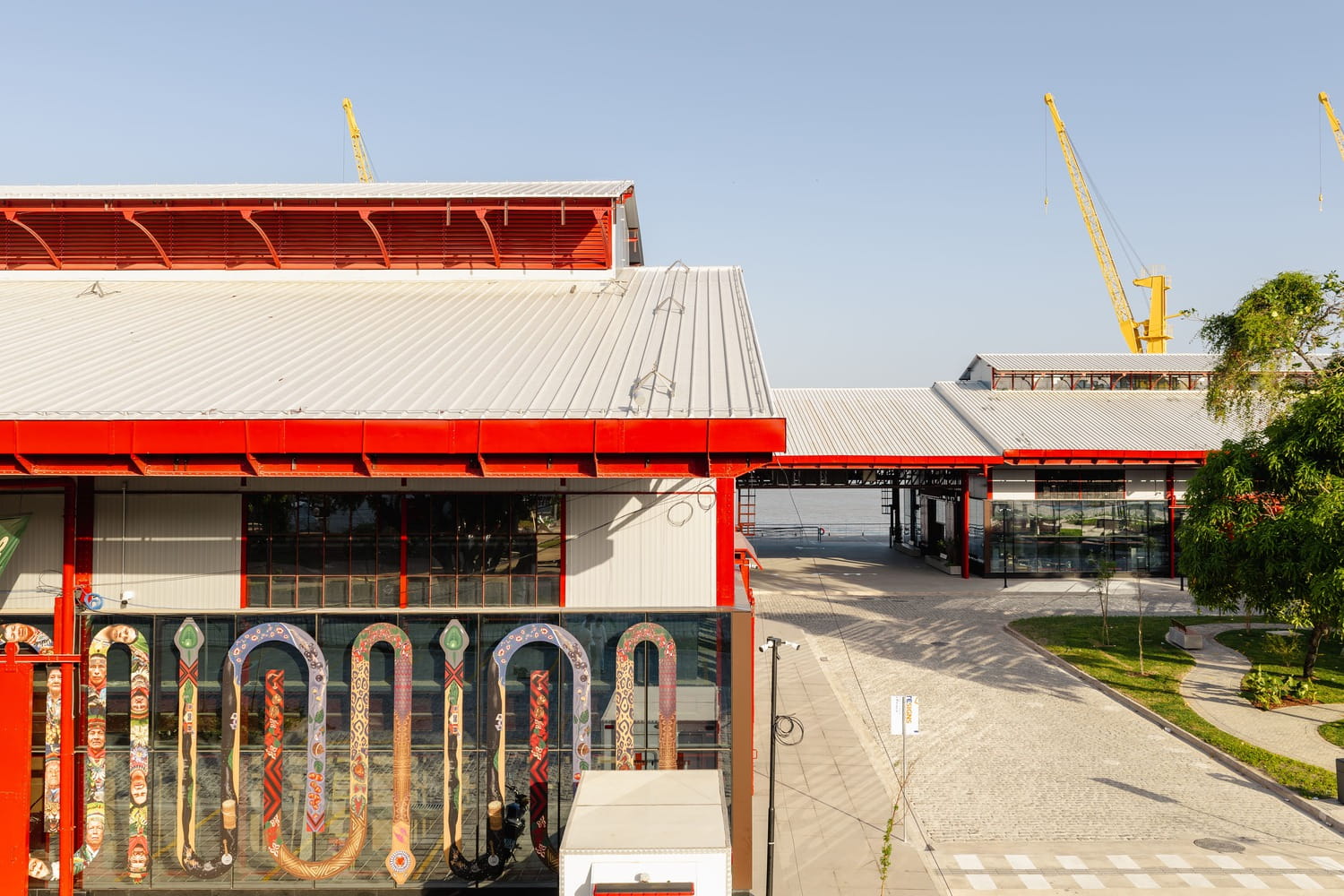
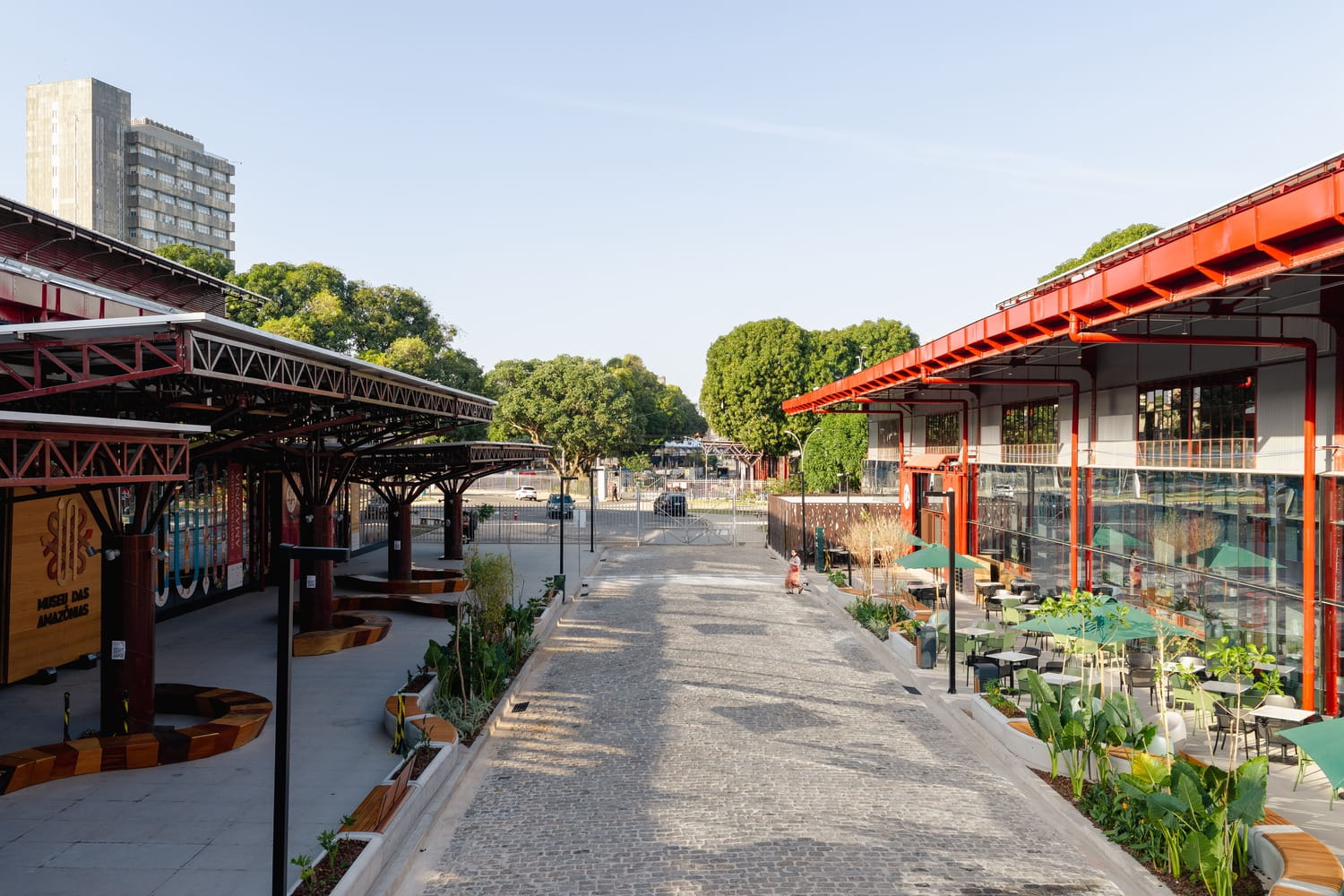
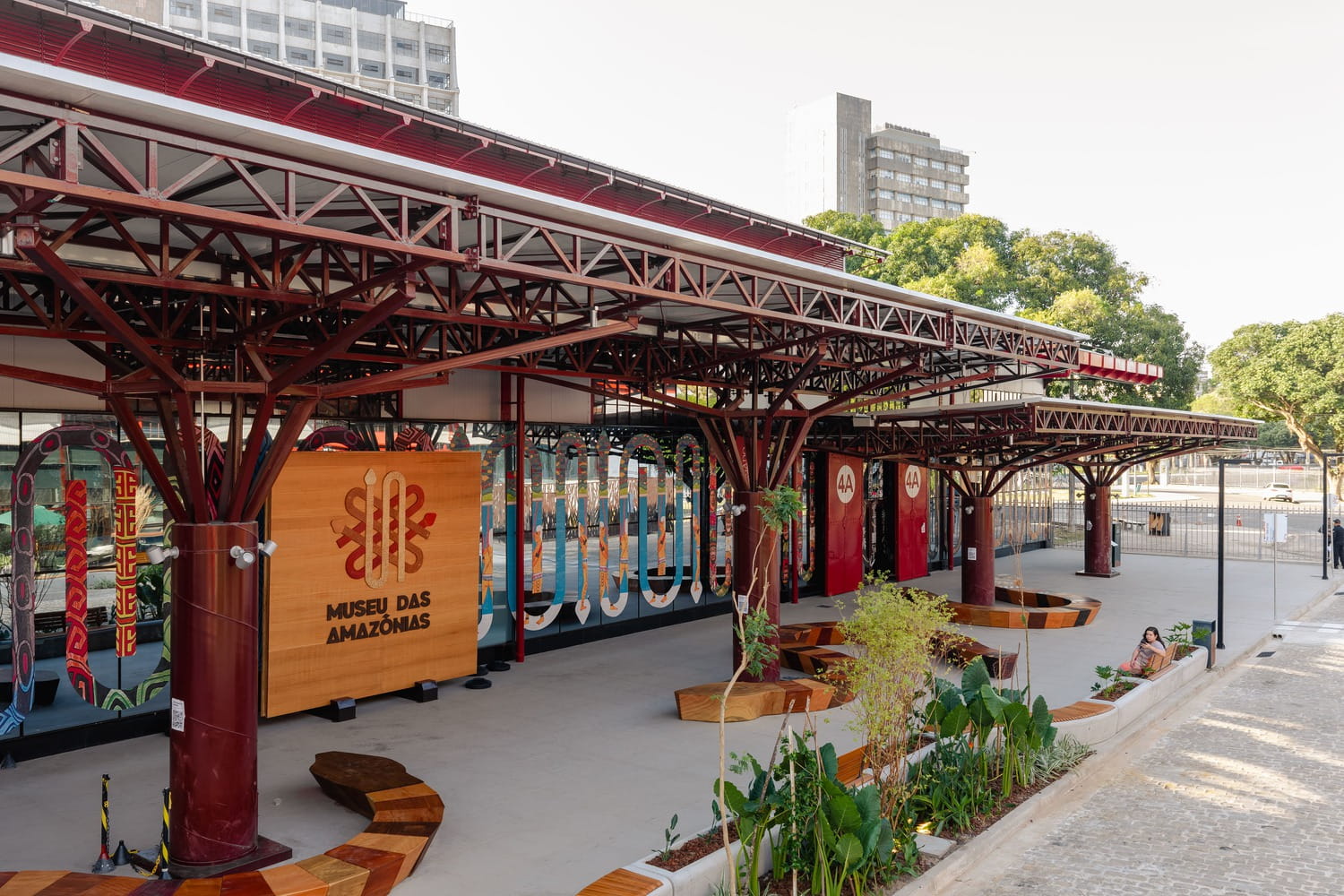
Table of Contents Show
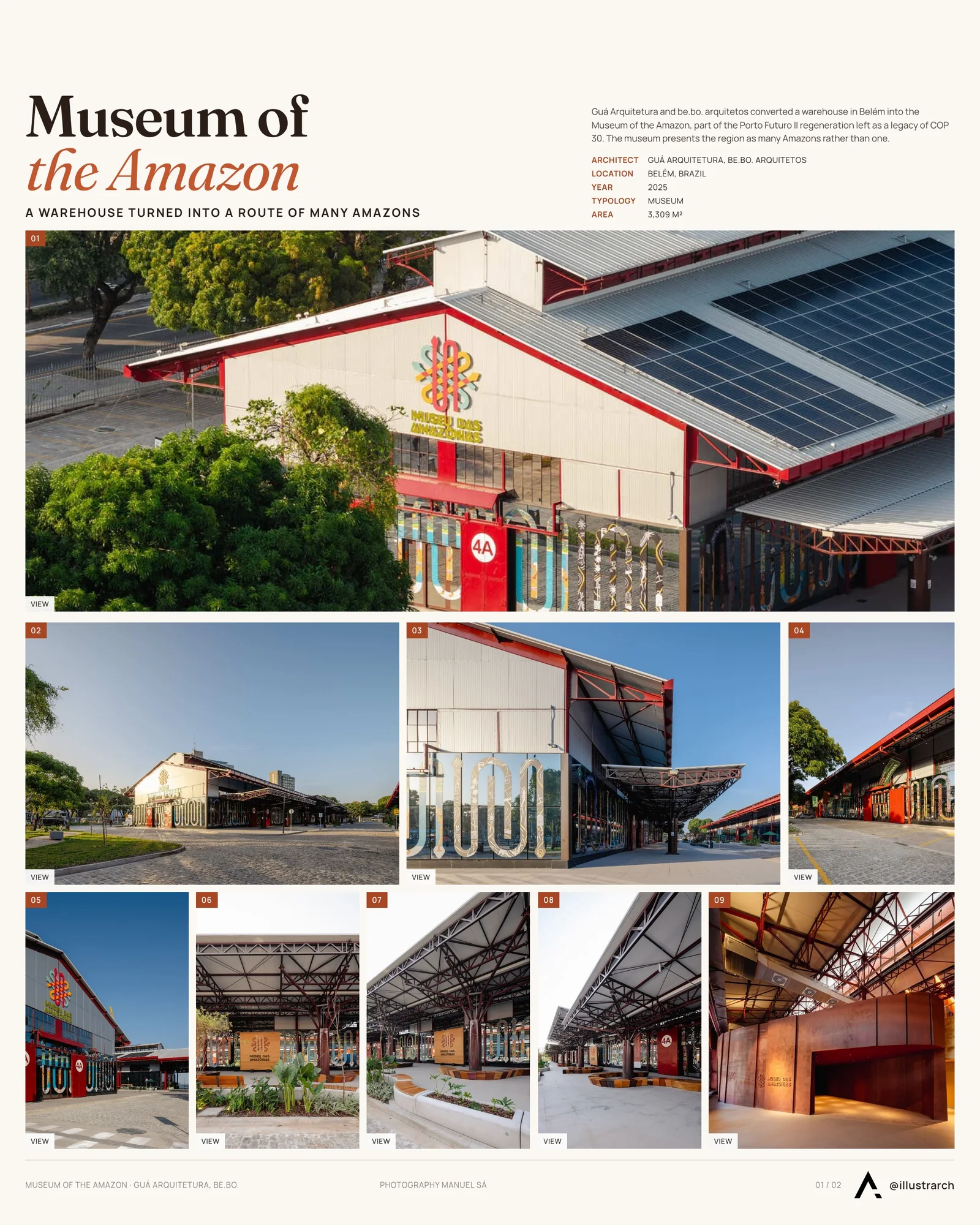
Opened to the public in Belém, the Museum of the Amazon (MAZ) stands as a powerful cultural institution dedicated to recognizing the scientific, technological, and human diversity of the Amazon region. Conceived as part of Porto Futuro II, a major urban regeneration initiative left as a legacy of COP 30 by the Government of Pará, the museum occupies a renovated warehouse of approximately 3,100 m². Designed collaboratively by Guá Arquitetura and be.bo. arquitetos, the project merges architecture, exhibition design, craftsmanship, and ancestral knowledge into a single immersive experience that redefines what a contemporary museum in the Amazon can be.
A Museum for Many Amazons
Rather than presenting a singular narrative, the Museum of the Amazon is rooted in the understanding that there are many Amazons, geographical, cultural, social, and ecological. Developed by the State Secretariat of Culture of Pará and implemented by IDG in partnership with the Museu Paraense Emílio Goeldi, the institution seeks to reflect the lives and knowledge systems of urban, indigenous, riverside, extractive, and quilombola communities across nine Brazilian states and eight neighboring countries.
Curated by Francy Baniwa, Joice Ferreira, and Helena Lima, the museum proposes a multisensory journey that invites visitors to engage emotionally and intellectually with the region. Sound, texture, light, materiality, and movement are treated as curatorial tools, allowing the museum to operate not just as a place of observation, but as a space of embodied learning and reflection.
Transforming the Warehouse into a Narrative Route
Architecturally, the project transforms an existing industrial warehouse into a two-level spatial route that unfolds gradually. The ground floor, spanning approximately 2,000 m², accommodates the main exhibition area, foyer, and museum shop. Above it, a 1,100 m² mezzanine houses spaces for temporary exhibitions, a multipurpose room, and a creative laboratory designed to host workshops, debates, and cultural programming.
The circulation between levels is intentionally fluid and visual, allowing constant cross-views and reinforcing the idea of continuity between stories, peoples, and temporalities. From the outset, the architects envisioned the museum as a continuous path, rather than a sequence of isolated rooms, an approach inspired by Amazonian cosmologies where knowledge is cyclical and interconnected.
The Serpent as Spatial and Symbolic Structure
A central conceptual thread of the museum is the serpent, a powerful figure across many Amazonian worldviews. Mythical beings such as Boiúna, the Canoe Snake, and the Great Snake informed both the architectural identity and exhibition elements. This symbolism materializes in multiple scales, from spatial organization to furniture and graphic design.
At the entrance, sinuous wooden benches evoke the coiled body of a snake, forming spaces of gathering and rest. Crafted using more than 15 species of sustainably managed Amazonian wood, these elements function as a xylotheque, a living library of regional timber diversity. The gesture highlights both ecological richness and the importance of sustainable forest management, making material choice itself an educational act.
On the exterior, the warehouse façade becomes a monumental canvas for a collective artwork titled “The Serpent is a Body that Unites Worlds.” Created by 16 Pan-Amazonian artists, the mural stretches across the building like a giant snake, transforming the museum into a visible urban landmark that speaks directly to the street and the city.
Materiality, Craft, and Ancestral Knowledge
Inside, the museum’s atmosphere is shaped by a deep commitment to material meaning. The foyer acts as a threshold space, preparing visitors for the journey ahead through low lighting and walls painted in a reddish geotint derived from clay. This pigment echoes the traditional colors used by Marajoara indigenous cultures in ceramics and body painting.
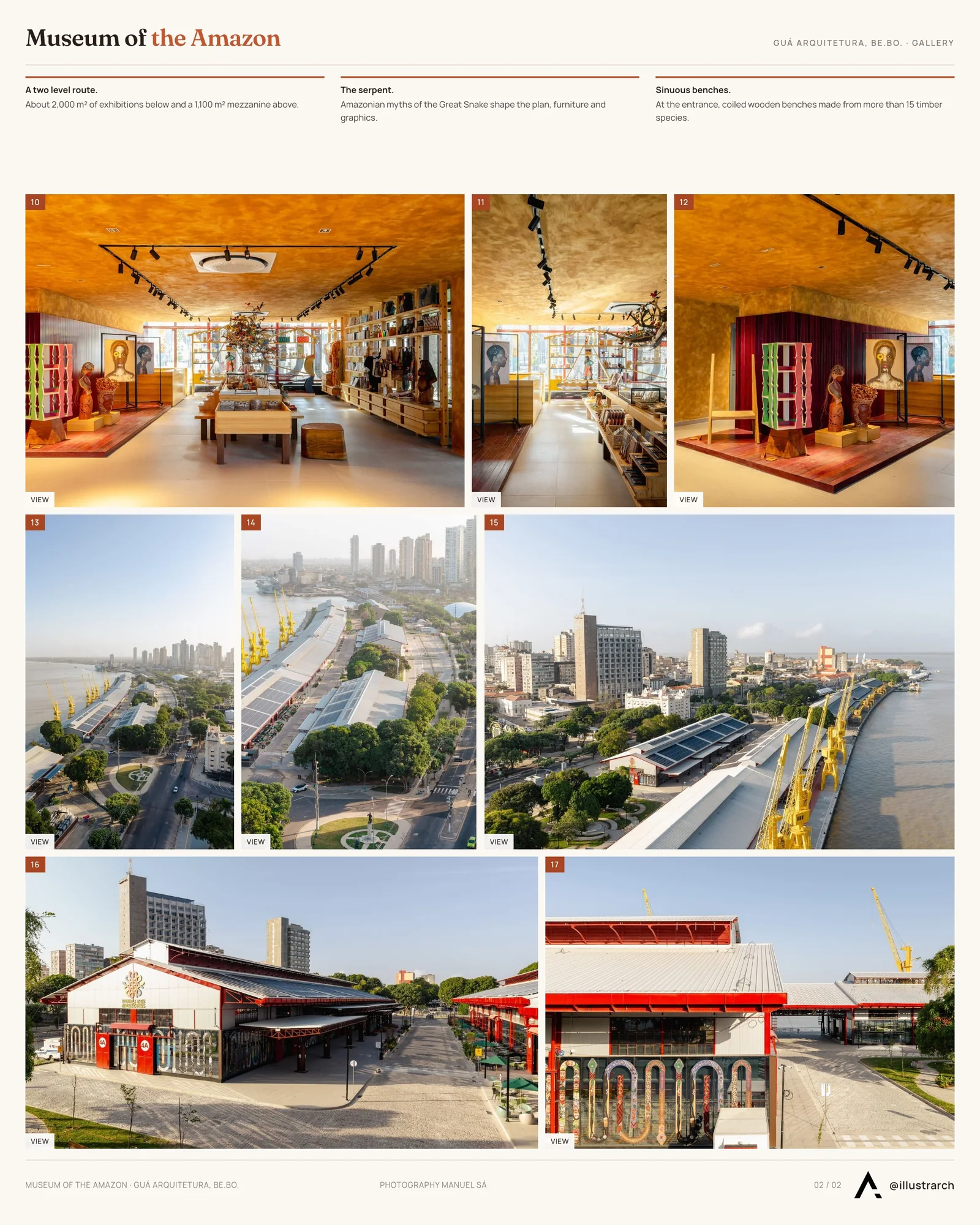
Developed in collaboration with the Mãos Caruanas studio from Marajó Island, this clay-based paint coats all interior walls, reinforcing the museum’s connection to land, soil, and ancestral technologies. Flooring, textures, and finishes are treated as narrative devices, each surface carrying cultural, ecological, and symbolic weight rather than functioning as neutral background.
Suspended between the two levels, a large LED globe hosts the artwork “Simbiosfera” by artist Roberta Carvalho, emphasizing the Amazon’s central role in the global ecological imagination. Floating visually within the void, the globe becomes a spatial and conceptual pivot, visible from multiple vantage points and reinforcing the museum’s vertical continuity.
Spaces for Creation, Exchange, and Future Visions
Beyond the permanent exhibition spaces, the museum includes a carefully crafted shop, featuring custom furniture by master carpenter Edson Rodrigues and a sculptural lamp by artisan Ivan Leal, composed of roots and miriti-fiber birds. These elements extend the museum’s ethos into everyday objects, reinforcing the value of local craftsmanship.
The mezzanine hosts 500 m² of temporary exhibition space, a modular multipurpose room adaptable for talks, performances, or workshops, and a creative space envisioned as an open platform for experimentation. Together, these spaces ensure the museum remains dynamic and evolving, capable of responding to contemporary debates and cultural production.
Scheduled to open in 2026, the permanent exhibition will guide visitors through a chronological journey from the geological formation of the Amazon to future scenarios. Immersive environments, including a spiral installation with thousands of miriti animals and the Espaço Aturá, inspired by indigenous Baniwa baskets, will explore themes of biocultural diversity, ancestral technologies, ecological crisis, and collective futures.
Architecture as Collective Practice
The Museum of the Amazon is fundamentally shaped by the principle of “ajurí” a collective effort grounded in cooperation, care, and shared responsibility. Designed and built through collaboration among architects, artists, curators, scientists, and local communities, the museum embodies a form of architecture that listens, gathers, and connects.
Rather than offering definitive answers, MAZ invites visitors to feel, question, and imagine. It stands as an architectural and cultural statement that knowledge is plural, the future is collective, and care for the Amazon begins with understanding its many voices.
Photography: Manuel Sá



Zumthor’s Three New Buildings Open at Fondation Beyeler in Riehen
Peter Zumthor's Wyss Museum, Ammann Pavilion and Erlen Torhaus open at Fondation...
 illustrarch Editoral Team4 Mins read
Frida Escobedo Studio to Design MALBA Underground Wing in Buenos Aires
MALBA has tapped Frida Escobedo Studio to build a subterranean expansion beneath...
illustrarch Editoral Team2 Mins read
George Lucas’s Narrative Art Museum Set to Open in LA in 2026
George Lucas's museum of narrative art, designed by Ma Yansong, opens in...
illustrarch Editoral Team3 Mins read
Hangzhou Empathy Museum by TAOA
Hangzhou Empathy Museum: a museum peeling back its skin to reveal a...
illustrarch Editoral Team3 Mins read


Leave a comment