

Osage Park Pavilion by Modus Studio – Bentonville, Arkansas
The Osage Park Pavilion by modus studio is an award-winning architectural landmark in Bentonville, Arkansas, where aviation-inspired design meets wetland preservation. Anchoring a 55-acre prairie park, the Osage Pavilion features a cypress facade, polycarbonate fifth-facade roof, and an occupiable green roof overlooking the municipal airport.
 Elif Ayse Sen19 January 20264 Mins read554
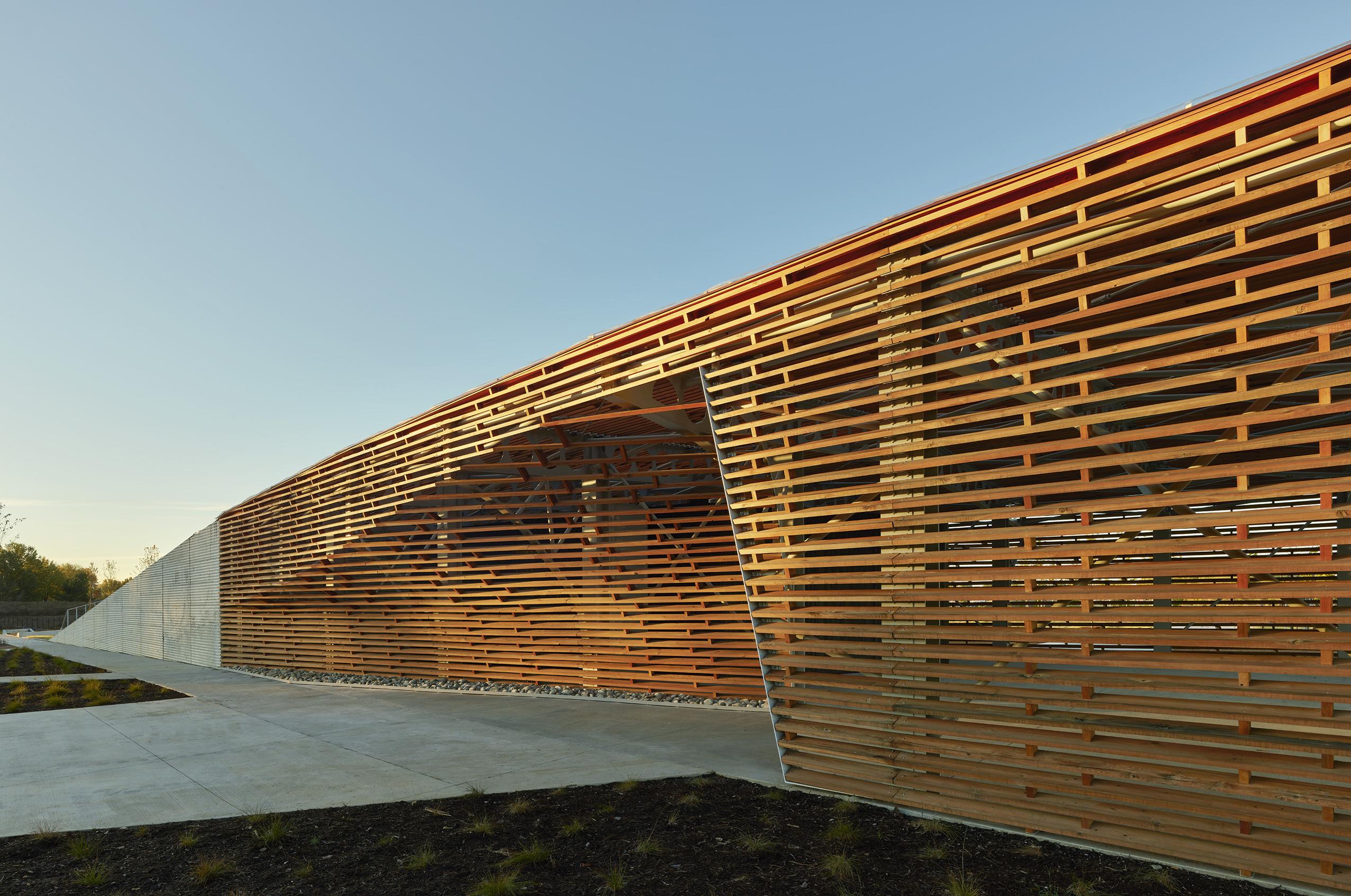


Table of Contents Show
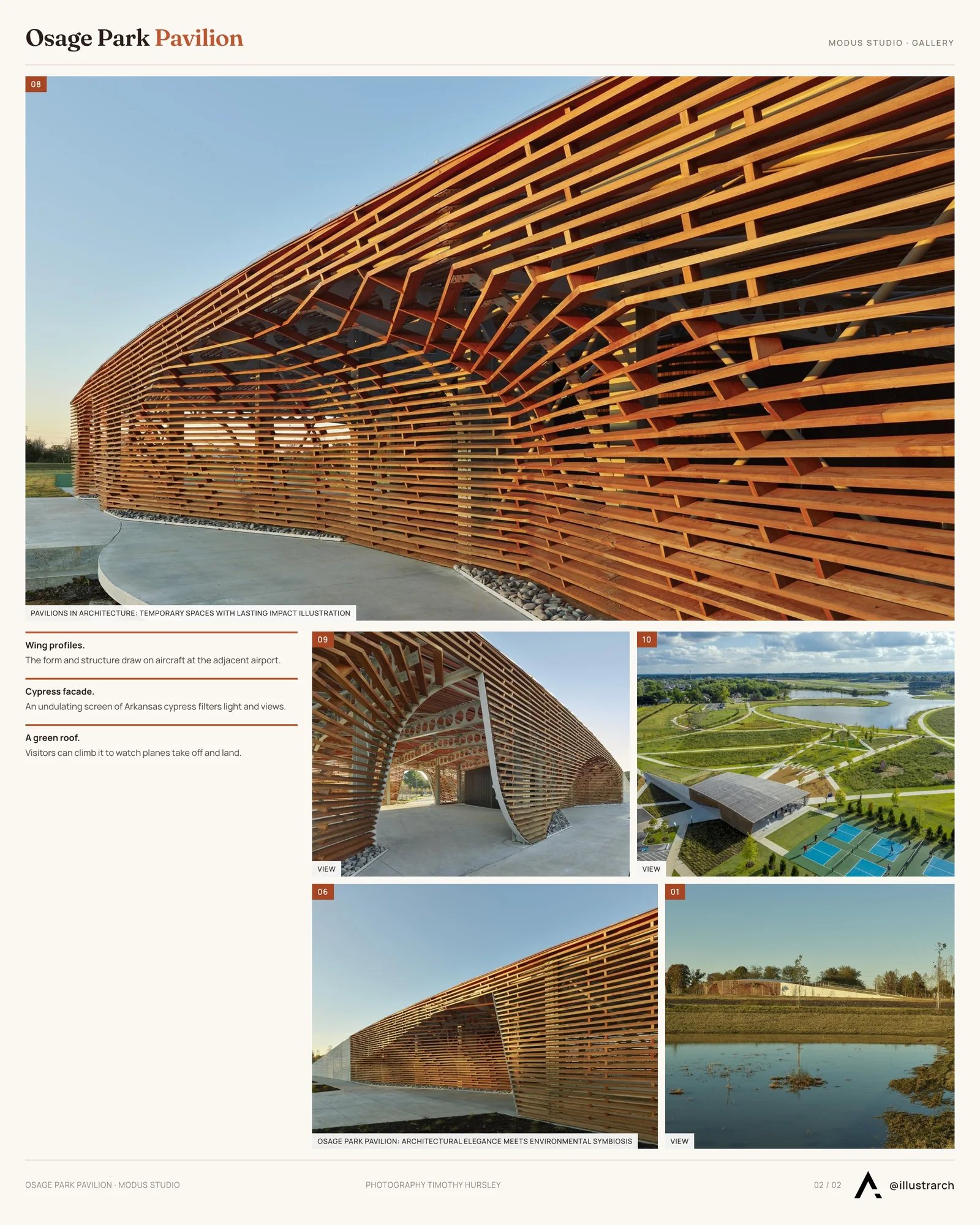
The Osage Park Pavilion by modus studio, nestled in Bentonville, Arkansas, stands not merely as an architectural entity but as a pivotal gateway and a luminous centerpiece for Osage Park. Positioned strategically at the northern extremity of a quaint municipal airport, this locale becomes a nexus where nature, recreation, and aviation intersect in a harmonious blend. Completed in 2020, the Osage Pavilion anchors the eastern edge of a 55-acre prairie wetland and riparian preserve, offering a covered gathering space, restrooms, a green room, and an outdoor stage and amphitheater.
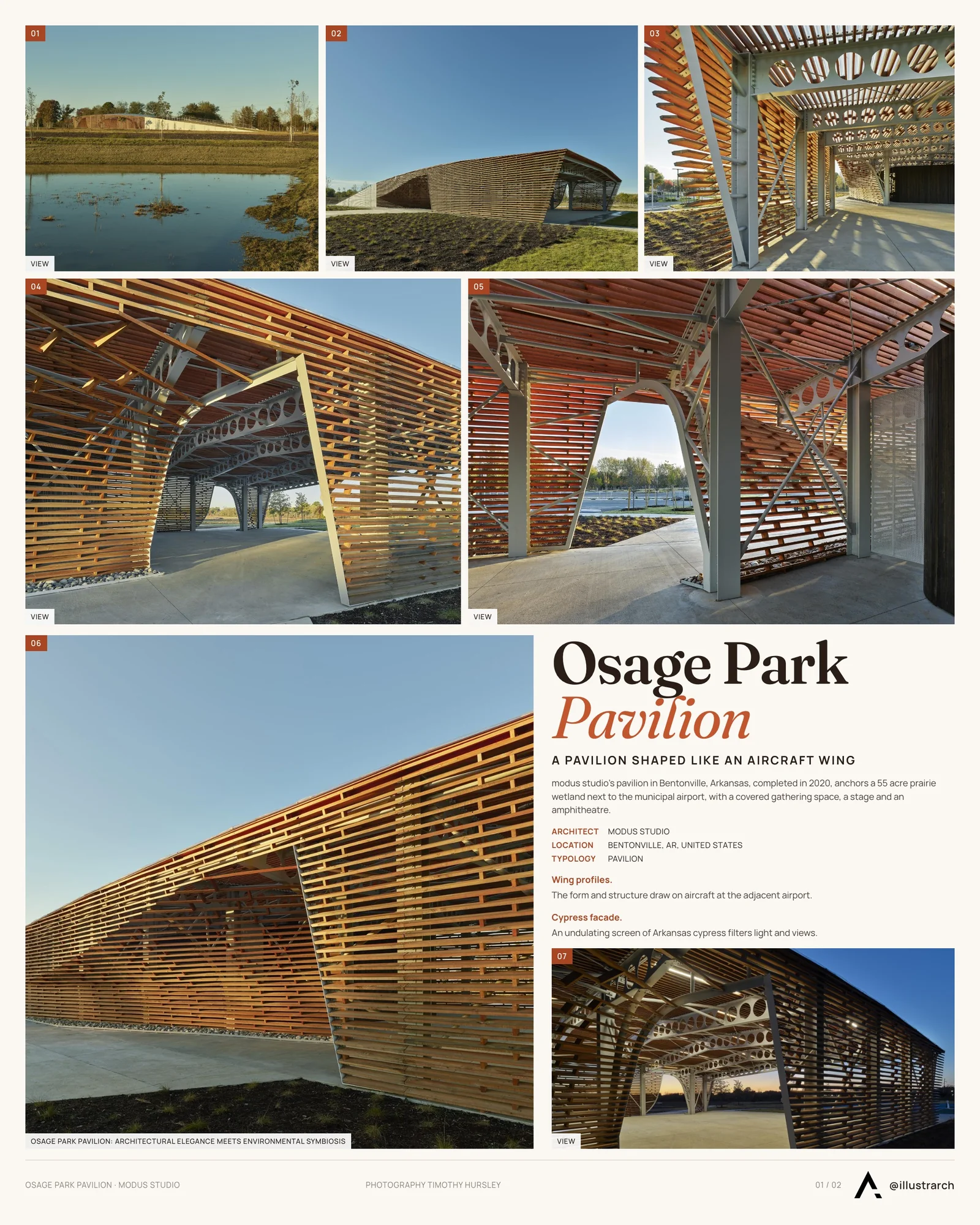
With the airport serving as a delightful playground for assorted unique small aircraft, the pavilion ingeniously integrates elements from aviation into its design ethos, deriving its spirited, playful form and structural articulation notably from the nuanced design of aircraft wings. Envision a structure where a simple, yet fluid form emerges organically from the ground, metamorphosing into a light, diaphanous structure that exuberantly celebrates the cascade of natural light through its repetitive structural components and a vibrant, oscillating facade crafted from cypress sourced within the lush realms of Arkansas.
Aviation-Inspired Design and Structural Innovation
The design philosophy behind the Osage Park Pavilion draws directly from the aircraft wing profiles visible at the adjacent Bentonville Municipal Airport. The pavilion’s structural skin functions as both a reflective surface and a permeable screen through which visitors can observe their surroundings. As the structure rises out of the parkland, an occupiable green roof transforms into a viewing platform where visitors can watch planes take off and land, a feature that bridges the worlds of aviation and landscape architecture.
The undulating Arkansas-sourced cypress facade creates a dynamic visual rhythm that shifts with changing light conditions throughout the day. The polycarbonate roof, which effectively becomes the fifth facade when viewed from above, allows filtered daylight to permeate the interior while maintaining weather protection for the gathering spaces below. This interplay between transparency and enclosure exemplifies how sustainable architecture can simultaneously serve functional and aesthetic purposes.
Wetland Preservation and Ecological Integration
Importantly, the existing wetlands within Osage Park are respectfully preserved, playing myriad pivotal roles within the ecological framework of the area, including but not limited to water purification, storage, and facilitating the processing of carbon and assorted nutrients. The deployment of boardwalks as a means of circulation throughout the park not only ensures the preservation of existing wetland and riparian zones but also offers visitors an immersive traversal through the park’s varied ecosystems. The green infrastructure is further bolstered through the integration of riparian buffers and the introduction of native flora, aimed at enhancing phytoremediation processes and rejuvenating a more authentically natural aquatic environment.
The Osage Park wetland system, designed by Ecological Design Group, functions as a ‘soft infrastructure’ that absorbs and filters stormwater, reducing downstream flooding and improving water quality across the Little Osage Creek Watershed. Existing beaver wetlands on the site were consciously preserved and expanded, providing habitat for several species of conservation concern while demonstrating how urban parks can contribute meaningfully to watershed health.
Architectural Harmony with Nature
As visitors meander through diverse riparian zones within the park, the pavilion, adorned with a lucid polycarbonate roof (which effectively becomes the 5th facade when viewed aerially), gently ascends from the terrain. This serene, softly illuminating entity stands as a testament to architectural elegance, symbiotically coexisting with the land while simultaneously extending a graceful gesture towards the celestial expanse above.
In essence, the Osage Park Pavilion signifies a confluence of architectural ingenuity, environmental stewardship, and recreational facilitation, becoming a locale where the earth and sky subtly converse, and visitors are enveloped within an experience that transcends mere observation, spiraling into a multidimensional interaction with nature, architecture, and aviation.
Community Hub and Inclusive Gathering Space
The Pavilion’s design also embraces a deep sense of community and inclusivity, making it a vibrant hub for various cultural and social activities. Its open and inviting architecture encourages gatherings, from casual meet-ups to organized events, fostering a sense of belonging and community spirit. The use of sustainable, locally-sourced materials further embeds the structure into the community’s fabric, symbolizing a commitment to local economy and craftsmanship. This thoughtful design approach transforms the Pavilion from a mere structure into a dynamic community landmark, where every element resonates with the ethos of inclusivity and social engagement.
Beyond its architectural merits, the Osage Pavilion serves as the operational heart of a park that offers pickleball courts, a dog park, an archery range, food truck areas, a cherry tree grove, and an extensive trail network. Managed by the Peel Compton Foundation, the park hosts regular community events including the popular “Osage Park After Dark” evenings, guided wetland tours, and seasonal programming that draws visitors year-round.
Awards and Critical Recognition
The Osage Park Pavilion has garnered significant recognition within the architectural community. In 2025, the project received a Small Project Award from the American Institute of Architects (AIA), recognizing design excellence in built works under 5,000 square feet. The pavilion also earned a Merit Award for Design Excellence from the AIA Gulf States Region, with jurors describing it as a “lovingly sculpted, extraordinary park pavilion” that uses an innovative structural skin. Additionally, the project received recognition from the Architecture MasterPrize, further cementing its status among the finest examples of contemporary pavilion architecture.
Educational Role and Environmental Awareness
Additionally, the Pavilion serves as an educational resource, offering visitors insights into sustainable architecture and environmental conservation. Interactive displays and informative signage throughout the park and within the Pavilion itself educate visitors about the importance of wetland ecosystems, sustainable building practices, and the role of architecture in environmental stewardship. This educational aspect, combined with the Pavilion’s striking design, makes it a destination for those interested in learning about and experiencing sustainable architecture firsthand, thereby promoting environmental awareness within the community.
Moreover, the Pavilion’s architecture harmoniously interacts with the natural light and landscape, creating a dynamic interplay of shadows and reflections throughout the day. As the sun moves across the sky, the structure’s surfaces and materials capture and transform the light, offering a constantly evolving visual experience. This interaction not only enhances the aesthetic appeal of the Pavilion but also emphasizes the connection between the built environment and the natural world, encouraging visitors to observe and appreciate the subtle beauty of their surroundings. This thoughtful integration of light and landscape in the design creates a serene and contemplative space, inviting visitors to pause and reflect amid the beauty of nature and architecture.
Osage Park Pavilion Project Details
The following technical details provide a comprehensive overview of the Osage Park Pavilion project for architecture professionals and enthusiasts:
- Architect: modus studio (Fayetteville, Arkansas)
- Location: 700 SW 16th St, Bentonville, Arkansas 72712
- Area: 4,383 sq ft
- Year Completed: 2020
- Park Size: 55 acres
- Principal / Founder: Chris Baribeau
- Structural Engineers: Tatum-Smith-Welcher Engineers
- Key Materials: Arkansas-sourced cypress, polycarbonate roofing, steel structure
- Photography: Timothy Hursley
Photo Credit: architizer.com




MOS Architects Unveils Basket-Like Aluminium Pavilion at Art Omi
MOS Architects built an egg-shaped aluminium pavilion at Art Omi, mixing basketry,...
 illustrarch Editoral Team3 Mins read
Anima Pavilion by Atelier Pensee
A timber pavilion shared with animals at a Suzhou middle school, where...
illustrarch Editoral Team3 Mins read

Serpentine Pavilion 2026 by LANZA Atelier: Celebrating 25 Years
LANZA Atelier's 2026 Serpentine Pavilion celebrates 25 years of the iconic London...
Elif Ayse Sen5 Mins read
BaleBio by Cave Urban
BaleBio Pavilion by Cave Urban in Bali reinterprets traditional Bale Banjar architecture,...
 Begum Gumusel2 Mins read


Leave a comment