

Chongqing Luxerivers Café by Wide Horizon & Epiphany Architects
Positioned where Chongqing's mountains meet elevated highways, the Luxi Lake Café emerges as a delicate architectural gesture responding to the city's dramatic topography and waterfront context.
 Begum Gumusel16 February 20264 Mins read222


Table of Contents Show
Positioned where Chongqing’s dramatic mountain landscapes converge with layered urban infrastructure, the Luxi Lake Café stands as evidence of architecture’s capacity to mediate between nature and metropolitan density. Designed collaboratively by Wide Horizon and Epiphany Architects, this 200-square-meter intervention completed in 2025 occupies a site distinguished by its relationship to water, steep terrain, and the city’s characteristic elevated roadways.
Topographic Response and Site Strategy
The metropolis itself operates as a three-dimensional matrix where mountainous terrain, waterways, and glass facades interweave to create spatial complexity rarely encountered in flatter urban centers. Rather than imposing a dominant architectural statement, the design team pursued a strategy of calibrated restraint. The building emerges as a calculated response to the confluence of geographic, infrastructural, and social forces that define this lakeside location.

Lead architect Zhuoxin Fang, working alongside a design team including Qianqian Xu, Xiujing Yin, Buwei Wu, and Yuxuan Zhang, orchestrated spatial relationships that honor the site’s inherent drama. Engineering support from UDG and landscape collaboration with WTD contributed technical rigor to the project’s environmental integration. The result reads as both structure and threshold, a space deliberately positioned between the kinetic energy of passing vehicles overhead and the reflective stillness of lake water below.
Material Vocabulary and Structural Expression
Transparency functions as the project’s organizing principle. Expansive glass walls dissolve conventional boundaries between interior occupation and exterior landscape, establishing visual continuity across multiple planes. This strategic deployment of glazing serves dual purposes: maximizing natural illumination while framing carefully choreographed views toward water and distant peaks. The café’s southern and eastern elevations lean heavily into this glazed expression, creating a luminous quality that shifts throughout diurnal cycles.
Materiality throughout remains deliberately minimal, a conscious decision that allows spatial experience to take precedence over surface decoration. The palette favors neutrality and durability, with refined detailing evident in edge conditions, joints, and transitions. Such restraint amplifies the surrounding landscape rather than competing with it, a characteristic approach within contemporary café design where atmosphere derives from environmental dialogue rather than applied ornament.
Spatial Sequence and Programmatic Organization
Circulation through the café unfolds as a carefully orchestrated progression. Entry positioning responds directly to topographic constraints, with the northeast approach negotiating grade change through a measured staircase sequence. This vertical transition becomes experiential rather than merely functional, visitors ascend gradually, the building’s character revealing itself incrementally until full visual access occurs at the upper landing.
The eastern window operates as a large-scale picture plane, establishing immediate connection between approaching visitors and the café’s interior life. This transparency creates reciprocal viewing: those outside glimpse the social activity within, while occupants maintain constant engagement with the waterfront beyond. Such permeability between public realm and private program reflects evolving attitudes toward hospitality space design, where boundaries become negotiable rather than absolute.
Environmental Integration and Contextual Dialogue
The structure’s relationship to Chongqing’s characteristic urban condition, where infrastructure often hovers above grade, generates unique opportunities for architectural expression. Rather than perceiving the adjacent elevated roadway as constraint, the design leverages this proximity to establish layered spatial readings. The café becomes simultaneously nested beneath metropolitan movement and elevated above natural water, occupying a liminal zone that belongs fully to neither category.
Landscape elements extend the architectural intervention beyond the building envelope. WTD’s contribution manifests in considered planting strategies and site grading that reinforce the waterfront connection. This green infrastructure softens hard edges while providing seasonal variation, a temporal dimension that ensures the project evolves through the calendar year. The outdoor realm functions as both approach sequence and destination, accommodating lingering and movement in equal measure.
Light, Transparency, and Atmospheric Conditions
Natural illumination shapes interior experience profoundly. The extensive glazing admits abundant daylight, reducing reliance on artificial sources during operational hours. Light quality shifts continuously as solar angles change, activating different zones throughout the day. Morning sun enters from the east, afternoon warmth arrives from the south, and evening light casts long shadows across the water surface visible through the western openings.
This dynamic luminosity connects occupants to temporal rhythms often lost within hermetically sealed contemporary interiors. The transparency that defines the building’s material character simultaneously establishes its environmental strategy, passive heating during cooler months, visual connection to cooling water during summer, and constant awareness of weather patterns as they develop across the lake.
Urban Infrastructure as Architectural Context
Chongqing’s distinctive urban fabric emerges from topographic necessity. Where many cities expand horizontally, this metropolis builds vertically and stackedly, creating neighborhoods that exist at multiple elevations simultaneously. Elevated highways, cliff-side buildings, and river-level development coexist within a compressed urban section that challenges conventional planning paradigms.

The Luxi Lake Café participates within this three-dimensional urbanism. Its position relative to overhead infrastructure acknowledges contemporary Chinese architecture’s increasing sophistication in addressing complex site conditions. Rather than rejecting the engineered landscape, the project accepts these elements as givens, finding opportunity within apparent constraint.
Social Function and Public Life
Beyond its physical attributes, the café serves as social infrastructure for waterfront activity. It provides gathering space for residents, rest stops for cyclists and pedestrians, and contemplative refuge for individuals seeking temporary respite from urban intensity. The program remains purposefully simple, coffee service, limited food offerings, seating zones of varying privacy, allowing the space itself to accommodate diverse uses without programmatic prescriptiveness.
This functional flexibility reflects broader shifts within hospitality design, where coffee shops increasingly function as communal infrastructure rather than purely commercial enterprises. The Luxi Lake project embraces this expanded role, offering public value through architectural generosity while maintaining commercial viability through careful operational planning.
Photography: PrismImage, Arch-Exist


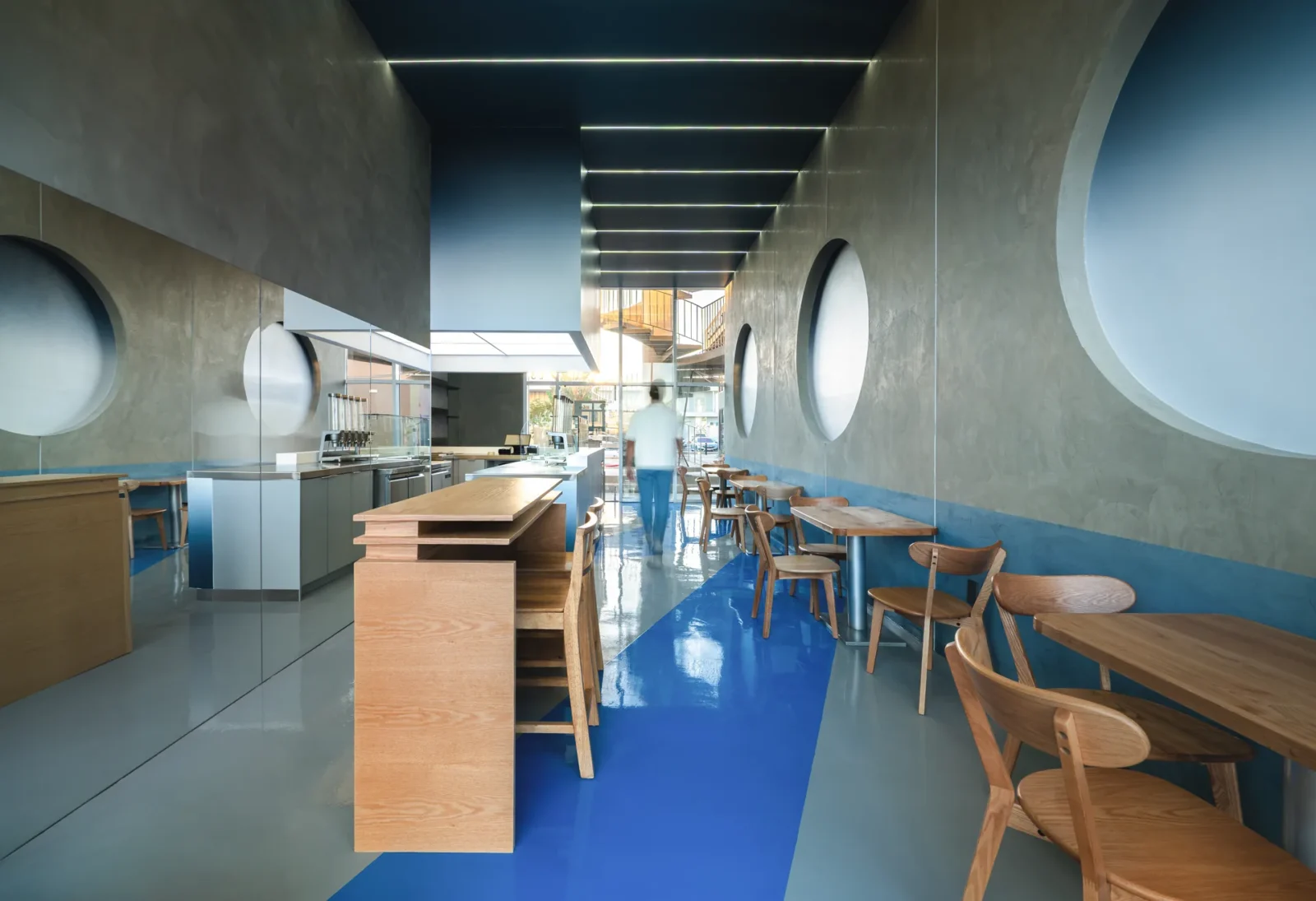
Good Habits Smoothie Bar by XN32 Studio
XN32 Studio turns a 55 m² smoothie bar in Mexicali into a...
 illustrarch Editoral Team3 Mins read
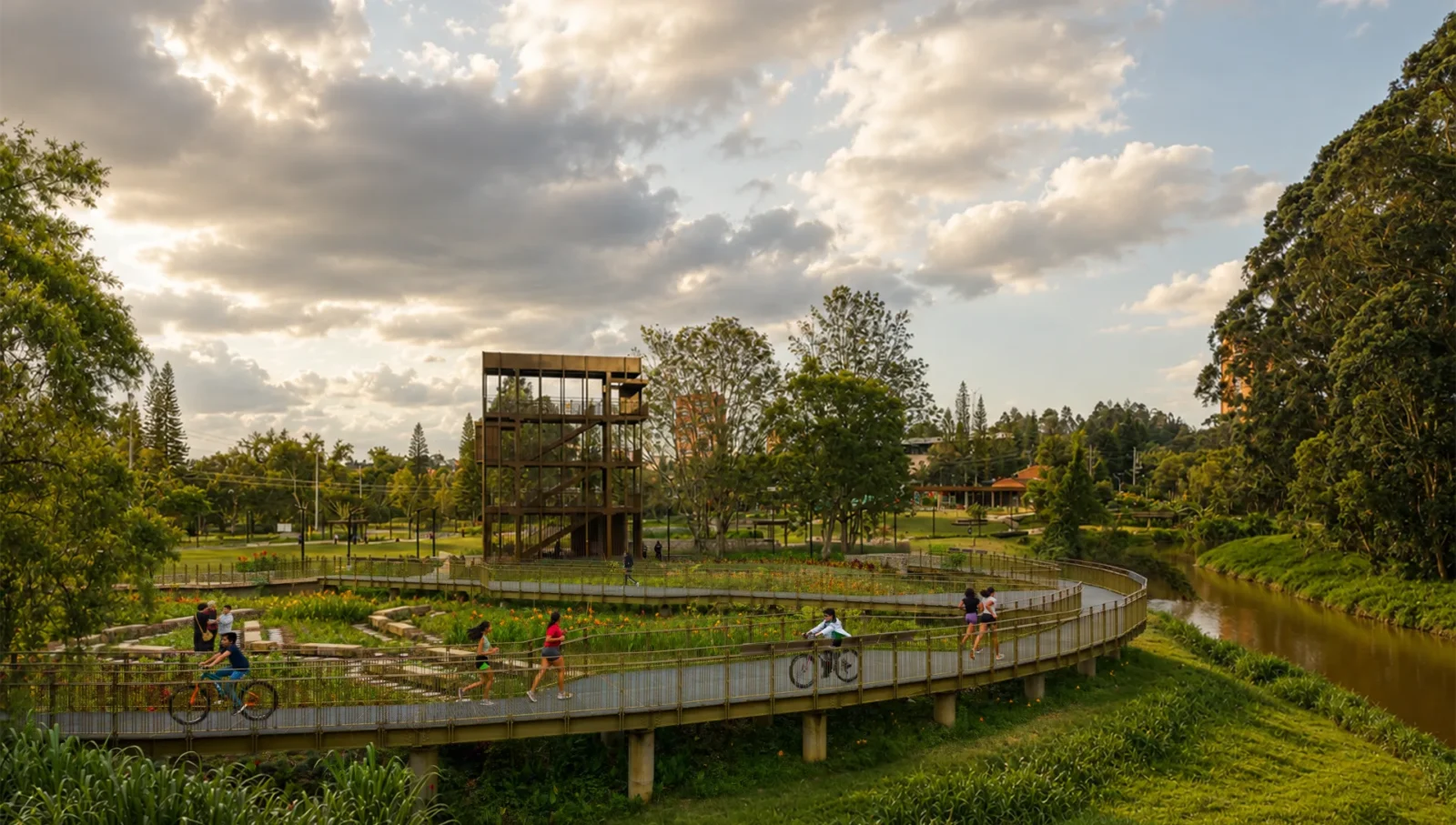
Café del Río by TAP Arquitectura
On a flood-prone stretch of the Río Negro in Rionegro, Colombia, a...
illustrarch Editoral Team2 Mins read

Origin Cafe and Roasters Jax by S.DA
S.DA turn a JAX District warehouse in Diriyah into a cafe, roastery...
illustrarch Editoral Team2 Mins read
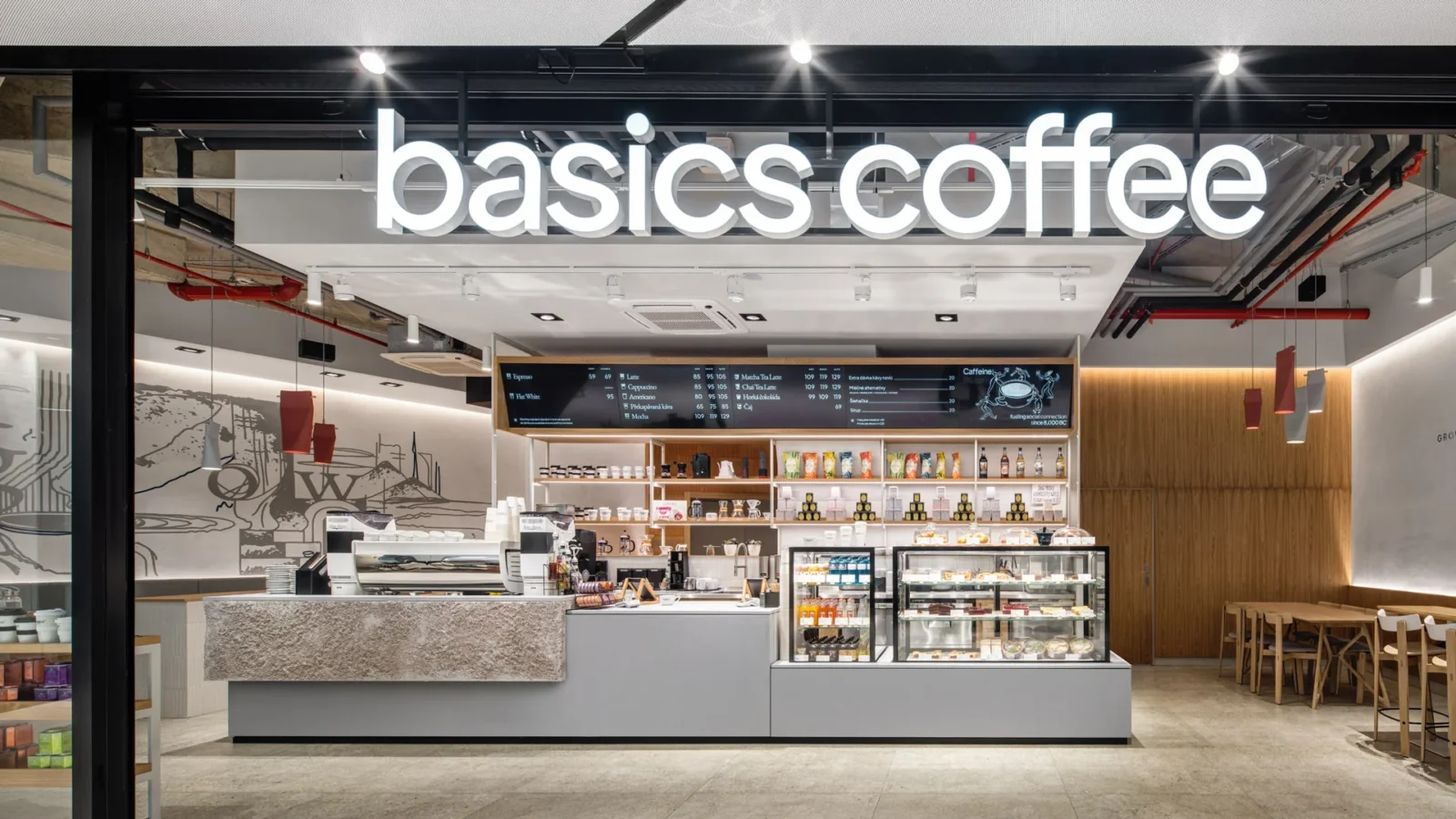
Basics Coffee by archicraft
Basics Coffee approached us to build a café chain brand from scratch....
illustrarch Editoral Team2 Mins read


Leave a comment