

How China’s Urban Voids Are Transforming City Life
China’s urban voids are reshaping city life, see how under-bridge belts, night markets, and tactical design turn gaps into culture and climate resilience.
 Sinan Ozen27 December 20254 Mins read268

Table of Contents Show
We’ve all walked past them: slivers beneath flyovers, odd triangles at block edges, fenced-off lots waiting for a plan. In the last decade, China’s urban voids have quietly shifted from nuisance to opportunity, becoming sites of commerce, culture, and community. As rapid urbanization settles into an era of renewal, these gaps are helping cities rebalance density with daily life. Here’s how these in-between spaces are reshaping the way we move, meet, and make cities our own.
Defining Urban Voids In China Today
From Leftover Parcels To Liminal Thresholds
We define urban voids as underused, unprogrammed, or transitional spaces: the edges of superblocks, residual corners after road widenings, setbacks, floodable riverbanks, or areas under viaducts. In China, they’re not just “leftovers.” They operate as thresholds, soft zones where formal planning ends and everyday improvisation begins. Because they’re flexible and low-cost, these voids invite temporary uses that formal parks or plazas often can’t host on short notice.

Why Rapid Urbanization Produces So Many Gaps
China’s fast buildout produced big-grain urban fabrics: wide arterials, large parcels, and rapid phasing. That scale mismatch leaves seams, between infrastructure and neighborhoods, old and new, planned and pending development. Land finance, phased approvals, and demolition, reconstruction cycles add pauses in the urban story. The result: thousands of small-to-mid spaces that aren’t priorities for capital projects but are perfect for bottom-up life.
How Voids Emerged And Multiplied
From Danwei Courtyards And Hutongs To Superblocks
Earlier urban forms, danwei courtyards, lilong and hutongs, wove fine-grain, human-scale networks. Market-led redevelopment consolidated parcels into superblocks, trading permeability for efficiency. Where pedestrian alleys once stitched neighborhoods together, perimeter walls and setbacks introduced dead edges. The leftover interstices, corners near gates, parking margins, utility easements, quietly multiplied.

Demolition, Infrastructure Buildout, And Land Finance Dynamics
Mega-infrastructure, metros, flyovers, and flood defense, created voids beneath and around structures. Meanwhile, demolition and staged redevelopment produced interim lots awaiting financing or approvals. Municipal reliance on land-lease revenue favored big, contiguous deals, which unintentionally sidelined small bits of land. Those bits, but, became the city’s experimental labs.
Everyday Life In The Voids
Informal Economies And Night Markets
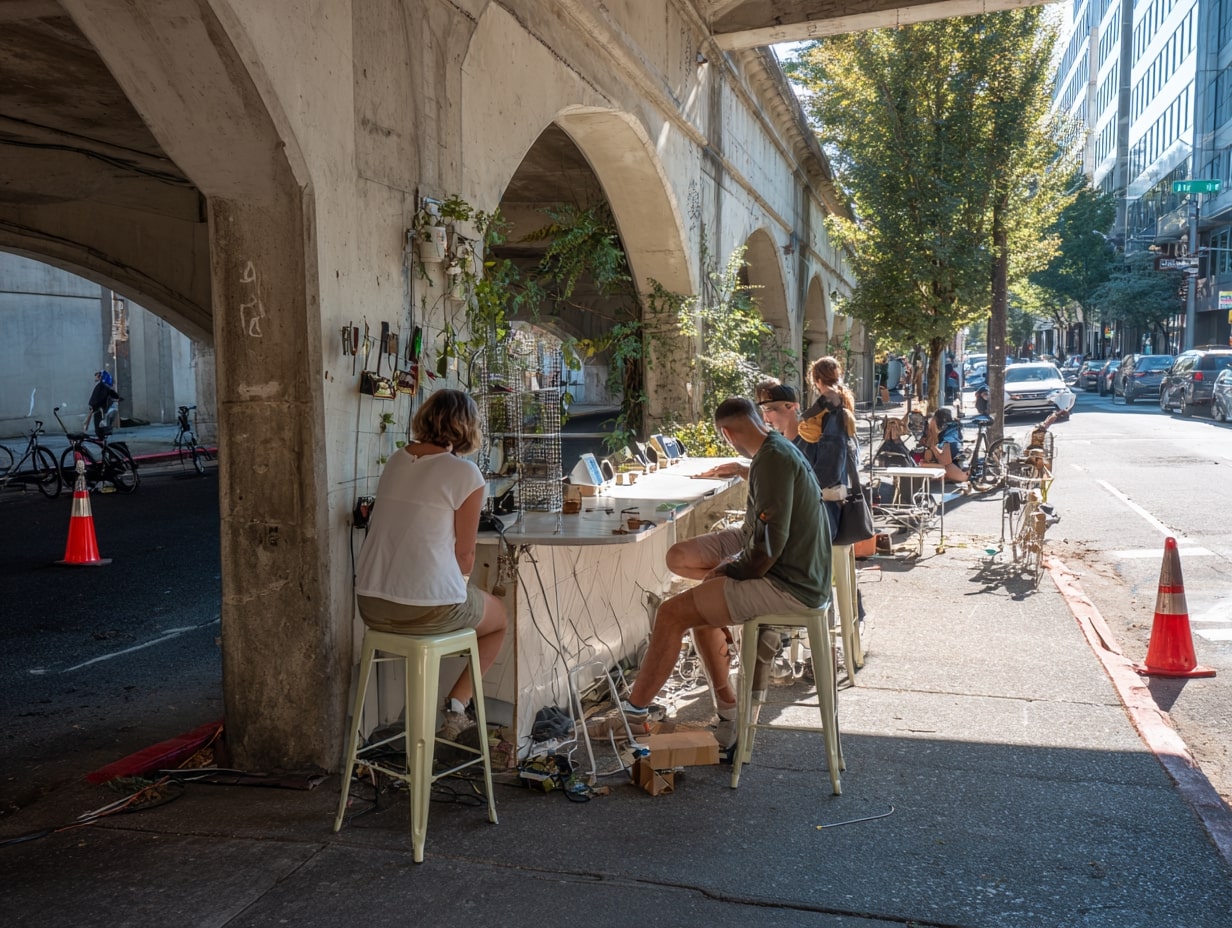
We see pop-up street food, repair stools, and phone-accessory stands colonize curb edges and under-bridge aprons. Night markets bloom where lighting, foot traffic, and tolerance overlap, often near commuter hubs or student districts. These small economies make streets lively and provide low-barrier livelihoods, especially for migrants and retirees.
Leisure, Play, And Intergenerational Sociality
At dusk, mahjong tables appear: in the mornings, square dancing and tai chi reclaim corners of plazas and parking aprons. Kids bike loops around planters while grandparents watch. Because voids sit close to homes and transport, they support short, frequent visits, micro-leisure that formal parks can’t always serve.
Cultural Expression, Street Sports, And Creative Scenes
Graffitiable walls, shipping-container stages, and DIY ramps show up in buffer zones. Streetball under viaducts, flatland BMX under ring roads, and roller-skating in delivery courts tell us something simple: shade and smooth concrete are a gift. China’s urban voids have become stages for youth culture, and a pressure valve for high-density living.
Design And Policy Turning Gaps Into Assets
Tactical Urbanism And Temporary-Use Frameworks
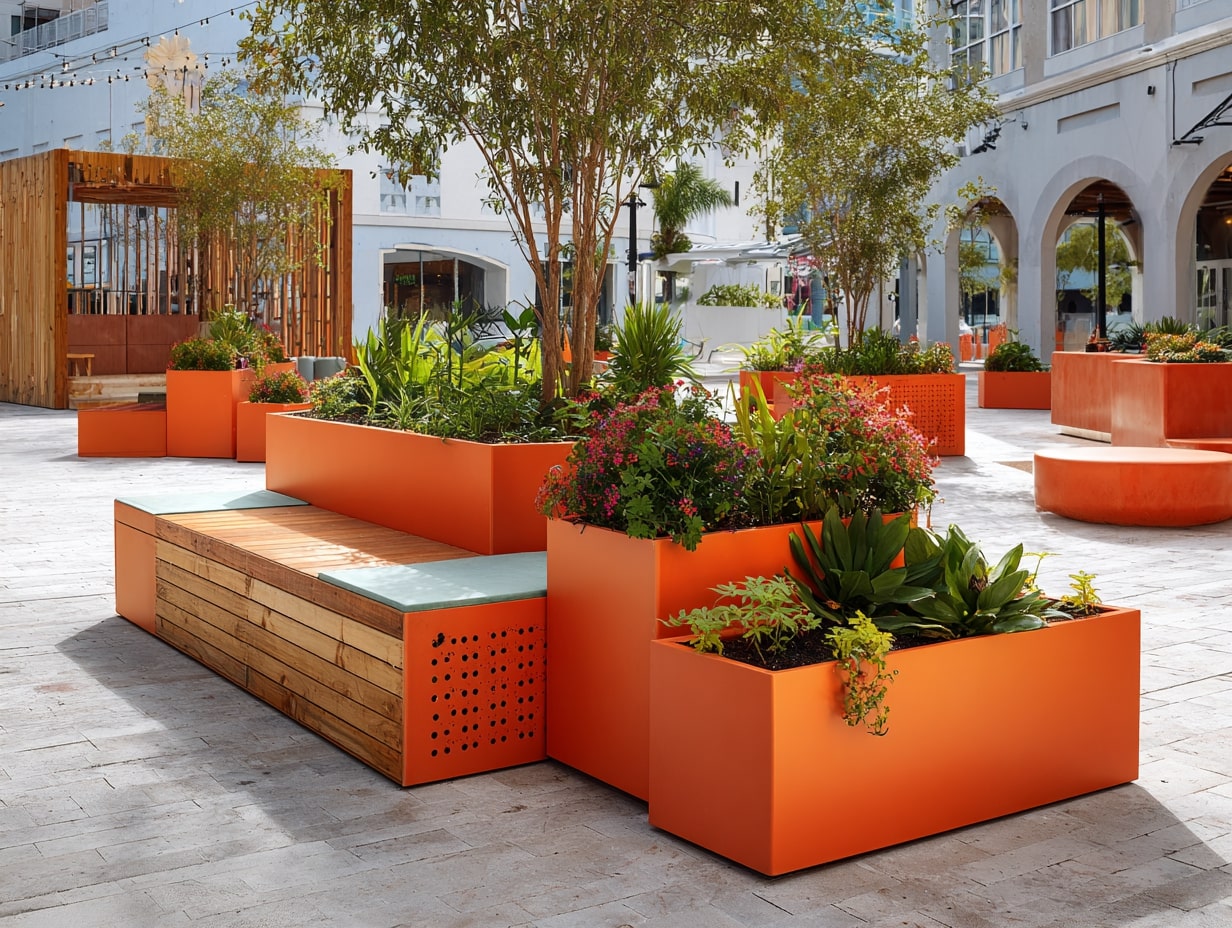
We’ve learned that light, quick, cheap updates unlock value fast: paint for wayfinding, modular seating, portable planters, and vendor-ready power access. Cities can standardize temporary-use permits, seasonal licenses, stall caps, hygiene checks, so informality gains legitimacy without losing agility.
Under-Bridge, Waterfront, And Edge-Retrofit Strategies
Under-bridge belts thrive with lighting, noise buffers, and program zoning (sports, markets, logistics). Waterfront setbacks double as climate sponges and weekend promenades with pop-up piers and floodable lawns. Along superblock edges, inserting mid-block paths, bike parking, and pocket gardens turns blank walls into active frontages.
Community Co-Design, Stewardship, And Maintenance
When residents co-design, choosing furniture, shade, and small play, spaces last. Stewardship groups can handle cleaning, vendor rotation, and feedback. Maintenance matters: clear responsibility for trash, lighting, and minor repairs keeps voids welcoming long after the ribbon-cutting.
City Snapshots And Transferable Lessons
Shenzhen: Startup Niches, Maker Alleys, And Mobility Links
Between factory conversions and metro nodes, we find rider pick-up bays doubling as micro-logistics hubs. Maker alleys spring from residual lanes behind electronics markets, perfect for prototypes and street-tech demos. The lesson: wire voids into mobility so people and goods flow seamlessly.
Shanghai: Lane Renewals, Pocket Parks, And Slow Streets
Lane-house districts show how tiny plots become pocket parks, library kiosks, or curbside galleries. Traffic-calmed “slow streets” stitch together schools, wet markets, and transit. Small, well-serviced spots near homes outperform distant “iconic” parks for daily life.

Guangzhou: Foshan: Sports Belts Under Flyovers
Continuous basketball, futsal, and skate lanes under elevated roads demonstrate the power of linear programming. Shade plus airflow equals year-round use. With consistent surfacing and lighting, these corridors feel safe and draw diverse ages.
Chongqing: Terraced Stairs And Micro-Plazas
Steep topography creates terrace landings that host kiosks, tea stools, and music corners. Simple handrails, drainage, and step-width tweaks turn circulation into social space. The broader takeaway: design to the grain of the landscape, not against it.
Risks, Trade-Offs, And What To Watch
Displacement And Sanitization Of Informality
When voids succeed, rents rise and regulation tightens. We risk pushing out the very vendors and scenes that made places vibrant. Calibrated rules, time windows, stall quotas, price caps for micro-leases, help keep opportunity open.

Safety, Surveillance, And Inclusive Access
Lighting, sightlines, and crowd management are essential, but heavy surveillance can chill use. We should pair safety measures with transparent data practices, multilingual signage, and barrier-free access so kids, elders, and migrants all feel welcome.
Climate Resilience, Heat, And Long-Term Upkeep
Void retrofits can double as climate infrastructure: permeable paving, rain gardens, shade trees, cool materials. Budget for maintenance from day one, trash, repainting, drainage, so spaces don’t slip back into neglect.
Conclusion
China’s urban voids show that city life thrives in the seams. If we pair flexible policy with community-led design and low-cost care, these gaps can boost livelihoods, climate resilience, and joy, block by block. The future of livable density may be hiding in plain sight, under the bridge and around the corner.




Concentric Zone Model: Burgess’s Five Rings Explained
Burgess drew 1925 Chicago as five rings spreading from the business district....
 illustrarch Editoral Team9 Mins read
The Third Place: Oldenburg’s Eight Characteristics Explained
Cafés, pubs, barber shops and libraries do social work that homes and...
illustrarch Editoral Team7 Mins read
andre kong studio and Wayward Turn Old Lampposts into Solar-Powered Waylamps in Barnet
Four Waylamps by andre kong studio and Wayward reuse old lampposts as...
illustrarch Editoral Team1 Mins read
Neom Stadium, the Elevated 2034 World Cup Venue, Reportedly Shelved by Saudi Arabia
Two sources told Reuters that Saudi Arabia has put the 46,000 seat...
illustrarch Editoral Team2 Mins read


Leave a comment