

Gothic Architecture: Tribune Tower’s Design, Competition & Legacy
Tribune Tower rose from a 1922 competition that attracted 260+ entries and ignited a fierce debate between Gothic revivalists and modernists. This article explores the neo-Gothic design by Howells and Hood, the building's medieval-inspired details, the famous stone collection from 149 world landmarks, and its recent conversion into luxury residences.
 Furkan Sen7 March 20267 Mins read257

Table of Contents Show
When the Chicago Tribune announced a $100,000 design competition in 1922, it set off one of the fiercest architectural debates of the 20th century. The goal was simple: build “the most beautiful and distinctive office building in the world.” The result, Tribune Tower, became a 36-story monument to gothic architecture at a time when modernism was already knocking on the door. Completed in 1925 at 435 North Michigan Avenue, the building still stands today as both a tribute to medieval European building traditions and a symbol of American corporate ambition. Its story tells us as much about the soul of American architecture as it does about pointed arches and flying buttresses.
The 1922 Competition That Divided the Architecture World

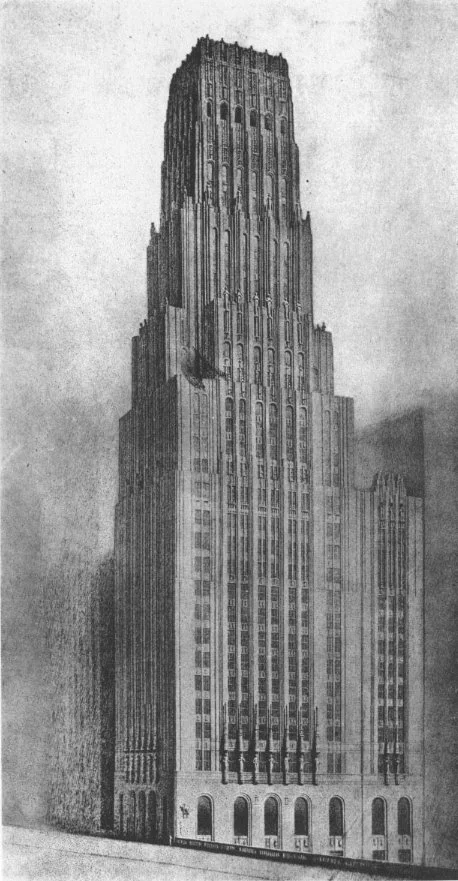

The Tribune Tower competition was not just a call for blueprints. It was a publicity campaign, a cultural statement, and a turning point in architectural history rolled into one. Colonel Robert R. McCormick, publisher of the Chicago Tribune, timed the competition to celebrate the newspaper’s 75th anniversary. He offered $50,000 to the winner and attracted more than 260 entries from 23 countries, according to the Chicago Architecture Center.
The jury unanimously awarded first place to New York architects John Mead Howells and Raymond Hood for their neo-Gothic design. Their proposal featured a tower crowned with ornate buttresses modeled after the Butter Tower of Rouen Cathedral in France. It was a deliberate nod to medieval European precedent, and it sparked an immediate backlash from modernists.
Finnish architect Eliel Saarinen took second place with a stepped, minimalist tower that emphasized verticality without historical ornament. Louis Sullivan, the legendary Chicago architect, publicly praised Saarinen’s entry and called it a vision for the future of American architecture. Saarinen’s design went on to influence buildings like the Gulf Building in Houston (1929) and even Raymond Hood’s own later projects, including the McGraw-Hill Building and Rockefeller Center.
Other entries from Walter Gropius, Adolf Loos, and Bruno Taut represented the European avant-garde pushing toward functionalism. Their submissions remain fascinating “what if” scenarios. Had a different entry won, the trajectory of American gothic architecture and skyscraper design might have shifted decades earlier.
Gothic Revival Architecture: From Cathedrals to Skyscrapers
To understand Tribune Tower, you first need to understand why architects in the 1920s were still reaching back to medieval building forms. Gothic revival architecture had been a powerful force in the United States since the mid-19th century. Its pointed arches, ribbed vaults, and vertical proportions carried associations with permanence, moral authority, and spiritual aspiration. These qualities made it especially attractive for institutions that wanted to project importance: churches, universities, and, eventually, corporate headquarters.
The Woolworth Building in New York, completed in 1913 by Cass Gilbert, established what critics called the “American Perpendicular Style.” It proved that gothic era architecture vocabulary could work at skyscraper scale. By the time the Tribune competition was announced, neo-Gothic had become an established design strategy for tall office buildings. Howells and Hood were not inventing something new. They were refining an existing tradition and pushing it to its most expressive form.
The key difference between original medieval Gothic buildings and their American revival counterparts lies in structure. Medieval cathedrals like Notre Dame used stone masonry where the flying buttresses and pointed arches were genuinely load-bearing. Tribune Tower, by contrast, uses a steel frame with non-load-bearing limestone cladding. The buttresses at its crown are entirely ornamental. They look the part, but the building stands because of modern engineering hidden behind medieval costume.
Key Elements of Gothic Design in Tribune Tower
The following table breaks down the primary gothic architectural features visible on Tribune Tower and how they compare to their medieval origins.
| Feature | Medieval Gothic Origin | Tribune Tower Application |
|---|---|---|
| Flying Buttresses | Structural support for vaulted ceilings | Purely ornamental at the tower crown |
| Pointed Arches | Load distribution in stone walls | Decorative framing at entrance and windows |
| Tracery and Stone Carvings | Religious iconography on cathedral facades | Aesop’s fables, journalistic symbols, and architect puns |
| Vertical Proportions | Spiritual aspiration toward the heavens | Corporate identity and skyline presence |
| Indiana Limestone Facade | Structural stone masonry | Non-load-bearing cladding over steel frame |
| Grotesques and Gargoyles | Rainwater drainage and spiritual symbolism | Journalistic themes (owl with camera, elephant sniffing out scandal) |
Architectural Details: What Makes Tribune Tower Unique

Tribune Tower Chicago rises 463 feet (141 meters) across 36 floors. The building’s crown is its most recognizable feature, an octagonal tower inspired by the south tower of Rouen Cathedral, a masterpiece of Late Gothic design in France. The limestone facade was carved extensively at both the base and the top, with the middle floors treated more simply to maximize usable office space.
At street level, a monumental three-story arched entrance draws visitors in. Hidden within the tracery above the doorway are creatures from Aesop’s fables, including the fox and the grapes and the crow and the pitcher. The architects also tucked in personal references: a carved Robin Hood (for Raymond Hood) and a howling dog (for Howells). These playful touches softened the building’s otherwise solemn Gothic character.
Inside, the lobby features a Hall of Inscriptions with quotations from Benjamin Franklin, Voltaire, Thomas Jefferson, and James Madison, all celebrating freedom of the press. According to the Encyclopaedia Britannica, this interior program reinforced the newspaper’s self-image as a guardian of democratic values. A large relief map, reportedly made from decommissioned U.S. paper currency, once illustrated the geographic reach of the Tribune’s coverage.
Perhaps the most unusual feature of Tribune Tower Chicago is the collection of 149 building fragments embedded into its exterior walls. Colonel McCormick instructed Tribune correspondents around the world to bring back stones from historically significant sites. Fragments from Westminster Abbey, the Parthenon, the Great Wall of China, the Taj Mahal, St. Peter’s Basilica, the Forbidden City, and the Kremlin are all labeled and visible at the building’s base. A 150th artifact, a moon rock, sits in a display window. This collection transformed the tower into a kind of architectural museum, connecting a Chicago newspaper headquarters to landmarks spanning centuries and continents.
The Modernism Debate: Was Gothic the Wrong Choice?

The Tribune Tower competition did not end when the winner was announced. It started a conversation about the future of architecture of gothic traditions versus modernist innovation that lasted for decades. Critics like Louis Sullivan saw the Howells and Hood design as a step backward, a retreat into historical nostalgia when architecture should have been pushing forward.
Saarinen’s second-place tower, with its graduated setbacks and restrained ornament, is often described as a bridge between Gothic verticality and modernist simplicity. It directly influenced a generation of American skyscrapers, as documented by the Society of Architectural Historians. Raymond Hood himself absorbed Saarinen’s lessons and moved decisively toward modernism in his later career, designing the Art Deco American Radiator Building (1924) and the streamlined Daily News Building (1930).
The European entries told another story entirely. Walter Gropius and Adolf Meyer submitted a stark glass-and-concrete tower that anticipated the International Style by three decades. Adolf Loos proposed an enormous Doric column, which may have been satirical. These entries had no chance of winning in 1922, but they provided a public catalog of emerging modernist thought. The competition entries were published in a book and exhibited internationally, giving architects worldwide a snapshot of the profession’s crossroads moment.
Looking back, the Tribune Tower was one of the last major examples of neo-Gothic skyscraper design in America. Within a few years, Art Deco took over as the dominant aesthetic for tall buildings, and by the 1950s, the glass curtain wall had become standard. The Chicago Tribune Tower stands as a closing chapter in the story of gothic revival architecture applied to commercial buildings.
Tribune Tower’s Second Life: From Newsroom to Luxury Residences

The Chicago Tribune occupied the building from 1925 until 2018, when the newspaper moved out and CIM Group and Golub & Company began converting the tower into luxury condominiums. The conversion, completed in 2021, preserved the building’s landmark-designated exterior and restored original features like the limestone facade and the lobby’s inscriptions. In 2023, the project won a Driehaus Prize for architectural preservation and adaptive reuse from Landmarks Illinois.
The 162 residential units now occupy the spaces where newsrooms and broadcast studios once operated. Amenities include a fitness center, indoor pool, and a rooftop terrace on the 25th floor, positioned directly beneath the building’s iconic flying buttresses. The conversion project demonstrates that gothic revival architecture can adapt to contemporary needs without losing its historic character. According to the architects at Solomon Cordwell Buenz, who handled the conversion, replicating the landmarked Gothic windows was one of the project’s greatest technical challenges.
The building also uses water from the nearby Chicago River for mechanical cooling, eliminating the need for a conventional cooling tower. This sustainability feature adds an unexpected modern layer to a structure rooted in medieval aesthetics.
Tribune Tower’s Place in the Chicago Skyline
Tribune Tower does not stand alone. It anchors one of Chicago’s most architecturally significant intersections, forming a group of four landmark towers that frame the Michigan Avenue Bridge over the Chicago River. The Wrigley Building (1924), the London Guarantee Building (1923), and 333 North Michigan Avenue (1928) are its companions. Together, these buildings create one of the most photographed urban compositions in North America.
The tower’s influence extends beyond Chicago. The Grace Building in Sydney, the Manchester Unity Building in Melbourne, and the Title Guarantee and Trust Building in Los Angeles all drew design inspiration from Tribune Tower’s Gothic silhouette. One Atlantic Center in Atlanta also references the building’s proportions and shaft design. Listed as a Chicago Landmark since 1989, Tribune Tower is also a contributing property to the Michigan-Wacker Historic District.
For architecture students and professionals, Tribune Tower remains a powerful case study. It demonstrates how a building’s style can simultaneously represent commercial ambition, cultural aspiration, and a deliberate engagement with architectural history. Whether you view it as the last great Gothic skyscraper or a missed opportunity for early modernism depends on your perspective. Either way, it reshaped the conversation about what American buildings could and should look like.
Note: The Tribune Tower’s conversion into residences means the interior is no longer publicly accessible on a regular basis. However, the exterior stone collection and architectural details can be viewed freely from the sidewalk along Michigan Avenue.






A 2,500-Year-Old Solar Observatory in Puebla Is the First Group E Complex Found Outside the Maya Area
Archaeologists working for Mexico's INAH have confirmed that two platforms at Teteles...
 illustrarch Editoral Team2 Mins read
Neoclassical Architecture: Features, History & Examples
Neoclassical architecture emerged in the mid-18th century, reviving Greek and Roman forms...
illustrarch Editoral Team8 Mins read

Donald Insall, the Conservation Architect Who Led Windsor Castle’s Restoration, Dies at 100
Donald Insall, the British architect who turned conservation into a planning discipline...
illustrarch Editoral Team2 Mins read

Craftsman Architecture: Features, History & Examples
Craftsman architecture emerged in early 1900s America as a response to Victorian...
illustrarch Editoral Team10 Mins read


Leave a comment