

Nubian Architecture: Color, Climate, and Community Along the Nile
A practical look at Nubian architecture across ancient and modern eras, covering painted facades, domed mud-brick vaults, passive cooling strategies, and the communal courtyard logic that still shapes sustainable design along the Nile today.
 Sinan Ozen1 May 20267 Mins read214
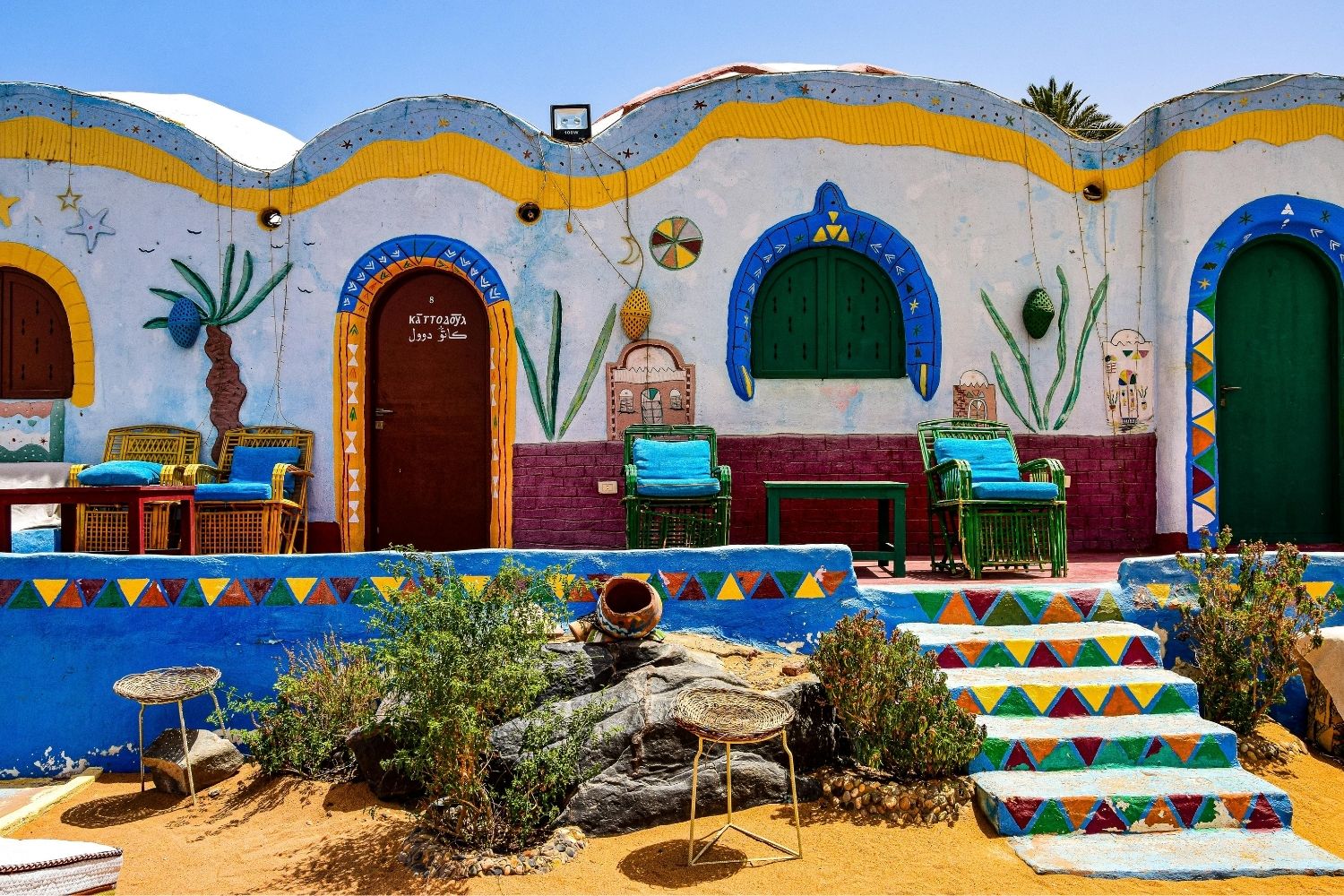
Table of Contents Show
Nubian architecture is a centuries-old building tradition from the Nile Valley between southern Egypt and northern Sudan, built around sun-dried mud brick, catenary vaults, painted facades, and shared courtyards. Its forms respond directly to extreme heat, scarce timber, and strong community ties, which is why ancient Nubian architecture still informs sustainable design today.
Walk into an old Nubian village along the Nile and the first thing you notice is color. Whitewashed walls edged in cobalt and ochre. Painted plates set into facades. Domed roofs curling against a hard blue sky. Behind that visual identity sits an architecture shaped by thousands of years of climate, scarcity, and social life, now being re-examined under the broader heading of contemporary vernacular architecture.
What Is Nubian Architecture?
Nubian architecture refers to the building traditions of the Nubian people, indigenous to the stretch of the Nile Valley between Aswan in Egypt and Dongola in Sudan. It covers prehistoric wattle-and-daub huts, the mud-brick temples of Kerma, the royal pyramids of Meroë, and the painted domed houses that still define villages around Aswan today.
What connects these very different structures is a consistent design logic. Build with what the land gives you. Work with the heat, not against it. Arrange homes around shared courtyards. Decorate facades with color and symbol as markers of identity. These ideas cut across the tradition from antiquity to modern Nubian architecture. The word itself traces back to the ancient Egyptian term nbu, meaning gold, a reminder that Nubia was never peripheral but a major trade corridor linking sub-Saharan Africa to the Mediterranean.
💡 Pro Tip
When studying Nubian vernacular architecture for a hot, arid project, start with wall-to-window ratio and courtyard orientation before looking at the vaults or color palette. The thermal performance of a traditional Nubian house comes from thick earth walls, minimal western exposure, and a shaded courtyard acting as a heat sink, not from the vaulted roof alone.
A Brief History of Nubian Architecture
Nubian architecture history stretches across three defining eras: the early Kerma period, the pyramid-building Kushite kingdoms of Napata and Meroë, and the later vernacular tradition. For a broader timeline, the history of architecture overview covers the full global arc.
Kerma and the Deffufas (c. 2500 to 1500 BC)
The earliest monumental Nubian architecture belongs to the Kerma culture. The Western Deffufa at Kerma measures roughly 50 by 25 meters at its base and reaches 18 meters in height. Built over 4,000 years ago from Nile silt, it is a solid stepped temple core with internal chambers, still standing in the Sudanese desert. Its scale proves Nubian builders were working with earth at architectural magnitudes long before Roman concrete changed what monumental mud construction could look like.
The Nubian Pyramids (c. 1000 BC to 350 AD)
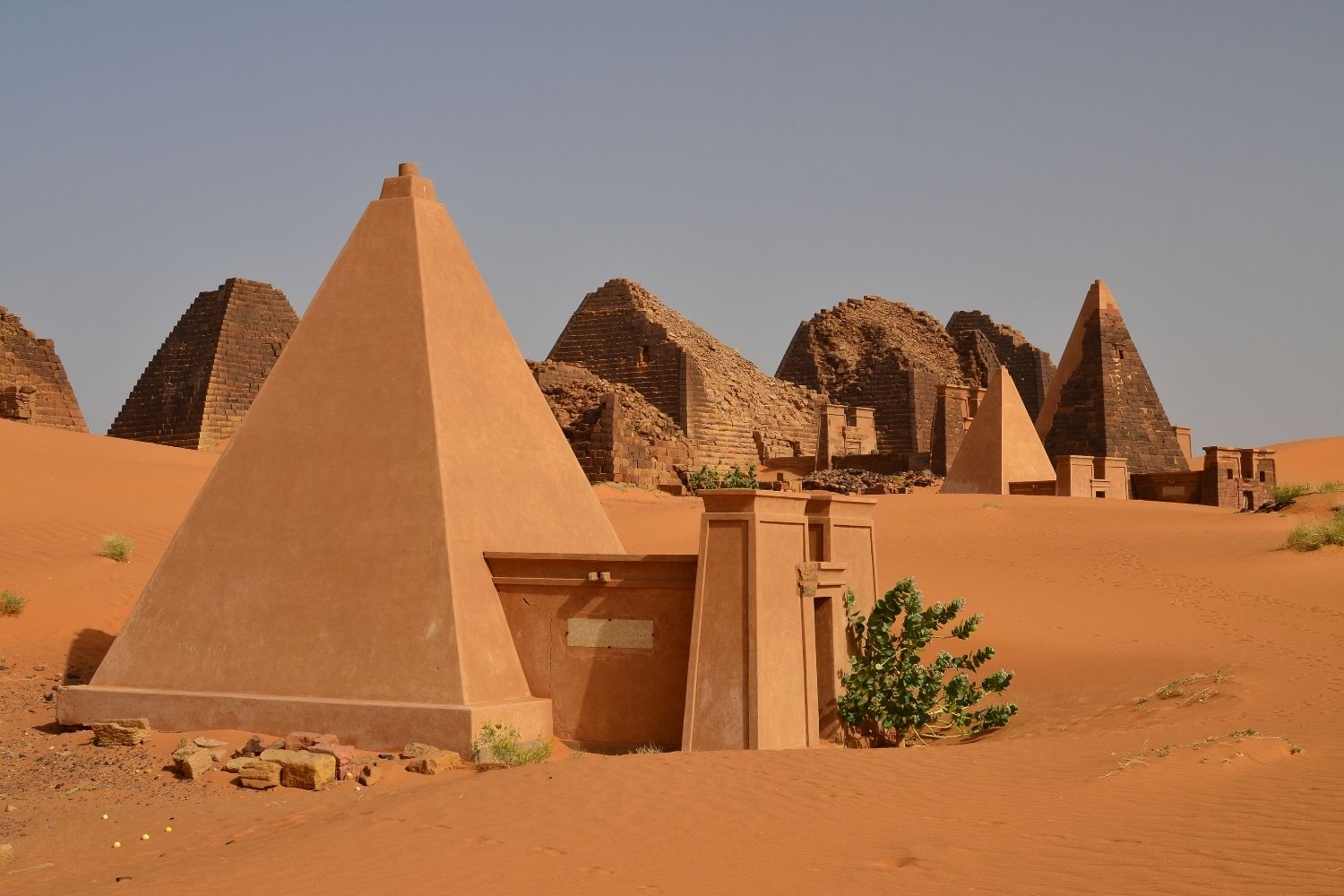
The Kushite kingdoms that followed built hundreds of pyramids, concentrated at El-Kurru, Nuri, Jebel Barkal, and Meroë. Meroitic pyramids typically stand under 30 meters tall, rise at a steep angle of about 72 degrees (compared to 54 degrees for most Egyptian pyramids), and were often stepped rather than smooth-faced, with small mortuary temples attached at the base.
📌 Did You Know?
Sudan contains more pyramids than Egypt. Estimates place the Nubian pyramid count between 220 and 255 structures, compared to roughly 118 in Egypt. The Archaeological Sites of the Island of Meroë were inscribed as a UNESCO World Heritage Site in 2011.
Vernacular Nubian Villages
Villages on islands like Suheil West near Aswan developed a domestic architecture built from sun-dried mud brick, finished with mud or lime plaster, and topped with flat palm-leaf roofs or the famous Nubian vault. Houses were arranged around courtyards. Exterior walls were decorated with vivid paint, ceramic plates set into the plaster, and symbolic motifs of flowers, birds, and animals. The facade became a form of community communication.
What Are the Key Materials and Construction Techniques?
Nubian architecture is, above all, an earth architecture. The three most important materials are sun-dried mud brick, stone (mainly sandstone), and organic plant matter like palm wood and reeds. Each was chosen for what the landscape offered.
Sun-Dried Mud Brick (Adobe)
The core material is adobe: bricks made from Nile silt mixed with clay and straw, shaped in wooden molds, and dried in the sun. Walls are typically 40 to 60 cm thick, giving them high thermal mass that flattens the desert’s daily temperature swing. The material is also locally sourced, which is why the tradition is being re-examined in contemporary sustainable architecture and climate-responsive design.
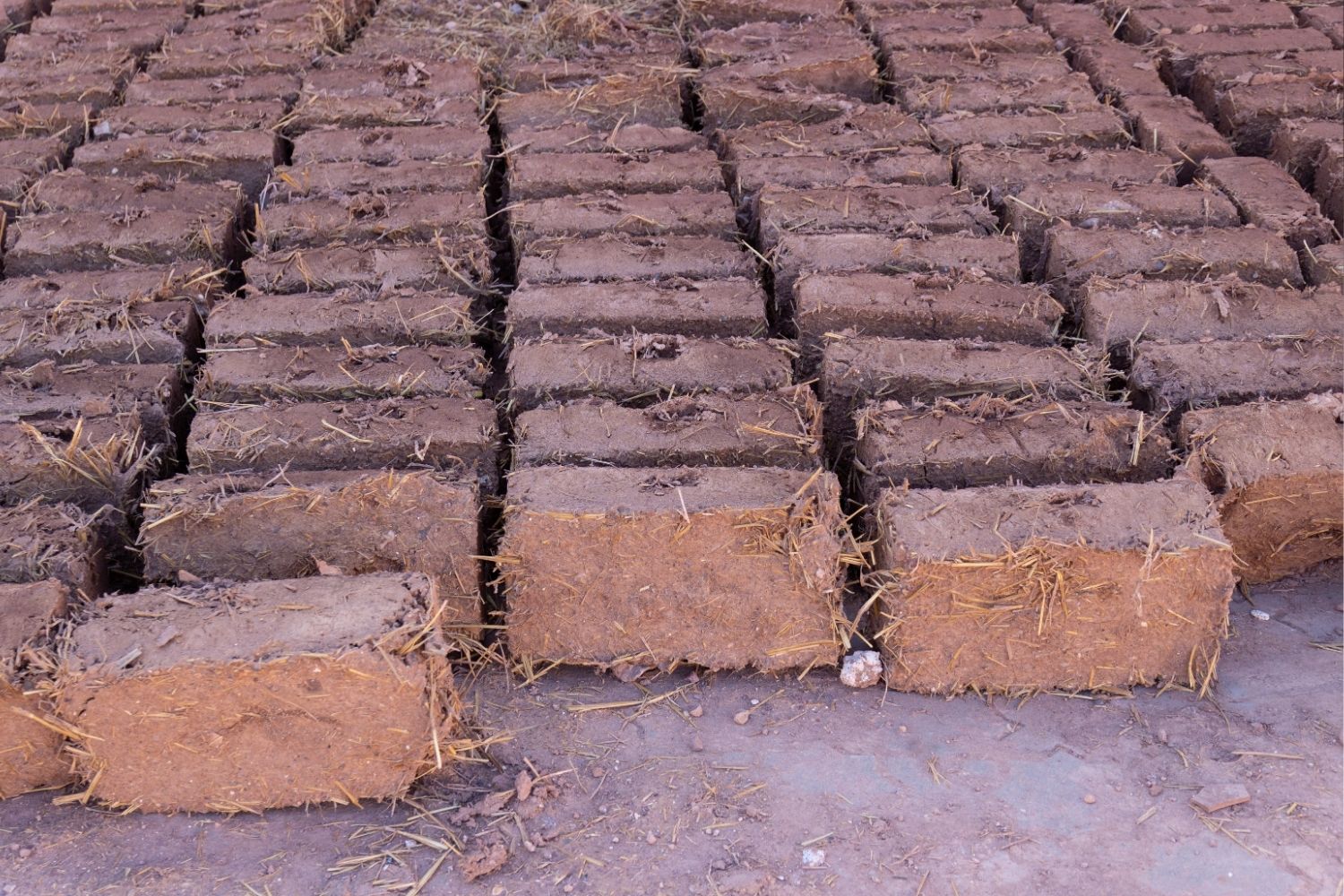
The Nubian Vault
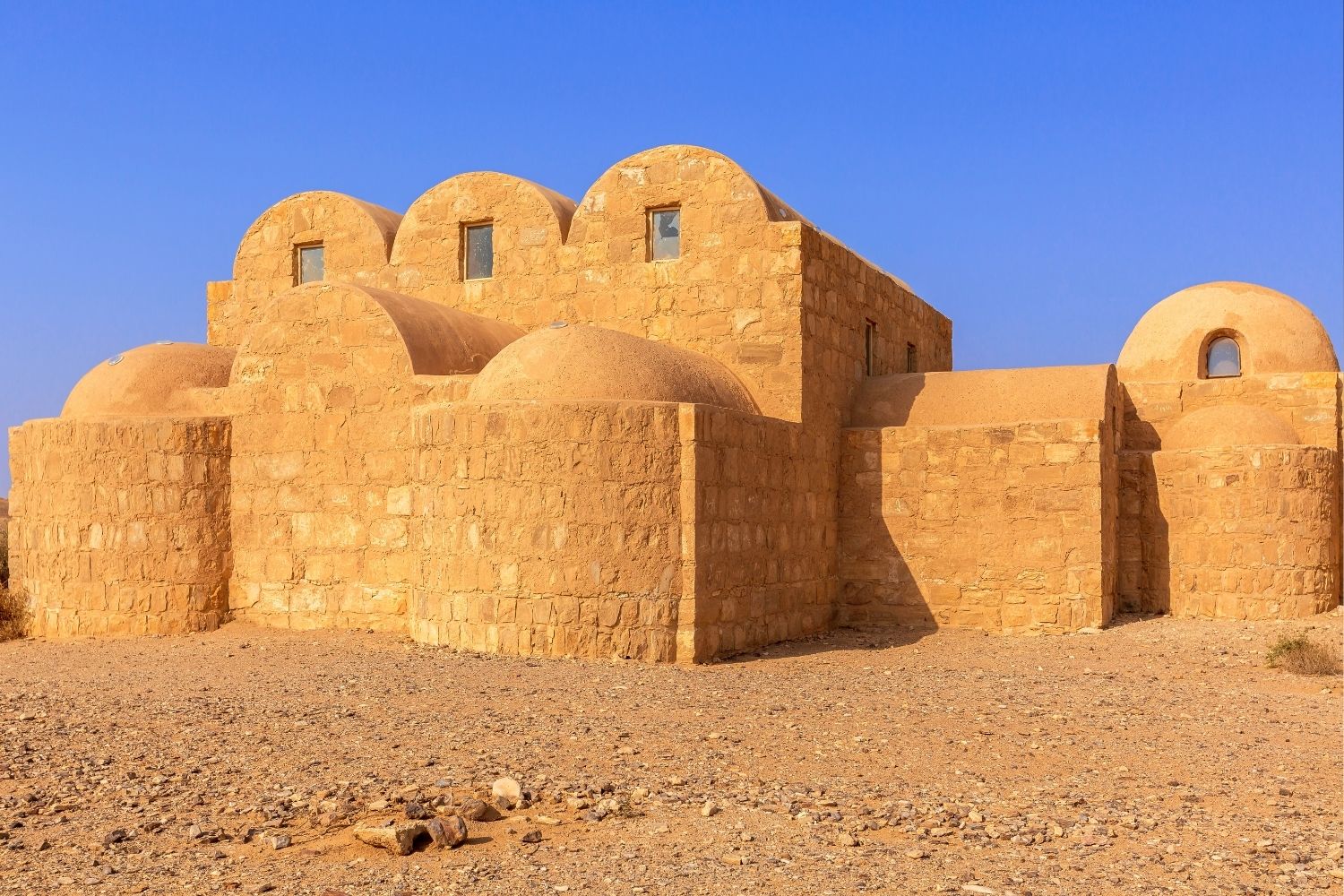
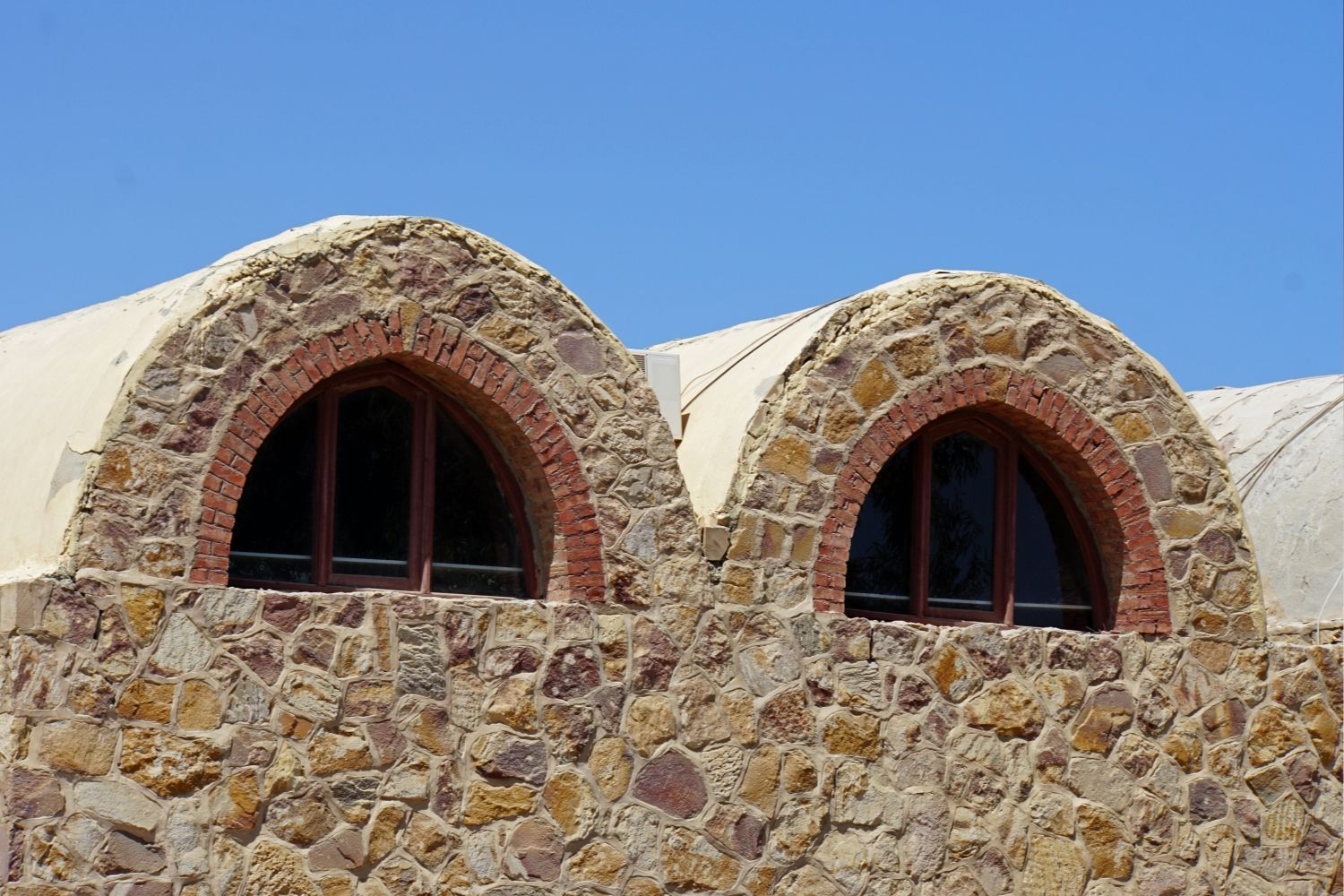
The Nubian vault is the most recognizable structural element of the tradition. It is a catenary-curved mud-brick roof laid in slightly inclined courses against an end wall, with no formwork, no timber centering, and no scaffolding required. Gravity and the geometry of the curve hold the bricks in place during construction. The technique was popularized for a global audience by Egyptian architect Hassan Fathy, whose 1948 New Gourna Village project brought the vault back into professional discourse. ArchDaily’s coverage of the Nubian vault revival documents how the technique is being reintroduced in hot-climate regions today.
📐 Technical Note
A traditional Nubian vault spans roughly 3 to 4 meters and uses mud bricks of about 25 x 12 x 6 cm, laid in inclined rows following a catenary curve (the shape a chain makes when hanging freely). This geometry keeps the wall and roof in pure compression, removing the need for timber formwork. Hassan Fathy documented the method in Architecture for the Poor (University of Chicago Press, 1973).
How Does Nubian Architecture Respond to Climate?
The Nile Valley’s climate is unforgiving: daytime temperatures above 40°C in summer, near-zero humidity, and sharp nighttime cooling. Nubian architecture evolved as a climate machine using passive strategies. Five carry most of the load:
- Thermal mass from thick mud-brick walls dampens the daily temperature swing.
- Small, high, shaded openings limit solar gain while allowing hot air to escape upward.
- Vaulted and domed roofs move the hottest air above the occupied zone and increase surface area for night cooling.
- Enclosed courtyards create a shaded microclimate that stays cooler than the surrounding desert.
- White plaster reflects solar radiation before it enters the building envelope.
Fathy’s measurements at New Gourna showed that traditional Nubian construction with malqaf wind catchers kept interior temperatures up to 10°C cooler than unshaded outdoor air, with no air conditioning at all. Research published in the Alexandria Engineering Journal examined how these Nubian vernacular systems can inform contemporary buildings in hot arid regions. For broader context, this overview of how climate shapes local architecture covers similar ground for other regions.
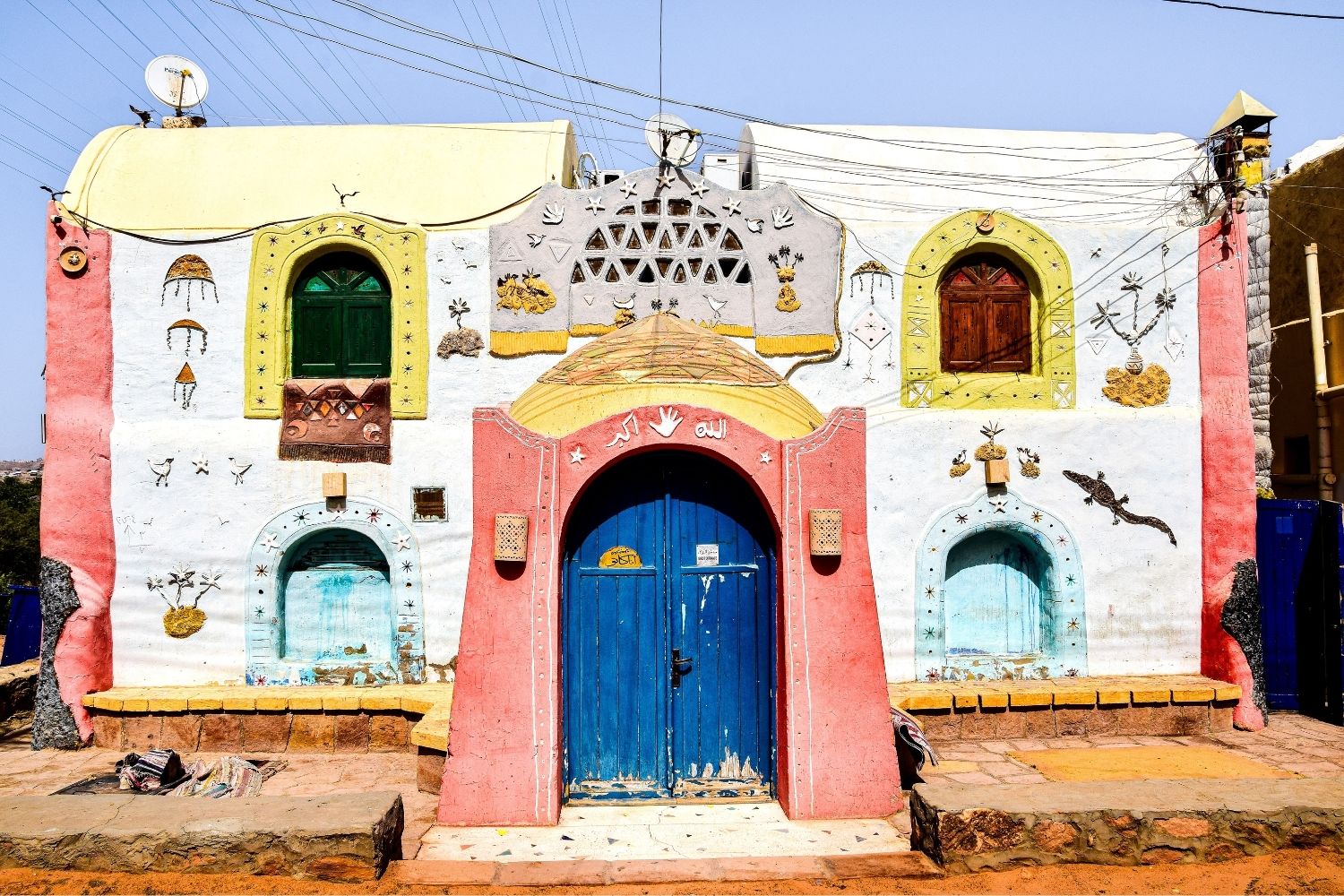
Modern Nubian Architecture and Global Influence
Modern Nubian architecture covers two related stories: the continued use of traditional techniques in contemporary buildings along the Nile, and the global spread of the Nubian vault. In Aswan, schools, mosques, shopping centers, and office buildings feature Nubian-style vaulted roofs in daily use.
🏗️ Real-World Example
New Gourna Village (Luxor, Egypt, 1948): Architect Hassan Fathy designed this village to rehouse a rural Egyptian community using traditional Nubian mud-brick construction, catenary vaults, domes, and malqaf wind catchers. His measurements showed interior temperatures up to 10°C below unshaded outdoor air without mechanical cooling, making it a reference point for the global revival of earth-based sustainable architecture.
The Nubian Vault Association has spread the technique across Burkina Faso, Mali, Senegal, and Ghana, where deforestation and expensive imported roofing make the vault an ideal fit. Architizer’s feature on the technique documents several of these West African programs. For architects interested in related contemporary work, the broader movement of contemporary vernacular architecture includes Francis Kéré’s compressed earth projects in Burkina Faso and shares a common ancestor in Nubian earth-building logic.
How Are Nubian and Egyptian Architecture Related?
Nubian and Egyptian architecture developed in constant dialogue, with both regions borrowing from each other across more than three thousand years. During the New Kingdom (c. 1550 to 1070 BCE), Egypt controlled northern Nubia and influenced temple design at sites like Jebel Barkal. In the 8th century BCE the direction reversed: Nubian kings of the 25th Dynasty, based at Napata, conquered Egypt and ruled for nearly a century.
Nubian builders adopted the pyramid form from Egypt but reinterpreted it with steeper angles, smaller footprints, stepped faces, and mortuary temples at the base rather than burial chambers inside the structure. Nubian iconography also increasingly featured local gods like Apedemak, the lion god of Meroë. The High Museum of Art’s Ancient Nubia exhibition provides detailed material context for the 25th Dynasty period, and this overview of ancient architecture and its impact on modern design covers how these traditions still shape practice.
⚠️ Common Mistake to Avoid
Nubian architecture is often dismissed as a smaller version of Egyptian architecture. This is wrong. The Kerma Deffufas predate most surviving Egyptian mud-brick monuments, Nubian pyramids outnumber Egyptian pyramids roughly two to one, and the Nubian vault is a structural invention that solves a problem (roofing without timber) Egyptian builders never had to fully address. Nubian architecture is a parallel and original tradition, not a derivative one.
🎓 Expert Insight
“We must consider the peasant not as a consumer, but as a producer. We can give him tools, give him tradition, teach him to build for himself.”
Hassan Fathy, Architecture for the Poor (1973)
Fathy’s framing captures why Nubian architecture still resonates as a working model. It is not a style to be copied onto another context but a construction logic rooted in local skill, local material, and local climate. The value is transferable; the specific forms are not.
✅ Key Takeaways
- Nubian architecture is a Nile Valley tradition spanning over 6,000 years, centered on sun-dried mud brick, vaulted roofs, and communal courtyards.
- Ancient Nubian architecture includes the Kerma Deffufas and over 220 pyramids at sites like Meroë, El-Kurru, Nuri, and Jebel Barkal, more than Egypt itself.
- The Nubian vault is a timber-free catenary mud-brick roof, still used in contemporary construction across West Africa.
- Passive strategies (thermal mass, stack ventilation, courtyards, reflective whitewash) deliver interiors up to 10°C cooler than outdoor air without mechanical cooling.
- Modern Nubian architecture continues in Aswan villages and has influenced global sustainable design through Hassan Fathy and the Nubian Vault Association.
Final Thoughts
Nubian architecture is the rare case of a building tradition that reads as both deeply local and universally relevant. The color, vaults, and courtyards belong to a specific stretch of the Nile. The underlying logic (build with what you have, work with the climate, let community shape the plan) belongs to anyone building in a hot, resource-constrained place. The Kerma walls and Meroë pyramids have lasted thousands of years, and the thinking behind them has a good chance of lasting a few thousand more.
Historical dates, archaeological interpretations, and attributions regarding ancient Nubian sites continue to be refined by ongoing research. Information presented here reflects current scholarly consensus but should be verified against the latest peer-reviewed sources for academic or professional use.









Florence Renaissance Architecture: How Building Became an Authored Art
Florence Renaissance architecture is usually told as a list of buildings. The...
 Furkan Sen6 Mins read

Architectural Styles History: Why Some Styles Fail and Others Endure
A look at architectural styles history through the decisions that actually keep...
Furkan Sen6 Mins read
Architectural Styles: Why Some Endure and Others Fade
Some architectural styles last for centuries while others are demolished within a...
Furkan Sen5 Mins read
Postmodern Architecture vs Deconstructivism: Playful Irony or Radical Disruption?
Postmodern architecture and deconstructivism both rejected modernism but took opposite paths. This...
Sinan Ozen5 Mins read


Leave a comment