

Inverse Ruin: Reimagining an Ancient Temple Through Contemporary Intervention
A contemporary architectural installation at the Herakleia archaeological site in Policoro offers a radical reinterpretation of an ancient Dionysian temple. By suspending the missing architectural elements above the original foundations, the project inverts the traditional process of ruin and invites visitors to rethink how history, decay, and architectural meaning are constructed.
 Elif Ayse Sen28 December 20252 Mins read258
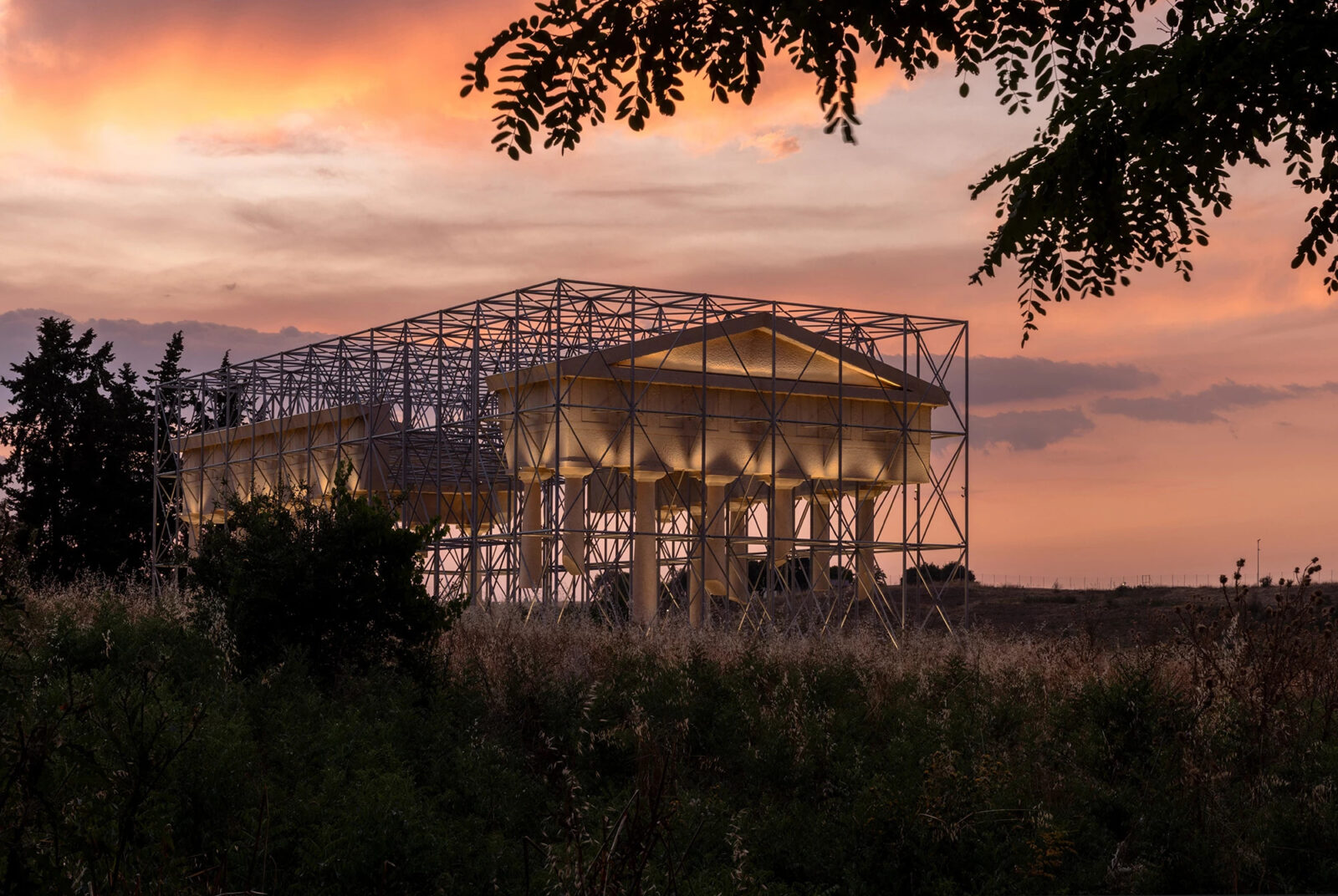
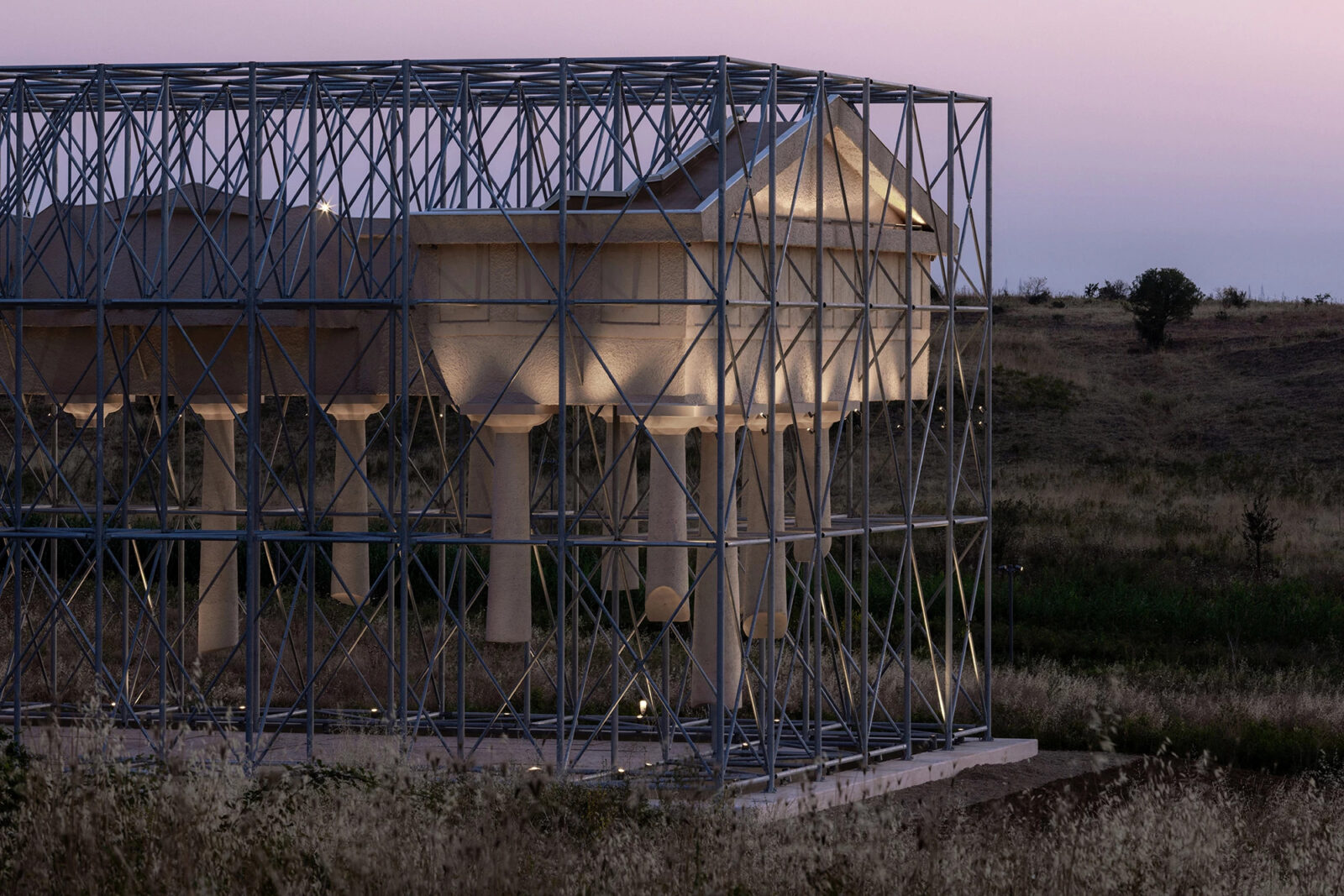
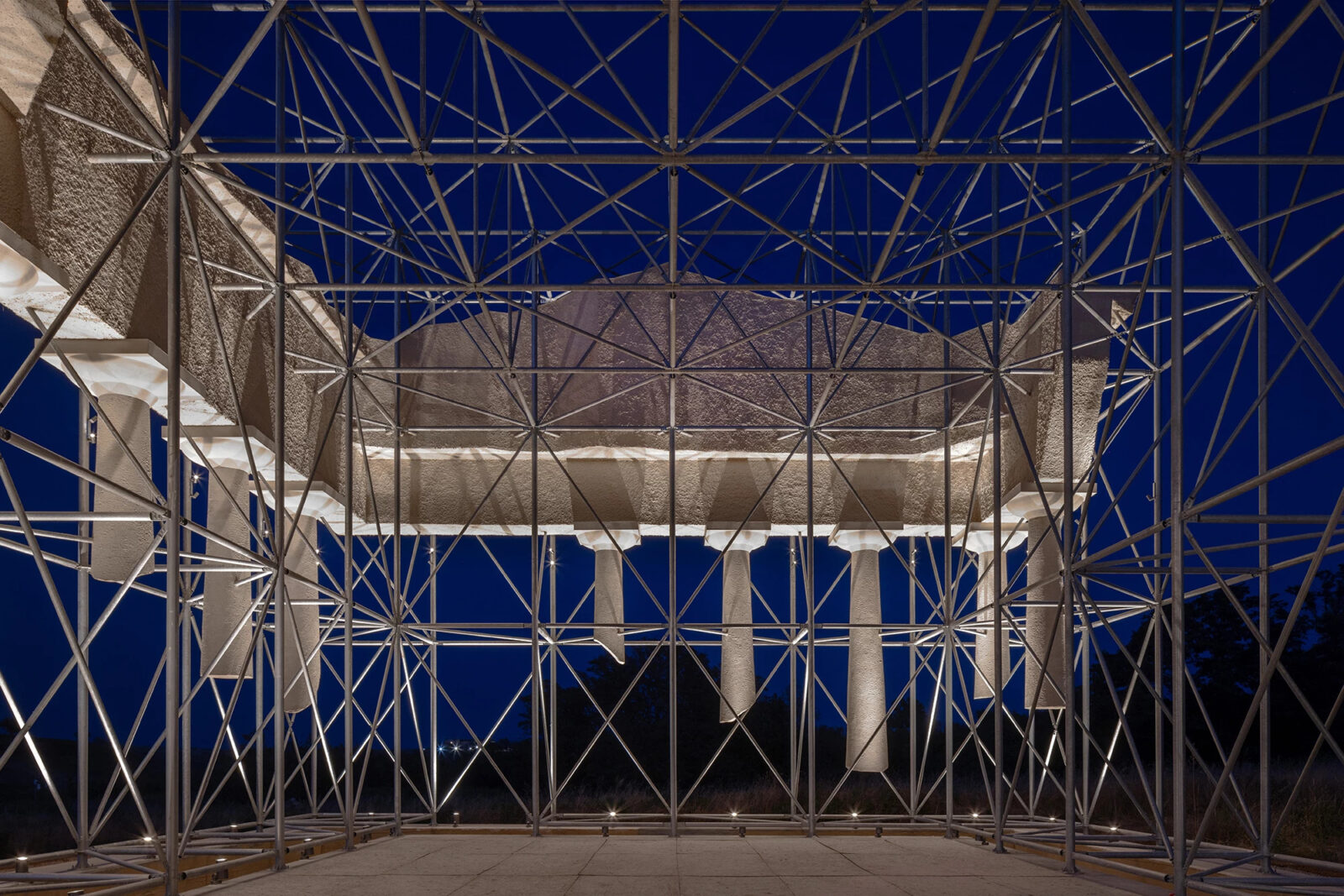

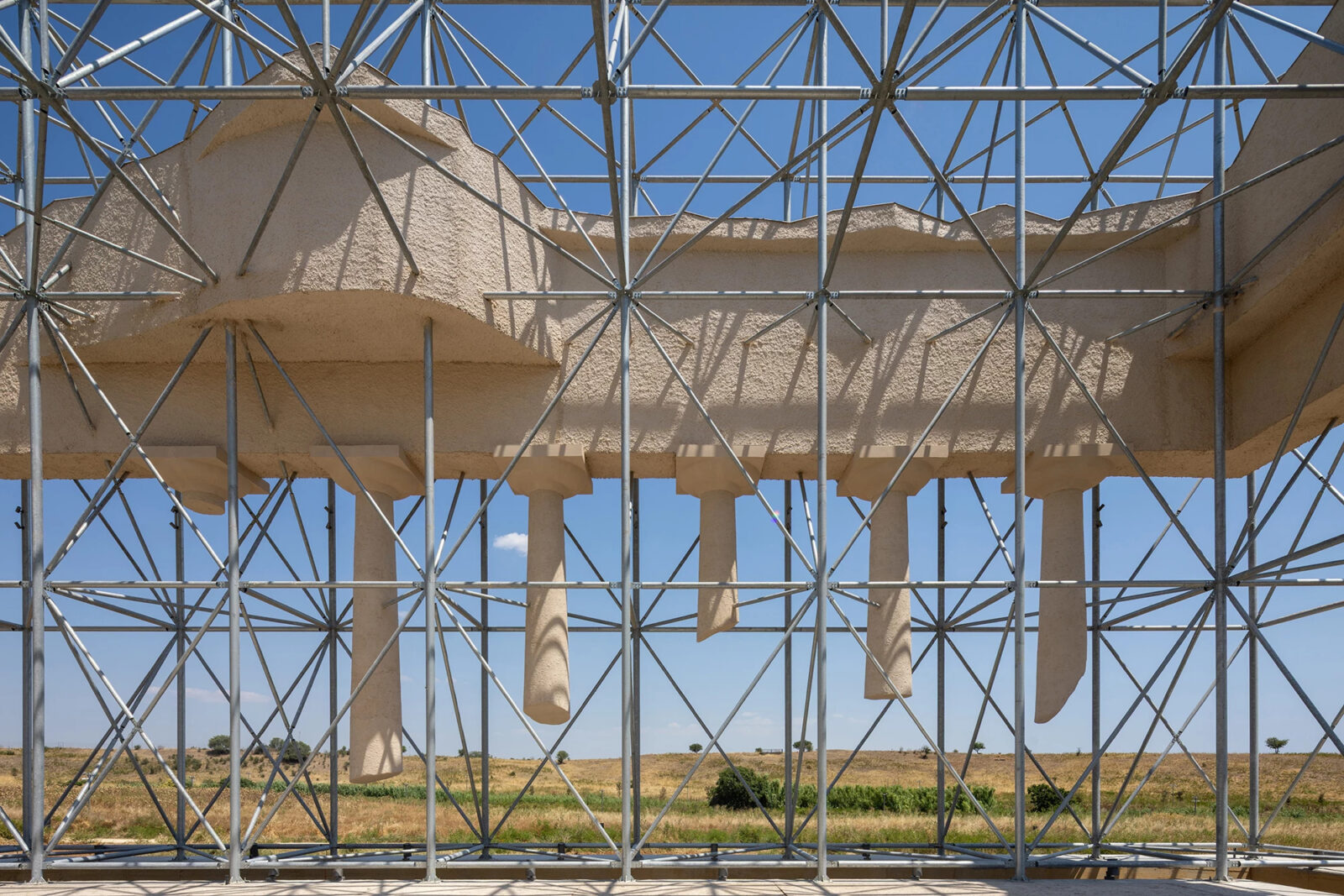
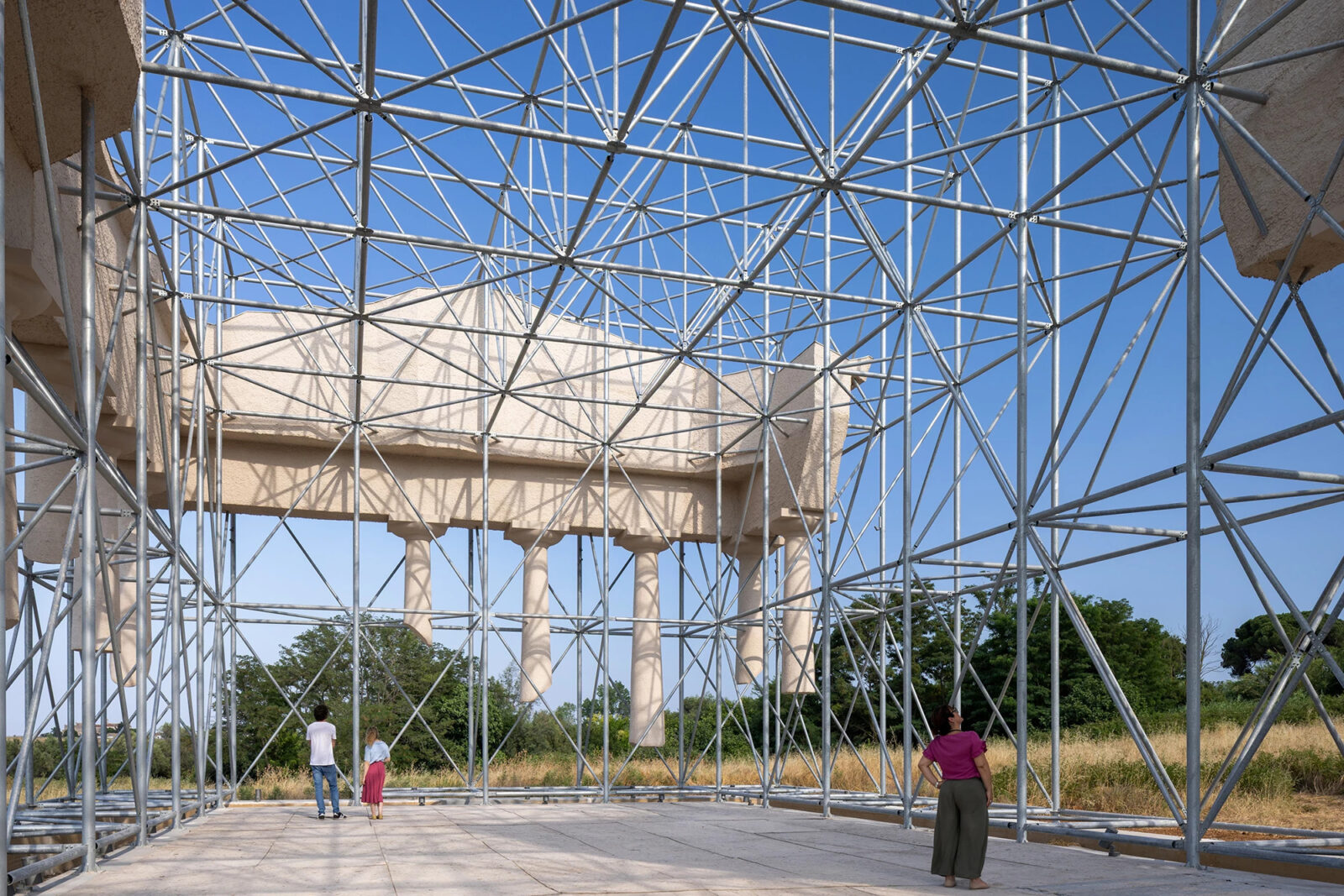
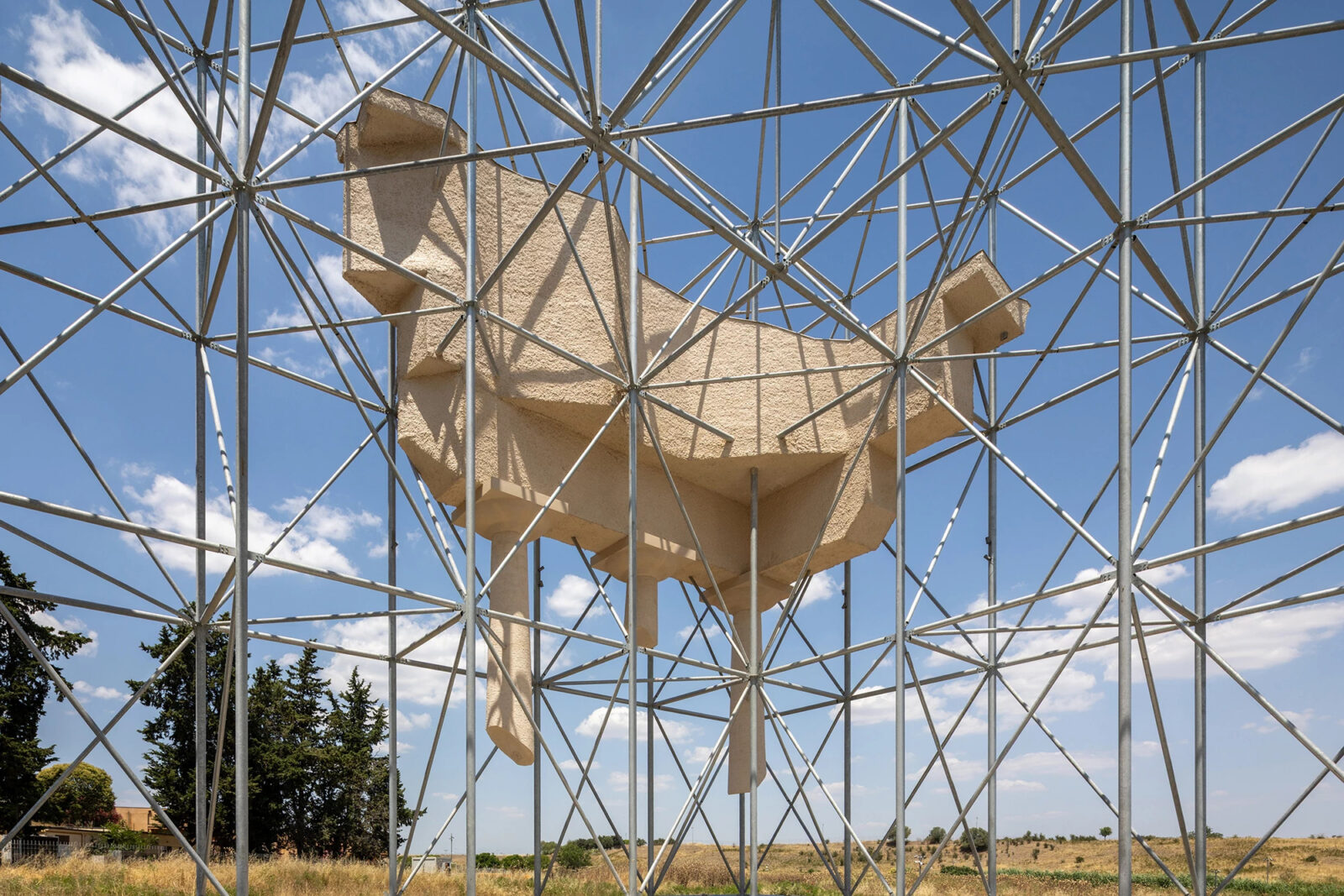
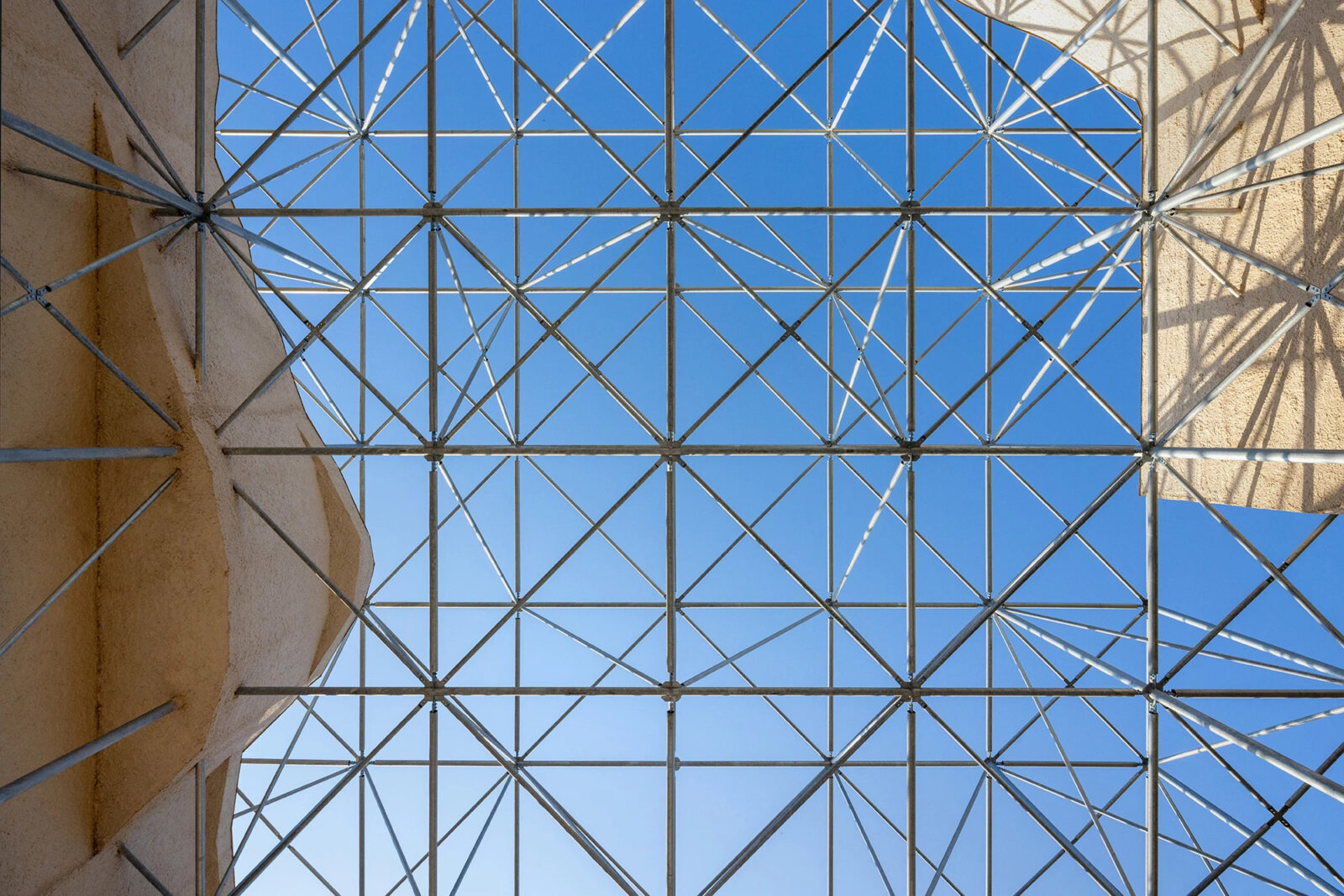
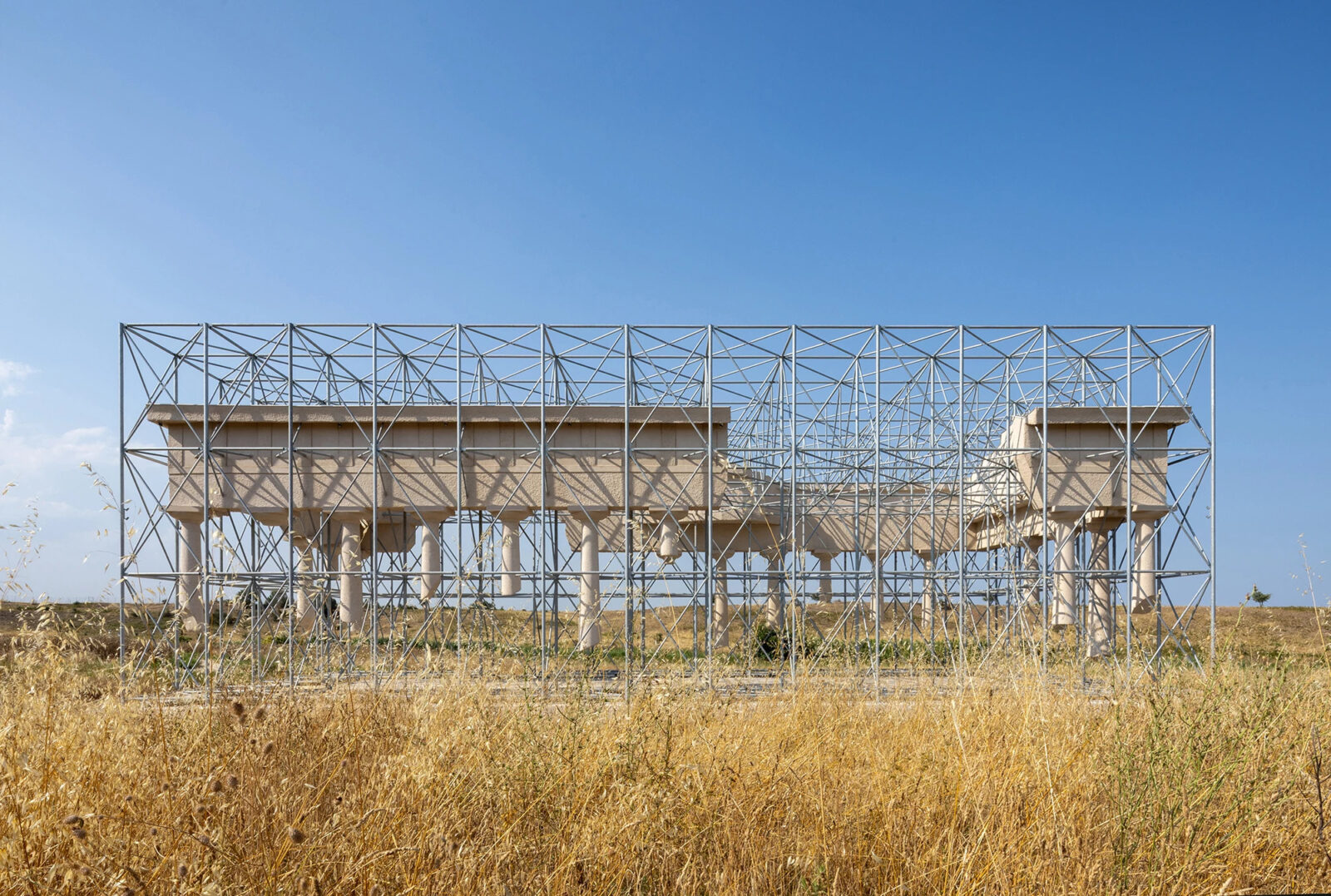
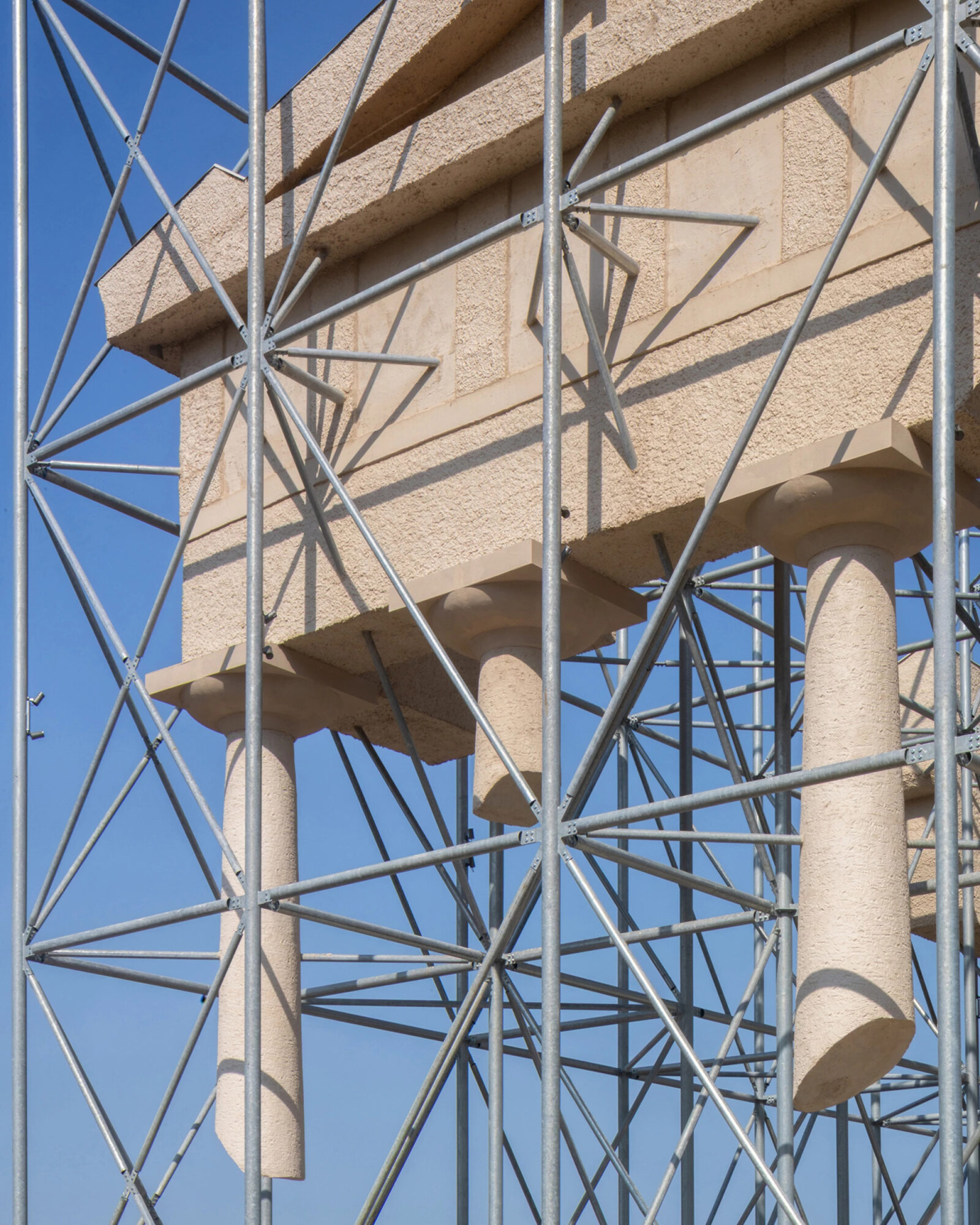
Table of Contents Show
On the archaeological grounds of Policoro in southern Italy, a striking artistic and architectural installation offers a new way to experience the remains of an ancient Dionysian temple. Once part of the acropolis of Herakleia, a Greek city founded in the late 5th century BC, the temple today survives only as foundations and fragments within the surrounding agora. Rather than reconstructing what has been lost, the project proposes a conceptual interpretation that challenges how we usually understand ruins.
From Fragment to Volume
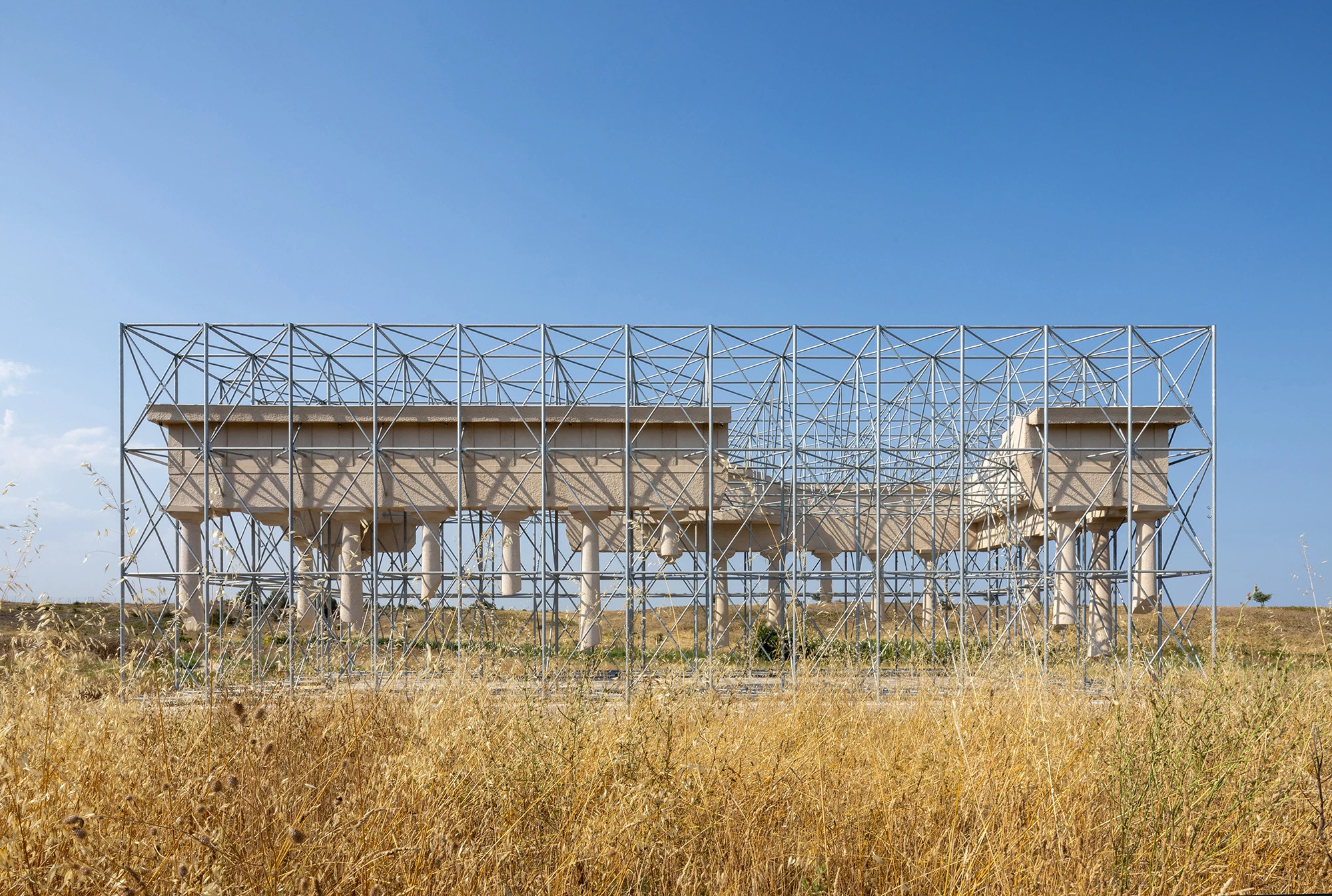
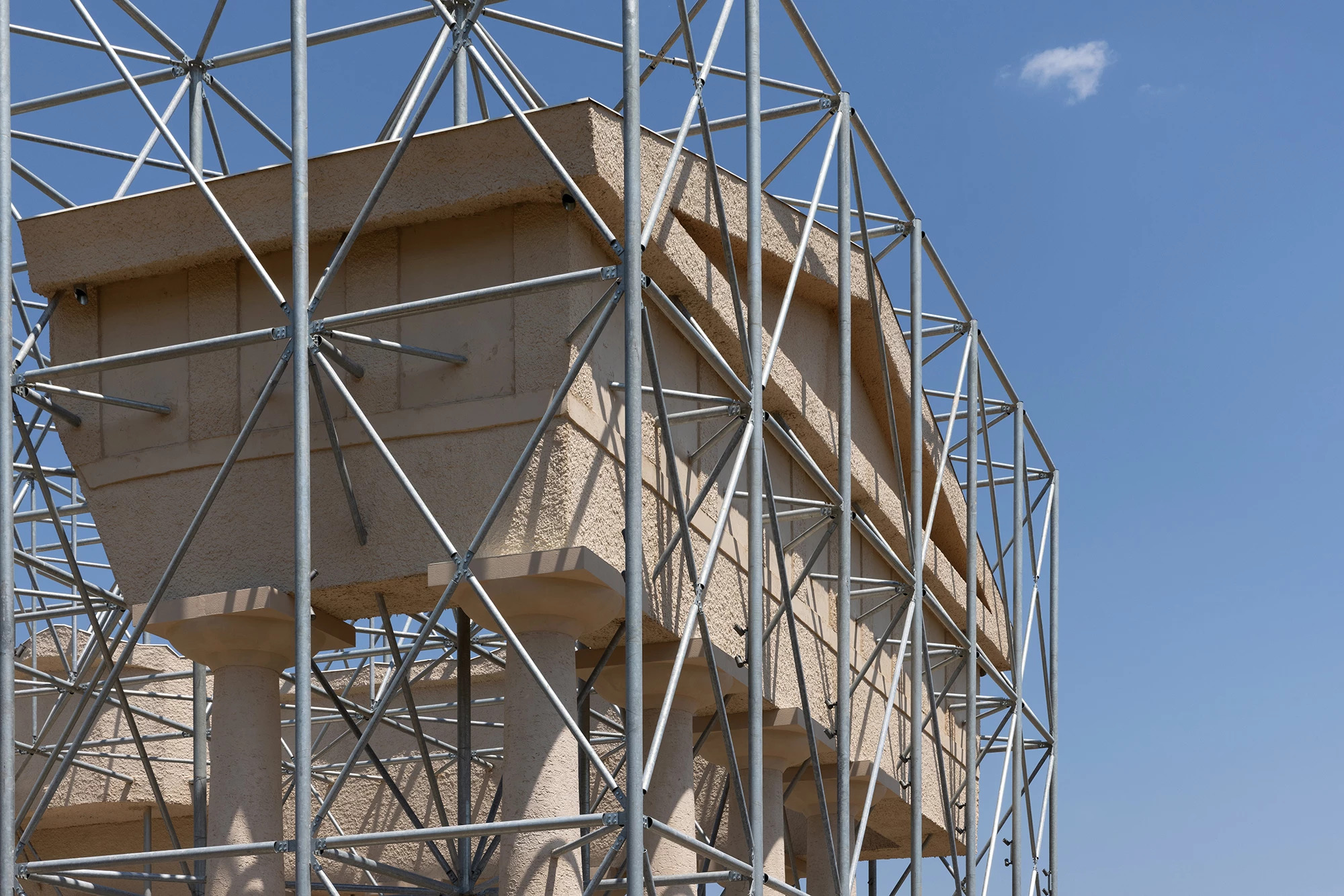
The intervention transforms the missing parts of the temple into a three-dimensional sculptural presence. Instead of rebuilding the structure from the ground up, the design presents the temple as an abstracted volume in space. The absent roof, upper walls, and sections of columns are reintroduced as suspended elements, allowing visitors to grasp the original scale and spatial power of the building without falsifying history through imitation.
An Inverted Ruin
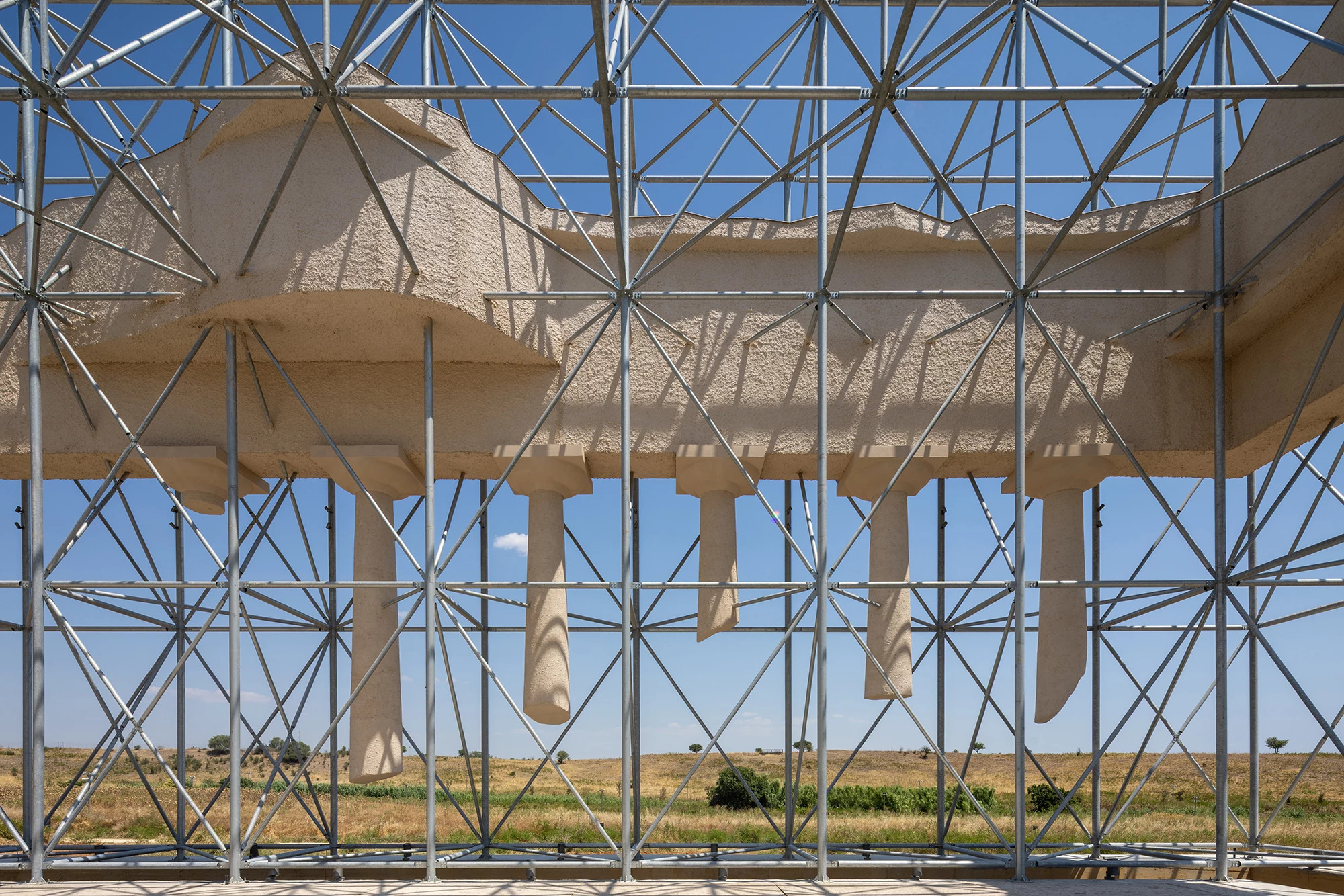
In most archaeological sites, decay follows a predictable path: exposed elements such as roofs and upper walls disappear first, while floors and foundations remain. This installation deliberately reverses that logic. The most vulnerable architectural components are lifted into the air, held within a lightweight steel framework. As a result, visitors encounter a ruin that seems to float above them, while the authentic remains stay untouched at ground level.

Walking Beneath History
One of the most distinctive aspects of the project is the visitor experience. People are invited to walk beneath the suspended fragments, moving through an artificial ruin while simultaneously observing the original archaeological traces below. This layered encounter creates a dialogue between past and present, material and interpretation, reality and representation.
Questioning the Idea of Ruins
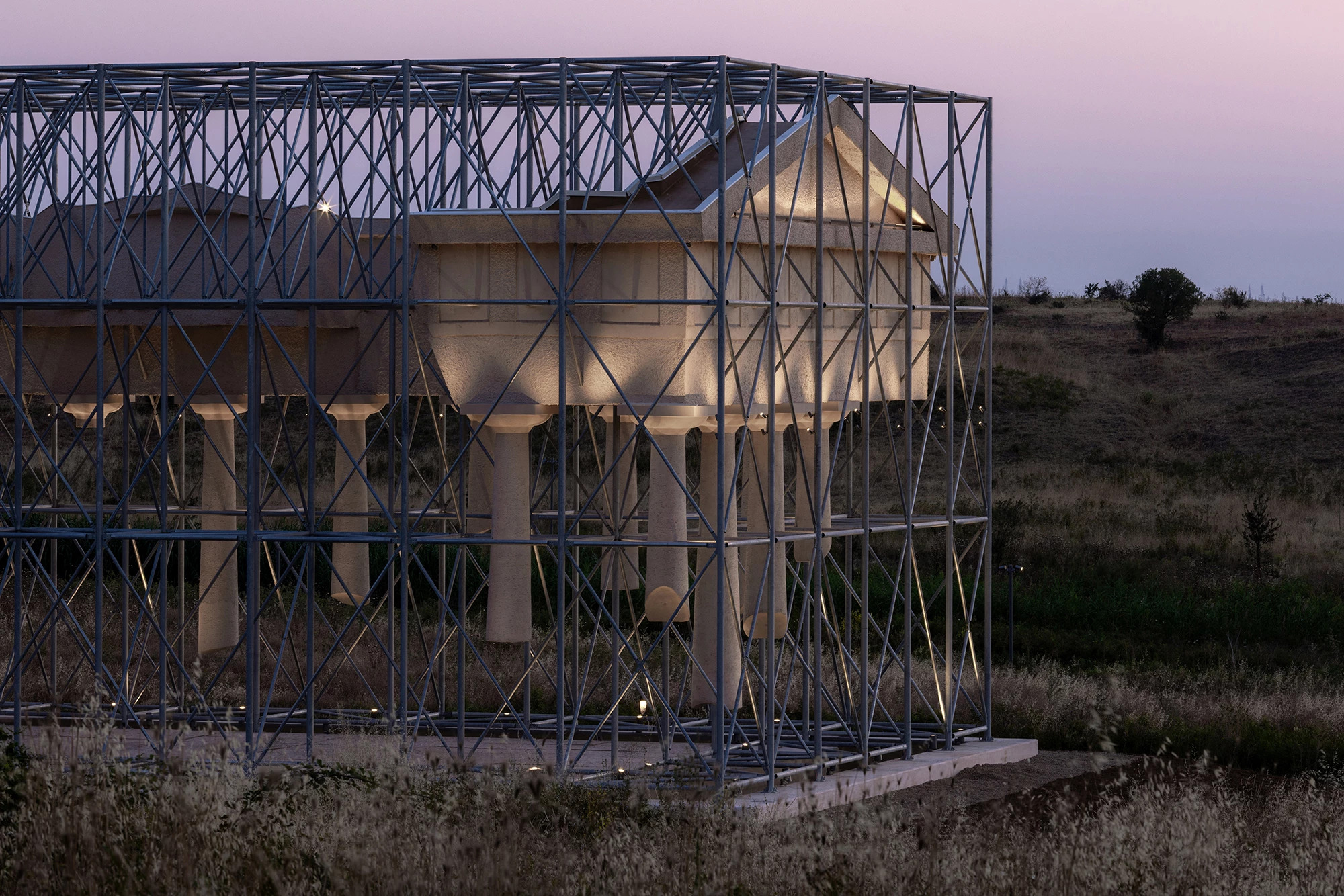
Beyond its spatial impact, the installation raises critical questions about how ruins are perceived. Ruins are often imagined as purely natural outcomes of time and decay, yet many are shaped by deliberate choices, restorations, and cultural narratives. By exposing its own artificiality so clearly, the project encourages visitors to reflect on the ideological and aesthetic constructions behind the romantic image of ancient ruins.
A New Perspective on an Ancient Site
By turning conventional expectations upside down, the intervention reveals the Dionysian temple not as a lost object to be nostalgically reconstructed, but as a catalyst for reflection. It demonstrates how contemporary architectural thinking can enrich archaeological sites without overpowering them, offering new ways to read history through space, movement, and perception.
Photography: Roberto Conte



India Art, Architecture & Design Biennale 2026: Ministry of Culture Opens Delhi Monuments
Delhi's monuments, including Purana Quila and the Red Fort, will host the...
 illustrarch Editoral Team2 Mins read
Vitra Museum Stages First Major Geoffrey Bawa Retrospective in Decades
Vitra Design Museum opens the first major Geoffrey Bawa retrospective in 20...
illustrarch Editoral Team2 Mins read
Ai Weiwei Installs 500 Cast-Iron Helmets Outside Sydney Museum
Ai Weiwei's 500 cast-iron helmets opened outside Sydney's MCA on 25 September,...
illustrarch Editoral Team2 Mins read
Isamu Noguchi at Lever House Traces Sculptor’s Decades-Long Collaboration with Bunshaft
Lever House's new exhibition pairs Noguchi sculptures with unbuilt garden designs made...
illustrarch Editoral Team2 Mins read


Leave a comment