

Pedestrian Accidents Without a Crosswalk: Can You Still Recover Compensation?
 Bahattin Duran10 January 20264 Mins read78

Table of Contents Show
Getting hit while crossing outside a crosswalk can feel like an instant loss—even before you’ve had a chance to understand your rights. Many pedestrians assume that if they weren’t in a marked crosswalk, they’re automatically at fault and can’t recover compensation. Drivers and insurance companies often reinforce that belief, using words like “jaywalking” to shut down the claim. But the truth is more nuanced. A crosswalk is important, but it is not the only factor that determines fault in a pedestrian accident.
Pedestrians can still have valid injury claims even when a crosswalk wasn’t present or wasn’t used. Drivers still have a legal duty to keep a proper lookout, follow speed laws, and take reasonable steps to avoid hitting someone in the roadway. If the driver was distracted, speeding, impaired, or failed to react safely, they may still be liable. In situations like these, Meyers & Flowers can help injured pedestrians understand how Illinois law applies, assess comparative fault, and pursue compensation based on the full circumstances—not just where the pedestrian was standing.
Why Crosswalk Location Isn’t The Only Thing That Matters
While crosswalks establish clear right-of-way rules, they don’t erase a driver’s responsibility elsewhere. Roads are shared spaces, and drivers must anticipate pedestrians—especially in residential areas, near parking lots, around schools, or in busy urban neighborhoods where foot traffic is common.
Many pedestrian accidents happen outside crosswalks because crosswalks aren’t always available. Some intersections don’t have marked crossings. Some streets require long walks to reach a designated crosswalk. And in many areas, people cross mid-block because it feels safer than crossing multiple turning lanes. These real-world conditions play a role in how fault is analyzed.
What Illinois Law Generally Says About Pedestrians Outside Crosswalks
In Illinois, pedestrians crossing outside a marked crosswalk often must yield the right-of-way to vehicles. However, that does not mean the driver has the right to hit someone. Drivers must still exercise due care, avoid collisions when possible, and drive safely for the conditions.
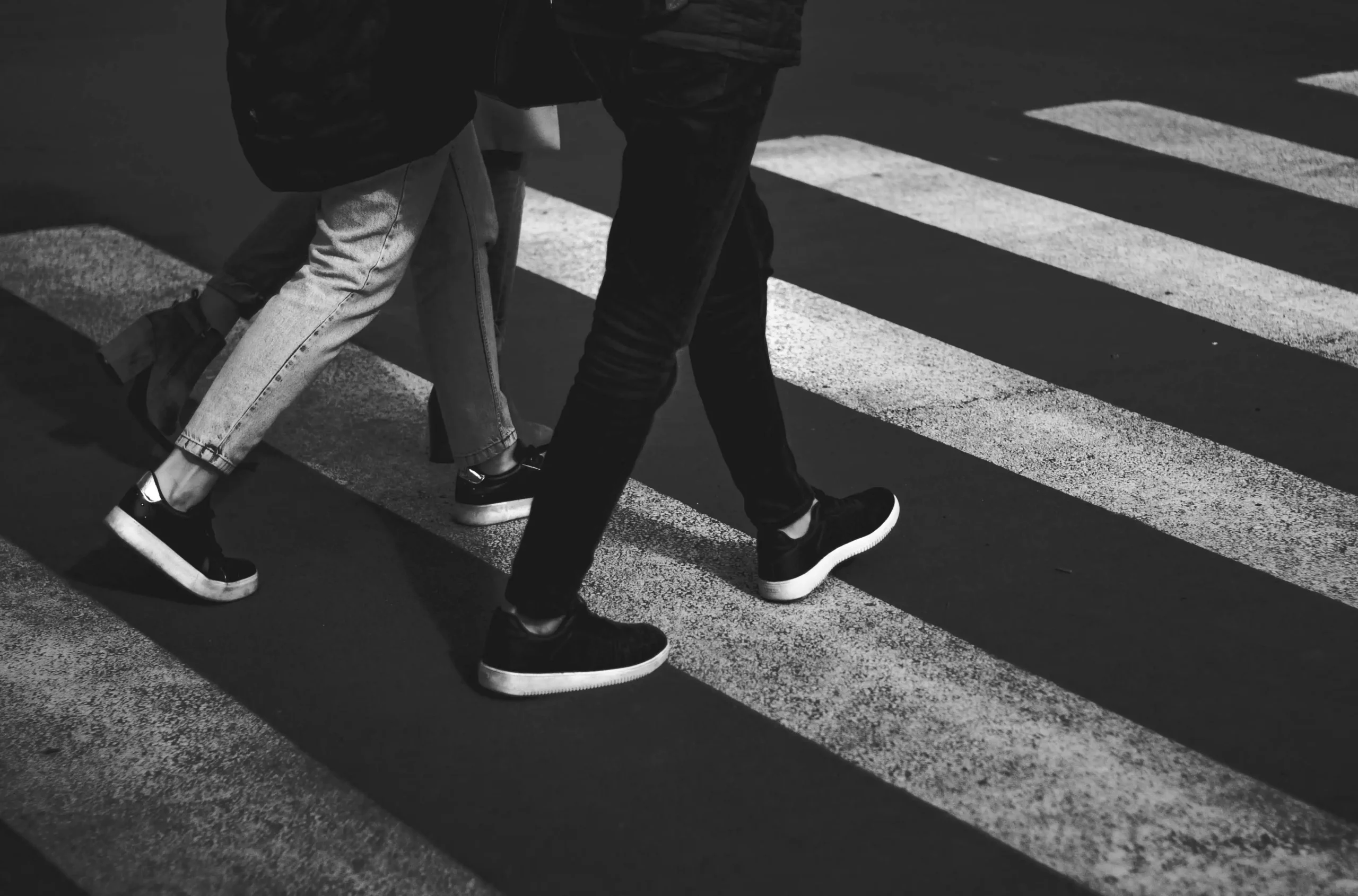
If a driver had time to see the pedestrian and could have avoided the crash but didn’t, the driver can still be held responsible. Illinois law focuses heavily on reasonableness: what each person did, what they could see, and what a careful driver would have done in that situation.
Situations Where Drivers Are Still Commonly Found At Fault
There are many scenarios where a driver may still be primarily at fault even if the pedestrian was outside a crosswalk. For example, if the driver was speeding through a residential area, they may not have had enough time to stop. If they were texting or looking down, they may not have seen the pedestrian until impact.
Drivers can also be liable if they failed to use headlights at night, drove aggressively in a crowded area, ran a stop sign, or ignored warning signs near schools or construction zones. In these cases, the focus becomes whether the driver acted safely—not just where the pedestrian was walking.
Parking Lots, Driveways, And Side Streets Often Create Hidden Crossing Risks
Many pedestrian injuries happen where there is no crosswalk by design—such as parking lots, driveways, alleyways, and side streets. Drivers backing out or turning quickly may not check for pedestrians. They may assume the space is clear and move without caution.
These crashes are common near shopping centers, apartment complexes, and city street parking. A pedestrian may be walking normally and still be struck by a car pulling out. These cases often involve visibility issues, poor lighting, and driver distraction—factors that can still support a strong compensation claim.
Comparative Fault: When You Can Still Recover Even If You Share Blame
Even if the pedestrian made a mistake, Illinois law may still allow recovery through comparative negligence. This means fault can be shared between the pedestrian and the driver, and compensation may be reduced based on the pedestrian’s percentage of responsibility.
In Illinois, an injured pedestrian can typically recover damages as long as they are less than 50% at fault. So even if someone crossed mid-block or outside a crosswalk, they may still recover meaningful compensation if the driver’s negligence played a larger role.
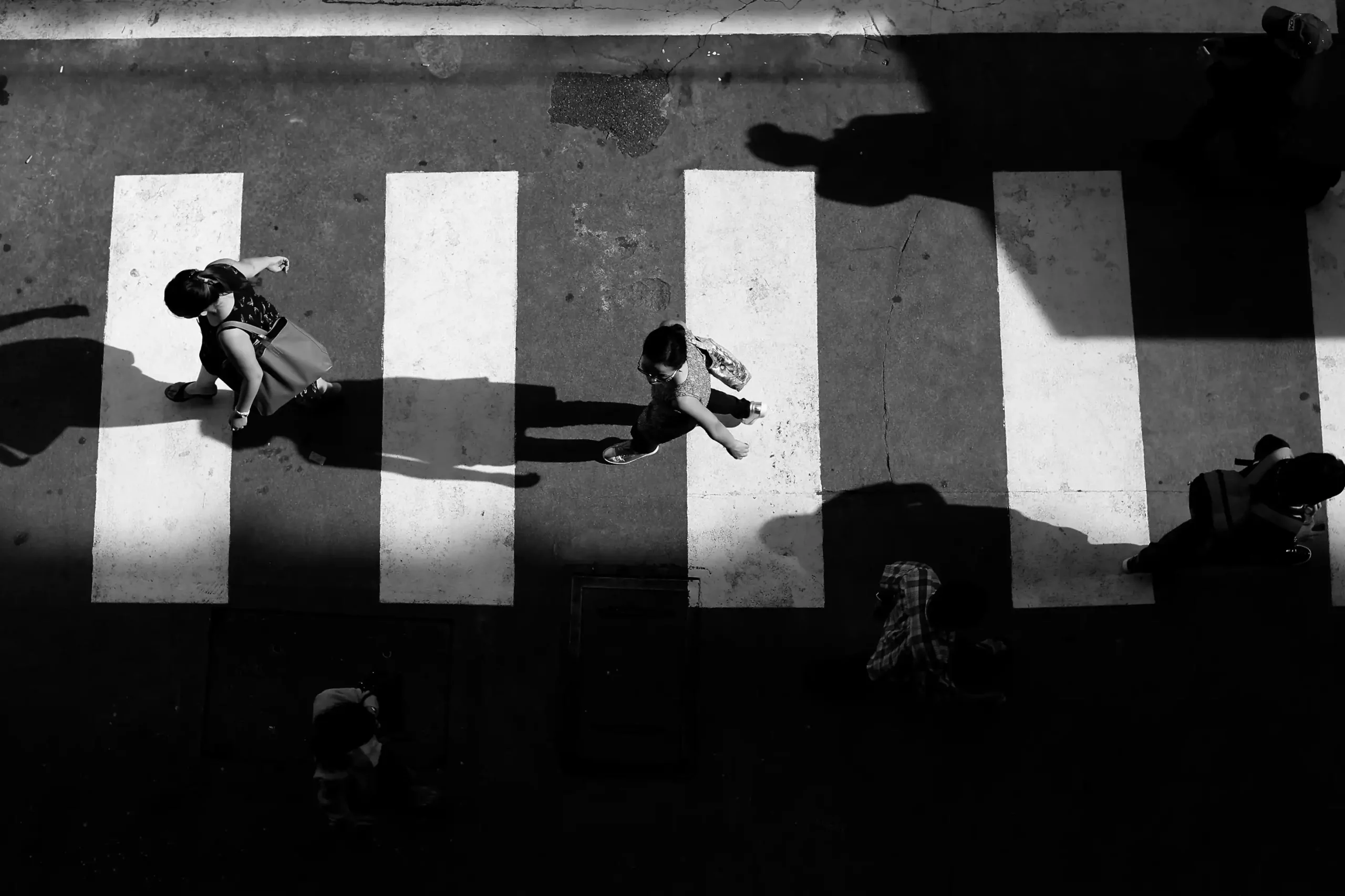
Why Insurance Companies Love “No Crosswalk” Cases
Insurance companies often treat crosswalk absence as an easy argument for denial or low settlement offers. They may claim the pedestrian “darted out” or “wasn’t supposed to be there” even if the driver had plenty of time to react. Their goal is often to raise the pedestrian’s fault percentage to reduce payouts.
That’s why evidence matters so much. Without clear proof, insurers often frame the incident in the most driver-friendly way possible. But with the right evidence—video footage, witness statements, and intersection documentation—the story can be corrected and liability can be proven.
Evidence That Helps Prove Driver Negligence Outside A Crosswalk
The strongest evidence in these cases often includes:
- Surveillance or doorbell camera footage
- Dashcam recordings
- Witness statements
- Photos of the scene showing lighting and visibility
- Vehicle speed evidence and skid marks
- Police crash reports
- Driver phone usage or impairment evidence
- Street layout showing limited crossing options
Even if the pedestrian wasn’t in a crosswalk, the evidence can show the driver had time to see and avoid the crash—or that they were driving in a way that made impact more likely.
The Injuries Are Still Real—And Damages Still Matter

The law doesn’t treat injuries as less serious because a pedestrian wasn’t in a crosswalk. A person struck by a vehicle can suffer broken bones, head trauma, spinal injuries, internal injuries, and long-term disability. The physical harm is often severe regardless of fault arguments.
Compensation may include medical expenses, lost income, reduced earning capacity, pain and suffering, and long-term rehabilitation needs. Even in shared-fault cases, the damages can be substantial because pedestrian injuries often require extensive treatment.
When Legal Help Becomes Important In These Claims
No-crosswalk cases are often challenged more aggressively, which makes legal strategy critical. These cases require evidence gathering, careful handling of comparative fault arguments, and strong documentation of injuries. Waiting too long can lead to lost video footage, disappearing witnesses, and weaker claim positioning.
If you were hit outside a crosswalk, a pedestrian accident lawyer can help investigate the driver’s actions, preserve important evidence, and build a claim that reflects the full story—not just the defense narrative. Legal support often makes the difference between a denied claim and a fair recovery.
You Can Still Pursue Compensation Without A Crosswalk
Being hit outside a crosswalk does not automatically prevent you from recovering compensation. Drivers still have a duty to drive carefully, remain alert, and avoid collisions when possible. If the driver was distracted, speeding, impaired, or careless, you may still have a valid claim—even if you crossed mid-block or in an unmarked area.
The key is understanding how comparative fault works and building a strong evidence-based case. With the right documentation and legal support, many pedestrians recover meaningful compensation even when a crosswalk was not involved.







Top 10 Architecture in the USA: Ranked by Revenue, Awards, and Specialty
A ranked breakdown of the top architecture firms in the USA covering...
 Furkan Sen13 Mins read

Kingdom Centre Tower: Riyadh’s Inverted Parabolic Arch and Sky Bridge Explained
A detailed look at Kingdom Centre Tower in Riyadh, Saudi Arabia, covering...
 Sinan Ozen9 Mins read

Architecture Precedent Study: How to Analyze a Building Step by Step
Learn how to conduct an architecture precedent study with a structured, step-by-step...
 Elif Ayse Sen12 Mins read

Reichstag Building: How Norman Foster Turned a War-Scarred Landmark into a Green Parliament
A detailed look at the Reichstag Building in Berlin, covering its turbulent...
Sinan Ozen7 Mins read


Leave a comment