

How Compact BLDC Motors Enable Dynamic Architecture
Compact BLDC motors are essential in modern architecture, enabling dynamic movement and adaptability in features like automated windows, shading systems.
 Bahattin Duran13 January 20264 Mins read169
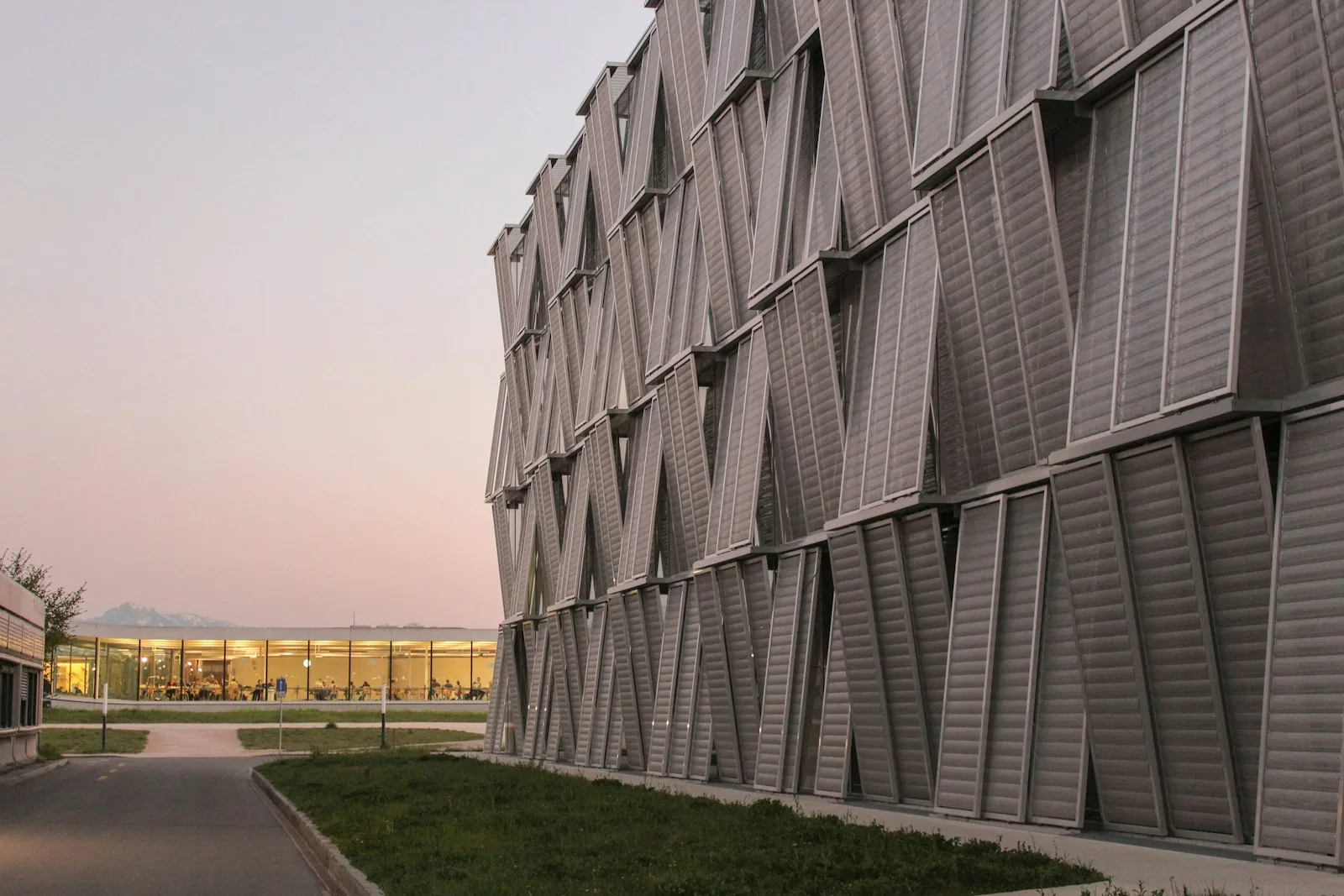
Table of Contents Show
Modern buildings are no longer static objects. Windows open and close automatically, shading systems respond to sunlight, and interior elements adjust without direct human intervention. Behind this quiet movement is a compact BLDC motor, small in size, but increasingly influential in how architecture behaves and responds.
For architects and designers, these motors are not simply mechanical components. They are enablers of motion, adaptability, and responsiveness, allowing buildings to interact with occupants and the environment in subtle, controlled ways. Understanding how and where compact BLDC motors support architectural systems helps designers make informed decisions without becoming motor specialists. In many architectural concepts, movement is defined visually long before its mechanical implications are fully considered.
Why Compact BLDC Motors Are Widely Used in Architecture
Compact BLDC motors offer a unique combination of qualities that suit architectural applications. Their appeal lies not in a single feature, but in how multiple characteristics work together to support clean, responsive design.
Key advantages include:
- Compact size, allowing motors to be concealed within frames, panels, and structural elements
- Quiet and smooth operation, essential for spaces where movement should feel natural rather than mechanical
- High energy efficiency, supporting low operational energy use
- Long service life with minimal maintenance, making them suitable for long-term architectural integration
Together, these qualities explain their growing role in architectural automation. Compared to traditional motor types, compact BLDC motors operate reliably in the background for years, without compromising spatial clarity or user comfort.
Where Compact BLDC Motors Appear in Architectural Systems
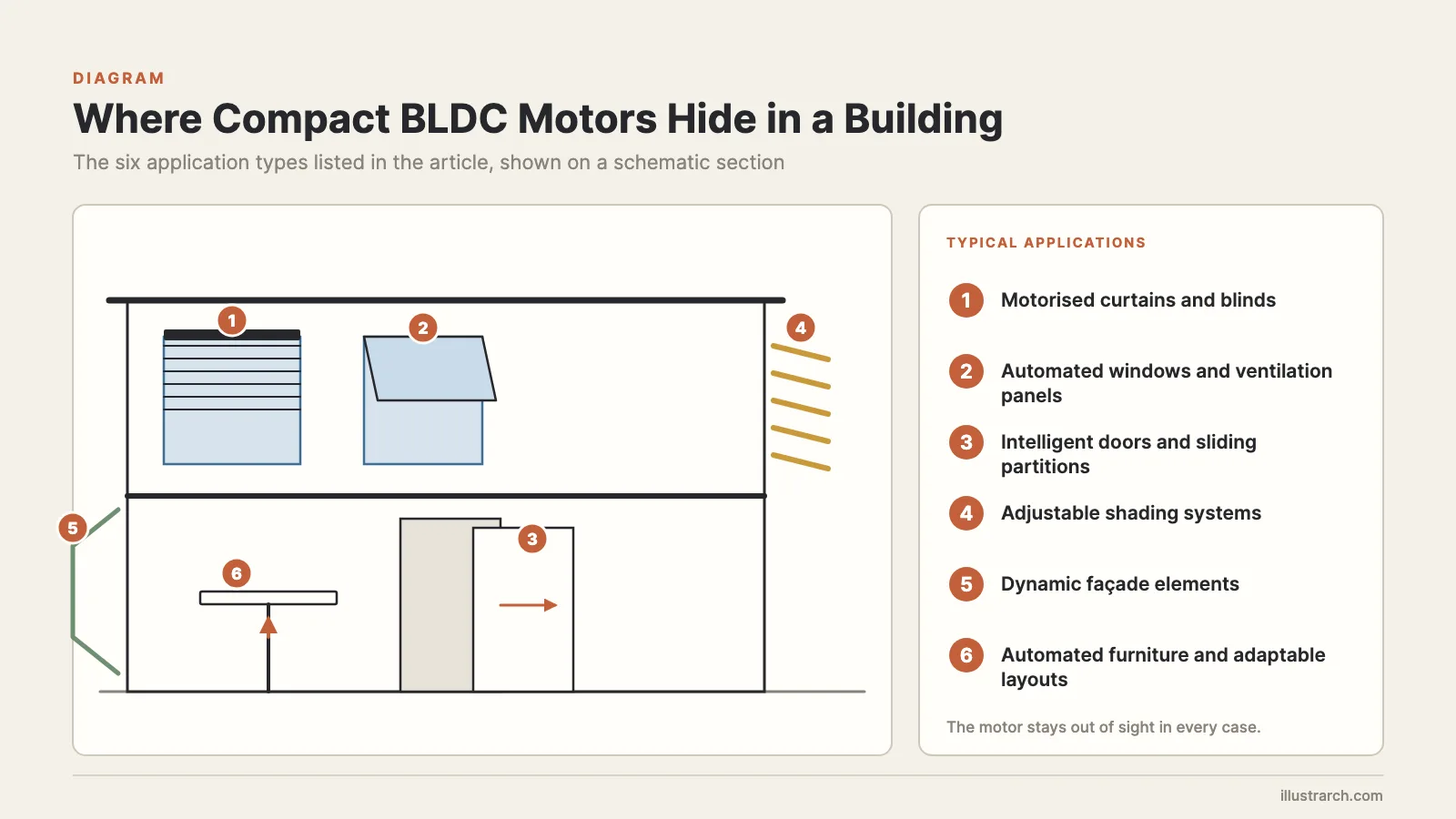
Many architectural features already rely on compact BLDC motors, often without users being consciously aware of them. Common applications include:
- Motorised curtains and blinds
- Automated windows and ventilation panels
- Intelligent doors and sliding partitions
- Adjustable shading systems
- Dynamic façade elements
- Automated furniture and adaptable interior layouts
In all of these cases, the motor must remain unobtrusive. Its success is measured not by visibility, but by how seamlessly movement integrates into the architectural experience.
Movement and Load as Design Considerations
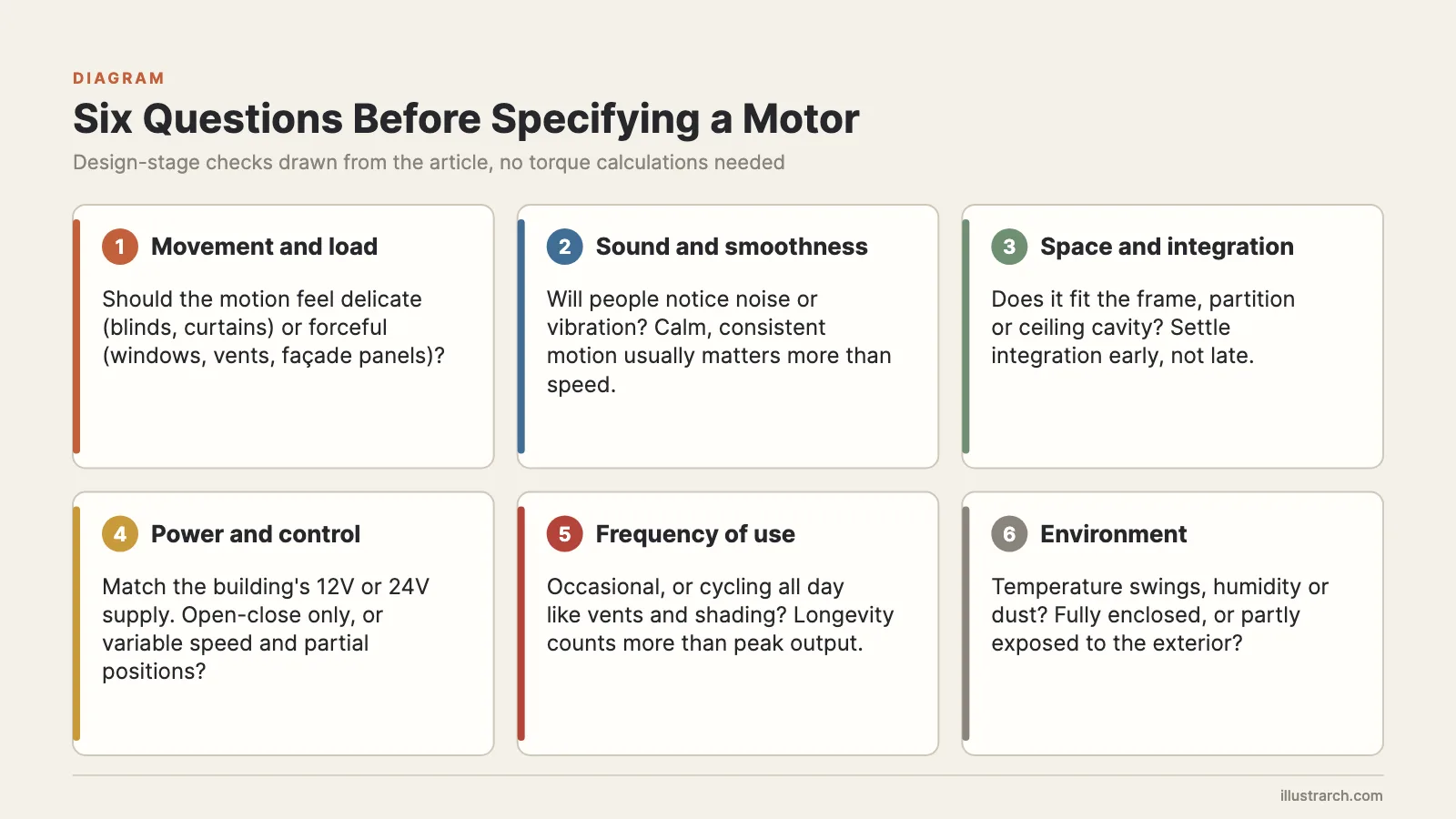
Every dynamic architectural element places different demands on its motor. Lightweight components such as blinds or curtains require gentle, controlled motion, while windows, vents, or façade panels involve greater mass and resistance.
From a design perspective, the goal is not to calculate exact torque values, but to understand whether the movement should feel delicate or forceful, slow or responsive. When a motor is under-specified, movement can appear hesitant or strained, undermining the intended user experience and increasing long-term reliability risks.
In practice, this balance between movement quality and mechanical capacity is increasingly reflected in compact motor solutions developed by manufacturers such as Brushless Inc., where controlled motion and long-term reliability are prioritised alongside minimal spatial impact.
Silence, Smoothness, and Spatial Experience
Sound and vibration are immediately noticeable in architectural spaces. Sudden movements, mechanical noise, or visible vibration can disrupt the perception of quality, especially in residential buildings, offices, hotels, and healthcare environments. When issues emerge later, they are rarely related to whether a motor can move an element, but to how that movement is perceived within the space.
Compact BLDC motors are often chosen for their ability to deliver smooth, controlled motion with minimal noise. In frequently used or highly visible architectural elements, consistency and quiet operation are usually more important than speed. Movement should feel intentional and calm, reinforcing comfort rather than drawing attention to the mechanism itself.
Spatial Constraints and Integration
Architectural designs rarely allocate generous space for mechanical systems. Motors are often required to fit within window frames, slim partitions, ceiling cavities, or compact housings.
Although many BLDC motors are described as “compact,” their dimensions and mounting options vary. From a design standpoint, it is essential to consider how the motor integrates into the surrounding construction. Successful integration allows movement to feel inherent to the architecture rather than added as an afterthought. Spatial constraints often become the defining limitation, not because motors are large, but because integration decisions are made too late.
Power and Control in Architectural Systems
Most building automation systems operate on low-voltage power, commonly 12V or 24V, balancing safety, efficiency, and system simplicity. Aligning motor selection with the building’s existing electrical infrastructure avoids unnecessary converters, simplifies wiring, and improves long-term reliability.
Control requirements also vary widely. Some architectural elements only require simple open-and-close functionality, while others benefit from variable speed, partial positioning, or responsive behaviour. Choosing a motor with control capabilities that match the design intent helps maintain system clarity and avoids unnecessary complexity.
Frequency of Use and Long-Term Reliability
Dynamic architectural elements may operate occasionally or many times each day. A window vent responding to air quality or a shading system adjusting to sunlight can cycle continuously throughout the day.
Compact BLDC motors are particularly well suited to frequent operation due to their durability and efficiency. When movement becomes a regular part of the architectural experience, reliability and longevity become as important as initial performance. Over time, consistency tends to matter more than peak performance in architectural systems that operate quietly and repeatedly.
Environmental Exposure and Building Conditions
Not all motors operate in protected interior spaces. Façade elements, ventilation systems, and transitional zones may expose motors to varying environmental conditions.
When considering environmental suitability, designers should ask:
- Will the motor be exposed to temperature variations?
- Is humidity or dust a concern in its location?
- Is the motor fully enclosed or partially exposed to the exterior?
Addressing these questions early in the design process helps prevent future maintenance challenges. Selecting motors designed for the expected conditions ensures consistent performance and reduces the likelihood of premature failure.
Energy Efficiency and Sustainable Design
Although individual motors are small, their cumulative energy use can be significant in large buildings with extensive automation. Compact BLDC motors are valued for their efficiency and thermal performance.
Efficient motor selection contributes to:
- Lower overall energy consumption
- Reduced heat generation within building systems
- Better alignment with sustainability goals and green certifications
For projects pursuing long-term environmental performance, efficient motors support both operational savings and responsive architectural strategies.
Cost, Longevity, and Design Value
While compact BLDC motors may involve higher upfront costs than simpler solutions, their long-term value often justifies the investment. Longer service life, reduced maintenance needs, and lower energy consumption all support predictable operating costs.
In architectural systems where replacement can be disruptive or expensive, reliability becomes a design consideration as much as a technical one.
Conclusion
Dynamic architecture relies on systems that move quietly, reliably, and efficiently. Compact BLDC motors play a critical role in enabling this movement, supporting buildings that respond to users, climate, and context without compromising comfort or design integrity.
Rather than focusing on technical specifications alone, architects and designers benefit from understanding how motors influence spatial experience, integration, and long-term performance. As buildings continue to evolve toward greater adaptability and responsiveness, compact BLDC motors remain unobtrusive but essential enablers of architecture that moves with purpose rather than noise.







Interior Design for Commercial Spaces: Enhancing Functionality and Brand Identity
Commercial interior design has to serve brand, function and regulation at once....
 Begum Gumusel4 Mins read
Futuro House Production Revived in Finland After Decades-Long Hiatus
A Facebook listing for abandoned moulds led to the first new Futuro...
 illustrarch Editoral Team3 Mins read
Building Your Dream Home in NSW: What You Should Know About Montgomery Homes
Montgomery Homes has been building across Sydney, Newcastle, the Hunter, Wollongong and...
illustrarch Editoral Team4 Mins read

Designing a Home Theater: Where Drapery Fits Into the Plan
In a media room the curtains are a performance layer, not decoration....
illustrarch Editoral Team3 Mins read


Leave a comment