

What Architects Need to Know About LiDAR Before Your Next Renovation Project
LiDAR scanning provides architects with highly accurate as-built drawings by capturing millions of measurement points in minutes.
 Bahattin Duran3 February 20268 Mins read166
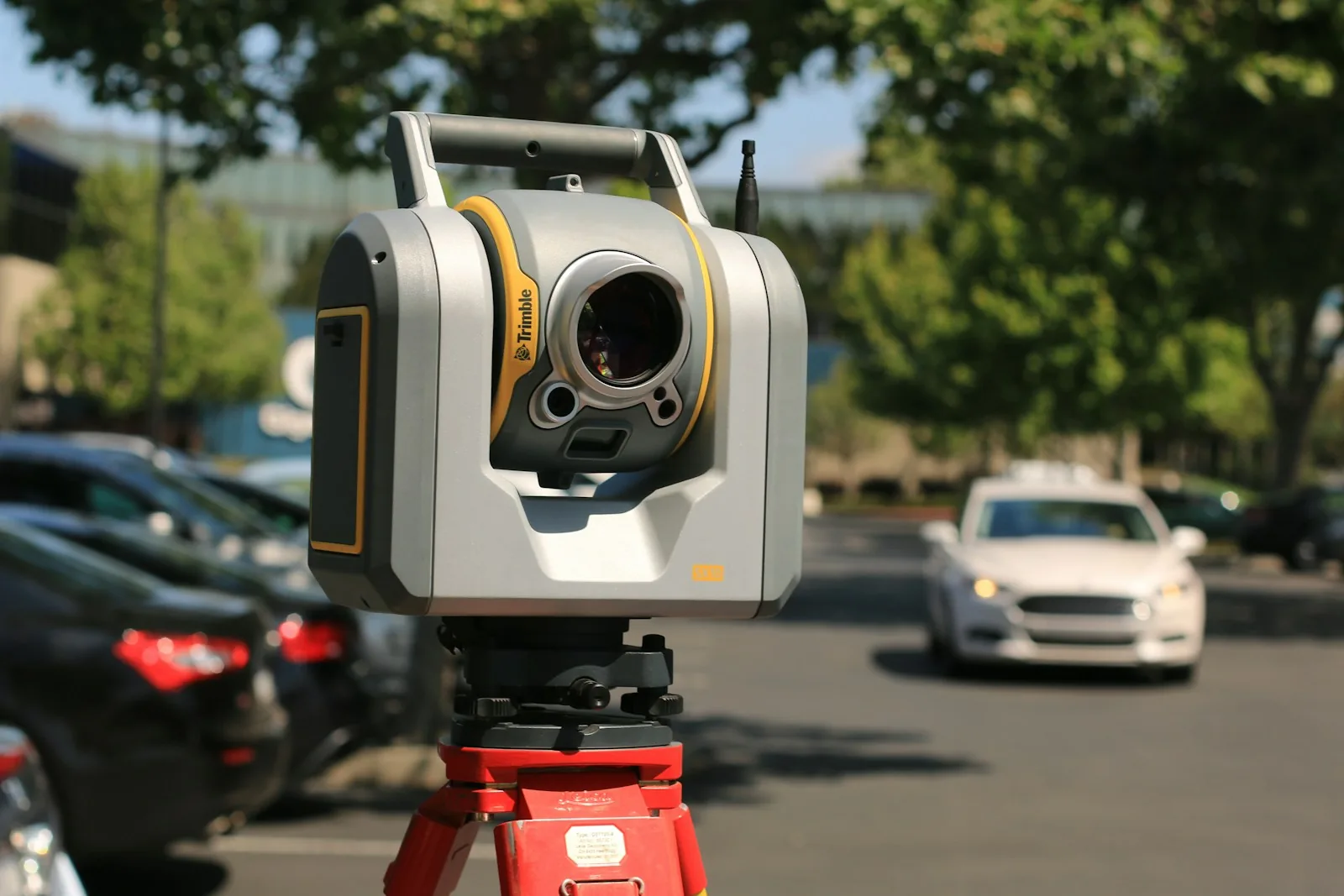
Table of Contents Show
Let’s be honest: you’ve been burned before. You’re standing in a 1920s building with drawings that claim the ceiling height is 12 feet, but your laser measure says 11’3″. The structural columns aren’t where the plans show them. And your client is asking why the design you spent weeks perfecting suddenly needs major revisions.
This isn’t your fault, it’s the reality of renovation work. But there’s a better way forward, and we’re here to walk you through exactly how LiDAR laser scanning transforms the way you approach existing buildings.
The Real Problem With Traditional As-Built Drawings
You already know this, but let’s name it: renovation projects are built on assumptions, and those assumptions cost you time, money, and credibility. Here’s what typically happens:
You inherit decades-old drawings, if you’re lucky. Maybe they’re hand-drafted blueprints from the 1960s that have been photocopied so many times the dimensions are barely legible. Or perhaps you’re working with a historic building in San Francisco’s Financial District where the original drawings were lost in the 1906 earthquake.
So you do what every architect does: you send someone out with a tape measure and a laser distance finder. They spend days measuring, taking photos, sketching. You build your design on those measurements. Then during construction, the contractor discovers that critical beam you designed around? It’s 18 inches to the left of where you thought it was.
Now you’re redesigning on the fly, eating into your fee, and explaining to your client why things are taking longer than expected.
We’ve seen this scenario play out hundreds of times across Las Vegas, Phoenix, Los Angeles, Denver, and San Francisco. And we want to help you avoid it on your next project.
What Exactly Is LiDAR Scanning for As-Built Drawings?
If you’re searching for “LiDAR As-Built Drawings” or “LiDAR scanning for architecture,” here’s what you need to know in plain terms:
LiDAR (Light Detection and Ranging) uses laser pulses to measure distances with millimeter accuracy, we’re talking ±3mm precision. Our 3D laser scanner captures millions of measurement points per second, creating a comprehensive “point cloud” that represents every surface, feature, and detail in your building.
Think of it this way: instead of a person with a tape measure taking 200 measurements over three days, the scanner captures 200 million measurements in minutes. And every single one is accurate to within a few millimeters.
The result is what we call precision as-builts, drawings you can actually trust your design on.
How LiDAR Scanning Actually Helps You (Not Just Sales Talk)

Here’s what 3D laser scanning as-built documentation does for your renovation projects: it captures millimeter-accurate measurements of the entire building in hours instead of days, and more importantly, it gives you confidence that your design will actually work.
Let me explain how this plays out in real terms for your workflow:
Before Construction Documents Start Instead of basing your schematic design on rough field measurements and assumptions, you’re working from a comprehensive 3D point cloud that shows you exactly what exists. That ornate ceiling medallion? You’ll see it’s 2 inches lower on the east side because the building settled. Those “symmetrical” window openings? They’re actually off by 3 inches, good to know before you design built-in millwork.
During Design Development (Especially for MEP Coordination) If you’re dealing with MEP as-built drawings, accuracy becomes absolutely critical. Your mechanical engineer needs to route HVAC through a ceiling plenum. With traditional as-builts, you’re guessing at what’s up there. With LiDAR scanning, you can see every pipe, conduit, and beam, before anyone climbs a ladder. Your MEP consultant isn’t calling you three weeks into construction saying “we have a problem.”
When the Contractor Requests Clarifications How many RFIs do you typically get asking “is this dimension correct?” With accurate as-built laser scanning from the start, you’ll dramatically reduce those time-draining back-and-forths. One architect we work with in Denver cut her RFIs by 60% on her last historic renovation project.
The Questions You’re Actually Searching For (Honest Answers)
“How much does LiDAR scanning actually cost compared to traditional surveys?”
This is the top question we hear, and here’s the honest answer: the upfront cost of 3D laser scanning services is typically 20-40% more than traditional measured drawings. But here’s what matters: you’re comparing that to the cost of one major design error, one round of unexpected construction changes, or one delay while you wait for field verification.
We’ve tracked projects across the Southwest, and architects who use precise plans from the start typically save 3-5 times the scanning cost through reduced errors, faster approvals, and fewer change orders. On a $2M renovation, that math works heavily in your favor.
“How do I find reliable LiDAR scanning companies near me?”
When you’re searching for “lidar services near me” or “as built drawings near me,” here’s what separates experienced providers from general surveying companies:
- Specific renovation experience: Ask if they’ve scanned occupied buildings, historic structures, and complex retail spaces. Scanning an empty warehouse is completely different from documenting a functioning restaurant with equipment, furniture, and limited access.
- Deliverables you can actually use: You need native Revit and AutoCAD files, not just PDF drawings or raw point clouds. Ask what format their as-built drawings services include.
- Local market knowledge: Someone experienced with San Francisco’s historic buildings understands different challenges than suburban office renovations. Market-specific knowledge matters.
- MEP coordination capabilities: If you need MEP as-built drawings, make sure they can identify and accurately document all building systems, pipes, ducts, conduits, structural members, and deliver this in a format your engineers can use.
“How long does the actual scanning process take?”
For a typical 10,000 SF commercial space, we’re on-site for 2-4 hours. You’ll have preliminary data within 48 hours and complete as-built 3D deliverables within 5-7 business days. Compare that to the 3-5 days a survey crew traditionally spends on-site, plus drafting time, and you’re actually getting your project started faster.
“What exactly do I receive, can I work with the files in Revit/AutoCAD?”
Yes, and this is crucial for your workflow. Our as-built drawings service delivers:
- The point cloud data (which you can view, measure, and extract from directly)
- Floor plans, reflected ceiling plans, elevations, and sections in both AutoCAD and Revit formats
- Coordinated structural and MEP documentation when needed
- All files are in the formats you already use, you’re not learning new software
“Can LiDAR capture everything for MEP coordination?”
This is critical for renovation work: 3D as-built scanning captures what’s visible. If pipes are above ceiling tiles we can access, we’ll document them with millimeter precision. If they’re behind walls, we work with you to identify access points or coordinate with other documentation methods. The honest answer: LiDAR excels at visible conditions and revealed MEP systems, and we’re upfront about what we can and cannot capture in your specific building.
Real Projects Where This Made the Difference

The San Francisco Union Square Retail Buildout
A national retailer was opening a flagship store in a 1927 building near Union Square. The architect was designing high-end millwork displays that required precise measurements, any errors would mean custom fabrication delays and cost overruns.
We provided 3D scanning services in San Francisco, capturing the 8,500 SF space and revealing that the “straight” walls actually varied by up to 4 inches over their length, and floor-to-ceiling heights ranged from 11’8″ to 12’2″ due to settling.
The architect adjusted their millwork design to accommodate these variances upfront. Result? The millwork fabricator delivered pieces that fit perfectly the first time. No field modifications, no delays, no surprise costs. The architect told us this single decision saved the project three weeks of schedule and approximately $45,000 in potential rework.
You can see more examples of our as-built services in San Francisco where precision documentation made complex renovations possible.
The Phoenix Historic Theater Conversion
An architect was converting a 1940s movie theater into a mixed-use space with ground-floor retail and upper-level offices. The existing drawings showed a symmetrical structure, but our lidar construction scan revealed significant deviations, the result of multiple renovations over 80 years. The mezzanine structure was 7 inches lower on one side, and several structural columns had been relocated during previous renovations but never documented.
Armed with this accurate data before design began, the architect could design around the reality of the building rather than discovering problems during construction. The project came in on schedule and within budget, rare for historic renovations.
Las Vegas Casino Retail Renovation
A luxury retail tenant was moving into a 1990s casino property that had been renovated three times. The challenge? Every renovation added new systems, HVAC, fire suppression, electrical, but documentation was incomplete. The architect needed comprehensive MEP as-built drawings in Las Vegas to design around existing systems.
Our 3D scanning in Las Vegas captured the entire ceiling plenum, revealing conflict points between the proposed design and existing ductwork that would have cost $80,000+ to relocate if discovered during construction. The architect redesigned the ceiling plan in one week, avoiding the entire issue.
How to Actually Use LiDAR on Your Next Project
Let’s make this practical. Here’s how to integrate as-built scanning into your workflow:
Early in Pre-Design (Ideal Timing) If you’re writing a proposal for a renovation project, budget for scanning in your services. Get the building scanned before you start schematic design. This is when accurate data provides the most value, you’re designing around reality from day one, not redesigning later.
During Schematic Design (Still Very Valuable) If you’re already into schematics and realizing your measurements aren’t adding up, it’s not too late. Scanning now prevents costly errors from multiplying through design development and CDs. Yes, you might need to adjust some early concepts, but that’s infinitely better than adjusting during construction.
For MEP-Heavy Projects If your renovation involves significant mechanical, electrical, or plumbing work, schedule as-built laser scanning before your consultants start their design. Give your MEP engineers accurate existing conditions data, they’ll thank you, and you’ll avoid coordination nightmares later.
Working Across the Southwest: Local Expertise Matters

Whether you’re searching for “3d scanning services Los Angeles,” “as built services Bay Area,” or “scanning services Las Vegas,” local market knowledge makes a real difference.
We’ve spent 27 years working in Las Vegas, Phoenix, Los Angeles, Denver, and San Francisco. Each market has unique characteristics:
- San Francisco: Historic buildings with unreinforced masonry, frequent seismic retrofits, and strict preservation requirements
- Las Vegas: Casino properties with complex MEP systems and 24/7 operations requiring minimal disruption
- Los Angeles: Mix of historic theaters, retail, and commercial spaces with diverse architectural styles
- Phoenix: Rapid commercial growth with many adaptive reuse projects
- Denver: Historic downtown buildings plus modern commercial developments
Understanding these market-specific challenges means we know what questions to ask, what issues to watch for, and how to deliver documentation that works for your specific project type and location.
The Bottom Line: This Is About Protecting Your Practice
Here’s what we want you to take away from this: you’re already excellent at design. You’ve spent years mastering your craft, understanding building codes, creating spaces that solve problems and delight users.
What derails renovation projects isn’t design skill, it’s inaccurate information about what actually exists. LiDAR scanner for construction and architecture simply gives you the accurate foundation you need to do your best work.
We’ve worked with architects across Las Vegas, Phoenix, Los Angeles, Denver, and San Francisco on over 300 renovation projects. The ones who succeed consistently are those who refuse to accept “good enough” when it comes to as-built documentation.
Your next renovation project deserves to start with confidence. You deserve to present designs to your client knowing they’ll actually work in the real building. And you deserve to avoid those 9 PM phone calls from the contractor saying they found a problem.
That’s what accurate as-built 3D scanning provides, and that’s exactly what we’re here to help you achieve.
Ready to discuss your next renovation project? We’d be happy to walk you through exactly how LiDAR scanning would work for your specific building and timeline. No sales pressure, just straight answers from people who’ve been doing this for 27 years across the Southwest market. Contact us to learn how our precision as-built services can protect your next project.




Interior Design for Commercial Spaces: Enhancing Functionality and Brand Identity
Commercial interior design has to serve brand, function and regulation at once....
 Begum Gumusel4 Mins read
Futuro House Production Revived in Finland After Decades-Long Hiatus
A Facebook listing for abandoned moulds led to the first new Futuro...
 illustrarch Editoral Team3 Mins read
Building Your Dream Home in NSW: What You Should Know About Montgomery Homes
Montgomery Homes has been building across Sydney, Newcastle, the Hunter, Wollongong and...
illustrarch Editoral Team4 Mins read
Designing a Home Theater: Where Drapery Fits Into the Plan
In a media room the curtains are a performance layer, not decoration....
illustrarch Editoral Team3 Mins read


Leave a comment