

Rem Koolhaas: The Architect-Intellectual Who Killed and Reinvented the Skyscraper
Rem Koolhaas is one of architecture's most influential thinkers, known for founding OMA, writing Delirious New York, and designing provocative structures that challenge how we define the skyscraper and public space. This article examines his architectural philosophy, key works, and what makes his style distinctly his own.
 Sinan Ozen2 April 20268 Mins read225

Table of Contents Show
Rem Koolhaas is a Dutch architect, theorist, and founder of OMA (Office for Metropolitan Architecture) whose work has fundamentally changed how architects think about cities, tall buildings, and the role of architecture in contemporary life. Born in Rotterdam in 1944, he began his career as a journalist before studying at the Architectural Association in London, and that unconventional path never left his work. His buildings challenge, provoke, and occasionally unsettle, but they always have something to say.

What Is Rem Koolhaas’s Architecture Philosophy?
The rem koolhaas architecture philosophy begins with a refusal to separate buildings from the forces that shape them. Politics, economics, media, and urbanization are not background context for Koolhaas; they are the material. Where most architects try to create order out of complexity, Koolhaas treats complexity as the design brief itself.
His 1978 book Delirious New York: A Retroactive Manifesto for Manhattan laid the intellectual foundation. In it, he reframed Manhattan’s grid not as chaos but as a brilliantly democratic system that allowed radically different buildings to coexist side by side. He called it the “culture of congestion” and argued that density, contradiction, and competition were what made cities alive. The book was not a proposal; it was a diagnosis, and the diagnosis became a worldview.
This worldview showed up in every OMA project that followed. Koolhaas was never interested in the beautiful object. He was interested in the program, the way space could be organized to generate unexpected encounters, and the question of what a building communicates about the society that builds it.
💡 Pro Tip
When studying rem koolhaas architecture style, read S,M,L,XL (1995) alongside the buildings, not after them. The book and the projects are designed to be read together; each informs the other in ways that neither communicates on its own. It is one of the few architectural monographs that genuinely changes how you see the buildings it documents.

How OMA Rem Koolhaas Architecture Changed the Design Industry
OMA, founded in 1975 with Elia Zenghelis, Zoe Zenghelis, and Madelon Vriesendorp, became the institutional vehicle for Koolhaas’s ideas. Madelon Vriesendorp, who co-founded OMA and whose surreal paintings gave the office its early visual identity, was awarded the 2025 Soane Medal for her exceptional contribution to architectural culture.
The firm operated differently from the start. OMA was not organized around a signature style that clients could purchase. It was organized around research, with each project treated as an opportunity to test an architectural hypothesis. The Kunsthal in Rotterdam (1992) tested what happens when a building has no conventional entrance sequence. The Seattle Central Library (2004) tested whether a library could be organized not by tradition but by the actual behavior of information.
This research-led approach produced buildings that looked nothing like each other, which was precisely the point. OMA rem koolhaas architecture has no house style because having a house style would mean the answer always precedes the question.
For a broader view of how Koolhaas’s key projects evolved across five continents, the top 10 iconic buildings by Rem Koolhaas on illustrarch covers each work in depth, from the CCTV Headquarters to De Rotterdam and the Seattle Central Library.
🎓 Expert Insight
“We are obsessed with the idea that architecture can be the mirror of society, that it can reflect the contradictions and the complexity of any given moment.” — Rem Koolhaas, Harvard Graduate School of Design lecture, 2014
This orientation explains why OMA buildings often feel uncomfortable or unresolved at first encounter. They are not designed to reassure. They are designed to accurately represent the world that commissioned them, including its tensions.
Rem Koolhaas Architecture Style: What Makes It Distinct?
The rem koolhaas architecture style is easier to describe through its methods than its forms. A few consistent characteristics show up across OMA’s portfolio:
First, programmatic stacking. Koolhaas frequently layers unrelated functions on top of each other, creating buildings where a concert hall sits below an apartment, or an escalator cuts through a library at a 45-degree angle. These collisions are intentional. They generate what he calls “programmatic instability,” moments where the building forces you to reconsider what you expected to find.
Second, structural exposure. OMA buildings rarely hide how they are put together. The Maison a Bordeaux (1998) runs a steel platform on a single hydraulic piston through three floors of a house, making the mechanical system the spatial experience. The building does not try to look effortless; it foregrounds its own effort.
Third, resistance to the picturesque. Unlike many contemporary architects, Koolhaas rarely pursues images for their own sake. The design secrets behind Koolhaas’s approach lie in prioritizing spatial organization over visual appeal, though the results are frequently striking anyway.
📌 Did You Know?
Before studying architecture, Rem Koolhaas worked as a journalist and co-wrote a screenplay for a Dutch crime film. He only enrolled at the Architectural Association in London at the age of 24, older than most of his peers. This background as a storyteller and observer shaped his treatment of buildings as narratives rather than objects, a quality that runs through every project OMA has produced.

What Is the CCTV Headquarters and Why Does It Matter?
The CCTV Headquarters in Beijing, completed in 2012, is probably the building that best illustrates what architecture rem koolhaas can do at its most ambitious. The structure rejects the standard skyscraper typology entirely. Instead of a vertical tower, it is a continuous loop: two leaning towers connected at the base and at the top by a massive cantilevered overhang, forming a closed circuit that houses offices, broadcasting studios, and public facilities in a single organizational system.
The technical engineering behind the cantilever, developed with Arup Engineers, was unprecedented at that scale. But the conceptual argument was even more significant. Koolhaas was not just building a headquarters for a state broadcaster. He was asking what a skyscraper is actually for. The conventional tall building is a vertical stack of identical floors, efficient but anonymous. The CCTV building proposes that a skyscraper can instead be a loop, a circuit where every part of the institution is connected to every other part, and where the organization of the building reflects the organization of the work that happens inside it.
🏗️ Real-World Example
Seattle Central Library (Seattle, 2004): Rather than organizing books through traditional hierarchies, OMA designed a continuous “book spiral” that allows the library’s collection to grow without disrupting the classification system. The building accommodated 1.45 million volumes in a non-linear spatial sequence across 362,987 square feet. Within its first year of opening, annual visits increased by over 50% compared to the previous building, demonstrating that unconventional spatial organization can generate genuine civic engagement.
To understand how this approach to tall buildings compares with the historical development of the skyscraper typology, the history and evolution of skyscraper architecture provides essential context, from William Le Baron Jenney’s steel frame innovations in the 1880s through to today’s supertall towers.
Elements of Architecture Rem Koolhaas: The Book That Redefined Fundamentals
In 2014, Koolhaas directed the Venice Architecture Biennale under the title “Fundamentals.” The accompanying publication, Elements of Architecture, runs to more than 2,500 pages and examines fifteen universal architectural components: floor, wall, ceiling, roof, door, window, facade, balcony, corridor, fireplace, stair, escalator, elevator, ramp, and toilet. The research was conducted over two years with students from the Harvard Graduate School of Design at OMA’s Rotterdam office.
The elements of architecture rem koolhaas project made an argument that had been implicit in all his earlier work: that architecture’s basic vocabulary had evolved independently across cultures and centuries without architects coordinating that evolution, and that understanding how each element changed tells us more about architecture’s real history than any stylistic survey. A window is not just a hole in a wall; it is a technology that has been shaped by climate, by building regulation, by the invention of glass, by air conditioning, and by digital fabrication. Each element has its own genealogy.
The fundamentals of architecture rem koolhaas explored through the Venice Biennale shifted the conversation away from star architects and iconic forms toward the anonymous, shared components that every building on earth uses. It was characteristically contrarian and characteristically rigorous.
💡 Pro Tip
Architecture students using Elements of Architecture rem koolhaas as a reference will find it most useful as a comparative research tool rather than a linear read. Each section on a single element (corridor, escalator, window) functions as a self-contained case study and can be read independently. The book is listed among the essential architecture student books recommended for building a deep understanding of design theory. For a full archive of OMA’s completed projects referenced in the book, ArchDaily’s OMA project archive is the most comprehensive free resource available.

Rem Koolhaas and the Architects He Shaped
One of the less-discussed aspects of Koolhaas’s legacy is how many significant contemporary architects passed through OMA or were directly influenced by his teaching. Zaha Hadid studied at the Architectural Association when Koolhaas was a visiting critic; he described her as “a planet in her own orbit” and recognized her talent before almost anyone else in the field. Bjarke Ingels worked at OMA before founding BIG. Winy Maas co-founded MVRDV. The list reflects how fertile the intellectual environment of OMA became for architects who wanted to engage seriously with cities and ideas.
This pedagogical influence extended to Harvard, where Koolhaas has been a professor and has conducted the Project on the City, a research program examining urbanization in China, Lagos, Rome, and other contexts. The work produced in those studios became published research and has influenced urban planning debates well beyond architecture schools.
What Is Junkspace and Why Does It Still Matter?
Koolhaas published the essay “Junkspace” in 2001, and it remains one of the most cited texts in architectural culture. The argument is that modernization has produced a new kind of built environment, characterized by air conditioning, escalators, dropped ceilings, and constant renovation, that has no coherent spatial logic. Shopping malls, airports, hotel lobbies, corporate atriums: these are junkspace, spaces defined not by architectural intention but by the logic of consumption and maintenance.
The essay was partly a critique of the environments OMA itself was being commissioned to design. That self-awareness is characteristic of Koolhaas’s intellectual approach. He rarely develops a position without including the critique of that position within the same text. “Junkspace” was not a manifesto against consumerism; it was an attempt to describe accurately what consumerism had built, and what that revealed about architecture’s reduced agency in late capitalism.
⚠️ Common Mistake to Avoid
Many students and practitioners misread Koolhaas as an advocate for the commercial and the chaotic because he describes these environments with such precision. He is not celebrating junkspace; he is diagnosing it. The essay is a critique, not a manifesto, and confusing the two leads to a fundamental misreading of the rem koolhaas architecture philosophy. His goal was always to recover architectural agency, not to surrender it to market forces.

Rem Koolhaas Pritzker Prize and Global Recognition
Koolhaas received the Pritzker Architecture Prize in 2000, architecture’s highest honor, at a point when his most ambitious buildings were still under construction. The jury citation noted his ability to combine “a theoretical framework with a practical approach” and his capacity to work across scales from furniture to urban masterplans.
In 2010, he received the Golden Lion for Lifetime Achievement at the Venice Architecture Biennale, and in 2014 he directed the Biennale itself under the Fundamentals theme. He has held a chair at Harvard since the late 1990s, and his influence on how architecture schools teach urban theory is nearly unmatched among practicing architects of his generation.
✅ Key Takeaways
- Rem Koolhaas built his architecture philosophy on treating buildings as cultural and political instruments, not aesthetic objects, an approach established in Delirious New York (1978) and sustained across every major OMA project.
- OMA rem koolhaas architecture deliberately avoids a signature style; each project is organized around a specific architectural hypothesis tested against its brief.
- The CCTV Headquarters in Beijing is the clearest statement of what rem koolhaas architecture can do to the skyscraper typology: turning a vertical stack into a continuous structural loop that reconnects the institution it houses.
- The elements of architecture rem koolhaas assembled for the 2014 Venice Biennale shifted discourse toward universal architectural components, away from authorship and iconic form.
- Koolhaas’s intellectual legacy extends well beyond his buildings, through the architects he trained (Hadid, Ingels), the schools he influenced, and texts like “Junkspace” that remain central to how the field understands its own conditions.




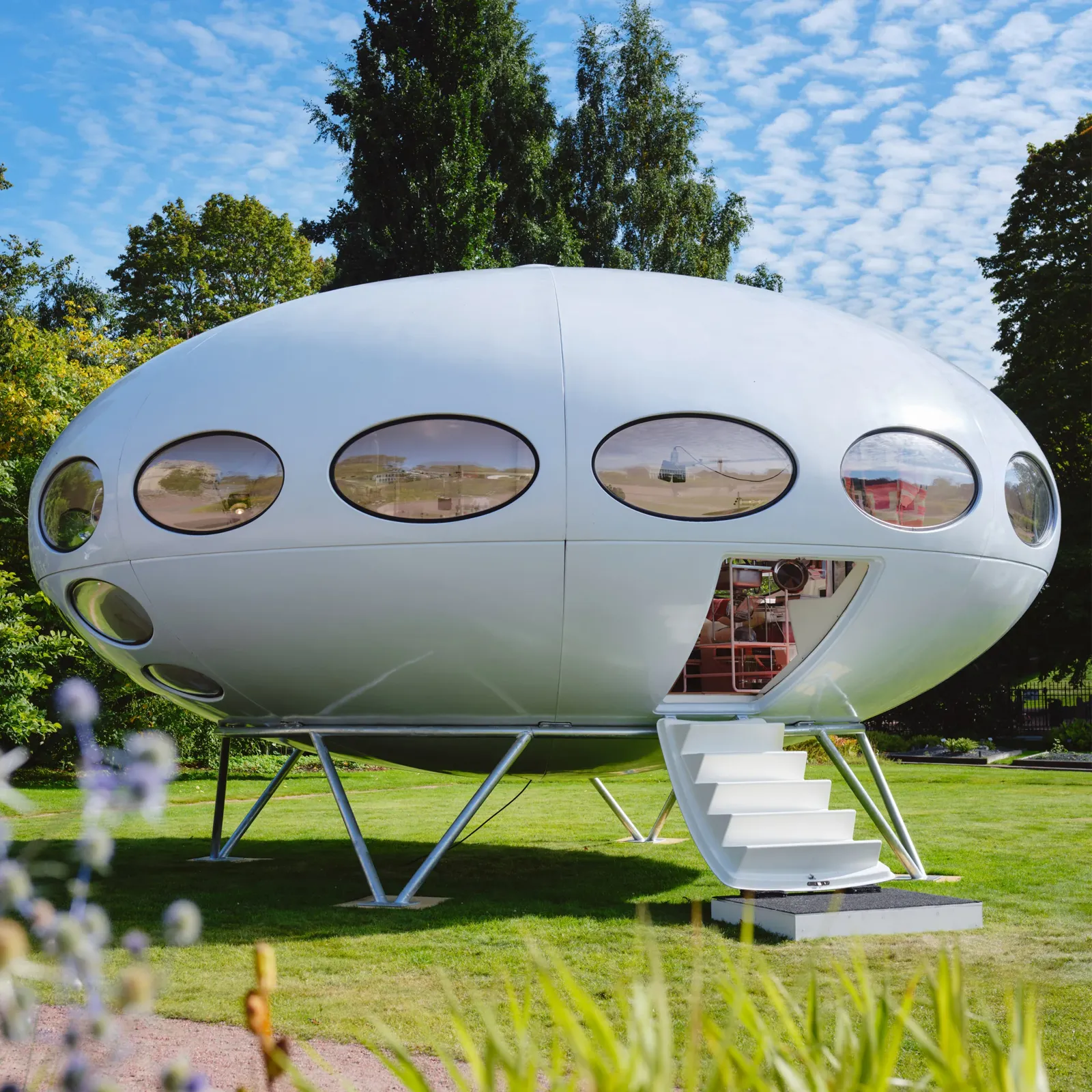
Futuro House Production Revived in Finland After Decades-Long Hiatus
A Facebook listing for abandoned moulds led to the first new Futuro...
 illustrarch Editoral Team3 Mins read

Building Your Dream Home in NSW: What You Should Know About Montgomery Homes
Montgomery Homes has been building across Sydney, Newcastle, the Hunter, Wollongong and...
illustrarch Editoral Team4 Mins read

Designing a Home Theater: Where Drapery Fits Into the Plan
In a media room the curtains are a performance layer, not decoration....
illustrarch Editoral Team3 Mins read

Oscar Niemeyer’s Cathedral of Brasília: The Hyperboloid Concrete Hymn
The Cathedral of Brasília reads as a single gesture, yet it stood...
 Furkan Sen7 Mins read


Leave a comment