

10 Interesting Facts About Zaha Hadid
Zaha Hadid reshaped contemporary architecture through bold experimentation, fluid geometries, and fearless design. From her early mathematical studies and radical drawings to famous buildings like the Heydar Aliyev Center and the One Thousand Museum Miami building, these ten facts reveal the extraordinary personality and lasting legacy of the first woman to win the Pritzker Architecture Prize.
 Begum Gumusel21 December 20255 Mins read230

Table of Contents Show
Zaha Hadid remains one of the most influential figures in contemporary architecture, known for reshaping how we perceive form, movement, and space. Every building Zaha Hadid designed pushed the boundaries of what architecture could achieve, combining bold visions, fluid geometries, and fearless experimentation that transformed cities around the world and inspired generations of architects. Beyond her iconic buildings, Hadid’s life and career are filled with remarkable stories that reveal her persistence, creativity, and groundbreaking achievements. Here are ten interesting facts about Zaha Hadid that highlight both her extraordinary personality and her lasting legacy.
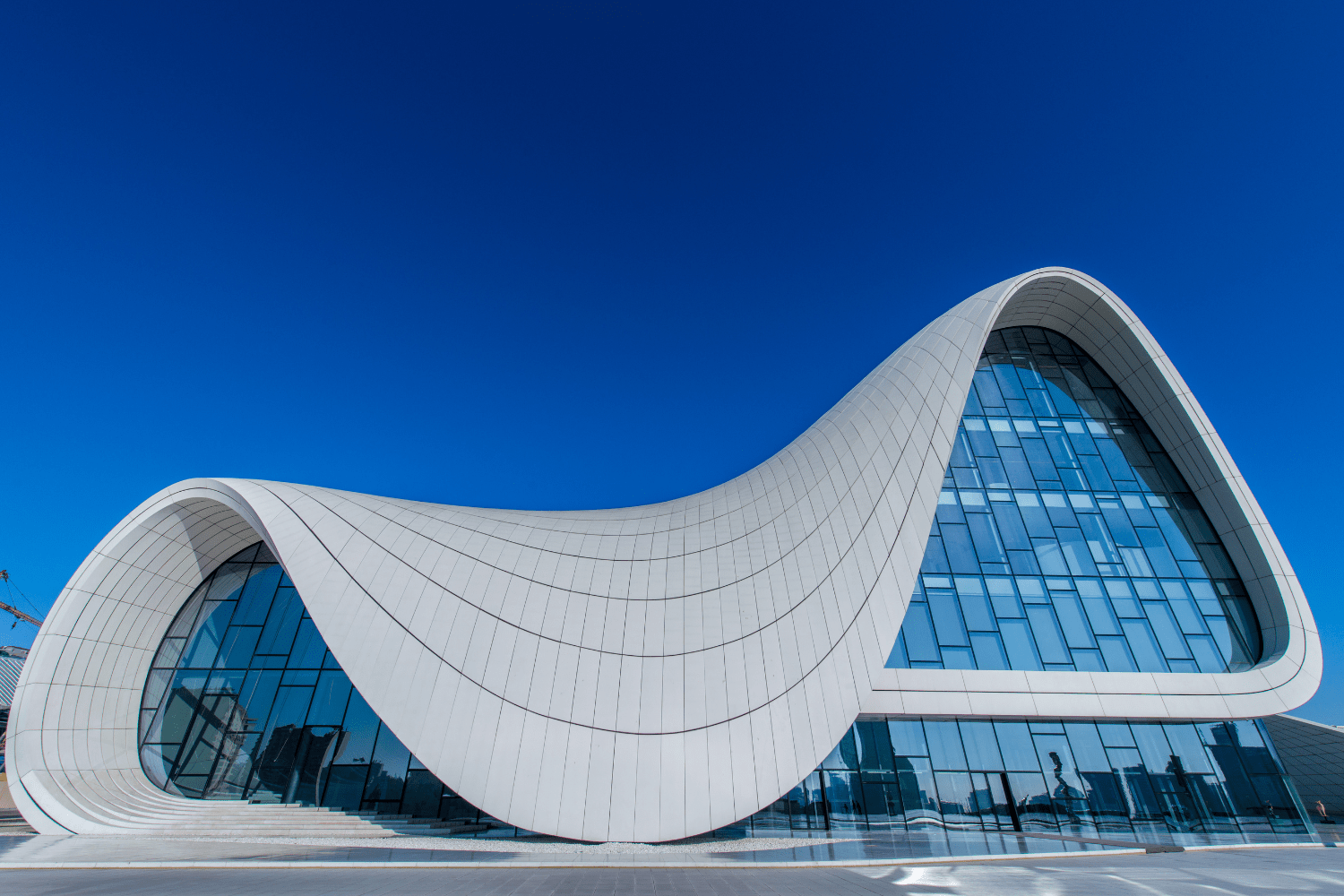
1 – She Was Known as the “Queen of the Curve”
Zaha Hadid earned the nickname “Queen of the Curve” because her designs embraced sweeping lines, dynamic shapes, and futuristic forms. Her architecture rejected traditional right angles, instead celebrating movement and fluidity. This signature Zaha Hadid design approach became a defining characteristic of her work and set her apart as a pioneer of expressive, non-linear parametric architecture. From cultural centers to residential towers, every building Zaha Hadid conceived reflected her commitment to sculptural form and spatial innovation.
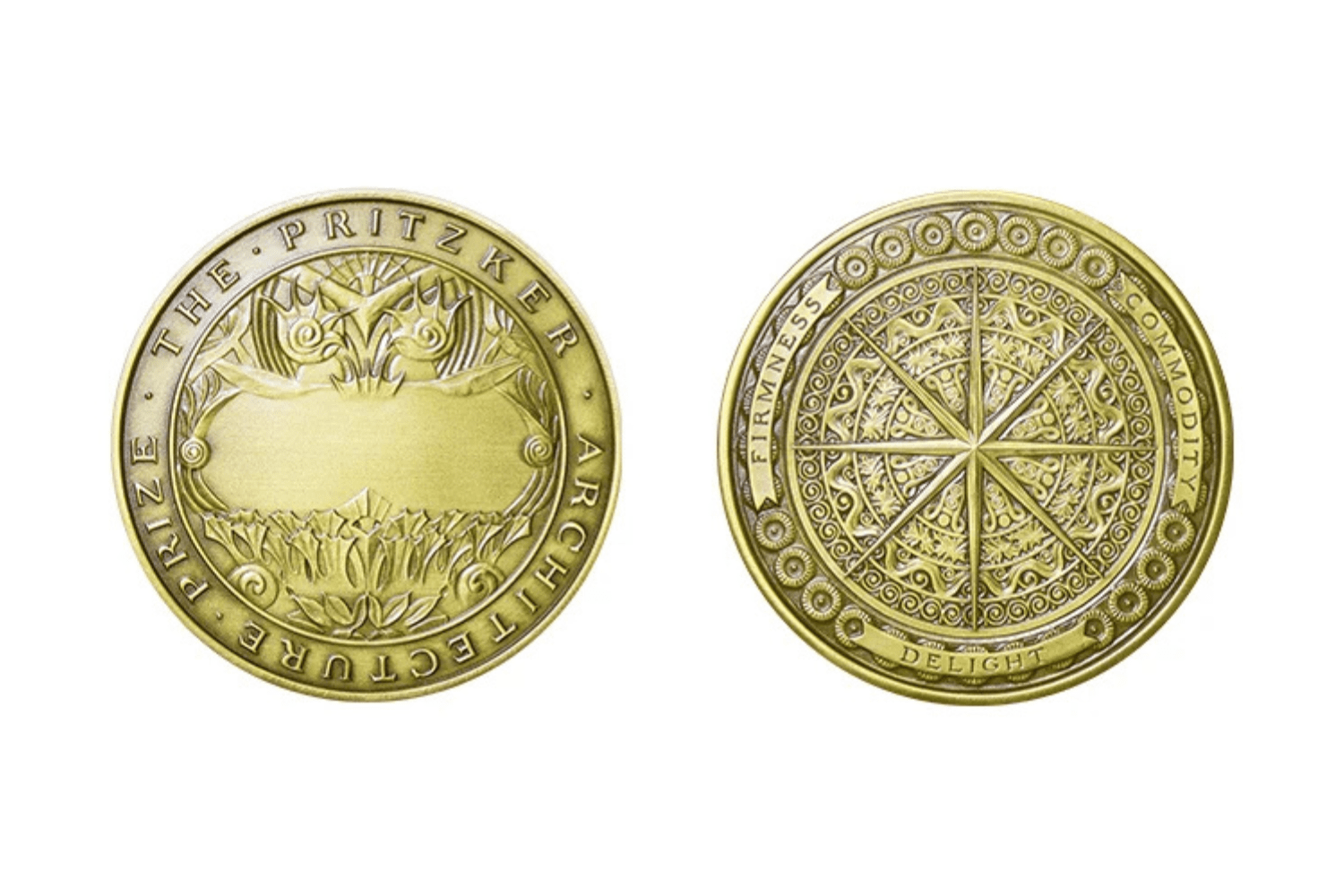
2 – She Was the First Woman to Win the Pritzker Architecture Prize
In 2004, Zaha Hadid made history by becoming the first woman to receive the Pritzker Prize, often referred to as the “Nobel Prize of Architecture.” This moment marked a turning point not only in her career but also in the global recognition of women architects. The award validated her bold experimentation and her contribution to the advancement of contemporary architecture. She later received the RIBA Royal Gold Medal in 2016, becoming the first woman to be individually awarded that honor as well.
3 – She Studied Mathematics Before Architecture
Before enrolling at the Architectural Association in London, Hadid studied mathematics at the American University of Beirut. Her strong mathematical background influenced the geometric complexity of her designs. Many of the famous buildings of Zaha Hadid demonstrate a deep understanding of patterns, parametric forms, and spatial relationships, all rooted in her early academic training. This mathematical foundation gave her design work a level of precision and structural logic that distinguished her from many of her contemporaries.
4 – Her Early Work Was Considered Too Radical
In the early stages of her career, Hadid struggled to get her designs built because many considered them too unconventional or technically challenging. Even though she won several competitions, her proposals remained unbuilt for years. Despite these setbacks, she continued to experiment, draw, and teach, eventually proving that her visionary ideas could become reality through advanced engineering and digital design tools. Her first completed structure, the Vitra Fire Station in Germany (1993), finally demonstrated that the radical Zaha Hadid architect buildings envisioned on paper could stand in the physical world.
5 – Zaha Hadid Drawings Blurred the Line Between Art and Architecture
Hadid often explored her architectural concepts through abstract paintings and Zaha Hadid drawings rather than traditional architectural representations. These artworks were filled with dynamic shifts of perspective and layered geometries, which later influenced her built projects. Her paintings were so significant that they were exhibited in major museums, including the Museum of Modern Art (MoMA) in New York, showing the close link between her artistic and architectural creativity. The Zaha Hadid art collection remains an important part of her legacy, with pieces continuing to be displayed and studied by architects and art enthusiasts worldwide.
6 – Famous Buildings of Zaha Hadid Transformed Cities Worldwide
From Guangzhou Opera House and MAXXI Museum to the London Aquatics Centre and Heydar Aliyev Center, the Zaha Hadid architect buildings have left a global impact. Her projects redefined skylines and public spaces across Asia, Europe, the Middle East, and the Americas. Her ability to create buildings that felt futuristic yet contextually sensitive made her a key figure in shaping 21st-century urban landscapes.
The Zaha Hadid Heydar Aliyev Center in Baku, Azerbaijan, is perhaps the most celebrated example of her fluid architectural language. Its sweeping white surface rises seamlessly from the ground, rejecting conventional angles entirely and creating a unified form that merges roof, walls, and surrounding plaza into a single gesture. This building Zaha Hadid designed has become a global icon of parametric design.
7 – She Was a Fierce Advocate for Women in Architecture
Hadid consistently spoke about the challenges women face in architecture and pushed for greater representation and recognition. She encouraged young female architects to pursue leadership roles and resist limitations imposed by the industry. Her own success became a powerful example, inspiring more women to enter and transform the profession. Today, her influence is visible in the growing number of women leading major architectural studios around the world.
8 – Zaha Hadid Design Extended Far Beyond Buildings
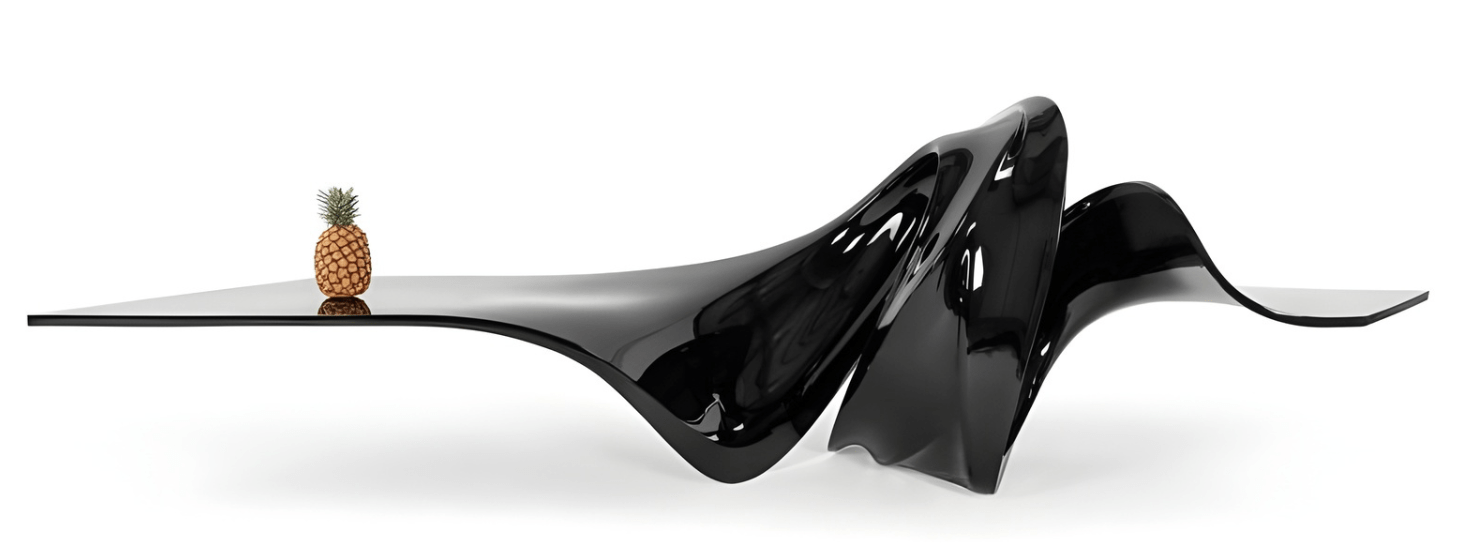
Although known primarily for her architecture, Hadid also created furniture, shoes, jewelry, lighting, and even cars. Zaha Hadid Design, established in 2006, continues to produce limited-edition works and collectible design pieces that apply her fluid aesthetic to everyday objects. Her Zaha Hadid design philosophy extended across disciplines, embracing both artistic freedom and advanced computational design. These collaborations showcased her versatility and her belief that innovation should not be confined to architecture alone.
9 – She Was Noticed Early by Rem Koolhaas
While studying at the Architectural Association, Hadid was taught by Rem Koolhaas, who immediately recognized her extraordinary talent. Koolhaas described her as a “planet in her own orbit,” referring to her distinct vision and fearless creativity. After graduating, she briefly joined Koolhaas’s Office for Metropolitan Architecture (OMA) before founding her own firm, Zaha Hadid Architects, in 1979. This early recognition gave her momentum and confidence as she began shaping her unique architectural identity.
10 – The Zaha Hadid Miami Building: One Thousand Museum
One of the most striking examples of Zaha Hadid architect buildings completed after her passing is the Zaha Hadid Miami building, officially known as One Thousand Museum. This 62-story luxury residential tower in downtown Miami features a dramatic curving exoskeleton made of glass fiber reinforced concrete, a structural system never before used at this scale. The building was one of Hadid’s final projects and her first residential tower in the Western Hemisphere. Completed in 2019, the Zaha Hadid house tower in Miami has redefined the city’s skyline and stands as a powerful testament to her enduring vision.
11 – Zaha Hadid’s Death and the Legacy That Lives On
On March 31, 2016, the architecture world was shaken when Zaha Hadid dies at the age of 65 following a sudden heart attack at Mount Sinai Medical Center in Miami, where she was being treated for bronchitis. The Zaha Hadid death marked the loss of one of the most important architects who changed the course of history, but her vision did not end with her passing.
After Zaha Hadid’s death in 2016, Zaha Hadid Architects continued to grow under the leadership of Patrik Schumacher and a global team of designers who worked closely with her. The studio still follows her forward-thinking approach and remains one of the world’s leading architectural firms, with recent competition wins and new commissions worldwide. The Zaha Hadid Foundation was established to preserve her legacy, fund architectural education for Arab women, and work toward establishing a museum dedicated to her life and work. Many ongoing projects and new designs reflect her influence, ensuring her legacy lives on for generations to come.

Zaha Hadid’s life was marked by bold ideas, relentless determination, and an unwavering belief in the power of design to transform the world. Her work challenged conventions, expanded architectural possibilities, and inspired countless individuals across creative disciplines. From her visionary Zaha Hadid drawings to the famous buildings of Zaha Hadid that define skylines on every continent, these facts reveal not only her remarkable achievements but also the passion and courage behind her visionary career. Today, her influence remains deeply embedded in architecture, reminding us that innovation thrives when imagination has no boundaries.



1 Comment



Futuro House Production Revived in Finland After Decades-Long Hiatus
A Facebook listing for abandoned moulds led to the first new Futuro...
 illustrarch Editoral Team3 Mins read

Building Your Dream Home in NSW: What You Should Know About Montgomery Homes
Montgomery Homes has been building across Sydney, Newcastle, the Hunter, Wollongong and...
illustrarch Editoral Team4 Mins read

Designing a Home Theater: Where Drapery Fits Into the Plan
In a media room the curtains are a performance layer, not decoration....
illustrarch Editoral Team3 Mins read

Oscar Niemeyer’s Cathedral of Brasília: The Hyperboloid Concrete Hymn
The Cathedral of Brasília reads as a single gesture, yet it stood...
 Furkan Sen7 Mins read


It’s interesting to learn about Zaha Hadid. She seems to have done a lot for architecture and inspired many people.