

What Makes American Tile Manufacturers Competitive in 2026
A breakdown of the five key factors helping American tile manufacturers compete in 2026, from supply chain advantages and antidumping duties to automation investments, sustainability credentials, and large-format innovation by companies like Daltile, American Olean, and Crossville.
 Sinan Ozen14 June 20266 Mins read245
Table of Contents Show
American tile manufacturers compete in 2026 through domestic production speed, antidumping tariff protection, factory automation, and growing demand for locally sourced ceramic and porcelain products. While imports still account for roughly two-thirds of U.S. tile consumption, domestic producers are gaining market share by offering shorter lead times, tighter quality control, and stronger sustainability credentials.
The U.S. ceramic tiles market is valued at an estimated $5.28 billion in 2026, according to Mordor Intelligence, with a projected compound annual growth rate of 5.05% through 2031. That growth is not evenly distributed. Domestic manufacturers, particularly those backed by Mohawk Industries and other vertically integrated groups, are capturing a larger slice of that expansion. Two-thirds of the tile sold in America still arrives from overseas, but a combination of trade policy, consumer preferences, and technology investments is shifting the balance. Below is a closer look at what is giving American tile makers their competitive position this year.
The Market Landscape for American Tile in 2026
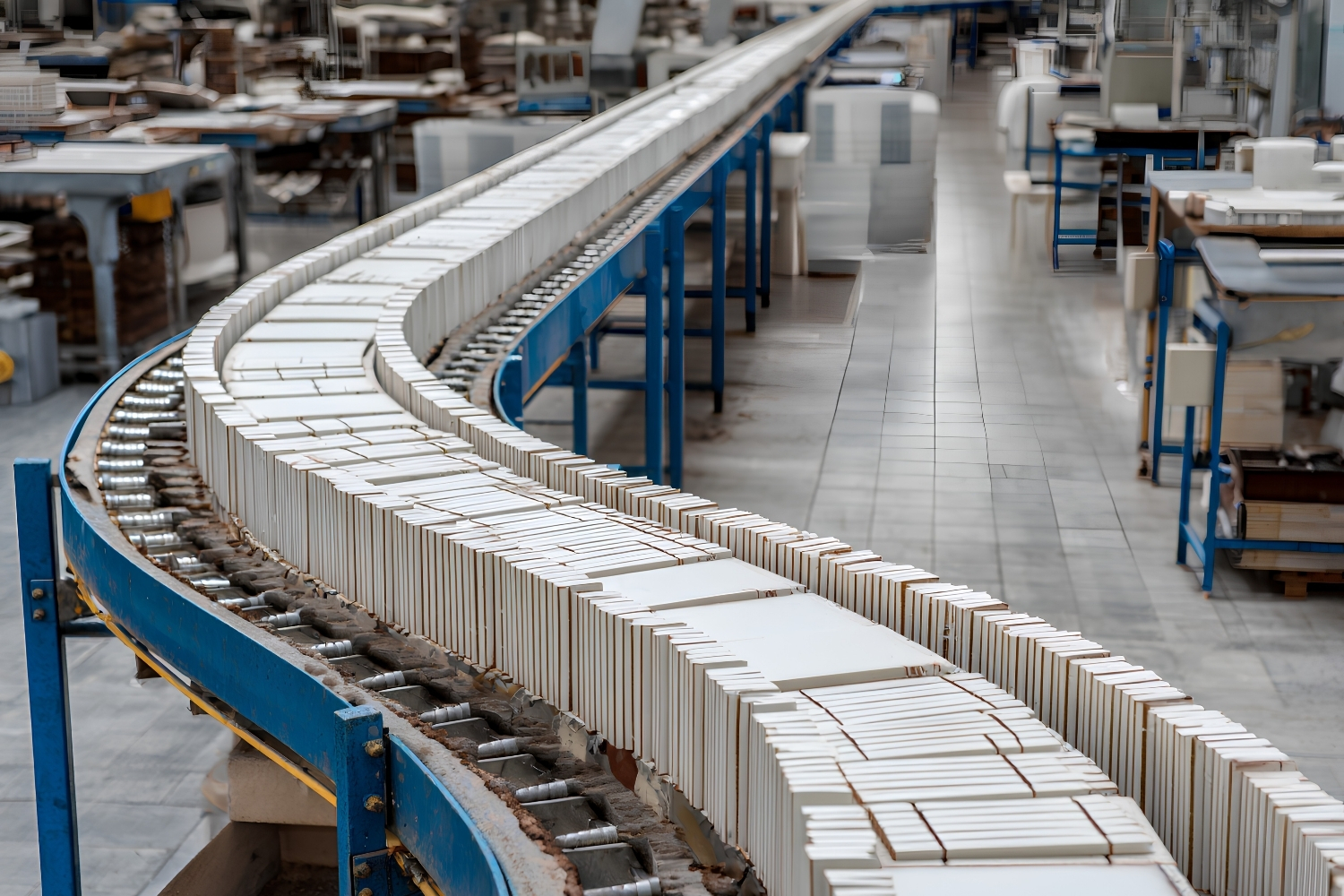
Seven major tile manufacturing companies currently operate production facilities inside the United States. That number has stayed relatively stable over the past decade, but the output per facility has increased significantly. Companies like Daltile, American Olean, Marazzi USA, Florida Tile, Crossville, Del Conca USA, and Stonepeak Ceramics form the core of domestic production. Most of these operations are concentrated in the Southeast, where access to natural gas, clay deposits, and logistics corridors keeps firing costs manageable.
The broader context matters, too. According to the Ceramic Tile Distributors Association, tile demand in 2026 is expected to land somewhere between negative 3% and positive 3%, essentially a flat year. Any real recovery depends on mortgage rates and consumer confidence. For domestic producers, that flat demand environment makes efficiency and differentiation even more important. Residential remodeling activity in Sun Belt states continues to support steady order volume, and American ceramic tile producers are positioning themselves to capture that regional demand faster than overseas competitors can ship product across the Pacific or Atlantic.
🔢 Quick Numbers
- $5.28 billion: estimated U.S. ceramic tiles market value in 2026 (Mordor Intelligence, 2026)
- 5.05%: projected CAGR for U.S. ceramic tile market through 2031 (Mordor Intelligence, 2026)
- Two-thirds of tile sold in America is imported (CTASC Industry Report, January 2026)
- 7 major domestic tile manufacturing companies operate U.S. production plants (Floor Trends, 2023)
How American Olean Tile and Daltile Shape Domestic Production
The single largest force in American tile manufacturing is Mohawk Industries, which owns three of the most recognized brands in the market: Daltile, American Olean tile, and Marazzi. Mohawk operates manufacturing plants across Tennessee, Kentucky, Texas, Oklahoma, Alabama, and Pennsylvania, giving it geographic reach that few competitors can match. Daltile alone runs over 250 company-owned showrooms and service centers across North America, making it the largest dedicated tile retail network on the continent.
American Olean, founded in 1923, traces its lineage back to the Franklin Tile Company and later the American Encaustic Tiling Company. After decades of ownership changes, including a period under Armstrong World Industries, the brand merged with Dal-Tile and eventually landed under the Mohawk umbrella. Today, American Olean tile targets the residential market with porcelain, ceramic, glass, and stone products, and many of its best-selling series are manufactured domestically. That local production translates to faster delivery timelines, consistent batch quality, and reduced exposure to international shipping disruptions.
Crossville, founded in 1986 in Tennessee, took a different path. Foreign investors originally backed the operation, which became the first company to produce porcelain tile in the United States. Crossville has since built a reputation for sustainability, earning recognition for its closed-loop water recycling and LEED-contributing product lines. Florida Tile, now owned by Italy’s Panaria Group, and Del Conca USA, which opened its Loudon, Tennessee facility in recent years, round out the domestic manufacturing base.
Why Domestic Production Gives American Tile Flooring an Advantage
Supply Chain Speed and Shorter Lead Times
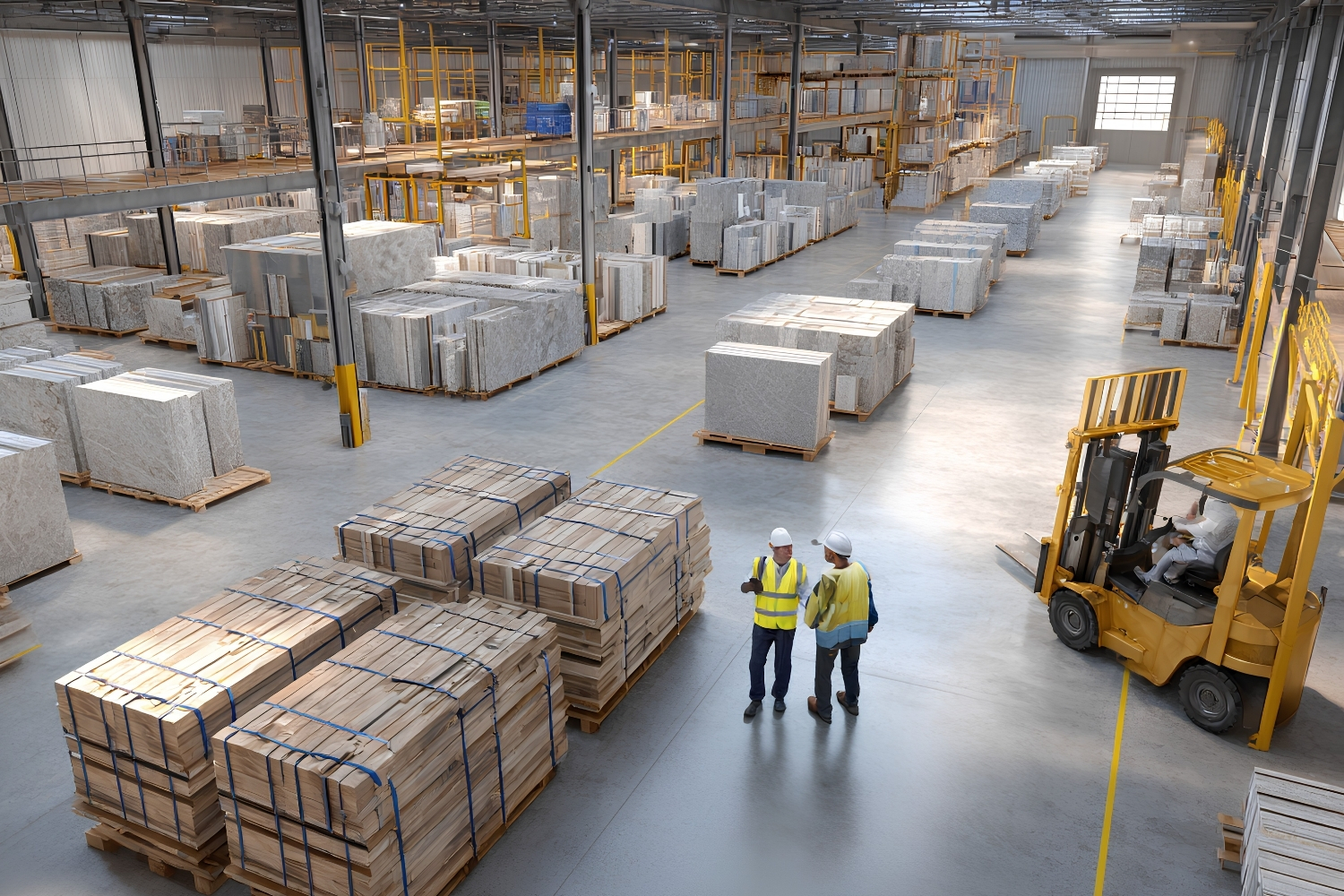
The most immediate advantage for American tile flooring producers is turnaround time. Imported tile from China, India, or Brazil can take 8 to 14 weeks from order to delivery, accounting for production scheduling, ocean freight, customs clearance, and inland transport. Domestic manufacturers routinely deliver within 2 to 4 weeks. For contractors working against tight construction schedules, that difference can determine whether a project stays on track or faces costly delays. As one U.S. tile executive noted in a Floor Covering News interview, domestic manufacturing offers short lead times and a reduced environmental footprint compared to imports.
💡 Pro Tip
When specifying American-made tile for a commercial project, request the specific plant location and production batch code. Domestic manufacturers can often match dye lots more precisely because they control the full production run. This matters for large-scale installations where color consistency across thousands of square feet is critical.
Tariff Protection and Trade Policy
Antidumping duties on imported tile from China have been in place for years, and those trade barriers continue to shape the competitive landscape in 2026. These tariffs have reduced the flow of low-priced imports, giving domestic producers room to compete without racing to the bottom on price. The cost of tariffs is typically split among the offshore manufacturer, the importer, and the end customer, which narrows the price gap between imported and American-made products. For architects and designers specifying tile for residential and commercial projects, the price difference between domestic and imported options has shrunk enough that delivery speed and quality assurance often tip the decision toward U.S.-made products.
Automation and Technology in American Ceramic Tile Production
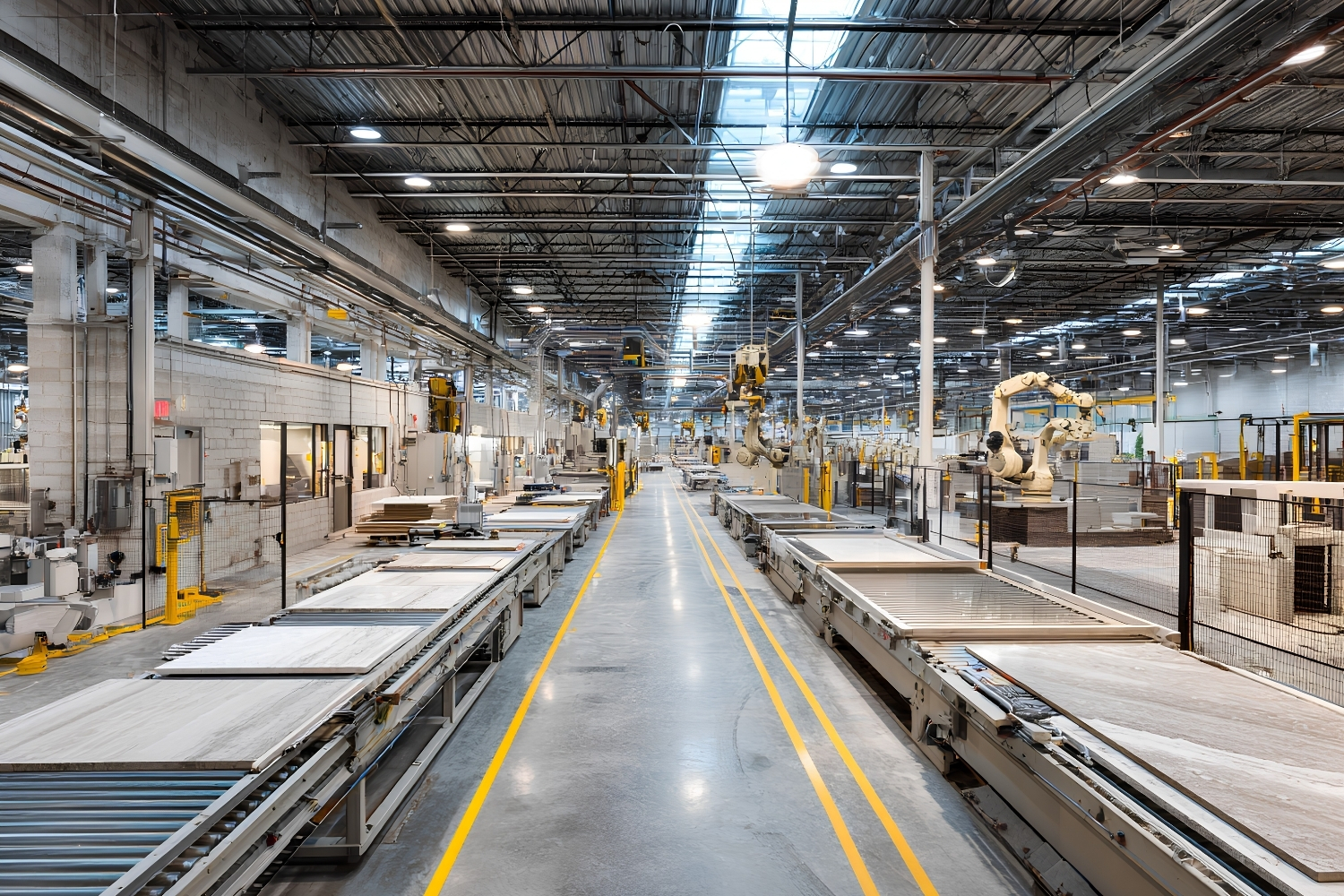
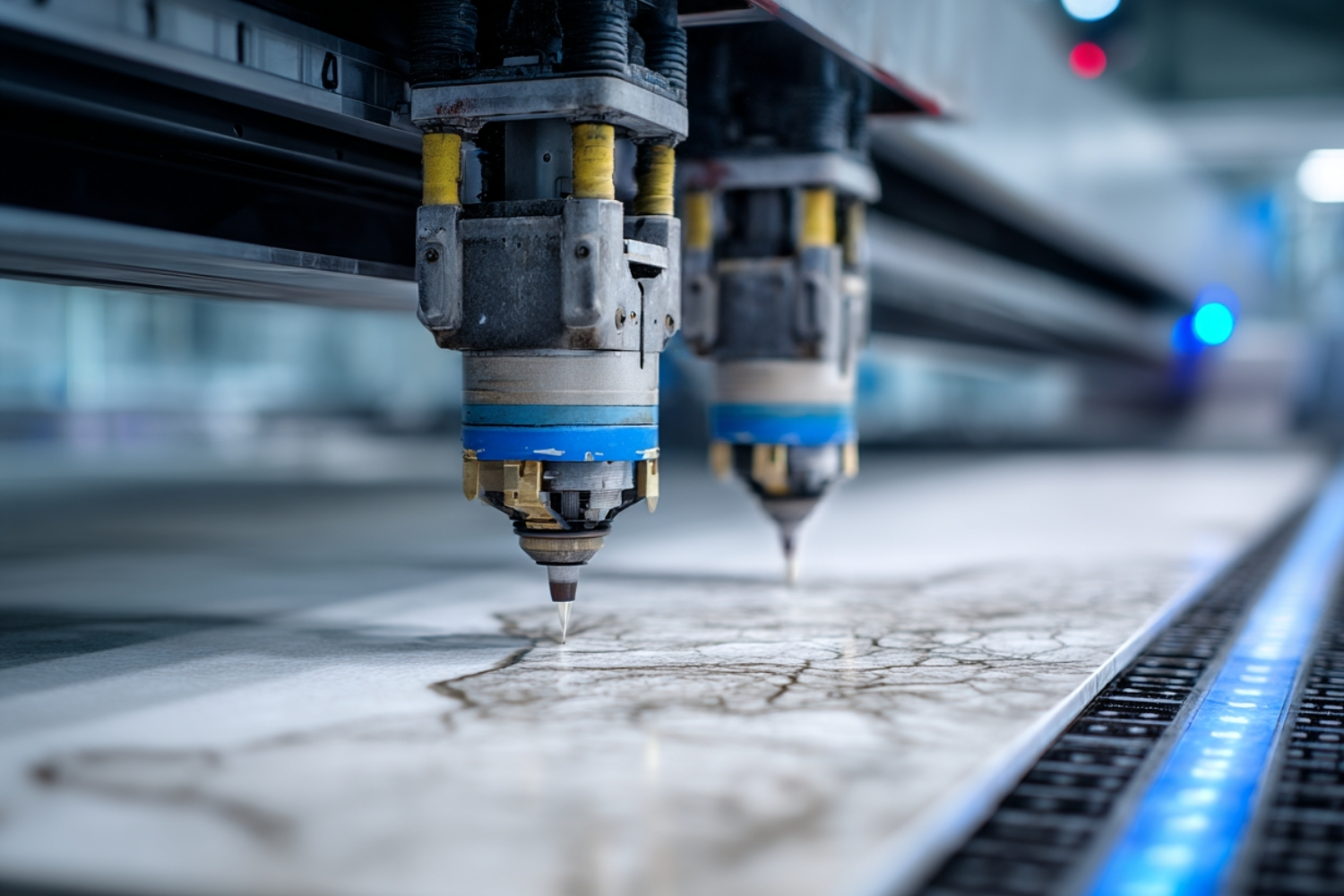
Factory automation is where American ceramic tile producers have invested most aggressively over the past three years. Panariagroup USA, which operates Florida Tile, recently added polishing lines, DryFix adhesive systems, and large-format production capabilities to its U.S. operations. These investments allow the company to handle formats up to 48 by 110 inches, sizes that were previously only available from Italian or Spanish factories. Digital inkjet printing technology has also matured to the point where domestic producers can replicate natural stone, wood grain, and concrete textures with enough variation that individual tiles in the same box look distinct from one another.
Mohawk’s investment cycle in its Georgia facility focused on robotics and smarter scheduling systems. According to the company, the goal goes beyond pure efficiency. Better use of raw materials and faster response to custom orders are the primary benefits. For floor tile applications that require custom sizing or rapid color matching, these automated lines can adjust production parameters without shutting down for manual retooling.
⚠️ Common Mistake to Avoid
Assuming all tiles sold under American brand names are manufactured domestically. Many well-known U.S. tile brands are primarily design and distribution companies that source production from factories in Italy, Spain, Turkey, China, or Brazil. Always check the country of origin listed on the product page or spec sheet before specifying a tile as “American-made” in project documentation.
Sustainability Credentials in American Tile and Marble Markets
Sustainability is not just a marketing angle for American tile manufacturers. It carries real weight in commercial specifications, particularly for projects pursuing LEED certification. Crossville operates a closed-loop water system at its Tennessee plant, recycling process water rather than discharging it. Several domestic producers also use locally sourced clay and feldspar, which reduces transportation emissions compared to shipping raw materials across continents.
The american tile and marble segment benefits from a parallel trend. Architects and interior designers are increasingly asked to document the environmental impact of every specified material. Sourcing tile domestically shortens the carbon chain from quarry or kiln to job site. For bathroom and residential projects, where tile selection often comes down to aesthetics and availability, the sustainability story can be the deciding factor for environmentally conscious homeowners.
Low-VOC manufacturing processes and regulatory preferences at the state level, particularly in California and New York, also push specifications toward domestic products that meet stricter environmental standards. Favorable natural gas prices in the U.S. lower kiln firing costs, according to the U.S. Energy Information Administration, giving domestic producers an energy cost advantage that partially offsets higher labor expenses.
What Is Next for American Ceiling Tile and Large-Format Innovation
American ceiling tile manufacturers face a different competitive dynamic than floor and wall tile producers. The ceiling tile market is more consolidated, with Armstrong Ceilings and USG (now part of Knauf) dominating domestic production. These companies compete less on aesthetics and more on acoustic performance, fire ratings, and installation efficiency. Large-format porcelain slabs, on the other hand, represent the fastest-growing product category for american tile flooring and wall applications. Formats exceeding 32 by 96 inches are now available from domestic producers for both residential kitchens and commercial lobbies.
Product differentiation in large-format, outdoor-rated, and wall tile categories is where industry analysts see the strongest growth potential through 2027. Domestic manufacturers who have already invested in the equipment to produce these sizes hold a logistical advantage. Shipping oversized porcelain slabs from Europe or Asia involves higher breakage rates and specialized handling that adds cost at every transfer point.
Where to Go From Here
Your Next Step: Before your next tile specification, pull product data sheets from at least two domestic manufacturers and one import option. Compare not just price per square foot, but lead time, minimum order quantities, and country-of-origin documentation. That side-by-side comparison will show you exactly where American-made tile adds value for your specific project timeline and budget.








Futuro House Production Revived in Finland After Decades-Long Hiatus
A Facebook listing for abandoned moulds led to the first new Futuro...
 illustrarch Editoral Team3 Mins read

Building Your Dream Home in NSW: What You Should Know About Montgomery Homes
Montgomery Homes has been building across Sydney, Newcastle, the Hunter, Wollongong and...
illustrarch Editoral Team4 Mins read

Designing a Home Theater: Where Drapery Fits Into the Plan
In a media room the curtains are a performance layer, not decoration....
illustrarch Editoral Team3 Mins read

Oscar Niemeyer’s Cathedral of Brasília: The Hyperboloid Concrete Hymn
The Cathedral of Brasília reads as a single gesture, yet it stood...
 Furkan Sen7 Mins read


Leave a comment