

6 Best Drawing Tablets for Architects & Students
Looking for the best drawing tablet for architects? This updated 2026 guide compares 6 top-rated tablets for architectural sketching, CAD work, and design, including the Apple iPad Pro, Wacom MobileStudio Pro 16, and budget-friendly options for architecture students. Find the perfect professional drawing pad or portable art tablet for your workflow.
 Furkan Sen25 January 202615 Mins read2.6k

Table of Contents Show
Quick Answer: The best drawing tablets for architects combine pressure-sensitive pen input, a responsive display and compatibility with sketching and modeling apps. The iPad Pro with Apple Pencil suits freehand and concept work, while Wacom and XP-Pen tablets serve detailed digital drafting. Budget options let students sketch and annotate without a large investment.
The best drawing tablets for architects in 2026 combine precision stylus input, high-resolution displays, and compatibility with professional design software like AutoCAD, Revit, and SketchUp. Whether you need a portable workstation for site visits or a budget drawing pad for architecture school, this guide compares six top-rated options, from the Apple iPad Pro to the Huion Inspiroy H640P, so you can match the right tool to your workflow.
In the field of architecture, where precision and creativity intersect, finding the best tablet for architects is essential for transforming visionary ideas into tangible designs. Drawing tablets, with their advanced pen technology and versatile capabilities, have become indispensable for architects and students alike, offering a blend of traditional sketching and modern digital convenience. Whether you are drafting detailed architectural plans or exploring bold conceptual sketches, the choice of a good drawing tablet can significantly influence the efficiency and quality of the creative process. This article covers the 6 best drawing tablets, carefully chosen to match the diverse needs of architects and students. From high-resolution displays and pressure-sensitive pens to customizable shortcuts and compatibility with leading design software, each tablet in our list promises to improve your design workflow.
In this updated 2026 guide, drawing tablets have evolved far beyond simple digital sketching tools. The latest trends show that architects and students now use tablets as a central hub for early-stage design, diagramming, and rapid iteration. With improved stylus accuracy, higher refresh rates, and tighter integration with CAD, BIM, and AI-powered rendering tools, the best drawing tablets significantly reduce the gap between concept sketches and production-ready visuals. Whether you need a portable drawing tablet computer for site visits or a graphics tablet monitor for studio work, this guide covers all price points and use cases.
Before switching to a professional drawing tablet, most architects relied on a fragmented workflow: hand sketches on paper, scanned drawings, manual redrawing in software, and repeated revisions across multiple tools. After adopting one of the best drawing tablets in 2026, the process becomes faster and more intuitive. Sketches are created directly in digital layers, design ideas are refined in real time, and feedback can be applied instantly during studio critiques or client meetings. This shift not only improves speed but also improves design clarity and communication.
What to Look for in the Best Drawing Tablet for Architects
Choosing the right professional drawing pad requires understanding your workflow. Architects working on architectural sketches need different features than graphic designers. Here are the key factors that separate a good tablet from a great one for architectural use:
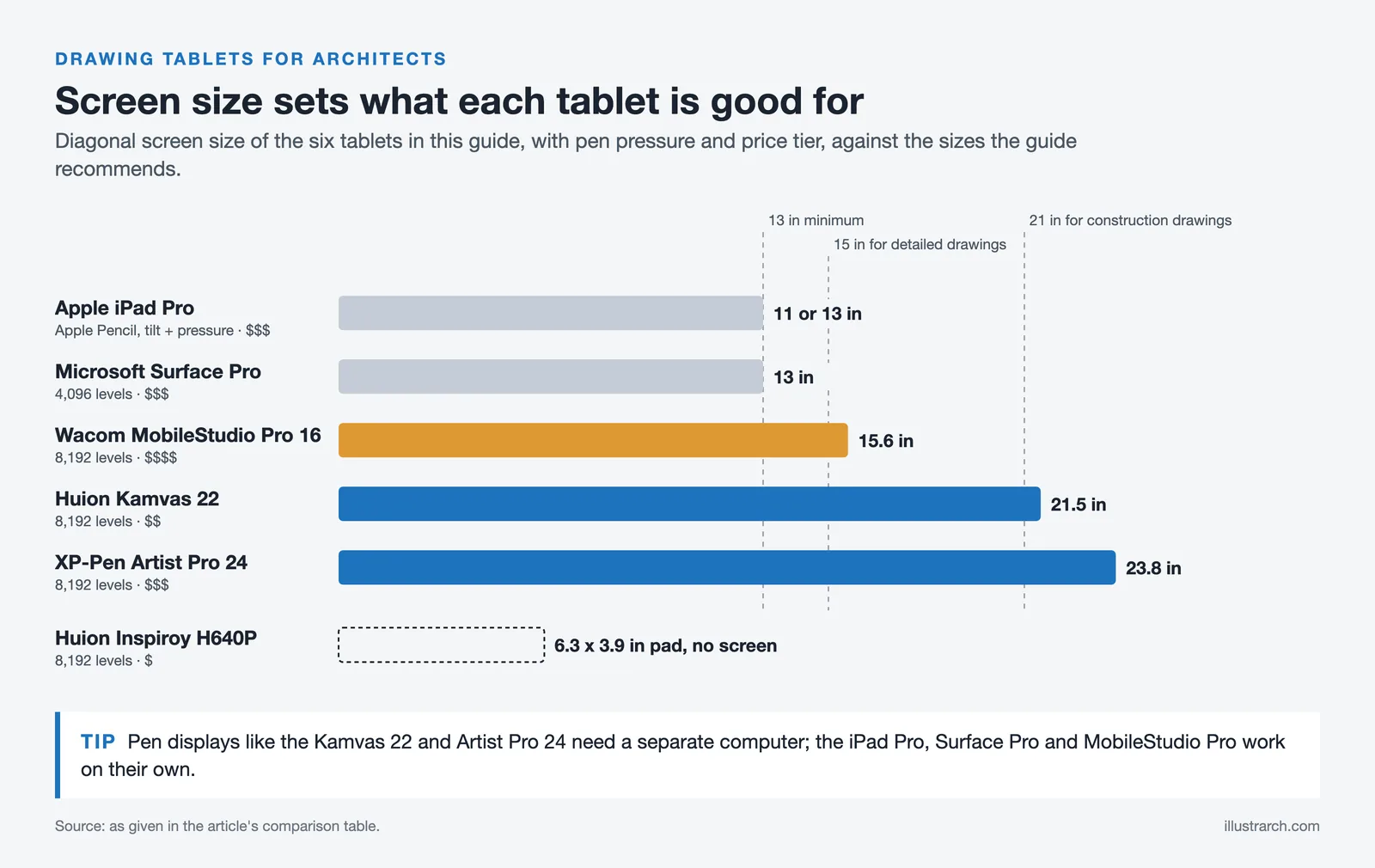
- Screen size and resolution: A larger display (15 inches or more) gives you room to work on detailed construction drawings and floor plans. For a tablet for drawing on screen experience, look for at least 2K QHD resolution.
- Pen pressure sensitivity: At least 8,192 levels for precise line control, essential for stylus accuracy in CAD sketching and shaded perspective work.
- Software compatibility: Confirm the tablet works with AutoCAD, Revit, SketchUp, and rendering tools like Lumion or 3D modeling software.
- Portability: If you frequently visit job sites, a portable drawing pad with long battery life is critical. The latest travel essentials for architects increasingly center on lightweight tablets that can handle full design workflows without a laptop.
- Budget: Students and beginners can find good inexpensive drawing tablets that still deliver solid performance for studio coursework and portfolio work.
💡 Pro Tip
Before buying, test whether your primary software runs natively or through a workaround on the tablet’s operating system. A common mistake is purchasing an iPad for Revit, only to discover the iOS version lacks the features needed for construction documentation. If you rely on full-featured BIM workflows, a Windows-based tablet like the Surface Pro or Wacom MobileStudio Pro is a safer choice.
What Are the 6 Best Drawing Tablets for Architects in 2026?
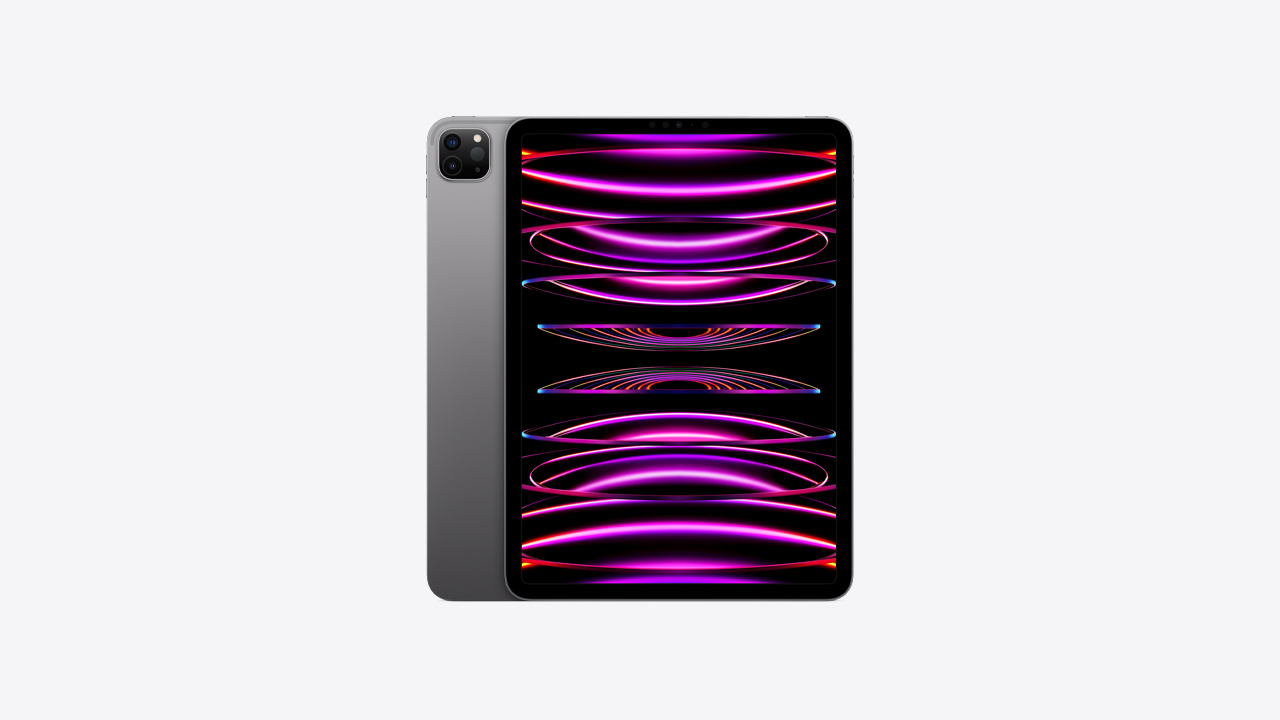
1. Apple iPad Pro: Best Tablet for Architects Overall




Quick Comparison: Best Drawing Tablets for Architects at a Glance
| Tablet | Screen Size | Pressure Levels | Best For | Price Range |
|---|---|---|---|---|
| Apple iPad Pro | 11″ / 13″ | Apple Pencil (tilt + pressure) | Portability, iPad architecture apps | $$$ |
| Wacom MobileStudio Pro 16 | 15.6″ | 8,192 | Standalone professional use | $$$$ |
| Huion Kamvas 22 | 21.5″ | 8,192 | Best value large display | $$ |
| XP-Pen Artist Pro 24 | 23.8″ | 8,192 | Large-scale drawings | $$$ |
| Microsoft Surface Pro | 13″ | 4,096 | Full Windows plus portability | $$$ |
| Huion Inspiroy H640P | 6.3″ x 3.9″ (no screen) | 8,192 | Budget-friendly for students | $ |
⚠️ Common Mistake to Avoid
Many architecture students buy a pen display monitor like the Huion Kamvas 22 or XP-Pen Artist Pro 24, assuming it will work on its own, but these tablets require a separate computer to function. They are displays with pen input, not standalone devices. If you need a self-contained unit you can carry without a laptop, look at the iPad Pro, Surface Pro, or Wacom MobileStudio Pro 16 instead.
Which Drawing Programs Work Best With Graphic Tablets?
Having the best graphics tablet for drawing is only half the equation. Pairing it with the right software is equally important. Here are the best drawing programs for graphic tablets used by architects. For a deeper comparison of digital sketching tools, see our full guide on best tools for digital architectural sketching:
- AutoCAD and Revit: Industry-standard CAD and BIM tools. Best on Windows-based tablets like the Surface Pro and Wacom MobileStudio.
- SketchUp: Intuitive 3D modeling that works well with pen input for quick conceptual 3D modeling.
- Morpholio Trace: A leading architecture app for iPad designed specifically for architectural sketching and overlay work.
- Concepts: An infinite-canvas vector sketching app popular among architects for early-stage digital sketching.
- Procreate: Excellent for architectural illustration and presentation-quality renderings on iPad.
- Adobe Photoshop and Illustrator: Essential good tablet drawing programs for post-production work, site analysis diagrams, and presentation boards.
How to Choose Between a Pen Display and a Graphics Tablet
One of the biggest decisions when selecting the best computer drawing tablet is whether to choose a pen display (draw directly on screen) or a graphics tablet (draw on a pad, view on monitor). Here is how to decide:
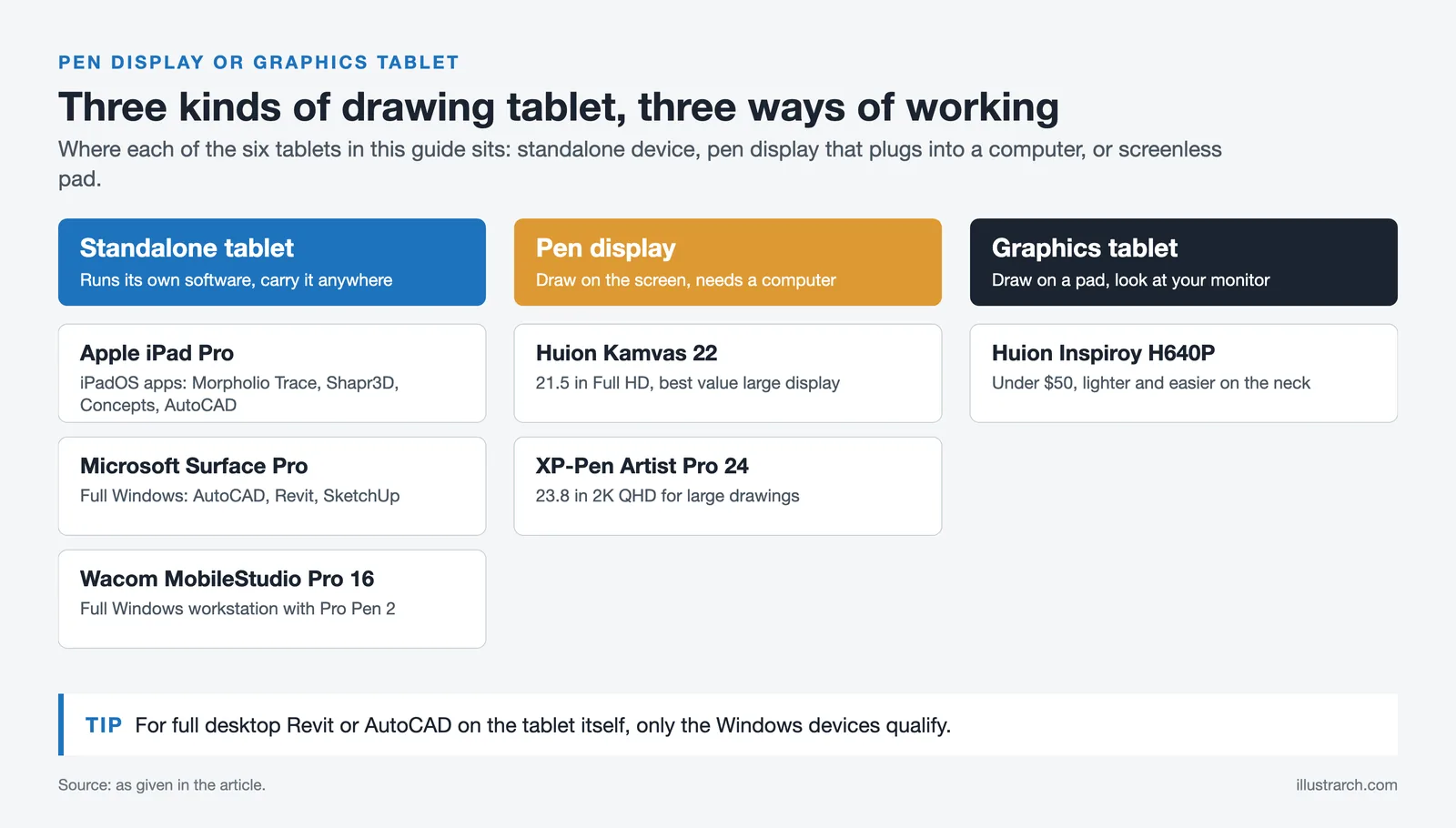
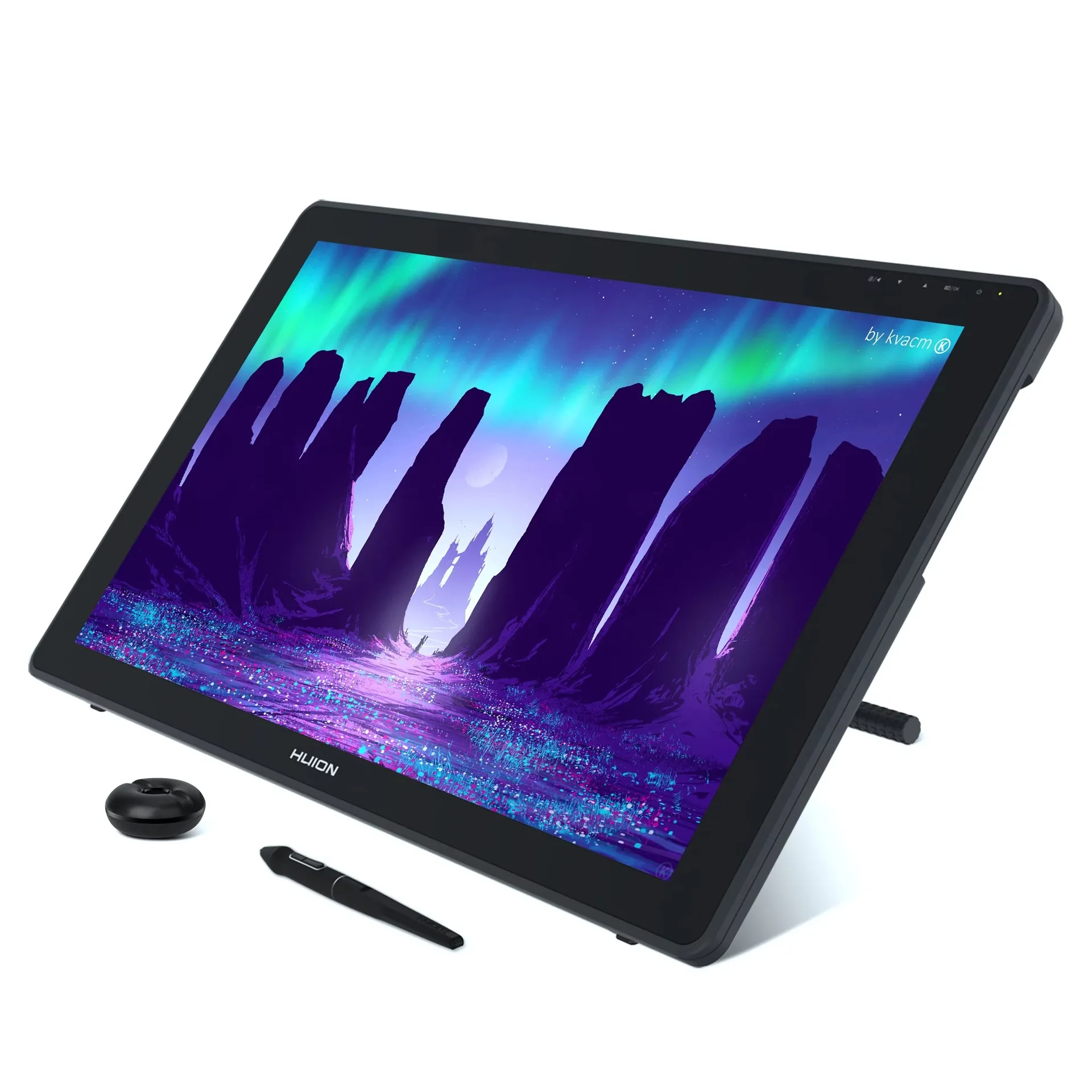
A tablet for drawing on screen (pen display) like the Huion Kamvas 22 or XP-Pen Artist Pro 24 provides the most intuitive experience. You see your stylus tip touching exactly where the line appears. This is preferred by architects doing detailed elevation drawings or client-facing presentations. On the other hand, a non-display drawing pad for computer like the Huion Inspiroy H640P is more affordable, lighter, and ergonomically friendlier for long sessions, since you are looking at your upright monitor rather than down at a flat screen.
For professionals working in a studio, a graphics tablet monitor or pen tablet monitor setup often delivers the best results. For mobile architects and students, a portable art tablet like the iPad Pro or Surface Pro offers flexibility without sacrificing drawing quality.
💡 Pro Tip
Experienced architects working on pen displays often recommend setting the tablet’s drawing area to match your monitor’s aspect ratio exactly. Mismatched aspect ratios cause your hand movements to feel “off” and make precise line work harder. Most tablet drivers allow you to lock this ratio in settings, so do it before your first session to build accurate muscle memory from the start.
What Are the Best Budget Drawing Tablets for Students?
Architecture school is expensive, and not every student can invest in a premium professional tablet for drawing. Several drawing tablets on a budget deliver solid performance for coursework, studio projects, and portfolio work.
The Huion Inspiroy H640P remains the top budget drawing pad for students under $50. For those willing to spend a bit more, the Huion Kamvas 22 offers a full-screen drawing experience at a competitive price. It is often cited as one of the best rated cheap drawing tablets with a built-in display. Students should also consider recommended tablets for artists from brands like XP-Pen and Gaomon, which offer solid mid-range options.
When choosing good inexpensive drawing tablets, prioritize pressure sensitivity (8,192 levels), driver stability with your operating system, and compatibility with design software you use in class. A good drawing tablet does not have to be expensive to be effective. It just needs to match your specific workflow needs.
✅ Key Takeaways
- The Apple iPad Pro is the best overall choice for architects who prioritize portability and a strong app ecosystem.
- For full desktop CAD and BIM software, choose a Windows-based device like the Microsoft Surface Pro or Wacom MobileStudio Pro 16.
- Pen display tablets (Huion Kamvas 22, XP-Pen Artist Pro 24) require a separate computer and are best suited for studio setups.
- 8,192 levels of pen pressure is the current standard, so avoid tablets below this threshold for serious architectural work.
- Architecture students on a tight budget can start with the Huion Inspiroy H640P, which costs under $50 and works with most CAD and design software.
- Always verify software compatibility before purchase, especially if your workflow depends on the full desktop version of Revit or AutoCAD.
Architecture Students Hub
This guide is part of Software, Rendering and Gear, stage 4 of our student roadmap from the first diagram to the first internship. Next stage: Portfolio, CV and Internships, or browse every free tool and guide in the Architecture Students Hub.
It also belongs to the Tech for Architects Hub, where every guide and example on the topic sits in one place.
FAQ: Choosing the Best Drawing Tablet for Architects
What is a good tablet for drawing architectural plans?
The best tablet for architects depends on your workflow. For portability and app ecosystem, the Apple iPad Pro is the top choice. For full desktop software like AutoCAD and Revit, the Microsoft Surface Pro or Wacom MobileStudio Pro 16 are ideal. Students on a budget should consider the Huion Kamvas 22 or Huion Inspiroy H640P as essential tools for architectural work.
What screen size is recommended for architectural work?
For architectural design, a larger screen size is usually preferable, as it provides more workspace to view detailed plans and renders. A minimum of 13 inches is recommended, but going up to 15 inches or larger can significantly improve the workflow. For tablet for construction drawings, 21 inches or larger is ideal.
How important is pen pressure sensitivity?
Pen pressure sensitivity is crucial for architects as it allows for more precise control over line thickness and opacity, mirroring the feel of traditional drawing tools. Look for tablets with at least 8192 levels of pressure sensitivity for the most natural and responsive drawing experience on any tablet with stylus for drawing.
Should I choose a tablet with a built-in screen or without?
Tablets with built-in screens (pen displays) offer a direct drawing experience, as you draw directly on the display, which many find more intuitive and closer to drawing on paper. Non-display tablets (graphics tablets) require you to draw on a separate surface while looking at your monitor. For architects, a pen display is often preferred for its immediacy and ease of use, especially during client presentations. However, a non-display drawing pad for computer can be more ergonomic and budget-friendly.
What connectivity options should the tablet have?
Confirm the tablet has compatible connectivity options with your computer or network, such as USB-C, HDMI, or Wi-Fi. This is particularly important for architects who may need to connect to various devices or present projects on different screens. A portable drawing tablet computer with both wired and wireless options gives you the most flexibility.
How does resolution affect a drawing tablet for architects?
A higher resolution means a more detailed display and a finer level of control over your drawings, which is beneficial for digital architectural drawings that often involve fine details. Look for a high-resolution screen to ensure the best visual clarity. The graphics tablet monitor options worth considering feature at least 2K QHD displays.
Is tilt recognition necessary?
Tilt recognition can be a valuable feature for architects, as it allows the stylus to behave more like a traditional pencil or brush, changing the character of the line with the angle of the pen. This can be useful for adding texture or shading to sketches, particularly when doing presentation renderings or conceptual diagrams.
What operating system compatibility should I consider?
Confirm the tablet is compatible with the operating system you are using, whether it is Windows, macOS, or something else. Compatibility is key for accessing and running architectural software smoothly. Windows-based tablet PC that you can draw on options like the Surface Pro run the full suite of CAD software natively.
How important is battery life for portable tablets?
For architects on the move, a tablet with long battery life is crucial. Look for tablets that offer enough battery life to last through a day of work without needing a recharge, especially if you plan to use it in the field. The portable art tablet should last at least 8 hours on a single charge.
What software compatibility should I check for?
Verify that the tablet supports the architectural software you use, such as AutoCAD, Revit, SketchUp, or others. Some tablets come with bundled software or offer compatibility features that enhance certain applications. The best programs for graphic tablets in architecture include Morpholio Trace, Concepts, Procreate, and Adobe Creative Suite.
Are there any additional features I should look for?
Consider tablets with customizable shortcut keys, a comfortable stylus grip, and perhaps a stand or adjustable angle support for ergonomic drawing positions. These features can significantly improve productivity and comfort during long drawing sessions. A good drawing tablet should also have reliable driver support and regular firmware updates.
The iPad Pro with Apple Pencil is the top all-round choice for sketching and concept work, while Wacom and XP-Pen tablets suit detailed digital drafting connected to a computer.
Yes. Architects use drawing tablets for concept sketching, marking up drawings, presenting ideas and digital illustration, making them a flexible complement to CAD and BIM software.
For most students, yes. Even affordable tablets make sketching, note-taking and markup faster and more flexible, and they reduce paper use across long studio projects.
Last updated:
- best computer drawing tablets
- best drawing tablets for professionals
- best rated cheap drawing tablets
- drawing programs for drawing tablets
- drawing tablets for architects
- drawing tablets for students
- drawing tablets stand alone
- good digital drawing tablets
- microsoft drawing tablets
- professional drawing tablets



5 Comments





Foster + Partners to Test Robot Swarms Building Timber from the Top Down
Foster + Partners wins €4m EU grant to build robot and drone...
 illustrarch Editoral Team2 Mins read
PLNAR Review: Does AR Measurement Hold Up on a Real Site Visit?
PLNAR began as a consumer AR tape measure and now runs as...
 Sinan Ozen5 Mins read
ArchiSnapper Review: Is This Field Report App Worth It for Architects?
A hands-on look at Deltek ArchiSnapper, the mobile app built for field...
Sinan Ozen5 Mins read

Gross Internal Area and Net Internal Area: What’s the Difference?
The difference between Gross Internal Area and Net Internal Area shapes how...
Sinan Ozen5 Mins read


I really enjoyed reading this article! The drawing tablets sound amazing, especially the Apple iPad Pro. It’s great to know there are so many options for architects to choose from. I can’t wait to try one out!
This article provides a helpful overview of the best drawing tablets for architects. It highlights important features like screen size and pressure sensitivity, which are essential for detailed work. I learned that the iPad Pro and Wacom Mobile Studio Pro are popular choices, but there are also affordable options like the Huion Kamvas 22. Overall, it’s great information for anyone looking to improve their design process.
I really enjoyed this article! It helped me understand the best drawing tablets for architects. I love how they combine technology and creativity. The iPad Pro sounds amazing with its clear display! Can’t wait to try one!
This article talks about drawing tablets. It seems like they are important for architects and students.
I read about different drawing tablets here. They look useful for making designs and sketches.