

Google Nano Banana in Architectural Visualization
Google’s Nano Banana—Gemini 2.5 Flash Image model—has quickly emerged as a standout tool in architectural visualization. Available through the Gemini mobile app, Google AI Studio, and API access, it delivers fast, realistic, and highly consistent imagery ideal for architects and designers. With quick generation times, natural-language editing, and strong coherence across multiple views, Nano Banana accelerates concept development, visualization workflows, and client presentations. Its simplicity and accuracy make it one of the most promising AI tools shaping the future of architectural image creation.
 Furkan Sen4 December 20252 Mins read263
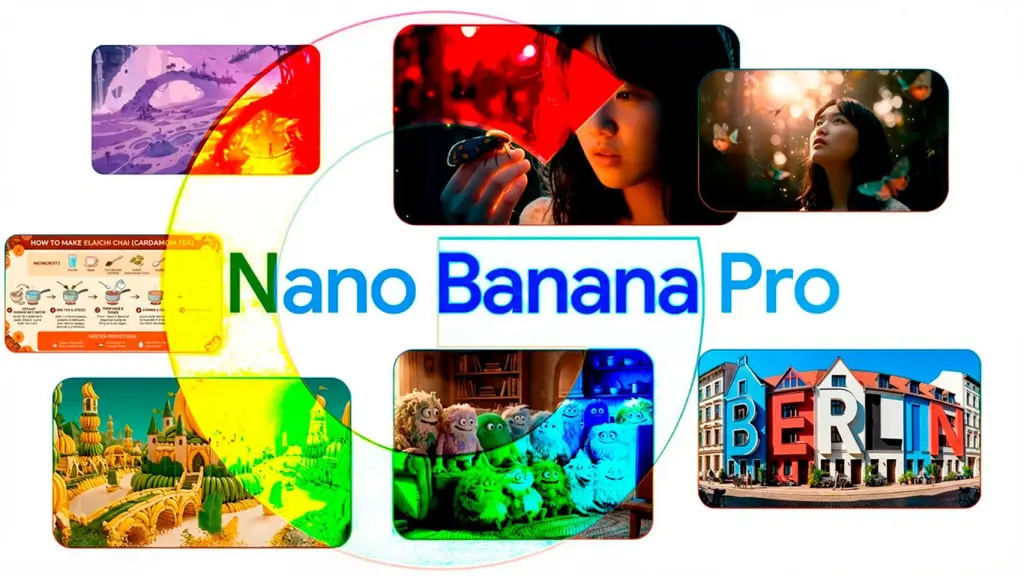
Google’s Nano Banana, the informal name given to the Gemini 2.5 Flash Image model, is rapidly becoming one of the most talked-about tools in architectural image generation. Accessible through the Gemini mobile app (the one with the small banana icon), Google AI Studio, or even via simple prompt posts on X, this model offers a mix of realism, accuracy, and ease of use that stands out among current AI solutions.
What Sets Nano Banana Apart
Nano Banana delivers a level of visual coherence that is difficult to achieve even with many paid AI tools. It maintains consistent characters, objects, and environments from image to image, handling playful tests like keeping a Roman helmet on a cat across entirely different backgrounds with surprising reliability.
Its realism is particularly noteworthy. Whether enhancing portraits, generating architectural scenes, or blending multiple photographic sources, the model produces images that feel grounded and natural rather than artificially stitched together.
Speed is another advantage. Outputs often appear in under ten seconds, noticeably faster than many competing platforms, which still require lengthy generation cycles.
The editing experience is flexible and intuitive. Users can upload photographs, describe the changes they want in plain language, adjust environments, merge visuals, or apply layered refinements without complex parameters. Because the model is available through multiple entry points—including AI Studio and API access—it also fits neatly into personal or professional pipelines.
For developers, the Gemini 2.5 Image API provides straightforward integration options. A 1024×1024 output costs around $0.039, with generous free-tier options inside AI Studio for experimentation.
Input:

Output:

Why Architects Should Pay Attention
Architectural visualization often demands rapid iteration, quick context checks, and the ability to test design ideas without waiting for lengthy render passes. Nano Banana serves precisely this need. Instead of revisiting 3D software for every material update, lighting revision, or site adjustment, designers can simply issue natural-language commands and receive refreshed imagery almost instantly.
Another major benefit is consistency across multiple views. When presenting a façade from different angles or preparing a sequence of design variations, the model maintains identity and visual accuracy, supporting a coherent narrative in client presentations or concept reviews.
Its long-term potential is even more exciting. Should models like Nano Banana eventually integrate directly inside BIM or modeling tools, designers could gain real-time, AI-powered previews during the design process. This would shift visualization from a separate step to an active part of shaping the architecture itself.
Input:

Output:

Final Thoughts
Nano Banana stands out because it strikes a rare balance: it is fast, visually convincing, and remarkably simple to use. For early concept development, design exploration, and rapid visualization tasks, it feels engineered for the architectural workflow. The ability to request changes like “make the terrace greener” or “adjust the façade texture to wood” and receive an immediate, high-quality result fundamentally shortens the iteration loop.
It should not be seen as a replacement for high-end final render engines—detailed material behavior, physical lighting accuracy, and ultra-high-resolution imagery still benefit from traditional workflows. Yet as a creative accelerator and visualization assistant, Google’s Nano Banana has already begun reshaping the way architects approach image creation and design communication.






Seedance 3.0 for Home and Garden Concepts: Making a Renovation Story Easier to Discuss
Seedance 3.0 can turn a renovation idea into a short concept video....
 illustrarch Editoral Team5 Mins read

From SketchUp View to Client-Ready Render: A Hands-On Look at Vizbase
Vizbase co-founder Mikus Zarāns shows how the browser-based AI renderer turns SketchUp...
illustrarch Editoral Team4 Mins read

Best AI Interview Assistant for Architects: 9 Tools Compared
We compare nine AI interview assistants for architects on speed, drawing awareness,...
illustrarch Editoral Team12 Mins read

OpenAI’s Astra Model Aims to Turn AI Into an Architecture Workflow Operator
OpenAI's Astra model, launched Sept. 3, 2026, runs multi-step tasks across software,...
illustrarch Editoral Team3 Mins read


Leave a comment