

Freelance Architect: Salary, Skills & How to Get Started
Learn how to build a freelance architecture career with updated 2026 salary data, essential skills, top platforms like Upwork and Fiverr, licensing requirements, and practical tips for finding clients and managing your practice.
 Elif Ayse Sen10 October 202517 Mins read923

Table of Contents Show
Breaking into the world of architecture can be a challenge, especially for young and inexperienced architects. But what if there’s a world of opportunity waiting for you in the freelance market? Whether you’re seeking freelance architectural work for the first time or looking to transition from a traditional firm, the possibilities are vast. As a freelance architect, you gain the freedom to choose your projects, set your own rates, and build a career entirely on your own terms. This guide covers everything from salary expectations and required skills to the best platforms for finding freelance architect jobs and practical strategies for long-term success.

Exploring Freelance Opportunities for Architects
The architecture industry has continued to evolve with the rise of freelance opportunities. More and more architects are venturing into freelance architectural work, enjoying the flexibility, creativity, and rewarding career that it often provides. According to data from ArchitectureCourses.org, the demand for freelance architects continues to rise in 2025 and 2026, fueled by the growing trend of remote work and the increasing need for flexible, project-based contracts. If you are weighing your career options, you may also want to explore whether architecture is a good career for your goals.
The Rise of Freelancing in Architecture
Over recent years, there has been a significant increase in the number of architects choosing to freelance. Can you be a freelance architect and make a living from it? Absolutely. Several factors are driving this shift:
- Demand for Specialized Architectural Services: As the need for bespoke architectural designs grows, the demand for freelance architects who specialize in unique areas (such as sustainable design, parametric architecture, and BIM consulting) also increases.
- Work Flexibility: Freelance architects enjoy a flexibility that’s rarely found in traditional employment. They set their schedule, choose whom to work with, and select the projects they find interesting. This is one of the main reasons why freelance work for architects has become so popular.
- Expansive Creative Control: As a freelance architect designer, the control over the end product belongs to you. This enables you to infuse more of your personal style into your designs, contributing to a more fulfilling work experience.
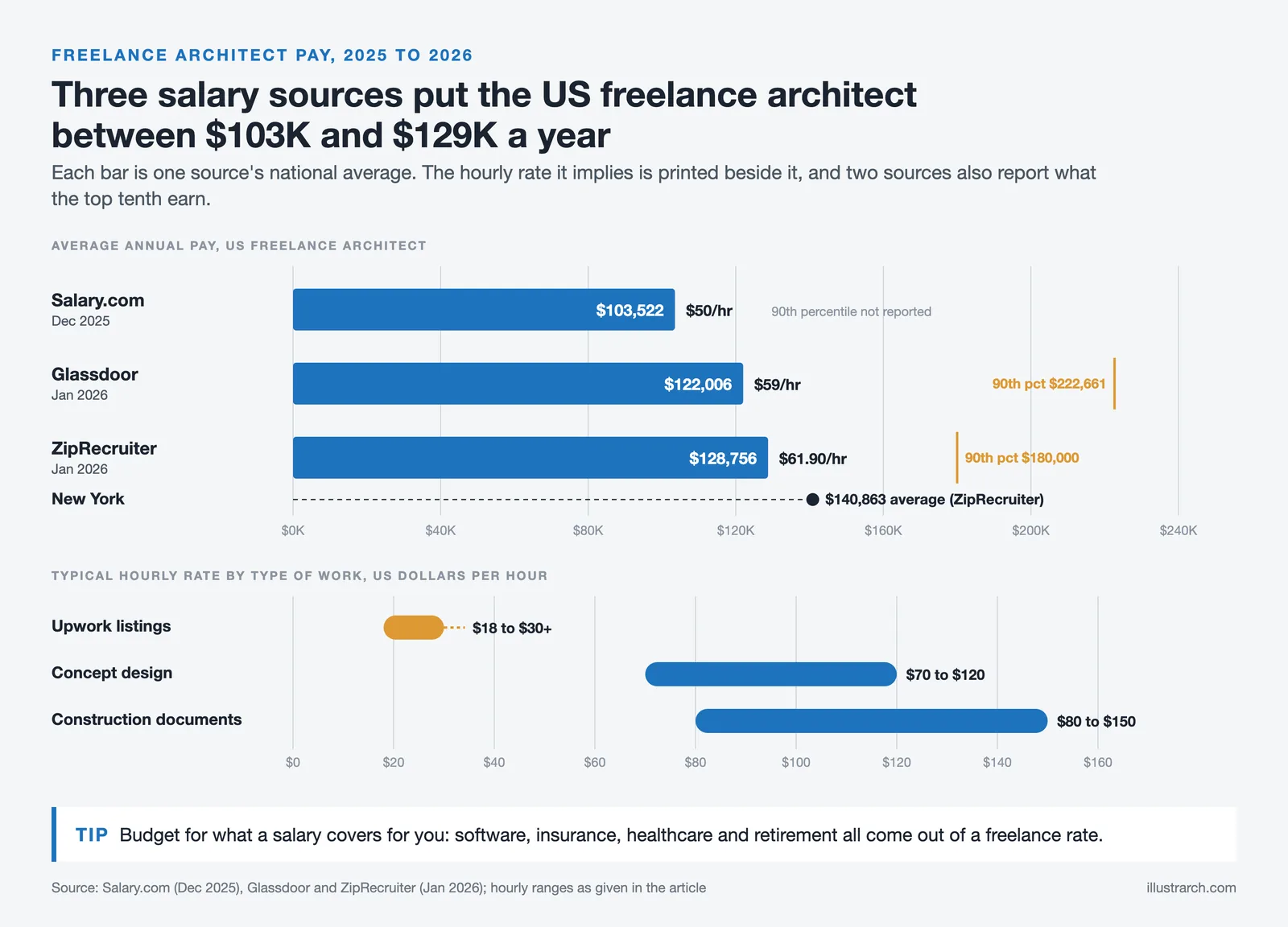
- Potential for Greater Earnings: Freelance architects determine their rates. According to 2025 and 2026 salary data from ZipRecruiter, the average freelance architect in the United States earns approximately $61.90 per hour, with annual earnings averaging $128,756. Entry-level freelancers can expect $46,500 to $91,000, while top earners reach $180,000 or more annually.
These factors combined have caused a shift with more architects embracing freelance opportunities. However, freelancing requires certain skills and responsibilities, such as:
- construction planning,
- 2D and 3D modelling,
- blueprint drafting,
- hand sketching,
- and innovative design ideation.
Using tools such as AutoCAD, Revit, SketchUp, and other design programs, architects are able to effectively fulfil their responsibilities, meeting project requirements and maintaining regulatory standards. Adhering to all legal requirements and regulations related to architectural practices ensures legality and professionalism in their practice. For a deeper look at the education and licensing pathway, check out our guide to becoming an architect.
The rise of freelancing in architecture creates opportunities for architects to redefine their career path and explore new avenues. From increased flexibility to creative control and potential for higher earnings, freelancing offers architects a strong alternative to traditional employment.
Can You Be a Freelance Architect? Requirements and Licensing
One of the most common questions from aspiring professionals is: can you be a freelance architect without working at a firm first? The short answer is yes, but there are prerequisites you should meet before hanging out your shingle.
In the United States, practicing architecture typically requires licensure through the National Council of Architectural Registration Boards (NCARB). This involves completing an accredited degree in architecture, gaining supervised work experience through the Architectural Experience Program (AXP), and passing the Architect Registration Examination (ARE). Licensing requirements vary by state, so verify your local regulations before offering services independently.
If you are not yet licensed, you can still pursue freelance work for architects in areas that do not require a stamp, such as 3D rendering, conceptual design, interior space planning, or drafting services. Many successful freelancers build their client base through these services while completing their licensure path. For those in the early stages of their career, our article on starting a career in architecture provides additional guidance.
Required Skills for Freelance Architects
As architects move through the dynamic landscape of freelancing, certain skills become indispensable. Ranging from core architectural capabilities to essential business and interpersonal skills, these proficiencies can strengthen a freelance architect’s career. Whether you are pursuing freelance architectural work full-time or as a side practice, mastering the following skills is essential.
Core Architectural Skills
A solid foundation in architectural skills sets the baseline for successful freelancing. This includes, but isn’t limited to:
- Construction Planning: Architects devise detailed construction plans, ensuring projects align with client demands and regulatory requirements.
- 2D and 3D Modeling: Makes use of software like AutoCAD and Revit, facilitating the creation of digital blueprints. California-based architects, for example, employ these tools to comply with the state’s strict building codes.
- Blueprint Drafting and Sketching: This skill is critical in communicating design ideas. It ranges from manual sketching to drafting detailed plans using design software.
- Materials Analysis: A crucial component in architecture, it entails calculating the strength of materials and predicting their lifespan. Physics simulations, depending on the software, may aid in this analysis.
- BIM (Building Information Modeling): Increasingly essential in 2026, BIM proficiency allows freelance architects to collaborate seamlessly with engineering teams and deliver more accurate, data-rich project documentation. Our guide to best BIM software can help you choose the right tools.

Business and Communication Skills
Beyond the technical realm, freelance architects must also hone their business and communication skills:
- Networking: It’s crucial for identifying potential clients and building professional relationships. Platforms like LinkedIn and industry groups through the American Institute of Architects (AIA) can significantly expand your reach.
- Project Management: Involves budgeting, scheduling, and orchestrating various project elements to meet deadlines and clients’ expectations.
- Interpersonal Skills: Foster a clearer understanding between the architect and clients, contractors, or other stakeholders. These skills aid in providing and receiving feedback, refining the project’s outcome.
- Financial Compliance: Includes accurate billing, invoicing, and budget management. Maintaining meticulous records helps avoid conflicts and ensures smooth transactions.
With a combination of these technical and business skills, freelance architects are well-equipped to handle their career paths, harnessing the flexibility and creative autonomy the freelance world offers. For more advice on building your skillset, explore our article on starting a career in architecture. You can also explore our beginner’s guide to architectural design software to build your technical toolkit.
Freelance Architect Salary Insights for 2025 and 2026
Understanding what influences pay schedules and rates is crucial for anyone considering freelance architecture. Updated salary data for 2025 and 2026 reveals strong earning potential across the profession.

Understanding the Freelance Architect Pay Structure
The compensation model for freelance architects differs significantly from the traditional salary-based structure. Freelancers typically set an hourly rate and bill their clients accordingly. So what is the typical architect freelance rate? According to data from Salary.com (December 2025), the average freelance architect in the United States earns approximately $50 per hour, with an average annual salary of $103,522. Glassdoor (January 2026) reports a higher average of $122,006 per year ($59/hour), while ZipRecruiter (January 2026) puts the national average at $128,756 per year ($61.90/hour).
For concept design and preliminary planning, rates typically range from $70 to $120 per hour, while construction documentation can command $80 to $150 per hour. Some architects might also opt for a project-based fee determined by the complexity, duration, and requirements of the assignment. This structure provides more flexibility and can lead to attractive income streams if managed correctly. For a broader perspective on architectural pay scales, see our detailed breakdown of architecture career salaries at every stage.
Freelance Architect Salary Comparison by Source
The following table summarizes the latest salary data from major compensation research platforms, giving you a clearer picture of what to expect as a freelance architect in the United States.
| Source | Average Hourly Rate | Average Annual Salary | Top Earners (90th Percentile) |
|---|---|---|---|
| Salary.com (Dec 2025) | $50/hr | $103,522 | Not reported |
| Glassdoor (Jan 2026) | $59/hr | $122,006 | $222,661 |
| ZipRecruiter (Jan 2026) | $61.90/hr | $128,756 | $180,000 |
Salary figures are approximate and vary by region, experience level, specialization, and project scope. Data reflects the US market as of late 2025 and early 2026.
Factors Influencing Freelance Architect Earnings
Profitability as a freelance architect depends largely on certain variables. Let’s explore some of the most important factors:
- Level of Expertise: Years of experience and the depth of skills an architect possesses play significant roles in determining pay rates. More seasoned architects can command higher rates due to their extensive knowledge and proven track records. Experienced professionals with specialized skills (such as sustainable design or AI-driven tools) can earn upwards of $150,000 annually.
- Market Demand: High demand translates to higher pay. Specialized skills, like proficiency in CAD software such as AutoCAD, Revit, or SketchUp, can significantly raise your market value as an architect freelance professional.
- Geographical Location: Regional living costs and local economies influence payment structures. According to ZipRecruiter, freelance architects in New York earn an average of $140,863 annually, well above the national average. High-cost areas like California and Washington, D.C. show similar trends.
- Project Complexity: Projects with intricate designs and requirements command higher fees due to the increased workload and specialized skill sets needed.
- Client Type: Working with commercial clients, real estate developers, or government agencies often results in higher project budgets compared to small residential commissions.
Keep in mind that freelance work also entails certain out-of-pocket expenses, including software subscriptions, operational costs, and often, self-funded healthcare and retirement plans. Balancing these expenses with income and maintaining meticulous financial records can significantly contribute towards a successful freelancing experience. For more on this topic, see our guide to salaries and job hunting for freelance architects.
Top Platforms for Freelance Architectural Work
Finding reliable platforms for project sourcing and fostering professional growth can transform your freelance career. The freelance marketplace has expanded significantly, with several platforms now catering specifically to architects and designers. Below are the best options for finding freelance architect jobs in 2026.
Best Freelancing Platforms for Architects
Choosing the right platform is critical for finding consistent freelance architectural work. Here are the most popular options:
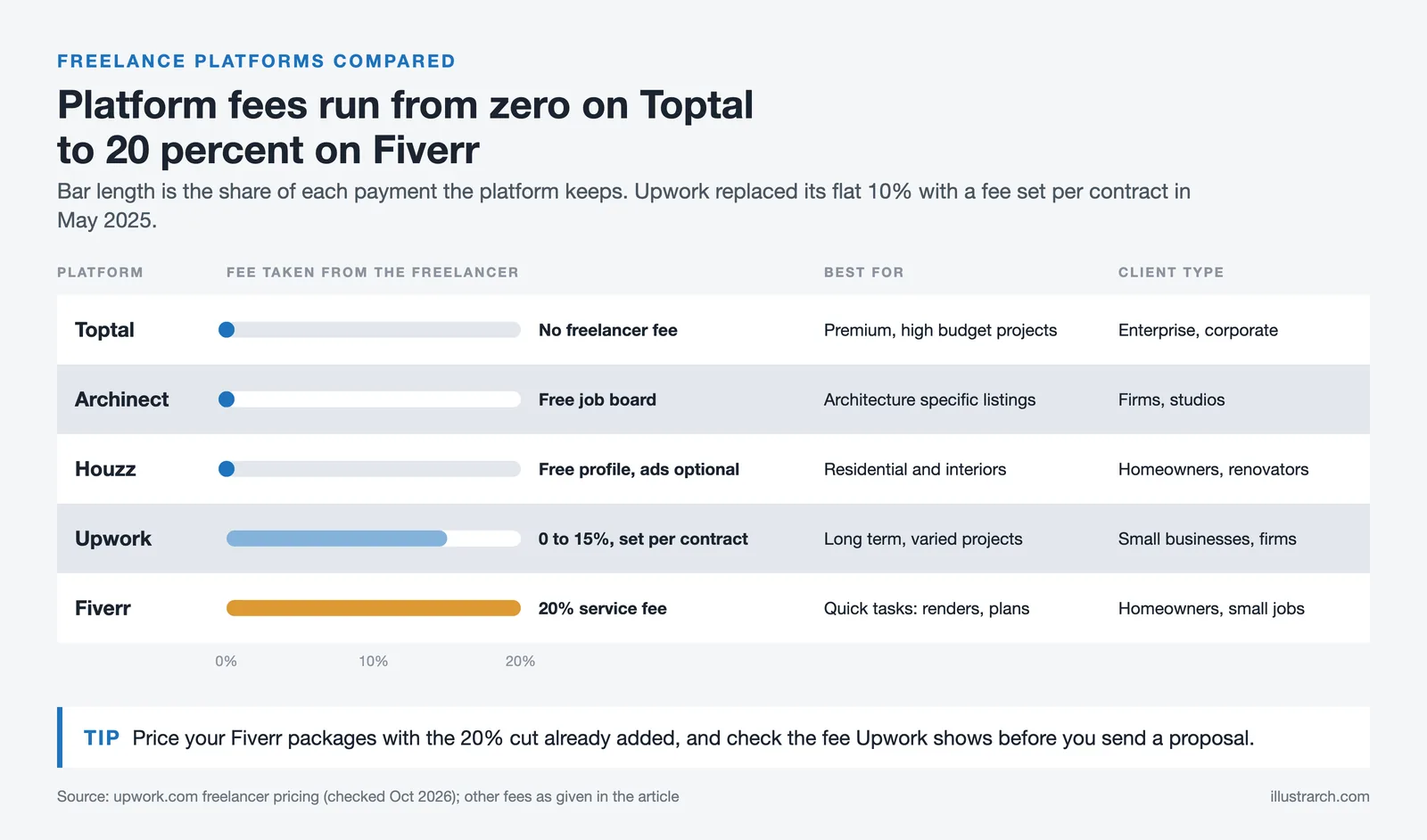
- Upwork: One of the largest freelance marketplaces, ideal for architects seeking both short-term and long-term projects. An upwork freelance architect can build a strong profile showcasing skills, portfolio pieces, and client reviews to stand out. According to Upwork’s own job listings, architects on the platform can earn $18 to $30+ per hour depending on experience.
- Fiverr: Great for offering specific services like 3D rendering, floor plans, and building elevations at competitive prices. Its tiered service packages help define scope and pricing upfront.
- Houzz: Particularly suited for architects interested in residential projects, home design, and interior design collaborations. You can create a business profile, showcase portfolio images, and be indexed by location.
- Toptal: A premium platform that connects top-tier freelance professionals with high-end clients looking for senior-level architectural work.
- Archinect: An architecture-specific job board that connects professionals with positions ranging from freelance gigs to full-time roles.
- PeoplePerHour: Similar to Upwork, this platform lets you create a profile, bid on projects, and build a reputation through client reviews. It’s especially popular with European clients.
For more platform recommendations, check our list of top websites to find architect jobs.
Freelance Platform Comparison for Architects
Each platform serves a different segment of the market. The table below compares the most popular options so you can choose the best freelance architect website for your needs.
| Platform | Best For | Fee Structure | Ideal Client Type |
|---|---|---|---|
| Upwork | Long-term contracts, varied projects | 0% to 15% service fee per contract (since May 2025) | Small businesses, startups, firms |
| Fiverr | Quick tasks like 3D renders, floor plans | 20% service fee | Homeowners, small projects |
| Houzz | Residential and interior design work | Free profile; paid ads optional | Homeowners, renovators |
| Toptal | Premium, high-budget projects | No freelancer fee | Enterprise, corporate clients |
| Archinect | Architecture-specific job listings | Free job board | Architecture firms, studios |
Building a Freelance Architect Website and Portfolio
Beyond third-party platforms, having your own architect freelance website is one of the strongest signals of professionalism. A dedicated portfolio site lets potential clients see your work on your terms, without competing against dozens of other profiles on a bidding platform.
Exploring different avenues, like freelancing websites, can offer numerous project opportunities. Platforms like WordPress, Squarespace, or Wix provide extensive resources that facilitate the creation of personal websites, distinguishing your personal brand and promoting your ideas. Start by showcasing your responsibilities as an architect, from construction planning to 2D and 3D modeling, blueprint drafting, and innovative design. Your personal brand can flourish with a clearly structured portfolio that showcases passion and consistency. You can also explore the benefits of architectural design software to improve the quality of your portfolio renderings.

Networking and Professional Development
Building a robust professional network can have a profound impact on your freelance career. Even a non-obligatory chat with potential contacts via platforms like LinkedIn can be enlightening. Let them know about your availability for freelance architectural work, informing potential clients about your services and how you might help them. Regular, albeit respectful, engagement with these contacts can yield potential avenues for new projects down the road.
To expand your network, do not underestimate the power of existing contacts, and reach out to new people as well. Invest time and effort in building your profile and brand on networking platforms. Maintain professionalism, express your interest in the industry, and share useful information. Attending conferences hosted by organizations like the AIA or regional architecture meetups can introduce you to potential collaborators and clients who prefer working with a freelance architect near me rather than a remote professional.
As a part of your professional development, ensuring legal and financial compliance is essential: preparations and submission of construction documents for permit approvals, plans review, revisions based on feedback, and adherence to all legal requirements remain crucial. You can also find valuable career tips in our guide on architect job search strategies.
Freelance Architect Job Description: What Clients Expect
Understanding the typical freelance architect job description helps you position yourself correctly in the market. Clients hiring freelance architects generally expect the following deliverables and responsibilities:
- Developing conceptual designs and schematic drawings based on client briefs
- Producing construction documents, including floor plans, sections, elevations, and detail drawings
- Creating 3D models and photorealistic renderings for client presentations
- Coordinating with structural engineers, MEP consultants, and contractors
- Preparing permit application packages and responding to plan check comments
- Managing project timelines, budgets, and client communication
The scope varies widely depending on whether you work directly with homeowners or provide support services to architecture firms. Freelance architects who serve other studios typically focus on production work (drafting, BIM modeling, rendering), while those working directly with end clients handle the full design process from concept through construction administration. For those interested in expanding beyond traditional architecture roles, our article on job alternatives for architects and interior designers covers a wide range of possibilities.
Building a Successful Freelance Architecture Practice
Success in freelance architecture hinges on strategic marketing and exceptional client service. Mastering these areas can propel your architecture practice forward and expand the breadth of your projects.
Marketing Your Services
Creating awareness and attracting clients are key to expanding a freelance architecture practice. Use diverse strategies to showcase your skills and expertise to potential clients. Use digital platforms such as Facebook, Instagram, and LinkedIn to share completed projects, detailing distinctive features and design elements to captivate your audience.
Align your marketing material with your brand. Your brand communicates your uniqueness, appealing to potential clients who desire particular design styles. They’ll be drawn to your portfolio based on your unique architectural style, expressed through captured images and described processes.
Participate in architectural forums and webinars as a subject matter expert. Use these platforms to share insights on architectural trends, demonstrate depth in knowledge, and establish credibility in the field. These interactions can also open doors to potential collaborations and partnerships, enhancing your visibility. Platforms like ArchDaily and Dezeen regularly feature industry insights and can help you stay current with trends while positioning yourself as a thought leader.

Managing Client Relationships
Success as a freelance architect isn’t solely dependent on architectural skills; client relationship management is equally significant. Devote yourself to understanding your clients’ goals and expectations, ensuring that your designs align with their vision.
Stay open to feedback and provide space for client participation in the design process, making necessary adjustments in response to client input. Your flexibility can foster a sense of belonging, culminating in client satisfaction. Provide consistent updates, keeping your clients informed on progress and proactively communicating any potential setbacks.
Should disagreements arise, extend effort towards resolution aimed at maintaining the client relationship, preserving future opportunities. Post-project, a follow-up call or email exhibits your commitment to client satisfaction, possibly opening doors for future projects or referrals.
Ensure that your billing process is transparent and easy to understand. Clear, simple invoices foster trust and can prompt timely payments, contributing to smooth client relationships.
In this journey, remember to maintain meticulous records of project expenses and consistently adhere to legal requirements associated with architectural practices. Compliance safeguards your reputation and perpetuates successful client relationships.

Freelance Architect vs. In-House Architect: Key Differences
One of the most common questions aspiring architects face is whether to pursue freelance architectural work or remain in a traditional firm. Both paths have distinct advantages.
Freelance architects enjoy creative freedom, flexible schedules, and the ability to select projects that match their interests. However, they must also manage their own business operations, find clients independently, and handle taxes and insurance on their own.
In-house architects, by contrast, benefit from steady paychecks, employer-provided benefits like health insurance and retirement plans, and access to established teams and resources. The trade-off typically comes in the form of less creative autonomy and rigid schedules.
Many architects eventually blend both approaches, maintaining a part-time freelance practice while working at a firm, to enjoy the benefits of each model. For a thorough comparison of the pros and cons, explore our article on the pros and cons of being an architect.
Freelance vs. In-House Architect Comparison
| Aspect | Freelance Architect | In-House Architect |
|---|---|---|
| Schedule | Flexible, self-determined | Fixed office hours (typically 40-50 hrs/week) |
| Income | Variable; higher ceiling, less predictable | Stable salary with annual reviews |
| Benefits | Self-funded health insurance, retirement | Employer-provided insurance, PTO, 401(k) |
| Creative Control | High; you choose projects and design direction | Limited by firm culture and senior leadership |
| Client Acquisition | Your responsibility entirely | Handled by the firm’s business development |
| Professional Growth | Self-directed; requires initiative | Mentorship, team learning, structured path |
Legal Considerations for Freelancers
Freelance architects operate within a legal context that has its unique implications. Thorough understanding and meticulous management of legal responsibilities contributes to maintaining sustainable freelance practices.
Contracts and Agreements
Contracts form the bedrock of any professional engagement, more so when you’re a freelancer. They help carve out the scope of work, define payment terms, and guard against potential disputes. A robust contract keeps everybody’s expectations clear. It provides a formal framework to manage the project, specifies project timelines, determines termination clauses, and outlines procedures for dispute resolution.
Furthermore, maintaining a record of project expenses is crucial, as it plays a critical role in accurate billing and invoice generation. This supports budget management and adherence to all legal requirements and regulations related to architectural practices. Independent contractors like freelance architects manage their own taxes, insurance, and other legal obligations, which is an important aspect to consider when transitioning from a regular job to freelance work. The National Council of Architectural Registration Boards (NCARB) provides guidelines on licensing requirements that every freelance architect should review.
Protecting Your Work and Intellectual Property
The fruits of your creativity go beyond mere drawings. For architects, it’s crucial to protect their intellectual property rights, as these architectural designs are potential sources of income. Understanding copyrights, trademarks, patents, and trade secrets acts as a safeguard for your work. Copyrights work best for architectural designs, as they prevent unauthorized individuals from using, reproducing, or selling your work.
Being thoroughly versed with these legal considerations can lead to a smooth and long-standing freelance architectural practice. Awareness about contracts, agreements, and intellectual property protection reinforces your value proposition as a freelance architect. To explore even more career pathways in the field, see our article on job alternatives for architects and interior designers.
Essential Tools and Software for Freelance Architects
Staying competitive as a freelance architect requires mastery of industry-standard tools. In 2026, the most in-demand software includes AutoCAD and Revit for drafting and BIM workflows, SketchUp for quick conceptual modeling, Rhino and Grasshopper for parametric design, and rendering engines like Lumion, Enscape, and V-Ray for producing photorealistic visualizations. Our detailed guide to mastering architectural design tools covers each of these in depth.
Project management tools such as Trello, Asana, or Monday.com can help freelancers manage multiple clients and deadlines efficiently. Accounting software like QuickBooks or FreshBooks streamlines invoicing and expense tracking, which is essential for any self-employed professional. Investing in the right tools not only improves your output quality but also signals professionalism to potential clients. For architects weighing different BIM options, our Revit vs. ArchiCAD comparison can help inform your decision.
Financial Management Tips for Freelance Architects
Managing finances effectively is one of the most important aspects of sustainable freelance architectural work. Since income can fluctuate month to month, it’s wise to build a financial buffer covering three to six months of expenses. Set aside approximately 25 to 30 percent of your income for taxes, as freelancers are responsible for self-employment tax in addition to income tax.
Track every business expense, from software subscriptions to home office costs, as many of these are tax-deductible. Consider working with an accountant who specializes in self-employed professionals to ensure full compliance and maximize your deductions. For further insights on managing your freelance finances and career growth, visit our comprehensive guide to salaries and job hunting for freelance architects.
Building codes, licensing requirements, and tax regulations vary by jurisdiction. Always consult local authorities and licensed professionals for advice specific to your situation.
How to Find a Freelance Architect Near Me
If you’re a client looking for a freelance architect near me, or a freelancer trying to attract local business, understanding how local search works is important. Many homeowners and small businesses prefer working with architects in their geographic area for easier site visits and in-person collaboration.
As a freelance architect, you can improve your local visibility by creating a Google Business Profile, listing your services on Houzz (filtered by location), and joining your local AIA chapter. Ask satisfied clients to leave Google reviews, as these play a significant role in local search rankings. Maintaining an active presence on local business directories and attending community events also helps establish you as a trusted professional in your area.
For clients, searching platforms like Houzz, Archinect, or even Upwork with location filters can connect you with qualified freelance architects who understand local building codes and regulations. Our article on how to become a freelance architect also provides useful steps for professionals looking to serve their local market.
Frequently Asked Questions About Freelance Architecture
How much does a freelance architect charge per hour?
According to Salary.com (December 2025), the average hourly rate for a freelance architect in the US is approximately $50. ZipRecruiter (January 2026) reports a higher average of $61.90 per hour. Rates vary significantly by experience, location, and specialization. Architects in high-cost cities like New York can earn $67 or more per hour on average.
Can you be a freelance architect without a license?
You can offer certain services like 3D rendering, drafting, interior space planning, and design consultation without an architecture license. However, you cannot legally stamp or sign construction documents without proper licensure through your state’s registration board. Requirements vary by state, so check with NCARB for specific guidelines.
What is the best freelance architect website for finding projects?
Upwork remains the most popular general-purpose platform for freelance architect jobs, while Archinect is the leading architecture-specific job board. For residential work, Houzz connects you with homeowners in your area. The best platform depends on your target client type and the services you offer.
How do I set my freelance architect rate?
Research competitor rates on platforms like Upwork and Glassdoor. Factor in your experience, overhead costs (software, insurance, taxes), desired take-home pay, and the going rate in your region. Many freelancers start slightly below market rate to build reviews, then increase their rates as their reputation grows.
Is freelance architecture a stable career choice?
Freelancing offers high earning potential and flexibility, but income can be inconsistent, especially in the first year. Building a diverse client base, maintaining a financial buffer, and cultivating repeat clients are the most effective ways to achieve stability. Many architects start freelancing part-time while still employed at a firm to reduce risk during the transition.



1 Comment


How to Become a Freelance Architect Step by Step: From License to Loyal Clients
How to become a freelance architect, step by step: licensing, legal setup,...
 Sinan Ozen5 Mins read

The Rise of Freelance Architects: Why Having the Right Contacts Matters More Than Ever
Freelance architects increasingly rely on strong professional networks to secure projects and...
 Bahattin Duran6 Mins read

Can Architects Work From Home? Exploring Remote Opportunities and Challenges
Explore how remote work is reshaping the architecture industry in our insightful...
 Begum Gumusel5 Mins read

Comprehensive Guide to Freelancing Finances and Job Searches for Long-Term Success
Explore the ultimate guide to freelancing finances and job searches. Learn how...
 illustrarch Editoral Team4 Mins read


I really loved how the article highlighted the benefits of freelancing for architects! The flexibility and creative control sound amazing. It’s great to know that freelance architects can potentially earn between $18 to $30 per hour, which is a pretty good incentive! I’m curious though, how do you think one can effectively network as a freelancer in this industry?