

Top 10 Landscape Architecture Books Every Designer Should Read
A focused guide to ten landscape architecture books covering ecology, planting design, history, and drawing, with real titles by McHarg, Jellicoe, Booth, Watts, Oudolf, and Forman for students and working designers.
 Bahattin Duran28 December 20256 Mins read341

Table of Contents Show
The best landscape architecture books cover ecology, history, planting design, and drawing, giving designers a foundation that general architecture titles miss. This list of ten landscape architecture books, from Ian McHarg’s Design with Nature to Piet Oudolf’s planting work, helps students and practitioners think about outdoor space with far more depth.
Landscape architecture sits between art and science. It asks you to read a site’s ecology, its history, and the way people move through it, then shape all of that into something usable and beautiful. Reading widely is part of the craft. The landscape architecture books below were chosen because they speak directly to that work, rather than to building design in general. Each one has shaped how practitioners approach ecology, planting, urban open space, or the plain business of drawing an idea clearly.
If you want broader reading for the profession, our roundup of architecture reference books covers the wider field. This guide stays on landscape.
Quick Reference: 10 Landscape Architecture Books at a Glance
| Book | Author | Why read it |
|---|---|---|
| Design with Nature | Ian McHarg | Makes ecology the starting point for site planning |
| The Landscape of Man | Geoffrey & Susan Jellicoe | A wide history of designed landscapes and gardens |
| Gardens: An Essay on the Human Condition | Robert Pogue Harrison | Why humans make gardens, told through myth and philosophy |
| Reading the Landscape of America | May Theilgaard Watts | Trains you to read what a site is telling you |
| Basic Elements of Landscape Architectural Design | Norman K. Booth | The design-fundamentals text many programs assign first |
| Planting: A New Perspective | Piet Oudolf & Noel Kingsbury | The modern reference for naturalistic planting design |
| Landscape Ecology | Richard T. T. Forman & Michel Godron | The scientific backbone: patches, corridors, matrices |
| The Landscape Urbanism Reader | Charles Waldheim (ed.) | Landscape, not buildings, organizing the city |
| Landscape Graphics | Grant W. Reid | Drawing and visual communication from first principles |
| Landscape Design: A Cultural and Architectural History | Elizabeth Barlow Rogers | One of the best single-volume histories of the field |
The 10 Best Landscape Architecture Books
1. Design with Nature by Ian McHarg
McHarg’s 1969 book made ecology the starting point for site planning, not an afterthought. He set out a layered method for reading topography, hydrology, soils, and vegetation before a single line goes on paper, an approach that still guides green infrastructure and climate-adaptive design. For anyone working on ecological restoration or regional planning, this is the reference point that every later theory argues with. You can find Design with Nature on Open Library, and the Cultural Landscape Foundation keeps a full profile of McHarg’s career.
2. The Landscape of Man by Geoffrey and Susan Jellicoe
Few books trace the history of designed landscapes as widely as this one. The Jellicoes follow garden and landscape design from prehistory through the classical world, Islamic gardens, the European Renaissance, and into the modern era, always tying form to the ideas and beliefs behind it. It works both as a history and as a store of precedents you can carry into your own projects. Browse editions on Open Library.
3. Gardens: An Essay on the Human Condition by Robert Pogue Harrison
Harrison, a literary scholar rather than a designer, asks what gardens mean to us and why people keep making them. He moves through myth, philosophy, and literature to argue that gardens are where humans tend life and practice care. For a landscape architect, the value is perspective. It reframes planting and place-making as acts with cultural and emotional weight, not only spatial problems. See the University of Chicago Press title on Open Library.
📌 Did You Know?
The job title “landscape architect” was popularized in the 1860s by Frederick Law Olmsted and Calvert Vaux while they designed New York’s Central Park. Before that, practitioners were usually called landscape gardeners, and the change in name marked the field’s move toward planning and engineering alongside horticulture.
4. Reading the Landscape of America by May Theilgaard Watts
Watts, a naturalist, teaches you to read a landscape the way an ecologist does. A hedgerow, a bog, or a roadside all tell stories about soil, climate, and human use. Her short observational essays sharpen the single most useful skill in the field, looking closely and understanding what you see. It pairs well with the heavier ecology texts further down this list. The book is catalogued on Open Library.
5. Basic Elements of Landscape Architectural Design by Norman K. Booth
Booth’s book is the design-fundamentals title many programs assign first. It breaks the composition of outdoor space into its working parts, landform, plants, water, buildings, and pavement, and shows how each one shapes movement, views, and feeling. The writing is clear and diagram-heavy, which makes it a practical desk reference rather than a theory read. Find it on Open Library.
6. Planting: A New Perspective by Piet Oudolf and Noel Kingsbury
Oudolf reshaped planting design with a naturalistic style built on structure, seasonal change, and how plants look as they fade, not only in bloom. Written with Noel Kingsbury, this book lays out his plant selections, planting plans, and the thinking behind schemes such as New York’s High Line. For designers who want planting to carry a project rather than decorate it, this is the modern reference. The Timber Press title is listed on Open Library.
🏗️ Real-World Example
Diana, Princess of Wales Memorial Fountain (London, 2004): landscape architect Kathryn Gustafson designed this ring of flowing water in Hyde Park to be walked through and touched, not just viewed. It shows how the site-reading and planting ideas in these books turn into built, public landscape.
7. Landscape Ecology by Richard T. T. Forman and Michel Godron
This is the scientific backbone of the reading list. Forman and Godron set out how landscapes work as systems of patches, corridors, and matrices, and how those structures shape habitat, water, and species movement. The ideas here support habitat design, greenway planning, and most serious ecological work in the field. It is dense, but it repays the effort. The 1986 edition is catalogued on Open Library.
8. The Landscape Urbanism Reader edited by Charles Waldheim
This collection gathers the essays that defined landscape urbanism, the argument that landscape, not buildings, should organize the modern city. It is a theory book, and a demanding one, but it gives language to a way of thinking about infrastructure, ecology, and open space at the scale of whole districts. It is useful for anyone working between planning and design. See it on Open Library.
9. Landscape Graphics by Grant W. Reid
Design only counts if you can communicate it. Reid’s book teaches the drawing conventions of the profession, plan graphics, section, lettering, trees, and rendering, from first principles. Even with digital tools now standard, the visual literacy it builds carries directly into presentation and review. Many students keep it within reach for years. It is listed on Open Library.
10. Landscape Design: A Cultural and Architectural History by Elizabeth Barlow Rogers
Rogers, who led the restoration of New York’s Central Park, wrote one of the best single-volume histories of the designed landscape. She connects gardens and parks to the cultures that built them, from ancient sites to twentieth-century modernism, with strong illustrations throughout. It closes the loop on this list, tying ecology, theory, and practice back to history. It is available on Open Library.
How to Build Your Landscape Architecture Reading List
Ten titles can feel like a lot at once, so treat them as a set to work through rather than a stack to finish. The strongest readers in the field move between lanes: ecology, history and theory, and practical skills. A planting book means more once you understand how a site functions ecologically, and a history like Rogers or Jellicoe makes contemporary work easier to place.
💡 Pro Tip
When you build a landscape reading list, pair one ecology title with one history or theory book and one practical skills book, rather than stacking three of the same kind. Designers who read across those three lanes tend to make sharper site decisions than those who only read what already feels comfortable.
🔢 Quick Numbers
- The American Society of Landscape Architects (ASLA) was founded in 1899 and today represents more than 15,000 members.
- Ian McHarg’s Design with Nature has stayed in print since 1969, and the Lincoln Institute of Land Policy published an expanded volume, Design with Nature Now, in 2019.
- Piet Oudolf’s planting design helped make New York’s High Line one of the city’s most visited parks, drawing several million visitors each year (Friends of the High Line).
Where to Go From Here
You do not need to read all ten at once. Start with the book closest to the work in front of you, an ecology title if you are analyzing a site, a planting book if you are choosing species, then let each one point you toward the next. A landscape architecture library grows best when it follows real projects rather than a syllabus. For related reading, see our look at plant selection in garden design and the difference between landscape architecture and architecture.







Landscape Architecture Section Drawings: 12 Examples and How They Are Built
Twelve real landscape sections, from Salomon Kleiner's Weißenstein garden profile and the...
 illustrarch Editoral Team17 Mins read
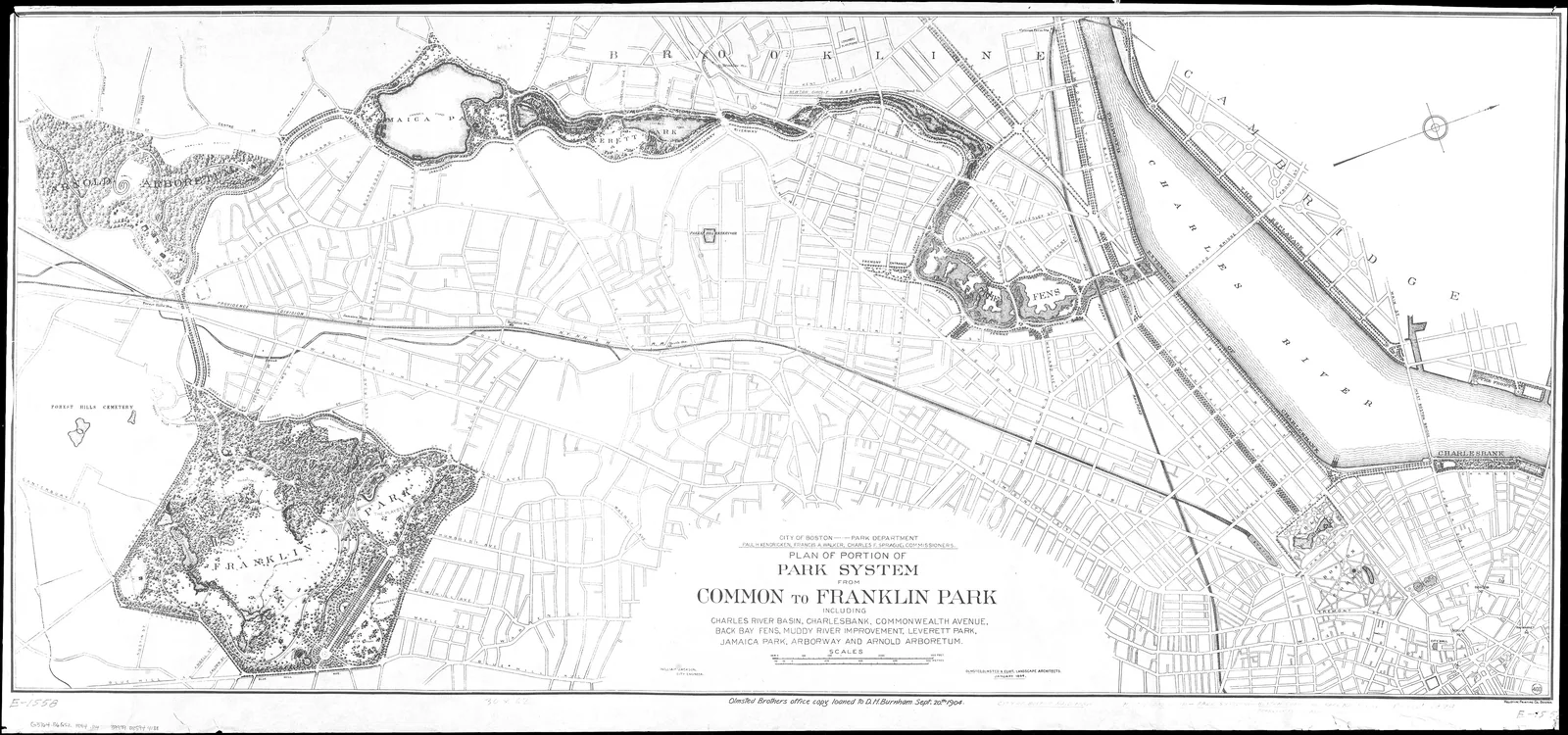
Landscape Architecture Drawings: Plans, Sections and Diagrams Explained with Real Examples
Seven real landscape architecture drawings, one for each type: the Emerald Necklace...
illustrarch Editoral Team11 Mins read

Top Rated Landscape Architecture Schools in the US, Europe, and Beyond
From Harvard GSD and UC Berkeley to Wageningen University in Europe, the...
 Sinan Ozen10 Mins read

7 Powerful iPad Apps for Modern Landscape Architecture & Garden Design
In 2025, iPad-based workflows have become essential for landscape architects and garden...
Bahattin Duran10 Mins read


Leave a comment