

Dance School
The dance school in Antwerp features a hybrid structural design that balances performance needs with public visibility, enhancing both privacy and exposure.
 illustrarch Editoral Team29 January 20191 Mins read317
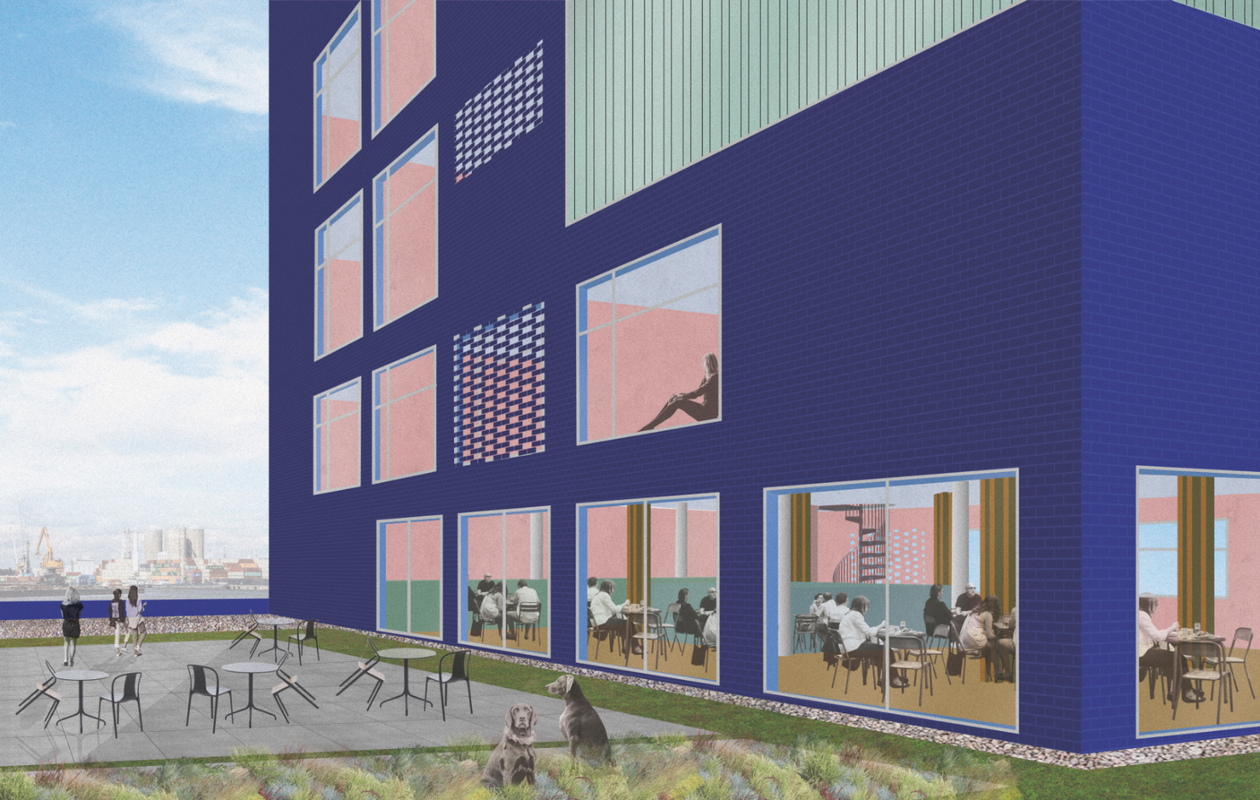


This dance school in Antwerp turns the everyday rituals of movement into a public spectacle visible from the street. Designed by Faber Martens (@fabermartens) and Tom Beysen (@tombeysen), the building sits in Het Eilandje (The Island), one of the emerging neighborhoods of Antwerp and a former port area now being reshaped for cultural and residential life. The use of blue, glazed brick in the façades refers to the old bridge guard houses that once dotted this part of the waterfront, anchoring the new structure in the memory of the district.
Buildings for dance and performance ask architects to reconcile two demands that usually pull in opposite directions. The studios need quiet, controlled, well-proportioned rooms with even daylight and sprung floors, while the institution also wants to advertise its presence and draw the public in. Here that tension is resolved through the envelope itself. The channel glass windows show the public where the dancing rooms are located in the building, and at night they give a glimpse of the internal activities, so the architecture becomes a kind of slow, glowing signboard for the life inside.
Structure and the open hall
The structural logic supports this openness. The building rests on four steel frames that are supplemented with a secondary wooden structure, a hybrid approach that lets the heavier members carry long spans while the timber handles finer subdivisions. Inverted king post trusses allow for a large, open performance hall, freeing the floor of columns so dancers and audiences can occupy the full width of the space. Column-free halls are a recurring goal in performance architecture, and the king post truss is a long-standing way to reach across a room without intermediate support.
On the outside, the perforated brick wall parts create an interesting contrast between open, closed and semi-closed surfaces, screening some rooms while opening others to light and view. That graded transparency is well suited to a dance studio environment, where privacy and exposure both matter. Rooted in the industrial fabric of Antwerp, the school reads as both a working building and a small civic landmark for its regenerating quarter.




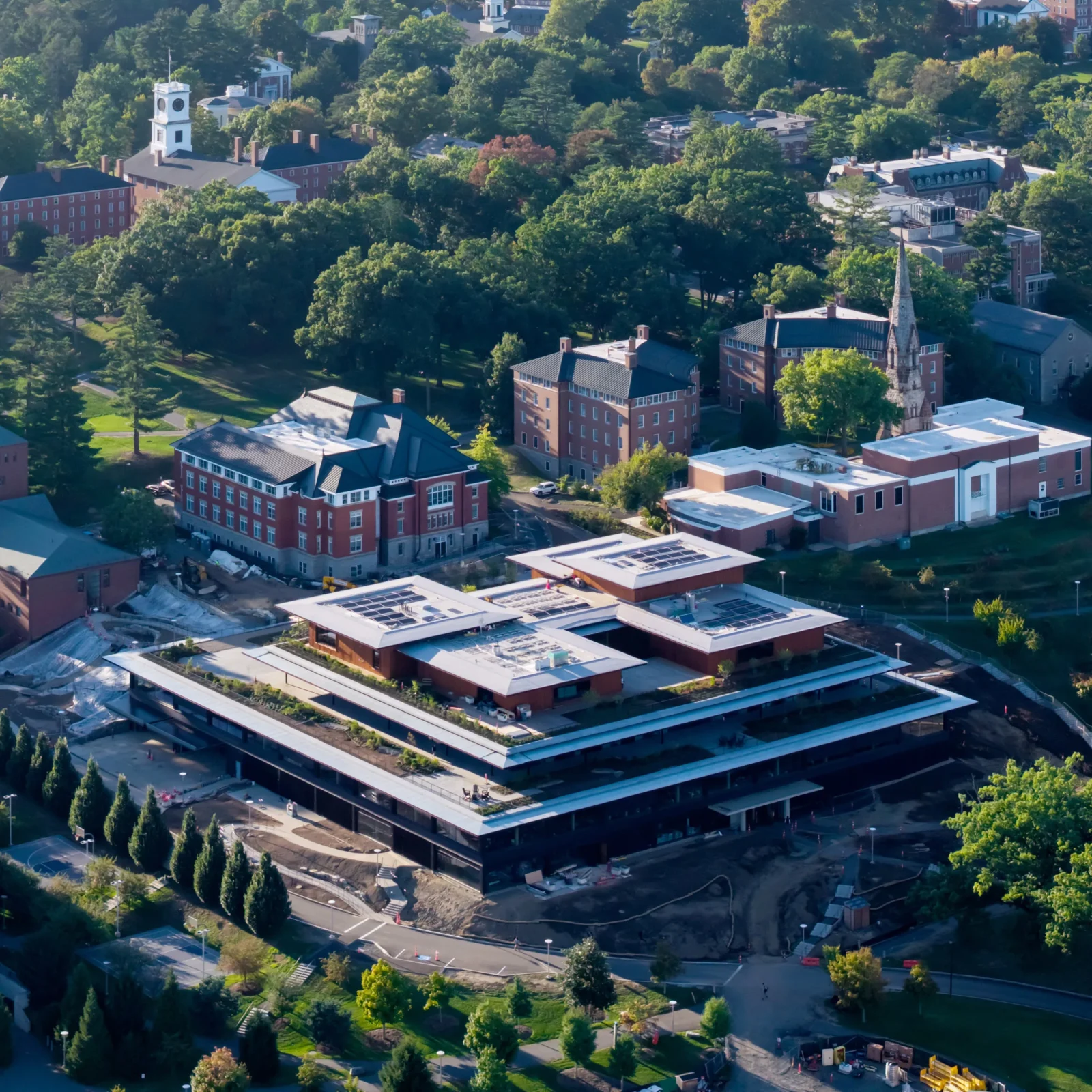
Herzog & de Meuron Builds Amherst College Student Center Atop Old Foundations
Herzog & de Meuron built a mass-timber student center at Amherst College...
illustrarch Editoral Team2 Mins read
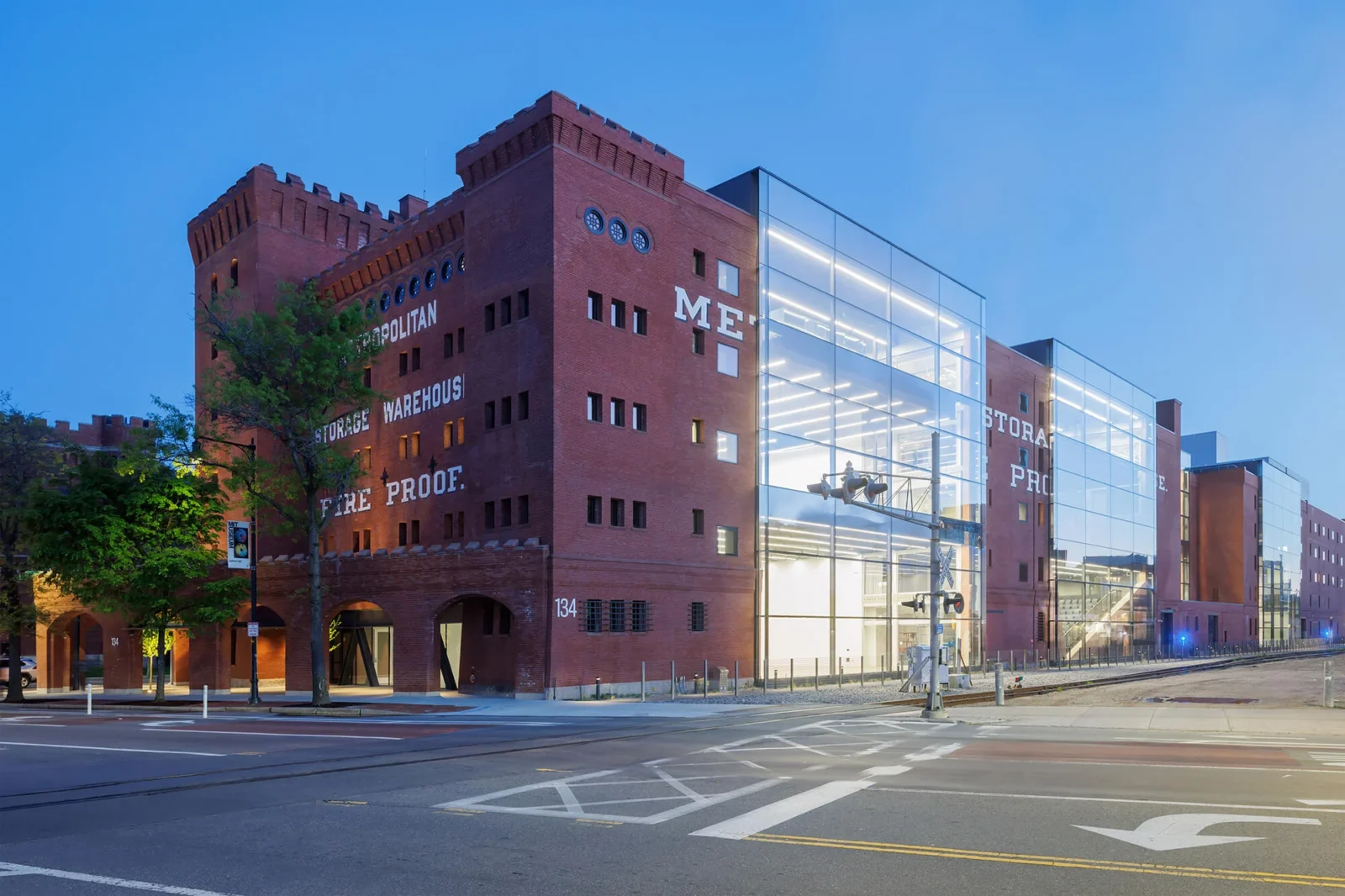
MIT Architecture School Moves Into DS+R-Converted Metropolitan Storage Warehouse
MIT's architecture school has moved into a DS+R-converted 1894 warehouse in Cambridge,...
illustrarch Editoral Team3 Mins read

SENA Tunja Training Center by TAP Arquitectura
TAP Arquitectura's unbuilt competition proposal for SENA in Tunja wraps a 4,400...
illustrarch Editoral Team2 Mins read
Best Software in Architecture School and What to Learn First
A practical look at the best software to learn in architecture school,...
 Elif Ayse Sen6 Mins read


Leave a comment