

Designing a Liminal Space Where Urban Meets Coastal
The Liminal House by Mcleod Bovell Modern Houses in West Vancouver is one of the finest examples of liminal space houses in contemporary residential architecture. Completed in 2022, this 1,016 m² concrete and Accoya wood dwelling sits at the threshold between suburban life and the Pacific coastline, embodying the concept of liminal architecture through its scenographic design, durable coastal materials, and seamless indoor-outdoor transitions.
 Elif Ayse Sen20 February 20265 Mins read756

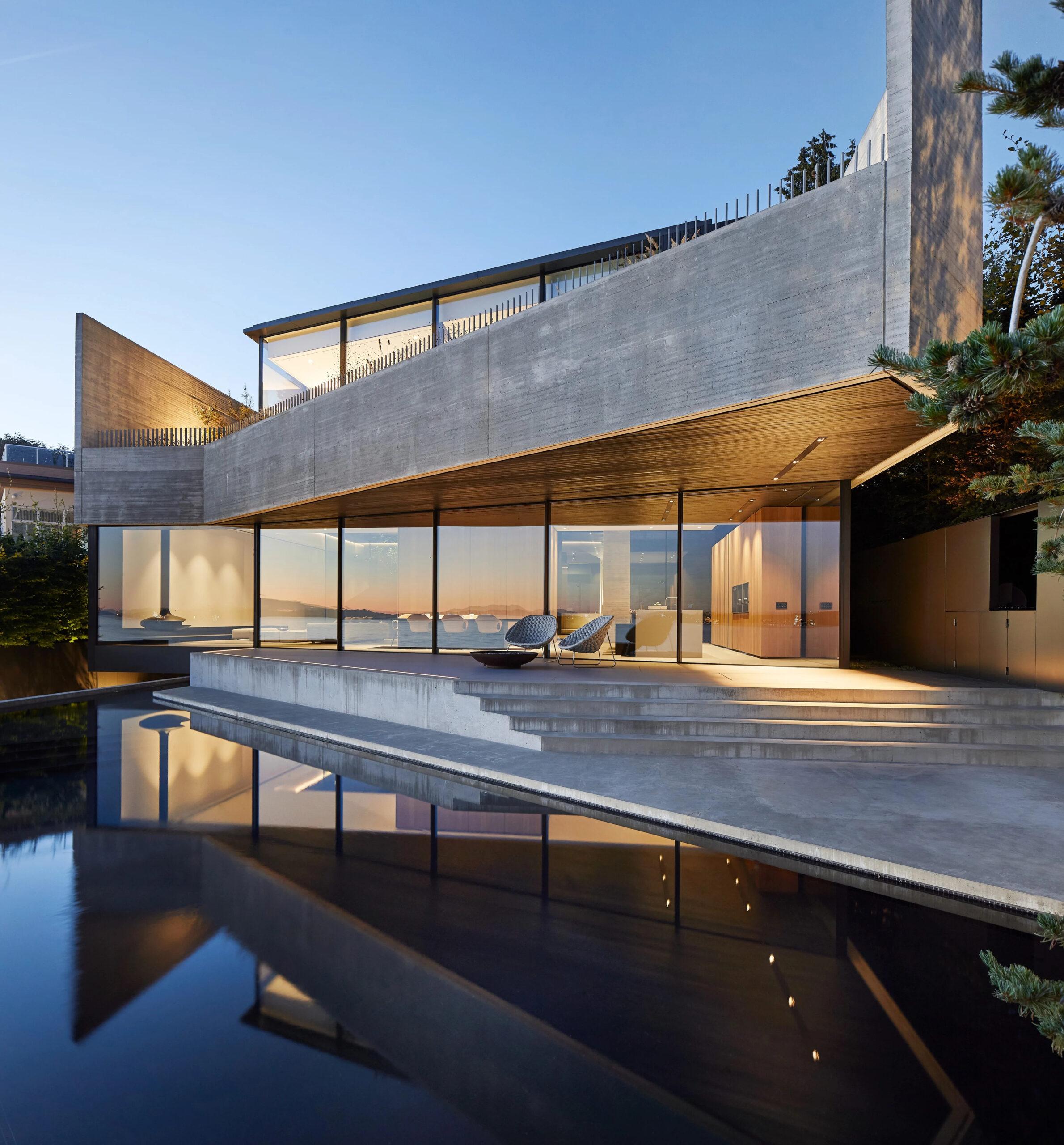


Table of Contents Show
The Liminal House by Mcleod Bovell Modern Houses is one of the most compelling examples of liminal space houses in contemporary residential architecture. Completed in 2022 in West Vancouver, Canada, this 1,016 m² (10,940 ft²) dwelling sits precisely at the threshold between suburban neighborhood and rugged Pacific coastline, making it a masterclass in liminal architecture that transforms the concept of transition into built form.
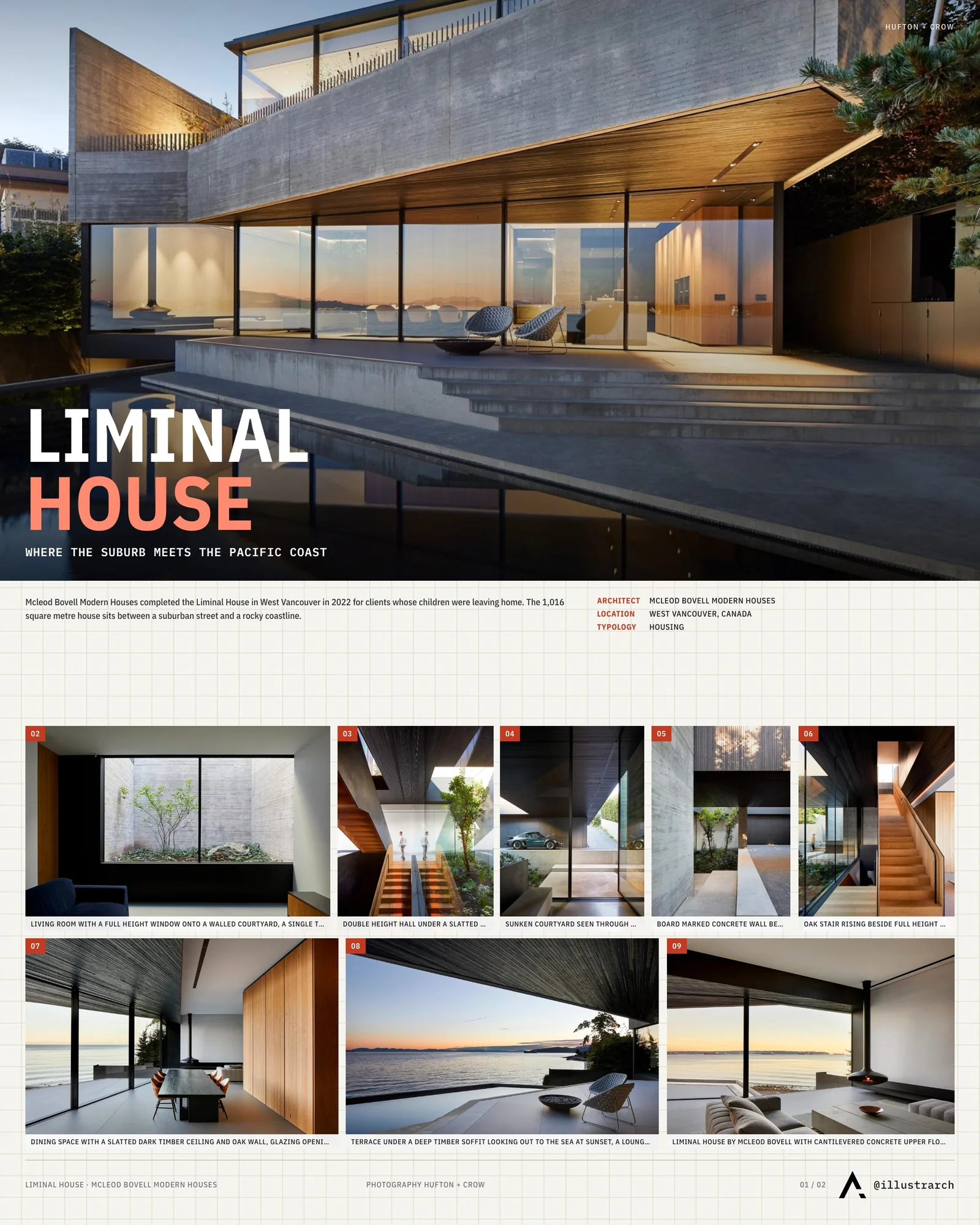
The clients approached the firm at a significant turning point in their lives, preparing for the next chapter as their children were leaving home. This transition in their family life became a central theme in envisioning a residence that reflects both conceptual and physical transitions. The architects adopted the term “liminal” to describe the design philosophy, focusing on the sensations of being in a transitional space, guiding movement through the environment, and capturing the essence of transitioning from one stage to another. The result is one of the most striking liminal houses built in recent years.

Site Context: Where Urban Meets Coastal in West Vancouver
Situated at the junction of a suburban neighborhood and the rocky coastline of West Vancouver, the site presents a unique blend of urban and natural landscapes. The design of the house takes cues from the creatures inhabiting this boundary area, adapted to the harsh coastal conditions. The structure is built with durable materials such as concrete, stained Accoya wood, and aluminum plate, chosen for their ability to withstand the coastal climate. This material palette is a direct response to the site’s demanding environmental conditions and reflects the kind of thoughtful material selection essential for coastal construction.
The steep site overlooks the Pacific Ocean, and the design team used the house’s organization to choreograph movement toward the shoreline. As a liminal spaces house, the building occupies what the architects describe as an “expanded border between land and sea,” referencing the interstitial creatures whose physiology has adapted to such challenging threshold environments.

Scenographic Design: A New Approach to Liminal Architecture
The approach to this project was informed by previous experiences with complex landscapes and close-proximity construction. The architects moved away from traditional flat architectural “elevations” in favor of a more dynamic, scenographic approach. This allows the house to be fully appreciated only by moving through and around it. The design integrates courtyards, overhanging structures, and the extension of natural landscapes into the lower floors, blurring the line between the built environment and nature.
This scenographic quality is central to what makes liminal architecture so powerful as a design strategy. Rather than presenting a single facade to the street, the Liminal House unfolds as a sequence of spatial experiences, each transition carefully orchestrated to evoke a sense of passage. The concept aligns with broader ideas about how space in and around architecture shapes human experience, where movement, light, and materiality combine to create environments that resonate on both physical and emotional levels.
One of the most distinctive structural features is an impressive 8-meter cantilever on the upper floor, achieved by planting 5-meter concrete fin walls joined by an immense concrete beam into the hillside. This engineering feat allows long, oblique infinity views through the landscape while providing a protective shell for the main-floor terrace below. The interplay of wood and concrete throughout the structure balances the raw strength of the concrete shell with the warmth of oak millwork interiors.

Light, Reflection, and the Liminal Spaces House Experience
The fluctuating coastal atmosphere plays a pivotal role in the house’s interaction with its surroundings. The house not only responds to these changes but also enhances them. The design strategically frames views using solid and glass walls, creating reflections and refractions that play with the concept of space and location. The presence of a dark pool at the property’s edge and the reflective surfaces of internal courtyards further enhance this interplay, creating a sense of being in a liminal, transitional space.
As the architects described, the endless refraction of light and sight means inhabitants are always seeing two or three things at once, a quality that is fundamental to liminal space houses where the boundaries between inside and outside, earth and sky, built and natural are deliberately dissolved. This approach to atmosphere in architecture demonstrates how light, material, and spatial design can profoundly shape the emotional experience of a home.
What Defines Liminal Houses in Residential Architecture
The concept of liminality in architecture draws from the Latin word limen, meaning “threshold.” Originally developed in anthropology by Arnold van Gennep to describe transitional phases in cultural rites of passage, the term has been adopted by architects to describe spaces that exist in-between, neither fully one thing nor another. In residential design, liminal houses embrace this ambiguity as a design principle rather than treating it as a problem to be solved.
Key characteristics that define liminal architecture in houses include layering of spatial boundaries, dissolution of the line between indoor and outdoor, blurring of material transitions, and deliberate ambiguity in how spaces connect. The Liminal House by Mcleod Bovell demonstrates all of these qualities. The courtyards serve as intermediary zones, the cantilevered volumes create sheltered thresholds, and the material palette, shifting from raw concrete to warm oak, guides inhabitants through a choreographed sequence of transitional moments.
This design philosophy connects to a growing interest in how nature-integrated architecture can create more meaningful connections between residents and their surroundings. By treating the boundary between city and coast as a design opportunity rather than a limitation, liminal space houses like this one offer a compelling model for residential projects on challenging sites.
Program and Spatial Organization
The Liminal House is organized as a journey rather than around a singular focal point. Entered from an autocourt on the hillside, the main level features a kitchen, dining, and living space with a floating fireplace. A central staircase and courtyard separate the public spaces from the garage, while the upper level houses bedrooms including a primary suite with ensuite and walk-in closet, children’s bedrooms, and a guest suite with its own terrace.
The lower level takes advantage of the slope, incorporating a recreation room, spa bathroom with sauna, guest room, and, notably, a showroom for the owners’ collection of rare sports cars. Despite being subterranean, lightwells and internal courtyards bring natural daylight deep into these spaces. This multi-level arrangement is a hallmark of liminal houses built on steep topographies, where each level offers a different relationship to the landscape and horizon. Understanding how these spatial sequences work relates closely to how architects approach modern architectural design principles of open plans and visual continuity.
Sustainability and Durable Coastal Materials
The material choices in this liminal architecture project were driven by both aesthetic vision and environmental necessity. Concrete provides the structural backbone and weather resistance needed for an exposed coastal location. Accoya wood, a modified timber known for its exceptional durability and dimensional stability, was chosen for its ability to resist moisture, rot, and insect damage without the environmental concerns of tropical hardwoods. Aluminum plate cladding completes the protective envelope.
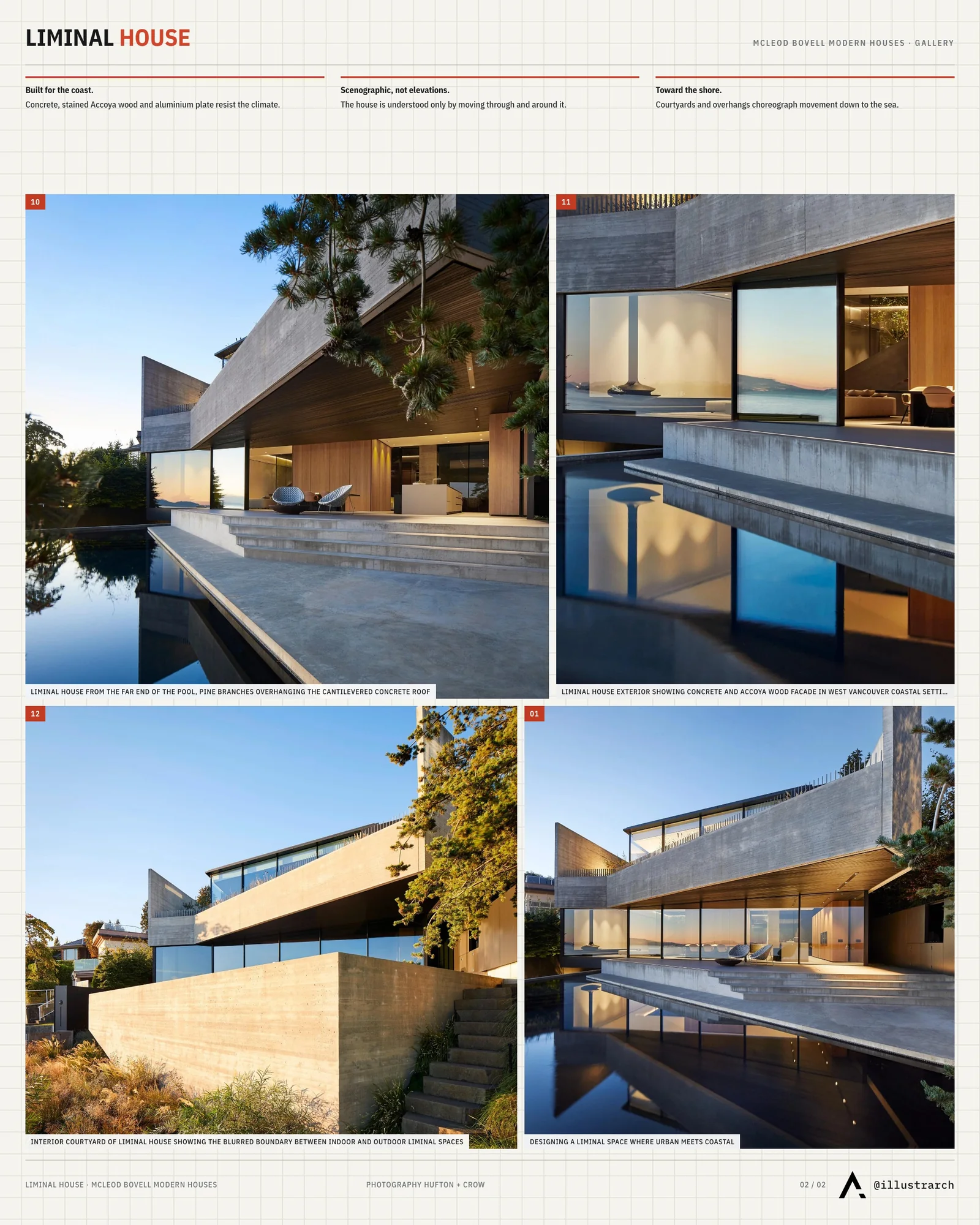
These durable, low-maintenance materials ensure the house can withstand the battering effects of West Vancouver’s shore environment, from salt spray and driving rain to intense UV exposure. The selection reflects a broader trend in coastal residential architecture toward materials that age gracefully rather than deteriorate, reducing long-term maintenance and environmental impact.
Project Details
- Project Name: Liminal House
- Architect: Mcleod Bovell Modern Houses
- Lead Designers: Lisa Bovell, Matt McLeod
- Location: West Vancouver, British Columbia, Canada
- Completion Year: 2022
- Gross Built Area: 1,016 m² / 10,940 ft²
- Photography: Hufton + Crow
- Builder: Hart Tipton Construction
- Project Team: Matt Mcleod, Lisa Bovell, Daan Murray & Daniel Ching
The threshold condition this project works with has a longer history in architecture and anthropology, set out in our guide to liminal space in architecture.


1 Comment


Living Typologies by Stela Boldur
Living Typologies by Stela Boldur is a student masterplan for the former...
 illustrarch Editoral Team2 Mins read

Residential Architecture Face-Off: Co-Living vs Traditional Apartment for Urban Housing
Co-living and traditional apartments represent two distinct approaches to residential architecture in...
 Furkan Sen8 Mins read
House in Nakano: A 96 m² Tokyo Architecture Marvel by HOAA
House in Nakano, designed by HOAA, creatively addresses urban density challenges by...
 Bahattin Duran6 Mins read

Bridleway House by Guttfield Architecture
Bridleway House by Guttfield Architecture is a barn-inspired timber extension that reframes...
 Begum Gumusel3 Mins read


I found the concept of ‘liminal’ spaces really interesting. It’s fascinating how the design reflects transitions, especially when families are going through big changes like kids leaving home. The materials used, like Accoya wood and concrete, seem perfect for the coastal climate. I’m curious about how these choices impact maintenance over time.