

Quincho Falconí
Quincho Falconí by Mediagua Architecture revitalizes a neglected backyard in Cuenca, Ecuador, creating distinct areas for leisure, dining, and outdoor cooking.
 illustrarch Editoral Team25 July 20191 Mins read365
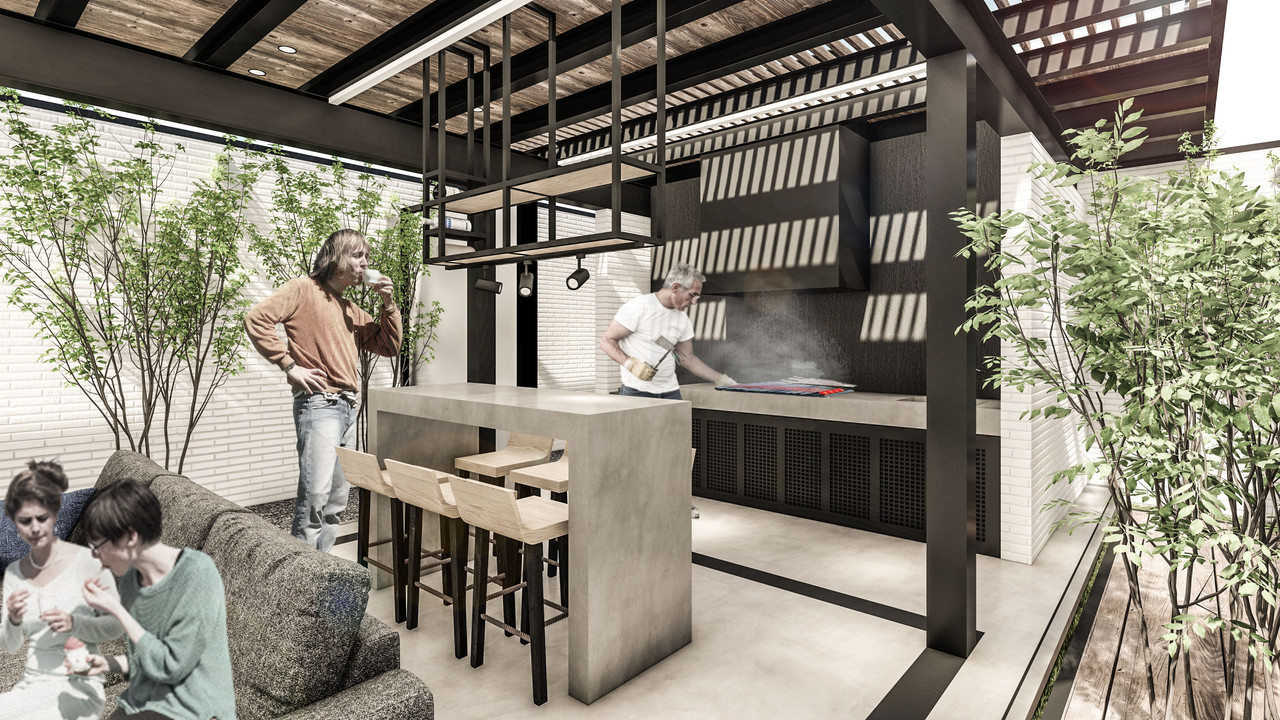


Quincho Falconí transforms a neglected backyard in Cuenca, Ecuador into a layered space for leisure, rest, and outdoor cooking. Designed by Mediagua Architecture, the project reworks a yard that previously served only as a laundry area and patch of green, giving it a clear order between domestic service, dining, and relaxation. The central move is a platform that appears to levitate above the ground floor, achieved through a slit detail along the slab that reads as a thin line of shadow and light.
That floating platform links the house to an outdoor dining area by way of a deck. The deck can work on its own or together with the barbecue zone, so the family can host a large gathering or use a single corner without the whole yard feeling occupied. A transparent block separates the living room, dining room, and a bar inside the barbecue area, a choice driven less by visual screening than by the practical need to manage smoke and keep fresh air moving when the grill is in use.
One space, many environments
Sliding glass modules let the same footprint behave in different ways. Closed, they shelter the interior from the cool air that settles in the Andean highland city of Cuenca; open, they push the living space outward toward the garden, erasing the line between inside and out. This flexibility is a familiar concern in residential architecture, where a small home often has to serve several roles across a single day and season. The laundry and warehouse sit where the house and recreation area cannot easily see them, protecting the privacy of both the service functions and the leisure space.
The result speaks to a wider tradition in Ecuadorian architecture, which often blends sheltered interiors with generous outdoor rooms suited to a temperate climate. A quincho, in much of South America, is a covered place for grilling and gathering, and here that idea is folded into the rhythm of an existing home in Cuenca. By treating the backyard as a sequence of connected thresholds rather than a single leftover plot, Mediagua Architecture turns a utilitarian corner into a place people will actually want to spend their evenings.


Residential Architecture Face-Off: Co-Living vs Traditional Apartment for Urban Housing
Co-living and traditional apartments represent two distinct approaches to residential architecture in...
 Furkan Sen8 Mins read
Designing a Liminal Space Where Urban Meets Coastal
The Liminal House by Mcleod Bovell Modern Houses in West Vancouver is...
 Elif Ayse Sen5 Mins read
House in Nakano: A 96 m² Tokyo Architecture Marvel by HOAA
House in Nakano, designed by HOAA, creatively addresses urban density challenges by...
 Bahattin Duran6 Mins read

Bridleway House by Guttfield Architecture
Bridleway House by Guttfield Architecture is a barn-inspired timber extension that reframes...
 Begum Gumusel3 Mins read


Leave a comment