

The META House Apartment
The META House Apartment offers a modular housing solution that allows residents to customize their living spaces, promoting community and reducing renovation waste.
 illustrarch Editoral Team23 January 20191 Mins read333
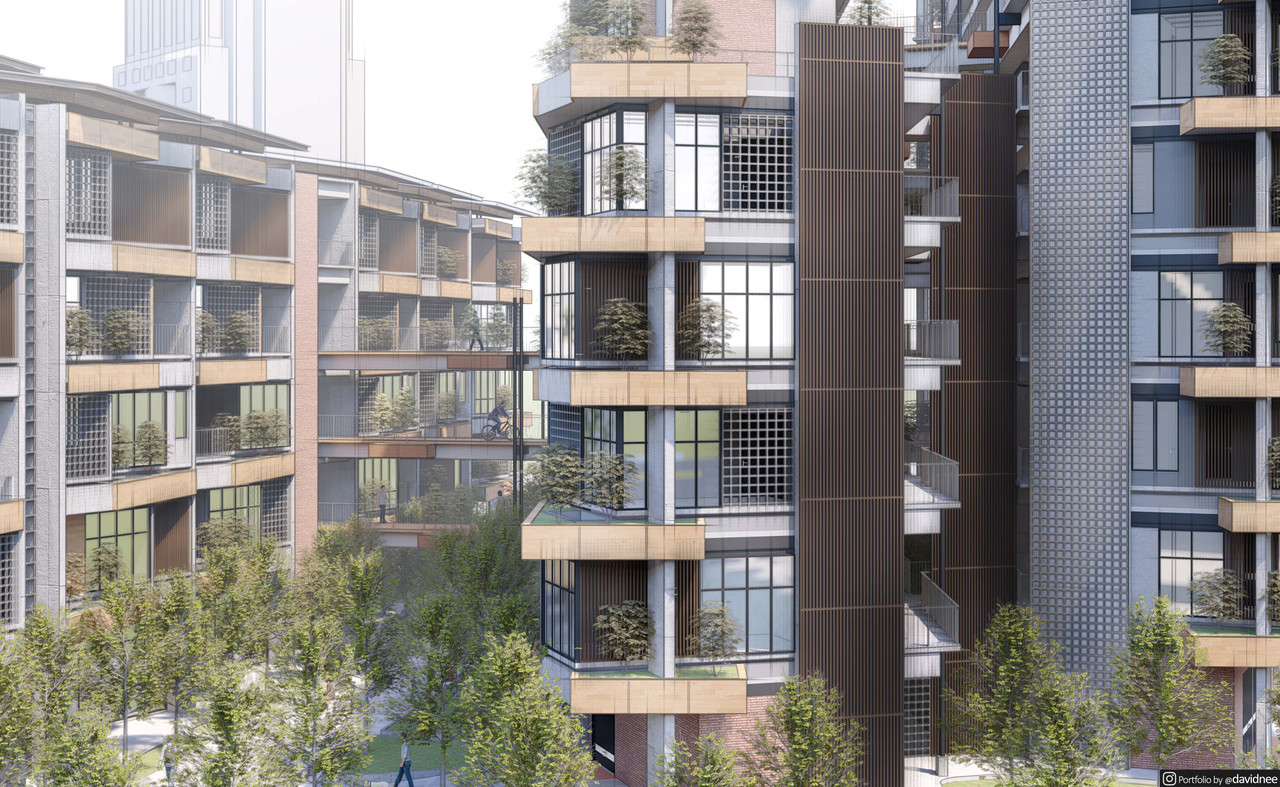


The META House Apartment reimagines mass housing as a flexible framework that residents help complete, a response by architect David Nee Zhi Kang to the standardized units common in developments across Johor Bahru, Malaysia. Most large housing projects today are shaped by maximum land-use efficiency and a profit-driven push to build the fastest, easiest way. The result is a stock of autonomous, impersonal units that overlook architectural value and the cultural aspects tied to living quality. Buyers then carry out major renovations when they move in, and every round of renovation and demolition adds to the carbon footprint a home leaves behind.
This project sets out to break that cycle. The proposed concept integrates mass housing with custom-made units, meeting the demands of users from different backgrounds while keeping the efficiency of mass production. It does so through a modular system that invites user participation in the design scheme. A series of prefabricated modular spaces offers highly customizable configurations during both the pre-occupancy and post-occupancy periods, all set within an open framework defined by the fundamental design.
The Architect as Framework, the Resident as Author
Housing as a building type carries a particular design challenge: it must serve many households at once yet feel personal to each one. The most durable approaches separate the permanent structure from the changeable interior, an idea long explored in open building and in the broader study of modular construction. Prefabrication brings speed and consistency, while a loose-fit plan lets people adapt their space over time without tearing it down. The META House Apartment places David Nee Zhi Kang in the role of introducing the fundamental development through the idea of the urban village, building a socially enriched community with a strong sense of place and bonding between neighbors.
The users then complete the design, each adding a unique identity and character so the apartment reflects the community living inside it. This division of roles draws on the qualities of the urban village, where shared streets and gathering points encourage everyday contact. By treating customization as a built-in right rather than an afterthought, the scheme cuts the waste of move-in renovations and gives ordinary housing a chance to grow with the people who call it home.



Residential Architecture Face-Off: Co-Living vs Traditional Apartment for Urban Housing
Co-living and traditional apartments represent two distinct approaches to residential architecture in...
 Furkan Sen8 Mins read
Designing a Liminal Space Where Urban Meets Coastal
The Liminal House by Mcleod Bovell Modern Houses in West Vancouver is...
 Elif Ayse Sen5 Mins read
House in Nakano: A 96 m² Tokyo Architecture Marvel by HOAA
House in Nakano, designed by HOAA, creatively addresses urban density challenges by...
 Bahattin Duran6 Mins read

Bridleway House by Guttfield Architecture
Bridleway House by Guttfield Architecture is a barn-inspired timber extension that reframes...
 Begum Gumusel3 Mins read


Leave a comment