

Orange Village by Koffi & Diabaté Architectes
Orange Village by Koffi & Diabaté Architectes is a futuristic corporate headquarters in Abidjan, combining circular architecture, collaborative workspaces, and advanced environmental strategies.
 Begum Gumusel2 January 20263 Mins read255

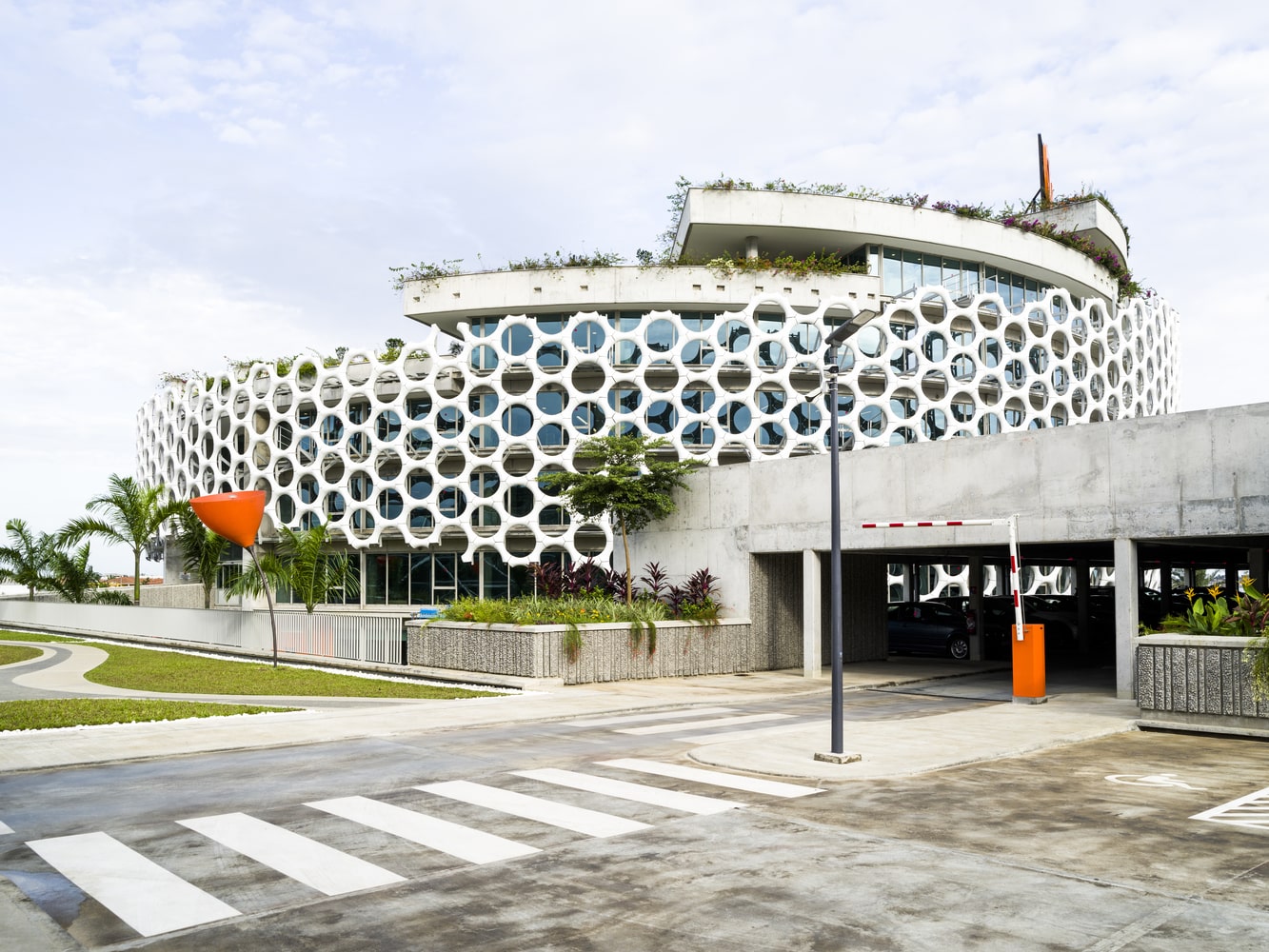


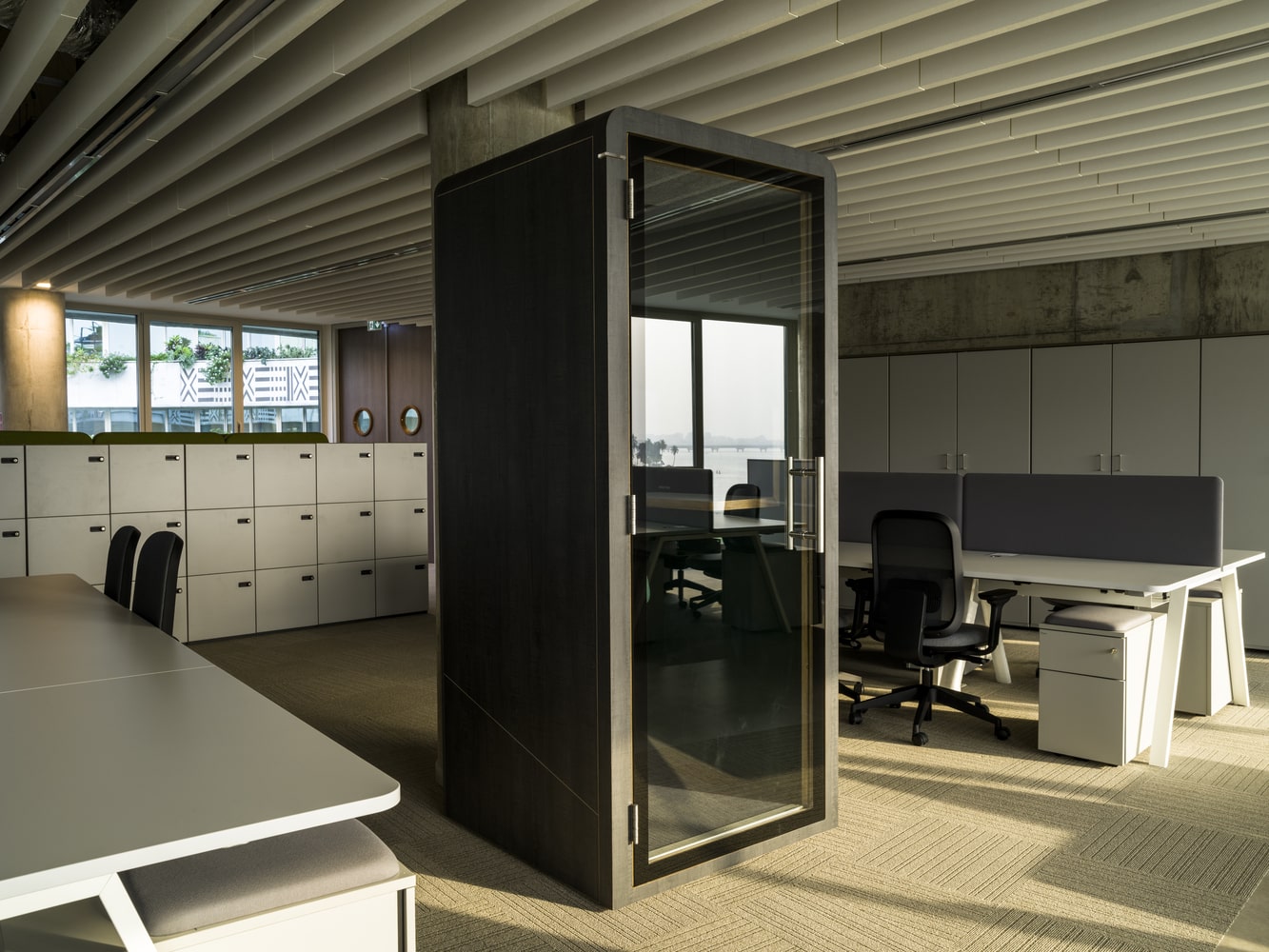
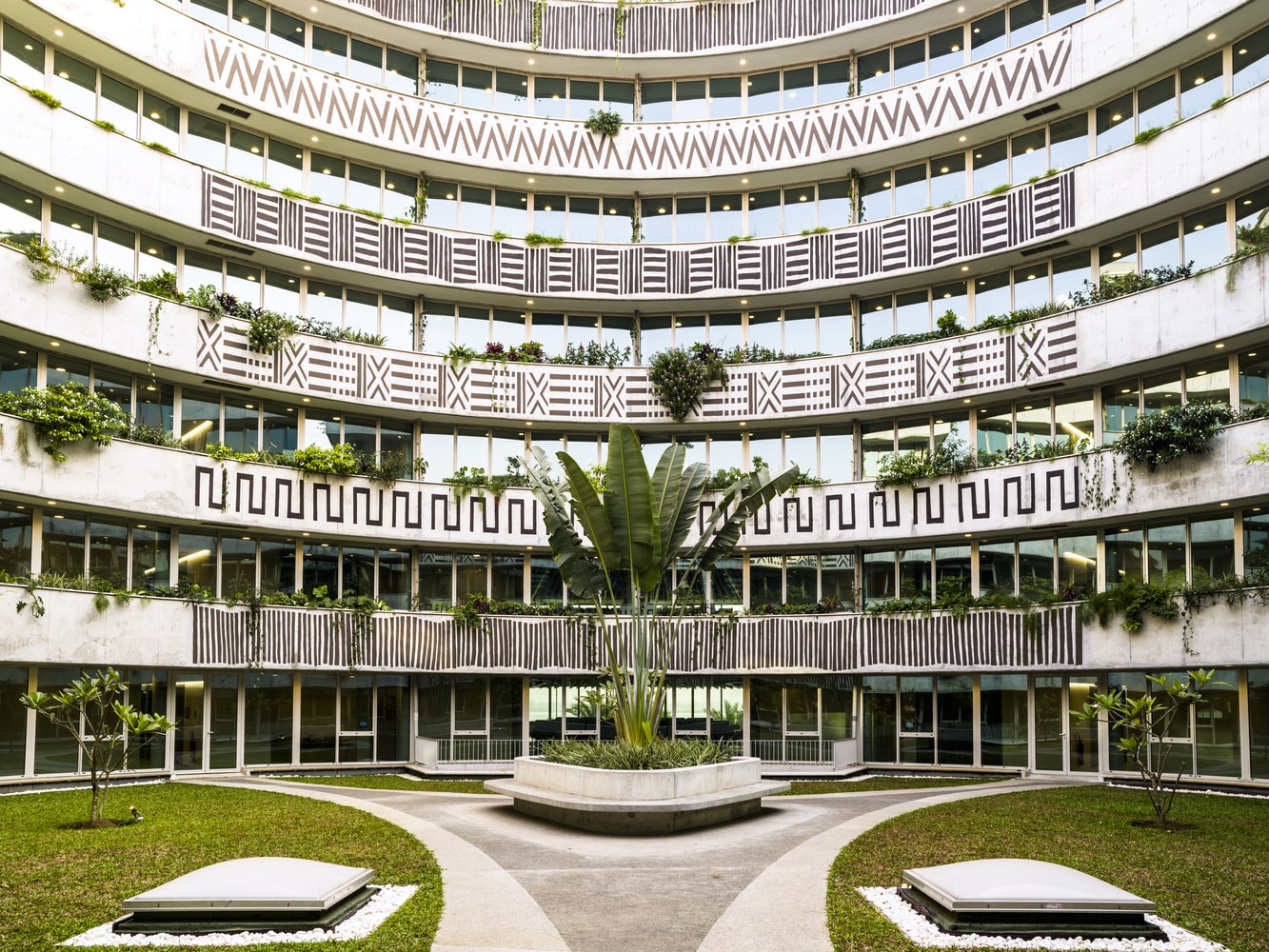
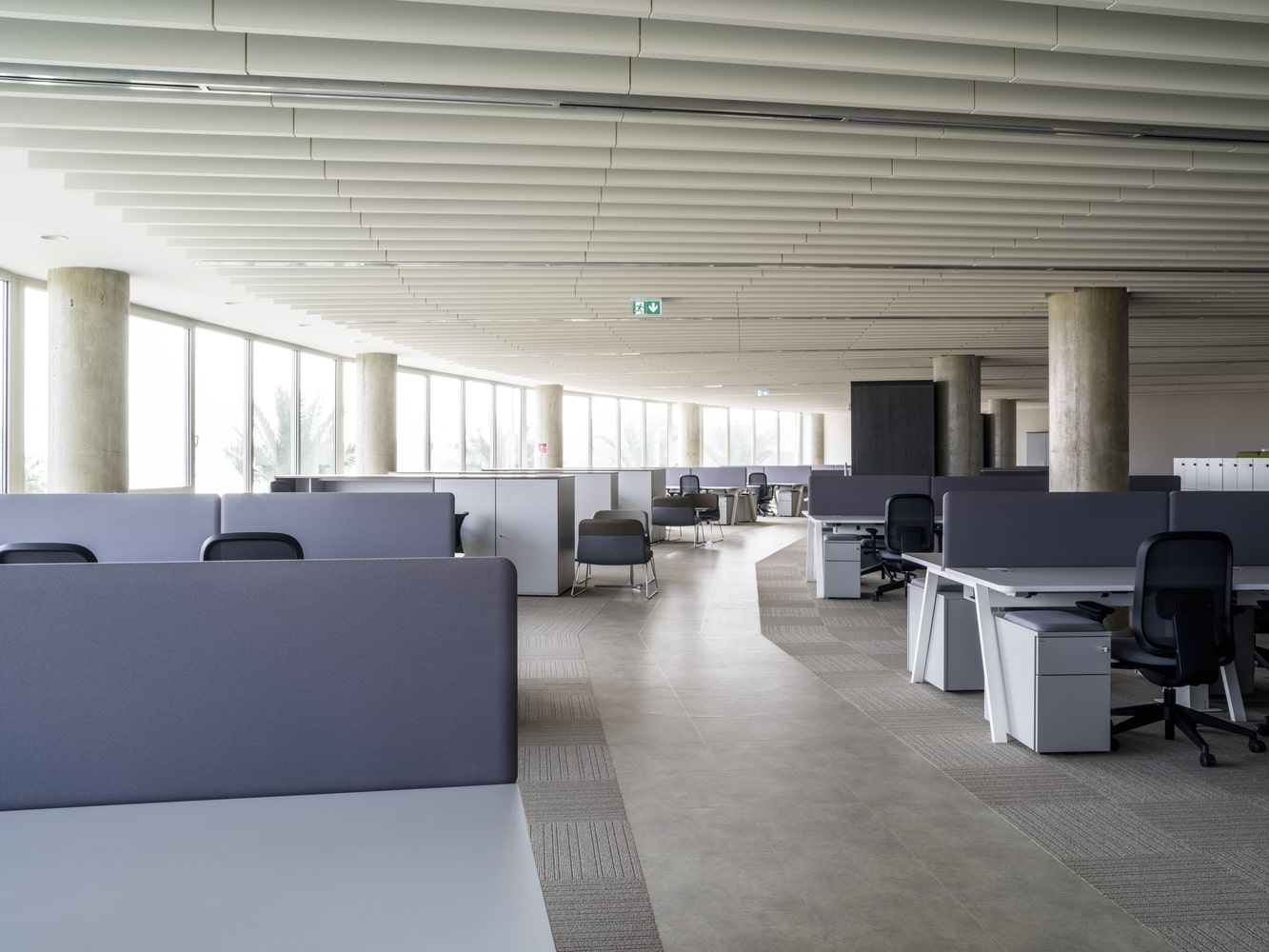
Table of Contents Show
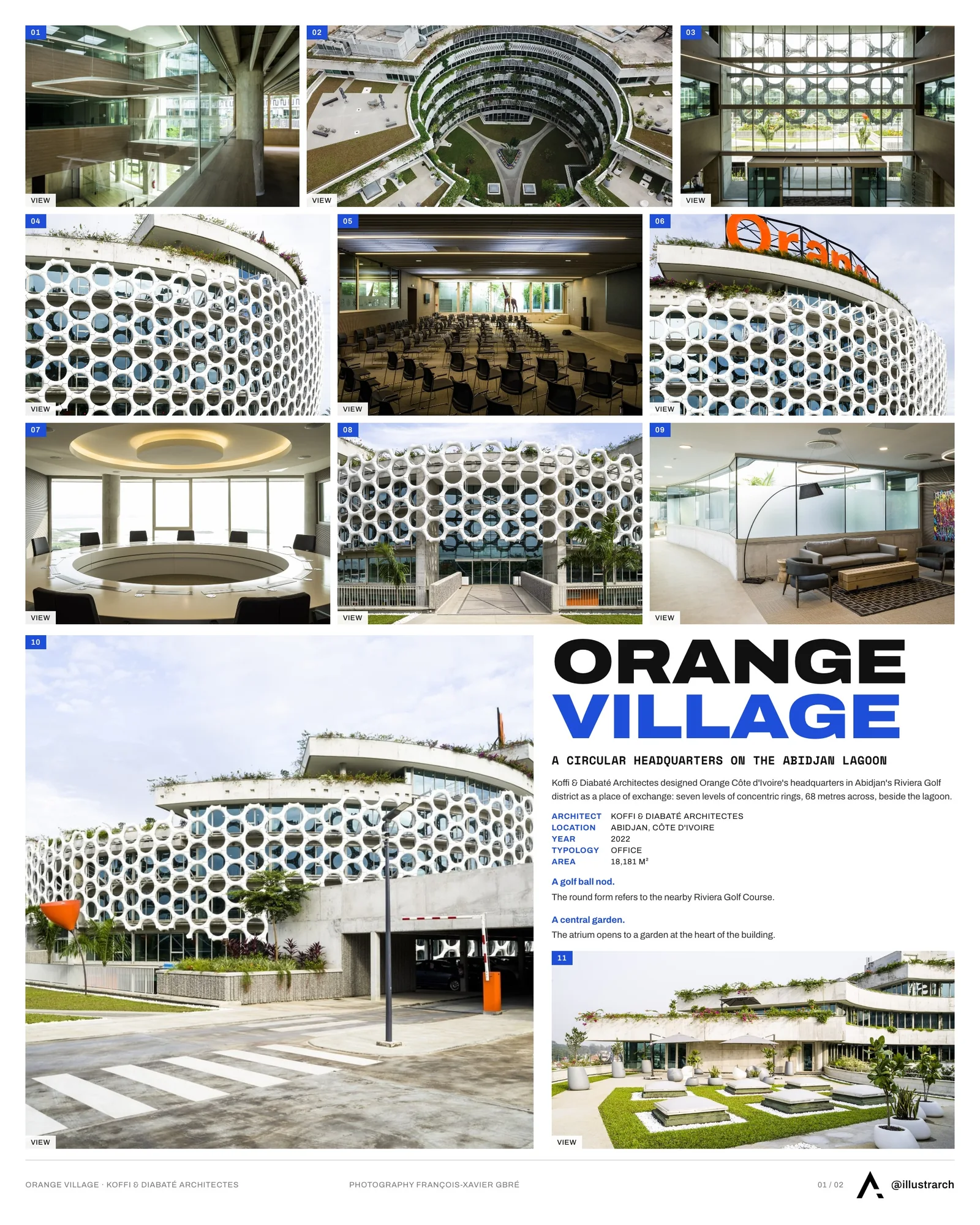
Set along the lagoon edge of Abidjan’s Riviera Golf district, Orange Village stands as a powerful architectural statement for Orange Côte d’Ivoire. Designed by Koffi & Diabaté Architectes, the headquarters transcends the conventional corporate office to become a symbol of innovation, sustainability, and regional leadership. Conceived as a place of exchange rather than a closed workplace, the project reflects the company’s ambition to embody openness, creativity, and technological progress while remaining deeply rooted in its local urban and environmental context.
An Iconic Circular Form Rooted in Place
Orange Village is defined by a striking architectural gesture: a seven-level structure composed of concentric rings with a diameter of 68 meters. This circular geometry gives the building a sculptural presence, immediately recognizable within the city skyline. Its form subtly references a golf ball, an intentional nod to the nearby Riviera Golf Course, while also evoking precision, connectivity, and movement, qualities aligned with Orange’s corporate identity.
Rather than imposing itself as an isolated object, the building is conceived as a natural extension of the surrounding vegetal axis. Positioned by the lagoon, it establishes a visual and spatial dialogue with the landscape, reinforcing a sense of continuity between architecture and nature. The circular form also organizes internal circulation intuitively, fostering fluid movement and visual connections across floors.
A Workplace Designed for Exchange and Creativity
From the outset, the architects sought to go beyond the idea of a traditional headquarters. Orange Village is designed as a collaborative ecosystem, encouraging interaction, innovation, and informal encounters. This philosophy is immediately evident upon entry, where a generous atrium opens toward a lush central garden. Acting as both a spatial and symbolic heart, the garden provides orientation, daylight, and a sense of calm within the building.
The ground and garden levels host shared functions that reinforce collective life: a conference center, training and meeting rooms, a restaurant, and a gym. These spaces are designed to encourage cross-departmental interaction and support a dynamic working culture. Above, the office floors combine individual offices, flexible co-working areas, and small meeting rooms, allowing employees to choose environments that best suit their tasks while maintaining visual openness and adaptability.
Outdoor Spaces and Panoramic Views
From the fourth level upward, each floor integrates outdoor terraces that offer employees the opportunity to work, meet, or relax in open air. These elevated spaces frame expansive views of the lagoon and surrounding greenery, reinforcing a strong connection to the natural environment even within a dense corporate setting.
The uppermost floor, reserved for top management, enjoys uninterrupted panoramic views of the waterfront. This vertical hierarchy is not expressed through separation, but through continuity, management spaces remain visually connected to the rest of the building, reinforcing transparency and accessibility within the organization.
Material Expression and Architectural Language
Materiality plays a central role in defining Orange Village’s identity. The architects chose to expose the rough-cast concrete structure, celebrating its honesty and durability. This decision lends the building a minimalist and robust character, while emphasizing craftsmanship and structural clarity.
Concrete is balanced by extensive glazing and the building’s signature double-skin façade, creating a subtle dialogue between solidity and lightness, authenticity and hyper-connectivity. The architectural language deliberately oscillates between raw material expression and advanced technological performance, reflecting the dual nature of Orange as both a grounded regional actor and a global digital leader.
Urban Integration and Landscape Strategy
Orange Village is conceived as a structuring element within the Riviera Golf neighborhood’s urban master plan. Its stepped and tiered massing responds carefully to local planning regulations, gradually rising from a three-story height at the main entrance to five stories toward the lagoon. This strategy softens the building’s impact and ensures a harmonious transition between public space, landscape, and architecture.
Green roofs, planted fences, and landscaped courtyards contribute to the project’s integration within its surroundings. Vegetation is not treated as an accessory, but as an architectural component that enhances thermal comfort, visual continuity, and ecological performance.
A High-Performance Environmental Strategy
Sustainability is embedded at every level of Orange Village’s design. A 40,000-square-meter double-skin façade, composed of approximately 4,000 individual elements, wraps the building to provide passive solar protection. This system significantly reduces heat gain, limits direct sunlight, and lowers overall energy consumption while giving the building its distinctive textured appearance.
Material choices prioritize durability and low maintenance, particularly on the most exposed façade elements. By combining passive climate strategies with a compact form and generous natural ventilation, the building achieves high environmental performance suited to Abidjan’s tropical climate.
Conclusion
Orange Village is more than a corporate headquarters, it is a contemporary architectural landmark that redefines the workplace in West Africa. Through its bold circular form, integrated landscape strategy, and strong environmental ambition, Koffi & Diabaté Architectes have created a building that expresses Orange’s leadership while celebrating local context and expertise. Positioned between lagoon, city, and greenery, Orange Village stands as a timeless symbol of innovation, collaboration, and sustainable urban development in Abidjan.
Photography: François-Xavier Gbré




New Government Quarter by Nordic Office of Architecture
The first phase of Oslo's New Government Quarter rebuilds the site of...
 illustrarch Editoral Team4 Mins read
New PRF Headquarters Building by Impare Arquitectura
Impare Arquitectura extend a Leiria gas-solutions company with a volume aligned to...
illustrarch Editoral Team2 Mins read

Mokuzai by IT’S Architecture
Mokuzai by IT'S Architecture is a 7,500 square metre office and health...
illustrarch Editoral Team2 Mins read
Corporativo MGP by Sensorial Arquitectura
A corporate project exploring the duality between rigidity and softness, seeking a...
illustrarch Editoral Team2 Mins read


Leave a comment