

Jean Dauger Stadium by Patrick Arotcharen Architecte
Jean Dauger Stadium in Bayonne redefines the contemporary sports venue as a civic landscape, blending rugby, public space, and green infrastructure within the city’s historic green belt.
 Begum Gumusel18 January 20264 Mins read220


Table of Contents Show
The redevelopment of Jean Dauger Stadium represents far more than a technical upgrade of a rugby venue. Conceived by Patrick Arotcharen, the project is a key architectural and urban intervention within Bayonne’s historic green belt, an area shaped by centuries of military, civic, and recreational use. Once occupied by moats and training grounds at the foot of the city ramparts, this landscape has long been protected from dense urbanization due to its historical and cultural significance. Today, the transformation of Jean Dauger Stadium positions it as a contemporary civic anchor—where sport, landscape, mobility, and everyday urban life intersect.
Reinforcing the Green Belt as Urban Infrastructure
Bayonne’s green belt acts as a porous threshold between the historic old town and surrounding neighborhoods. As contemporary urban strategies increasingly prioritize pedestrian and cycling networks, climate-responsive landscapes, and public green spaces, this corridor has gained renewed relevance. Jean Dauger Stadium forms the southern segment of this system, contributing not only as a sporting venue but as an accessible public landscape that remains active beyond match days.
Each intervention within the stadium precinct follows a shared strategy: to facilitate soft mobility routes through and around the site, reinforce public edges, and allow architectural structures to participate in everyday urban life. When rugby fixtures are not taking place, the stadium’s stands, terraces, and annexes function as extensions of the park, offering spaces for walking, gathering, dining, and cultural activity.
From Sports Ground to Park-Based Stadium
At its core, the Jean Dauger complex is conceived as a stadium embedded within a park, rather than a fenced-off object. This approach gives the rugby ground a rare spatial quality, where the intensity of sporting events coexists with the calm continuity of landscaped surroundings. Mature trees, open lawns, and raised walkways frame the stadium, reinforcing its relationship to the historic city and the green belt.
The project transforms the legacy layout—once organized around cycling and athletics tracks—into a compact “cauldron” stadium. By reducing the distance between spectators and the pitch, the design intensifies the emotional connection between players and fans. The original grandstand is preserved and brought closer to the field, while three new stands are positioned tightly along the touchlines and dead-ball line. This centripetal configuration frees up land behind the seating, allowing new public spaces, park areas, and elevated pedestrian paths to emerge.
Topography, Embankments, and Visual Balance
Built on a gently sloping site running south to north, the stadium’s perception shifts depending on one’s approach. Historically, spectators were elevated above the pitch by the former cycle-track embankments—a memory retained in the collective consciousness of Bayonne’s residents. The new design embraces this condition while mitigating its visual impact on the surrounding city.
A peripheral embankment wraps the stadium, softening the apparent height of the stands when viewed from public spaces. This gesture reduces the architectural mass while reinforcing the continuity of the park landscape. From within the stadium, however, spectators experience a heightened sense of enclosure and proximity, reinforcing the intensity of match-day atmosphere.
East Stands: Structure as Urban Theater
The east stands break from conventional stadium design by relocating vertical circulation to the exterior. Stairs and walkways are expressed as lightweight metal structures that rise through the foliage of the park, creating a layered visual dialogue between architecture, vegetation, and movement. These external access routes transform circulation into a public spectacle, visible from both the park and the pitch.
Beneath the terraces, interior spaces are framed by powerful exposed-concrete arches, revealing the structural logic of the stands. These spaces are deliberately left open and transparent, allowing activities—conferences, gatherings, celebrations—to spill visually into the park. The result is a stadium that feels inhabited even when no match is taking place, dissolving the boundary between sports infrastructure and civic architecture.
South Stand and Urban Interface
The south stand plays a critical role in connecting the stadium to the city. Lower terraces are partially excavated below street level, reducing bulk along Avenue du Docteur Léon Moynac. At balcony level, hospitality lounges align directly with the public realm, offering glazed views toward both the pitch and the park.
These lounges sit behind monumental arcades that support the upper terraces, creating a rhythmic façade visible to pedestrians and cyclists passing beneath the plane trees of the avenue. The south-east corner curves gently to link the east and south stands, housing a restaurant whose vaulted interior continues the architectural language of the arcades. This sequence—street, forecourt, lounge, pitch—turns the stadium edge into an urban event, animated throughout the day.
AB Campus: Training, Landscape, and Architectural Restraint
Located on the western edge of the complex, the AB Campus extends the stadium’s role beyond spectator sport. Designed as the training and performance center for Aviron Bayonnais, the facility brings amateur and professional players together under one roof. Organized around a large covered hall, it integrates training spaces, medical and recovery facilities, offices, and dining areas.
Architecturally, the building adopts a vaulted form that echoes the landscaped mounds along the adjacent bus corridor. Its metallic skin replaces grassy slopes, allowing the architecture to recede into the terrain. This deliberate restraint ensures that the historic grandstand remains the dominant landmark, framed in the distance by cathedral spires and ramparts.
Material Simplicity and Phased Evolution
The project’s architectural language is intentionally restrained: raw concrete, natural wood, dark green masonry, and a large aluminium roof define a sober palette that enhances the stadium’s integration into the landscape. This simplicity avoids visual excess, allowing structure, space, and context to speak clearly.
Executed in phases, the redevelopment responds to budgetary realities and future uncertainties, gradually increasing capacity from 13,500 to 16,500 spectators. Commercial units and future educational spaces beneath the stands further reinforce the stadium’s evolving civic role, ensuring its relevance well beyond the rugby season.
Photography: Mathieu Choiselat, Sandrine Iratçabal, Jean-François Tremege, Agnès Clotis, Cléa Meksvanh, Pierre Chambion




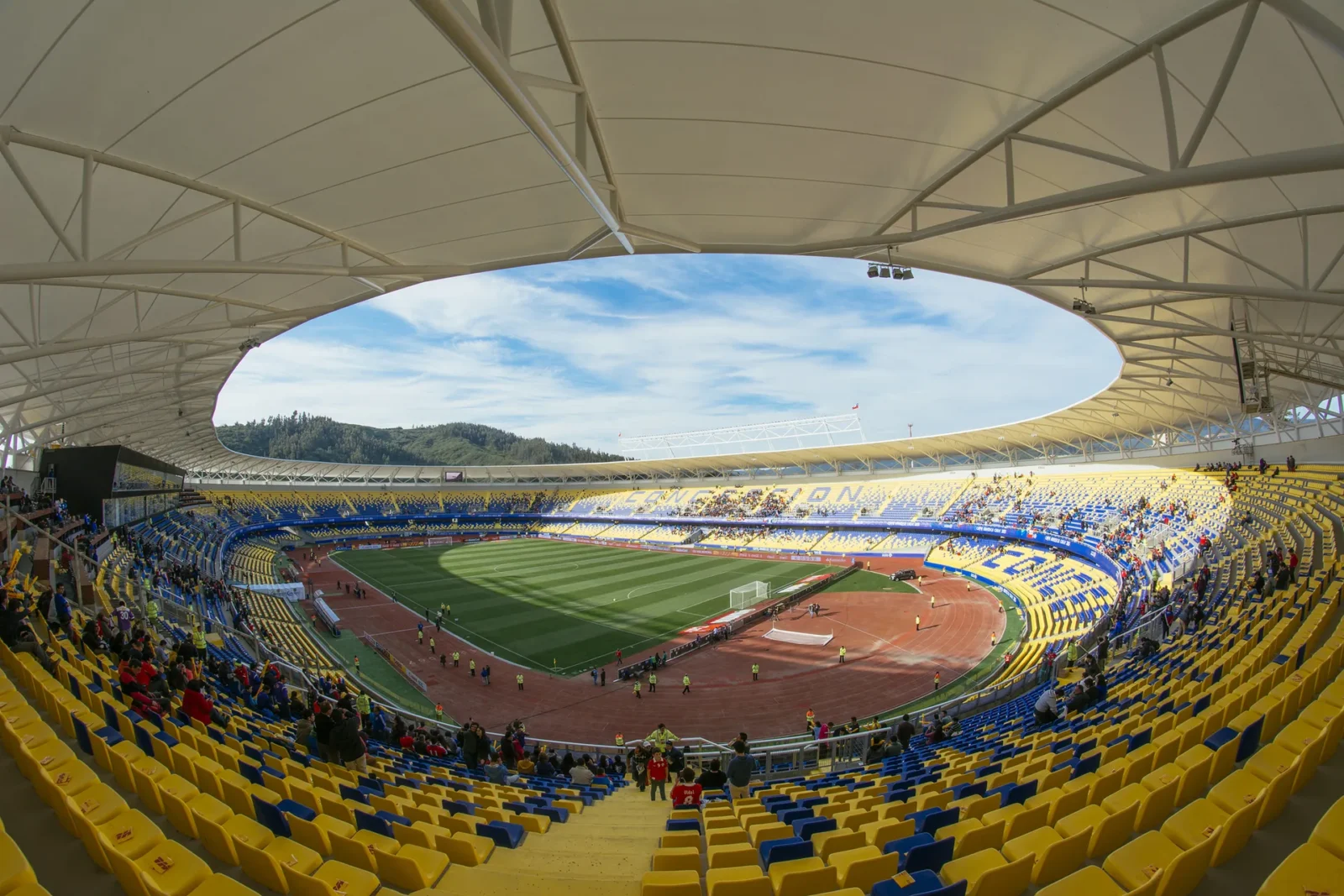
Ester Roa Rebolledo Municipal Stadium by Valle Cornejo Arquitectos
Valle Cornejo Arquitectos modernise Concepcion's municipal stadium by wrapping a single continuous...
 illustrarch Editoral Team2 Mins read

6 Stadium Projects Redefining Sports Architecture in 2026
Across Europe, Asia, Africa, and the Middle East, a new generation of...
 Elif Ayse Sen3 Mins read
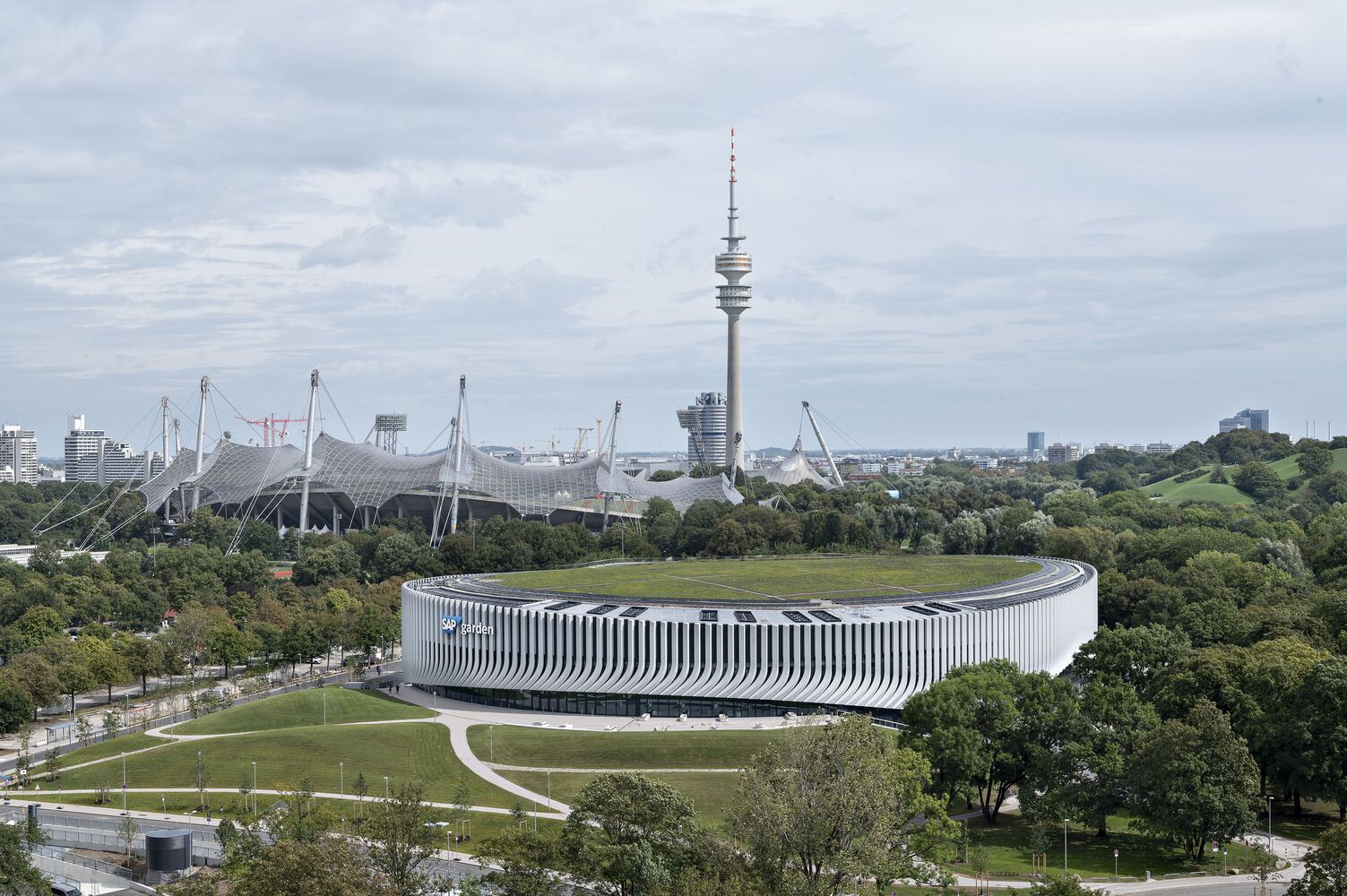
Sportarena Olympiapark Munich SAP Garden by 3XN
SAP Garden by 3XN is a state-of-the-art arena in Munich’s Olympic Park,...
Begum Gumusel3 Mins read
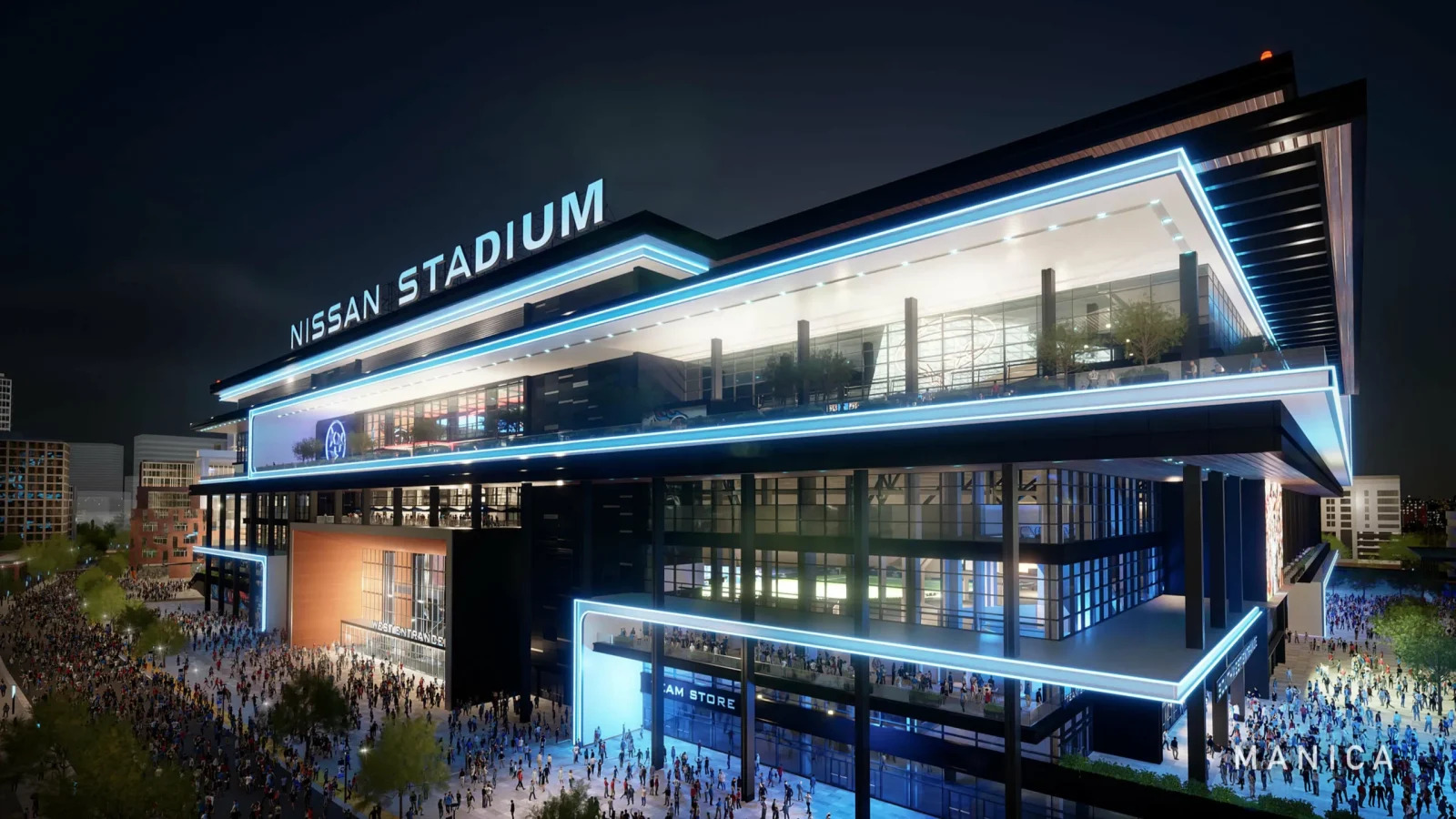
Nashville’s $2.1B Nissan Stadium Approaches Final Construction Stage
Nashville’s new Nissan Stadium is nearing completion, bringing advanced engineering, an all-weather...
Elif Ayse Sen3 Mins read


Leave a comment