

Inspirational Stories #19: KOOP Architects
In the 19th edition of our Inspirational Stories series, KOOP Architects shares how a cooperative working model, a deep respect for place and memory, and the award-winning Seddülbahir Fortress project shape a practice where architecture becomes a way of building relationships across time.
 Elif Ayse Sen2 July 20266 Mins read8
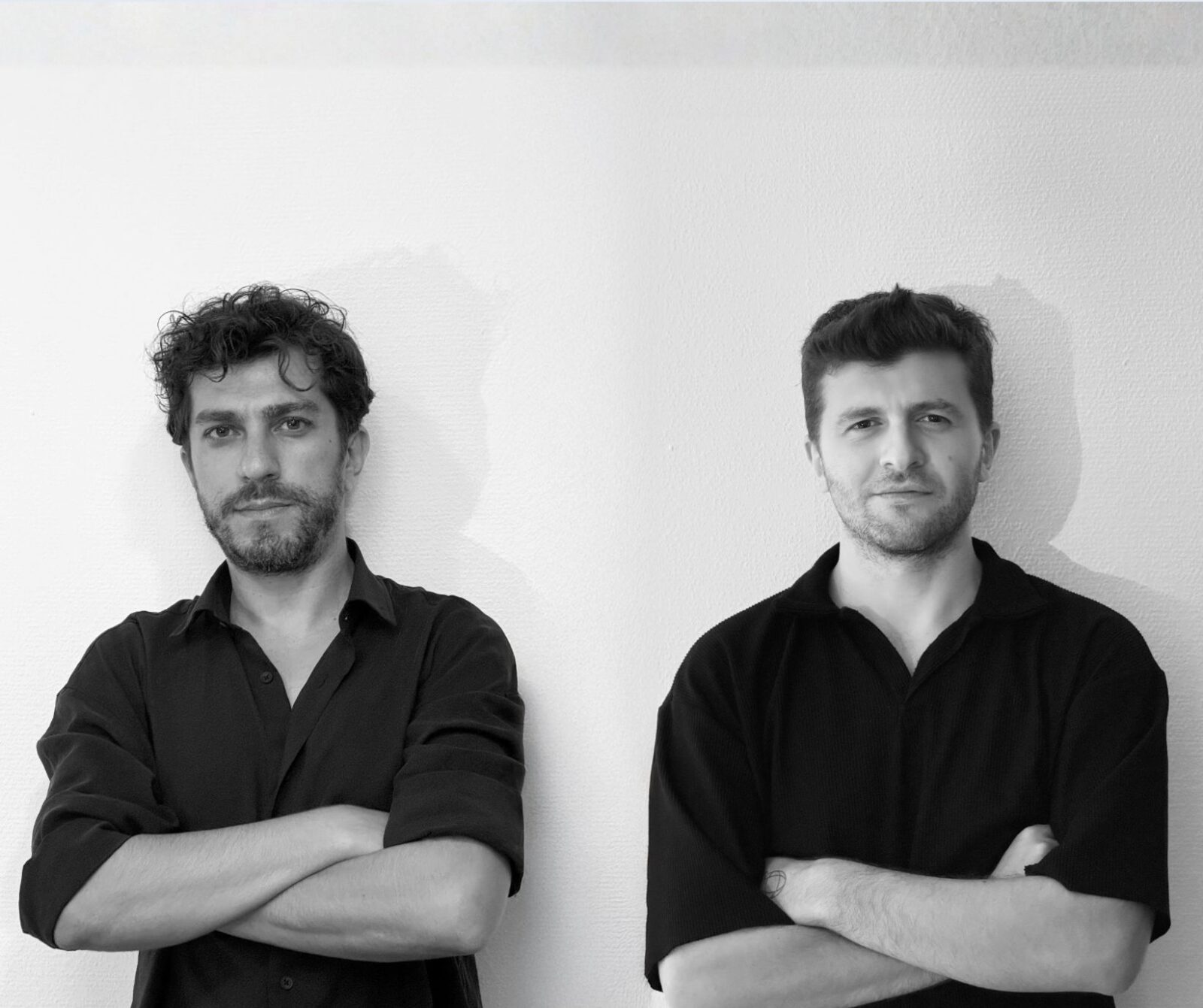
Table of Contents Show
In the 19th edition of our Inspirational Stories series, we are pleased to feature KOOP Architects, @kooparch on Instagram, an Istanbul-based studio founded in 2013 by architect Y. Burak Dolu and working between Istanbul and Abu Dhabi. Conceived less as a conventional office than as a continuously evolving cooperative platform, KOOP brings together specialists in urban design, restoration, museology, construction, graphic design and landscape to work across the boundaries of architecture. The studio is known for its sensitive engagement with historical buildings, public spaces and collective memory, an approach embodied in its award-winning Seddülbahir Fortress Re-Use Project on the Gallipoli Peninsula, completed in 2023 and shortlisted in the heritage category of the 2024 Dezeen Awards. In this conversation, founder Y. Burak Dolu and architect Koray Bayraktutan reflect on how collective thinking, a careful reading of place, and a relational understanding of architecture continue to guide their work.
Looking back to the founding of KOOP in 2013, how did the studio’s journey begin, and what ideas or needs led to the formation of a cooperative working model?
Burak: KOOP’s journey officially began in 2013 with a desire to approach architecture not as an individual act, but as a shared process of thinking and responsibility. Since 2006—through competitions and collaborative projects—I experienced how collective work could significantly enrich architectural production, and that experience led directly to KOOP’s formation.
The cooperative model grew out of a need to move beyond hierarchical office structures and instead create an environment where knowledge is shared, discussion is encouraged, and different disciplines can contribute on equal ground. In this sense, KOOP was shaped less as a conventional studio and more as a continuously evolving platform for learning and production.
KOOP frequently works across architecture, restoration, museology, urban design, and other disciplines. How does this collaborative structure influence your design thinking and decision-making process?
Burak: At KOOP, architecture has never been treated as an isolated discipline. Our engagement with restoration, museology, urban design, and other fields turns design into a space of negotiation rather than a linear path of decision-making. While this can seem like it slows things down at first, it ultimately deepens the work and often saves time later—because early assumptions are tested, refined, and strengthened. Diverse perspectives challenge initial intuitions and help us arrive at more grounded and resilient decisions. In this multi-voiced environment, design evolves not primarily through form, but through meaning.
Koray: Of course, we don’t build the same level of collaboration for every project. Depending on a project’s function and scale, we bring in specialists we trust or collaborate with other offices. It’s impossible for a single person—or a single studio—to know everything, and the risk of error becomes unnecessarily high. A project supported by niche expertise can sound harder to manage, but it tends to produce the most reliable outcome.
Many of your projects engage deeply with historical buildings and public spaces. How do you approach understanding the “space” and its memory before intervening architecturally?
Koray: When working with historical buildings or public spaces, our first step is not to design, but to understand. Beyond physical traces, we try to read the transformations a place has undergone, its patterns of use, and the residues it has left in collective memory. Archival research, on-site observations, and readings at different scales are integral to this process. We see architectural intervention as a new layer added to an existing narrative—neither dominant nor invisible. Establishing this balance is one of the most delicate aspects of our work.
Burak: And when we speak about “memory,” we don’t mean it only in a historical—or even purely human—sense. Every place carries multiple histories: geographical, climatic, ecological, and cultural. These should be the first inputs of design. Today, “sustainability” is a popular word, but its core principle is simple: understand the place first. If you respect both the natural and human memory of a site—if you truly study the accumulated building knowledge of that geography over centuries—your project should already be sustainable, without forced narratives or performative certification criteria.
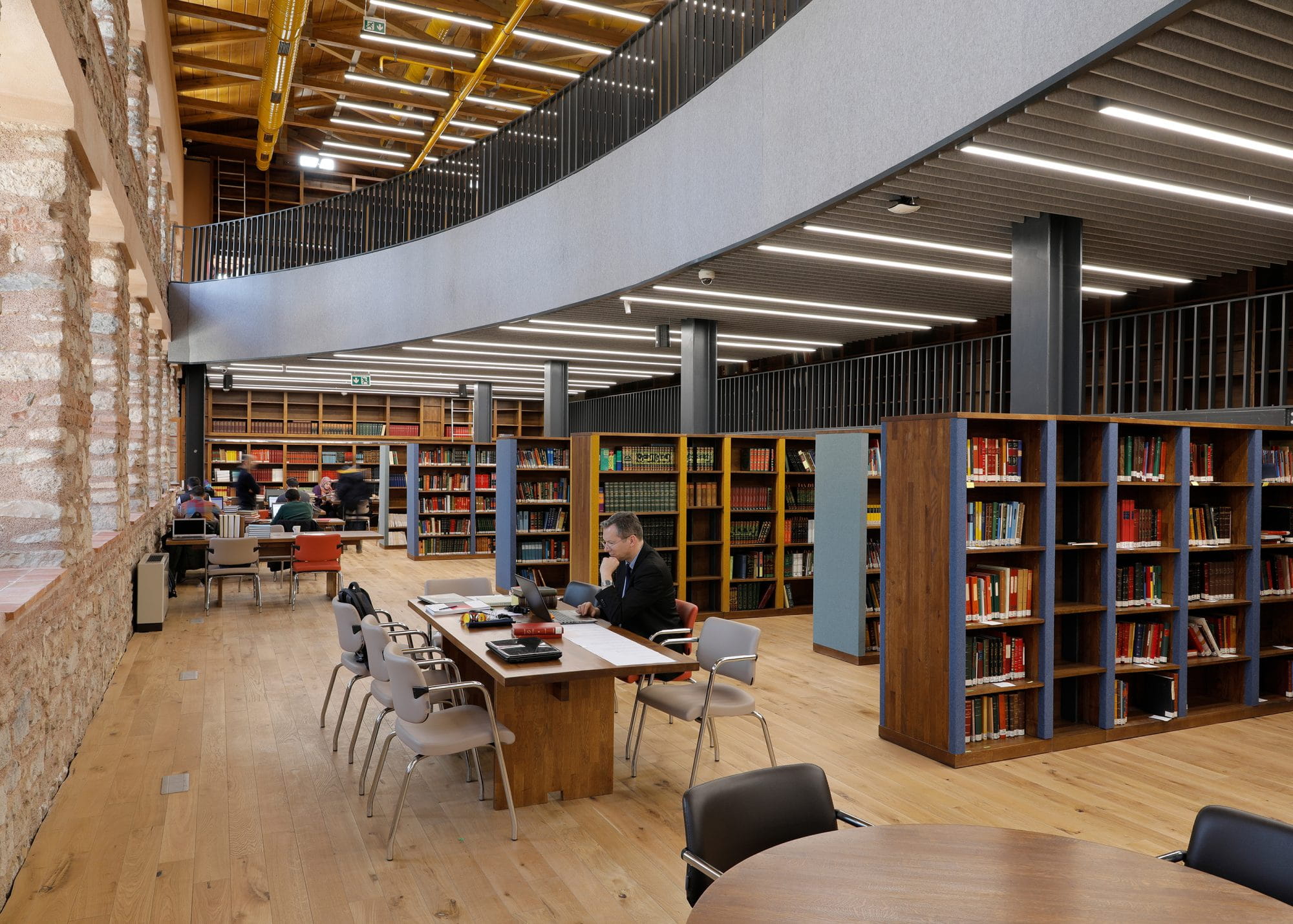
What kinds of challenges and opportunities do you encounter when working with historical and layered environments?
Koray: Layered historical environments demand the right questions rather than clear-cut answers. The need to respond to contemporary requirements while preserving existing values creates a constant field of tension. At the same time, this tension offers a significant opportunity: to question how architecture can position itself within a continuum of time. In such projects, the architect’s role extends beyond design and becomes one of mediation and interpretation.
Burak: In a way, historical contexts are also the most “reliable” environments to work in—because if you understand the place correctly, it already guides your decisions. You have a strong grounding to lean on, which can feel safer than designing in a context with fewer cues. That’s why it’s often surprising to see how many projects fail despite claiming to “understand the site.” When outcomes are weak, it usually points to a problem not with intention, but with methods of analysis and understanding.
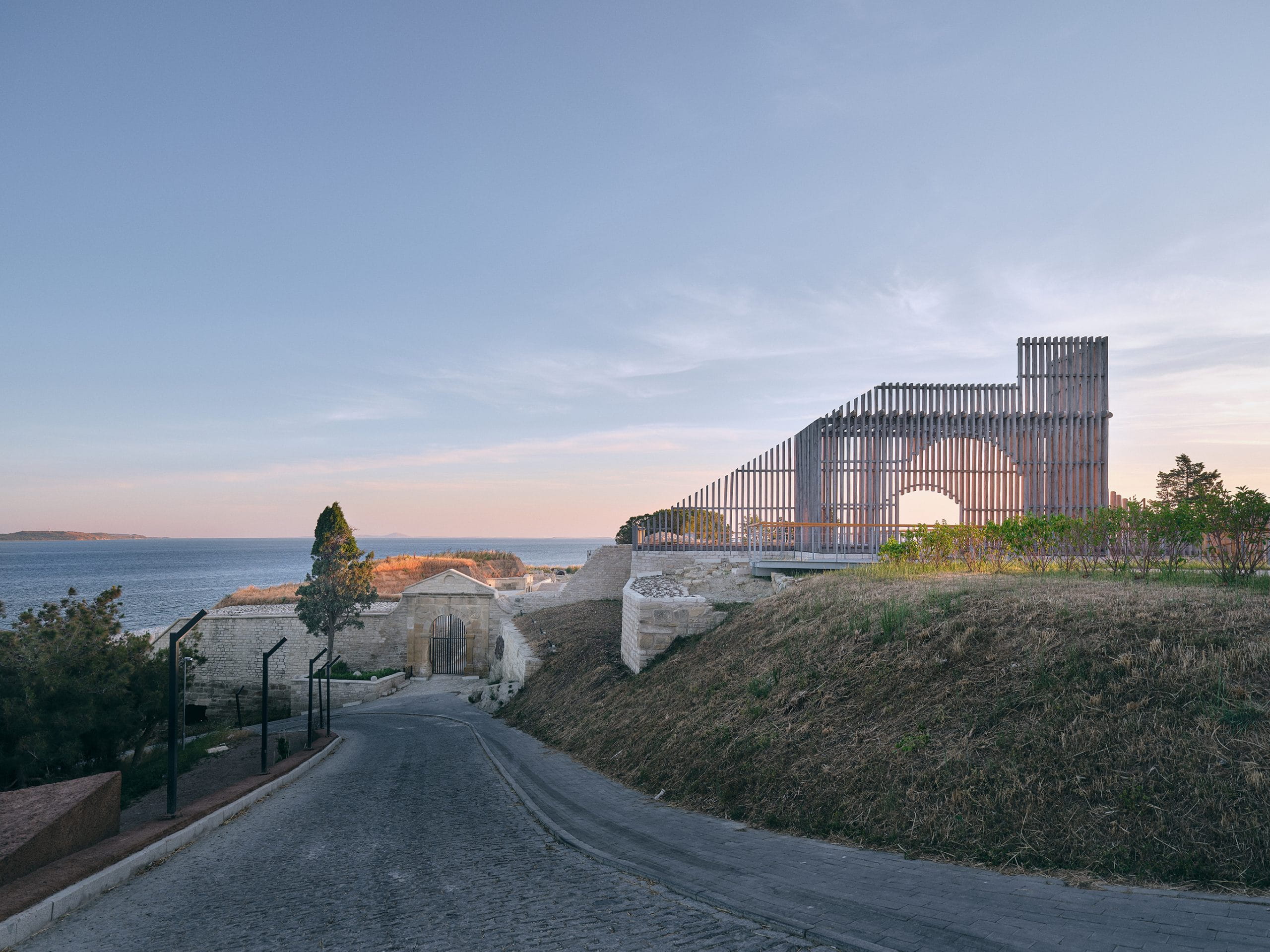
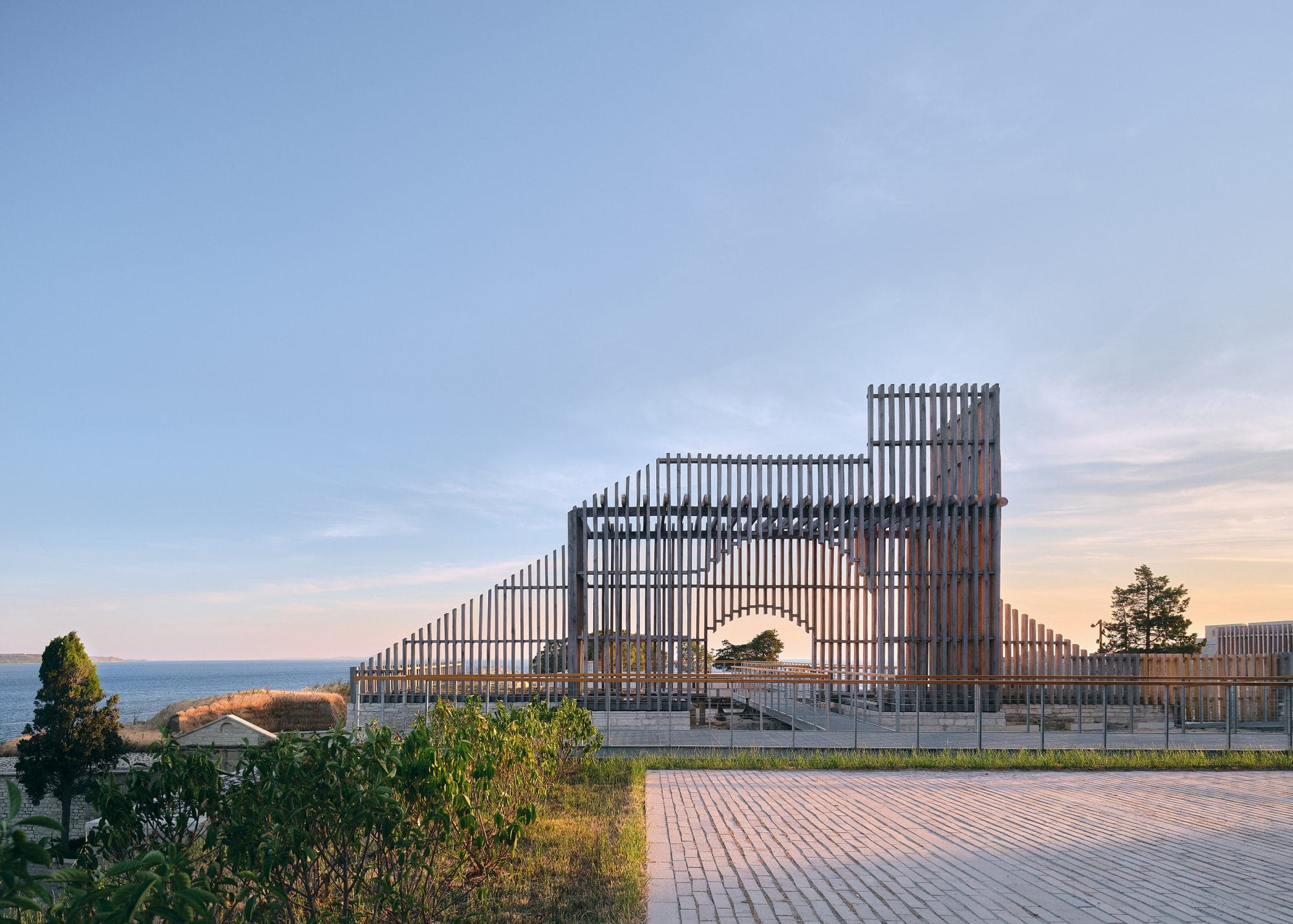
We are delighted to publish the awarded Seddülbahir Fortress project. What did this project represent for your studio, and how did international recognition influence your perspective on architectural practice?
Burak: Seddülbahir Fortress became one of our most intensive explorations of the relationship between architecture, conservation, and public use. It was a testing ground for re-establishing a dialogue between a historical structure and contemporary life, rather than treating preservation as an end in itself.
One key moment was how we approached the lost parts of the historic fabric. Our timber additions—used to complete missing areas—were not a widely accepted approach at first, and neither the client nor approval authorities immediately welcomed the idea. But once built, the response shifted dramatically. We received very positive feedback from the client, the local community, and professionals across architecture and conservation. In many ways, the project became a strong built example of internationally established conservation principles—such as the Venice Charter and the Nara Document on Authenticity—instead of following a purely reconstructive restoration mindset.
The contemporary museum building and other new insertions inside the fortress followed the same logic: they were designed in a delicate balance—receding within the historic setting, while also clearly expressing their contemporary identity.
International recognition was meaningful because it showed how an approach rooted in local context can resonate globally. It reinforced our belief that careful, place-specific work can carry universal value.
Based on your experience, what advice would you give to young architects and emerging practices who want to work responsibly with history, public space, and collective memory today?
Burak: I’m not really in an “advisory chair” but I can share a few observations. The first is to resist the pressure to produce quick answers. Working with history, public space, and collective memory requires time and patience. Allocate enough time for understanding, and only then move toward design.
Koray: I believe another point is to see architecture not merely as the production of objects, but as a practice of building relationships—between past, present and future, users and place, material and meaning. When you shift your focus toward relationships, your work becomes more responsible, more durable, and ultimately more generous to the contexts it touches.
Through this conversation, KOOP Architects reveals a practice grounded not in signature forms but in the patient work of understanding, where every site is read for its geographical, climatic, ecological and cultural memory before a single line is drawn. From the cooperative model that turns design into a space of negotiation, to the timber additions at Seddülbahir that complete what war erased without pretending to reconstruct it, their work argues that architecture is most responsible when it positions itself within a continuum of time rather than above it. Burak and Koray remind us that genuine sustainability begins with respect for the accumulated building knowledge of a place, and that the architect’s role is as much about mediation and interpretation as it is about design. Their advice to emerging practices is quietly radical: resist the pressure of quick answers, give understanding the time it deserves, and treat architecture as a way of building relationships between past, present and future. To explore more of their work, visit KOOP Architects’ official website.



Inspirational Stories #18: Arch-Exist Photography
In the 18th edition of our Inspirational Stories series, Arch-Exist Photography shares...
Elif Ayse Sen4 Mins read

Inspirational Stories #17: Ambientevario
In the 17th edition of our Inspirational Stories series, Ambientevario shares how...
Elif Ayse Sen6 Mins read

Inspirational Stories #16: Egemen Karakaya
In the 16th edition of Inspirational Stories, we feature Egemen Karakaya, an...
Elif Ayse Sen4 Mins read
Inspirational Stories #15: Sol Marengo
In the 15th edition of our Inspirational Stories series, architectural illustrator Sol...
Elif Ayse Sen4 Mins read


Leave a comment