

Benthem Crouwel Completes the Afsluitdijk Revamp with a Fish Passage and Domed Pumping Stations
The 32 km Afsluitdijk in the Netherlands has been raised, armoured and given pumping stations, a fish passage and a cycle path in a revamp by Benthem Crouwel.
 illustrarch Editoral Team12 October 20262 Mins read1

The Afsluitdijk, the 32-kilometre dam that closed off the former Zuiderzee in the 1930s, has been upgraded for a future of rising seas and more extreme weather. Dutch studio Benthem Crouwel has completed an eight-year overhaul that strengthens the structure, adds visible pumping stations, opens a passage for migratory fish and creates a new cycle route, Dezeen reports.
Built between 1927 and 1932, the dam separates the IJsselmeer lake from the Wadden Sea and protects the country from North Sea storm surges. According to the studio, the revamp means it can now withstand a severe storm of the kind expected once every 10,000 years while keeping its long, linear character.
Raised and armoured along its full length
Studio partner Daniel Jongtien calls the dam one of the Netherlands’ most iconic waterworks, noting that its construction created the IJsselmeer and changed how the country manages water. The brief was to reinforce that monumental character without losing sight of what the dike is for.
The whole length has been raised by two metres and armoured with 75,000 interlocking Levvel-bloc concrete units. They are laid in a deliberately regular, symmetrical pattern and have rough surfaces so that marine plants can take hold. The project was developed from 2018 with builder BAM and contractor Van Oord and investors Rebel and Invesis, and this consortium will maintain it for the next 25 years.
Pumps you can see and a route for fish
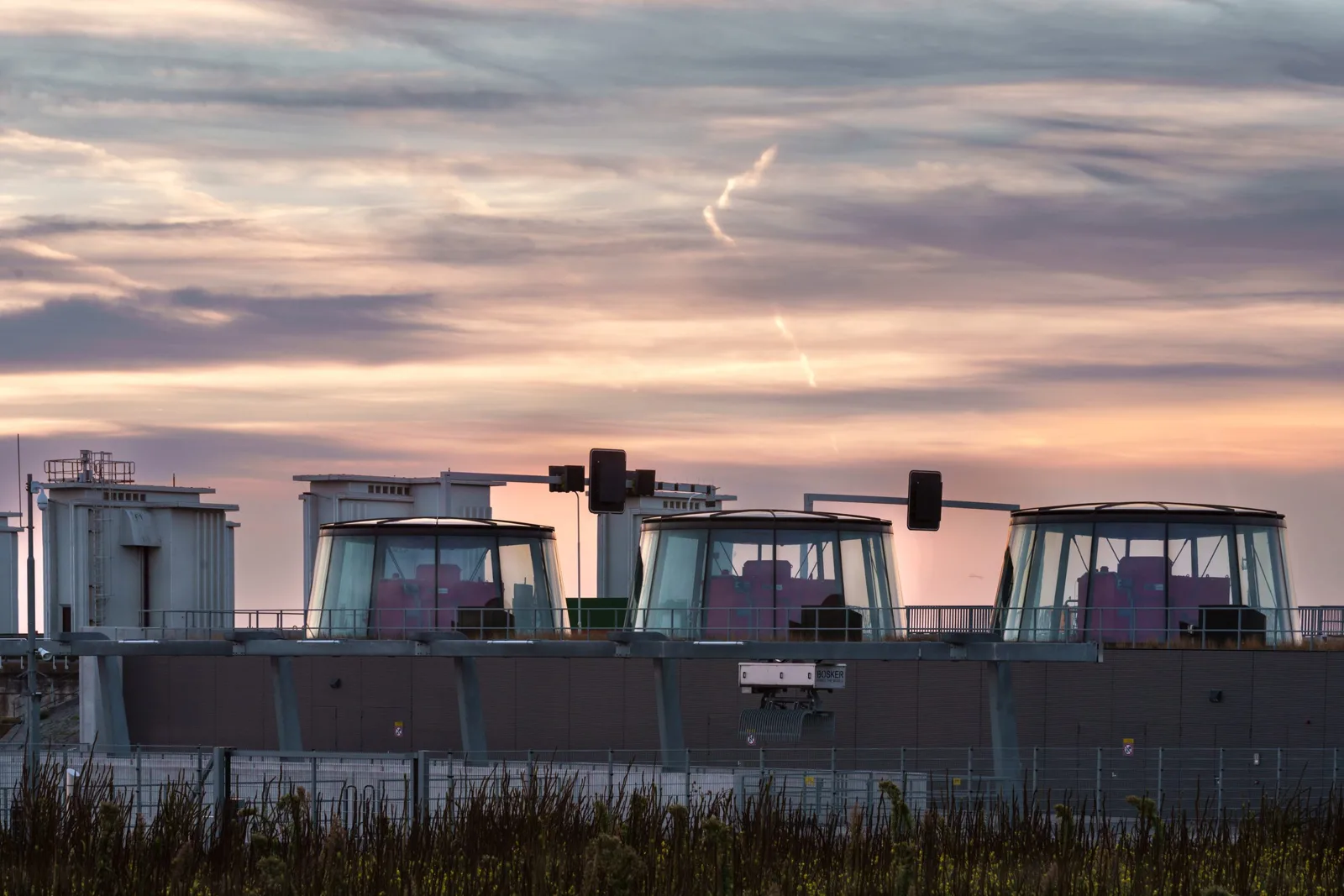
Most new technology is hidden, but six pumping stations sit under four-metre-high domes as one of the few intentionally visible additions. The pumps below, almost 12 metres tall, move surplus water from the IJsselmeer into the Wadden Sea at 275,000 litres per second, which the studio compares to filling an Olympic pool in nine seconds. New discharge sluices and storm surge barriers complete the water management system.
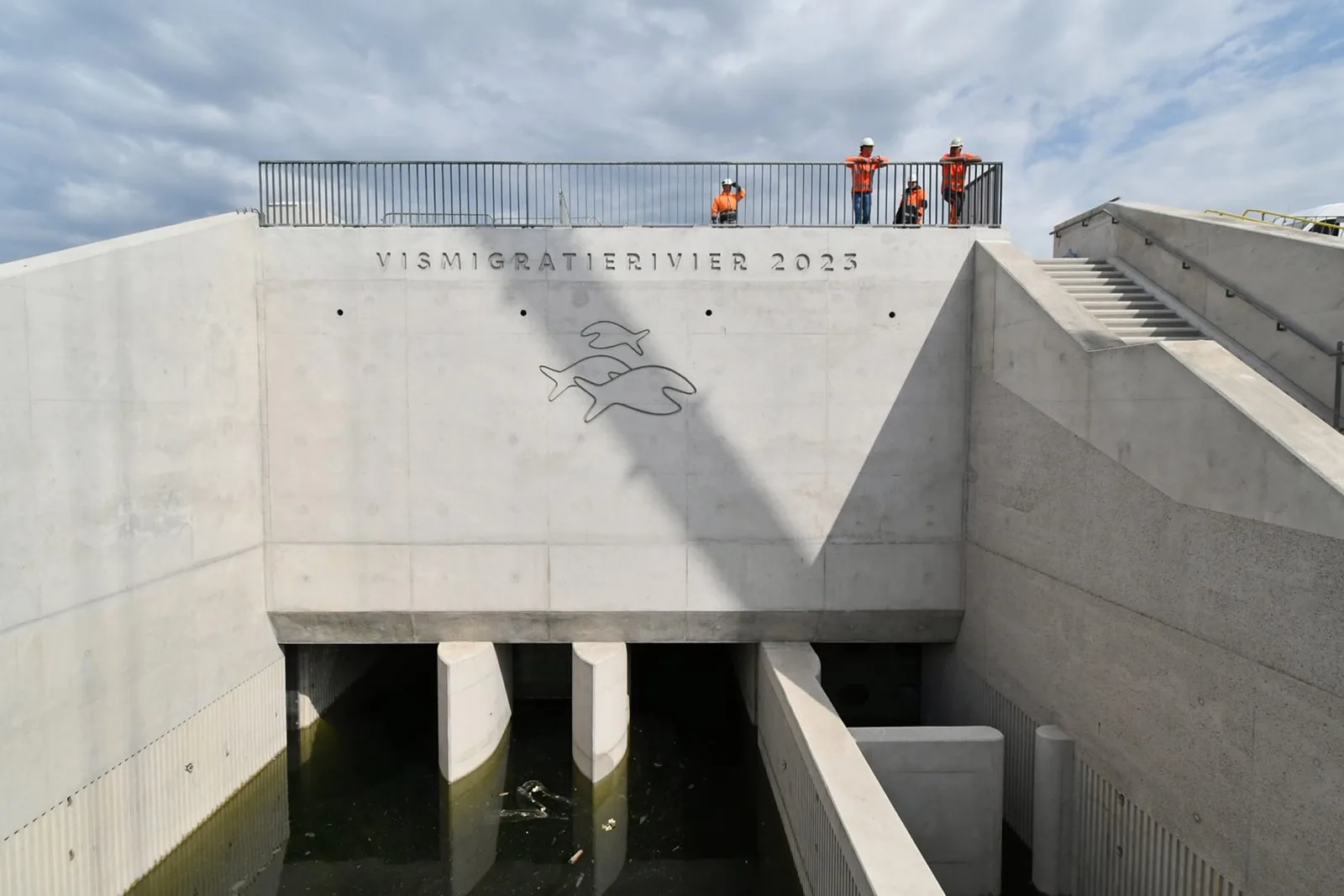
A 15-metre-wide opening now lets fish migrate between the IJsselmeer and the Wadden Sea again, restoring a link between fresh and salt water that the dam had blocked for almost a century. Jongtien describes it as a move from simply keeping water out to balancing flood protection with ecology. A new cycle and pedestrian path with viewing platforms runs along the Wadden Sea side, alongside the existing route on the IJsselmeer side. Jongtien sums up the design approach as spectacular simplicity: abstract in form, minimal in detail and visible only where an element has a clear purpose.



Luxembourg Pavilion Tackles the Overconsumption of Living Space at the 2027 Venice Biennale
Curated by Céline Zimmer and Exutoire, the Luxembourg Pavilion's Excess! will compare...
illustrarch Editoral Team2 Mins read
Frida Escobedo Studio to Design MALBA Underground Wing in Buenos Aires
MALBA has tapped Frida Escobedo Studio to build a subterranean expansion beneath...
illustrarch Editoral Team2 Mins read
CF Møller Turns a Former Psychiatric Hospital in Denmark into the Mind Museum
In Middelfart on Funen, CF Møller has turned an 1888 psychiatric hospital...
illustrarch Editoral Team2 Mins read
Design Museum Gent Reopens with a Carmody Groarke Extension Built from Waste-Based Bricks
Design Museum Gent reopens on 3 October 2026 with a 2,200 sqm...
illustrarch Editoral Team2 Mins read


Leave a comment