

Metabolism vs Futurism: Two Visions of the City of Tomorrow
Metabolism and Futurism both rejected the architectural past to imagine radically new cities, yet they did so from opposite ends of the globe and with opposing philosophies. This article compares their origins, core ideas, iconic projects, and shared legacy in shaping how we think about urban life and adaptable design.
 Sinan Ozen5 May 20266 Mins read57
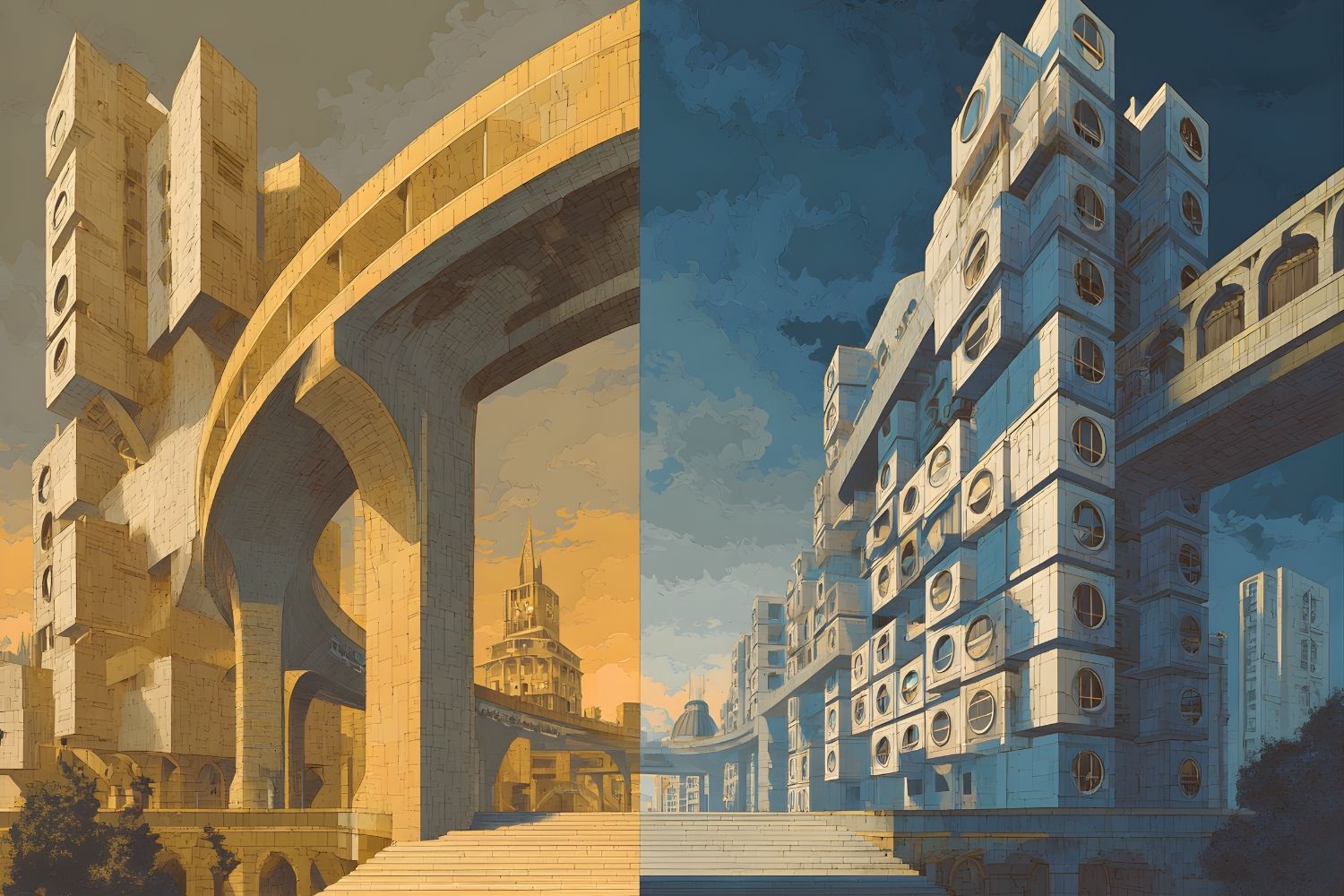
Table of Contents Show
Metabolism vs Futurism represents a clash between two of the 20th century’s most radical architectural movements. Italian Futurism, launched in 1909, celebrated speed, machinery, and the destruction of historical tradition. Japanese Metabolism, born at the 1960 Tokyo World Design Conference, treated cities as living organisms capable of growth, adaptation, and renewal. Together, these movements reshaped how architects think about urban life.

What Is Futurism in Architecture?
Futurism in architecture grew out of the broader Italian Futurist movement founded by the poet Filippo Tommaso Marinetti in 1909. The Futurists glorified speed, industry, and violence while despising museums, libraries, and anything tied to the past. Architecture became the movement’s most ambitious frontier when Antonio Sant’Elia published the Manifesto of Futurist Architecture in 1914.
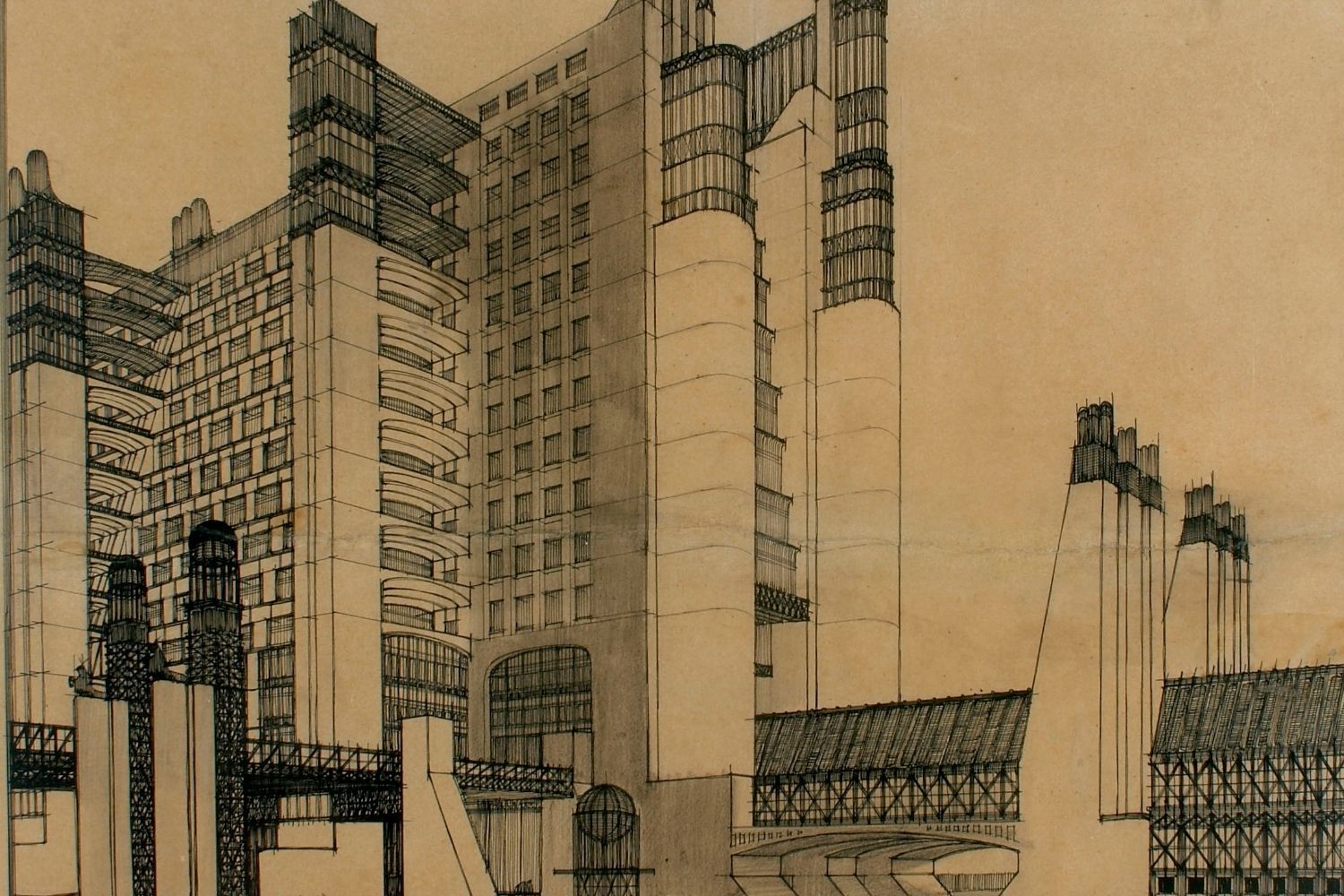
Sant’Elia’s manifesto called for buildings stripped of all historical ornament and constructed from reinforced concrete, steel, glass, and industrial fibres. He envisioned a Citta Nuova (New City) of stepped skyscrapers laced with external elevators, aerial walkways, and multi-level transport systems. Streets would drop below ground to serve cars and trams while pedestrians moved on elevated bridges above. The city was imagined as a machine, restless and expendable, rebuilt every generation to keep pace with technology.
Futurism architecture never produced finished buildings in Sant’Elia’s lifetime. He died in combat during World War I at age 28, leaving only drawings and a single completed villa. Yet his sketches directly influenced Fritz Lang’s Metropolis (1927), Ridley Scott’s Blade Runner (1982), and the visual language of science fiction cityscapes that followed. Le Corbusier, too, drew from Sant’Elia’s vertical city concepts when developing his Ville Radieuse proposals in the 1930s.
🎓 Expert Insight
“We must invent and rebuild the Futurist city like an immense and tumultuous shipyard, agile, mobile and dynamic in every detail.” — Antonio Sant’Elia, Manifesto of Futurist Architecture (1914)
This declaration captures the Futurist obsession with constant renewal. For Sant’Elia, permanence was the enemy of progress. Buildings should be consumed and replaced like any other industrial product.
What Is Metabolism Architecture?
The metabolism architecture movement emerged from a very different crisis. Post-war Japan faced destroyed cities, a surging population, and limited land. A group of young architects led by Kiyonori Kikutake, Kisho Kurokawa, and Fumihiko Maki, all mentored by Kenzo Tange, presented their manifesto at the 1960 Tokyo World Design Conference. The document, titled “Metabolism 1960: The Proposals for a New Urbanism,” contained four essays and drawings for floating ocean cities and plug-in capsule towers.
The Japanese word for metabolism, shinchintaisha, literally means replacing old with new. The Metabolists took this biological metaphor seriously: cities should grow, transform, and shed components the way organisms replace cells. Large-scale infrastructural “spines” would remain permanent while smaller residential and commercial units plugged in, wore out, and were swapped for updated versions.
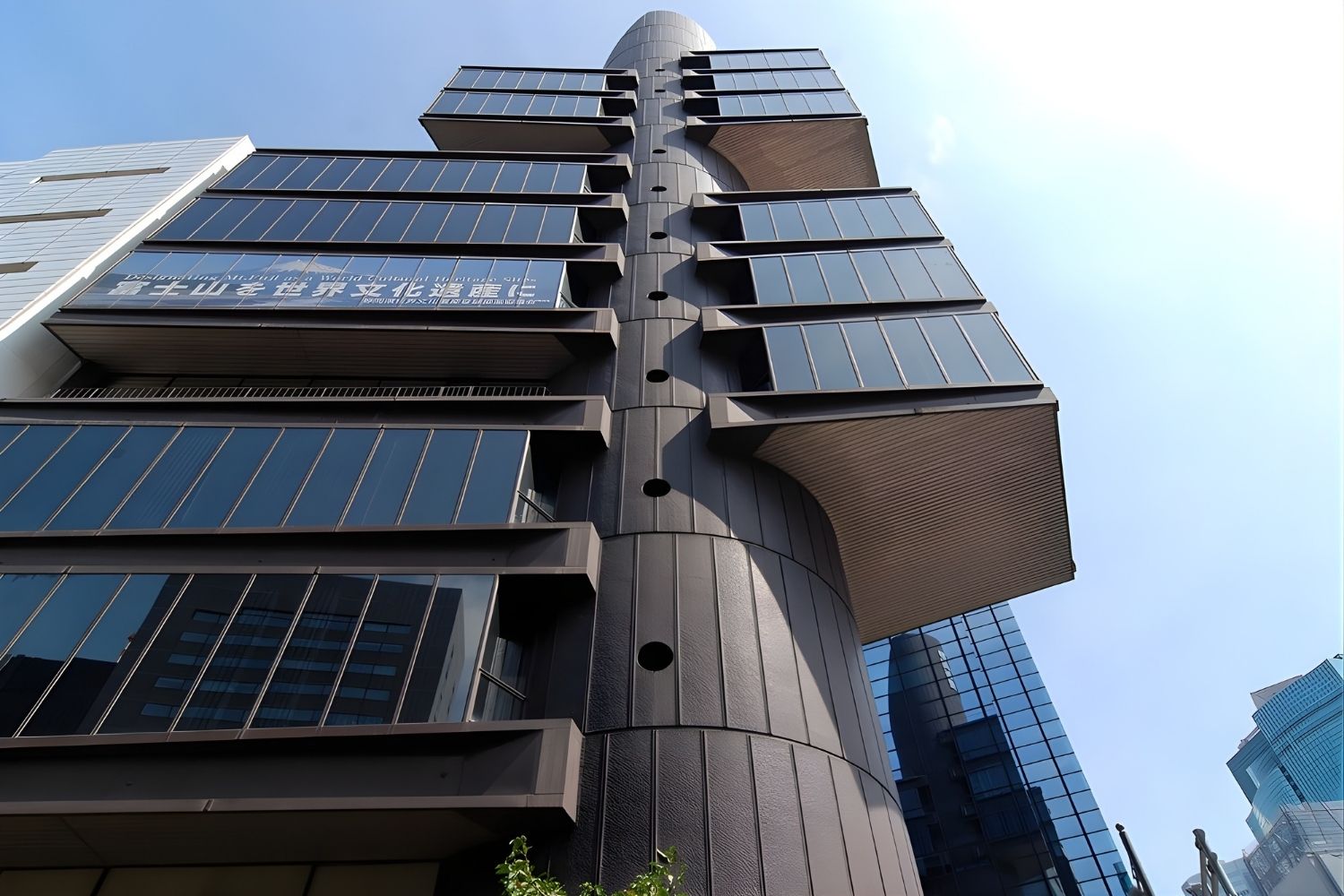
Kenzo Tange’s 1960 Tokyo Bay Plan illustrated this logic at urban scale. The proposal stretched a linear city across Tokyo Bay on a massive infrastructure grid that could expand outward as the population grew. Kikutake’s Marine City imagined floating ring-shaped platforms on the open ocean. Kurokawa’s Nakagin Capsule Tower, completed in 1972 in Tokyo’s Ginza district, became the most famous built example of metabolic architecture. Its 140 prefabricated capsules, each 2.5 metres wide and four metres long, plugged into two concrete cores. In theory, any capsule could be detached and replaced. In practice, none ever were.
💡 Pro Tip
When studying the Metabolist movement, look beyond the Nakagin Capsule Tower. Tange’s Yamanashi Press and Broadcasting Centre (1966) in Kofu is a stronger example of Metabolist infrastructure thinking in practice, with cylindrical concrete cores supporting floors that were designed to accept future expansion. It remains in active use today.
How Do Their Philosophies Compare?
Both movements rejected historical tradition and called for architecture that would match the speed of modern life. But the Futurists wanted to destroy and replace, while the Metabolists wanted to grow and adapt. Futurism and architecture, as Sant’Elia defined it, demanded buildings with a planned lifespan of one generation. Nothing should outlast its usefulness. The Metabolists shared that impatience with static form but proposed a more surgical solution: keep the skeleton, swap the organs.
The political context also diverged sharply. Italian Futurism was entangled with nationalism and, later, with Fascism under Mussolini. The movement celebrated war as a cleansing force. Japanese metabolism architecture, by contrast, arose from a society exhausted by war and focused on collective reconstruction. The Metabolists framed their work around biological cooperation rather than conquest.
There is also a difference in attitude toward nature. Futurism treated the natural world as something to be conquered by machines. Metabolism in architecture drew directly from organic processes, viewing the city as an ecosystem rather than a factory. Kikutake’s floating cities were designed to rise and fall with tides. Kurokawa’s later philosophy of “symbiosis” explicitly called for coexistence between technology and nature.
⚠️ Common Mistake to Avoid
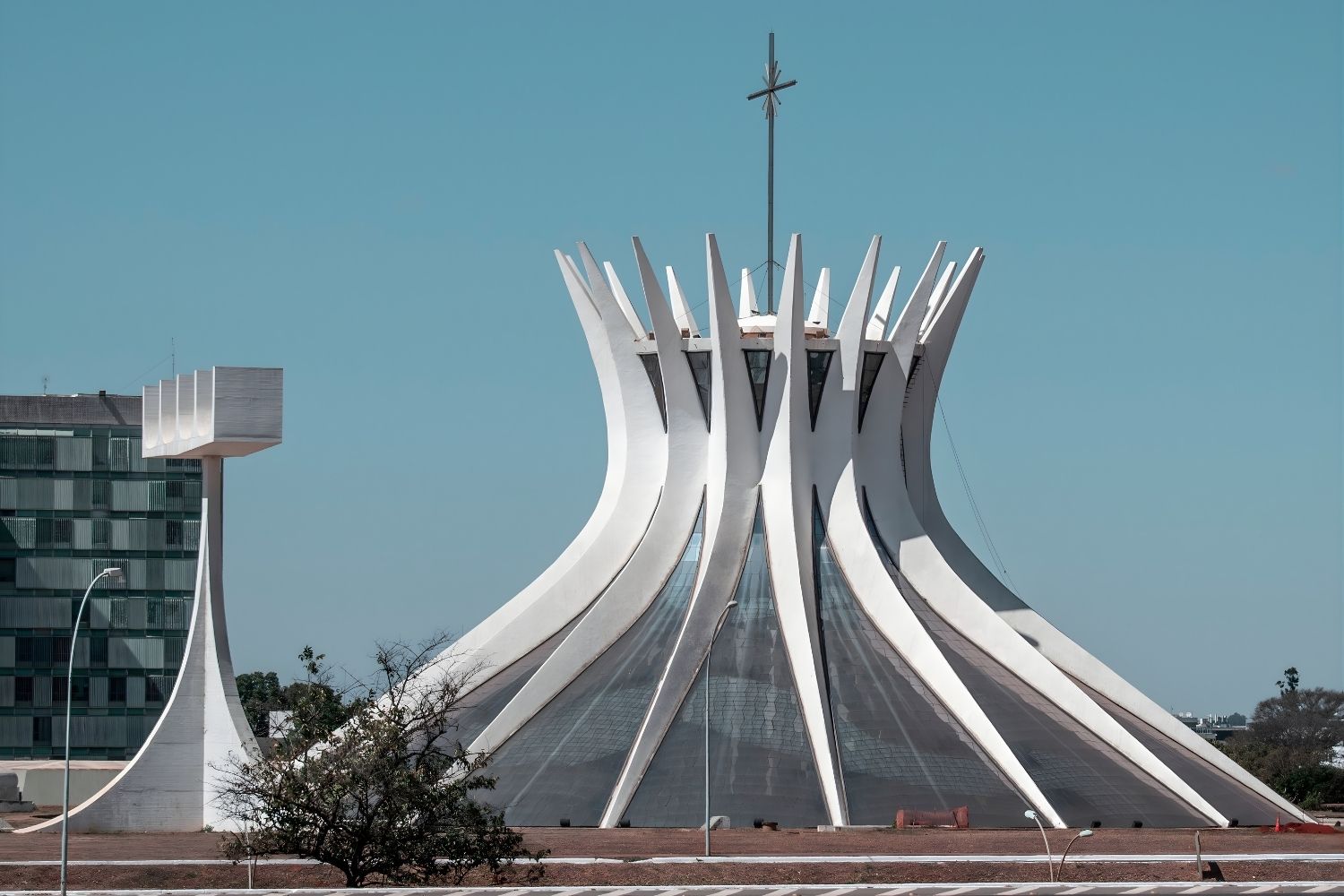
Many students confuse Italian Futurism with Neo-Futurism. Italian Futurism (1909-1944) was a broad cultural movement tied to Marinetti’s manifestos and Sant’Elia’s unbuilt drawings. Neo-Futurism is a late 20th-century architectural style defined by flowing digital forms and sustainability, most associated with Zaha Hadid and Santiago Calatrava. The two share a name and an appetite for the new, but their methods and values are quite different.
Comparison of Metabolism vs Futurism
The table below summarises the key distinctions between these two movements:
| Aspect | Italian Futurism | Japanese Metabolism |
|---|---|---|
| Origin | Italy, 1909 (architecture manifesto 1914) | Japan, 1960 World Design Conference |
| Core metaphor | The machine, the factory, speed | The living organism, biological growth |
| Attitude to the past | Total rejection, call for destruction | Rejection of static form, not of cultural roots |
| Relationship to nature | Conquest through technology | Coexistence and organic adaptation |
| Built works | Almost none (drawings and manifestos) | Several (Nakagin Tower, Expo ’70 pavilions, Yamanashi Centre) |
| Key figures | Sant’Elia, Marinetti, Chiattone | Tange, Kurokawa, Kikutake, Maki |
| Urban vision | Multi-level mechanical city | Expandable infrastructure with plug-in capsules |
Key Projects That Define Each Movement
Futurism architecture lives almost entirely on paper. Sant’Elia’s Citta Nuova drawings (1912-1914) remain the movement’s defining output, held today at the Pinacoteca Civica in Como, Italy. Mario Chiattone, a collaborator, produced a parallel series of drawings for a Modern Metropolis. A handful of temporary pavilions for Futurist exhibitions were built, but none survive. The Guggenheim’s 2014 retrospective of Italian Futurism confirmed that the movement’s architectural contribution was visionary but overwhelmingly theoretical.
The japanese metabolism architecture movement, by contrast, left built evidence. Beyond the Nakagin Capsule Tower, the 1970 World Exposition in Osaka served as a proving ground. Tange master-planned the entire site. Kurokawa designed two corporate pavilions: the Takara Beautillion, assembled from capsules in just six days, and the Toshiba IHI pavilion, a space-frame structure that could theoretically grow in 14 directions. Kikutake contributed the Expo Tower, a 70-metre-high structure with observation capsules. Expo ’70 drew over 64 million visitors and marked the peak of Metabolist ambition.
🏗️ Real-World Example
Nakagin Capsule Tower (Tokyo, 1972): Kurokawa’s 140-capsule tower was assembled in just 30 days using units prefabricated in a shipping-container factory. Each capsule measured 2.5 x 4 metres and included a bed, bathroom, TV, and refrigerator. Despite being designed for capsule replacement, maintenance costs and ownership fragmentation prevented any unit from ever being swapped. The tower was demolished in April 2022, though several capsules have been preserved by the Museum of Modern Art in New York.
Shared Legacy and Lasting Influence
Despite their differences, both movements contributed a shared idea that continues to shape architecture: buildings do not have to be permanent monuments. They can be temporary, adaptable, and responsive to the conditions around them. This thinking feeds directly into contemporary concepts like modular construction, adaptive reuse, and biomimicry in architecture.
Futurism’s influence runs through high-tech architecture and the parametric design tools that generate the flowing forms of firms like Zaha Hadid Architects and Foster + Partners. The Futurist demand for buildings that express speed and dynamism echoes in every airport terminal and transit hub designed around movement rather than stillness.
Metabolism’s DNA is equally present. Prefabricated modular housing, the concept of infrastructure-as-platform, and the idea of designing cities that can absorb population shocks all trace back to the 1960 manifesto. Architects working on floating urban structures for climate-vulnerable coastlines are, whether they know it or not, continuing Kikutake’s Marine City research. The broader arc of modern architecture runs through both movements.
📌 Did You Know?
The 1960 Tokyo World Design Conference that launched Metabolism attracted 227 attendees, including 84 international visitors such as Louis Kahn, Ralph Erskine, and Jean Prouve. This cross-cultural exchange helped spread Metabolist ideas globally and influenced Western megastructure thinking throughout the 1960s and 1970s.
Final Thoughts
Metabolism vs Futurism is more than a comparison of two historical styles. It is a debate about how architecture should respond to change. The Futurists answered with demolition and mechanical rebirth. The Metabolists answered with organic growth and infrastructural permanence layered with expendable parts. Neither vision was fully realised, yet both remain surprisingly relevant as cities face rapid urbanisation, climate stress, and the need for buildings that can evolve rather than simply endure.
For anyone studying architectural history or working on 20th-century design movements, understanding these two positions clarifies a tension that still runs through every conversation about what cities should become. The question Sant’Elia and Kurokawa both asked, how do we build for a future we cannot predict, has not been answered. It has only grown more urgent.







Postmodern Architecture vs Deconstructivism: Playful Irony or Radical Disruption?
Postmodern architecture and deconstructivism both rejected modernism but took opposite paths. This...
Sinan Ozen5 Mins read

Scandinavian Design vs Japanese Minimalism: Nordic Light Meets Zen Simplicity
A side-by-side comparison of Scandinavian and Japanese minimalism covering origins, color palettes,...
 Furkan Sen7 Mins read

Constructivism vs Bauhaus: Revolutionary Art or Industrial Design?
A direct comparison of Constructivism and Bauhaus across origins, ideology, materials, typography,...
Furkan Sen6 Mins read
Deconstructivist Dreams: Architecture Breaking All Rules
From the Guggenheim Bilbao to the Jewish Museum Berlin, deconstructivist dreams reshaped...
Sinan Ozen6 Mins read


Leave a comment