

Diamond Schmitt and MVRDV Reveal Toronto Research Building for University of Toronto
Diamond Schmitt and MVRDV, with Two Row Architect, have revealed the design for the nine-storey Temerty Building at the University of Toronto. The terraced 36,000-square-metre research and teaching facility draws on the Niagara Escarpment and integrates Indigenous knowledge into its plan and landscape.
 Elif Ayse Sen26 April 20269 Mins read143
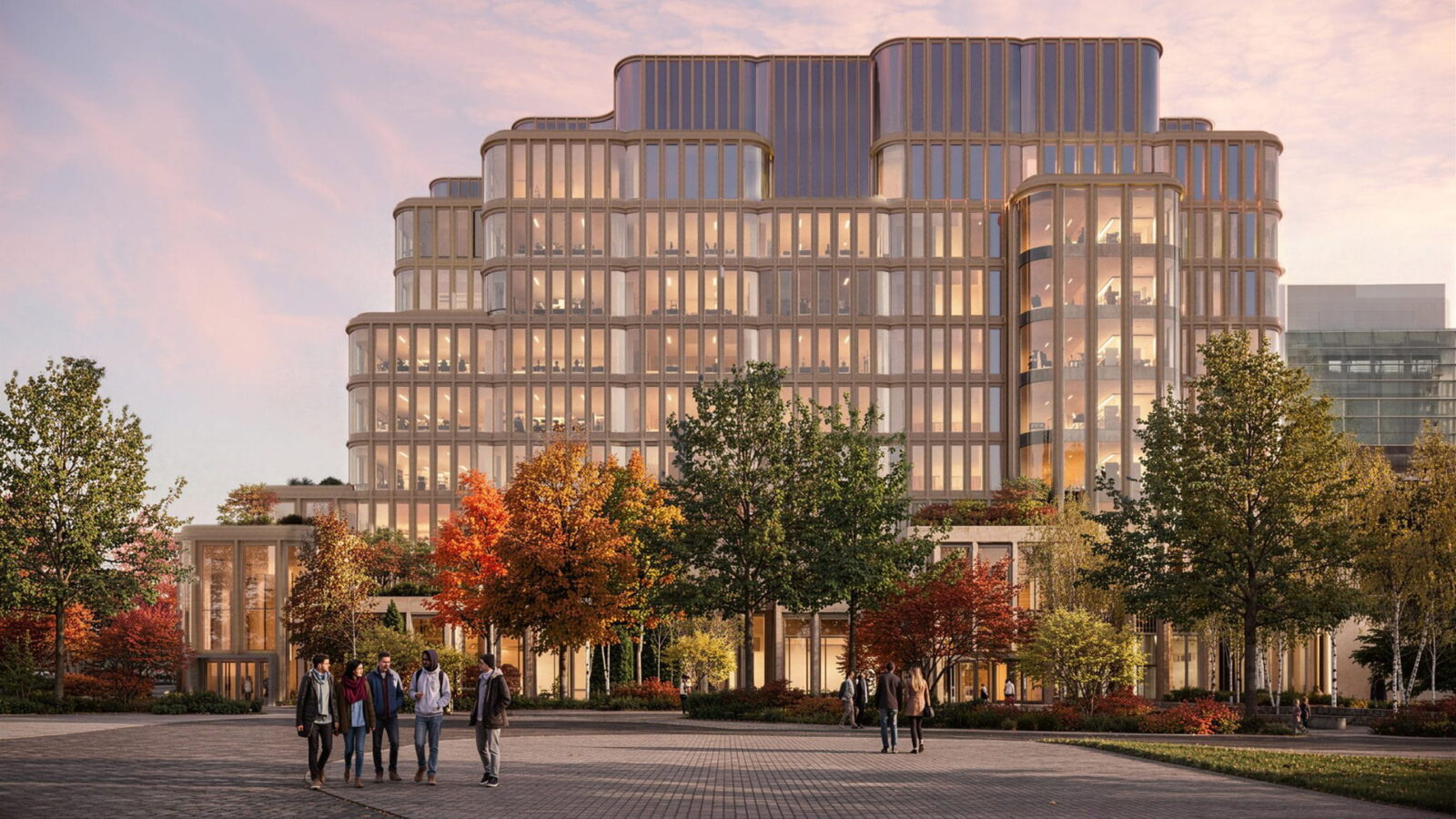


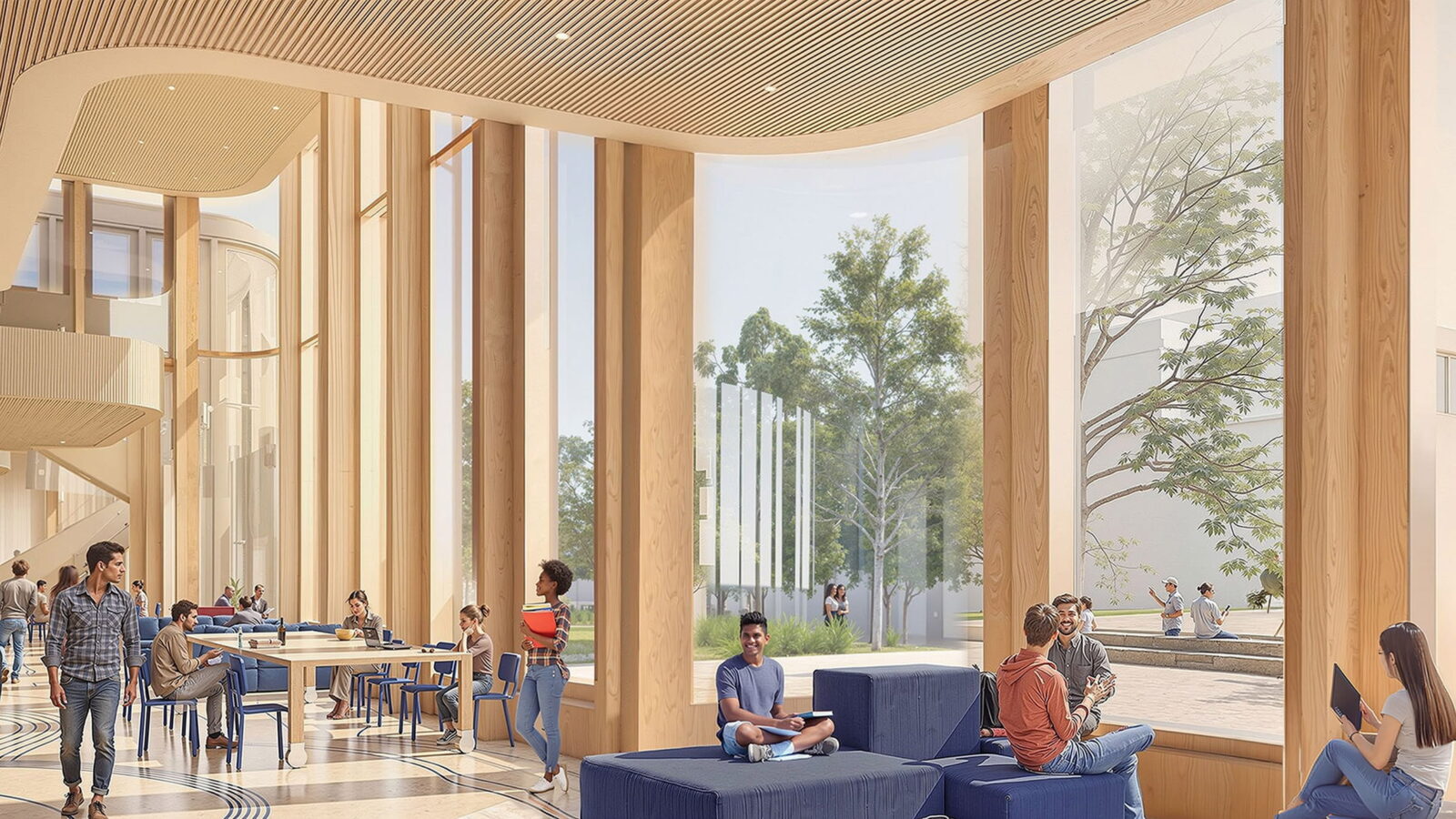


Table of Contents Show
Diamond Schmitt and MVRDV, working with Indigenous practice Two Row Architect, have unveiled the design for the Temerty Building at the University of Toronto. The nine-storey, 36,000-square-metre research and teaching facility features a terraced form inspired by the Niagara Escarpment, an off-white stone facade, and a Longhouse-oriented gathering hall that places Indigenous knowledge at the centre of the plan.
A New Hub for Health Research at the Heart of Toronto
The University of Toronto has revealed the design of its James and Louise Temerty Building, a major new facility for health research and teaching that will reshape the King’s College Circle area of the St. George campus. The project is led by Toronto-based Diamond Schmitt Architects in partnership with Rotterdam-based MVRDV, with Indigenous firm Two Row Architect contributing throughout the design process.
The building will rise on the site of the existing Medical Sciences Building’s west wing, which dates from 1969. Across nine storeys, it will host the Temerty Faculty of Medicine and the Faculty of Arts & Science’s Department of Cell & Systems Biology, co-locating clinical research, biological science, and education in a single facility for the first time. Pre-construction is scheduled to begin in the second half of 2026, starting with preparatory work on the existing west wing in July.
This is the second collaboration between Diamond Schmitt and MVRDV for the University of Toronto. The first, the Myron and Berna Garron Health Sciences Complex at the Scarborough campus, is expected to complete later this year. That earlier project established a working method between the two offices that the Temerty Building extends into a more central and ceremonially significant site.
💡 Pro Tip
When evaluating a research-building design, look at how teaching floors and lab floors are stacked. Placing teaching at the base and labs above (as the Temerty Building does) keeps public foot traffic on the lower levels and protects sensitive lab work from disturbance, while still letting students see active research from the floors below.
The Project: Replacing a 1969 Wing with a 36,000-Square-Metre Facility
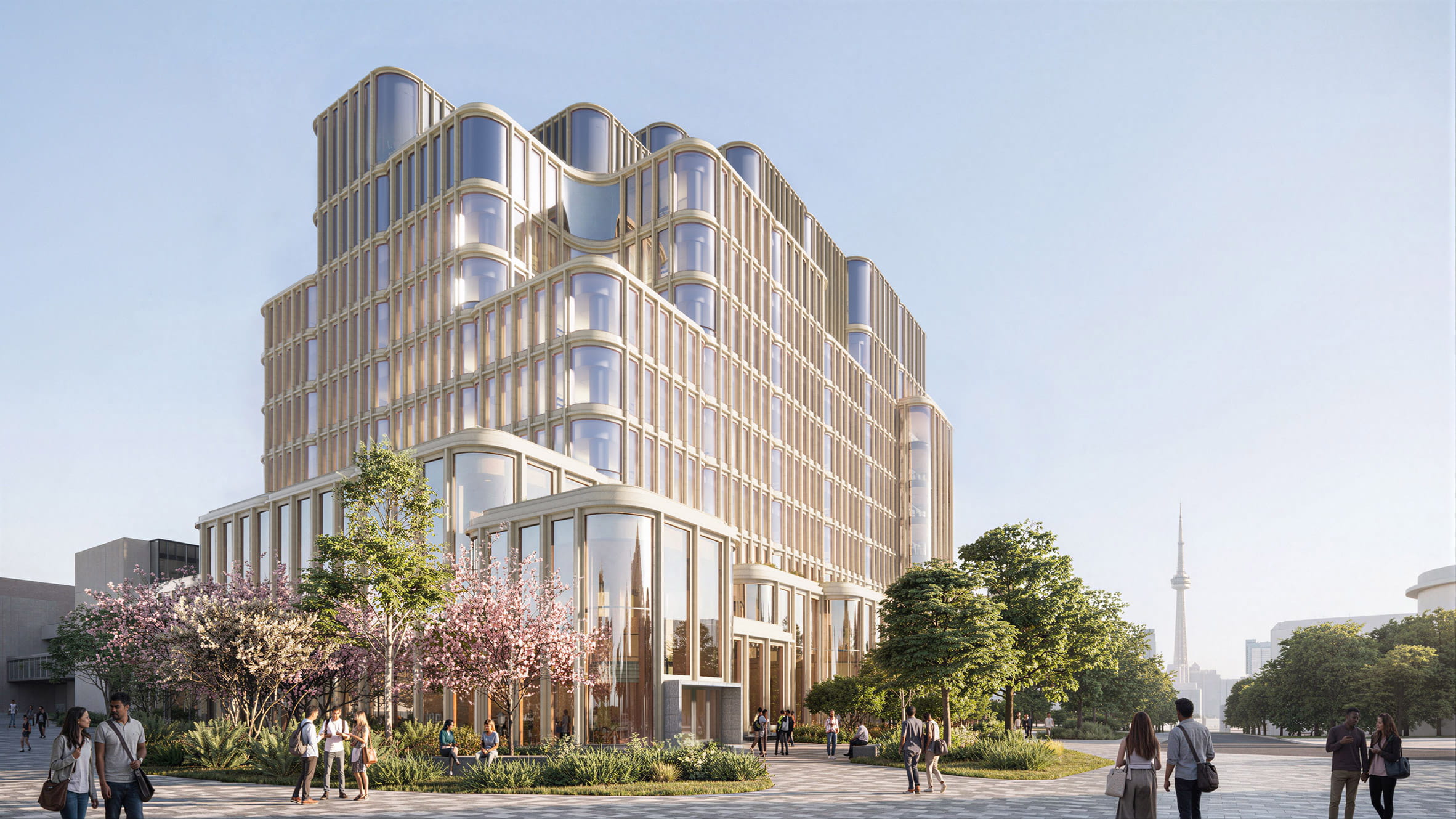
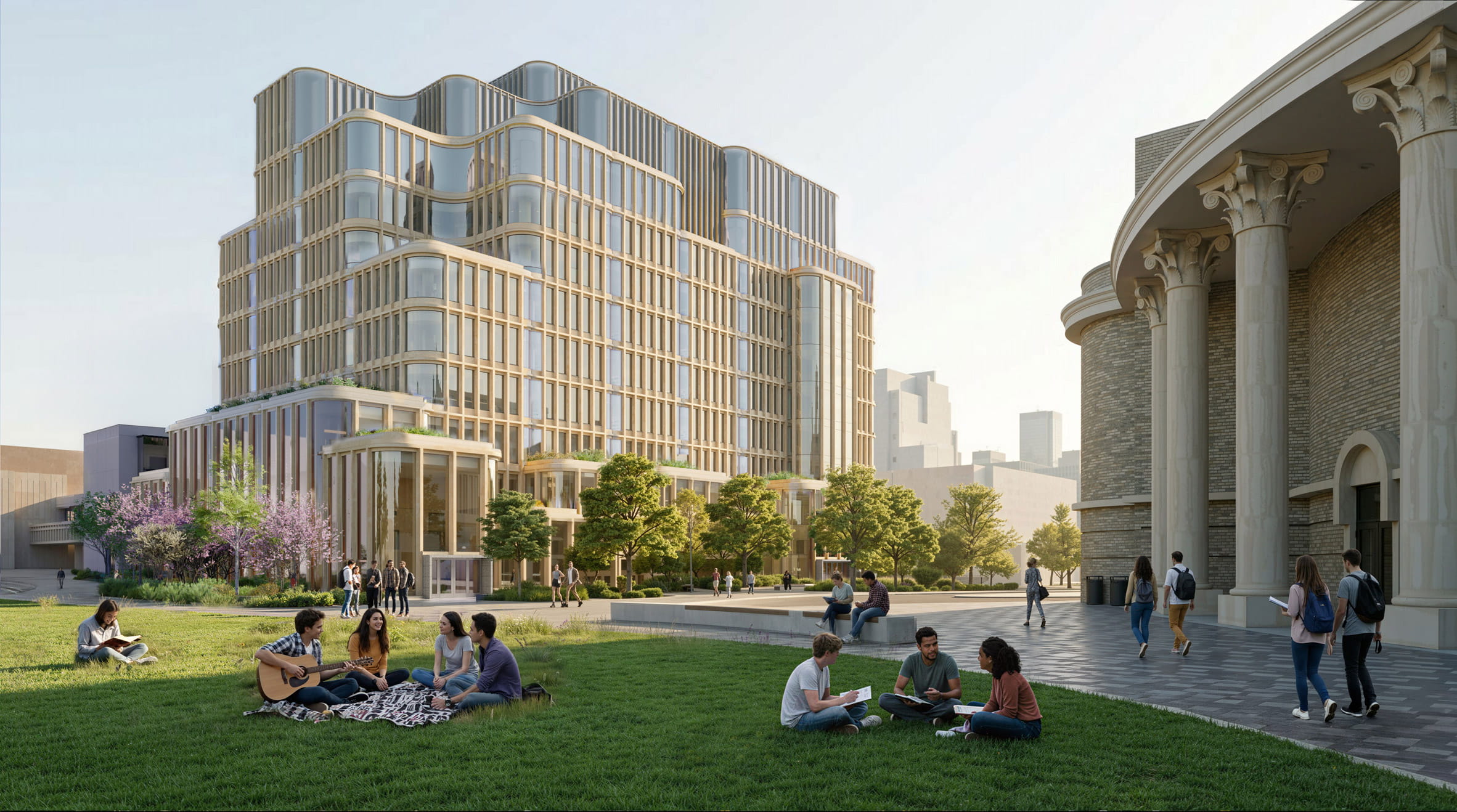
The Temerty Building replaces the West Wing of the Medical Sciences Building at the corner of King’s College Road and King’s College Circle. Together with the neoclassical Convocation Hall opposite, this site forms a gateway to Front Campus, the historic centre of the university. The aging 1969 wing has been criticized for years for inflexible lab layouts and limited connection to the surrounding campus, and the design team has framed the new building as both a programmatic upgrade and an urban repair.
According to the architects and the university, the project covers approximately 388,000 square feet (36,000 square metres) of floor area. Roughly 60% of the total area is dedicated to research space, with the remainder split between teaching, communal, and ceremonial functions. Two lower floors hold flexible teaching and gathering spaces, while seven upper floors contain wet and dry laboratories serving dozens of principal investigators.
A central donation made the project possible. The James and Louise Temerty gift of $250 million to the University of Toronto in 2020 directed a significant portion of its funding toward this new facility. The vision itself goes back further, to the Temerty Faculty of Medicine’s 2018 to 2023 Academic Strategic Plan, which identified the need for a modernized facility that could bring researchers, educators, and learners together under one roof.
Form Inspired by the Niagara Escarpment
The most distinctive feature of the design is its terraced massing. Renders show a stepped, rectangular volume with softened corners and a series of plant-filled setbacks that reduce the building’s bulk as it rises. The architects have linked this form directly to the Niagara Escarpment, the long limestone ridge that runs across southern Ontario and shapes much of the regional landscape.
“The Temerty Building’s design is about bridging worlds,” said Donald Schmitt, principal architect at Diamond Schmitt. “It prioritises functionality and durability, but also ensures the building will be warm and inviting.” The terraced strategy serves several purposes at once: it brings daylight deep into the floor plates, provides usable outdoor space at multiple levels, and visually relates the building to its natural and cultural context rather than treating those references as decorative additions.
Pocket terraces along the setbacks will host plantings tied to the four sacred medicines of many Indigenous traditions in the region: cedar, sage, sweetgrass, and tobacco. A green roof crowns the building. Together, these planted surfaces extend the landscape vertically through the facade, an idea that has become a recurring theme across MVRDV’s recent work.
🎓 Expert Insight
“Not only does the design provide excellent research and learning facilities, it offers generous and stimulating communal spaces for people to forge connections and exchange ideas, creating the productive friction that characterises many of the best research institutes.”, Nathalie de Vries, Founding Partner, MVRDV
De Vries’s idea of “productive friction” sits at the centre of the building’s diagram. The terraces, the triple-height ground hall, and the open social spaces between wet and dry labs are all designed to push researchers from different disciplines into accidental contact rather than keeping them in sealed corridors.
Stone, Glass and a Reading of the Surrounding Campus
The exterior is wrapped in an off-white, skeletal stone cladding that expands and contracts depending on placement. On the lower floors, where communal spaces face the campus, the cladding opens to reveal large areas of glass and sandstone. Higher up, where laboratories require more controlled environments, the stone frame becomes denser.
The architects have explicitly tied this articulation to neighbouring buildings. The vertical rhythm of the facade picks up Gothic influences from older campus structures, while the curved corners echo the colonnade and columns of the neoclassical Convocation Hall directly opposite the site. This is not a contextual mimicry. The Temerty Building reads as a distinctly contemporary structure, but one that has been studied carefully against its setting rather than dropped onto it.
For an overview of MVRDV’s broader approach to facade design and stacked landscape forms, see Top 5 Projects of MVRDV Office, which includes precedents like Valley in Amsterdam and the Shenzhen Terraces that share design DNA with the Toronto building.
Indigenous Knowledge in the Plan
One of the most significant aspects of the project is the role of Two Row Architect, an Indigenous-owned practice based on Six Nations of the Grand River territory. Two Row was involved across the design conversation, not as a consultant brought in for cultural review at the end, but as a partner shaping the building’s plan from the start.
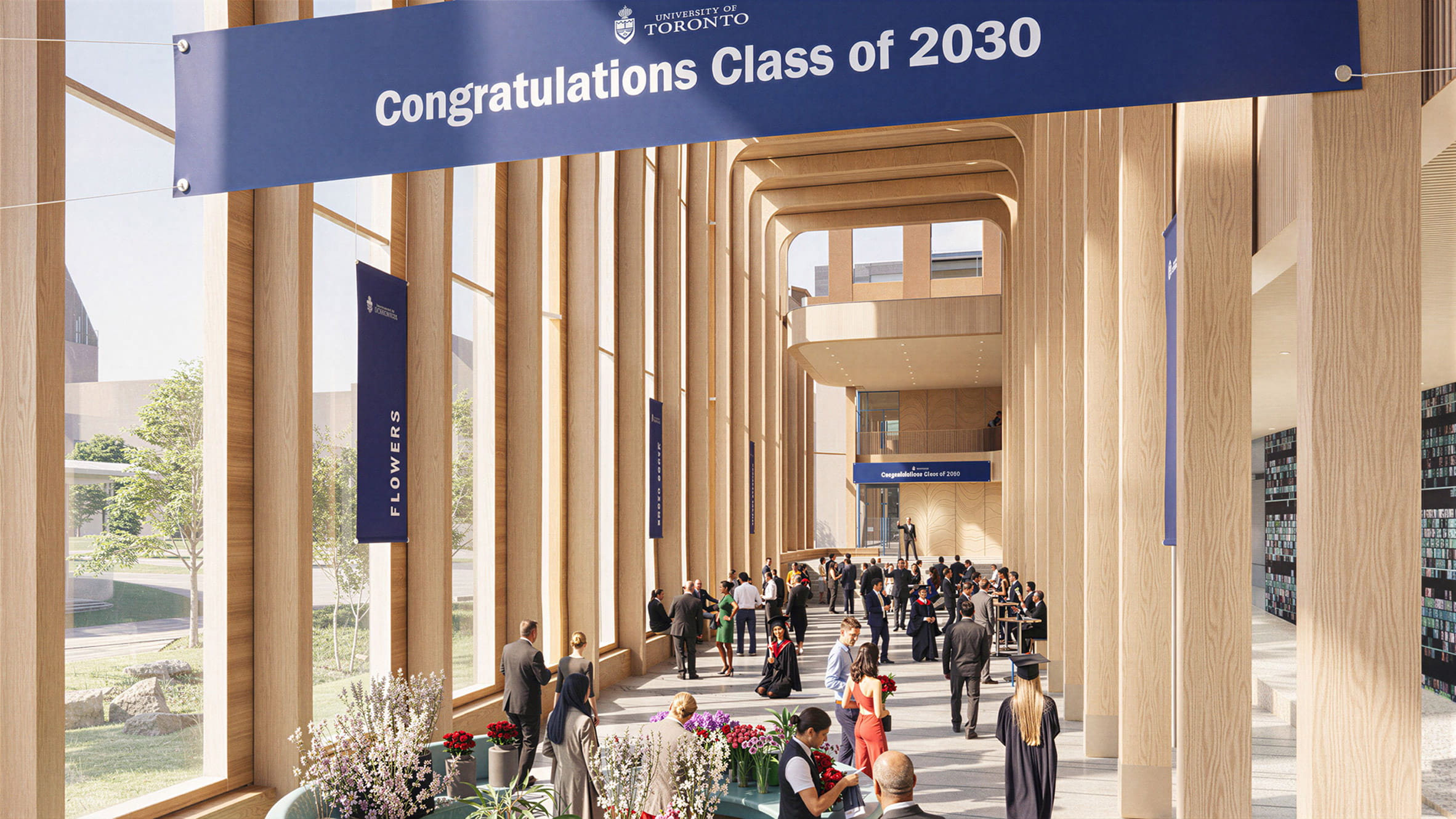
The ground floor includes a Longhouse-oriented gathering space, with a triple-height hall designed for informal encounters, secondary audience functions, and graduation ceremonies. In the southwestern corner of the building, dedicated rooms are provided for the university’s Elders and Knowledge Keepers, while the adjacent landscape includes an Indigenous teaching garden. Spaces for Temerty Medicine’s Equity and Social Accountability offices, including Inclusion and Diversity, Access and Outreach, and Indigenous Health, are placed prominently rather than tucked away on upper floors.
“As part of the design conversation, we want to bring in an understanding of Indigenous knowledge and Ways of Knowing,” said David Dow, also a principal architect at Diamond Schmitt, when the team was first selected. “It will be important for us to open the lines of communication with Indigenous communities around the St. George campus to help inform how people orient themselves within the building.” The terraces planted with cedar, sage, sweetgrass, and tobacco extend that orientation upward through the building, tying the medicinal landscape to research happening on every floor.
⚠️ Common Mistake to Avoid
Many institutional projects treat Indigenous design input as a late-stage consultation, often limited to a feature wall or naming ceremony. The Temerty Building integrates Two Row Architect as a design collaborator from the early stages, with planning decisions like the Longhouse-oriented hall and the placement of Elders’ rooms made jointly. This is the difference between cultural decoration and structural integration of Indigenous knowledge.
Inside the Building: Labs, Classrooms and Communal Floors
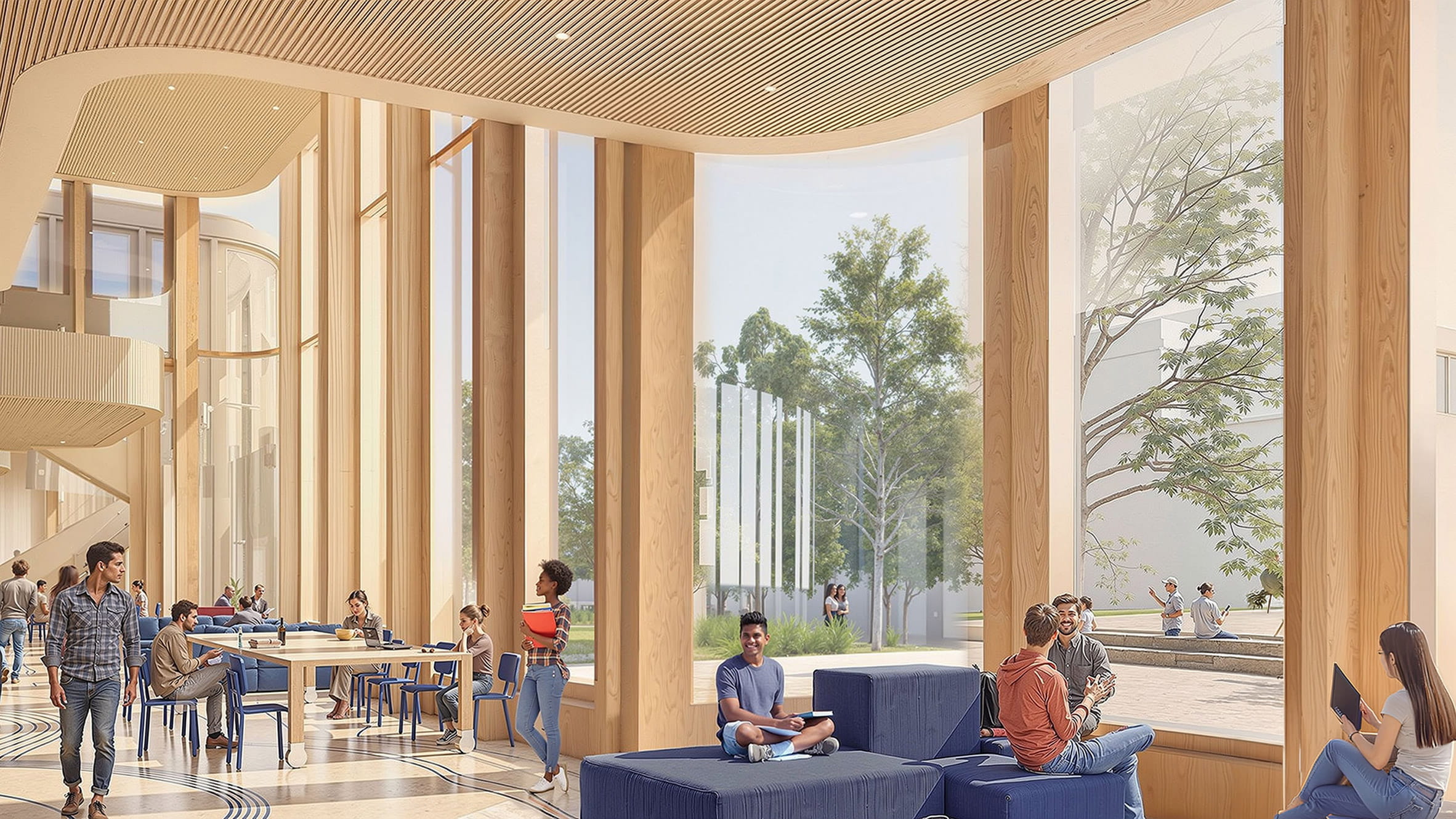
The interior programme is organized around the contrast between active, public lower floors and protected, productive upper floors. The triple-height ground hall sits at the centre of campus circulation, with movable walls that allow it to transform from studio learning spaces into an open-plan venue for events. Flexible classrooms and seminar rooms support a shift from lecture-based instruction to active, collaborative learning, with adaptable layouts and integrated technology that connect students and instructors across U of T’s tri-campus network.
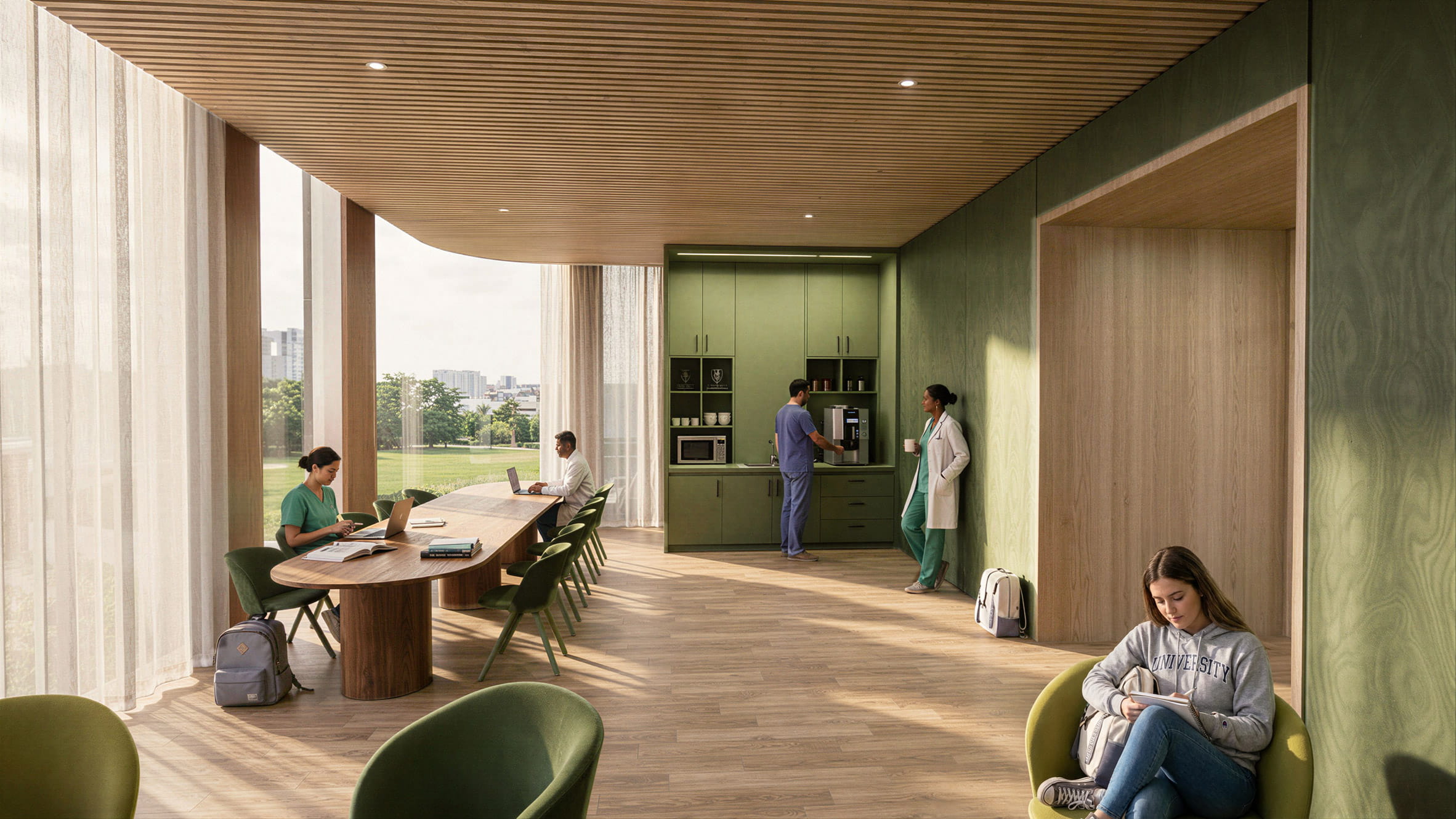
Above the teaching levels, seven floors of state-of-the-art wet and dry laboratories serve dozens of principal investigators from both Temerty Medicine and the Faculty of Arts & Science. The lab floors are broken into three areas per floor: a wet laboratory zone, a dry laboratory zone, and an open social space designed for cross-team interaction. Specialized facilities are provided for infectious disease research and aquatic disease models, two areas where U of T has been expanding capacity in recent years.
This organizational logic, which keeps shared social space directly attached to the lab floors rather than concentrated only on the ground level, is a deliberate design move. It is also the kind of decision that depends on a strong early-stage spatial diagram. For a closer look at how architects work through these adjacencies before committing to form, our guide to Best Diagram Tools for Architects covers the bubble-diagram and adjacency tools used in projects of this scale.
Climate Positive Strategy and District Energy
The Temerty Building advances the University of Toronto’s broader Climate Positive plan, which targets climate-positive operations by 2050. A new district energy nodal plant will provide heating and cooling to the Temerty Building and several neighbouring facilities, while on-site renewable energy generation supports the campus-wide goal.
The use of natural materials, the green roof, and the planted terraces are part of this strategy. So is the integration of teaching gardens at ground level, which contribute to stormwater management on a site that has been almost entirely paved for decades. Beyond technical performance, the design’s connection to the King’s College Circle landscape opens the area to surrounding campus life for the first time in fifty years, according to the design team.
This direction reflects a wider movement in campus architecture, where research facilities are increasingly judged on their environmental performance and community openness as much as on their lab specifications. Our overview of The Evolution of Campus Architecture covers how these priorities have shifted across recent decades.
🏗️ Real-World Example
Myron and Berna Garron Health Sciences Complex (Scarborough, scheduled completion late 2026): This earlier collaboration between Diamond Schmitt and MVRDV at the University of Toronto Scarborough campus established the working method that the Temerty Building extends. The Scarborough complex similarly co-locates medical and academic functions in a single facility, and its lessons on lab-to-classroom adjacencies directly informed the terraced strategy used in Toronto.
Why Diamond Schmitt and MVRDV?
The pairing of Diamond Schmitt and MVRDV reflects a deliberate strategy by the University of Toronto’s architect selection committee, which ran a competitive request-for-proposal process that drew international participation. Diamond Schmitt is one of Toronto’s most experienced institutional practices, with deep familiarity in Canadian academic and healthcare architecture. MVRDV, founded in Rotterdam in 1993 by Winy Maas, Jacob van Rijs, and Nathalie de Vries, brings a research-driven, conceptually adventurous approach to large-scale projects.
The combination is not accidental. Diamond Schmitt anchors the project in local code, climate, and institutional expectations, while MVRDV pushes the form, programme, and public-life dimensions. The result is a building that feels confidently rooted in Toronto but speaks an architectural language that travels internationally. This kind of pairing has become more common on major institutional projects in Canada and the United States, where local practices increasingly partner with international firms to deliver work that meets both technical and conceptual ambitions.
For broader context on how MVRDV operates across cultures and continents, our coverage of the Snøhetta, MVRDV and BIG Ion Riva Master Plan in Istanbul shows the firm working in another collaborative international setup, and our piece on MVRDV’s Rotterdam ROCKS! proposal for the Shift Sustainability Landmark explores their continuing interest in stacked, terraced civic forms.
The Project Team
The full design team brings together a long list of consultants under the lead of Diamond Schmitt and MVRDV. Two Row Architect’s design team is led by Erik Skouris. Landscape architect Michael Van Valkenburgh Associates handles the surrounding gardens and public realm. RJC Engineers is responsible for structural design, and Smith and Andersen for mechanical, electrical and plumbing systems. RDH and RWDI serve as building physics and environmental advisors. Cost calculation is handled by Graham Ball, who is also serving as contractor.
This concentration of consultants reflects the technical complexity of contemporary research buildings, where lab requirements, sustainability targets, and ceremonial spaces all need to coexist within a single envelope. The full coordination of disciplines is one of the reasons projects of this kind tend to use partnerships between local and international architects rather than a single office.
✅ Key Takeaways
- The Temerty Building is a 36,000-square-metre, nine-storey research and teaching facility designed by Diamond Schmitt and MVRDV with Two Row Architect for the University of Toronto’s St. George campus.
- Its terraced massing is inspired by the Niagara Escarpment, with pocket terraces planted with cedar, sage, sweetgrass, and tobacco, the four sacred medicines of many regional Indigenous traditions.
- The plan locates teaching and gathering spaces on the lower floors and seven floors of wet and dry labs above, with a Longhouse-oriented hall and dedicated rooms for Elders and Knowledge Keepers integrated from the earliest design stages.
- The project replaces a 1969 wing of the Medical Sciences Building, advances U of T’s Climate Positive plan through district energy and on-site renewables, and is the second collaboration between Diamond Schmitt and MVRDV at the university after the Scarborough Health Sciences Complex.
- Pre-construction begins in the second half of 2026, marking a major step in shaping the heart of the campus for U of T’s next century.
A Building That Connects Disciplines, Cultures and Eras
The Temerty Building sits at the intersection of several agendas at once: the university’s Climate Positive commitment, its push to bring health and biology research closer together, its relationship with surrounding Indigenous communities, and the broader question of how a 200-year-old institution presents itself to the next century. Few institutional buildings in North America are asked to carry this much weight.
The design’s success will ultimately depend on how the spaces feel once people are inside them, and how the planted terraces, the Longhouse-oriented hall, and the open lab social spaces work over years of daily use. But the underlying diagram, where research, teaching, ceremony, and landscape stack together rather than being separated into different buildings, points toward a more integrated model of what a contemporary research facility can be. With pre-construction starting later in 2026, the project will be one to watch closely as it moves from renders into built form.






Futuro House Production Revived in Finland After Decades-Long Hiatus
A Facebook listing for abandoned moulds led to the first new Futuro...
 illustrarch Editoral Team3 Mins read
Building Your Dream Home in NSW: What You Should Know About Montgomery Homes
Montgomery Homes has been building across Sydney, Newcastle, the Hunter, Wollongong and...
illustrarch Editoral Team4 Mins read
Student Center Santa Marta by El Equipo Mazzanti
El Equipo Mazzanti roof a Santa Marta campus with a concrete canopy...
illustrarch Editoral Team2 Mins read
Singapore Institute of Technology by Henning Larsen
Singapore Institute of Technology by Henning Larsen is a campus in a...
illustrarch Editoral Team3 Mins read


Leave a comment