

Le Corbusier: Design Philosophy of His Famous Buildings
A focused guide to Le Corbusier's design philosophy, the Five Points of Architecture, and his most famous buildings, including Villa Savoye, Unité d'Habitation, Notre-Dame du Haut, and the Capitol Complex at Chandigarh. Includes furniture, the Modulor, and his lasting influence on modern architecture.
 Furkan Sen5 May 202611 Mins read68
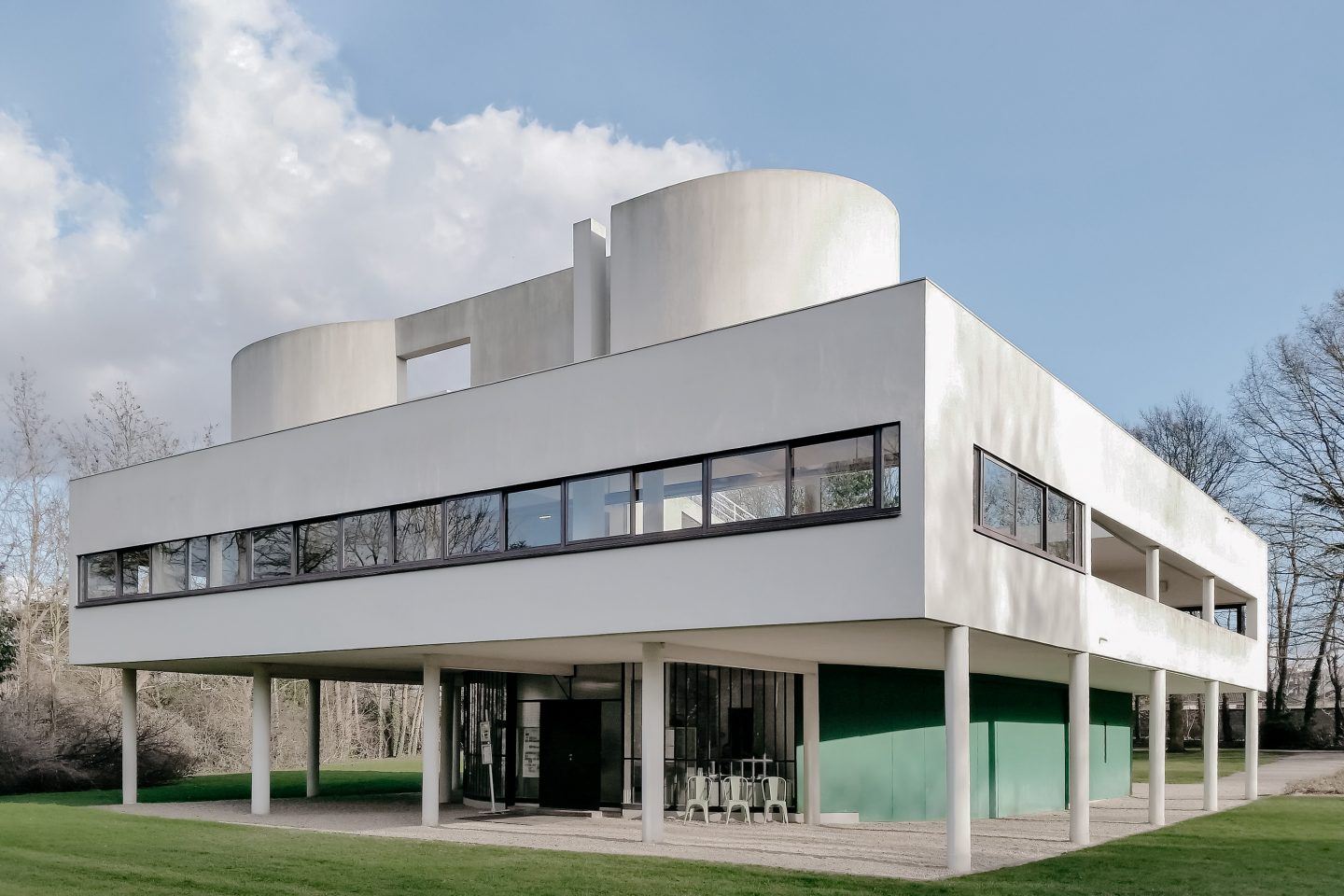
Table of Contents Show
Le Corbusier was a Swiss-French architect whose design philosophy reshaped 20th-century architecture through functionalism, the Five Points of Architecture, and a human-scaled proportional system called the Modulor. His famous buildings, from Villa Savoye to the Unité d’Habitation, translated these ideas into concrete, glass, and pilotis, setting the template for modern architecture worldwide.
Born Charles-Édouard Jeanneret in 1887 in Switzerland, Le Corbusier became one of the most influential architects of the 20th century. His work spanned five decades and seven countries, producing villas, housing blocks, chapels, and entire city plans. In 2016, UNESCO inscribed 17 of his buildings on the World Heritage List as a single transnational property, recognising the global reach of his architectural language. This article looks at the design philosophy of Le Corbusier through his most famous buildings, his iconic furniture, and the principles that still shape how architects think about space, structure, and proportion today.
Who Was Le Corbusier? A Brief Background
Charles-Édouard Jeanneret-Gris was born on October 6, 1887, in La Chaux-de-Fonds, a Swiss watchmaking town where his father painted enamelled watch dials and his mother taught music. He adopted the pseudonym Le Corbusier in the 1920s, partly as a reinvention of identity and partly to separate his architectural writing from his painting. He acquired French nationality in 1930 and spent most of his career working from a small studio at 35 rue de Sèvres in Paris.
His early training combined art school in Switzerland under Charles L’Eplattenier with apprenticeships in the offices of two figures who shaped early modernism: Auguste Perret in Paris, who taught him reinforced concrete construction, and Peter Behrens in Berlin, where Walter Gropius and Mies van der Rohe also passed through. That single Berlin office produced three of the century’s most influential architects, a concentration of talent with few parallels in design history.
Le Corbusier was not only an architect. He was a painter, a writer, an urban planner, and a furniture designer, and his books, including Vers une architecture (1923) and The Modulor (1948), spread his ideas as widely as his buildings did.
The Design Philosophy of Le Corbusier in One Sentence
Le Corbusier believed that architecture should be a rational, functional response to modern life, designed at the scale of the human body and built honestly with industrial materials. His famous phrase, “a house is a machine for living in,” captured the conviction that a well-designed building should work with the same clarity and efficiency as a well-engineered machine, while still serving human comfort and dignity.
That single sentence sounds simple, but it carried serious weight in the 1920s. Most domestic architecture at the time was still wrapped in historical ornament, copying classical, gothic, or regional motifs. Le Corbusier rejected this entirely. He saw the house as a tool, not a monument, and he wanted that tool to be honest about what it was made of and how it worked.
🎓 Expert Insight
“A house is a machine for living in.” Le Corbusier, Vers une architecture (1923)
This single sentence framed an entire generation of design debate. It positioned the dwelling as a precise instrument calibrated to its inhabitants rather than a vehicle for symbolism, and it shifted attention from the facade to the plan, the section, and the way light, air, and movement actually pass through a building.
The Five Points of Architecture
Le Corbusier’s most influential contribution to architectural theory is the Five Points of Architecture, formulated in the mid-1920s as a kind of charter for the new way of building. Each point responds to a specific possibility opened up by reinforced concrete, the material that lets a structural frame carry the loads previously carried by load-bearing masonry walls.
The five points are:
- Pilotis: slender concrete columns lift the building off the ground, freeing the ground plane for circulation, parking, or landscape.
- Free plan: with the structure carried by columns rather than walls, internal partitions can be placed wherever the program requires.
- Free facade: because the facade no longer carries structural loads, openings and surfaces can be composed independently of the frame inside.
- Horizontal ribbon windows: long, continuous bands of glazing replace small punched openings, flooding interiors with even daylight and framing wide views.
- Roof garden: the flat roof becomes a usable outdoor terrace, recovering the ground-level space taken up by the building’s footprint.
Together, these five points describe a building that floats, opens, and breathes in ways that traditional masonry construction simply could not allow. They are not aesthetic preferences. They are a programme for what concrete frame construction makes possible. You can read more about how these principles fit into the wider story of modern architecture on illustrarch.
💡 Pro Tip
When studying Le Corbusier’s villas, do not try to read the Five Points as a checklist. Read them as a system. In Villa Savoye, for example, the pilotis are not just columns; they create the turning circle for a 1929 car. The roof garden is not just a terrace; it replaces the lost ground. Each point only makes full sense when you see how it depends on the others.
Villa Savoye: The Manifesto Built in Concrete
If the Five Points were the theory, Villa Savoye (1929–1931, Poissy, France) is where Le Corbusier proved the theory could stand up. Designed for the Savoye family as a weekend country house, it became the most studied modernist house ever built and a near-perfect demonstration of his architectural vocabulary.
The house sits on a flat meadow outside Paris, raised on slender pilotis so the white volume seems to hover above the grass. The ground floor is curved to match the turning radius of a car, with the entrance, garage, and service rooms tucked beneath the floating box. Inside, a ramp runs through the centre of the house, leading from ground floor to roof terrace in what Le Corbusier called the promenade architecturale, a designed sequence of views and spatial experiences. The roof garden is enclosed by a curving solarium wall, turning the top of the house into a private outdoor room with framed views of the surrounding countryside.
For a deeper case study comparing Villa Savoye to other modernist masterpieces such as Mies van der Rohe’s Farnsworth House and Frank Lloyd Wright’s Fallingwater, see illustrarch’s overview of iconic modern houses.
🏗️ Real-World Example
Villa Savoye (Poissy, 1931): The house demonstrates all five of Le Corbusier’s points in a single building. It is one of the 17 properties listed by UNESCO in 2016 as part of “The Architectural Work of Le Corbusier, an Outstanding Contribution to the Modern Movement,” and it remains open to the public as a state-managed monument administered in partnership with the Centre des monuments nationaux.
The Modulor: Designing at Human Scale
By the 1940s, Le Corbusier had spent two decades trying to reconcile the universalising ambitions of modern architecture with the very specific dimensions of the human body. The result was the Modulor, a proportional system he developed between 1943 and 1955 and published in two books, Le Modulor (1948) and Modulor 2 (1955).
The Modulor begins with a standing figure 1.83 metres tall, with arm raised reaching 2.26 metres. Le Corbusier divided this figure at the navel and other key points using ratios drawn from the Fibonacci sequence and the golden ratio (approximately 1:1.618). Multiplying and dividing the reference points by 1.618 generates two interlocking measurement series, a “red” and a “blue” sequence, which can be applied to everything from door handles and stair risers to entire facades.
The system reached its fullest expression in the Unité d’Habitation in Marseille, where ceiling heights, apartment widths, balcony depths, and corridor dimensions all derive from Modulor measurements. For a closer look at how the Modulor sits within the wider history of architectural proportion, see illustrarch’s articles on the golden ratio in modern architecture and proportion and scale in architecture.
What Are the Most Famous Buildings by Le Corbusier?
Le Corbusier’s most famous buildings include Villa Savoye, the Unité d’Habitation in Marseille, the Notre-Dame du Haut chapel at Ronchamp, the Convent of Sainte Marie de La Tourette, and the Capitol Complex at Chandigarh in India. Across these projects, you can trace his shift from the white, machine-aged purism of the 1920s to the rough concrete sculpturalism of the 1950s.
The table below summarises the design philosophy expressed in his most studied buildings:
| Building | Location, Year | Key Idea |
|---|---|---|
| Villa Savoye | Poissy, France, 1931 | Manifesto of the Five Points; promenade architecturale |
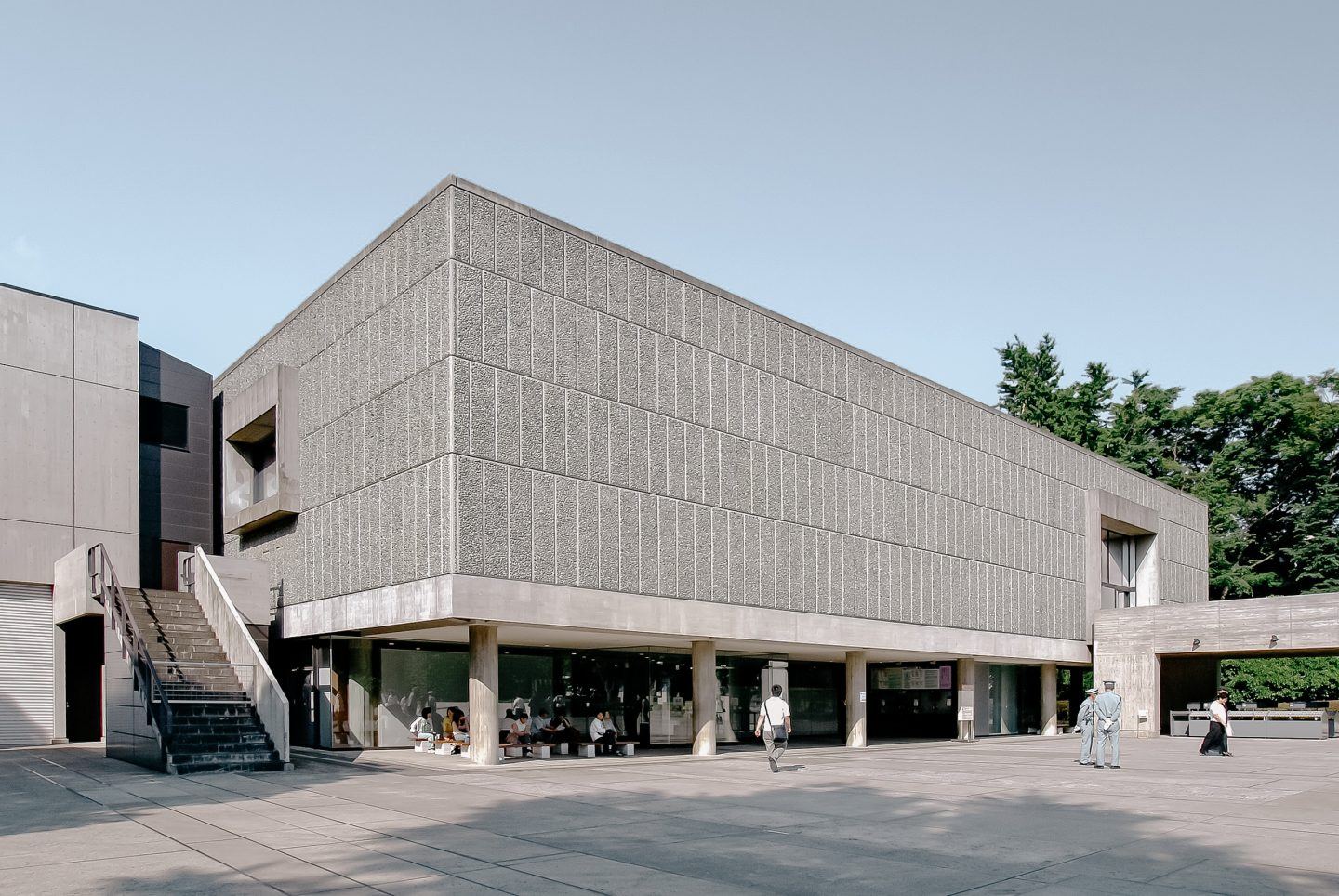
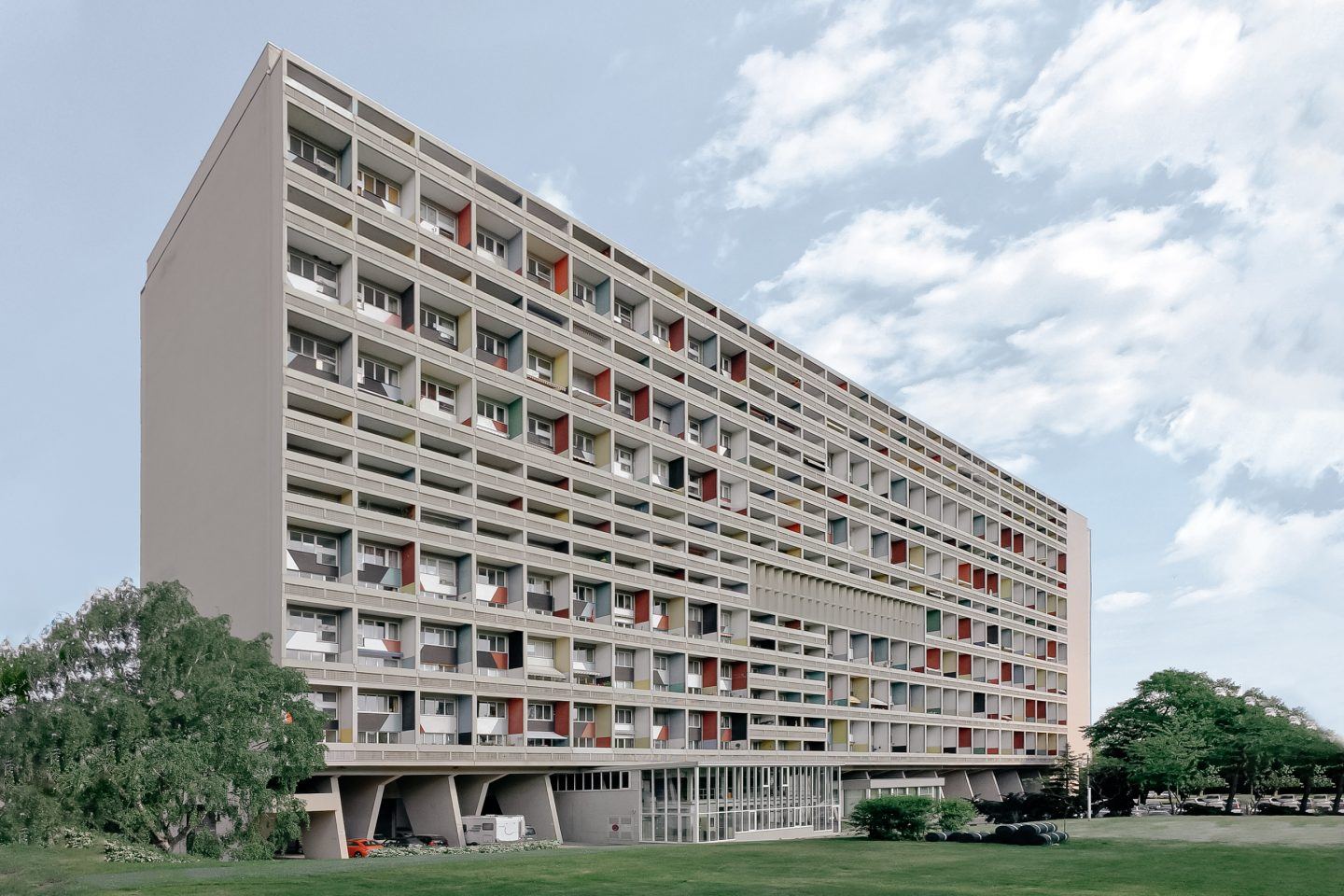
| Unité d’Habitation | Marseille, France, 1952 | Vertical village; Modulor in action; béton brut |
| Notre-Dame du Haut | Ronchamp, France, 1955 | Sculptural concrete; light as material; rule-breaking late style |
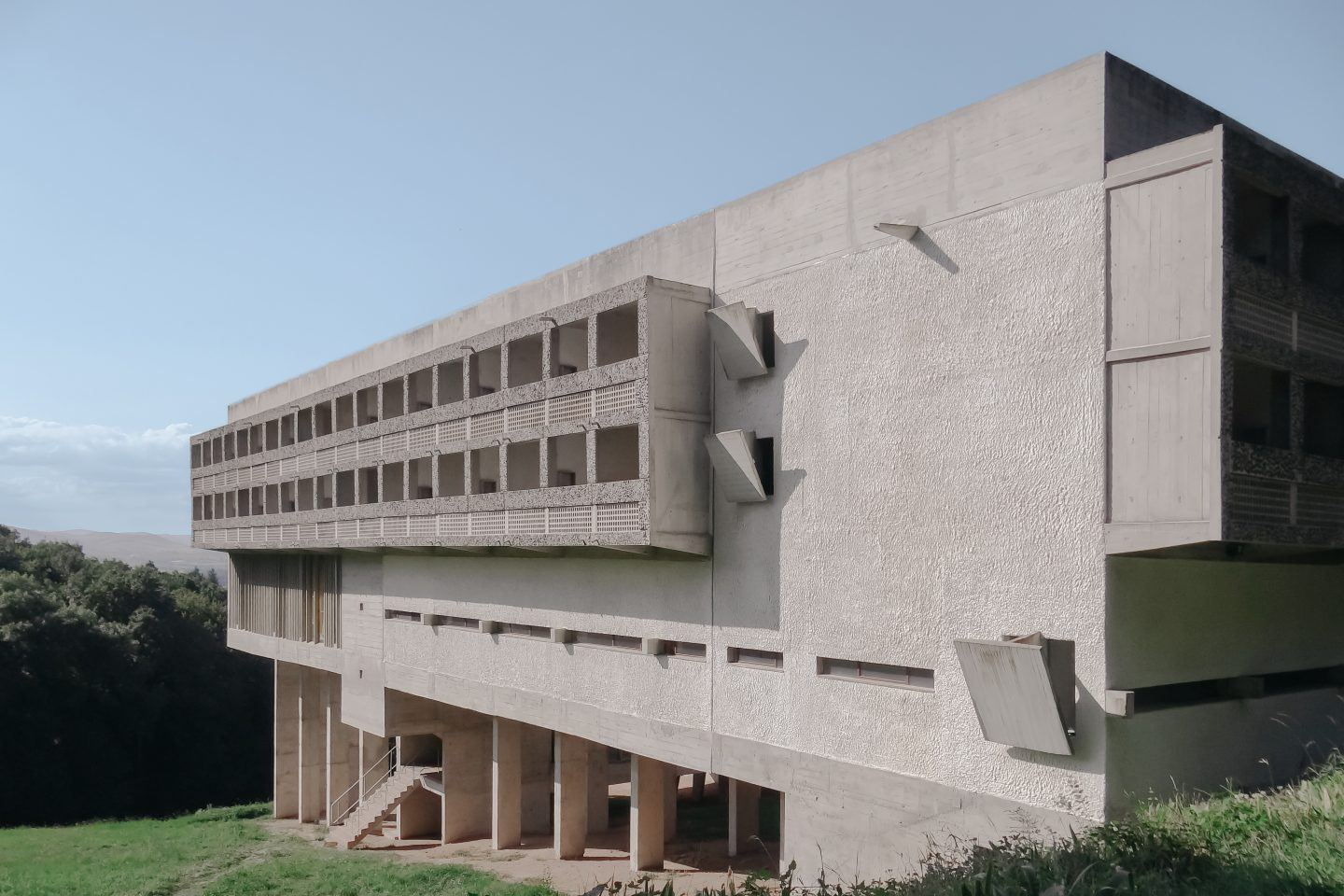
| Sainte Marie de La Tourette | Éveux, France, 1960 | Monastic life expressed in raw concrete and rhythm |
| Capitol Complex | Chandigarh, India, 1950s–60s | Civic monumentality; modernist urbanism at city scale |
Unité d’Habitation: A City Inside a Building
Completed in 1952 in Marseille, the Unité d’Habitation is a 337-unit residential block conceived as a “vertical village.” Twelve storeys of flats sit on massive pilotis, with internal “interior streets” connecting the apartments. The roof carries a running track, a kindergarten, a pool, and a small theatre. A shopping street runs through the middle of the block. The building is built of board-marked concrete, what the French call béton brut, and it is widely considered the foundational work of Brutalist architecture. It is one of the 17 sites included in the UNESCO World Heritage inscription.
Notre-Dame du Haut at Ronchamp: Sculpture in Concrete
By the time he designed the chapel at Ronchamp (completed 1955), Le Corbusier was willing to break almost every rule he had earlier helped establish. There are no horizontal ribbon windows. There is no free plan in any conventional sense. The building is an asymmetric sculptural mass with thick curved walls, a heavy floating roof, and small irregular openings that scatter coloured light across the interior. It is one of the most studied buildings of the 20th century, and the most surprising thing about it is that the same architect who wrote the Five Points designed it.
Chandigarh: A Modernist City
In the 1950s, India’s first prime minister, Jawaharlal Nehru, invited Le Corbusier to design Chandigarh, a new capital city for the states of Punjab and Haryana. Le Corbusier produced the master plan and designed the major civic buildings of the Capitol Complex: the Secretariat, the High Court, and the Legislative Assembly. The city follows a rectilinear grid divided into 47 numbered sectors, each conceived as a self-contained neighbourhood with housing, markets, schools, and parks. The Capitol Complex itself is a study in monumental brutalist civic architecture, with massive concrete forms set in vast open plazas.
Le Corbusier Furniture: The Other Half of the Story
Le Corbusier did not just design buildings. Together with his cousin Pierre Jeanneret and the designer Charlotte Perriand, he produced a small but enduring collection of Le Corbusier furniture in the late 1920s, a body of work that is still in continuous production today.
The four most recognisable pieces, originally shown at the 1929 Salon d’Automne in Paris, are:
- LC1 sling-back chair, with a tubular steel frame and a leather back that pivots on the frame
- LC2 Grand Confort, a cubic club chair with cushions held inside a steel cage
- LC3 Grand Confort, the larger sofa version of the LC2
- LC4 Chaise Longue, the curved tubular-steel lounger that became one of the most photographed objects of 20th-century design
The furniture was conceived as an extension of the architecture. Tubular steel matched the industrial honesty of his buildings, and leather upholstery was selected for durability rather than decoration. The pieces are still manufactured under licence by Cassina, which holds exclusive worldwide production rights for the Le Corbusier collection. For broader context on how interior design evolved alongside the architects who shaped it, see illustrarch’s history of modern interior architecture.
Le Corbusier Architecture and Urbanism: The Controversial Side
Le Corbusier’s architectural ideas were inseparable from his ideas about cities, and this is the area where his legacy becomes most contested. In the 1925 Plan Voisin, he proposed demolishing a large part of central Paris and replacing it with a grid of identical 60-storey cruciform towers set in vast parks. The plan was never built, but its underlying logic (separation of functions, repetitive tower blocks, motor vehicles privileged over pedestrians) influenced postwar urban planning across Europe, the Americas, and the Soviet bloc, often with disappointing social results.
His 1933 Ville Radieuse (Radiant City) extended the same principles into a fully theoretical city of strict zoning, high-rise housing, and elevated highways. Many of the failed mass-housing estates of the 1960s and 1970s drew, directly or indirectly, on these schemes.
⚠️ Common Mistake to Avoid
It is tempting to dismiss Le Corbusier’s urbanism as a single coherent failure. The actual record is more mixed. The Unité d’Habitation works as a building because it was never just one tower in isolation; it has shops, a school, and roof amenities built into the same structure. The problems came later, when other architects copied the tower form without the social programme that gave it life. Reading Le Corbusier’s plans as ideology rather than as architecture flattens both the ambition and the lessons.
How Did Le Corbusier Influence Modern Architecture?
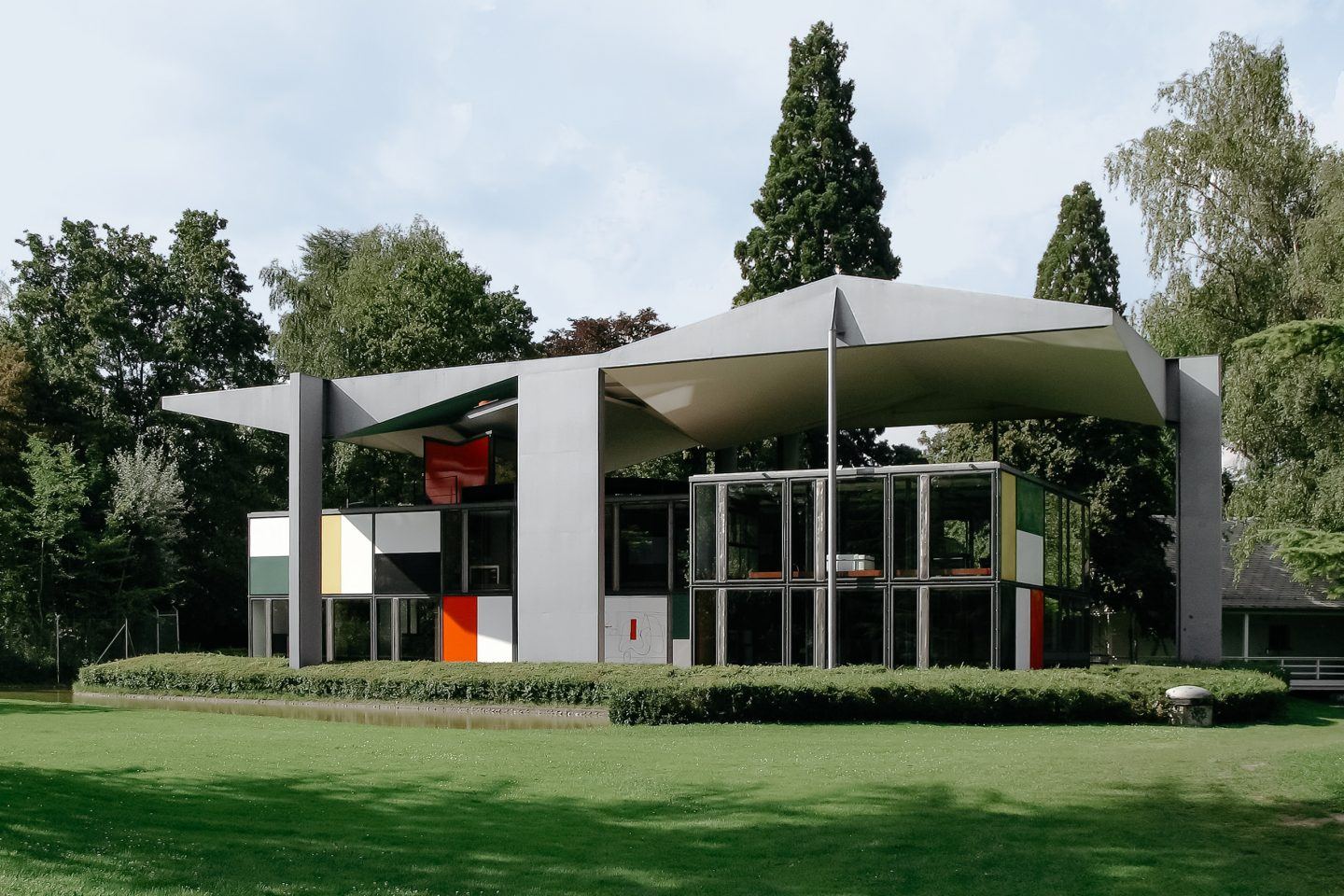
Le Corbusier shaped modern architecture in three distinct ways: through built work that became reference points for generations, through written theory that formalised the language of the Modern Movement, and through direct teaching and collaboration that placed his ideas inside the offices and schools where the next generation trained.
His influence runs through the International Style debate of the 1930s, the brutalist experiments of the 1950s and 1960s, the development of mass housing across postwar Europe, and the way contemporary architects still talk about pilotis, free plans, and roof gardens as if they were neutral building blocks rather than the radical proposals they once were.
For a wider survey of how Le Corbusier sits among the figures who reshaped 20th-century architecture, see illustrarch’s profile of the most influential architects of the 20th century, and the comparison between modern and contemporary architecture for how today’s designers relate to his legacy.
📌 Did You Know?
In 2016, UNESCO inscribed 17 buildings by Le Corbusier across seven countries (France, Switzerland, Germany, Belgium, Argentina, India, and Japan) as a single transnational World Heritage Site titled “The Architectural Work of Le Corbusier, an Outstanding Contribution to the Modern Movement.” It remains one of the few modern-architecture inscriptions on the World Heritage List and the only one organised across so many national borders.
Le Corbusier’s Legacy in 2026 and Beyond
A century after the Five Points were first formulated, the design philosophy of Le Corbusier still shapes the basic vocabulary of architectural education. The pilotis is taught as a standard structural device. The free plan is the default condition of contemporary office and residential design. The roof garden has been rebranded as the green roof and now appears in sustainability briefs across the world. The Modulor’s emphasis on human scale anticipates many of the concerns of today’s evidence-based design.
His controversial side also remains relevant. Every contemporary debate about high-rise public housing, about the separation of pedestrian and vehicular space, and about whether modern architecture serves or alienates its inhabitants traces back, somewhere along the line, to choices that Le Corbusier made or recommended.
That ambivalence is part of why he is still studied. He is the architect every modernist defends and every traditionalist criticises, the one who designed both the most quietly beautiful chapel of the 20th century and some of its most troubling urban schemes. To understand modern architecture, you have to understand Le Corbusier.
✅ Key Takeaways
- Le Corbusier’s design philosophy treats buildings as rational tools calibrated to the human body and built honestly with industrial materials.
- The Five Points of Architecture (pilotis, free plan, free facade, ribbon windows, roof garden) describe a building that floats, opens, and breathes thanks to reinforced concrete.
- Villa Savoye is the clearest built demonstration of the Five Points; the Unité d’Habitation translates them into mass housing.
- The Modulor ties his architecture and furniture to a proportional system based on the human body and the golden ratio.
- Seventeen of his buildings across seven countries are jointly inscribed on the UNESCO World Heritage List as one transnational site.
- His legacy is double-edged: a richly influential architecture combined with urban schemes that remain a cautionary reference for contemporary planners.
Final Thoughts
Le Corbusier was not an architect who tried to please. He argued in print, broke his own rules in mid-career, and produced both luminous works of art and proposals that planners now study as warnings. What endures is the seriousness with which he treated architecture as a discipline. He believed that the way a building meets the ground, frames a view, and houses a person matters, and he spent fifty years arguing that case in concrete, in writing, and in furniture. The famous buildings (Villa Savoye, the Unité, Ronchamp, La Tourette, Chandigarh) are still there, still studied, still teaching the same lessons to anyone willing to look closely at how a wall meets a window or a roof meets the sky.
For more on the architects who built on and reacted against this legacy, the wider story of modernism and its successors is a useful next read.
The most authoritative sources for further study remain the Fondation Le Corbusier in Paris, which holds the architect’s archive and manages three of the UNESCO sites; the UNESCO World Heritage listing for the seventeen buildings inscribed in 2016; the dedicated Le Corbusier World Heritage portal; and ArchDaily’s overview of the seventeen World Heritage projects.



Architecture in Geometry: From Basic Shapes to Complex Forms
Geometry gives architecture its order. This breakdown shows how basic shapes like...
Furkan Sen7 Mins read

Best Portable Monitors for Architects: 2026 Buying Guide
Portable monitors let architects keep a dual-screen workflow on site visits, in...
Furkan Sen7 Mins read
Why Custom Kitchens Are Becoming a Must-Have in Modern Homes
Table of Contents Show Designed for the Reality of NYC LivingMaximizing Every...
 illustrarch Editoral Team2 Mins read
Designing Physical Brand Touchpoints for Architecture Studios
Table of Contents Show Think Beyond the LogoMatch the Object to the...
illustrarch Editoral Team5 Mins read


Leave a comment