

15 Most Influential Architects of the 20th Century and Their Buildings
A deep-dive into the 15 most influential architects of the 20th century, covering their defining buildings, core design philosophies, and the lasting impact each one had on how we design and experience the built world today.
 Sinan Ozen15 March 202612 Mins read242

Table of Contents Show
The most influential architects of the 20th century didn’t just design buildings — they fundamentally rewrote the rules of how we think about space, structure, and the human experience. From Frank Lloyd Wright’s organic Prairie houses to Le Corbusier’s radical urban visions, these 15 figures shaped everything that followed them, including the skylines we live under today.

Why the 20th Century Was Architecture’s Most Transformative Era
No century before or since packed so much architectural disruption into such a short span of time. Industrialization, two world wars, the rise of steel-and-glass construction, and a global conversation about what cities should look like — all of it converged to create conditions where a handful of visionary designers could permanently alter the trajectory of the built world. The famous architects of the 20th century didn’t operate in a vacuum; they responded to real crises of housing, urbanism, and identity. That urgency is precisely what made their work so consequential.
⚠️ Common Mistake to Avoid
Many students and enthusiasts conflate “modern” with “contemporary” architecture. Modern architecture is a specific historical movement, roughly spanning 1900 to 1970, defined by principles like “form follows function,” material honesty, and the rejection of ornament. Contemporary architecture simply describes what is being built right now. A building can be contemporary without being remotely modern in its philosophy.

The 15 Most Influential Architects of the 20th Century
This list focuses on architects whose ideas — not just their buildings — generated lasting change. Each one sparked schools of thought, trained subsequent generations, or challenged assumptions so thoroughly that the field couldn’t return to what it was before them.
1. Frank Lloyd Wright (1867–1959)
Widely regarded as America’s greatest architect, Wright developed the Prairie Style in the early 1900s, emphasizing horizontal lines, open floor plans, and a deep connection between building and landscape. His concept of “organic architecture” — the idea that a structure should grow naturally from its site and materials — still shapes residential design today. Fallingwater (1939), cantilevered dramatically over a waterfall in rural Pennsylvania, and the Guggenheim Museum in New York (1959) are among the most studied buildings in history. Wright’s influence on modern domestic architecture is difficult to overstate: the open-plan living spaces standard in homes worldwide trace their lineage directly to his work.
🎓 Expert Insight
“The longer I live, the more beautiful life becomes. If you foolishly ignore beauty, you will soon find yourself without it.” — Frank Lloyd Wright
This perspective encapsulates why Wright’s work endures: he treated beauty not as ornamentation but as a structural requirement. His buildings were designed to improve the daily lives of those who inhabited them, a philosophy that continues to inform how architects approach residential and civic design.
2. Le Corbusier (1887–1965)
Born Charles-Édouard Jeanneret in Switzerland, Le Corbusier became arguably the most debated architect of the century — admired and criticized with equal intensity. His “Five Points of Architecture” (pilotis, free floor plan, free facade, horizontal windows, roof garden) and his declaration that “a house is a machine for living in” set the terms of modernist discourse for decades. The Villa Savoye (1929) near Paris remains a pilgrimage site for architecture students worldwide. His later work, including the sculptural concrete chapel at Ronchamp (1954), showed a willingness to break even his own rules. Le Corbusier’s urban plans, however — including his vision to demolish central Paris and replace it with tower blocks — remain a cautionary tale about ideology overriding context.
For a deeper look at how these design philosophies evolved, see illustrarch.com’s overview of architects who changed the course of history and the broader evolution of modern architecture from Bauhaus to Brutalism.

3. Ludwig Mies van der Rohe (1886–1969)
Mies gave the world “less is more” — and the glass skyscraper. As the last director of the Bauhaus before Nazi pressure forced its closure, he carried the modernist project to the United States, where he transformed Chicago’s skyline and the Illinois Institute of Technology campus. The Barcelona Pavilion (1929), reconstructed in 1986, is studied as a near-perfect exercise in spatial flow, material refinement, and structural clarity. His Seagram Building in New York (1958), co-designed with Philip Johnson, defined the corporate tower typology that still dominates city centers globally. Frank Lloyd Wright, who rarely praised other architects, introduced Mies to a Chicago audience in 1938 with the words: “I admire him as an architect, respect and love him as a man.”
📌 Did You Know?
Mies van der Rohe had no formal architectural degree. He learned through apprenticeships, working in the studio of Peter Behrens alongside both Le Corbusier and Walter Gropius during the same period. Three of the century’s most influential architects thus emerged from a single office — a concentration of talent with few parallels in design history.
4. Walter Gropius (1883–1969)
Gropius founded the Bauhaus in Weimar in 1919, creating the most influential design school of the 20th century. The Bauhaus merged fine art, craft, and industrial production under one roof, producing a generation of designers who spread its ideas across Europe and eventually America. As a direct educator and institutional builder, Gropius shaped architecture through the minds he trained as much as through buildings he designed. After emigrating to the United States, he joined the faculty at Harvard’s Graduate School of Design, where he influenced a further generation of American architects. His Fagus Factory (1911–1913), now a UNESCO World Heritage Site, is considered one of the first buildings of modern architecture.

5. Alvar Aalto (1898–1976)
Finland’s greatest architect brought warmth and humanity to modernism at a moment when the movement risked becoming coldly mechanical. Aalto rejected the rigidity of the International Style, incorporating natural materials like wood and brick alongside curved organic forms that responded to the body and to Nordic light. His Paimio Sanatorium (1933) and Villa Mairea (1939) demonstrate a careful attention to how buildings feel from the inside — how light falls, how surfaces respond to touch, how a corridor can encourage movement rather than merely permit it. Aalto’s legacy runs through every architect who has insisted that modernism must serve human experience, not override it.
💡 Pro Tip
When studying the best architects of the 20th century for a design brief or academic essay, resist the temptation to treat them as a uniform “modernist bloc.” Aalto, Wright, and Kahn each pushed back against the more doctrinaire strands of the movement. Tracking those internal debates reveals far more about how architecture actually develops than any single manifesto will.
6. Louis Kahn (1901–1974)
Kahn arrived late to international prominence but became one of the most philosophically rigorous architects in history. His approach — asking what a building “wants to be,” separating “served” from “servant” spaces — gave architects a new vocabulary for thinking about program and structure. The Salk Institute in La Jolla, California (1965), with its axial courtyard open to the Pacific, is regarded as one of the most moving pieces of architecture in the world. Kahn also designed the National Assembly in Dhaka, Bangladesh (completed 1982, after his death), a masterwork of monumental civic architecture that remains deeply relevant to debates about how democratic institutions should be housed.
7. Oscar Niemeyer (1907–2012)
Niemeyer’s career stretched from the 1930s to the 21st century, and he never stopped experimenting. Working closely with Lúcio Costa on the master plan for Brasília — Brazil’s purpose-built capital, inaugurated in 1960 — he produced a collection of civic buildings that fused modernist principles with sensuous, sculptural curves. The National Congress, the Presidential Palace, and the Cathedral of Brasília remain some of the most photographed civic buildings of the 20th century. Brasília itself was designated a UNESCO World Heritage Site in 1987, an almost unheard-of recognition for a city barely three decades old at the time.

8. Philip Johnson (1906–2005)
Few architects had a longer or more contradictory career. Johnson helped introduce European modernism to American audiences through his curatorial work at MoMA in the early 1930s, co-organized the landmark “International Style” exhibition of 1932, and later collaborated with Mies on the Seagram Building. His own Glass House in New Canaan, Connecticut (1949) is a touchstone of residential modernism. In his later decades, Johnson pivoted dramatically toward postmodernism, designing the AT&T Building in New York (now 550 Madison Avenue) with its controversial Chippendale crown. Whether admired or criticized, Johnson was never irrelevant — his moves reliably indicated which way architectural culture was about to turn.
9. Eero Saarinen (1910–1961)
Saarinen died at 51, cutting short a career that had already produced some of the century’s most expressive buildings. The TWA Terminal at JFK Airport (1962), with its swooping concrete vaults evoking a bird in flight, demonstrated that an airport could be an emotionally resonant experience rather than a utilitarian transit shed. The Gateway Arch in St. Louis (1965) remains the tallest arch in the world. Saarinen’s willingness to design each project in a completely different formal language — a practice critics called inconsistency, but supporters called responsiveness — made him a precursor to the pluralism that would define late 20th-century architecture.
🏗️ Real-World Example
TWA Flight Center, JFK Airport (New York, 1962): Designed by Eero Saarinen, the terminal was built entirely from cast-in-place concrete and features two shell-like vaults with a 315-foot span. Closed to air travel in 2001, it was repurposed and reopened in 2019 as the TWA Hotel — a landmark preservation project that transformed a derelict building into a functioning 512-room hotel, demonstrating how architecturally significant 20th-century structures can anchor economic regeneration.
10. I.M. Pei (1917–2019)
Ieoh Ming Pei bridged Eastern and Western design sensibilities with a clarity of form that made his buildings immediately recognizable. The glass Pyramid at the Louvre (1989), initially controversial but now inseparable from Paris’s cultural identity, exemplifies his ability to introduce bold geometry into charged historic contexts. The East Building of the National Gallery of Art in Washington, D.C. (1978) solved an extraordinarily difficult trapezoidal site through a triangulated composition that became a model for museum expansion strategies. Pei received the Pritzker Prize in 1983 and continued practicing into his late nineties.

11. Jørn Utzon (1918–2008)
Utzon’s Sydney Opera House is arguably the most recognized building completed in the second half of the 20th century. Winning an international competition in 1957 as a relatively unknown Danish architect, Utzon proposed a series of shell-like roof forms that pushed the boundaries of what reinforced concrete could achieve. The project’s construction was technically and politically turbulent — Utzon resigned before it was completed in 1973 and never returned to Australia to see the finished building. He received the Pritzker Prize in 2003, with the jury explicitly noting that the Sydney Opera House alone would have justified the award.
12. Robert Venturi (1925–2018)
Venturi’s 1966 book “Complexity and Contradiction in Architecture” was the most influential architectural manifesto since Le Corbusier’s “Towards a New Architecture.” His argument that “less is a bore” (a direct rebuke to Mies) and his celebration of ambiguity, historical reference, and the everyday landscape of Las Vegas opened the door to postmodernism. His Vanna Venturi House (1964), designed for his mother, is a small building that manages to reference classical pediments, traditional domestic scales, and modernist abstraction simultaneously — a feat of compressed meaning that architecture students still unpack today.
13. Tadao Ando (born 1941)
Self-taught and entirely self-directed, Ando developed a signature architectural language centered on exposed board-formed concrete, water, light, and silence. His Church of the Light in Osaka (1989), a small structure dominated by a cross-shaped aperture in the end wall, demonstrates that minimal means can produce maximum emotional intensity. Ando received the Pritzker Prize in 1995. His ongoing practice continues to produce buildings of extraordinary restraint, and his work has been particularly influential in Japan, South Korea, and among architects interested in the intersection of spirituality and materiality.

14. Norman Foster (born 1935)
Foster pioneered high-tech architecture — an approach that celebrates structural systems, building services, and technological precision as aesthetic elements rather than hiding them behind cladding. The Hong Kong and Shanghai Bank (1986) in Hong Kong, at the time the most expensive building ever constructed, suspended its floors from external hangers to create a column-free interior. The Reichstag renovation in Berlin (1999), adding a glass dome accessible to the public above the parliamentary chamber, became a symbol of democratic transparency. Foster received both the Pritzker Prize (1999) and the Stirling Prize multiple times, and his practice Foster + Partners remains one of the world’s most prolific architectural firms.
💡 Pro Tip
When analyzing architects who changed architecture through technology, pay close attention to how they treated building services. Foster, Piano, and Rogers made mechanical systems visible and architecturally expressive — a complete reversal of the modernist convention of concealment. This shift had downstream effects on how engineers and architects collaborate at the earliest stages of design.
15. Renzo Piano (born 1937)
Piano’s career-defining early work, the Centre Georges Pompidou in Paris (1977, co-designed with Richard Rogers), turned a cultural institution inside out — moving structural and mechanical systems to the exterior to free the interior for maximum flexibility. The building was so radical that it divided Paris; it is now one of the most visited cultural buildings in Europe. Piano’s subsequent projects — the Menil Collection in Houston, the Shard in London, the Whitney Museum in New York — show an architect of unusual range, capable of both monumental urban gestures and intimate, light-filled gallery spaces. He received the Pritzker Prize in 1998.
What Made These Architects Truly Influential?
Reviewing this influential architects list reveals a pattern: the designers who changed architecture permanently were rarely those who simply built the biggest or most expensive projects. They were the ones who articulated a coherent idea — about how space should feel, how buildings relate to landscape, how construction technology can generate new forms — and then found ways to test that idea against real conditions. Wright’s organic principles, Mies’s structural refinement, Kahn’s philosophical rigor: each produced not just buildings but frameworks that other architects could work within, challenge, or reject.
Many of the greatest architects of all time on this list were also teachers, writers, or institution-builders. Gropius founded the Bauhaus. Johnson curated the International Style exhibition. Venturi wrote the manifesto that unraveled modernist orthodoxy. Their influence multiplied through the people they trained and the ideas they circulated, far beyond any individual building.

How These Architects Changed Architecture Across the Globe
The famous modern architects listed here operated across vastly different cultural contexts — from Wright’s American Midwest to Niemeyer’s Brazilian tropics, from Aalto’s Nordic forests to Ando’s Japanese cities. Yet they shared a conviction that architecture could be a vehicle for social, cultural, and even political transformation. Gropius believed design education could reshape industrial society. Le Corbusier believed urban planning could eliminate poverty. Utzon believed a public building could give a city its identity.
Not all of those ambitions were realized without cost. Le Corbusier’s housing theories, applied without sensitivity by lesser architects worldwide, contributed to bleak housing estates across Europe and America. The best architects of the 20th century were human: visionary in some dimensions, blind in others. Understanding both sides is essential to learning from them honestly.
For an extended look at modern movements, see also ArchDaily’s modernism archive and the Pritzker Prize laureates list, which tracks the field’s evolving consensus on who has shaped architecture since 1979.
🔢 Quick Numbers
- 14 of the 15 architects on this list have at least one building designated as a UNESCO World Heritage Site or on a national heritage register (UNESCO, 2024)
- The Bauhaus school, founded by Gropius in 1919, produced graduates who went on to lead architecture programs in at least 12 countries (Bauhaus-Archiv Berlin, 2019)
- The Sydney Opera House, designed by Utzon, attracts over 10 million visitors per year and contributes an estimated AUD 775 million annually to the New South Wales economy (Sydney Opera House Trust, 2023)
Famous Architects and Their Buildings: A Quick Reference
The following table provides a fast overview of each architect’s most recognized work and their core contribution to the field.

Key Buildings and Contributions
Each entry below pairs a defining project with the idea it introduced or perfected:
| Architect | Key Building | Core Contribution |
|---|---|---|
| Frank Lloyd Wright | Fallingwater (1939) | Organic architecture, open plan |
| Le Corbusier | Villa Savoye (1929) | Five Points of Architecture |
| Mies van der Rohe | Seagram Building (1958) | Glass skyscraper, minimalism |
| Walter Gropius | Bauhaus Building, Dessau (1926) | Art-craft-industry integration |
| Alvar Aalto | Paimio Sanatorium (1933) | Humanist modernism |
| Louis Kahn | Salk Institute (1965) | Served/servant space theory |
| Oscar Niemeyer | Brasília civic buildings (1960) | Sculptural modernism in concrete |
| Philip Johnson | Glass House (1949) | Postmodern pivot, curatorial influence |
| Eero Saarinen | TWA Terminal (1962) | Expressive structural form |
| I.M. Pei | Louvre Pyramid (1989) | Geometry in historic contexts |
| Jørn Utzon | Sydney Opera House (1973) | Shell structures, civic identity |
| Robert Venturi | Vanna Venturi House (1964) | Postmodern theory, complexity |
| Tadao Ando | Church of the Light (1989) | Minimalism, concrete, spirituality |
| Norman Foster | HSBC HQ, Hong Kong (1986) | High-tech architecture |
| Renzo Piano | Centre Pompidou (1977) | Inside-out services, flexibility |
Who Are the Most Famous Architects in the World Today?
The legacy of these most important architects in history flows directly into contemporary practice. The parametric experimentation of firms like Zaha Hadid Architects owes a debt to both the formal ambitions of Saarinen and the technological sensibility of Foster. The revival of interest in raw materiality — concrete, timber, brick — that characterizes much current work echoes Kahn and Ando. The civic and social questions that Gropius and Le Corbusier grappled with remain unresolved, reappearing in discussions about housing affordability, climate resilience, and the future of cities.
Understanding the 20th century’s most influential architects isn’t an exercise in nostalgia. It’s the fastest route to understanding where architecture is going — and why.
For related reading, explore illustrarch.com’s profiles of architectural masterpieces from around the world, the full history of architecture from ancient times to modern day, and the key differences between modern and contemporary architecture. External deep dives are available at Dezeen’s architect profiles and the Wikipedia architecture overview.
✅ Key Takeaways
- The most influential architects of the 20th century shaped the field through ideas as much as buildings — their theories, schools, and writings extended their reach far beyond individual projects.
- Modern architecture is a specific historical movement defined by principles like “form follows function” and material honesty; it is not synonymous with any building constructed recently.
- Many of the century’s greatest architects were also educators: Gropius at the Bauhaus and Harvard, Mies at IIT, Kahn at Yale and Penn. Institutional influence multiplied their individual impact.
- The limitations of 20th-century modernism — particularly its failures in social housing and urban planning — are as instructive as its successes for architects working today.
- The Pritzker Architecture Prize, established in 1979, provides a continuously updated record of global architectural leadership and is a useful reference for tracking the field’s evolving canon.
- architects who changed architecture
- best architects of the 20th century
- famous architects 20th century
- famous architects and their buildings
- famous modern architects
- greatest architects of all time
- influential architects list
- most important architects in history
- most influential architects
- who are the most famous architects in the world







Futuro House Production Revived in Finland After Decades-Long Hiatus
A Facebook listing for abandoned moulds led to the first new Futuro...
 illustrarch Editoral Team3 Mins read

Building Your Dream Home in NSW: What You Should Know About Montgomery Homes
Montgomery Homes has been building across Sydney, Newcastle, the Hunter, Wollongong and...
illustrarch Editoral Team4 Mins read

Designing a Home Theater: Where Drapery Fits Into the Plan
In a media room the curtains are a performance layer, not decoration....
illustrarch Editoral Team3 Mins read
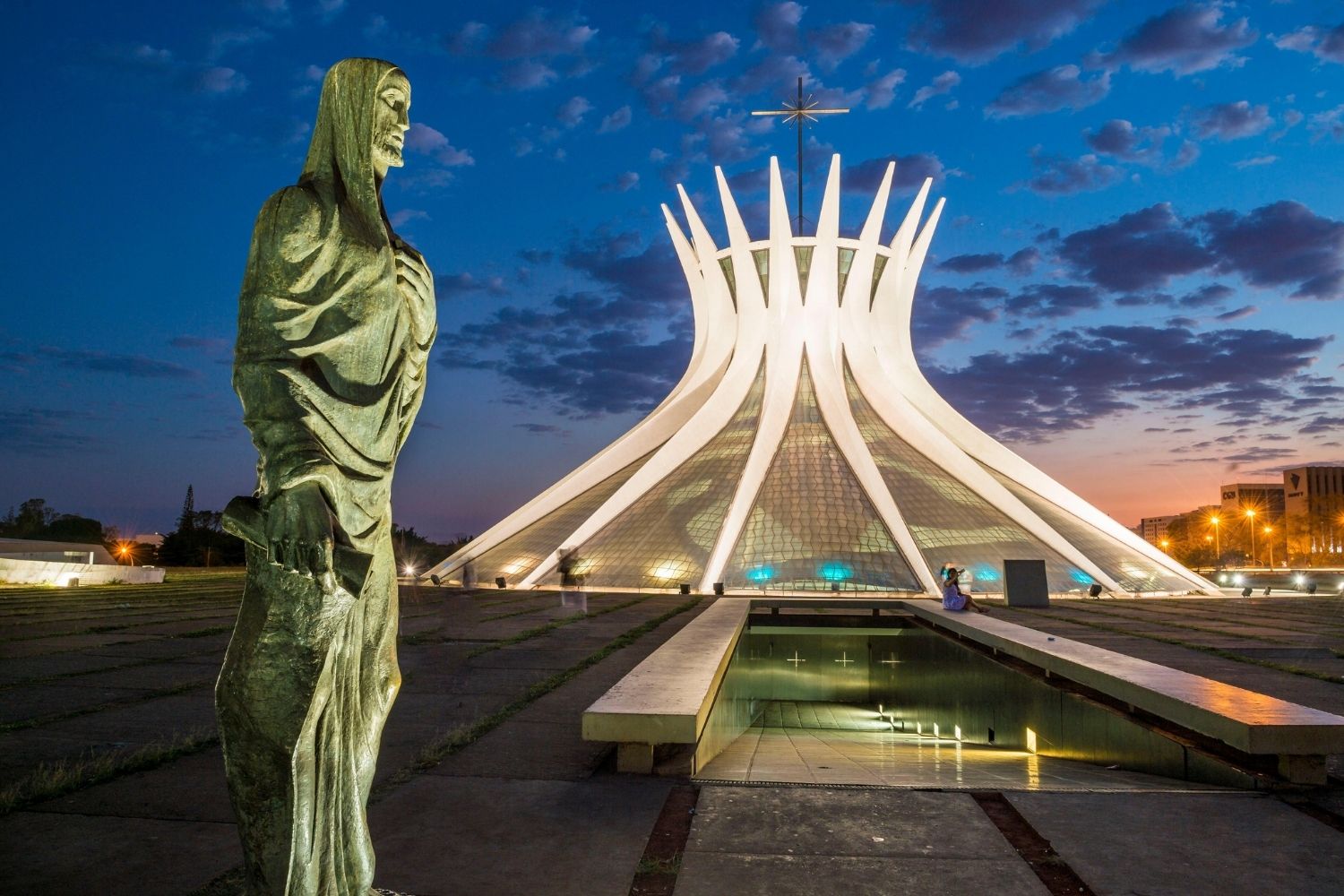
Oscar Niemeyer’s Cathedral of Brasília: The Hyperboloid Concrete Hymn
The Cathedral of Brasília reads as a single gesture, yet it stood...
 Furkan Sen7 Mins read


Leave a comment