

Architecture Portfolio for Internship: 8 Steps to Stand Out and Get Hired
A focused guide to building an architecture portfolio for internship applications. Covers project selection, page layout, design process documentation, software tools, common mistakes, and tips from hiring managers to help architecture students land their first professional opportunity.
 Elif Ayse Sen25 May 202613 Mins read1
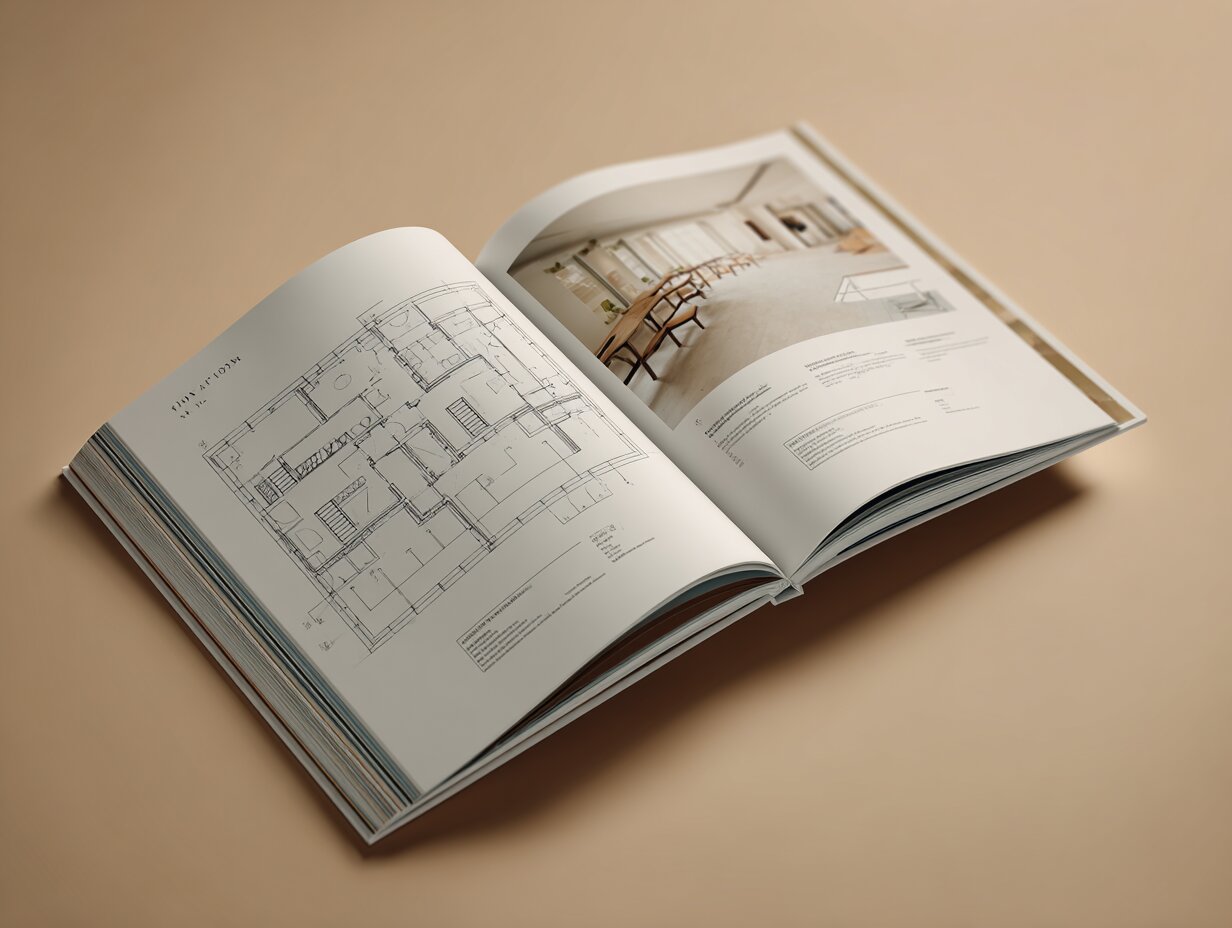
Table of Contents Show
An architecture portfolio for internship applications is a concise, visually consistent document that presents your strongest academic and personal design work to hiring managers at architecture firms. Unlike a professional portfolio built around completed buildings, an internship portfolio focuses on your design thinking, software skills, and creative potential to convince a firm you are ready to contribute from day one.
Landing your first architecture internship often comes down to one thing: your portfolio. Grades, resumes, and cover letters matter, but the portfolio is where hiring managers actually decide whether to invite you for an interview. According to the American Institute of Architects (AIA), firms consistently rank the portfolio as the most important factor when screening intern candidates. At firms like Stantec, a single hiring manager may review over 100 portfolios per internship cycle. You have roughly 30 seconds to make them stop scrolling.
So how do you build a portfolio that earns those extra seconds? This guide walks you through eight practical steps, from selecting the right projects to choosing your layout software and avoiding the mistakes that get portfolios rejected.
What Should an Architecture Portfolio for Internship Include?

An architecture student portfolio for internship should contain three to five of your best projects, a brief personal statement, and your contact information. Each project needs enough visual material to tell a complete story: site analysis, concept diagrams, development sketches, technical drawings, and final renders or photographs. The key is showing not just what you designed, but how you think through a problem from start to finish.
Beyond design projects, include a clean one-page resume at the front of your document. Some students also add a short section at the end for personal creative work like photography, painting, or model-making. These extra pages give firms a sense of your broader visual sensibility, which matters in a field where aesthetics drive hiring decisions.
💡 Pro Tip
Always label each project with your specific role, especially for group studio work. If you were responsible for the facade design and physical model while a teammate handled the site plan, say so clearly. Hiring managers at firms like Arup have noted that unlabeled team projects are one of the most common reasons portfolios get passed over, because the reviewer cannot tell what work is actually yours.
For a deeper look at what elements make up a strong document, read our guide to building a strong architecture portfolio.
How to Select Projects for Your Internship Portfolio

Project selection is the single most important decision you will make. Choose quality over quantity. Three well-documented projects will always outperform eight mediocre ones. Each project you include should demonstrate a different skill or design strength: one might highlight conceptual thinking, another could show technical detailing, and a third could prove your ability to work across scales.
Think about the firm you are applying to. A residential design studio wants to see housing projects, material palettes, and interior spatial sequences. A large commercial practice cares more about your ability to produce technical drawings, work with BIM software, and handle complex building systems. Tailoring your project selection to each application takes extra time, but it signals that you did your research and genuinely care about that firm’s work.
If you only have academic studio projects, that is perfectly fine for an internship portfolio. Focus on projects where you pushed beyond the assignment brief or developed an idea further than what was required. Competition entries, self-initiated design explorations, and volunteer projects for community organizations all count. What matters is the depth of your engagement, not whether the project was built.
⚠️ Common Mistake to Avoid
Many students arrange their projects chronologically, starting with first-year work and ending with their strongest recent project. This buries your best work at the back of the document. Hiring managers at top firms often review only the first three to five pages before making a decision. Lead with your strongest project, not your earliest one.
Telling a Design Story: Process Over Product

One of the biggest differences between a generic portfolio and one that gets interviews is the presence of design process documentation. Firms hiring interns are not looking for perfect renders. They want to see how you move from a vague brief to a resolved design. That means including concept sketches, site analysis diagrams, iterative plan studies, physical model photographs, and development drawings alongside your final presentation images.
For each project, build a visual narrative. Start with the design problem: what was the site, the brief, the constraint? Then show your initial response through early sketches or diagrams. Follow that with how the design evolved through feedback, testing, and revision. End with the final outcome, presented through plans, sections, renders, or photos. This structure mirrors how architects actually work, and it proves that you can handle the iterative, feedback-driven nature of professional practice.
Keep written descriptions short. A two to three sentence caption per spread is enough. The images should carry the story. If you find yourself writing a full paragraph to explain a diagram, that diagram probably needs to be redesigned to communicate more clearly on its own.
🎓 Expert Insight
“One of the biggest mistakes is people gravitate to showing the prettiest images.” — Reinaldo Soto-Santiago, Associate & Talent Lead, Stantec
This observation, shared with the AIA, highlights a common trap for students. After seeing dozens of polished renders, reviewers lose interest. What makes a portfolio memorable is evidence of original thinking and problem-solving, not just visual polish.
For more on structuring your narrative effectively, see our article on the process behind a successful architecture portfolio.
Architecture Portfolio Layout and Design Principles

Your layout is itself a design project. Firms evaluate the visual quality of the portfolio document alongside the architectural work inside it. A clean, consistent grid system, a limited color palette (two to three tones at most), and one or two carefully chosen typefaces will make your work look professional without distracting from the content.
Start by establishing a grid. Most successful student portfolios use a simple column grid with generous margins. This gives your images room to breathe and prevents pages from looking cluttered. Consistency is critical: keep your fonts, margins, and image sizes uniform from the first page to the last. Reviewers notice when a portfolio suddenly shifts layout style halfway through, and it signals carelessness.
White space is your friend. Resist the urge to fill every square centimeter of a spread. A single strong image with breathing room around it communicates more confidence than four images jammed together. Use visual hierarchy to guide the viewer’s eye: larger images for key design moves, smaller images for supporting details, and captions that sit quietly at the edge of the page.
Digital vs. Print Portfolio Formats
Most internship applications today are digital. You will submit a PDF by email or through an online portal. Keep your file size under 10 MB (ideally under 5 MB) so it downloads quickly and does not get blocked by email filters. Some firms receive hundreds of applications, and a file that takes too long to open may never get opened at all.
For in-person interviews, a printed portfolio still makes a strong impression. High-quality paper stock, clean binding, and a tactile cover page show attention to detail. Many students maintain both: a concise 10 to 15 page PDF for initial submissions and a more detailed printed book for face-to-face meetings.
For a detailed comparison, check our guide on architecture portfolio size and format.
Best Software for Creating an Architecture Internship Portfolio

The software you choose for assembling your portfolio affects both the quality of the final document and how efficiently you can update it. Here is a breakdown of the most widely used tools among architecture students and professionals.
Portfolio Layout and Assembly Software
| Software | Best For | Cost | Learning Curve |
|---|---|---|---|
| Adobe InDesign | Industry-standard layout with precise typography and grid control | Paid (Creative Cloud subscription) | Moderate |
| Figma | Free collaborative layout design with modern interface | Free tier available | Low to moderate |
| Canva | Quick portfolio assembly with pre-built templates | Free tier available | Low |
| Adobe Illustrator | Vector diagrams, drawings, and single-page compositions | Paid (Creative Cloud subscription) | Moderate to high |
| Adobe Photoshop | Image editing, render post-processing, and visual enhancement | Paid (Creative Cloud subscription) | Moderate |
Adobe InDesign remains the go-to choice for multi-page portfolio layout. It gives you precise control over grids, typography, and image placement across dozens of pages. If you are serious about producing a professional-quality document, investing time in learning InDesign will pay off throughout your career.
For students on a budget, Figma and Canva offer strong free alternatives. Figma is especially useful if you want to collaborate with classmates or mentors on your layout in real time. Canva works well for quick assembly but offers less typographic precision than InDesign or Figma.
For a full breakdown of software options, read our article on which software to use when creating an architectural portfolio.
💡 Pro Tip
Build a master InDesign file containing all your projects, then export tailored 10 to 15 page PDF versions for each firm you apply to. A residential studio wants to see different work than a healthcare design practice. Customizing your selection for each application shows initiative and takes far less time than building a new portfolio from scratch every time.
How to Make an Architecture Portfolio for Internship Step by Step

If you are starting from scratch, the process can feel overwhelming. Breaking it into clear steps helps you stay organized and produce a polished result without burning out.
First, gather all your raw material. Export your best renders, collect your sketch scans, photograph your physical models with consistent lighting, and organize your technical drawings into folders by project. Having everything in one place before you open your layout software saves hours of back-and-forth later.
Second, write a short project brief for each piece you plan to include. Two to three sentences that explain the site, the design challenge, and your approach. These briefs will become your captions and help you decide which visual materials best support the story.
Third, create a rough page plan. Decide how many spreads each project gets (typically two to four per project for an internship portfolio) and what goes on each page. Sketch this out on paper before touching InDesign.
Fourth, set up your layout template. Define your grid, choose your typefaces, and establish your color palette. Lock these decisions in early so you are not redesigning halfway through.
Fifth, place your images and refine. Crop carefully, adjust image sizes to create visual rhythm, and check that every page serves a clear purpose. Remove anything that does not add value.
Sixth, add your cover page, table of contents, resume, and contact information. Your cover page should be simple: your name, “Architecture Portfolio,” and one signature image that hints at your design style.
Seventh, proofread everything. Typos, inconsistent spacing, and misaligned elements undermine an otherwise strong portfolio. Ask a classmate, professor, or mentor to review it with fresh eyes.
Eighth, export and test. Save your PDF, check the file size, and open it on both a laptop screen and a phone to confirm readability. Send a test email to yourself to make sure it downloads correctly.
For more detail on the full creation process, see our 10 steps to create a successful architectural portfolio.
Portfolio Requirements for Architecture Internship Applications
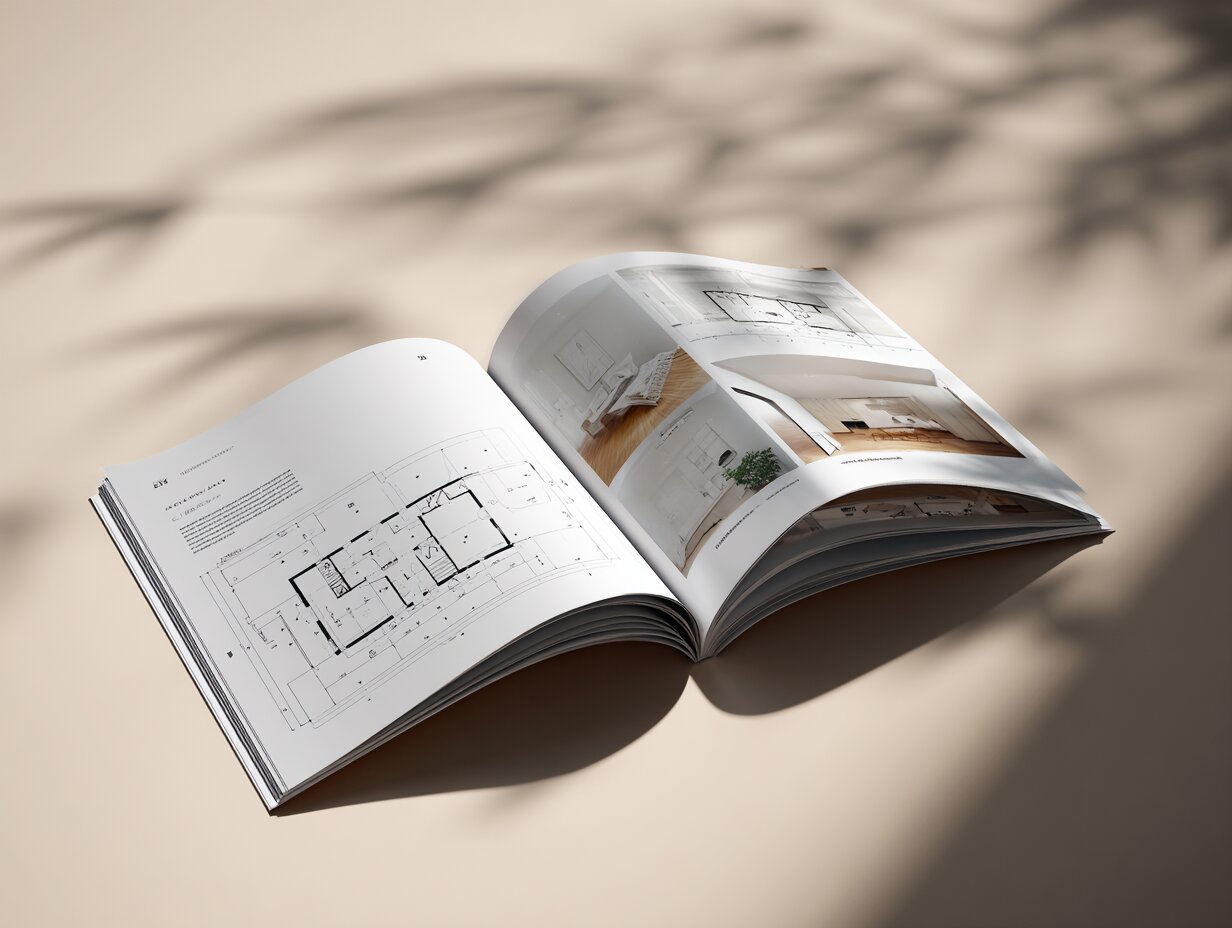
Different firms and internship programs have different portfolio requirements. Before submitting, always check the application instructions carefully. Some firms specify page limits, file size caps, or required project types. Ignoring these requirements can disqualify your application before anyone even opens the PDF.
General portfolio requirements for architecture internship positions typically include:
- A PDF document between 10 and 20 pages (sometimes as short as 8 pages for initial submissions)
- File size under 10 MB, preferably under 5 MB
- A mix of project types showing range (residential, commercial, conceptual, technical)
- Clear labels for academic vs. professional work, with your role defined for team projects
- Evidence of software proficiency in tools like AutoCAD, Revit, SketchUp, Rhino, or Grasshopper
- Contact information and a short personal statement or biography
Some programs, particularly at larger firms like Gensler, SOM, or HOK, use online application portals where you upload your portfolio alongside a resume and cover letter. Others still accept applications by email. In either case, name your file clearly: “FirstName_LastName_Portfolio_2026.pdf” is far more professional than “portfolio_final_v3_FINAL.pdf.”
📌 Did You Know?
At Stantec, a single hiring manager reviews over 100 portfolios per internship cycle, and the firm may hire upward of 600 interns across all disciplines in a given year (AIA, 2025). With that volume of applications, a portfolio that is easy to open, quick to scan, and clearly organized has a significant advantage over one that requires effort just to access.
Tailoring Your Portfolio for Different Firms
A one-size-fits-all portfolio rarely performs as well as a targeted one. Before you submit, spend 30 minutes researching the firm. Look at their recent projects on their website and on platforms like ArchDaily or Dezeen. Read their “About” page to understand their design philosophy. Check if they specialize in a particular building type or approach.
Then adjust your portfolio accordingly. If the firm is known for parametric design and digital fabrication, lead with projects that show your computational skills. If they focus on adaptive reuse and heritage, foreground any project where you worked with existing structures or site context. You do not need to rebuild your portfolio for every application. Simply reorder your projects and swap one or two pieces to align with the firm’s focus.
Your cover letter should connect directly to your portfolio. Reference a specific project the firm completed and explain why it resonates with your own design interests. This level of specificity tells the hiring manager that your application is intentional, not mass-produced.
For practical advice on the application process itself, check out our architecture internship application tips.
Common Mistakes in Architecture Internship Portfolios

Certain mistakes appear so frequently in student portfolios that hiring managers can spot them within seconds. Avoiding these will immediately place your portfolio above a large portion of the applicant pool.
The first and most common issue is excessive length. Reviewers at architecture firms typically spend under two minutes on an initial portfolio review. A 40-page document signals a lack of editing judgment. Keep your submission between 10 and 15 pages unless the firm explicitly asks for more.
The second mistake is inconsistent visual quality. If your first three spreads are polished and the remaining pages look rushed or unfinished, the reviewer will question your attention to detail. Every page in your portfolio should meet the same standard of care.
Third, many students fail to explain their contribution to team projects. If you worked in a group of five on a studio project, the reviewer needs to know which drawings, models, or design decisions were yours. Without this clarity, they cannot evaluate your individual ability.
Fourth, oversized file attachments. A 50 MB PDF clogs email inboxes and frustrates reviewers. Compress your images before placing them in your layout, and export at screen resolution (150 DPI is sufficient for digital viewing) rather than print resolution.
Fifth, missing contact information. It sounds basic, but some students submit portfolios without an email address or phone number on any page. Make your contact details visible on the cover page and on the last page.
🎓 Expert Insight
“There’s nothing worse than an impressive image with no context of your role and how you’re involved in it.” — Claudia Tschunko, Leader of Arup Architecture (UK, Middle East, India & Africa)
This feedback, shared in a portfolio review session organized by Bespoke Careers, reinforces why labeling your contribution matters. Clarity about your role is not modesty; it is professionalism that reviewers actively look for.
Building Your Online Presence Alongside Your Portfolio
A strong PDF portfolio is essential, but pairing it with an online presence extends your reach. Platforms like Behance and Issuu let you publish your portfolio for free, making it accessible to any firm that searches for candidates online. Some students build personal websites using Squarespace, Webflow, or WordPress, which gives them full control over presentation and branding.
An online portfolio also lets you include content that does not fit in a PDF: embedded videos of physical models, animated walkthroughs, or interactive diagrams. These additions can set you apart, especially when applying to digitally oriented firms.
Make sure your online portfolio loads fast on mobile devices. Many hiring managers will open your link on a phone during a commute or between meetings. If it takes more than a few seconds to load or requires pinching to zoom, you have lost them.
For inspiration, browse our collection of 10 best architecture portfolio examples by students and young architects.
How to Prepare Your Portfolio for the Interview
Getting an interview invitation means your portfolio worked. Now you need to present it in person (or on screen) and walk the interviewer through your work. Prepare a shorter “presentation version” of your portfolio, around 10 to 12 pages, that you can discuss in 10 to 15 minutes without rushing.
Practice narrating each project. Explain the brief, your approach, the key design decisions, and what you learned. Be ready for questions like “Why did you choose this material?” or “How did this design respond to the site?” These are not trick questions. They test whether you can articulate your design thinking, which is a skill you will use daily as an intern.
If the interview is virtual, share your screen and walk through the PDF page by page. Make sure your screen share is set to show the portfolio at full size, not as a tiny window. If it is in person, bring a printed copy. Even if the interviewer has already seen your digital submission, holding a physical portfolio creates a more engaging conversation.
For broader guidance on landing an internship, see our guide to landing an architecture internship for students.
✅ Key Takeaways
- Select three to five of your strongest projects and lead with the best one, not the earliest one.
- Show your design process (sketches, diagrams, iterations) alongside final renders to prove how you think, not just what you produce.
- Keep your PDF under 15 pages and 5 MB for initial submissions, and always check firm-specific requirements before sending.
- Label your role clearly on every team project so reviewers can evaluate your individual contribution.
- Tailor your portfolio to each firm by reordering projects and swapping pieces to match their design focus and project types.
FAQ

How many pages should an architecture portfolio for internship be?
Most hiring managers recommend 10 to 15 pages for an internship portfolio. Some firms accept as few as 8 pages for initial screening. The goal is to show your best work concisely. Every page should earn its place, and reviewers typically spend under two minutes on a first pass, so shorter and stronger always beats longer and weaker.
How to make a portfolio for architecture internship with no professional experience?
Focus entirely on your academic studio projects, competition entries, and personal design explorations. Choose projects where you pushed beyond the assignment requirements or developed an original concept. Include hand sketches, development models, and process documentation to show depth of thinking. Firms expect interns to have academic work only, so the absence of professional projects is not a disadvantage at this stage.
What software is best for making an architecture internship portfolio?
Adobe InDesign is the industry standard for multi-page layout and offers the most control over typography, grids, and export quality. Figma is a strong free alternative with real-time collaboration features. Canva works for quick assembly but offers less precision. For image editing and rendering, Adobe Photoshop and Illustrator remain the most widely used tools among architecture students.
Should I send a digital or printed architecture portfolio for internship applications?
For initial applications, send a digital PDF. Most firms accept submissions by email or through online portals, and a well-compressed PDF under 5 MB ensures easy access. Reserve printed portfolios for in-person interviews, where the tactile quality of physical pages can strengthen your presentation and create a more engaging conversation with the interviewer.
How do I tailor my architecture portfolio for different internship applications?
Research each firm’s project types and design approach before submitting. Reorder your projects so the most relevant work appears first, and consider swapping one or two pieces to better match the firm’s focus. You do not need a completely new portfolio for each application. A master file with all your projects allows you to export customized 10 to 15 page versions quickly.
- architectural portfolio for internship
- architecture portfolio for internship
- architecture student portfolio for internship
- how to make a portfolio for architecture internship
- how to make an architecture portfolio for internship
- how to make architectural portfolio for internship
- how to make architecture portfolio for internship
- portfolio for architecture internship
- portfolio requirements for architecture internship






Architectural Portfolio Visibility on Pinterest: A Practical Guide for Architects
Pinterest operates less like a social network and more like a visual...
 Sinan Ozen6 Mins read

10 Things You Need To Do To Create a Successful Architectural Portfolio
Discover 10 essential steps to create a successful architecture portfolio. From cover...
 Furkan Sen9 Mins read
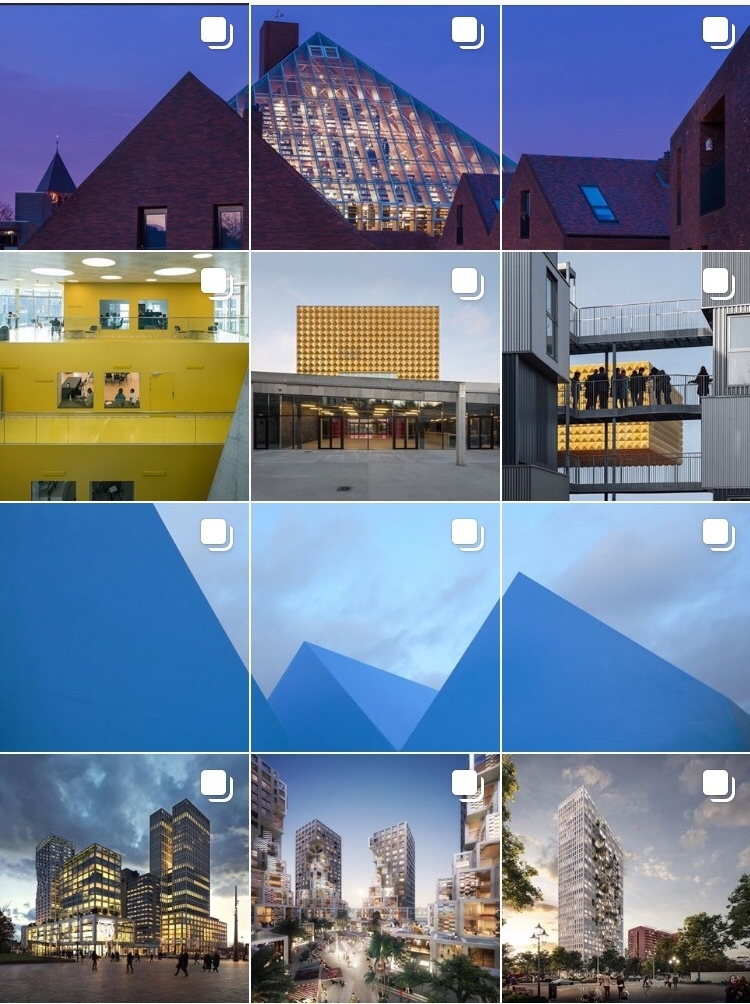
A Guide To Creating an Instagram Profile as an Architecture Portfolio
Discover how to transform your Instagram profile into a professional architecture portfolio....
 Muhammad Abdullatef - Tifa Studio8 Mins read

Architecture Portfolio Tips: A Guide to Creating Yours
Creating an architectural portfolio that stands out requires more than showcasing your...
Elif Ayse Sen13 Mins read


Leave a comment