

10 Best Architecture Portfolio Examples by Students & Young Architects
Discover 10 successful architecture portfolio examples by young architects and architecture students. From minimalist layouts to bold color palettes, these architectural design portfolio examples showcase what makes a portfolio stand out. Learn essential tips on visual consistency, portfolio formats, and design process documentation to create your own compelling architecture student portfolio.
 Muhammad Abdullatef - Tifa Studio17 January 202613 Mins read1.6k

Table of Contents Show
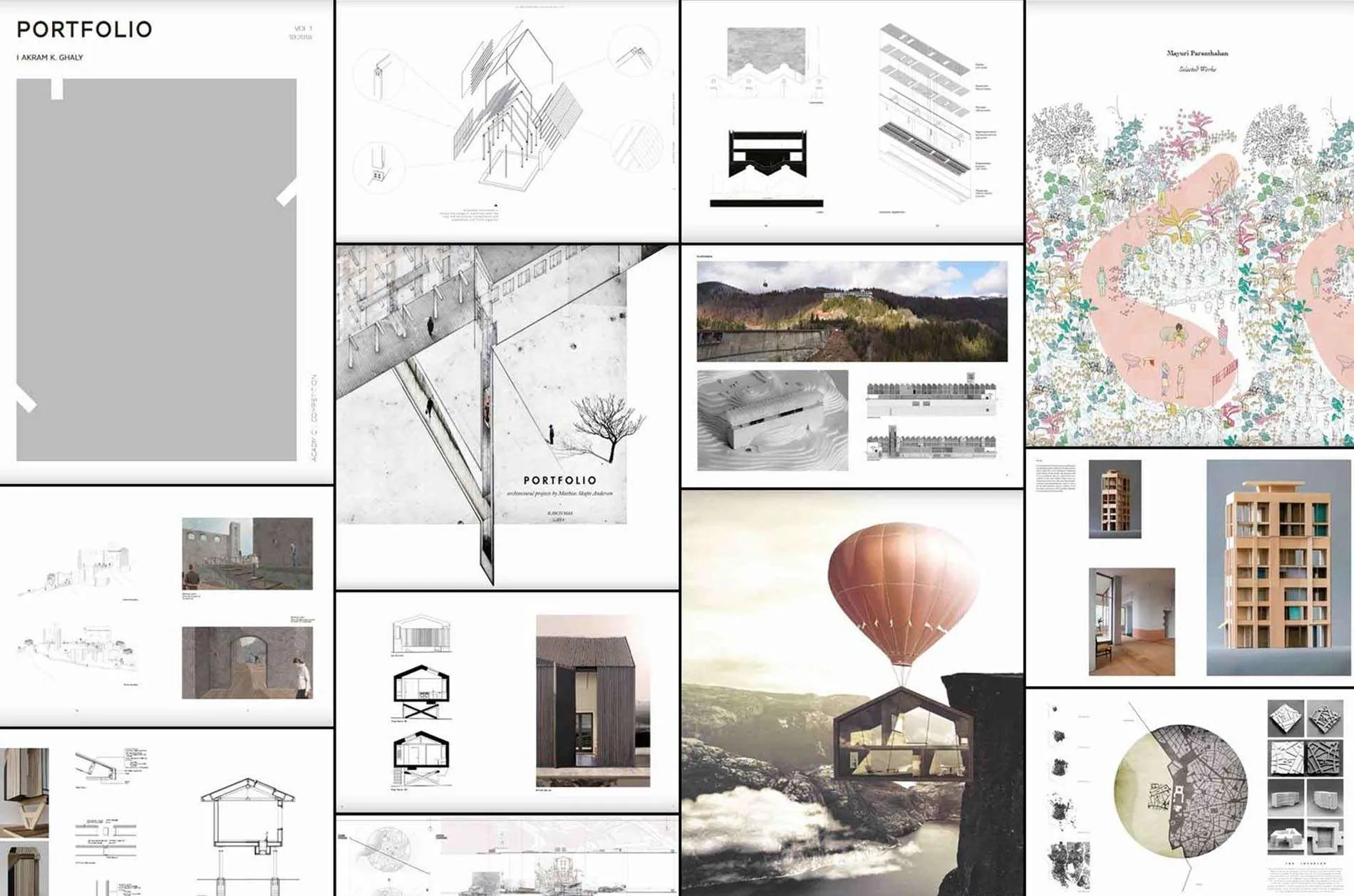
Looking for the best architectural portfolio examples to inspire your own work? Whether you are an architecture student preparing for university applications, a recent graduate entering the job market, or a young professional refining your personal brand, studying successful portfolios is one of the most effective ways to learn what works. A well-crafted architecture portfolio communicates not just your design skills but your creative thinking, visual storytelling ability, and professional identity. It is always good to start our projects with examining the precedents to learn from our colleagues, and as portfolio design is a graphic design project itself, it is important to check the successful examples done by architecture students or young architects to know what makes a portfolio successful. Reviewing architecture portfolio examples before starting your own helps you avoid common mistakes, understand current trends in portfolio design, and develop a clearer sense of your personal style. In this article, we have included 10 examples of successful portfolios made by different architecture students and architects, along with key lessons you can apply to your own work.
Check them thoroughly and take notes, then start your magic!
The best architectural portfolio examples share a common thread: they balance design clarity with personal voice. Each portfolio in this list was selected because it does something specific exceptionally well, whether that is color harmony, diagram communication, rendering style, or typographic boldness. Study them with that lens and you will leave with concrete ideas to apply immediately.
What Makes a Great Architecture Portfolio?
Before diving into the examples, it helps to understand the core elements that separate a strong architectural design portfolio from an average one. According to the American Institute of Architects (AIA), a portfolio should clearly demonstrate your design process, technical proficiency, and creative vision. The best professional architecture portfolio examples share several common traits: a cohesive visual identity, a clear narrative structure, high-quality images, and a thoughtful balance between text and visuals. Whether you are building an undergraduate architecture portfolio or an architecture masters portfolio, these fundamentals remain the same. For tips on how to present your design work effectively, check out our guide on 5 Things for Successful Architectural Presentation Boards, which covers principles that also apply to portfolio layout and design.
💡 Pro Tip
When reviewing other architects’ portfolios for inspiration, keep a running list of specific decisions that catch your eye: a particular color palette, a diagram style, a page margin width. Collecting these micro-observations is far more useful than simply bookmarking portfolios you admire. You end up with a vocabulary you can actually apply to your own layout decisions.
10 Inspiring Architectural Portfolio Examples by Young Architects and Students
The following student architecture portfolio examples showcase a range of styles, techniques, and approaches. Each one offers unique lessons for anyone looking to build or improve their own portfolio.
1. Shohei Yamashita
The portfolio cover grabs your attention from the first glance, which is a really effective move to make the audience more curious about checking your portfolio. The inner design is minimalist and makes the drawings show up clearly. The representation techniques are successful and show the abilities of the portfolio author. This is an excellent architecture portfolio example that demonstrates how a strong first impression sets the tone for the entire document. 
2. Annie Z. Wang
The careful choice of the color palette makes the portfolio look professional and neat. It helps the drawings not to be distracting but instead leading and harmonious. The clean lines and nice renderings reflect an original style of the author. Annie’s work is a standout among architectural design portfolio examples, particularly for how the consistent color scheme ties diverse projects together into a unified visual narrative. 
3. Yifu Kang
The portfolio has such clear diagrams which help the audience understand the concept and the ideas involved very easily. The choice of colors is successful and the harmony between the whole drawings works well. For anyone looking for examples of architecture portfolios that effectively use diagrams and visual storytelling, Yifu Kang’s portfolio is a must-see reference. Learn more about the role of diagrams in architecture in our article on Presentation Board Checklist. 
4. Davic Tonic
The original representation techniques that the author uses make his portfolio stand out of the crowd. The variety of the projects represented show the wide range of experience and skills that the author has. This is a strong professional architecture portfolio example that proves how diverse project types can strengthen your overall presentation. 
5. Ferhang Alipour
The bold fonts and colors used in the portfolio reflect the courageous character of the author, which is genuinely refreshing. Getting out of the comfort zone and trying something different takes real confidence. The author did it and succeeded. This architecture portfolio design example reminds us that personality and boldness can be just as important as technical polish.  In the competitive field of architecture, having a well-crafted portfolio is crucial for showcasing your work and demonstrating your skills. As you create your own standout portfolio, consider utilizing AssignmentBro, a platform that can do any kind of assignment, from research papers to design projects.
6. Laurent Rosset
The style of renderings involved in this portfolio is successful and delivers the message in an efficient way. The distinctive representation used here highlights the skills of the author and makes her portfolio stand out of the crowd. Laurent’s work serves as one of the best architecture portfolios examples for those interested in atmospheric rendering styles. 
7. Justina Namirskaite
The neat drawings and the original representation techniques that the author uses make her portfolio reach its goal in a subtle way. The variety of the projects represented show the creativity and the skills that the author has. This is a solid portfolio example for architecture student applicants who want to highlight creative range without overwhelming the viewer. 
8. Mayuri Paranthahan
Less is more. The drawings show the strong ability of the author to use the software tools mentioned. Mayuri’s portfolio is a great example architecture portfolio that demonstrates how restraint and simplicity can be more impactful than visual excess. 
9. Yujin Cao
The bold use of colors in some parts of the portfolio shows that the author has a strong designer’s eye for color selection. Yujin’s approach works as an inspiring architecture portfolio design example for students who want to use color strategically to create visual hierarchy and emphasis in their work. 
10. Arthur Zakrzewski
The careful use of colors makes the portfolio look professional and orderly; it also helps the drawings to be leading and harmonious rather than distracting. The author’s unique style is evident in the clean lines and refined renderings. Arthur’s work rounds out our list of architectural portfolio examples with a clear approach to visual consistency. 
Key Takeaways from These Architecture Portfolio Examples
After reviewing these 10 architecture student portfolio examples, several common patterns emerge that can guide your own portfolio creation process: Visual consistency is essential. Nearly every successful portfolio on this list maintains a cohesive color palette, consistent typography, and unified layout across all pages. Whether you are creating a portfolio for architecture university applications or a professional job search, this visual consistency communicates professionalism and attention to detail. Let your work breathe. Minimalist layouts with generous white space allow your drawings and renderings to take center stage. Avoid the temptation to fill every inch of the page. As platforms like Issuu and Behance demonstrate, the most viewed architecture portfolios examples tend to favor clean, uncluttered presentations. Diagrams and process matter. Including concept diagrams, site analysis, and design process documentation shows that you can think critically about architecture, not just produce beautiful images. This is particularly important for architecture masters portfolio examples and undergraduate architecture portfolio examples, where admissions committees want to see evidence of design thinking. Show range but maintain focus. The best portfolios include a variety of project types such as residential, commercial, urban design, and landscape while maintaining a coherent personal style. If you are building a landscape architecture portfolio, for instance, make sure your projects reflect both ecological sensitivity and design excellence.
⚠️ Common Mistake to Avoid
Many students include every project they have ever worked on, thinking more content signals more experience. This almost always backfires. Reviewers at architecture firms typically spend fewer than two minutes on an initial portfolio scan, according to hiring feedback published by Bespoke Careers. A portfolio with 3 to 5 deeply presented projects consistently outperforms one with 15 projects shown at surface level.
What Should You Include in an Architecture Student Portfolio?
An architecture student portfolio should include 3 to 5 of your strongest projects, each presented with both final visuals and process documentation. For each project, reviewers want to see concept sketches, site analysis diagrams, development iterations, and final drawings or renderings. Written project descriptions of 50 to 100 words that explain your design decisions add important context that images alone cannot provide. For academic portfolios, admissions committees at most schools also expect to see hand drawings or physical model photographs alongside digital outputs. This combination proves that your design thinking is not dependent on software alone. If you are applying for internships or graduate programs, check out our detailed breakdown of 10 Things You Need to Do to Create a Successful Architectural Portfolio for a full checklist. For professional portfolios submitted with job applications, the Royal Institute of British Architects (RIBA) recommends focusing on your most recent and relevant work, clearly noting your specific role in any collaborative projects. Clients and employers want to know exactly what you contributed, especially in team-based studio work.
📌 Did You Know?
According to a panel review published by Bespoke Careers featuring four hiring professionals who have collectively reviewed thousands of architecture portfolios, the second page of a portfolio (immediately after the cover) is the most critical for retaining reviewer attention. A project summary page listing your key projects, your role, and whether each is academic or professional work dramatically improves how quickly reviewers can orient themselves in your portfolio.
Architecture Portfolio Types: Choosing the Right Format
Not all architectural portfolios serve the same purpose. Understanding the different types can help you tailor your presentation to your audience: Academic portfolios are required for undergraduate and graduate admissions. High school architecture portfolio examples typically include creative work such as sketches, paintings, photography, and models that demonstrate visual aptitude and creative potential. Programs like the USC School of Architecture recommend including 6 to 12 digital images showing diverse creative skills. For undergraduate architecture portfolio examples, the emphasis shifts more toward spatial thinking and design process documentation. Professional portfolios are used for job applications and client presentations. These should highlight completed projects, technical proficiency, and your specific role in collaborative work. Professional architecture portfolio examples tend to be more focused and concise, typically presenting 5 to 8 strong projects from the past few years. For an in-depth look at professional portfolio strategy, read our guide on Architecture Portfolio Tips: A Guide to Creating Yours. Architecture portfolio websites serve as your permanent online presence. Platforms like Squarespace, Format, Wix, and Behance make it easy to create polished architecture portfolio website examples without coding skills. An online portfolio lets you share your work instantly with potential employers, clients, and collaborators anywhere. For more on how digital portfolios have transformed architectural education, read our article on The Evolution of an Architecture Student Portfolio.
How Many Pages Should an Architecture Portfolio Be?
For most applications and job submissions, the ideal architecture portfolio length is 8 to 15 pages. This is the unanimous recommendation from experienced hiring panels, including the RIBA and industry recruiters at firms of all sizes. A focused portfolio of this length signals that you can edit your own work, which is itself a design skill. Anything beyond 20 pages risks losing the reviewer’s attention before they reach your strongest projects. The right page count also depends on your career stage. Here is a quick reference:
| Career Stage | Recommended Pages | Projects to Include |
|---|---|---|
| High school / Pre-university | 6 to 12 pages | Creative work, sketches, models |
| Undergraduate student | 10 to 20 pages | 3 to 5 studio projects with process |
| Graduate / Masters applicant | 12 to 20 pages | 4 to 6 projects, conceptual depth |
| Early-career professional | 10 to 15 pages | 5 to 8 recent projects |
| Senior professional (application) | 8 to 15 pages | Best recent work, curated tightly |
For a full breakdown of page size, format, and dimension choices, see our guide on Architecture Portfolio Size and Format.
Tips for Creating Your Own Architecture Portfolio in 2026
Ready to start building your own portfolio? Here are practical tips drawn from the examples above and current industry best practices: Start with your strongest project. First impressions matter. Place your best work at the beginning to immediately capture your audience’s attention. According to Dezeen, recruiters at top architecture firms often spend fewer than a minute on an initial portfolio review, so leading with impact is critical. Tell a story for each project. Rather than only showing final renders, walk the viewer through your design process from concept to completion. Include site analysis, sketches, diagrams, development models, and final presentations. This approach works well for both architecture student portfolio examples and professional portfolios alike. Choose the right tools. Software like Adobe InDesign, Illustrator, and Photoshop remain the industry standard for portfolio layout. For 3D visualization, tools such as Lumion, V-Ray, Enscape, and Twinmotion can help you create compelling renderings. Explore our curated list of design software recommendations for architecture students. Keep it concise. Most portfolio reviewers recommend keeping your portfolio under 30 pages for print and PDF formats. Focus on quality over quantity. A focused portfolio of 5 to 8 projects is usually more effective than an exhaustive catalog of everything you have ever designed. Get feedback and iterate. Before finalizing your portfolio, seek feedback from professors, mentors, and peers. Fresh eyes can spot issues with layout, readability, and project selection that you might overlook. For guidance on organizing your presentation layouts, explore our detailed guide on How to Organise Your Presentation Board. There are many reasons to learn from an online portfolio. Just like students seek essay writing help and learn from professional academic writers to get scholarships, architecture portfolios serve as a source of inspiration. Browse platforms like Archisoup’s portfolio guide and Behance whenever you need a fresh perspective on your own work.
✅ Key Takeaways
- Visual consistency across pages (color, typography, layout) is the single most common trait in strong architecture portfolios.
- Process documentation (sketches, diagrams, iterations) matters as much as final renders, especially for academic applications.
- Keep your portfolio to 3 to 5 carefully selected projects. Quality of presentation consistently outperforms quantity.
- For most submissions, 8 to 15 pages is the recommended range. Longer portfolios risk losing reviewer attention.
- Your cover page sets the tone. It should immediately communicate your design identity and make the reviewer want to continue.
- Online portfolio platforms like Behance and Issuu give your work global visibility beyond local applications.
Frequently Asked Questions
What should an architecture portfolio include?
An architecture portfolio should include 3 to 5 of your strongest projects, each showing both the final outcome and the design process behind it. For each project, include concept sketches, site analysis, development diagrams, and final drawings or renderings. A short written description explaining your design decisions for each project adds important context. For graduate applications, hand drawings and physical model photographs are also expected.
How long should an architecture portfolio be?
For most job applications and academic submissions, 8 to 15 pages is the recommended length. This applies whether you are submitting a PDF digitally or bringing a printed version to an interview. A tight, well-curated portfolio shows that you can edit your own work, which is itself a valuable design skill. For in-person interviews, you can bring a longer version of 20 to 30 pages to discuss in detail.
What is the best format for an architecture portfolio?
PDF remains the most widely accepted format for submitting architecture portfolios digitally. A landscape orientation at 1920 x 1080 pixels resolution works well for screen viewing, while A4 or US Letter size works for both screen and print. For online presence, publishing your portfolio on platforms like Issuu or building a portfolio website on Behance, Squarespace, or Format gives you additional visibility.
How do I make my architecture portfolio stand out?
The most effective way to stand out is to develop a consistent visual identity that runs through every page. Choose a color palette of two to three colors, a clear typographic hierarchy, and a grid layout that you apply consistently. Beyond aesthetics, portfolios that clearly document the thinking and process behind each project tend to leave a stronger impression than those that only show polished final images.
Can I include group projects in my architecture portfolio?
Yes, group projects are acceptable and even encouraged, especially for students who may have limited individual project work. The key is to clearly describe your specific role and contributions within the team. Reviewers understand that architecture is a collaborative profession, and they want to see that you can work in a team context. Just make sure you do not misrepresent your level of contribution to any project.
Final Thoughts
Exploring architectural portfolio examples by young architects fuels inspiration and shows the range of creative directions available in the field. Whether you are preparing a portfolio for architecture university applications, assembling high school architecture portfolio examples for your first admission, or polishing your professional architecture portfolio for a career move, the principles remain consistent: be authentic, be clear, and let your design work speak for itself. The 10 portfolios featured in this article show that success comes from thoughtful curation, visual consistency, and the confidence to develop a personal style. Coupled with a strategic approach to making money online and smart financial planning, these aspiring architects can carve their path to success while safeguarding their future through a robust savings account. For more portfolio inspiration and resources, explore our Architectural Portfolio article series, check out our expert strategies in Architecture Portfolio Tips: 10+ Expert Strategies, and browse our portfolio and presentation templates to jump-start your design process.
- architect portfolio examples
- architectural portfolio design
- architectural portfolio examples
- architecture portfolio application
- architecture portfolio cover
- architecture portfolio examples
- Architecture Student Portfolio
- portfolio design for architects
- portfolio for architecture students
- portfolio templates for architects


3 Comments




Futuro House Production Revived in Finland After Decades-Long Hiatus
A Facebook listing for abandoned moulds led to the first new Futuro...
 illustrarch Editoral Team3 Mins read
Building Your Dream Home in NSW: What You Should Know About Montgomery Homes
Montgomery Homes has been building across Sydney, Newcastle, the Hunter, Wollongong and...
illustrarch Editoral Team4 Mins read
Designing a Home Theater: Where Drapery Fits Into the Plan
In a media room the curtains are a performance layer, not decoration....
illustrarch Editoral Team3 Mins read

Oscar Niemeyer’s Cathedral of Brasília: The Hyperboloid Concrete Hymn
The Cathedral of Brasília reads as a single gesture, yet it stood...
 Furkan Sen7 Mins read


The article has some good points about looking at other portfolios. I think it’s helpful to see what others have done.
It’s interesting to read about different styles in portfolios. I guess checking examples can help when making your own.
So, apparently, starting with your best project is key. I always thought leading with my doodles was the way to go! Who knew first impressions mattered more than my stick figures? Maybe I’ll try throwing in some actual architecture next time!