

Gothic vs Neoclassical Arches: Exploring Grandeur and Legacy Across the Centuries
Explore the timeless allure of Gothic and Neoclassical arches, from the soaring intricacy of medieval cathedrals to the balanced elegance of Enlightenment-inspired designs. Discover how these architectural symbols of faith, reason, and power reflect the cultural essence of their eras while shaping global design legacies across centuries.
 Sinan Ozen10 February 202612 Mins read470
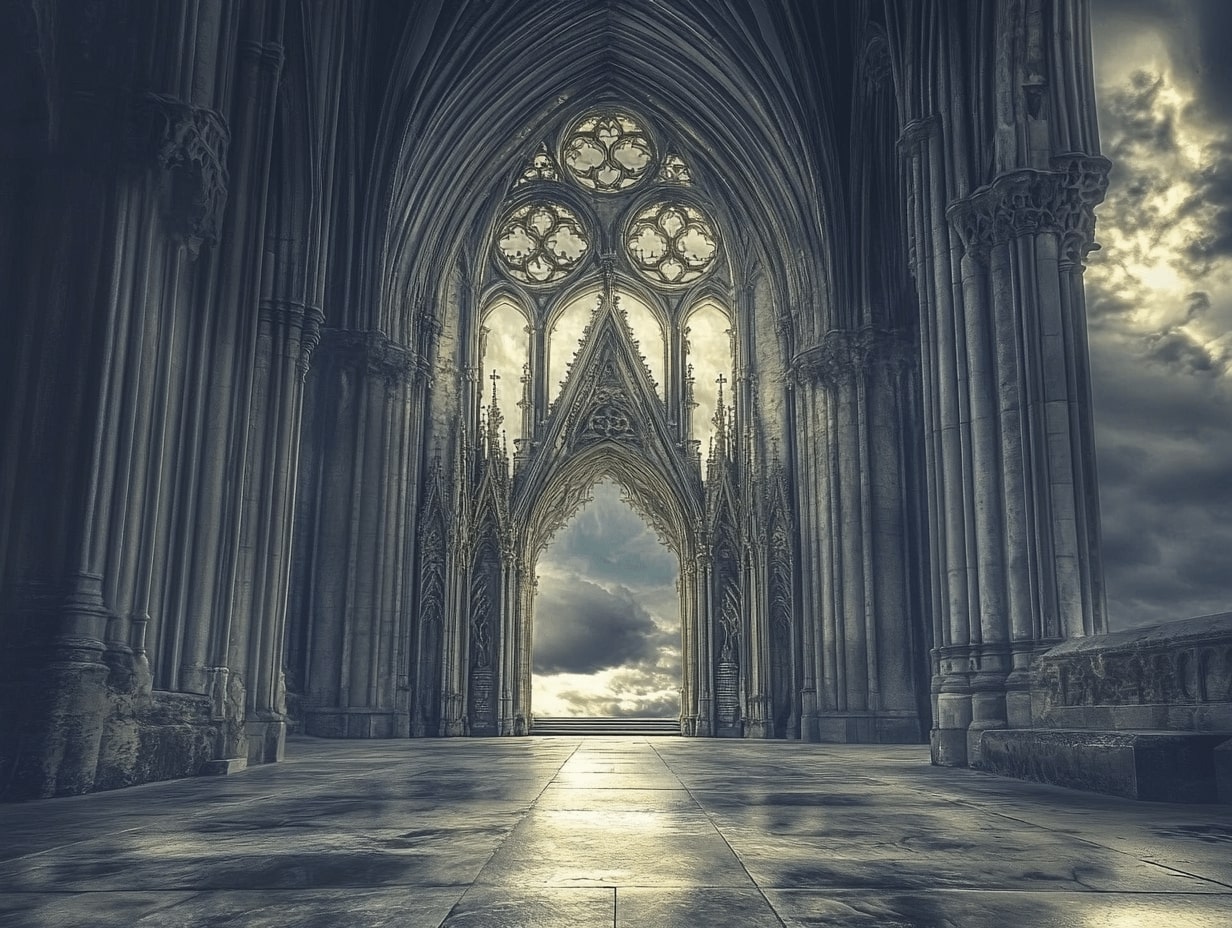
Table of Contents Show
Arches have shaped the way we experience architecture, blending beauty with structural innovation. Among the most iconic styles, Gothic vs Neoclassical arches stand as timeless symbols of their eras, each telling a story of cultural values and artistic ambition. These designs don’t just define buildings, they reflect the spirit of the centuries they emerged from. Understanding the various types of arches in Gothic architecture alongside the classical forms of Neoclassical design reveals how structural ingenuity and aesthetic vision evolved across centuries.
When we compare the soaring, intricate Gothic arches to the balanced, restrained elegance of Neoclassical ones, we uncover more than just aesthetic differences. These styles reveal how societies expressed power, faith, and progress through their architecture. The contrast also connects to broader discussions of renaissance architecture vs gothic design and how later movements like neogothic architecture reinterpreted medieval forms for modern contexts. By exploring their contrasts, we can better understand the grandeur they brought to the world and the legacy they’ve left behind.
Understanding Gothic And Neoclassical Architecture
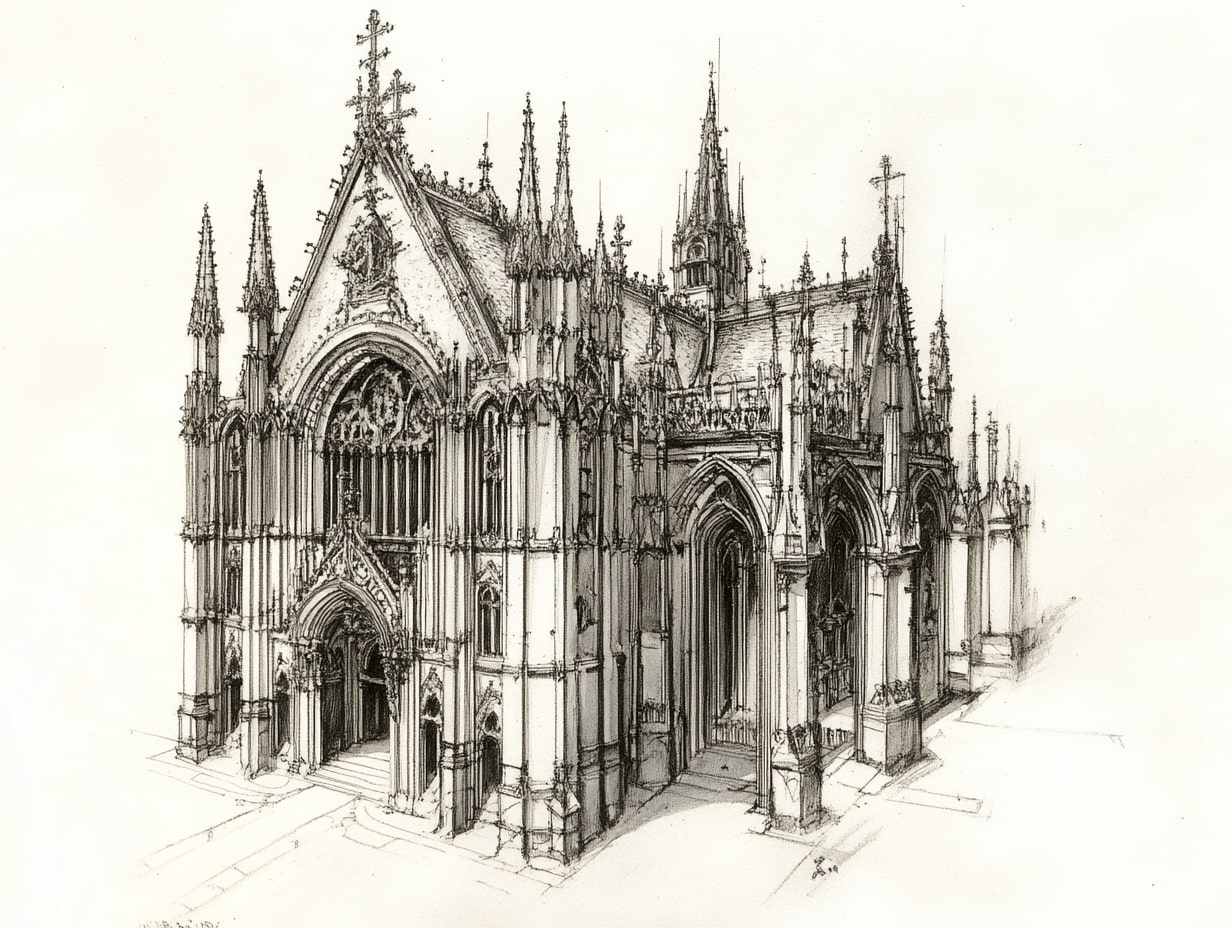
Gothic and Neoclassical architecture showcase contrasting yet equally influential designs. Both styles shaped architectural identities while reflecting distinct historical and cultural contexts. The debate between gothic vs renaissance architecture often extends to Neoclassical comparisons, since Neoclassicism drew from the same Greco-Roman roots that inspired the Renaissance.

Defining Gothic Arches And Their Types
Gothic arches, also called pointed arches, gained prominence during the High and Late Middle Ages. Their defining feature is the pointed apex, which differs from the semicircular form of classical arches. By distributing weight vertically, they enabled the construction of taller structures and expansive interiors. Gothic arches often appear in cathedrals, churches, and civic buildings, where ribbed vaulting frequently accompanies them. Examples of these arches include those in Chartres Cathedral and Notre-Dame de Paris.
The types of arches in gothic architecture are remarkably diverse and evolved throughout the medieval period. The lancet arch, characterized by its narrow, sharply pointed form, dominated Early Gothic buildings and created a dramatic sense of height. The equilateral arch, where the radius equals the span, became the standard form in High Gothic structures like Chartres Cathedral. The ogee arch, with its distinctive S-curved profile, emerged in the Decorated Gothic period and added ornamental flair to windows and doorways. Later still, the Tudor arch, a flattened, four-centred pointed arch, appeared in Late Gothic English architecture, blending structural practicality with decorative refinement. Each of these arch types served both structural and aesthetic purposes, contributing to the evolving visual language of Gothic architecture.
| Arch Type | Period | Century | Shape Description | Primary Use | Notable Example |
|---|---|---|---|---|---|
| Lancet Arch | Early Gothic | 12th-13th c. | Narrow, sharply pointed; arc radius longer than span | Windows and arcades emphasizing height | Salisbury Cathedral, Wells Cathedral |
| Equilateral Arch | High Gothic | 13th-14th c. | Radius equals span; forms equilateral triangle | Standard windows, nave arcades, tracery | Chartres Cathedral, York Minster |
| Ogee Arch | Decorated Gothic | Late 13th-14th c. | S-curved profile; concave flowing into convex | Ornamental doorways and window heads | Ely Cathedral, Bristol Cathedral |
| Tudor Arch | Late Gothic / Perpendicular | 15th-16th c. | Flattened, four-centred pointed arch; wider than tall | Wide doorways and large window openings | King’s College Chapel, Hampton Court Palace |
Elaborate ornamentation and tracery commonly enhance Gothic arches. These decorative elements, influenced by religious symbolism, often combine floral patterns, statues, and stained glass. The intricate designs contribute to the grandeur and spiritual focus characteristic of Gothic architecture.
Characteristics Of Neoclassical Arches
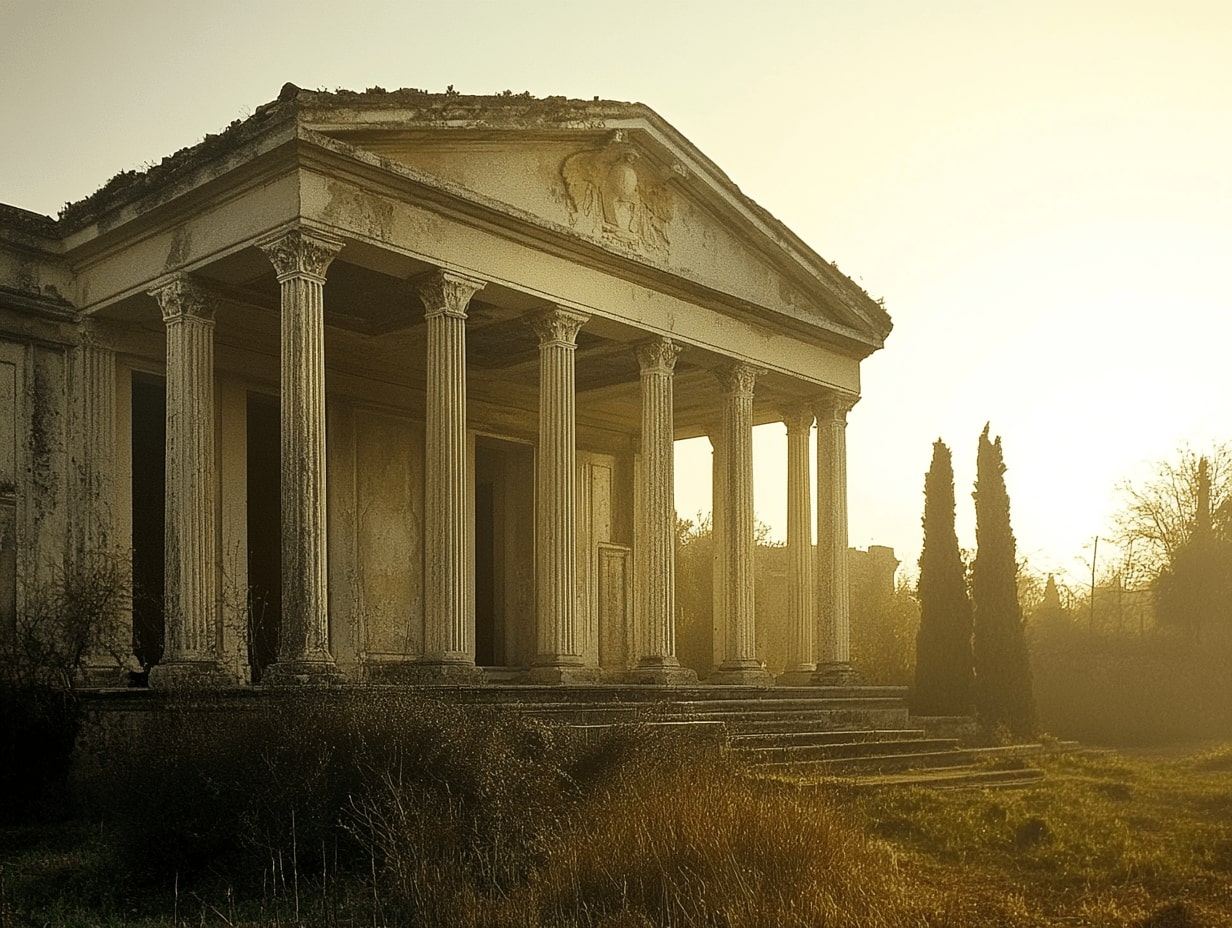
Neoclassical arches, descending from Roman and Greek inspirations, rose to prominence in the 18th and early 19th centuries. Their semicircular form represents harmony and geometric precision. Unlike Gothic arches, they emphasize symmetry and simplicity, reflecting Enlightenment ideals that prized order and rationality. These arches often feature smooth curves adorned with minimalistic moldings or bas-reliefs.
Columns and pilasters frequently frame Neoclassical arches, adding visual balance. Iconic examples include the Arc de Triomphe in Paris and Jefferson’s Monticello. Neoclassical designs celebrate grandeur through understated elegance, favoring proportion over embellishment. This architectural preference aligns with the cultural movement’s focus on classical antiquity as a model of timeless excellence.
Historical Context Of Gothic And Neoclassical Styles
Gothic and Neoclassical styles emerged centuries apart, each responding to unique cultural, religious, and intellectual shifts. These architectural movements reshaped the built environment, symbolizing the values and aspirations of their times.

The Rise Of Gothic Architecture
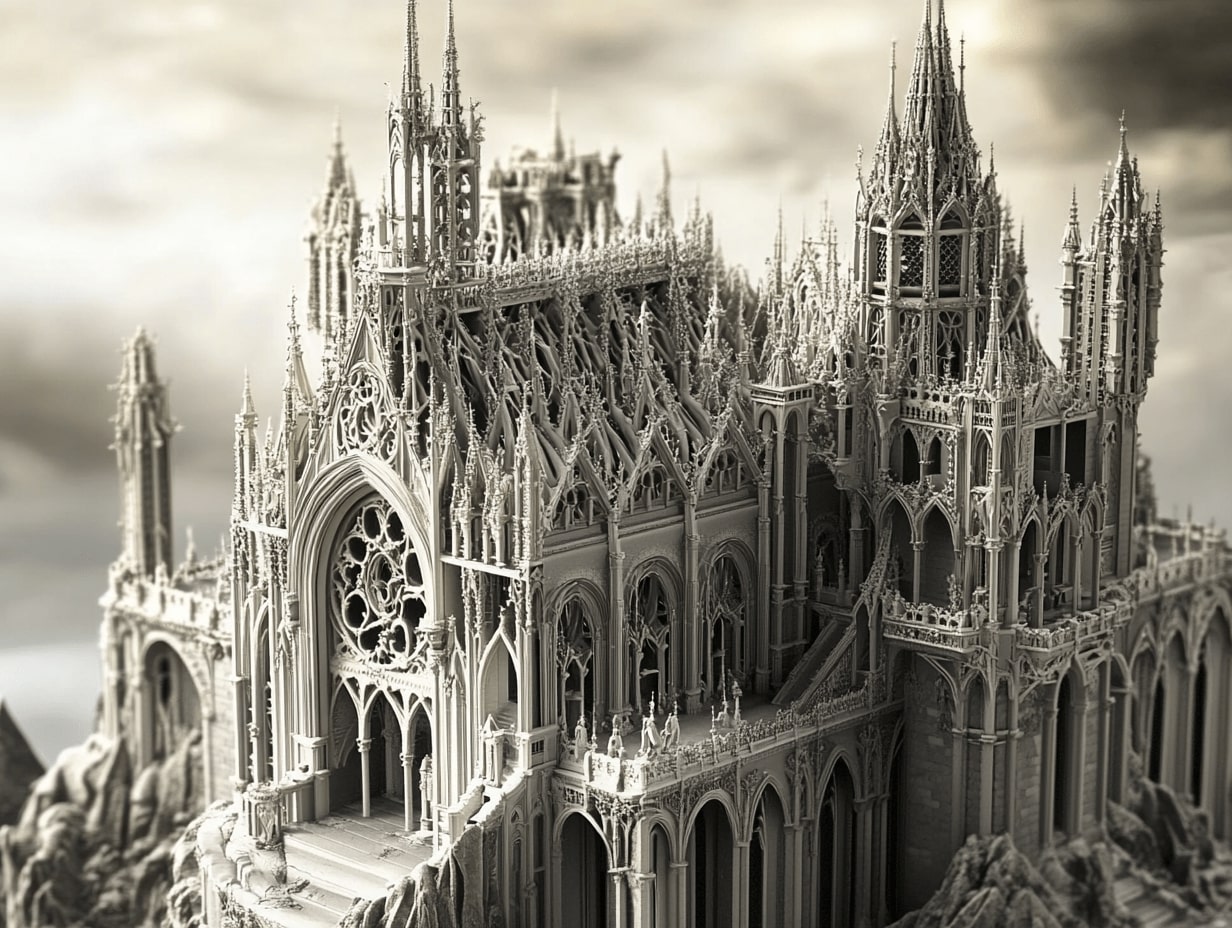
Gothic architecture emerged in 12th-century France, flourishing during the High and Late Middle Ages. The style replaced Romanesque architecture, prioritizing verticality and light. Cathedrals like Notre-Dame de Paris and Chartres Cathedral showcase pointed arches, ribbed vaults, and flying buttresses that allowed taller structures and larger stained-glass windows. This innovation aligned with the era’s religious fervor, framing divine light as a symbol of faith.
Urbanization advanced Gothic designs, as cities expanded and sought monumental structures that reflected civic pride and spiritual devotion. By the 15th century, Gothic architecture had spread across Europe, with regional variations such as England’s Perpendicular Gothic and Italy’s Gothic-Renaissance hybridization.
The Emergence Of Neoclassical Design
Neoclassical architecture gained prominence in the mid-18th century, drawing inspiration from Ancient Greece and Rome. This revival mirrored the Enlightenment’s rationality and emphasis on classical ideals. Structures like the Panthéon in Paris and the United States Capitol exemplify the balanced proportions, geometric forms, and restrained decoration central to the Neoclassical style.
The Grand Tour, undertaken by aristocrats and intellectuals, facilitated the study of classical ruins, fueling demand for Neoclassical designs. Public buildings, theaters, and villas embraced symmetry and order, aligning with Enlightenment values of democracy, reason, and progress. By the 19th century, Neoclassical architecture had influenced global construction, transcending Europe to shape urban and civic identities worldwide.
| Period | Century | Origin | Arch Form | Cultural Driver | Key Landmark |
|---|---|---|---|---|---|
| Gothic | 12th-16th | France | Pointed arch | Religious fervor, spiritual aspiration | Notre-Dame de Paris (1163) |
| Renaissance | 15th-17th | Italy | Semicircular (Roman revival) | Humanism, classical rediscovery | Florence Cathedral dome (1436) |
| Neoclassical | 18th-19th | France / England | Semicircular (refined, purer) | Enlightenment, reason, democracy | Panthéon, Paris (1790) |
| Neo-Gothic Revival | Late 18th to 19th | England | Pointed arch (revived) | Romanticism, national identity | Palace of Westminster (1840s) |
Renaissance Architecture vs Gothic: The Transitional Bridge
Understanding the relationship between renaissance vs gothic architecture is essential for appreciating how Neoclassicism eventually emerged. The Renaissance, beginning in 15th-century Italy, represented a deliberate departure from Gothic forms. Where Gothic architecture reached skyward with pointed arches and elaborate tracery, Renaissance architects like Filippo Brunelleschi returned to the rounded arches, domes, and symmetrical proportions of ancient Rome. Brunelleschi’s dome for Florence Cathedral marked a watershed moment, a Gothic structure crowned with a Renaissance engineering triumph.
The contrast between gothic vs renaissance architecture is visible in their fundamental philosophies. Gothic design expressed collective spiritual aspiration through soaring verticality, while Renaissance architecture celebrated individual human potential through measured harmony and mathematical proportion. Renaissance buildings like St. Peter’s Basilica and the Palazzo Rucellai replaced the pointed arch with semicircular arches, pilasters, and classical orders, elements that Neoclassical architects would later refine further. This evolution from Gothic mysticism through Renaissance humanism to Neoclassical rationalism traces a coherent arc in Western architectural thought.
Key Differences Between Gothic And Neoclassical Arches
Gothic and Neoclassical arches differ significantly in design, materials, and construction techniques, representing the distinct cultural priorities of their eras. These differences define their unique architectural identities.

Structural Design And Aesthetic Approach
Gothic arches feature pointed designs, directing load forces downward and enabling taller structures with large windows. This design prioritizes verticality, creating awe-inspiring interiors often adorned with intricate carvings, stained glass, and religious motifs. Examples include the ornate arches of Chartres Cathedral.
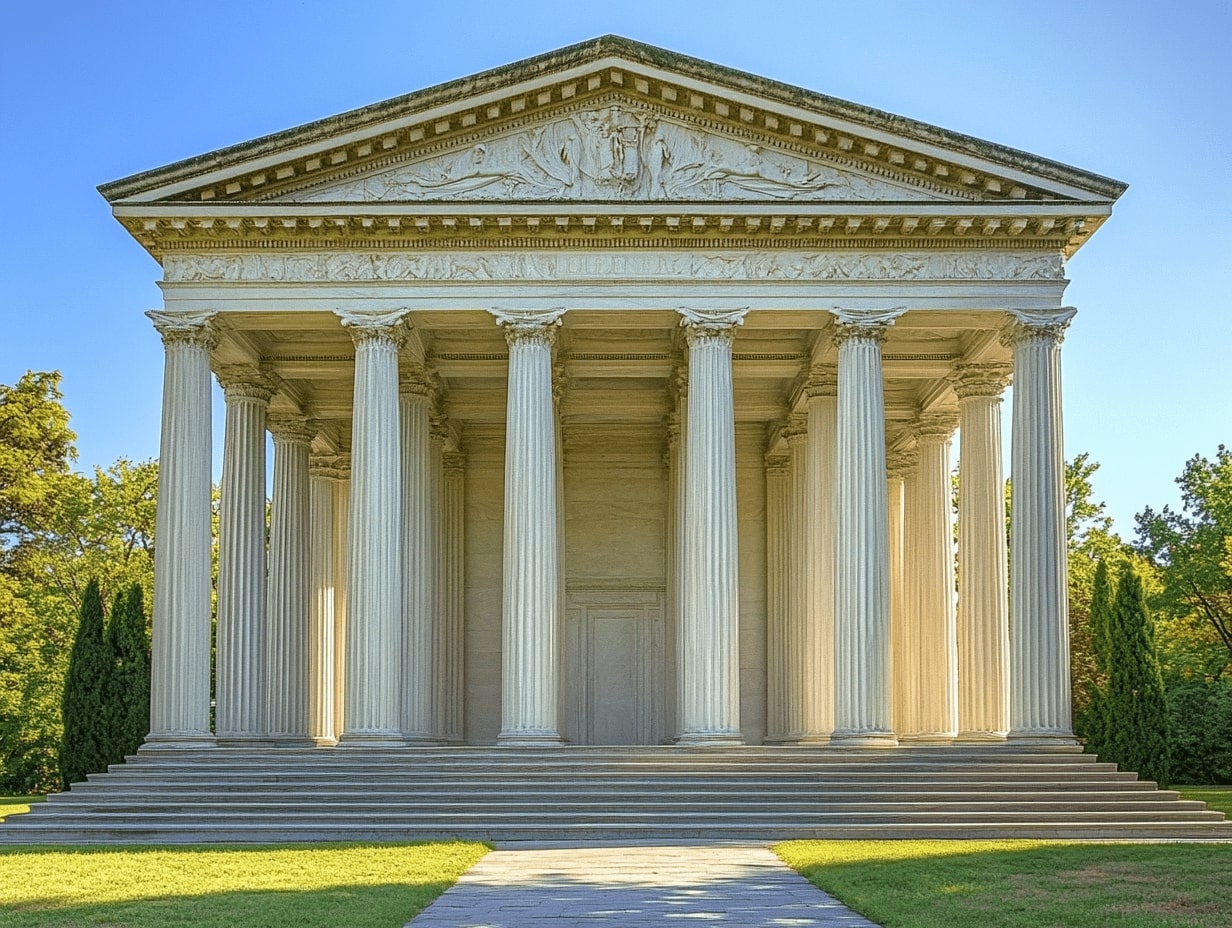
Neoclassical arches adopt semicircular forms, emphasizing balance and symmetry. These arches are simpler and framed by columns or pilasters, embodying Enlightenment ideals of rationality and order. They often appear in monumental structures like the US Capitol, symbolizing authority and clarity.
Materials And Techniques Used
Gothic architecture often uses limestone and sandstone, chosen for their workability and durability. Techniques like ribbed vaulting, flying buttresses, and tracery enhance both structural stability and decorative appeal. These methods allowed builders to achieve towering heights and luminous interiors.
Neoclassical construction favors materials such as marble, granite, and stucco, reflecting an admiration for ancient Roman and Greek engineering. Builders employed simpler jointing techniques and precise geometric planning to achieve clean lines and polished finishes, emphasizing refinement over complexity.
| Feature | Gothic Arches | Neoclassical Arches |
|---|---|---|
| Arch Shape | Pointed apex (two arcs meeting at a sharp angle) | Semicircular (smooth, continuous curve) |
| Period of Prominence | 12th-16th century | 18th-19th century |
| Structural Emphasis | Verticality; directs load forces downward | Horizontal balance; distributes weight evenly outward |
| Aesthetic Philosophy | Intricate ornamentation, spiritual grandeur | Restrained elegance, geometric precision |
| Primary Materials | Limestone, sandstone | Marble, granite, stucco |
| Construction Techniques | Ribbed vaulting, flying buttresses, tracery | Precise geometric planning, simpler jointing |
| Ornamentation | Stained glass, carvings, floral tracery, statues | Minimalistic moldings, bas-reliefs, columns |
| Symbolic Intent | Divine aspiration, spiritual transcendence | Rational order, civic authority, democracy |
| Framing Elements | Clustered columns, pinnacles, spires | Columns, pilasters, pediments |
| Iconic Example | Chartres Cathedral, Notre-Dame de Paris | Arc de Triomphe, United States Capitol |
The Symbolism Of Grandeur In Gothic And Neoclassical Architecture
Grandeur in architecture reflects the philosophical and societal values of its time. Gothic and Neoclassical styles achieve this magnificence through distinct approaches, symbolizing spirituality and rationality, respectively.
Gothic Grandeur: Spiritual And Vertical Emphasis
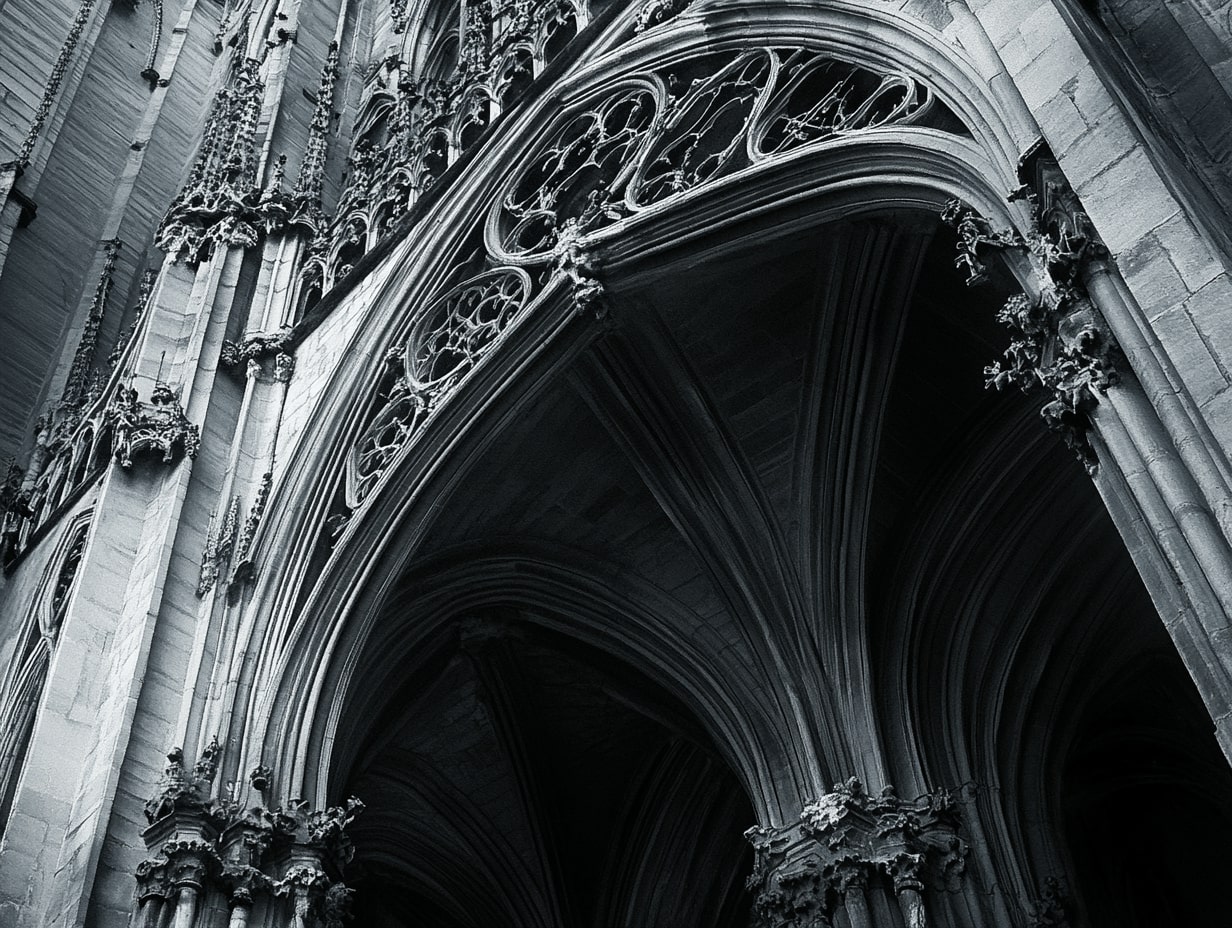
Gothic architecture embodies a sense of spiritual transcendence through its soaring verticality and intricate detailing. The pointed arches prevalent in Gothic designs draw the viewer’s eye upwards, symbolizing an aspiration to connect with the divine. Prominent in cathedrals such as Chartres and Amiens, these structures use architectural elements like ribbed vaults and flying buttresses to achieve unprecedented heights. Stained-glass windows, often depicting biblical narratives, enhance the ethereal ambiance by filtering sunlight into vibrant hues, reinforcing the spiritual sanctity of interior spaces. Every element conveys devotion and the intent to inspire awe, situating Gothic grandeur as a testament to faith and human aspiration. The golden ratio proportions claimed for Notre-Dame Cathedral, though debated, are often cited to show how mathematical precision served spiritual expression in Gothic design.
Neoclassical Grandeur: Balance And Rationality
Neoclassical architecture champions order and clarity, reflecting Enlightenment ideals of reason and democracy. Semicircular arches, set within frameworks of symmetrical columns and pilasters, embody this balance. Iconic landmarks such as the United States Capitol and the Panthéon in Paris highlight precision in geometric proportion and simplicity in ornamentation. The use of durable materials such as marble and granite ensures both stability and elegance, while meticulous symmetry conveys authority and logic. This approach captures the cultural shift toward rational inquiry and civic pride, anchoring Neoclassical grandeur in ideals of measured perfection and enduring influence.
Neo Gothic vs Gothic: Understanding The Revival Movement
One of the most fascinating chapters in architectural history is the distinction between neo gothic vs gothic architecture. While original Gothic architecture emerged organically from medieval building traditions between the 12th and 16th centuries, neogothic architecture, also known as Gothic Revival, was a self-conscious 19th-century movement that deliberately revived medieval forms for new purposes.
The key differences between neo Gothic and original Gothic lie in context, materials, and intent. Medieval Gothic builders invented pointed arches and flying buttresses as structural solutions to the challenge of building taller, lighter churches. Neogothic architects, by contrast, adopted these forms primarily for their aesthetic and symbolic associations with tradition, spirituality, and national identity. Where Gothic masons worked exclusively in stone using centuries-old craft techniques, neogothic builders incorporated industrial-age materials like cast iron and steel alongside traditional stonework. The Gothic Revival movement was also heavily influenced by literary Romanticism and the writings of critics like John Ruskin, who championed medieval craftsmanship as morally superior to industrial production.
Prominent neogothic architecture examples include the Palace of Westminster in London, designed by Charles Barry and Augustus Welby Pugin in the 1840s, and St. Patrick’s Cathedral in New York, designed by James Renwick Jr. These buildings demonstrate how 19th-century architects adapted the Gothic vocabulary of pointed arches, tracery, and vertical emphasis to serve modern civic and religious functions while evoking the grandeur of the medieval past.
| Aspect | Original Gothic | Neo-Gothic (Gothic Revival) |
|---|---|---|
| Time Period | 12th-16th century | Late 18th-19th century |
| Origin of Forms | Evolved organically from Romanesque traditions | Self-conscious revival of medieval styles |
| Primary Intent | Structural innovation for taller, lighter churches | Aesthetic and symbolic evocation of tradition |
| Materials | Exclusively stone (limestone, sandstone) | Stone combined with cast iron, steel, and industrial materials |
| Intellectual Influence | Christian theology, scholasticism | Romanticism, writings of John Ruskin and A.W.N. Pugin |
| Building Types | Cathedrals, churches, monasteries | Parliament buildings, universities, railway stations, churches |
| Construction Method | Traditional stone masonry, decades-long builds | Modern engineering with industrial-age techniques |
| Iconic Example | Notre-Dame de Paris, Chartres Cathedral | Palace of Westminster, St. Patrick’s Cathedral (NYC) |
Influence Of Gothic And Neoclassical Styles Across Centuries
The enduring impact of Gothic and Neoclassical architecture reflects their transformative roles in shaping global design aesthetics. Both styles have been revived and reimagined over centuries, influencing modern architectural practices in distinct ways.
Gothic Revival And Neogothic Architecture In Modern Buildings
Gothic Revival emerged in the late 18th and early 19th centuries, rediscovering the spiritual and ornamental complexity of medieval Gothic architecture. Architects adapted pointed arches, ribbed vaults, and dramatic verticality for projects ranging from churches to public buildings. Notable examples include the Palace of Westminster in London, where soaring spires and intricate tracery evoke Gothic grandeur while serving contemporary functions.
During the 20th century, neogothic architecture features also appeared in higher education institutions. Universities such as Princeton and Yale incorporated pointed arches and ornate detailing to establish gravitas and historical continuity. Even modern skyscrapers, like the Woolworth Building in New York, draw inspiration from Gothic forms, blending historic aesthetics with modern engineering. The distinction between neo gothic vs gothic becomes especially evident in these modern applications, where industrial materials and contemporary engineering replace traditional stone masonry while preserving the visual language of medieval design.
Modern Interpretations Of Neoclassical Design
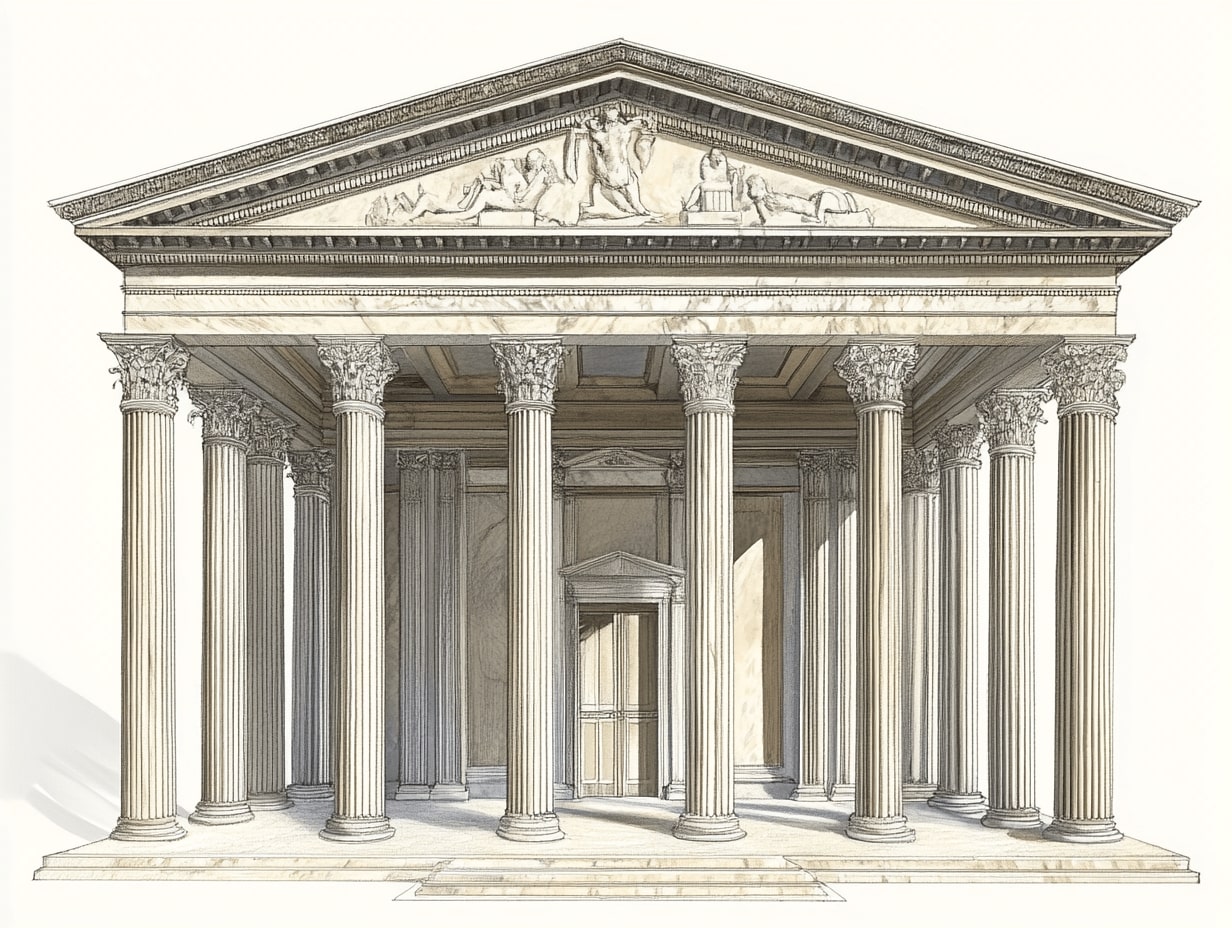
Neoclassical design evolved in modern architecture by integrating its symmetrical elegance with contemporary needs. The clean lines and balanced proportions of semicircular arches remain prominent in government buildings, museums, and memorials. For instance, the Jefferson Memorial in Washington, D.C., aligns classical geometry with national symbolism, emphasizing permanence and democratic ideals.
Minimalist variations of Neoclassical elements emerged in the 20th century, blending simplicity with functionality. Architects maintained key features like pilasters, domes, and symmetrical layouts but used modern materials such as steel and glass. Contemporary projects like the British Museum’s Queen Elizabeth II Great Court illustrate how Neoclassical principles adapt to modern construction while paying homage to their historical origins. For architectural travel enthusiasts, cities like Paris, Rome, and Washington D.C. offer unparalleled opportunities to experience both Gothic and Neoclassical masterpieces in person.
| Landmark | Location | Style | Built / Completed | Key Architectural Features |
|---|---|---|---|---|
| Notre-Dame de Paris | Paris, France | Gothic | 1163-1345 | Flying buttresses, rose windows, pointed arches |
| Chartres Cathedral | Chartres, France | Gothic | 1194-1220 | Equilateral arches, stained glass, ribbed vaults |
| Amiens Cathedral | Amiens, France | Gothic | 1220-1270 | Tallest Gothic nave in France, tracery, sculptural portals |
| Palace of Westminster | London, England | Neo-Gothic | 1840-1876 | Pointed arches, spires, ornamental tracery with iron structure |
| St. Patrick’s Cathedral | New York, USA | Neo-Gothic | 1858-1878 | Pointed arches, twin spires, marble and stone exterior |
| Woolworth Building | New York, USA | Neo-Gothic | 1913 | Gothic-inspired terra cotta cladding, steel frame |
| Panthéon | Paris, France | Neoclassical | 1790 | Corinthian columns, dome, symmetrical facade |
| Arc de Triomphe | Paris, France | Neoclassical | 1836 | Monumental semicircular arch, bas-relief sculptures |
| United States Capitol | Washington D.C., USA | Neoclassical | 1800 (expanded 1850s) | Dome, columns, semicircular arches, marble facade |
| Jefferson Memorial | Washington D.C., USA | Neoclassical | 1943 | Circular colonnade, Roman Pantheon-inspired dome |
Comparing Gothic, Renaissance, And Neoclassical Arch Forms
A comprehensive understanding of Western architectural history requires examining how arch forms evolved across three pivotal periods. The comparison of renaissance architecture vs gothic forms, and their subsequent influence on Neoclassical design, reveals a continuous dialogue between innovation and tradition.
Gothic arches, with their distinctive pointed profiles, solved the structural challenge of spanning wide naves while directing thrust downward. The Renaissance returned to the Roman semicircular arch, valuing its associations with classical harmony and human-scaled proportion. Neoclassical architects then refined these Renaissance-era semicircular forms, stripping away Baroque ornamentation to achieve a purer expression of ancient ideals. This progression from the pointed Gothic arch through Renaissance rounded arches to Neoclassical geometric precision illustrates how each era reinterpreted the arch as both a structural element and a cultural statement.
| Feature | Gothic | Renaissance | Neoclassical |
|---|---|---|---|
| Arch Shape | Pointed (two-centred) | Semicircular (Roman revival) | Semicircular (refined, purer geometry) |
| Structural Role | Directs thrust downward for height | Even load distribution | Even distribution with geometric precision |
| Ornamentation | Highly elaborate (tracery, carvings) | Moderate (classical orders, pilasters) | Minimal (clean moldings, bas-reliefs) |
| Proportional System | Vertical emphasis, height over width | Mathematical harmony, human scale | Strict symmetry, idealized geometry |
| Core Philosophy | Collective spiritual aspiration | Individual human potential (humanism) | Rational order and civic ideals |
| Accompanying Elements | Flying buttresses, ribbed vaults, stained glass | Domes, pilasters, classical orders | Columns, pediments, porticos |
| Example Building | Notre-Dame de Paris | St. Peter’s Basilica, Rome | United States Capitol |
Understanding these connections enriches our appreciation of historic and contemporary buildings alike. Whether examining the evolution of facade design or the structural principles behind monumental arches, these three traditions remain foundational to architectural education and practice worldwide.
Conclusion
Gothic and Neoclassical arches stand as enduring symbols of their respective eras, each showcasing unique design principles, materials, and cultural values. Gothic arches, with their pointed forms and intricate ornamentation, capture the spiritual aspirations and artistic innovation of the Middle Ages. The various types of arches in Gothic architecture, from lancet to ogee to Tudor, demonstrate remarkable structural and aesthetic versatility. Neoclassical arches, with their semicircular symmetry and restrained elegance, reflect Enlightenment ideals of reason, democracy, and timeless order.
Both styles continue to influence modern architecture, blending historical grandeur with contemporary functionality. Gothic Revival and neogothic architecture designs reinterpret medieval complexity, while modern Neoclassical structures adapt balanced aesthetics to current needs. The broader narrative connecting gothic vs renaissance architecture through to Neoclassical design reveals how Western civilization continuously reinterpreted the arch as a symbol of power, faith, and progress. These arches embody not only architectural excellence but also the evolving cultural narratives that continue to shape the built environment today.


5 Comments





Futuro House Production Revived in Finland After Decades-Long Hiatus
A Facebook listing for abandoned moulds led to the first new Futuro...
 illustrarch Editoral Team3 Mins read

Building Your Dream Home in NSW: What You Should Know About Montgomery Homes
Montgomery Homes has been building across Sydney, Newcastle, the Hunter, Wollongong and...
illustrarch Editoral Team4 Mins read

Designing a Home Theater: Where Drapery Fits Into the Plan
In a media room the curtains are a performance layer, not decoration....
illustrarch Editoral Team3 Mins read

Oscar Niemeyer’s Cathedral of Brasília: The Hyperboloid Concrete Hymn
The Cathedral of Brasília reads as a single gesture, yet it stood...
 Furkan Sen7 Mins read


This article talks about Gothic and Neoclassical arches. It explains how they are different and what they represent. I found it interesting to learn about their history.
I found the differences between Gothic and Neoclassical arches interesting. It’s nice to learn how they reflect the values of their time.
The article explains the styles well. I didn’t know about the types of Gothic arches before.
This comparison between Gothic and Neoclassical architecture is helpful. I like how it shows the evolution of design.
I find it hard to believe that Gothic architecture is all about spiritual aspirations. Sure, the pointed arches look impressive, but isn’t it just a way to show off? The article talks about how Gothic styles were a response to urbanization and civic pride, but does that really mean they were purely about faith? Neoclassical arches seem so much more grounded with their symmetry and order. Why do we romanticize the chaos of Gothic when Neoclassical brings a sense of calm?