

7 Affordable Model Making Materials and Where to Find Them
A practical look at seven budget-friendly model making materials for architecture projects. Covers foam board, cardboard, balsa wood, acrylic sheets, basswood, cork, and 3D printing filament, with sourcing tips, cost comparisons, and expert advice to help you build better physical models without overspending.
 Furkan Sen26 May 202610 Mins read246
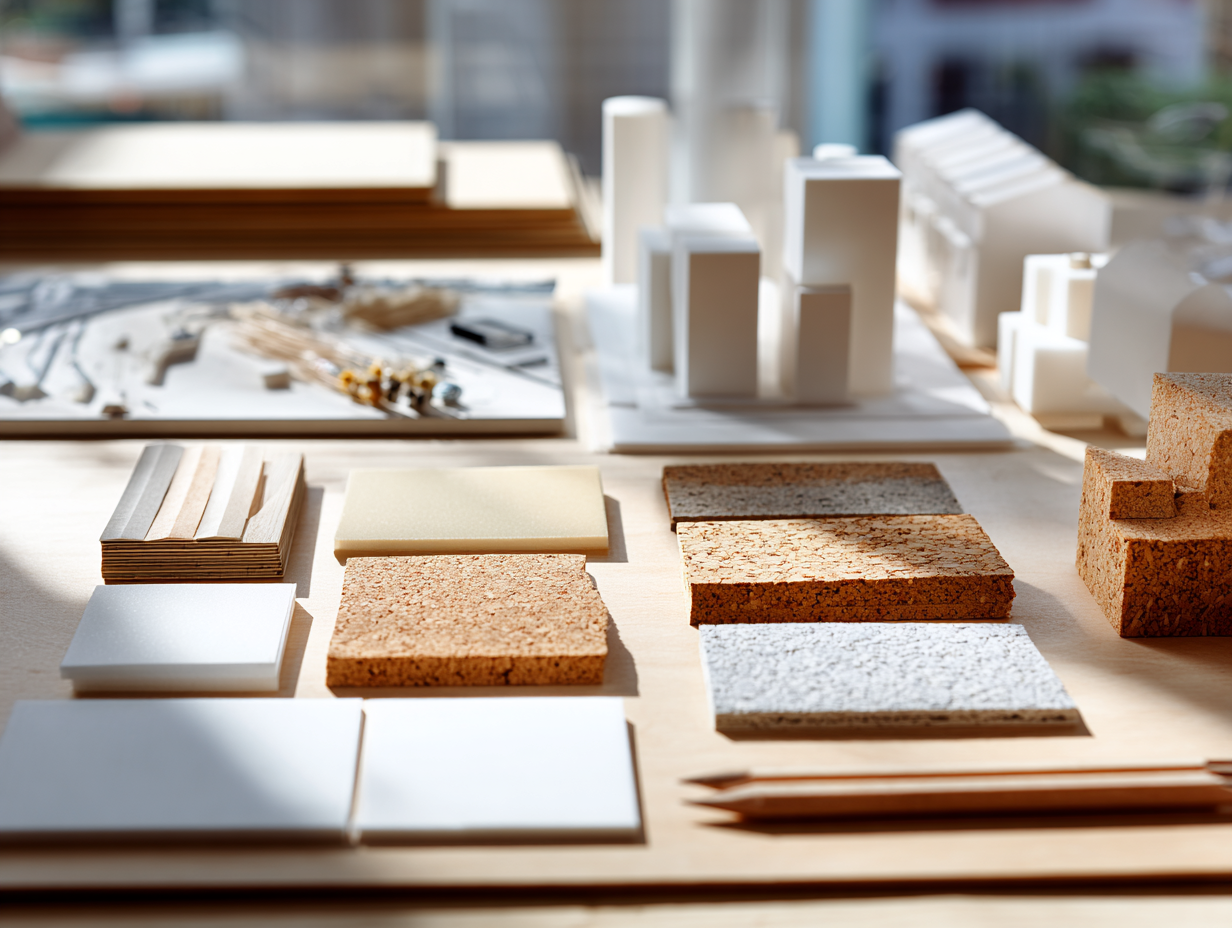
Table of Contents Show
Model making materials are the foundation of every successful architectural model, from early concept studies to polished client presentations. The right material affects scale accuracy, visual quality, and ease of construction. This guide covers seven budget-friendly options, where to buy them, and how to choose the right one for your project.
Physical models remain one of the most effective ways to test spatial relationships, study light behavior, and communicate design intent. But you don’t need expensive specialty supplies to produce a sharp, professional result. The seven materials below are widely available, easy to work with, and affordable enough for studio budgets and professional offices alike. Each one suits different scales, model types, and presentation styles, so understanding their strengths is the first step toward building better architectural model making materials knowledge.
Foam Board: The Go-To Material for Quick Study Models
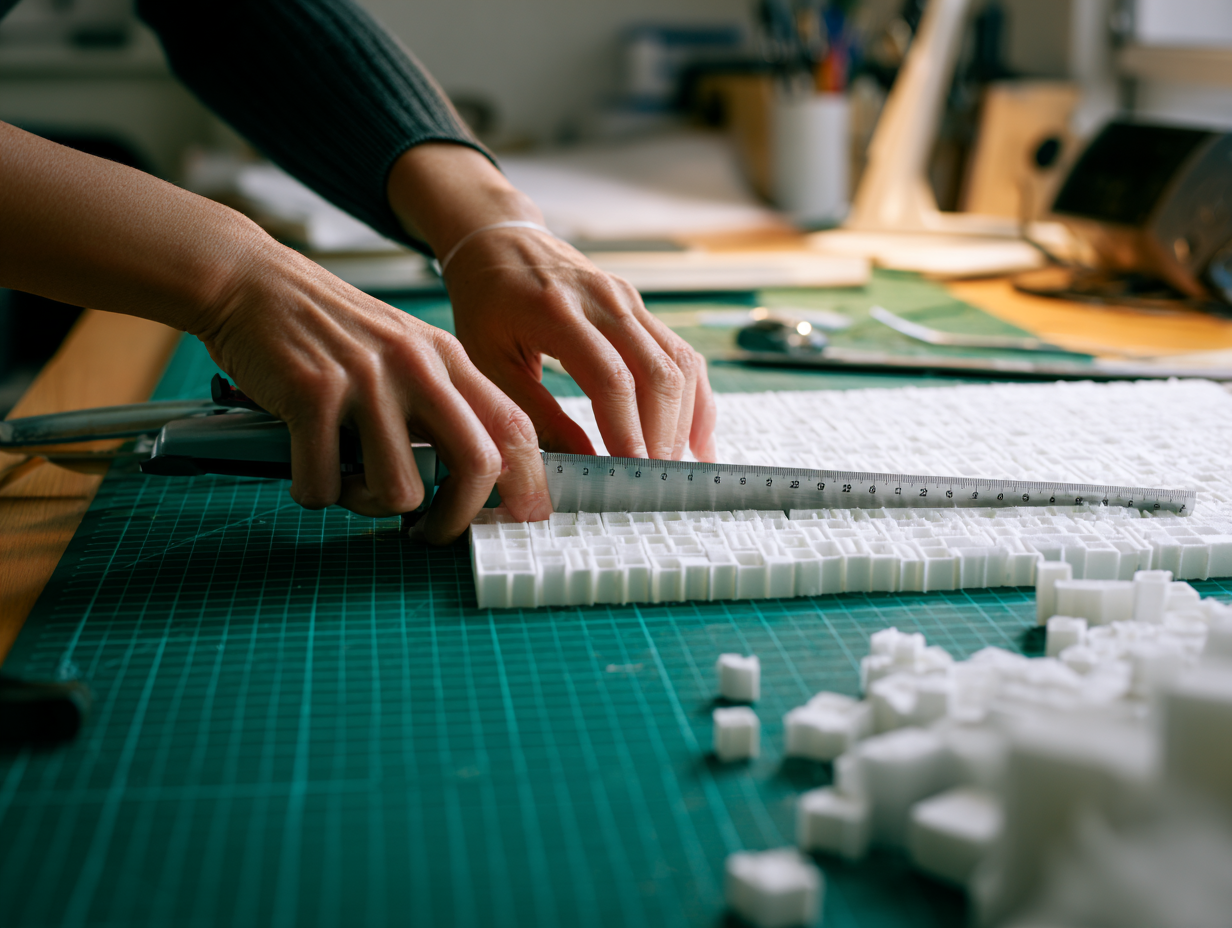
Foam board (sometimes called foam core) is a lightweight panel made from a polystyrene foam center sandwiched between two sheets of smooth paper or card stock. It comes in white, black, and sometimes colored finishes, with standard thicknesses of 3 mm, 5 mm, and 10 mm. Architecture students and professionals reach for foam board first because it cuts cleanly with a utility knife, bonds well with white glue or hot glue, and produces crisp edges that photograph nicely.
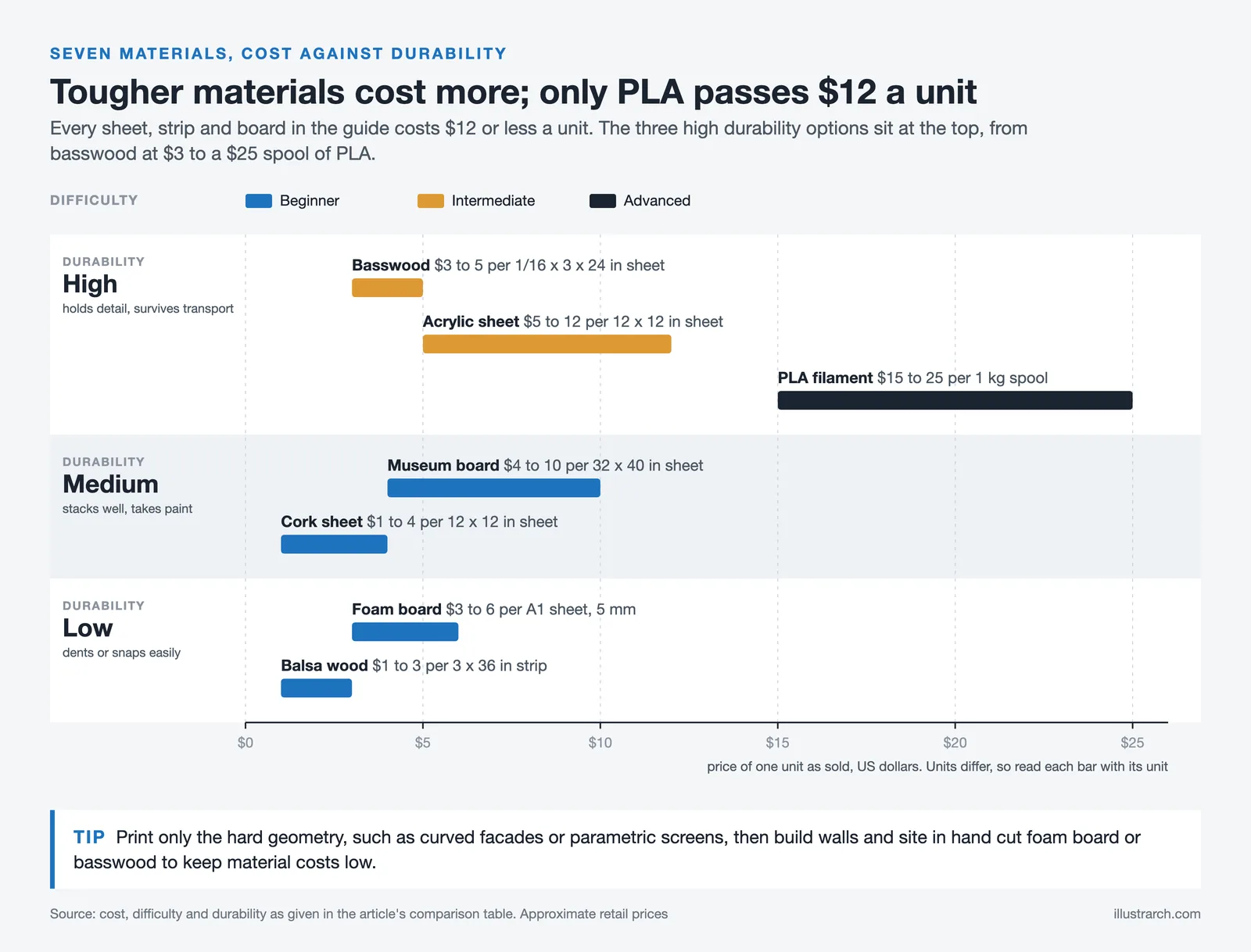
A single A1-size sheet of 5 mm foam board typically costs between $3 and $6 at most art supply stores. You can find it at Blick Art Materials, Michaels, Amazon, and local stationery shops. For bulk purchasing, brands like Elmer’s and Gilman offer multi-packs at discounted rates.
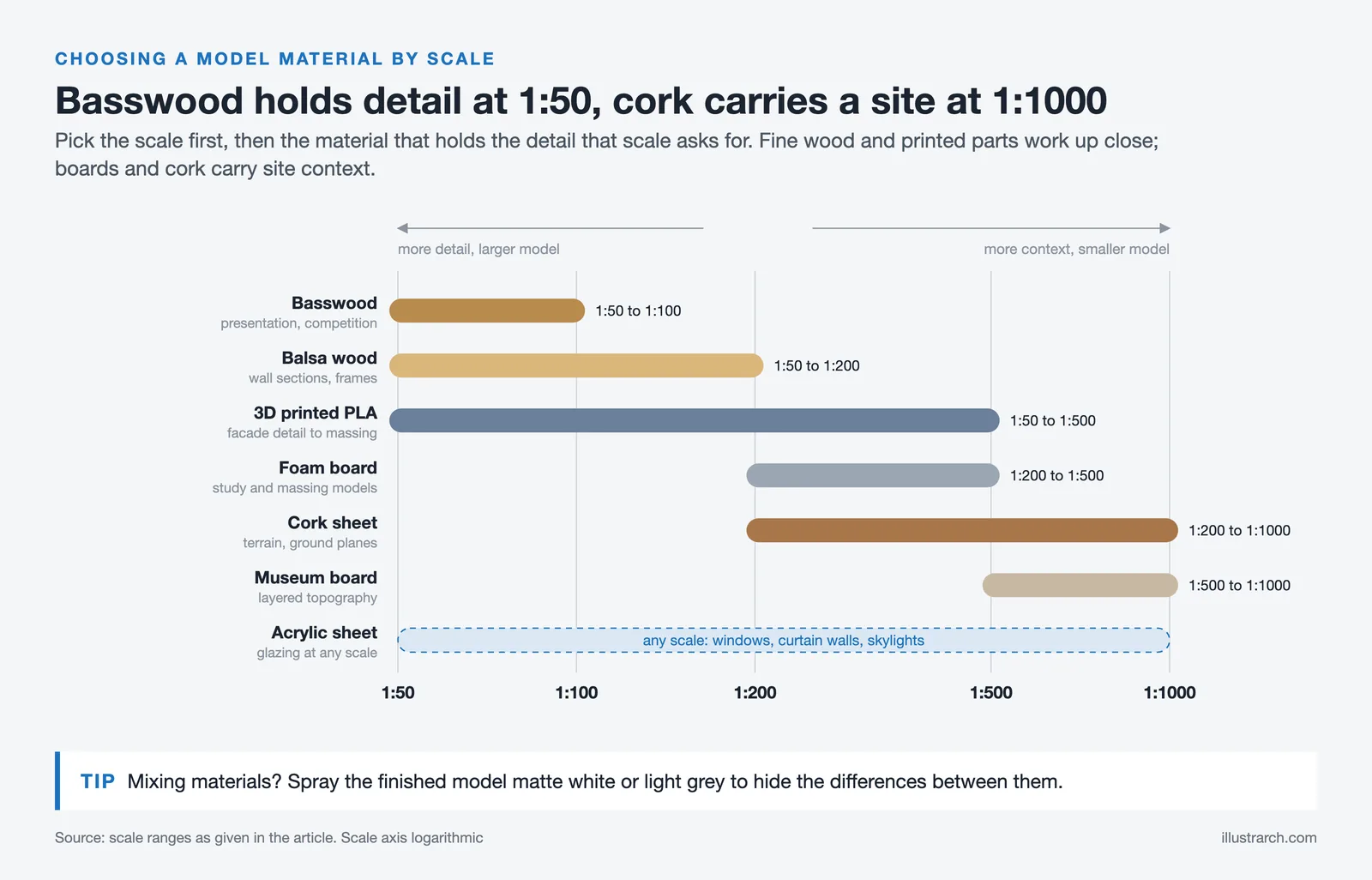
Foam board works best for massing models, site context models, and early-stage concept explorations at scales from 1:200 to 1:500. Its main limitation is durability: corners can dent under pressure, and the paper skin can peel away from the foam if stored in humid conditions. For final presentation models, consider reinforcing edges with thin card stock strips.
💡 Pro Tip
Score foam board lightly on one side before bending it to create clean folds without cracking the opposite paper layer. This technique is far faster than cutting separate pieces and gluing corners, and it produces neater joints on study models. Use a fresh blade each session to avoid ragged edges that show up in photographs.
Corrugated and Museum Board Cardboard
Cardboard is the most accessible of all model making materials. Corrugated cardboard from shipping boxes works for rough draft models and topography layers, while museum board (also called mat board) provides a finer, denser option for presentation-quality work. Museum board is available in thicknesses from 1 mm to 3 mm and comes in dozens of colors.
Corrugated cardboard costs nothing if you recycle packaging. Museum board sheets run approximately $4 to $10 per 32 x 40 inch sheet at stores like Blick, Jerry’s Artarama, and Utrecht. Online retailers such as Amazon and Dick Blick ship flat packs that protect the boards during transit.
One advantage of museum board over foam board is its layering potential. Stacking multiple sheets creates precise topographic contours for site models, especially at 1:500 and 1:1000 scales. The material also accepts spray paint and marker without warping, which helps when you need to differentiate between building masses, roads, and green areas on a context model.
Balsa Wood: Lightweight and Easy to Shape
Balsa wood has been a favorite among architect model making materials for decades. It is extremely light, soft enough to cut with a hobby knife, and available in sheets, strips, and blocks of varying thicknesses. Standard sheet sizes range from 1/32 inch to 1/4 inch thick, and a 3 x 36 inch strip usually costs between $1 and $3.
Hobby shops like Hobby Lobby, local model train stores, and online suppliers such as Balsa Central and National Balsa carry a wide selection. Amazon also stocks multi-packs that include assorted thicknesses, which is useful for experimenting with different facade depths and structural members on a single model.
Balsa works well for wall sections, structural frames, and custom furniture at scales from 1:50 to 1:200. Its natural grain gives models a warm, organic quality that photographs well under studio lighting. The main drawback is fragility: balsa snaps easily along the grain, so handle finished models with care and store them in rigid containers.
🎓 Expert Insight
“A model is a form of three-dimensional sketching; it doesn’t have to be exactly right, it’s used as an inspiration for the buildings you want to build.”
Eric Reinholdt, AIA, Founder of 30X40 Design Workshop
This mindset is especially relevant when choosing affordable materials like balsa. The goal of most studio models is not perfection but exploration. Inexpensive materials free you to experiment, iterate, and break things without worrying about wasted resources.
Basswood: A Sturdier Alternative to Balsa
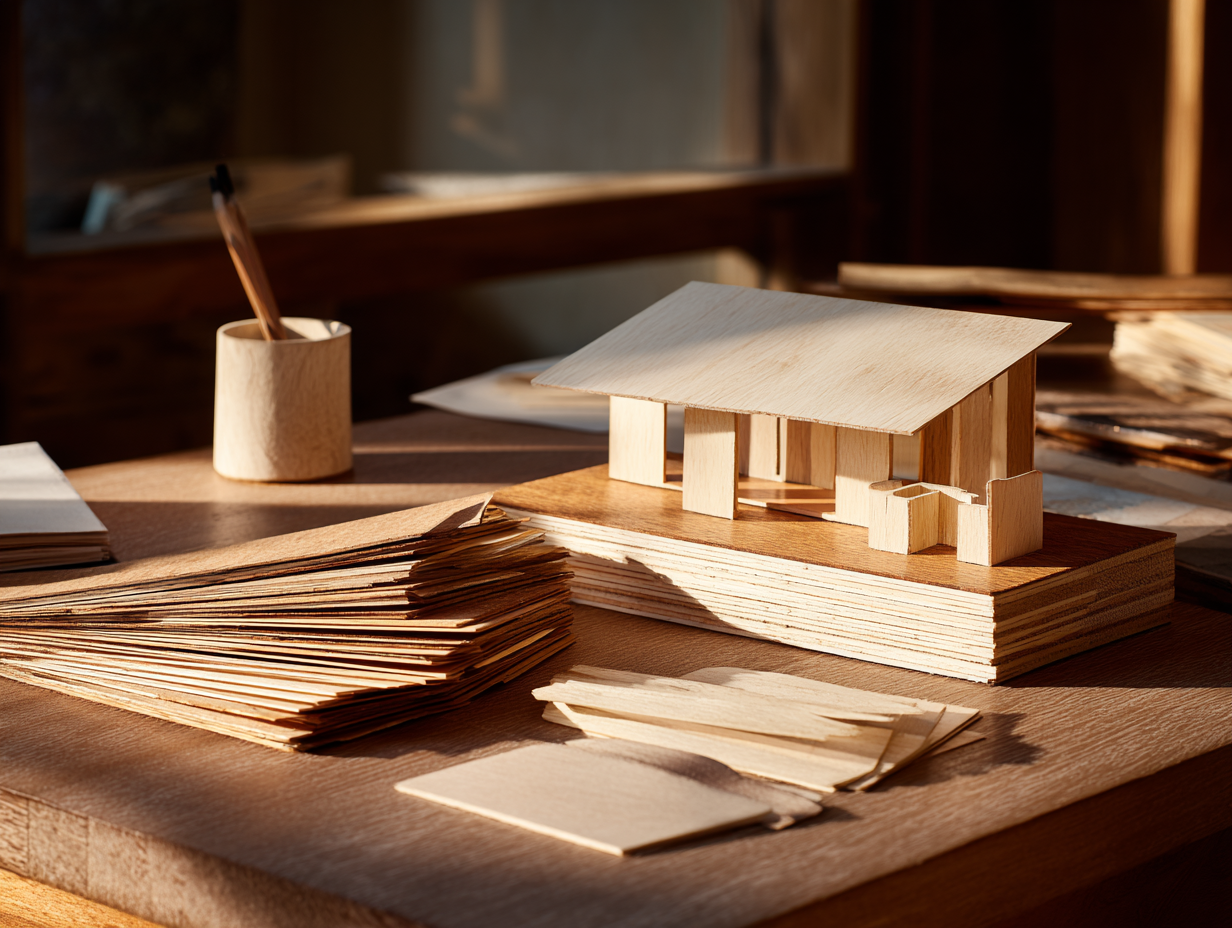
Basswood is denser and stronger than balsa, which makes it a preferred choice for presentation models where durability matters. It cuts cleanly with a sharp hobby knife or scroll saw, sands to a smooth finish, and accepts stains and varnishes for a polished look. Sheets and strips are sold at hobby shops, woodworking suppliers, and online retailers like Midwest Products and Amazon.
Pricing sits slightly above balsa: a 1/16 x 3 x 24 inch sheet costs roughly $3 to $5. Buying in bulk from Midwest Products or directly from specialty lumber suppliers brings the per-sheet cost down noticeably.
Basswood is the standard material for competition models and client presentations because it holds fine details like window mullions, column profiles, and stair railings without splintering. If your project demands a model that will travel to jury presentations or exhibitions, basswood handles the abuse of transport far better than balsa or foam board.
Acrylic Sheets: Simulating Glass and Transparency
Every architecture model that includes windows, curtain walls, or skylights eventually needs a transparent element. Acrylic sheets (often sold under the brand name Plexiglas) provide a lightweight, shatter-resistant substitute for real glass. Standard thicknesses for model making range from 1 mm to 3 mm, and colors include clear, frosted, and tinted options.
A 12 x 12 inch clear acrylic sheet costs about $5 to $12 depending on thickness. You can find acrylic at home improvement stores like Home Depot and Lowe’s, as well as specialty plastic suppliers such as TAP Plastics and Canal Plastics. Online retailers including Amazon and ePlastics ship cut-to-size panels.
Acrylic bonds well with cyanoacrylate (super glue) or specialty acrylic cement. It can be scored and snapped for straight cuts, or cut with a laser cutter for complex facade patterns. For models that use model making equipment like laser cutters, acrylic opens up detailed screen and louver designs that are impossible to achieve by hand.
⚠️ Common Mistake to Avoid
Many students glue acrylic with white glue or hot glue, which creates cloudy residue visible through the transparent surface. Always use cyanoacrylate (super glue) applied in tiny dots at the edges, or acrylic-specific cement that melts the surfaces together for an invisible bond. Test on scrap pieces first, since some adhesives can crack or craze acrylic.
Cork Sheets: Texture and Terrain on a Budget
Cork sheets are often overlooked among best materials for model making, but they serve a specific and valuable purpose. Thin cork (1 mm to 3 mm thick) represents ground planes, plazas, and landscape textures with a warm, earthy tone that contrasts well against white building masses. Thicker cork boards (6 mm to 12 mm) can be stacked and carved to create topographic contours.
A 12 x 12 inch cork sheet costs about $1 to $4 at craft stores like Michaels, Joann Fabrics, and Amazon. Cork rolls offer even better value for larger site models. Specialty suppliers such as Jelinek Cork Group sell sheets in architectural-grade thicknesses with consistent density and color.
Cork cuts easily with a utility knife, accepts pins and push-tacks for temporary placements, and can be painted or stained to represent different site conditions. Its natural texture reads well at scales from 1:200 to 1:1000, giving site models a visual warmth that plain white foam board cannot match.
3D Printing Filament: Digital Precision at Low Cost
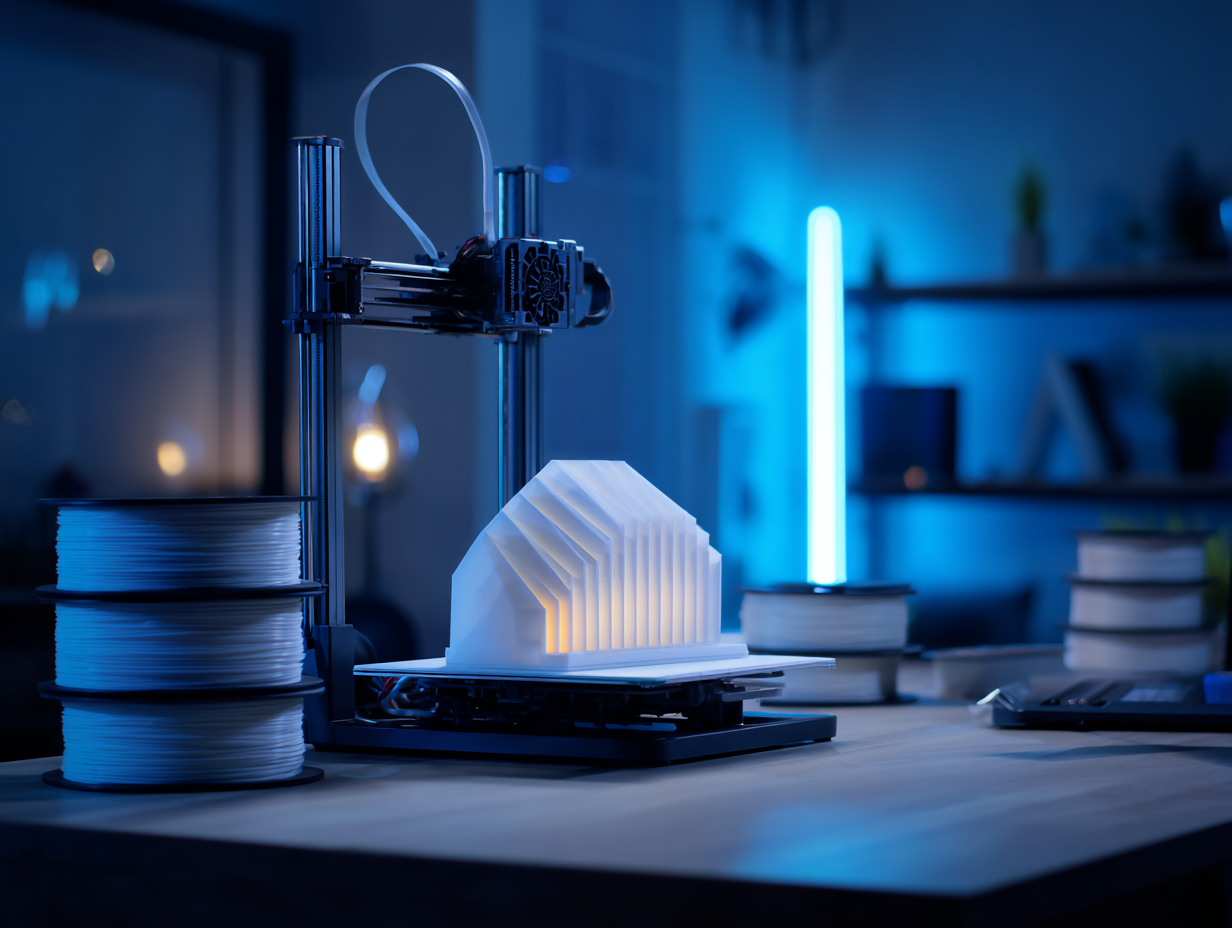
3D printing has changed how architects approach model making. PLA (polylactic acid) filament is the most common material for FDM (Fused Deposition Modeling) printers used in studios and offices. A 1 kg spool of PLA costs between $15 and $25, which is enough to print several small-scale building components or an entire massing model at 1:500 scale.
You can buy PLA filament from 3D printing suppliers like Hatchbox, eSUN, and Prusament, or from general retailers like Amazon and MicroCenter. For higher-detail models, resin (used in SLA printers) produces smoother surfaces, though resin costs roughly $30 to $50 per liter.
3D printing pairs especially well with traditional materials. Print complex geometry like curved facades, parametric screens, or custom furniture pieces, then combine them with hand-cut foam board or basswood for walls and site context. This hybrid approach saves time on difficult shapes while keeping overall material costs low. If you are considering a printer for your studio, take a look at the best 3D printers for architectural model making to compare options suited for architecture work.
📌 Did You Know?
According to a case study published by UltiMaker, the London-based firm Make Architects reduced physical model production costs by up to 90% after switching to Ultimaker 3D printers for their studio work. Even budget-friendly printers like the Prusa MK4 now produce resolution fine enough for 1:200 scale facade details.
Comparison of Affordable Model Making Materials
The following table summarizes the key characteristics of each material to help you pick the right one for your next project:
| Material | Cost Range | Best For | Difficulty | Durability |
|---|---|---|---|---|
| Foam Board | $3-$6 per A1 sheet | Study models, massing | Beginner | Low |
| Museum Board | $4-$10 per sheet | Topography, layered sites | Beginner | Medium |
| Balsa Wood | $1-$3 per strip | Wall sections, frames | Beginner | Low |
| Basswood | $3-$5 per sheet | Presentation models | Intermediate | High |
| Acrylic Sheet | $5-$12 per 12×12 in | Windows, curtain walls | Intermediate | High |
| Cork Sheet | $1-$4 per 12×12 in | Terrain, ground planes | Beginner | Medium |
| PLA Filament | $15-$25 per 1 kg spool | Complex geometry, facades | Advanced | High |
Where to Buy Model Making Materials
Sourcing architecture model making materials at the right price depends on knowing where to shop. Local art supply stores like Blick Art Materials, Michaels, and Hobby Lobby carry foam board, balsa, basswood, and museum board in standard sizes. For bulk orders, online retailers offer better per-unit pricing and wider material selections.
Amazon is the most convenient general-purpose source, with fast shipping and competitive pricing on almost every material listed here. For specialty items, consider dedicated suppliers: Midwest Products for basswood and balsa, TAP Plastics for acrylic sheets, and Hatchbox or Prusament for 3D printing filament.
Architecture students should also check their school’s fabrication lab or materials library before buying. Many university programs stock basic materials and offer laser cutting access, which dramatically reduces out-of-pocket costs for studio projects. Professional offices can negotiate volume discounts directly with suppliers like Blick Art Materials for recurring orders.
💡 Pro Tip
Before buying materials, build a small test piece using scraps to check how each material cuts, glues, and finishes at your chosen scale. A 15-minute test can save hours of rework. Experienced model makers keep a “sample kit” of offcuts from previous projects to quickly compare textures, thicknesses, and colors when starting a new model.
How to Choose the Right Material for Your Project
Selecting the best material for model making starts with three questions: What is the model’s purpose? What scale are you working at? And how long does the model need to last?
For early design studies and draft models, foam board and corrugated cardboard are the fastest and cheapest options. They let you test massing, spatial arrangements, and site relationships without investing time in precise joinery. Once the design direction is settled, switch to basswood or a combination of basswood and acrylic for the final presentation model.
Scale also matters. At 1:500 or 1:1000, thin museum board and cork represent buildings and landscapes cleanly because fine detail is not expected at those scales. At 1:100 or 1:50, you need materials that hold crisp edges and show structural depth, which is where basswood and 3D printed components excel. For an overview of how physical models fit into the broader architectural workflow, see this guide on physical models in architecture.
Budget is always a factor. The table above shows that most materials cost under $10 per sheet or strip, so even a complex presentation model can be built for under $50 in raw materials. The real cost is usually time, not supplies, which is why matching the material to the model’s purpose prevents wasted effort.
Video: Architectural Model Making Material Selection
In this video from 30X40 Design Workshop, architect Eric Reinholdt walks through his preferred model making materials and explains how each one performs in practice. It is a helpful visual companion to the material descriptions above.
Tips for Getting Better Results With Affordable Materials
Cheap materials do not have to look cheap. A few techniques can raise the visual quality of any budget model. First, use a sharp blade at all times. Dull knives compress foam board, tear cardboard fibers, and splinter balsa. Replace utility blades every 20 to 30 cuts, and keep a stropping block nearby for hobby knives.
Second, apply adhesives sparingly. Excess glue creates visible seams, warps thin materials, and slows down assembly because you wait longer for drying. Cyanoacrylate works for small joints and acrylic. White PVA glue is better for porous materials like balsa, basswood, and cardboard. Hot glue is acceptable for draft models but too messy for presentation work.
Third, spray paint a unified color over the finished model if you want a clean, monochrome look. Matte white or light gray spray paint hides color differences between materials and gives the model a professional studio appearance. This is a standard trick in architecture schools and offices worldwide. For more hands-on advice, the tips for building a physical model guide covers additional techniques for clean finishes and assembly.
✅ Key Takeaways
- Foam board and cardboard are the fastest, cheapest options for study models and early design explorations.
- Balsa wood is lightweight and affordable, while basswood offers superior durability for presentation and competition models.
- Acrylic sheets provide the best option for simulating glass and transparent elements at any scale.
- Cork sheets add natural texture for terrain and ground planes at a very low cost.
- 3D printing filament allows precise complex geometry, and combining printed parts with hand-cut materials keeps overall costs down.
- Always match the material to the model’s purpose, scale, and expected lifespan to avoid wasting time and money.
Final Thoughts
Building strong physical models does not require expensive specialty supplies. The seven model making materials covered here, foam board, cardboard, balsa wood, basswood, acrylic, cork, and 3D printing filament, cover nearly every model type an architect or student will encounter. Each sits at a different point on the cost, durability, and precision spectrum, so the smartest approach is to keep several on hand and combine them based on what each project demands. Start with inexpensive draft models, refine with sturdier materials for final presentations, and use the savings to invest in sharp blades and good adhesives, the two things that actually determine a model’s finish quality.
Cost figures mentioned are approximate and vary by region, supplier, and purchase quantity. Check current pricing with your preferred retailer before placing bulk orders.







Futuro House Production Revived in Finland After Decades-Long Hiatus
A Facebook listing for abandoned moulds led to the first new Futuro...
 illustrarch Editoral Team3 Mins read
Building Your Dream Home in NSW: What You Should Know About Montgomery Homes
Montgomery Homes has been building across Sydney, Newcastle, the Hunter, Wollongong and...
illustrarch Editoral Team4 Mins read
Designing a Home Theater: Where Drapery Fits Into the Plan
In a media room the curtains are a performance layer, not decoration....
illustrarch Editoral Team3 Mins read

Oscar Niemeyer’s Cathedral of Brasília: The Hyperboloid Concrete Hymn
The Cathedral of Brasília reads as a single gesture, yet it stood...
Furkan Sen7 Mins read


Leave a comment