

8+ Best Tiny Home Communities in Michigan: Great Lakes Tiny Living Guide
Explore tiny home communities in Michigan. Great Lakes lifestyle, affordable land, and four-season tiny living. Compare costs and communities in MI.
 Bahattin Duran26 May 202618 Mins read218
Table of Contents Show
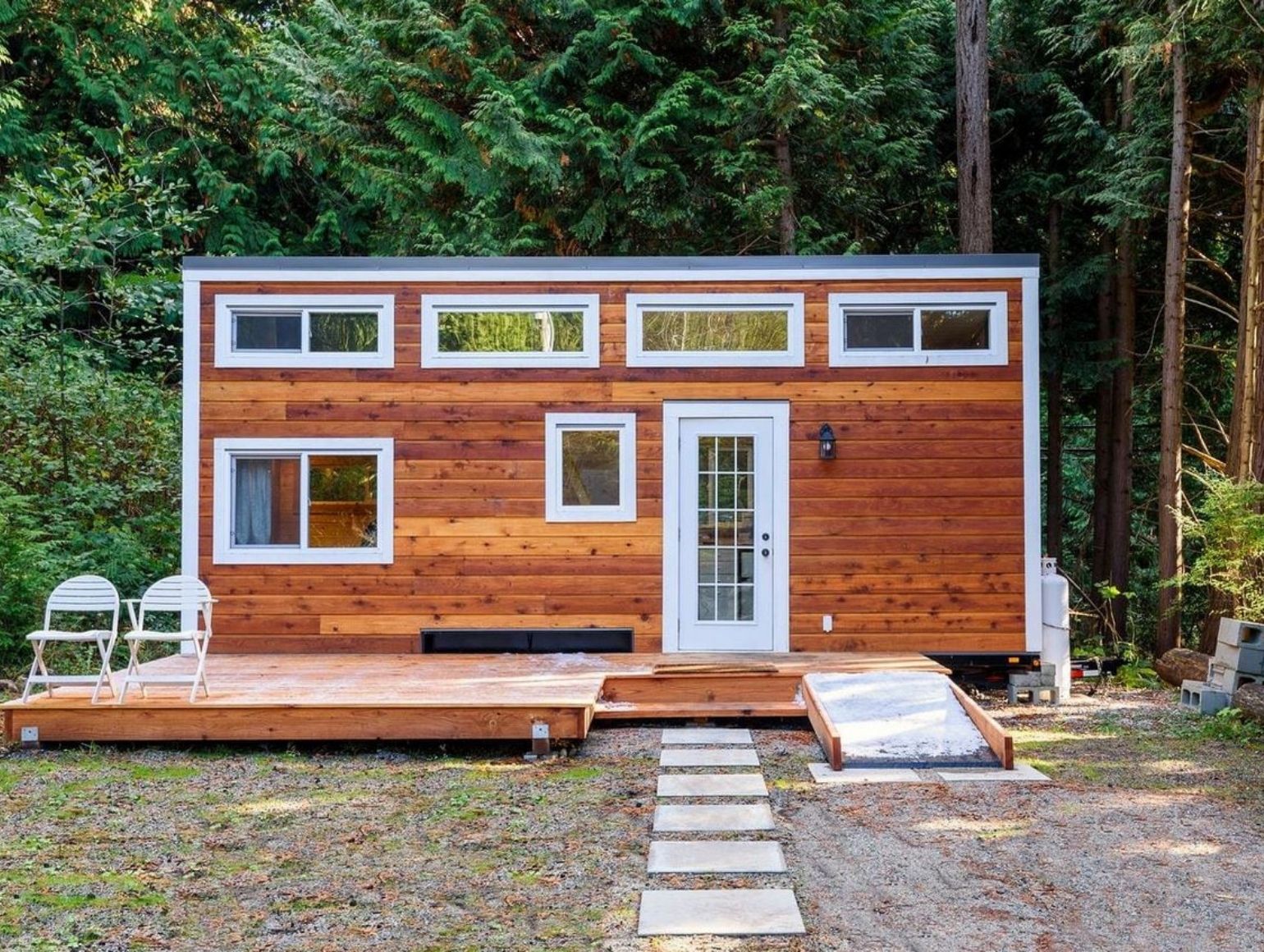
Michigan offers over a dozen tiny home communities spread across four distinct regions, with home prices ranging from $45,000 in the Upper Peninsula to $195,000 near Ann Arbor. Monthly living costs (lot rent, utilities, heating, insurance) average $400 to $1,200 depending on location. The state has no statewide minimum square footage requirement, and counties like Washtenaw, Marquette, and Houghton allow tiny homes as small as 200 square feet. Michigan’s Lake Michigan shoreline, affordable rural land, and growing ADU-friendly zoning make it one of the strongest states in the Midwest for tiny home living.
Whether you are exploring tiny home communities in Michigan for the first time or comparing specific locations across the state, this guide covers zoning laws, community profiles, costs, and cold-climate building requirements to help you make an informed decision. For a broader look at options nationwide, see our guide to the top tiny house communities to consider in the USA.
Michigan’s cities and towns have shown increasing openness to alternative housing, and several communities have been developed specifically for tiny home owners. The state’s extensive shoreline along Lakes Michigan, Huron, Superior, and Erie provides stunning waterfront settings that would be prohibitively expensive in most coastal states, making lakeside tiny living an achievable dream here. The four-season climate does require careful attention to insulation and heating, but Michigan tiny home residents will tell you that the trade-off of affordable lakeside living in a tight-knit community is more than worth the winter preparation.
Video: Tiny Home Communities in Michigan
What Are the Zoning and Legal Requirements for Tiny Homes in Michigan?
Michigan does not have a single statewide policy governing tiny homes. Zoning and permitting decisions fall to individual counties and municipalities. Foundation-built tiny homes are generally treated as standard residences under the Michigan Residential Code, while tiny homes on wheels (THOWs) are often classified as recreational vehicles. Minimum square footage requirements range from zero in rural UP townships to 600-900 sq. ft. in some suburban jurisdictions. Always verify rules with your target county’s planning office before purchasing land.
The Michigan Residential Code adopts sections of the International Residential Code (IRC). The IRC’s Appendix Q, specifically written for tiny houses under 400 square feet, provides a model code framework that some Michigan jurisdictions have begun to reference.
How to Navigate Michigan Tiny Home Permits
If you plan to build on a permanent foundation, you will generally need to comply with the Michigan Residential Code, secure a building permit, and pass inspections for electrical, plumbing, and structural systems. The Michigan Bureau of Construction Codes (BCC), part of LARA, oversees statewide building standards and can help clarify which code edition is currently in effect. For THOWs, the path usually involves finding a community or RV park that allows long-term occupancy, or securing a special use permit from the local zoning board.
Zoning by County: Quick Reference
| County / Region | Min. Sq. Ft. | THOWs Allowed | ADU-Friendly | Notes |
|---|---|---|---|---|
| Washtenaw (Ann Arbor) | No county min. | In approved parks | Yes | ADU ordinance passed; progressive zoning |
| Wayne (Detroit) | Varies by twp. | Limited | Expanding | Detroit has pilot programs for tiny home villages |
| Grand Traverse (Traverse City) | Varies (240+) | In designated areas | Yes | Growing tiny home acceptance in resort areas |
| Ottawa (West MI) | Varies by twp. | Seasonal parks | Limited | Some lakeside communities allow tiny homes |
| Marquette (Upper Peninsula) | No strict min. | Yes, rural areas | Yes | Very flexible zoning in rural UP townships |
| Emmet (Petoskey area) | Varies | Seasonal | Limited | Resort-area restrictions may apply |
| Kalamazoo | Varies by twp. | In approved parks | Yes | City of Kalamazoo exploring ADU expansion |
| Houghton (Keweenaw) | No strict min. | Yes | Yes | Remote, affordable; minimal zoning enforcement |
Zoning regulations change frequently. Always verify current rules directly with the county planning or zoning office before purchasing land or committing to a community.
Best Tiny Home Communities in Michigan: Top 8 Compared
The best tiny home communities in Michigan include Cass Community Social Services (Detroit), Eco Village at Great Lakes (Muskegon), Northern Pines (Traverse City area), and Keweenaw Tiny Cabins (Houghton). Prices range from $45,000 for a basic cabin in the Upper Peninsula to $195,000 for a pocket neighborhood unit near Ann Arbor. Lot rent across these communities runs between $75 and $500 per month depending on location and amenities.
| Community | Location | Home Price Range | Lot Rent / HOA | Homes | Key Features |
|---|---|---|---|---|---|
| Cass Community Social Services Tiny Homes | Detroit (SE MI) | Rent-to-own program | $250-$400/mo | 25 | Nonprofit; rent-to-own in 7 years; community garden |
| Eco Village at Great Lakes | Muskegon (West MI) | $85,000-$150,000 | $200-$350/mo | 30+ | Near Lake Michigan; solar options; community clubhouse |
| Northern Pines Tiny Community | Traverse City area | $95,000-$180,000 | $250-$400/mo | 20 | Wine country location; four-season builds; shared trails |
| Lake Huron Tiny Village | Oscoda (NE MI) | $65,000-$120,000 | $150-$300/mo | 15 | Lakefront access; quiet setting; affordable lots |
| UP Wilderness Tiny Homes | Marquette (UP) | $55,000-$110,000 | $100-$250/mo | 12 | Off-grid options; large wooded lots; low cost of living |
| West Shore Tiny Living | Holland (West MI) | $100,000-$175,000 | $300-$450/mo | 18 | Walking distance to Lake Michigan beaches; Dutch heritage town |
| Ann Arbor Pocket Neighborhood | Ann Arbor (SE MI) | $110,000-$195,000 | $350-$500/mo | 10 | University town; walkable; shared courtyard design |
| Keweenaw Tiny Cabins | Houghton (UP) | $45,000-$95,000 | $75-$200/mo | 8 | Most affordable; wilderness setting; off-grid capable |
Prices are approximate and based on publicly available data as of 2025. Contact each community for current pricing and availability.
Best Michigan Tiny Home Communities at a Glance
- Most Affordable: Keweenaw Tiny Cabins (Houghton, UP) starting at $45,000
- Best for Social Impact: Cass Community Social Services (Detroit) with rent-to-own in 7 years
- Best Lakeside Location: West Shore Tiny Living (Holland) near Lake Michigan beaches
- Best for Wine Country Living: Northern Pines (Traverse City area)
- Best for Off-Grid Living: UP Wilderness Tiny Homes (Marquette)
- Best for Urban Access: Ann Arbor Pocket Neighborhood with walkable university town setting
- Best Value Near Water: Lake Huron Tiny Village (Oscoda) from $65,000
- Best for Eco-Conscious Living: Eco Village at Great Lakes (Muskegon) with solar options
What Is Tiny Home Living Like in Michigan’s Upper Peninsula?
The Upper Peninsula is the most affordable region in Michigan for tiny home living. Land costs as little as $5,000 to $15,000 per acre in remote areas, and many UP townships have no minimum square footage requirements or formal zoning ordinances. The region is popular for off-grid builds using solar-plus-battery systems and composting toilets. The primary challenge is Michigan’s harsh winters, with snowfall reaching 150 to 300+ inches annually in some locations, requiring robust insulation and snow-load-rated roof structures.
More accessible parcels near towns like Marquette or Houghton range from $15,000 to $40,000 per acre, making it one of the most straightforward places in Michigan to establish a tiny homes upper peninsula Michigan homestead.
How to Go Off-Grid with a Tiny Home in Michigan
Off-grid tiny home living in Michigan requires a solar-plus-battery system (5-10 kW recommended), a backup propane generator, a well or rainwater collection for water, and a composting toilet or MDHHS-approved septic system. The UP is the most popular region for off grid tiny homes Michigan setups due to minimal zoning restrictions and low land costs.
Solar-plus-battery systems paired with a backup propane generator can keep a well-insulated tiny home comfortable through the coldest months. Water is typically sourced from wells, and many UP properties have access to clean groundwater at relatively shallow depths. Any permanent septic installation will need to meet Michigan Department of Health and Human Services (MDHHS) sanitary code requirements.
Off-Grid Tiny Home Essentials for Michigan
- Power: 5-10 kW solar array + lithium battery bank + propane backup generator
- Water: Drilled well (most reliable) or rainwater collection with filtration
- Waste: Composting toilet + greywater recycling system
- Heating: Cold-climate mini-split + wood stove or propane backup
- Internet: Starlink satellite (essential for rural UP locations)
- Estimated Setup Cost: $15,000-$35,000 for full off-grid system
Best Tiny Home Communities in West Michigan: Lake Michigan Shoreline
West Michigan’s Lake Michigan shoreline offers scenic tiny living from New Buffalo to Petoskey, with lot prices ranging from $30,000 to $150,000. Communities in Holland, Grand Haven, Saugatuck, and Muskegon provide beach access, vibrant downtown areas, and a growing arts scene. Tiny home communities west Michigan developments are more expensive than UP options but significantly cheaper than comparable coastal locations on the East or West Coast.
What to Know About Lakeside Tiny Homes in Michigan
Building near lakeside tiny homes Michigan waterfront areas often involves additional regulations. The Michigan Department of Environment, Great Lakes, and Energy (EGLE) Critical Dunes Program regulates construction within designated critical dune areas and wetland zones. Before purchasing waterfront or near-waterfront property, verify whether the lot falls within a critical dune area, as building restrictions in these zones can be significant.
Flood zone designations should also be checked through FEMA’s Flood Map Service Center. Properties within a 100-year floodplain will require flood insurance and may need elevated foundations, which increases construction costs.
Lakeside Tiny Home Checklist for Michigan Buyers
- Check EGLE critical dune area maps before purchasing waterfront property
- Verify FEMA flood zone designation and insurance requirements
- Confirm local setback requirements from the ordinary high water mark
- Budget for elevated foundation costs if in a floodplain ($10,000-$25,000 extra)
- Factor in flood insurance premiums ($700-$2,000+ annually)
- Research erosion rates along your target shoreline section
What Are the Best Tiny Home Options in Southeast Michigan?
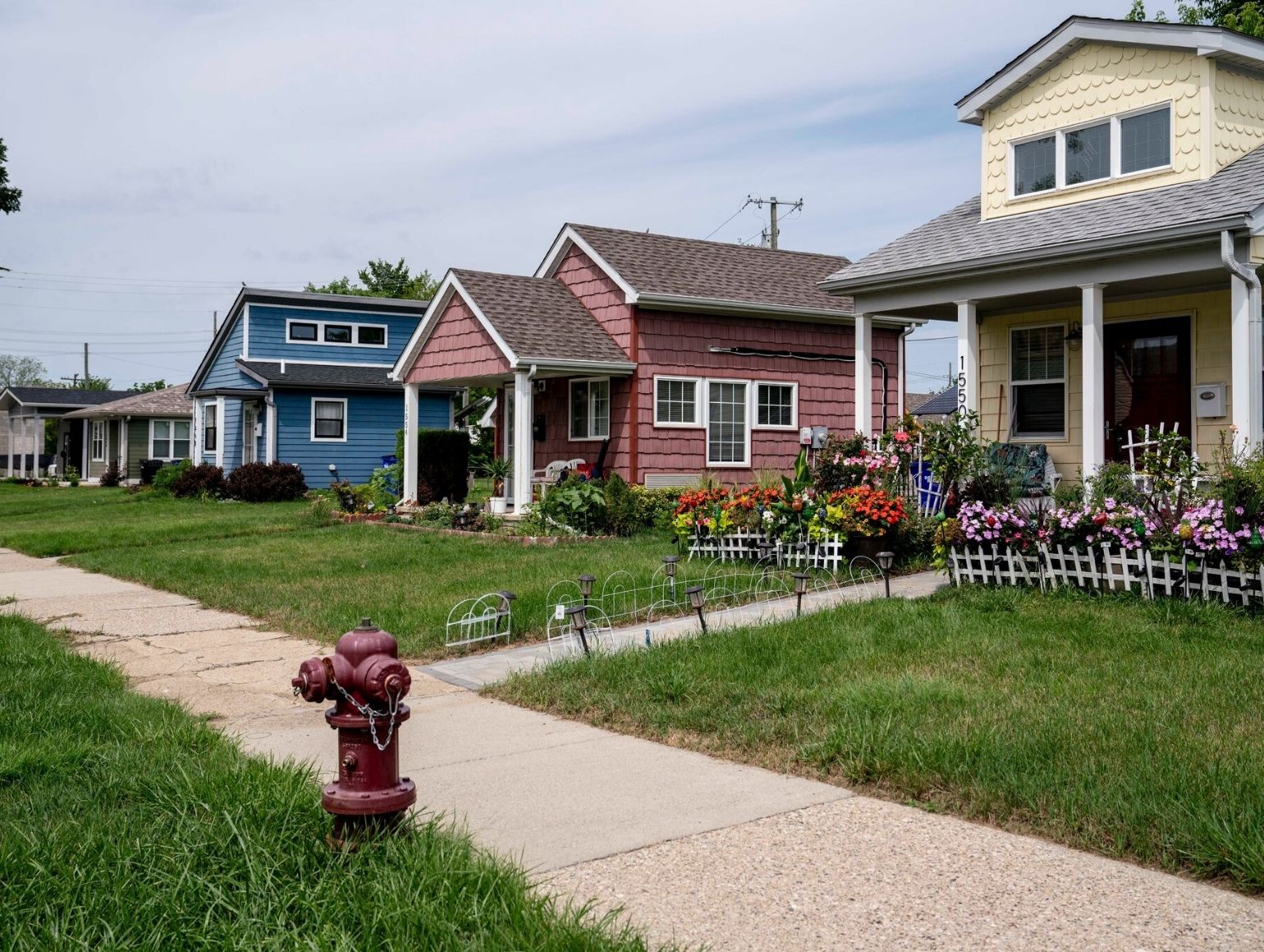
Southeast Michigan offers urban tiny home options in Detroit and Ann Arbor, with access to employment centers, universities, and cultural institutions. Detroit’s Cass Community Social Services operates the most well-known tiny home village in the state, offering rent-to-own homes starting at $1 per square foot per month. Ann Arbor has some of the most progressive ADU policies in Michigan, allowing tiny homes in most residential zones as secondary dwellings.
The Cass Community Social Services tiny home project in Detroit offers a rent-to-own program where residents can own their home after seven years of on-time payments. Each home ranges from approximately 250 to 400 square feet, is built on a permanent foundation, and sits on its own lot with a small yard.
Ann Arbor, home to the University of Michigan, has adopted some of the most progressive ADU (Accessory Dwelling Unit) policies in the state. The city’s zoning code now allows ADUs in most residential zones, making it possible to place a tiny home on an existing residential lot as a secondary dwelling. This has opened up opportunities for pocket neighborhoods and backyard tiny homes within the city limits.
Urban vs. Rural Tiny Living in Michigan: Quick Comparison
| Factor | Urban (SE Michigan) | Rural (UP / Northern) |
|---|---|---|
| Home Price Range | $80,000-$195,000 | $45,000-$120,000 |
| Land Cost per Acre | $30,000-$100,000+ | $5,000-$40,000 |
| Zoning Complexity | More restrictive, permit-heavy | Minimal to none in some townships |
| Off-Grid Feasibility | Very limited | Highly feasible |
| Public Transit Access | Available (limited) | None |
| Internet Reliability | Fiber/cable available | Starlink recommended |
| Healthcare Proximity | Major hospital networks | Regional hospitals, longer travel |
| Winter Severity | Moderate (25-50″ snow/year) | Severe (150-300+” snow/year) |
Best Tiny Home Communities Near Traverse City, Michigan
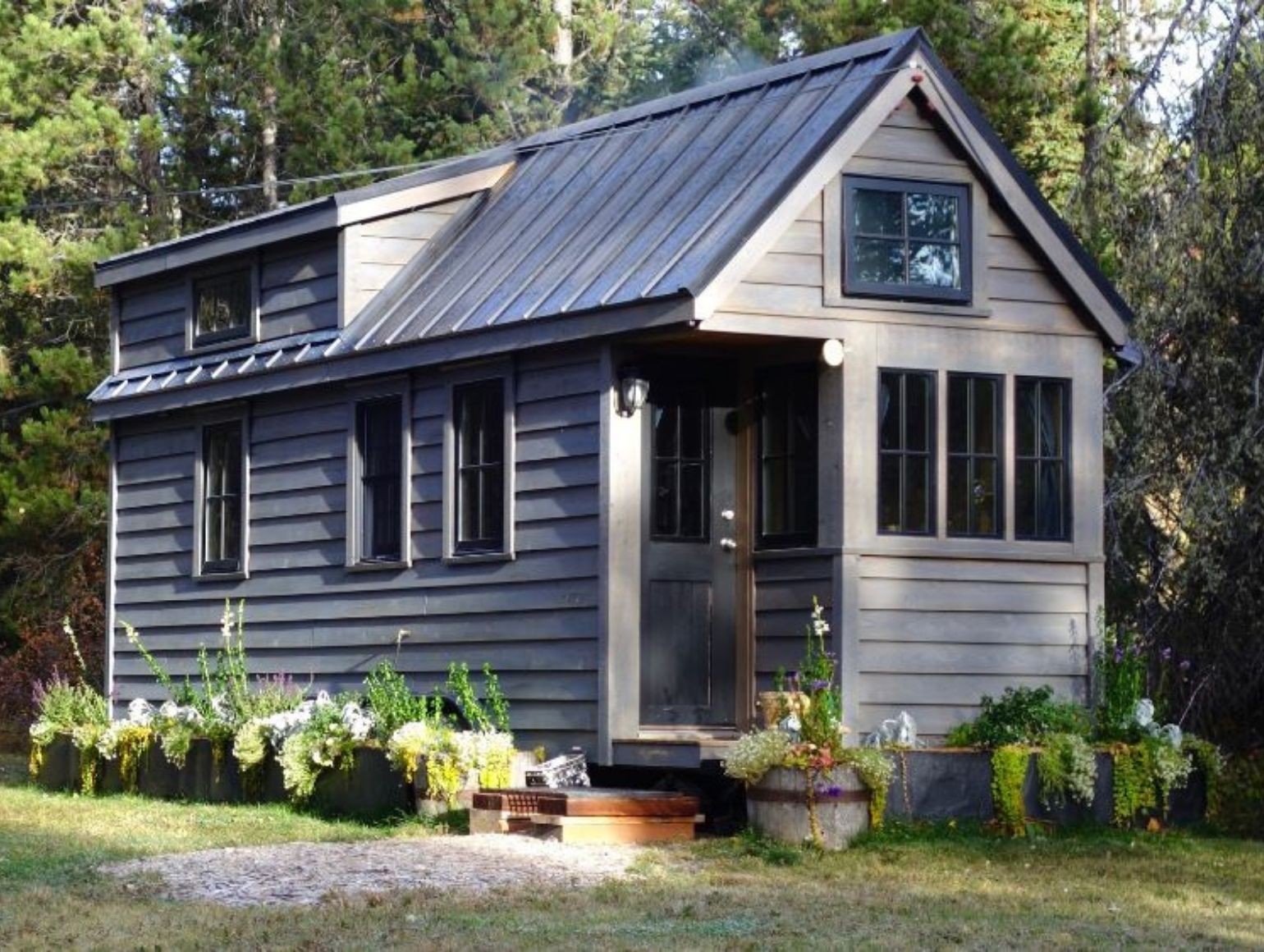
Traverse City and surrounding northern Lower Michigan have become a hotspot for tiny home development, with communities offering homes from $95,000 to $180,000. The area is known for vineyards, cherry orchards, Sleeping Bear Dunes National Lakeshore, and a strong tourism economy. Tiny home communities traverse city michigan developments offer amenities like shared gardens, trail networks, and common gathering spaces within reach of 40+ wineries on the Old Mission and Leelanau Peninsulas.
The Grand Traverse County area has shown increasing willingness to accommodate alternative housing types, including tiny homes. The downside is that property values in the immediate Traverse City area have risen sharply in recent years, driven by tourism and remote-worker migration. Looking slightly outside the city, in counties like Benzie, Leelanau, or Antrim, can offer more affordable entry points while still keeping you within a short drive of Traverse City amenities.
How Much Does It Cost to Live in a Michigan Tiny Home Community?

The total first-year cost of tiny home living in Michigan ranges from $60,000 to $300,000+ (home purchase + land + setup), with ongoing monthly expenses of $400 to $1,200. The Upper Peninsula is the most affordable region, where a complete setup can start under $60,000. West Michigan lakeside communities cost more ($100,000-$250,000 total), while southeast Michigan urban options range from $120,000 to $300,000. Monthly costs break down roughly as: lot rent $75-$500, utilities $40-$180, winter heating $60-$200, and insurance $35-$125.
| Expense Category | Urban/Suburban (SE MI) | Lakeside (West MI) | Rural/UP | Notes |
|---|---|---|---|---|
| Tiny Home Purchase | $80,000-$195,000 | $65,000-$175,000 | $45,000-$120,000 | Foundation-built; THOWs may be less |
| Land / Lot (if purchasing) | $30,000-$100,000 | $30,000-$150,000 | $5,000-$40,000 | Per lot; highly variable by location |
| Monthly Lot Rent / HOA | $300-$500 | $200-$450 | $75-$250 | If in a community with shared amenities |
| Property Tax (annual) | $800-$2,500 | $600-$2,000 | $200-$800 | Michigan avg. effective rate ~1.38% |
| Utilities (monthly) | $80-$180 | $70-$160 | $40-$120 | Lower for off-grid with solar; higher in winter |
| Heating (winter months) | $80-$200 | $80-$200 | $60-$180 | Propane, electric, or wood; 5-6 month season |
| Insurance (annual) | $600-$1,200 | $700-$1,500 | $400-$900 | Flood insurance extra for waterfront |
| Maintenance (annual) | $500-$1,500 | $500-$1,500 | $300-$1,000 | Snow removal, weatherproofing, general upkeep |
Pro Tip: Budget for Michigan Winters
Many first-time tiny home owners underestimate winter costs. Budget an additional $800 to $1,500 per winter season for heating fuel, snow removal, and weatherproofing supplies. If you are heating with propane, filling a 250-gallon tank costs approximately $600 to $900 and may need to be done two to three times per season depending on your insulation quality and thermostat settings.
Disclaimer: All cost figures in this article are estimates based on publicly available data and community listings as of 2025. Actual costs may vary based on market conditions, community policies, construction specifications, and individual circumstances. This content is for informational purposes only and should not be considered financial advice. Consult with local real estate professionals, builders, and financial advisors before making purchasing decisions.
How to Build a Four-Season Tiny Home for Michigan Winters

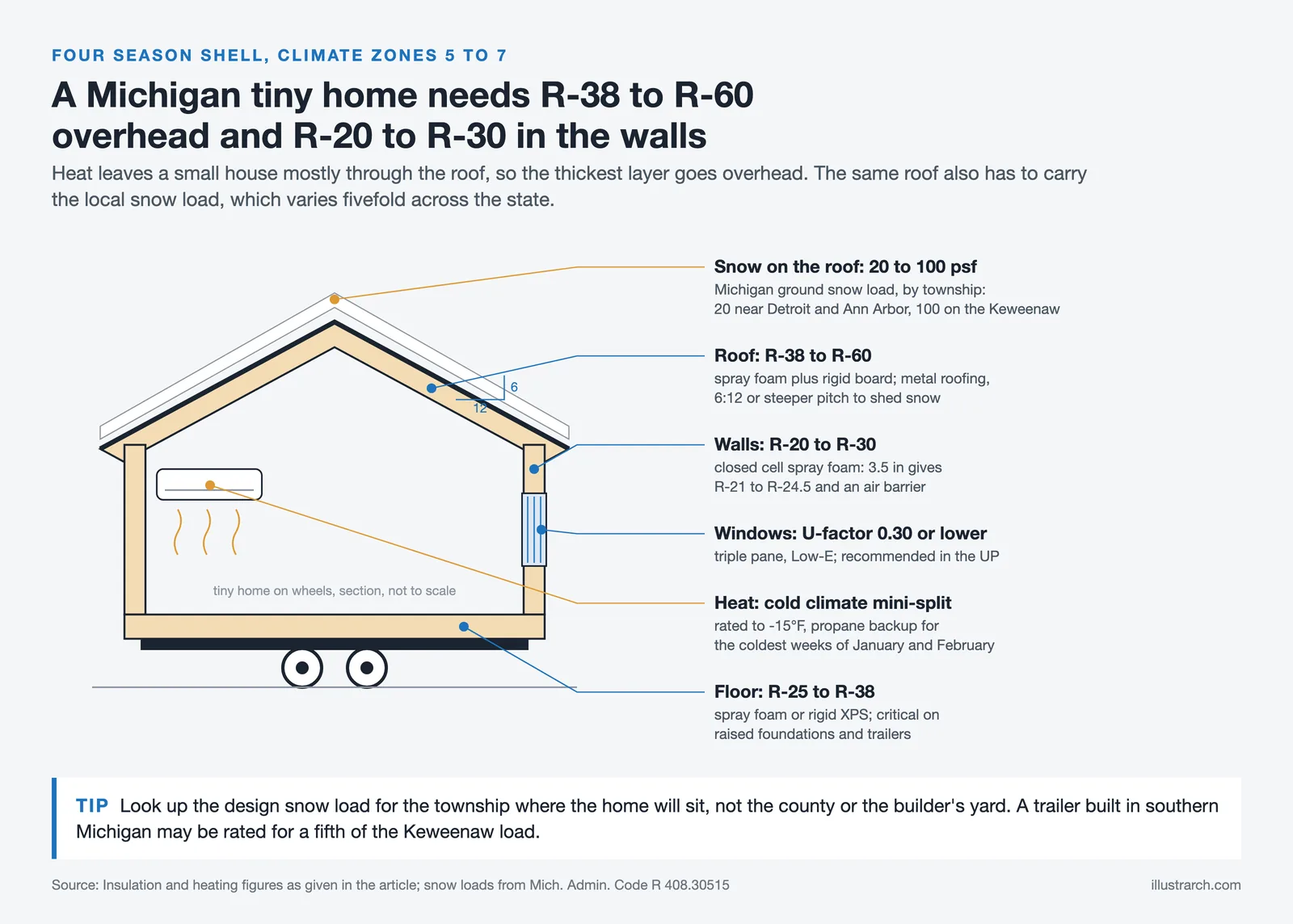
A Michigan tiny home must be built to handle Climate Zones 5-7 conditions, with wall insulation of R-20 to R-30, roof insulation of R-38 to R-60, and triple-pane windows with a U-factor of 0.30 or lower. The most effective heating setup is a cold-climate mini-split heat pump (rated to -15°F) as primary heat with a propane backup system. Metal roofing with a 6:12 or steeper pitch is standard to handle ground snow loads of 20 to 100 psf depending on region. Closed-cell spray foam insulation is the most popular choice because it provides both insulation and an air/vapor barrier in limited wall thickness.
What Insulation R-Values Are Needed for Michigan Tiny Homes?
| Building Component | Recommended R-Value | Best Material | Notes |
|---|---|---|---|
| Walls | R-20 to R-30 | Closed-cell spray foam | 3.5″ achieves R-21 to R-24.5 |
| Roof / Ceiling | R-38 to R-60 | Spray foam + rigid board | Critical: most heat loss occurs through roof |
| Floor | R-25 to R-38 | Spray foam or rigid XPS | Especially important for raised foundations / THOWs |
| Windows | U-factor ≤ 0.30 | Triple-pane, Low-E coated | Double-pane minimum; triple recommended for UP |
Best Heating Systems for Michigan Tiny Homes
| Heating System | Best For | Effective Temp Range | Estimated Annual Cost |
|---|---|---|---|
| Cold-climate mini-split heat pump | Primary heat (all regions) | Down to -15°F | $400-$800 |
| Propane forced-air / radiant | Backup or primary in extreme cold | Any temperature | $800-$1,800 |
| Wood stove | Rural / UP locations | Any temperature | $200-$600 (if sourcing own wood) |
| Electric radiant floor heating | Supplemental comfort | Any temperature | $300-$700 |
Many owners opt for a dual system, combining a cold-climate mini-split for primary heating with a propane backup for the coldest stretches of January and February.
What Snow Load Rating Is Required in Michigan?
Michigan’s ground snow load ranges from 20 psf in the southern Lower Peninsula to 100 psf in parts of the Upper Peninsula. Roof structures must be engineered to handle the local design snow load plus any drifting considerations. Metal roofing with a steep pitch (6:12 or greater) is the most common choice for Michigan tiny homes because it sheds snow effectively and withstands freeze-thaw cycles.
Pro Tip: Cold-Climate Mini-Split Selection
Not all mini-splits are rated for Michigan winters. Look for units specifically rated for cold-climate operation, such as the Mitsubishi Hyper-Heating (H2i) or Fujitsu XLTH series, which maintain heating capacity down to -15°F or lower. A properly sized cold-climate mini-split can serve as the primary heat source for a well-insulated tiny home of 400 square feet or less, potentially eliminating the need for a propane system in southern Michigan.
How to Choose a Tiny Home Builder in Michigan
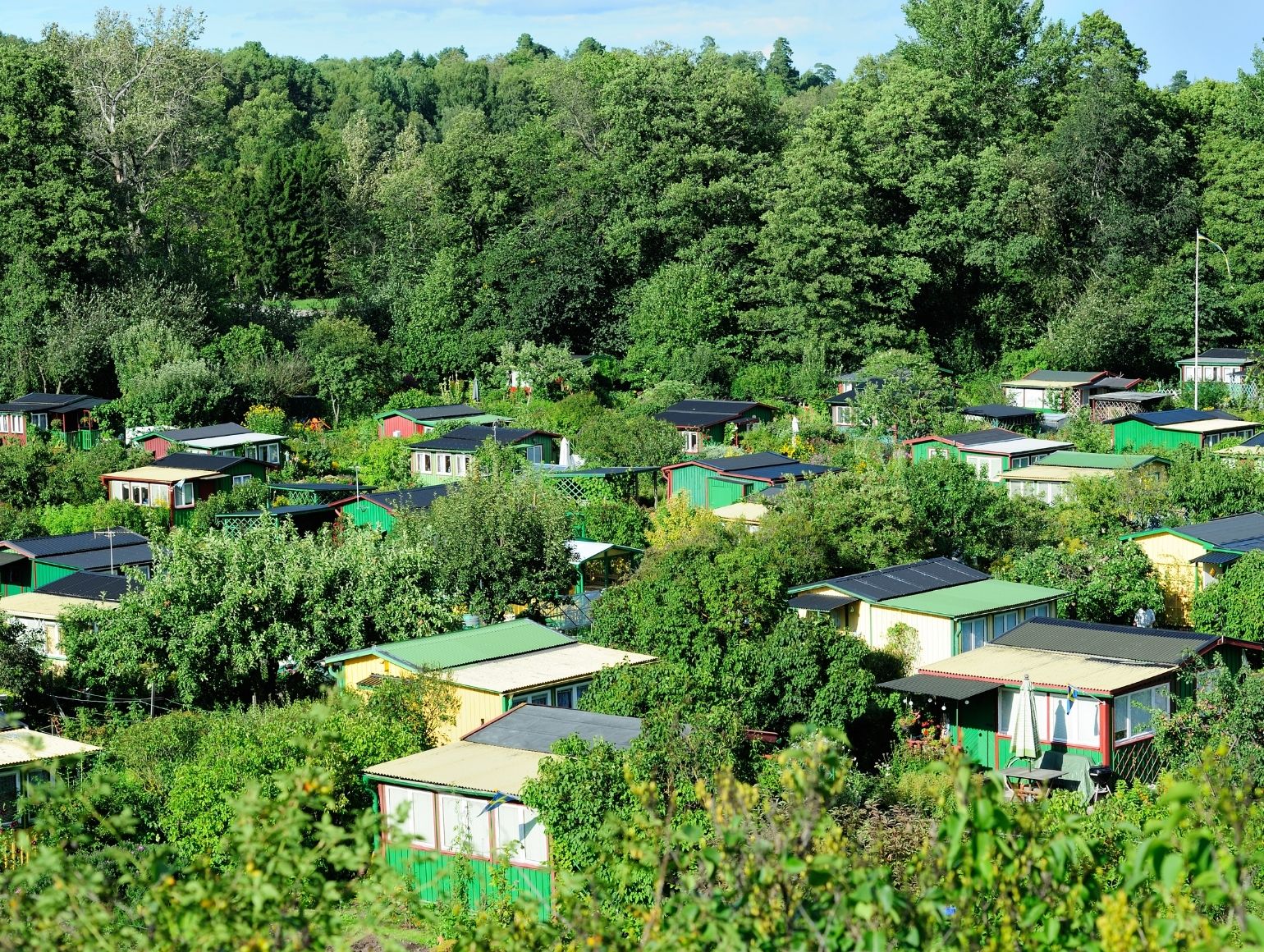
When choosing a Michigan tiny home builder, prioritize companies with direct experience in cold-climate construction, local snow load requirements, and Michigan permitting processes. Ask about their insulation systems (closed-cell spray foam preferred), moisture management approach, and whether they assist with zoning compliance. Request references from previous Michigan clients and visit a completed home during winter to assess thermal performance. The Tiny Home Industry Association (THIA) maintains a directory of certified builders.
What to Ask a Michigan Tiny Home Builder
- What insulation system do you use and what R-values do your walls, roof, and floor achieve?
- How do you handle moisture management and vapor barriers in cold climates?
- What snow load rating do you engineer your roof structures for?
- Do you assist with local permitting and zoning compliance?
- Can you provide references from Michigan clients who have lived through at least one winter?
- What heating system do you recommend and install?
- Are your homes built to IRC Appendix Q standards?
- What is your warranty coverage for weather-related issues?
Great Lakes Tiny Homes Michigan and similar regional builders offer both custom and semi-custom designs tailored for the state’s climate. Some communities on the list above have preferred builder relationships that can simplify the construction and placement process.
How to Move to a Michigan Tiny Home Community: Step-by-Step Guide
Moving to a Michigan tiny home community involves eight key steps: research zoning, visit communities, evaluate your budget, secure financing, choose your home, plan the build or move, set up utilities, and winterize before your first Michigan winter. The entire process typically takes 6 to 18 months from initial research to move-in, depending on whether you are buying an existing home or commissioning a custom build.
- Research Zoning and Legal Requirements. Identify your target region (UP, West MI, SE MI, or Northern Lower). Contact the county planning/zoning office to verify tiny home regulations. Determine whether you need a building permit, special use permit, or variance.
- Visit Communities in Person. Schedule tours of at least two to three communities. Talk to current residents about their experience. Evaluate the community during winter if possible.
- Evaluate Your Budget. Calculate total costs including home, land or lot fees, setup, and at least the first year of ongoing expenses. Factor in Michigan-specific costs like winter heating and snow removal. Consider Michigan’s property tax rate (average effective rate around 1.38%) and homestead exemption if applicable.
- Secure Financing. Tiny home financing options include personal loans, RV loans (for THOWs certified to ANSI/NFPA standards), chattel loans, and in some cases traditional mortgages for foundation-built homes. Some Michigan credit unions have developed specific products for tiny home buyers.
- Choose Your Home. Decide between purchasing a pre-built home, commissioning a custom build from a local builder, or buying within a community that offers turnkey homes. For Michigan, prioritize builders experienced in cold-climate construction.
- Plan the Build or Move. If building, establish a timeline that accounts for Michigan’s construction season (typically April through November for foundation work). If moving a THOW, arrange for transport and verify that the community or lot is ready for placement, including utility hookups.
- Set Up Utilities and Services. Connect electric, water, and sewer or septic. Set up propane delivery if applicable. Arrange for internet service, which can be limited in rural and UP locations (Starlink has become a popular solution).
- Winterize Before Your First Michigan Winter. Install or verify adequate insulation, seal all air leaks, test your heating system, insulate water pipes, and stock winter supplies including a backup heat source.
Frequently Asked Questions
Are tiny homes legal in Michigan?
Yes, tiny homes are legal in Michigan, but regulations vary by county and municipality. Foundation-built tiny homes that meet the Michigan Residential Code are generally permitted where zoning allows. Tiny homes on wheels face more restrictions and are often classified as recreational vehicles. Always check with your local county zoning office for specific requirements.
What is the minimum square footage for a house in Michigan?
Michigan does not have a statewide minimum square footage requirement. This is set at the county or township level. Some jurisdictions require 600 to 900 square feet minimum, while others, particularly in the Upper Peninsula and rural areas, have no minimum or allow structures as small as 200 square feet.
Can I live in a tiny home year-round in Michigan?
Yes, thousands of people live in tiny homes year-round in Michigan. Success depends on building or purchasing a home designed for the state’s cold winters, with proper insulation (R-20+ walls, R-38+ ceiling), a reliable heating system, and construction that can handle local snow loads.
How much does it cost to live in a tiny home community in Michigan?
Monthly costs for living in a Michigan tiny home community typically range from $400 to $1,200. This includes lot rent or HOA fees ($75 to $500), utilities ($40 to $180), heating ($60 to $200 during winter), and insurance. The total depends heavily on location and whether the community is in an urban, lakeside, or rural setting.
Can I go off-grid with a tiny home in Michigan?
Off-grid living is possible in Michigan, particularly in the Upper Peninsula and rural northern areas where zoning is minimal. Solar-plus-battery systems, well water, and composting toilets are common off-grid solutions. However, any permanent septic system must meet state sanitary code requirements, and some townships require a potable water connection for permanent residences.
What heating system works best for a tiny home in Michigan?
A cold-climate mini-split heat pump (rated to -15°F or lower) is the most efficient primary heating option for a well-insulated Michigan tiny home. Many owners pair this with a propane backup heater for extreme cold snaps. Wood stoves are popular in rural locations but require adequate clearances and proper chimney installation in a small space.
Do I need special insurance for a tiny home in Michigan?
Yes, standard homeowner’s insurance policies typically do not cover tiny homes. Foundation-built tiny homes may qualify for a dwelling policy from some insurers. THOWs usually require a specialty policy similar to RV insurance. If your tiny home is near water, flood insurance may be required or strongly recommended. Contact an insurance agent experienced with alternative housing.
What is the best region in Michigan for tiny home living?
The best region depends on your priorities. The Upper Peninsula offers the lowest costs and most flexible zoning. West Michigan provides Lake Michigan shoreline access and vibrant small towns. Southeast Michigan (Detroit/Ann Arbor) offers urban amenities and progressive ADU policies. The Traverse City area combines natural beauty with a strong local economy but has higher property values. For a comparison of communities across multiple states, see our guide to the top tiny house communities in the USA.
How do Michigan property taxes affect tiny home owners?
Michigan’s average effective property tax rate is approximately 1.38%, which is above the national average. However, tiny home owners benefit because their assessed property values are much lower than conventional homes. A tiny home on its own lot assessed at $80,000 might pay roughly $1,100 per year in property taxes. Michigan’s homestead exemption can provide additional savings on your primary residence.
Can I build a tiny home in a Michigan flood zone?
Building in a FEMA-designated flood zone is possible but adds requirements and costs. The structure typically needs to be elevated above the base flood elevation, flood insurance is required if you have a federally backed mortgage, and construction methods must comply with floodplain management regulations. Check FEMA flood maps and consult with your local floodplain administrator before purchasing waterfront property.
Resources and References
For further research, the following resources are helpful.
Michigan Government Resources: Michigan Bureau of Construction Codes (BCC) for building code information and permitting guidance. EGLE Critical Dunes Program for environmental regulations near waterways and coastal construction. Michigan Department of Health and Human Services for sanitary code and septic requirements.
National Resources: IRC Appendix AQ (Tiny Houses) at the International Code Council for building code standards specific to tiny homes. Tiny Home Industry Association (THIA) for advocacy, builder directories, and community listings. American Tiny House Association (ATHA) for zoning advocacy and educational resources. FEMA Flood Map Service Center for floodplain data.
Related Reading on illustrarch.com: The Top Tiny House Communities to Consider in the USA






Tiny House Water Systems: Your Complete Guide to Plumbing, Rainwater Harvesting and Off-Grid Solutions
A practical guide to designing a tiny house water system, covering PEX...
Bahattin Duran14 Mins read
Off-Grid Tiny House Living: Complete Setup Guide for Beginners
This guide walks you through every stage of setting up an off-grid...
Bahattin Duran15 Mins read
Tiny House with Loft: Design Ideas, Plans and Building Tips for Vertical Living
A complete guide to designing and building a tiny house with loft,...
Bahattin Duran15 Mins read
8+ Best Tiny Home Communities in South Carolina
Find tiny home communities in South Carolina. Affordable living, coastal charm, and...
Bahattin Duran20 Mins read


Leave a comment