

Casa Batlló: Gaudí’s Organic Modernisme Masterpiece
Casa Batlló stands on Barcelona's Passeig de Gràcia as one of Gaudí's most complete expressions of Catalan Modernisme. Built between 1904 and 1906, the building transforms an ordinary apartment block into a living sculpture through its bone-shaped columns, iridescent trencadís facade, dragon-scale rooftop, and deeply functional interior design.
 Furkan Sen18 March 20269 Mins read222

Table of Contents Show
Casa Batlló is Antoni Gaudí’s radical renovation of an 1877 apartment block on Barcelona’s Passeig de Gràcia, completed between 1904 and 1906. Rather than demolish the existing structure, Gaudí reimagined it from facade to rooftop, producing one of the most recognizable examples of Catalan Modernisme and a UNESCO World Heritage Site that draws nearly two million visitors each year.
The Commission: How Casa Batlló Came to Be
In 1903, textile industrialist Josep Batlló i Casanovas purchased the unremarkable building at Passeig de Gràcia 43 for 510,000 pesetas. He initially wanted it torn down entirely and replaced with something new. Gaudí persuaded him otherwise. A full renovation, the architect argued, could achieve something far more audacious than a new build, and Batlló — wanting a house that would stand apart from every other residence on the street — gave him complete creative freedom.
That freedom was not incidental. The Passeig de Gràcia had become Barcelona’s most prestigious address, where wealthy industrialists commissioned competing architects to outdo one another. The stretch where Casa Batlló stands became known as the Manzana de la Discordia (Block of Discord), a reference to the fierce professional rivalry between Gaudí, Lluís Domènech i Montaner (Casa Lleó Morera), and Josep Puig i Cadafalch (Casa Amatller), all working within steps of each other.
Gaudí submitted his renovation plans in 1904 and completed the work by 1906. Despite entering the resulting building in the Barcelona City Council’s annual competition for best new architecture, it lost twice. Only in 1962 did the city formally recognize it as a heritage landmark. Today, Gaudí’s Barcelona buildings hold seven UNESCO World Heritage designations collectively, with Casa Batlló among them since 2005.
📌 Did You Know?
When Gaudí submitted Casa Batlló to the Barcelona City Council’s best building award in 1906, it lost — and lost again the following year. The prize went to Casa Lleó Morera by Domènech i Montaner in 1906 and to Bonaventura Bassegoda’s Col·legi Comtal in 1907. It was not until 1962 that the building was formally placed on the city’s Heritage Catalog. Today it is one of the most visited architectural landmarks in Spain, receiving close to two million visitors annually.
What Is Catalan Modernisme? How Casa Batlló Fits In

Catalan Modernisme was the local expression of the broader Art Nouveau movement that swept Europe between roughly 1880 and 1910. Where French and Belgian Art Nouveau tended toward decorative sinuousness applied to conventional structures, Catalan Modernisme reached further — architects like Gaudí treated the building itself as a biological organism, with structure, ornament, and function inseparable from one another.
Casa batlló represents Modernisme in its most complete form. The building has no applied decoration in the traditional sense. Every curve on the facade serves a structural or environmental purpose. The bone-shaped columns carry load. The graduated blue tiles in the light well distribute natural light evenly to all floors. The undulating roofline creates a functional ventilation system beneath its dragon-scale surface. Gaudí’s approach to architecture as science is nowhere more legible than here.
💡 Pro Tip
When studying Casa Batlló as a case study, pay attention to the light well rather than only the facade. Gaudí enlarged the existing single well into two shafts and covered them with tiles that graduate from deep cobalt at the top to near-white at the bottom. This gradient compensates for the reduced light intensity at lower floors, achieving an even distribution without any mechanical assistance. It is one of the clearest examples of passive environmental design in pre-modern architecture.
The Facade: Dragon, Sea, or Carnival?

The street facade of casa batlló barcelona is perhaps the most debated surface in Spanish architecture. Gaudí left no written explanation for its iconography, directing the placement of each ceramic tile and stone element from the street below without detailed drawings. Over more than a century, three competing readings have emerged.
The most popular interprets the building through the legend of Sant Jordi (Saint George), patron saint of Catalonia. In this reading, the scaly ceramic rooftop is the dragon’s back; the cross-tipped tower is the saint’s sword piercing it; and the bone-shaped columns and skull-like balcony railings represent the dragon’s victims. The blue-green tiles shimmer like reptilian scales in Mediterranean sunlight.
A second reading, championed by Salvador Dalí, sees the facade as a seascape. The chromatic gradients, the wavelike undulation of the stone surface, and the way morning light reflects off the trencadís tiles suggest the surface of water — Dalí specifically compared it to Monet’s Water Lilies series. A third interpretation links the balcony masks and confetti-like mosaic to Carnival, with the facade’s crown resembling a harlequin’s cap.
All three readings are defensible, which is precisely the point. Gaudí designed ambiguity into the surface intentionally, allowing the building to mean different things to different viewers.
🎓 Expert Insight
“Gaudí has built a house according to the shapes of the sea, representing the waves on a calm day. A true sculpture of the reflections of the twilight clouds on the water.” — Salvador Dalí
Dalí’s marine reading of the facade highlights something important about Gaudí’s method: he drew structural logic and aesthetic form from natural phenomena simultaneously. The undulating stone surface functions as a structural diaphragm while visually evoking water, and the two functions reinforce rather than contradict each other.
The Interior of Casa Batlló: A Space Designed for Light and Air

Stepping inside casa batlló reveals that the exterior was not the project’s most innovative element. The interior is where Gaudí’s environmental engineering becomes most apparent. Because the building is a narrow townhouse with fenestration only on its two short facades, cross-ventilation and natural lighting are structurally difficult to achieve. Gaudí solved both problems simultaneously.
He expanded the original single light well into two shafts running vertically through the building, then lined them with thousands of ceramic tiles graduating from deep blue at the top (where light enters most intensely) to pale blue-white at lower floors (where light diminishes). The result is a perceptually even light quality throughout all apartments regardless of floor level — passive environmental control achieved entirely through geometry and material choice.
The Noble Floor, original residence of the Batlló family, is the heart of the building’s interior. The main hall features a ceiling that moves in slow waves, evoking an ocean surface viewed from below. Large oak doors carry integrated colored glass panels. A mushroom-shaped fireplace anchors the study. Not one interior wall meets at a right angle. The Batlló family occupied this floor until the 1950s; the building then passed through various owners before the Bernat family purchased it in the 1990s and opened it to the public from 2002.
⚠️ Common Mistake to Avoid
Many visitors and students describe the Casa Batlló interior as purely decorative, treating the organic forms as ornament layered over a conventional structure. This misreads the building. The curving partitions, angled columns, and graduated tile systems are all load-bearing, ventilating, or light-distributing elements. Gaudí’s forms are never applied — they are structural. Separating aesthetics from function in his work produces a fundamentally incorrect architectural reading.
The Rooftop: Gaudí’s Dragon-Scale Terrace

The rooftop of casa batllo spain is the element most likely to stop first-time visitors entirely. The main terrace surface is covered in ceramic scales that shift color from bottle green at the eastern edge through deep blue at the center to rose and pink at the west. Gaudí achieved this gradient by selecting tiles with slightly different metallic glazes and positioning them as a dragon’s overlapping scales, each angled to catch light from different directions.
Beneath the surface, the attic is constructed from 60 catenary arches that form a continuous ribbed structure — visitors inside describe the sensation as standing inside an animal’s ribcage. These arches provide both structural support and a passive ventilation plenum that regulates temperature throughout the building below.
The chimneys and ventilation stacks that emerge from the terrace are among the most sculptural elements on any rooftop in Europe. Clustered in groups, covered in trencadís mosaic in whites, greens, and deep purples, they resemble warriors or figures in carnival dress depending on the angle. Gaudí designed each cluster to serve both as a functional exhaust and as a visual composition that reads as a unified sculptural group from the street below.
For context on how this rooftop compares to Gaudí’s other Barcelona work, the Sagrada Família’s use of natural geometry deploys identical structural logic — catenary arches, hyperboloid vaults, and ruled surfaces — at a completely different scale.
🏗️ Real-World Example
Casa Milà (Barcelona, 1912): Built just a few years after Casa Batlló, Gaudí’s “La Pedrera” extends many of the same principles further. The free-plan structural system eliminated all load-bearing interior walls, allowing floor plans to be reconfigured at will. Le Corbusier visited the building years later and cited it as an early precedent for the open floor plan he would champion in modern architecture — a direct line from Gaudí’s structural experiments at Casa Batlló to the core ideas of European Modernism.
Gaudi Casa Batlló: Structural Techniques and Materials

Gaudi casa batlló was constructed through a combination of Montjuïc sandstone, iron, ceramic, and glass — materials chosen not for stylistic reasons but for their specific structural and optical properties. The sandstone on the lower floors is naturally porous and warm-toned, providing a textural contrast to the shimmering ceramic above. The iron balcony railings, shaped into organic mask forms, are structurally continuous with the facade rather than bolted additions.
The trencadís technique — broken ceramic tile shards set in mortar — appears throughout the building’s exterior surfaces and rooftop. Gaudí had refined this method across earlier projects including Park Güell and Palau Güell. Its advantages are practical as well as aesthetic: small shards conform to curved surfaces that conventional tiles cannot cover, the glazed ceramic surface resists moisture and ultraviolet degradation, and the irregular tesserae scatter light rather than reflecting it in a single direction.
To understand how Gaudí developed his design methods across his entire career, from catenary modeling to trencadís application, the continuity between his projects is striking. Casa Batlló represents his mature period at its most concentrated.
💡 Pro Tip
If you are presenting Casa Batlló in an academic or professional context, focus on the light well as your primary analytical case study rather than the facade. The facade is visually compelling but complex to analyze without extensive material knowledge. The light well, by contrast, demonstrates passive environmental design principles that translate directly into contemporary sustainable architecture practice — graduated surface reflectance, vertical daylight redistribution, and stack-effect ventilation all in one integrated system.
Casa Batlló’s Influence on Contemporary Architecture

Casa batlló gaudi did not produce an immediate stylistic school the way modernist movements in Germany or France did. Gaudí’s methods were too personal and too labor-intensive to be directly replicated. What the building transmitted instead was a set of principles: structure derived from natural form, materiality selected for performance rather than appearance, and the rejection of applied ornament in favor of integrated design.
Those principles resonate sharply in contemporary architectural discourse. Biomimetic design, computational form-finding, and passive environmental systems all find precedents in Gaudí’s working method. The catenary arch modeling he conducted with hanging chains anticipates parametric structural analysis by decades. As noted in recent assessments of his legacy, Gaudí is now considered a pioneer of parametric design — his analog computation of optimal structural forms predating digital tools by a century.
Barcelona’s designation as World Capital of Architecture in 2026, coinciding with the centenary of Gaudí’s death, has amplified this conversation. The city’s ten districts are hosting events examining how his innovations — buildings that ventilate, adapt, and engage their environment — speak to architecture’s current challenges more directly than most 20th-century modernist work.
🔢 Quick Numbers
- UNESCO World Heritage designation: 2005 (part of the “Works of Antoni Gaudí” group inscription)
- Construction period: 1904–1906 — a full renovation completed in approximately 18 months
- Rooftop structure: 60 catenary arches forming the attic, all built without a single straight line
- Annual visitors: approximately 2 million, making it one of Spain’s most visited cultural sites (Casa Batlló, 2024)
Visiting Casa Batlló: What to Know Before You Go

The building at Passeig de Gràcia 43, Barcelona, operates daily as a museum and cultural venue. Ticket options range from a standard audio-guided experience to a premium visit that includes access to the Batlló family’s private residence and an augmented reality tablet that layers historical imagery over the existing spaces.
The rooftop is included in all ticket categories and offers views over the Eixample district’s grid — the urban plan by Ildefons Cerdà that shaped the entire neighborhood. Booking tickets in advance is strongly recommended, particularly between April and October; the building reaches capacity and manages entry through timed slots.
Evening visits have a distinct character. The facade’s trencadís surface changes dramatically depending on light conditions, and the interior spaces feel different without the full ambient daylight that defines the daytime experience. For architecture students, a morning visit during lower-traffic hours allows closer examination of the light well’s tile gradient and the rooftop chimney clusters without the crowd pressure that mid-day visits involve.
Casa Batlló sits within walking distance of two other Gaudí buildings — Casa Milà (La Pedrera) a few blocks north and the entirety of the Eixample district’s Modernisme landmarks. The official Casa Batlló website provides current pricing, opening hours, and ticket booking.
✅ Key Takeaways
- Casa Batlló was a renovation, not a new build — Gaudí transformed an 1877 apartment block into a UNESCO World Heritage landmark between 1904 and 1906.
- The building’s organic forms are structural, not decorative: bone columns carry load, graduated tiles distribute light, and catenary arches ventilate the building passively.
- The facade’s iconography is deliberately ambiguous, drawing on the Sant Jordi dragon legend, marine imagery, and Carnival symbolism simultaneously.
- Gaudí’s working method at Casa Batlló — form derived from natural systems, materials chosen for performance — anticipates biomimetic and parametric design by decades.
- As a Modernisme case study, Casa Batlló is most productively analyzed through its light well and rooftop ventilation system rather than its visual surface alone.
Further Reading and Official Sources
For primary source documentation on the building’s architecture and conservation history, the official Casa Batlló architectural pages provide detailed section-by-section breakdowns of the facade, interior, and rooftop. UNESCO’s World Heritage documentation for the Works of Antoni Gaudí covers the Outstanding Universal Value assessment for all seven listed properties, including Casa Batlló. ArchDaily’s documentation of the building offers detailed plan drawings and analytical photography for study purposes.
For the broader context of Catalan Modernisme and how it sits within European architectural history, the Wikipedia entry on Casa Batlló provides a well-sourced historical overview. The ArchDaily coverage of Gaudí remains the best single resource for comparative analysis across his projects.



Futuro House Production Revived in Finland After Decades-Long Hiatus
A Facebook listing for abandoned moulds led to the first new Futuro...
 illustrarch Editoral Team3 Mins read

Building Your Dream Home in NSW: What You Should Know About Montgomery Homes
Montgomery Homes has been building across Sydney, Newcastle, the Hunter, Wollongong and...
illustrarch Editoral Team4 Mins read

Designing a Home Theater: Where Drapery Fits Into the Plan
In a media room the curtains are a performance layer, not decoration....
illustrarch Editoral Team3 Mins read
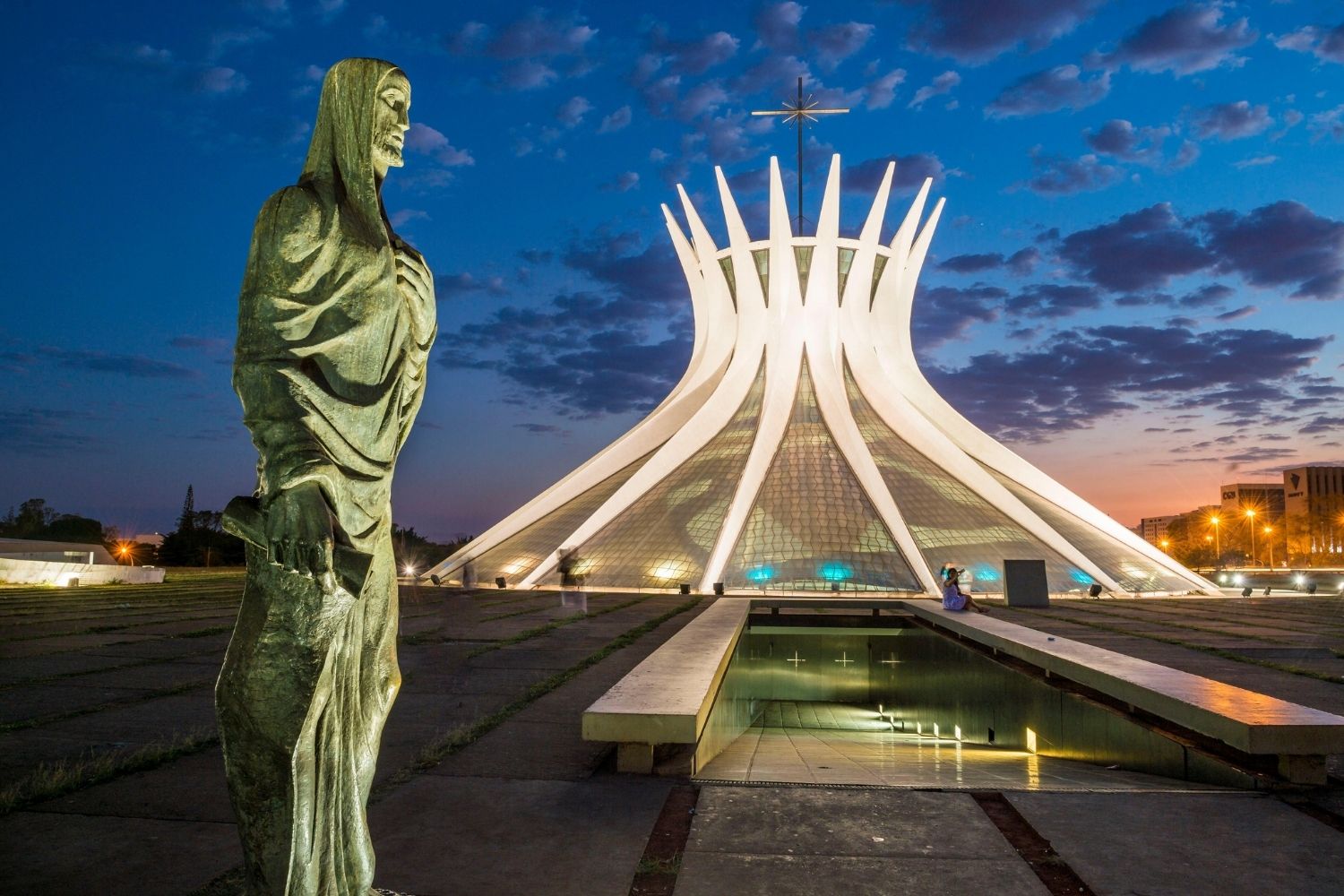
Oscar Niemeyer’s Cathedral of Brasília: The Hyperboloid Concrete Hymn
The Cathedral of Brasília reads as a single gesture, yet it stood...
Furkan Sen7 Mins read


Leave a comment