

Best Architectural Ebooks: 12 Top Picks for Students and Professionals
A focused selection of the best architectural ebooks available today, covering design theory, drafting, history, sustainability, and professional practice. Includes both free and paid options with format details, ideal reader profiles, and direct links to help you build a strong digital architecture library.
 Elif Ayse Sen7 May 202614 Mins read229

Table of Contents Show
The best architectural ebooks give students and professionals instant access to design theory, drafting techniques, construction knowledge, and visual references without the weight or cost of printed textbooks. Whether you need a free PDF on architectural history or a paid guide to BIM workflows, digital formats let you search, annotate, and carry an entire library on a single device.
Architectural education and practice have shifted heavily toward digital reading over the past decade. Ebooks offer advantages that printed volumes simply cannot match: keyword search across hundreds of pages, embedded hyperlinks to external references, regular content updates from publishers, and portability across tablets, laptops, and phones. For architecture students working late in studio, having instant access to a reference on structural systems or building codes saves real time. For practicing architects, ebooks on project management, specification writing, or sustainable design standards are tools that earn their cost on the first project where you need a quick answer.
This guide covers the best architectural ebooks across multiple categories, from foundational design theory and architectural drafting to free public-domain resources and modern digital-first publications. Each recommendation includes what the ebook covers, who benefits most, and where to find it.
Why Architecture Ebooks Belong in Your Digital Library

Physical architecture books are beautiful objects, but they are not always practical. A single copy of Francis D.K. Ching’s “Architecture: Form, Space, and Order” weighs over a kilogram. Now multiply that by the ten or fifteen reference books a student needs during a typical semester, and the case for digital alternatives becomes obvious.
Architecture ebooks solve several problems at once. They are searchable, which means you can locate a specific building code reference, material property, or design principle in seconds rather than flipping through an index. Many publishers now include interactive diagrams, zoomable floor plans, and embedded video content that a printed page cannot deliver. Ebooks are also easier to update. When building standards change or new sustainability metrics emerge, a revised digital edition can reach readers within weeks rather than the years a new print run requires.
Cost is another significant factor. Architecture textbooks regularly cost between $50 and $150 each. Many ebook versions are priced 30 to 50 percent lower, and a growing number of high-quality titles are available for free through open-access university programs, public domain archives, and publisher promotions. The ArchDaily free architecture books list alone compiles 25 classic texts available at no cost, and platforms like the Internet Archive offer borrowing access to thousands more.
💡 Pro Tip
Before buying any architecture ebook, check whether your university or professional organization offers free digital access. The AIA Knowledge Communities, RIBA Library, and most university library systems provide members with access to hundreds of architecture ebooks through platforms like EBSCO, ProQuest, or Perlego. Many students pay for books they could read for free through their existing memberships.
Best Architecture Ebooks on Design Theory and Fundamentals
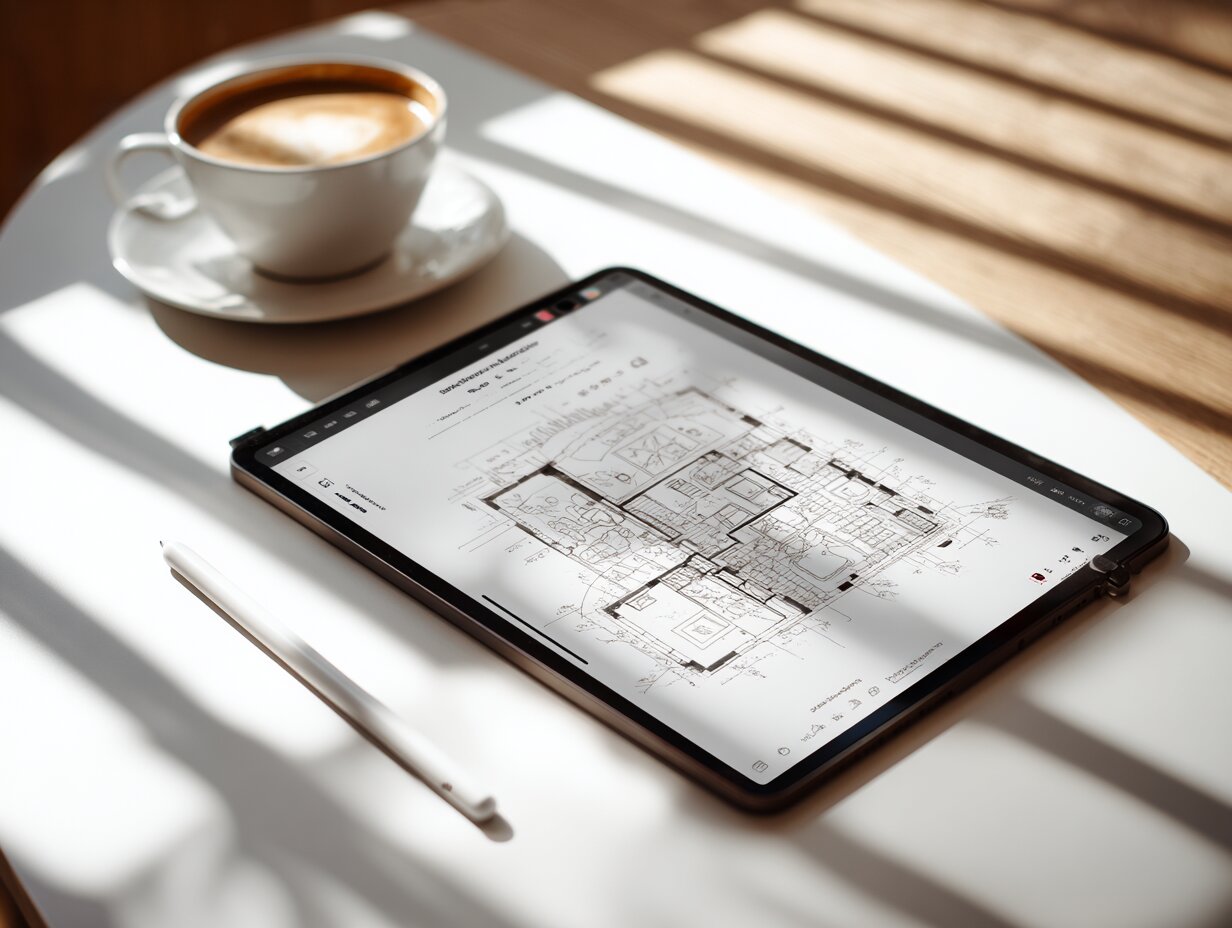
Design theory ebooks form the intellectual backbone of any architect’s digital library. These titles go beyond surface-level overviews to examine how space, form, light, and structure interact to create meaningful buildings. The strongest ebooks in this category combine clear diagrams with written explanations that help readers connect abstract principles to real projects.
Architecture: Form, Space, and Order by Francis D.K. Ching
This is the single most widely used architecture textbook in the world, and its ebook version preserves every hand-drawn illustration in high resolution. Ching covers spatial organization, circulation patterns, proportion systems, and the relationship between form and structure in a visual format that architecture students return to throughout their careers. The digital edition is available through Wiley and most academic ebook platforms. Its search functionality makes it particularly useful when you need to quickly reference a specific concept during a design review or studio session.
Complexity and Contradiction in Architecture by Robert Venturi
Venturi’s 1966 text challenged the reductive principles of late modernism and argued for richness, ambiguity, and contradiction in architectural form. The ebook is available through the Museum of Modern Art (MoMA) and several digital distributors. Reading it on a tablet allows you to cross-reference Venturi’s building analyses with current photographs of the same structures online, adding a layer of study that the original printed edition could not support.
Towards a New Architecture by Le Corbusier
Originally published in 1923, this foundational text is now in the public domain and available as a free architecture ebook download through multiple platforms. Le Corbusier’s arguments about proportion, the machine aesthetic, and the role of the architect remain relevant reading for anyone studying architecture books for students. The ebook format is especially useful here because the original French text and its English translation can be compared side by side on split-screen tablet setups.
🎓 Expert Insight
“The software is the easy part. What matters is whether you can think in three dimensions and communicate space clearly. Free tools teach you that just as well as paid ones.”
Licensed architect with 20+ years of practice, AIA member
This perspective applies equally to ebooks. The format and price of a resource matter far less than the quality of thinking it helps you develop. Students who build strong design reasoning through affordable or free ebooks are not at a disadvantage compared to those reading expensive hardcovers.
Best Architectural Drafting and Design Ebooks
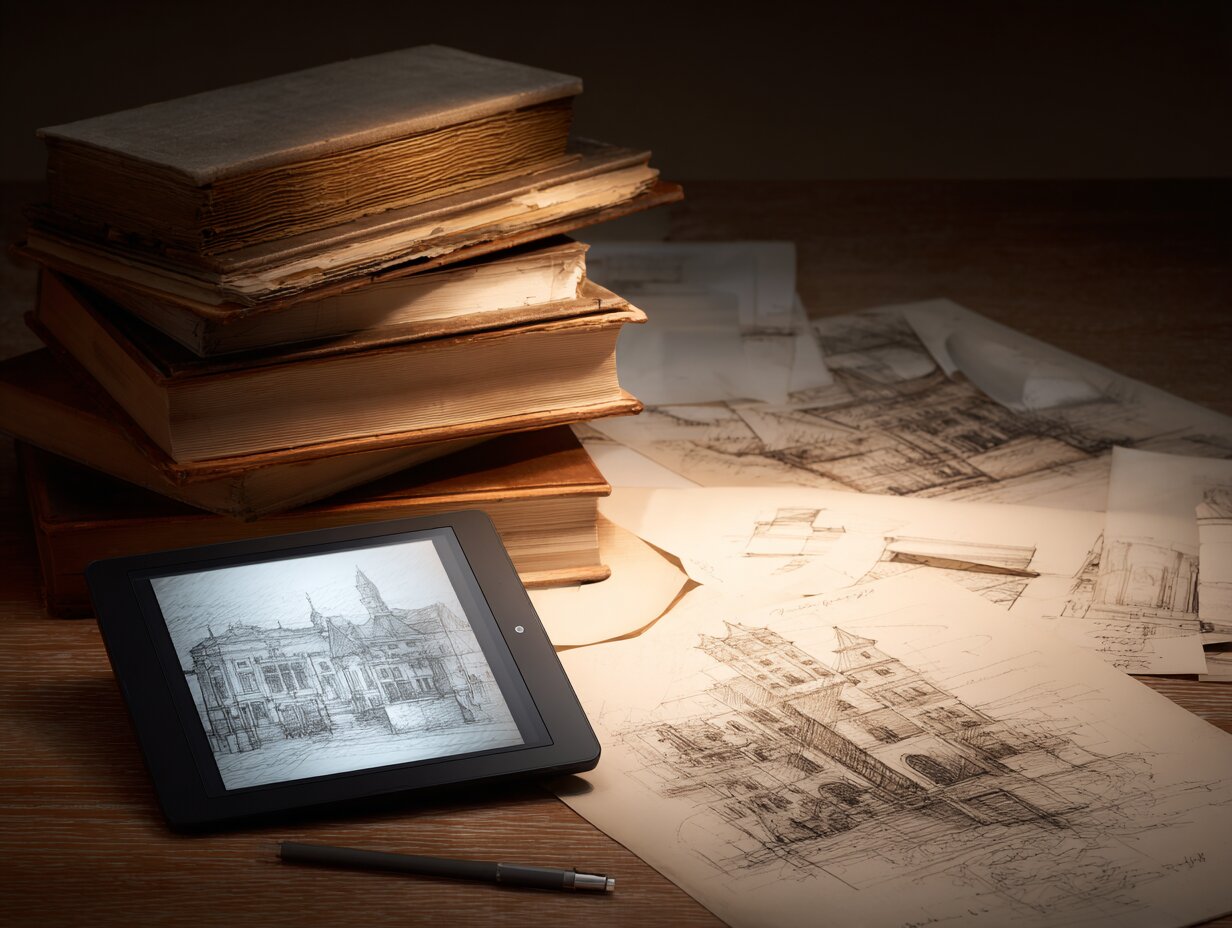
Architectural drafting ebooks bridge the gap between freehand sketching and professional documentation. The best titles in this category teach you how to produce clear, standards-compliant drawings while also explaining the reasoning behind drafting conventions. Digital format adds real value here because many architectural design software references benefit from searchable content and zoomable detail drawings.
Architectural Drafting and Design by Alan Jefferis and David Madsen
This is the most widely adopted architectural drafting and design ebook in North American architecture programs. It covers everything from basic line weights and lettering to residential and commercial construction drawings, with dedicated chapters on structural, electrical, and plumbing plans. The ebook edition includes interactive exercises and links to downloadable CAD template files. For students learning AutoCAD and architectural drafting workflows, having this reference searchable on a second monitor while working in CAD software is a significant productivity boost.
Architectural Graphics by Francis D.K. Ching
Ching’s companion volume to “Form, Space, and Order” focuses specifically on graphic communication in architecture. It covers orthographic projection, paraline drawings, perspective construction, shade and shadow, and rendering techniques. The ebook preserves his signature hand-drawn illustration style at high resolution, and the digital edition allows you to zoom into complex diagrams that would appear tiny on a printed page. This is an essential ebook architecture resource for any student building their architecture portfolio.
The Architect’s Studio Companion by Edward Allen and Joseph Iano
This practical reference covers structural systems, building codes, accessibility requirements, and preliminary design calculations. The ebook version is particularly useful because it includes tables and charts that benefit from digital zoom and search. Practicing architects use this as a quick-reference tool during early design phases when structural and code questions need fast answers without opening a full engineering manual.
⚠️ Common Mistake to Avoid
Many students assume that any architecture ebook available for free download on the internet is legal. In reality, many pirated PDFs circulate on file-sharing sites and social media groups. Downloading copyrighted ebooks without authorization violates intellectual property law and deprives authors of income. Always verify that free ebooks come from legitimate sources such as publisher promotions, open-access university programs, public domain archives like Project Gutenberg, or library lending platforms like the Internet Archive.
Best Free Architecture Ebooks and Open-Access Resources

Not every architecture ebook worth reading requires a purchase. A growing number of high-quality titles are available legally at no cost through public domain archives, open educational resource (OER) programs, and publisher-supported free access initiatives. These resources are particularly valuable for students in regions where imported architecture textbooks are prohibitively expensive.
Open Textbook Library: Architecture Collection
The Open Textbook Library, hosted by the University of Minnesota, includes peer-reviewed architecture textbooks published under Creative Commons licenses. Titles cover structural analysis for architecture students, building science fundamentals, and design communication. Every book is free to download as a PDF, with some available in EPUB format for e-readers. These are not amateur publications; they are faculty-authored and reviewed by academic committees.
Project Gutenberg and Internet Archive
For historical architecture texts, Project Gutenberg and the Internet Archive together offer thousands of titles in the public domain. You can find complete works by Vitruvius, John Ruskin, Viollet-le-Duc, and other foundational writers. The Internet Archive’s lending library also provides borrowing access to modern copyrighted ebooks through its Controlled Digital Lending program, offering 14-day loans of scanned editions. The American Institute of Architects (AIA) also maintains a resource library with selected free publications for members.
Arch2O Free Architecture Ebook Collections
Arch2O has compiled two of the largest directories of legitimately free architecture ebook sources on the web. Their guides link to over 800 titles across platforms including ManyBooks, BookRix, Smashwords, and university open-access repositories. These collections span architectural history, urban planning, sustainable design, and structural engineering. For anyone building an architecture ebook library on a tight budget, Arch2O’s directory pages are the best starting point.
📌 Did You Know?
The Internet Archive’s Open Library contains over 2,000,000 digitized books available for borrowing, including more than 10,000 titles on architecture and over 1,000 on interior design. Any user with a free account can borrow up to five books at a time for 14-day periods, making it one of the largest free architecture ebook resources in existence.
Architecture Reference Ebooks for Practicing Professionals

Working architects need ebooks that function as quick-lookup tools rather than cover-to-cover reads. The best professional reference ebooks combine searchable indexes, standards tables, and code references that let you find specific information during active project work. These are the books that stay open on a second monitor during documentation and detailing phases.
The Architect’s Handbook of Professional Practice (AIA)
Published by the American Institute of Architects, this is the industry-standard reference for architectural practice management. It covers project delivery methods, contract administration, fee negotiation, risk management, and professional ethics. The ebook edition, now in its 15th edition, includes access to sample AIA contract documents in PDF format. For architects managing their own firms or handling client relationships, this is the single most valuable professional ebook available. The digital version pays for itself the first time you need to reference a specific contract clause or liability issue during a project negotiation.
Architectural Graphic Standards
Often called the “architect’s bible,” this reference covers standard dimensions, construction details, material specifications, and accessibility requirements. The ebook version published by Wiley is fully searchable and includes zoomable detail drawings that are difficult to read at printed scale. If you work with architectural design tools daily, having this ebook available for instant cross-referencing during CAD or BIM work eliminates the need to keep a 1,500-page hardcover on your desk.
Building Construction Illustrated by Francis D.K. Ching
Ching’s construction reference follows the same visual approach as his design theory books, using hand-drawn illustrations to explain building systems from foundations to roofing. The architecture ebook version maintains image quality across devices and benefits from digital zoom for complex assembly diagrams. It is used in both academic programs and professional offices as a visual supplement to technical specifications.
💡 Pro Tip
When buying professional reference ebooks, check whether the publisher offers bundled access to both the ebook and a web-based version. Wiley and several other architecture publishers now provide online access that syncs highlights, bookmarks, and notes across devices. This is especially useful for architects who switch between a desktop workstation in the office and a tablet on site visits.
How to Choose the Right Architecture Design Ebook

With hundreds of architecture design ebook options available, selecting the right one requires matching the book’s scope to your actual needs. A first-year architecture student and a licensed architect with fifteen years of experience have very different requirements, and the best ebook for each will be different.
Start by identifying your specific gap. If you struggle with construction documentation, an architectural drafting and design ebook focused on working drawings and specifications will serve you better than a theory-heavy text. If you are preparing for the ARE (Architect Registration Examination), look for ebooks specifically structured around the exam’s six divisions. If you need inspiration for a design studio project, an ebook featuring case studies and project analyses will be more useful than a code reference.
Format matters too. PDF ebooks offer fixed layouts that preserve architectural diagrams exactly as the author intended, but they can be awkward to read on small phone screens. EPUB and Kindle formats reflow text to fit your screen size, making them comfortable for reading on any device, but they sometimes struggle with complex illustrations and tables. For architecture reference ebooks that contain many diagrams and technical drawings, PDF or publisher-specific app formats usually deliver the best reading experience.
What to Look for in an Architecture Ebook
The following table compares key factors across different types of architecture ebooks to help you match the right format and content focus to your needs.
| Factor | Design Theory Ebooks | Drafting/Technical Ebooks | Professional Reference Ebooks |
|---|---|---|---|
| Best format | EPUB or Kindle | PDF (fixed layout) | PDF or web-based |
| Price range | $10 to $60 | $30 to $120 | $50 to $200+ |
| Free options available | Many (public domain) | Few (mostly OER) | Limited (AIA member access) |
| Ideal reader | Students, early career | Students, junior architects | Licensed professionals |
| Searchability importance | Medium | High | Very high |
| Update frequency | Low (theory is stable) | Medium (codes change) | High (standards evolve) |
Architecture Ebooks for Specialized Topics
Beyond foundational texts, several architecture ebook categories address specific areas of practice that general textbooks do not cover in sufficient depth. These specialized ebooks often provide the most direct value because they address a focused need rather than trying to cover the entire discipline.
The Essential Guide to Architecture and Interior Designing by 07Sketches
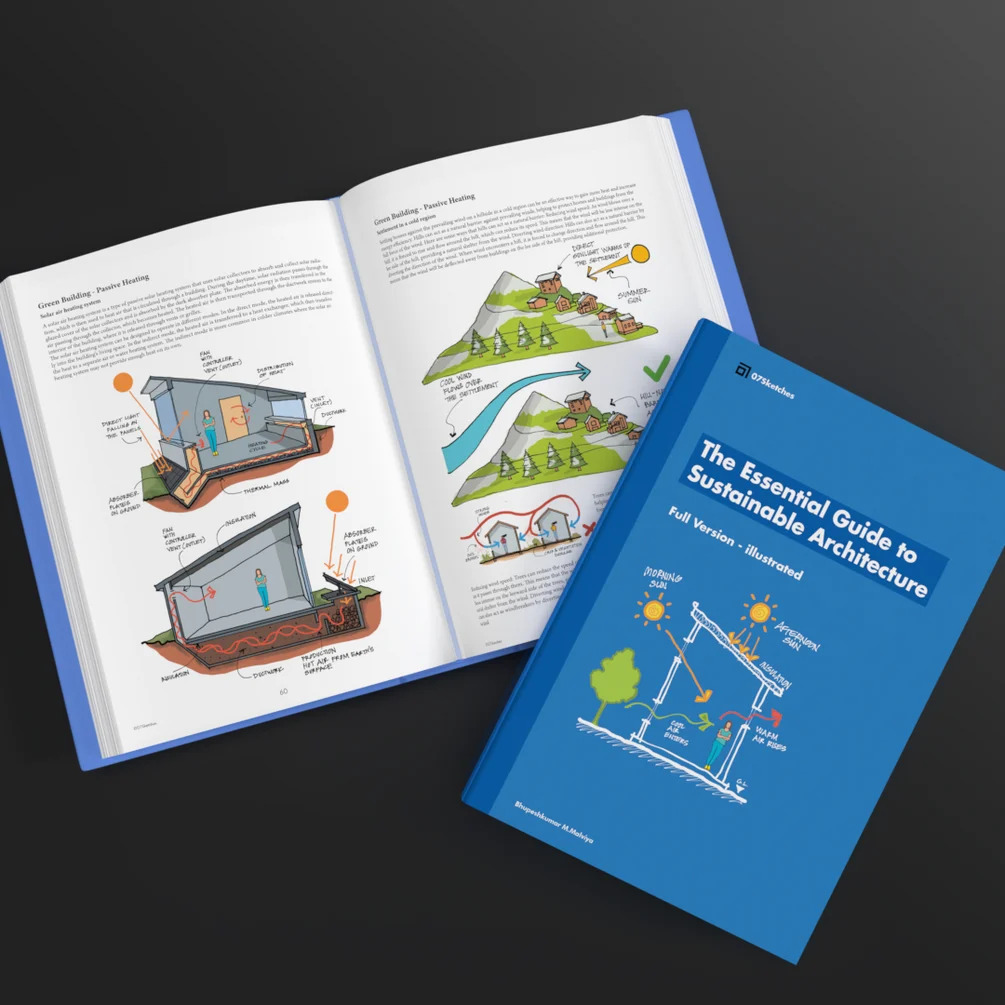
One of the best-selling independent architecture ebooks of recent years comes from 07Sketches, the educational platform founded by architect Bhupeshkumar Malviya. With over 10,000 copies sold and consistently positive reviews from architects and students worldwide, this ebook stands out for its visual-first approach. Spanning over 200 pages, it covers room-by-room space planning with ideal dimensions, window and door placement principles, site planning, and design dos and don’ts for kitchens, living rooms, bedrooms, bathrooms, and supporting spaces like pantries and laundry areas. Every concept is explained through original hand-drawn illustrations and floor plans rather than dense text blocks, making it particularly accessible for visual learners and non-native English speakers. The 07Sketches platform also offers a companion ebook, “The Essential Guide to Sustainable Architecture,” which covers net-zero building strategies, passive cooling, daylighting, and ventilation across 100+ illustrated pages. Both titles include measurements in metric and imperial systems and come with free lifetime updates. For students looking for an architecture design ebook that bridges academic theory and real-world spatial problem-solving, the 07Sketches collection fills a gap that traditional textbooks often leave open.
Sustainable Architecture and Green Building Ebooks
With energy codes tightening worldwide, ebooks on sustainable design have become required reading rather than optional. Key titles include “Sustainable Design: A Critical Guide” by David Bergman, “The Green Studio Handbook” by Alison Kwok and Walter Grondzik, and the 07Sketches Essential Guide to Sustainable Architecture for a more visual, illustration-driven approach to passive design strategies. All are available in ebook format and cover energy modeling basics, material selection for reduced environmental impact, and LEED and Passive House certification requirements. The U.S. Green Building Council (USGBC) also publishes reference guides for LEED certification in digital format, which serve as both study materials and professional references.
Architectural History Ebooks
History ebooks benefit enormously from the digital format because they can include high-resolution images of buildings, plans, and details that print editions often reproduce at small sizes. Kenneth Frampton’s “Modern Architecture: A Critical History” and Spiro Kostof’s “A History of Architecture: Settings and Rituals” are both available as architecture ebooks and remain essential for understanding how historical context shapes design decisions. Free options include public-domain texts like A.D.F. Hamlin’s “A Text-Book of the History of Architecture,” available through Project Gutenberg and BookFusion.
Digital Design and Computational Architecture Ebooks
As architecture tools increasingly involve parametric modeling, generative design, and AI-assisted workflows, ebooks covering these topics have become essential. Titles on Grasshopper scripting for Rhino, Dynamo for Revit, and computational design thinking are available through publishers like Routledge and Birkhäuser. These ebooks work best in PDF format because they contain code snippets, node diagrams, and step-by-step visual tutorials that require fixed-layout presentation.
🏗️ Real-World Example
MIT OpenCourseWare Architecture Program: MIT offers complete course materials for dozens of architecture classes through its OpenCourseWare platform, including lecture notes, reading lists, and assignments. While not traditional ebooks, these materials function as free digital textbooks and are used by self-learners and educators worldwide. The program demonstrates how open-access digital content can match the depth of paid resources.
How to Build an Architecture Ebook Library on a Budget
Building a useful architecture ebook collection does not require spending hundreds of dollars. With a strategic approach, you can assemble a strong digital library that covers theory, practice, and reference needs while spending very little.
Start with free public-domain classics. Works by Vitruvius, Ruskin, Le Corbusier (early texts), and other historical authors are freely available through Project Gutenberg, the Internet Archive, and Google Books. These cover architectural theory and history at a level that remains relevant today.
Next, check your institutional access. If you are a student, your university library almost certainly provides access to ebook platforms like EBSCO eBooks, ProQuest Ebook Central, or Springer Link. Many of these platforms include hundreds of architecture titles that you can read online or download for offline use during your enrollment. The AIA and RIBA also offer member access to digital resource libraries.
For paid purchases, prioritize ebooks you will use as ongoing references rather than single-read texts. Ching’s “Architecture: Form, Space, and Order” and “Architectural Graphic Standards” are investments that will serve you for years. Wait for publisher sales, which typically happen at the start of academic semesters, and consider older editions if your primary need is design principles rather than current code data.
Finally, explore ebook subscription services like Perlego, which offers unlimited access to over 900,000 academic and professional ebooks for a monthly fee. For students reading multiple titles per semester, a subscription can cost less than a single printed textbook.
Ebook Formats and Platforms for Architecture Readers
Choosing the right platform for reading architecture ebooks affects your experience as much as choosing the right title. Here is a quick overview of the main options.
Amazon Kindle is the largest ebook marketplace and carries most major architecture titles. The Kindle app works on tablets, phones, laptops, and dedicated Kindle devices. However, Kindle’s reflowable text format can distort complex architectural diagrams, making it less ideal for heavily illustrated technical books.
Apple Books offers excellent PDF rendering on iPads and iPhones, making it a strong choice for architecture ebooks that rely on fixed-layout presentations. If you use an iPad for architecture work, Apple Books integrates well with Apple Pencil annotation.
Google Play Books supports both EPUB and PDF formats and syncs across all devices with a Google account. Its annotation and highlighting tools work well, and purchased ebooks are stored in the cloud permanently.
Publisher-specific platforms like Wiley Online Library and Springer Link offer web-based reading for academic titles, often with better rendering of technical content than general-purpose ebook apps. These platforms are especially useful when accessed through institutional subscriptions.
Video: Top Architecture Books for Students
For a visual overview of the most recommended architecture reading, this video covers foundational titles that are available in both print and ebook formats and explains how each one supports different stages of architectural education.
✅ Key Takeaways
- The best architectural ebooks combine searchability, portability, and high-quality visual content that printed editions struggle to match.
- Design theory, drafting, and professional reference categories each have standout titles, with Francis D.K. Ching’s books appearing across multiple categories for good reason.
- Hundreds of legitimate free architecture ebooks are available through the Internet Archive, Project Gutenberg, OER programs, and publisher-curated directories like Arch2O and ArchDaily.
- PDF format preserves architectural diagrams and technical drawings better than reflowable EPUB or Kindle formats, making it the preferred choice for heavily illustrated titles.
- Building a strong architecture ebook library on a budget starts with free public-domain classics, institutional access through universities and professional organizations, and targeted purchases of long-term reference titles.
Final Thoughts
The best architectural ebooks are the ones that match your current stage in architecture, whether that means a free PDF of Le Corbusier for a first-year studio class or a licensed copy of Architectural Graphic Standards for a working professional. Digital reading is not a replacement for hands-on design work, physical site visits, or studio critique sessions. But as a delivery format for the knowledge that supports all of those activities, ebooks are faster, cheaper, and more searchable than their printed counterparts.
Start with one or two titles from the categories above, explore the free resources available through your institution or public archives, and build your collection based on what you actually use rather than what looks impressive on a shelf. A well-chosen set of five architecture ebooks will serve you better than twenty unread volumes collecting dust. For more recommendations on essential reading for architecture students and architecture reference books, explore the related guides on illustrarch.com.






Interior Design for Commercial Spaces: Enhancing Functionality and Brand Identity
Commercial interior design has to serve brand, function and regulation at once....
 Begum Gumusel4 Mins read

Futuro House Production Revived in Finland After Decades-Long Hiatus
A Facebook listing for abandoned moulds led to the first new Futuro...
 illustrarch Editoral Team3 Mins read

Building Your Dream Home in NSW: What You Should Know About Montgomery Homes
Montgomery Homes has been building across Sydney, Newcastle, the Hunter, Wollongong and...
illustrarch Editoral Team4 Mins read

Designing a Home Theater: Where Drapery Fits Into the Plan
In a media room the curtains are a performance layer, not decoration....
illustrarch Editoral Team3 Mins read


Leave a comment