

Rammed Earth vs Adobe Construction: Ancient Techniques Compared
Rammed earth and adobe are the two oldest earthen construction techniques still used today, but they behave very differently on site. This guide breaks down how each is built, their thermal and structural performance, embodied carbon, costs, and where each makes the most sense for modern architecture.
 Furkan Sen13 May 202611 Mins read204
Table of Contents Show
Rammed earth and adobe are two of the oldest earthen construction methods still used in modern architecture. Rammed earth is built by compacting damp soil into formwork to create monolithic walls, while adobe construction relies on sun-dried mud bricks laid with mortar. Both share similar materials but differ in structure, labour, climate suitability, and finish.
What Is the Difference Between Rammed Earth and Adobe?
The simplest way to understand these techniques is to think of rammed earth as a wall that is poured and pounded in place, and adobe as a wall stacked from individually moulded bricks. Both methods use roughly the same raw ingredients of clay, sand, silt and a small amount of water. The difference is how those ingredients become a wall.
In rammed earth construction, a slightly damp soil mix is poured into a tall formwork and then compacted in 10-25 cm layers using a manual or pneumatic tamper. After compaction, the formwork is removed and the wall is structurally usable almost immediately. Layered horizontal bands often remain visible in the finished surface, giving rammed earth walls their distinctive geological appearance, which is one reason architects in projects like Patio Guapuruvu House in Brazil leave them exposed as the final interior finish, as covered in our article on embracing rammed earth at Patio Guapuruvu House. The Wikipedia entry on rammed earth traces evidence of the technique to Neolithic sites of the Fertile Crescent and the Yangshao and Longshan cultures in China dating to 5000 BCE.
Adobe construction works in two stages. First, a wetter mud mix, often with straw or dung as a binder, is shaped in wooden forms and left to dry in the sun for several weeks. The resulting bricks are then assembled into walls using mud mortar, a process closer to traditional masonry. The Spanish word adobe itself comes from Arabic at-tūb, meaning mud brick, and according to the Wikipedia entry on adobe, adobe architecture has been dated to before 5,100 BP and is used throughout the world.
💡 Pro Tip
When deciding between the two techniques on a residential project, run a simple soil shake test before committing. Rammed earth performs best with a lower clay fraction and more sand and gravel, while adobe tolerates a higher clay fraction (often 15-25% clay with the remainder sand). Using site soil that is wrong for the chosen method is the most common reason small earthen builds fail in their first wet season.
How Are Rammed Earth Walls Built?
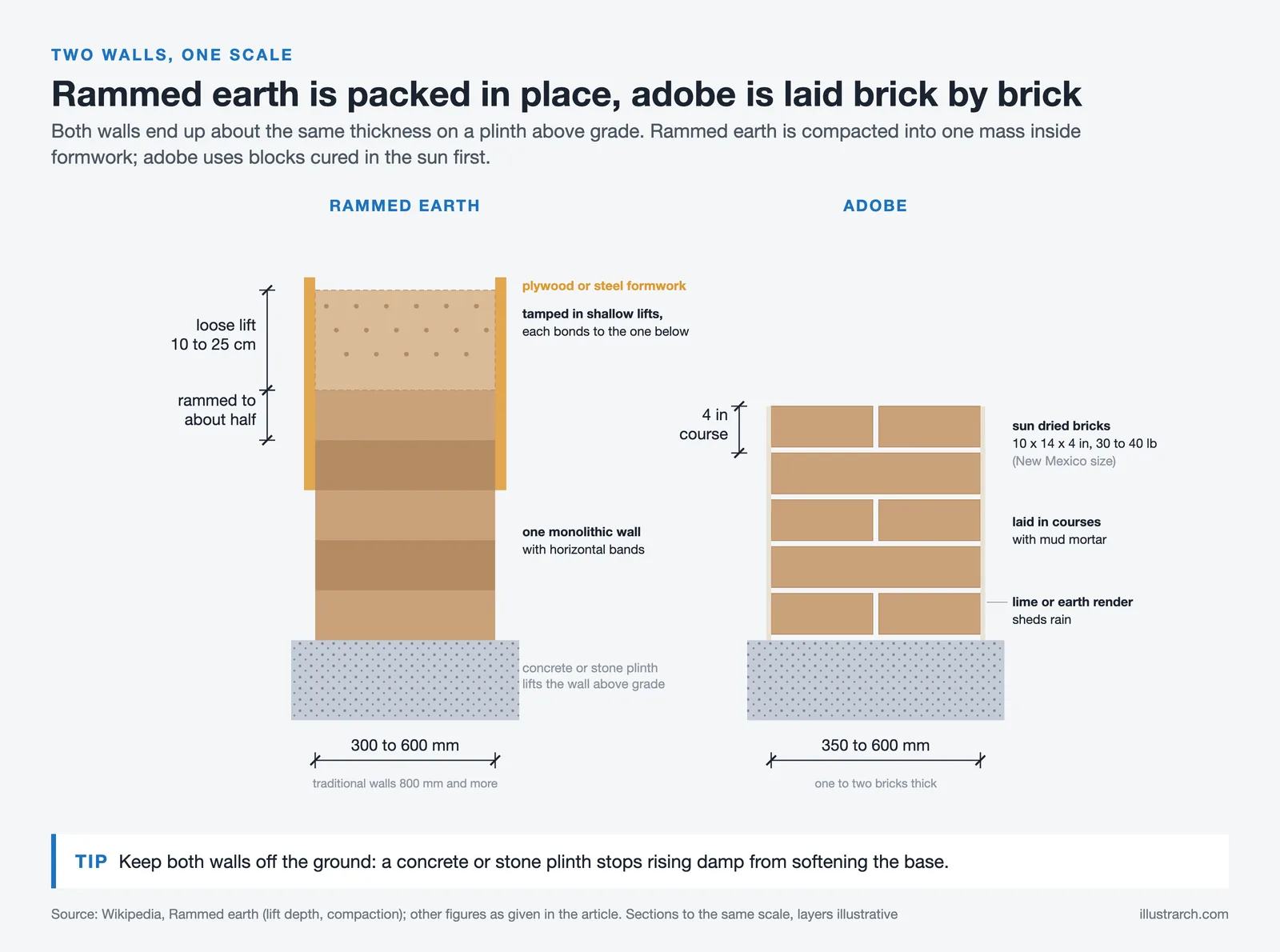
A rammed earth wall is essentially a controlled compaction process. The construction crew sets up a sturdy formwork, usually plywood or steel panels braced against lateral pressure, on a concrete or stone foundation that lifts the earth wall above grade and away from rising damp. Soil with the right particle size distribution is mixed with water until it reaches an optimum moisture content, which is the point where the soil compacts most densely.
The mix is shovelled into the formwork in shallow lifts and tamped down to roughly half its loose volume. Each compacted lift bonds mechanically to the one below, building the wall in horizontal layers known as lifts or courses. According to the Wikipedia overview of rammed earth, soil mix is poured into the formwork to a depth of 10 to 25 cm and then compacted to approximately 50% of its original volume. Once the formwork reaches the top of the section, it is removed, repositioned, and the next bay is built. Modern crews often use pneumatic tampers to speed compaction, but the principle is unchanged from techniques used in Neolithic China.
Many contemporary projects use cement-stabilised rammed earth, where a small percentage of cement (typically 5-10%) is added to the mix to improve strength and weather resistance. This variation has become the dominant version in Australia, where Luigi Rosselli Architects has built dozens of rammed earth homes, including the rural farmhouse documented in our piece on Earth by the River, a contemporary farmhouse rooted in landscape.
Typical Wall Thickness and Structural Behaviour
Rammed earth walls are thick by necessity. Load-bearing exterior walls usually range from 300 mm to 600 mm in thickness, with some traditional buildings reaching well over 800 mm. This mass is what gives the wall its compressive strength, thermal performance, and acoustic damping. Compressive strength of unstabilised rammed earth typically falls between 1 and 2 MPa, while cement-stabilised versions can exceed 8 MPa, putting them in the same range as low-strength concrete.
How Is Adobe Construction Built?
Adobe construction begins at ground level, often weeks before any wall goes up. Workers mix clay-rich soil with water and a fibrous binder, traditionally straw or animal dung, then press the mix into wooden moulds to form rectangular bricks. The bricks are turned out onto a flat surface and left to cure under the sun for two to four weeks, depending on climate.
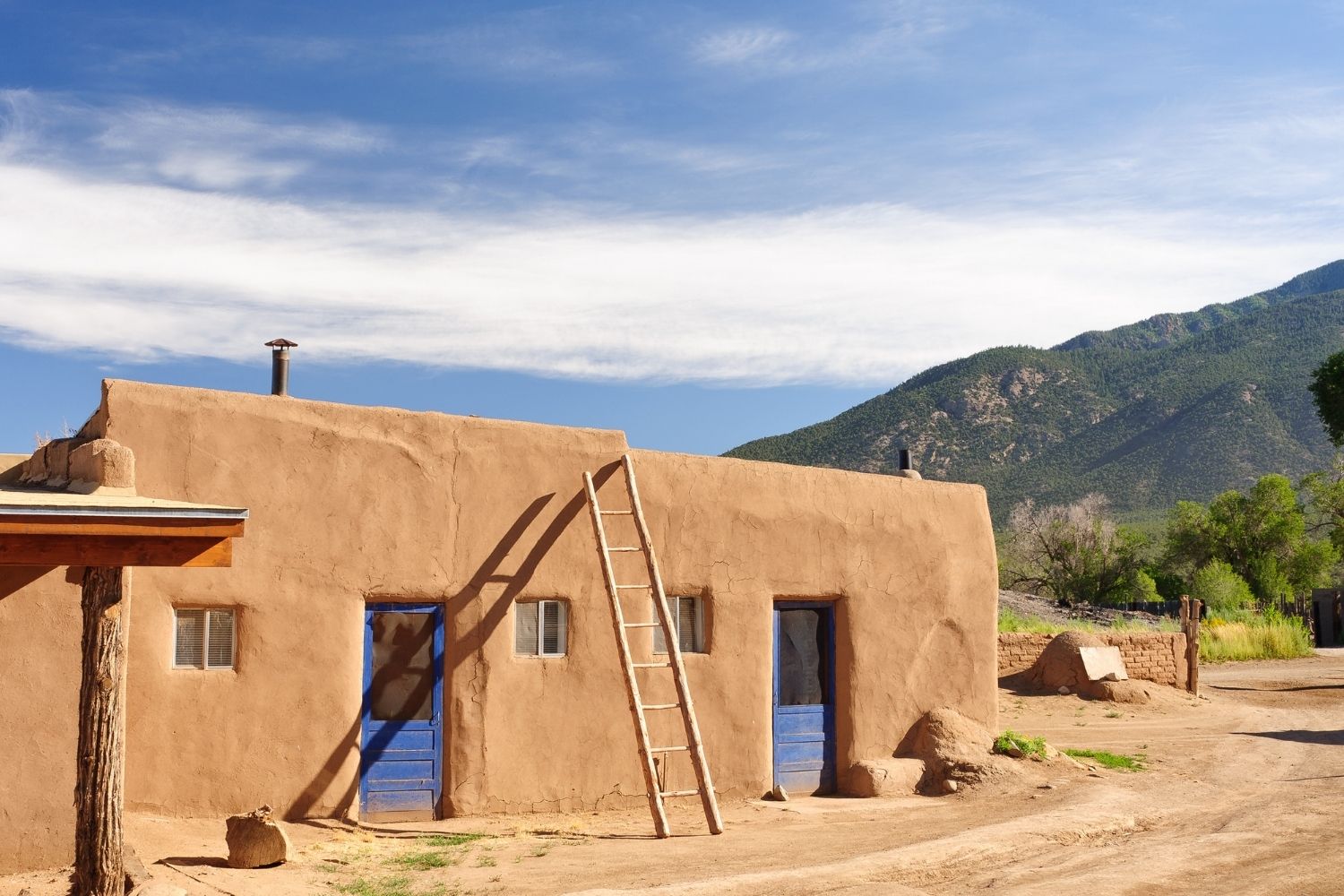
Once dry, the bricks are laid in courses much like fired clay bricks, but using a mortar made from the same earth mix rather than cement-based mortar. Walls are typically built on stone or concrete foundations to protect the base from moisture, and the finished walls are usually plastered with lime or earth render to shed rain and reduce surface erosion. The technique allows for sculptural forms, which is why adobe churches in New Mexico, like San Francisco de Asís Mission in Ranchos de Taos, have such distinctive flowing buttresses and rounded edges.
📐 Technical Note
According to the Wikipedia entry on adobe, the most desirable soil texture for producing the mud of adobe is 15% clay, 10–30% silt, and 55–75% fine sand. Modern stabilised adobe often incorporates up to 10% Portland cement or emulsified asphalt by weight to improve water resistance, a practice common in regions where building codes require certified compressive strength values.
Brick Sizes and Wall Construction
Traditional adobe bricks vary in size by region. In New Mexico, where adobe construction is still produced commercially, bricks are typically around 10 x 14 x 4 inches and weigh 30 to 40 pounds each. According to a New Mexico Bureau of Mines & Mineral Resources circular on adobe brick production, a total of 30 adobe-brick producers, representing 87% of the active manufacturers, are located in the Albuquerque and Española Basin areas of the Rio Grande valley. Walls are usually built one to two bricks thick, often resulting in 350-600 mm wall thicknesses similar to rammed earth.
Rammed Earth vs Adobe: Key Differences at a Glance
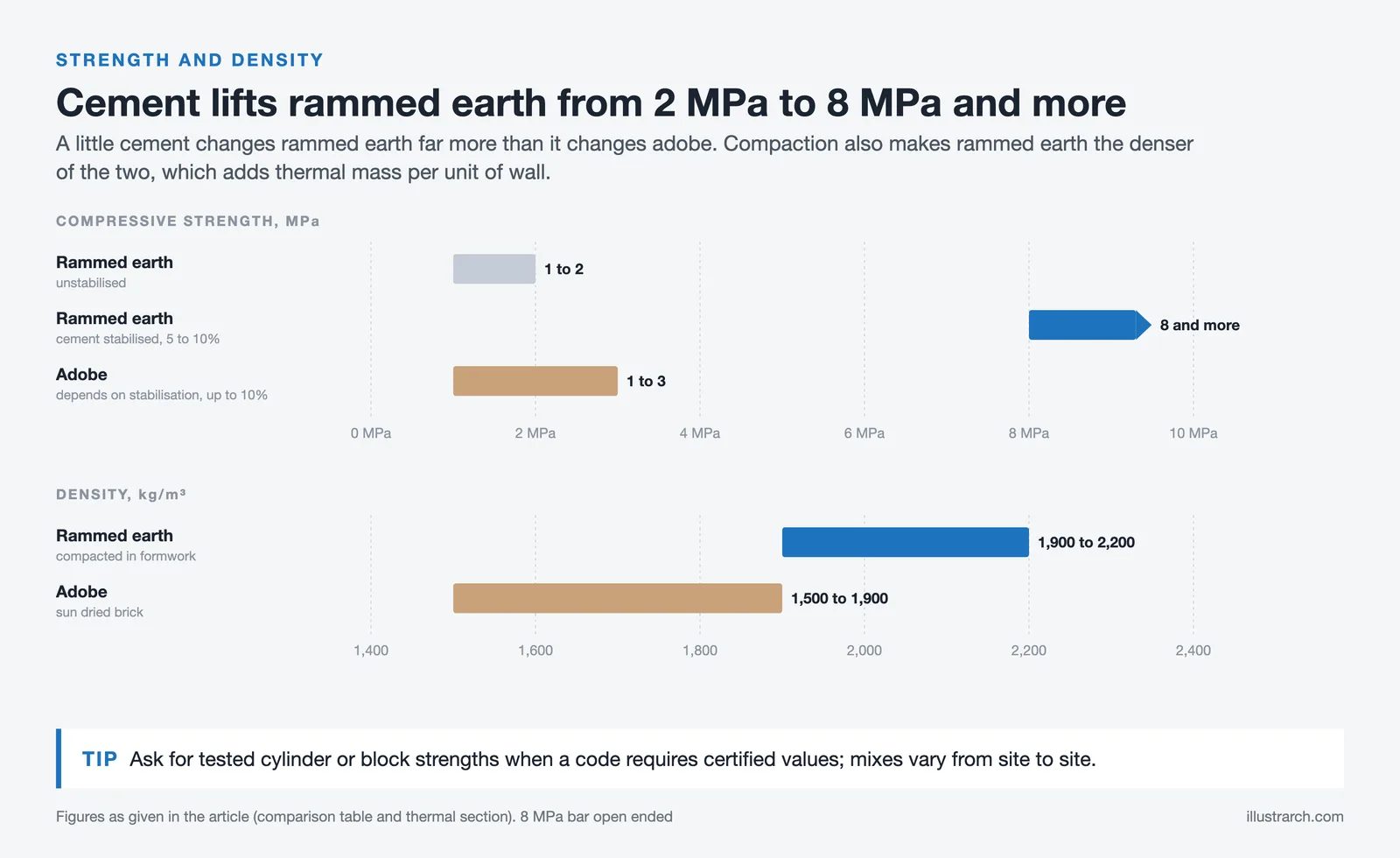
The most important practical differences between the two techniques show up in how they are built, how they perform, and where they make the most sense.
Comparison Table: Rammed Earth vs Adobe Construction
| Feature | Rammed Earth | Adobe |
|---|---|---|
| Wall Construction Method | Compacted in layers within formwork (monolithic wall) | Sun-dried mud bricks laid with mud mortar |
| Soil Mix | Lower clay content, more sand and gravel | Higher clay (15-25%) plus straw or fibrous binder |
| Cure Time Before Use | Wall is structurally usable immediately; full strength in 28 days if stabilised | Bricks need 2-4 weeks of sun-drying before laying |
| Equipment Needs | Heavy formwork, manual or pneumatic tampers | Wooden brick moulds, simple masonry tools |
| Compressive Strength | 1-2 MPa unstabilised; 8+ MPa stabilised | Typically 1-3 MPa, depending on stabilisation |
| Visual Character | Layered horizontal bands, often left exposed | Plastered surfaces, sculptural flowing forms |
| Climate Suitability | Dry to moderately wet climates; needs good roof overhang | Best in arid and semi-arid climates |
| Labour Profile | Specialised crew, heavy formwork handling | Lower skill threshold for brick-making, community-friendly |
Thermal Performance and Comfort
Both techniques rely on thermal mass, the ability of dense materials to absorb heat during the day and release it slowly at night. This is why so many vernacular earthen buildings sit in climates with large daily temperature swings, from the Atacama desert to the New Mexican high desert. Thick earthen walls keep interiors cool through hot afternoons and warm well into the cold night.
Rammed earth slightly outperforms adobe in raw thermal mass per unit volume because of its higher compaction density, typically 1900-2200 kg/m³ versus around 1500-1900 kg/m³ for adobe. In practice, however, both materials behave similarly inside finished buildings, and the dominant factor is wall thickness, orientation, and roof design rather than the technique itself.
Neither method offers strong insulation in the modern R-value sense. They store heat well but conduct it relatively easily, which is why high-performance earthen buildings in cold climates often add a separate insulation layer on the outside or pair the wall with a heavily insulated roof. For a broader view of how earthen materials compare to other options, see our article on top building materials for sustainable construction.
🔢 Quick Numbers
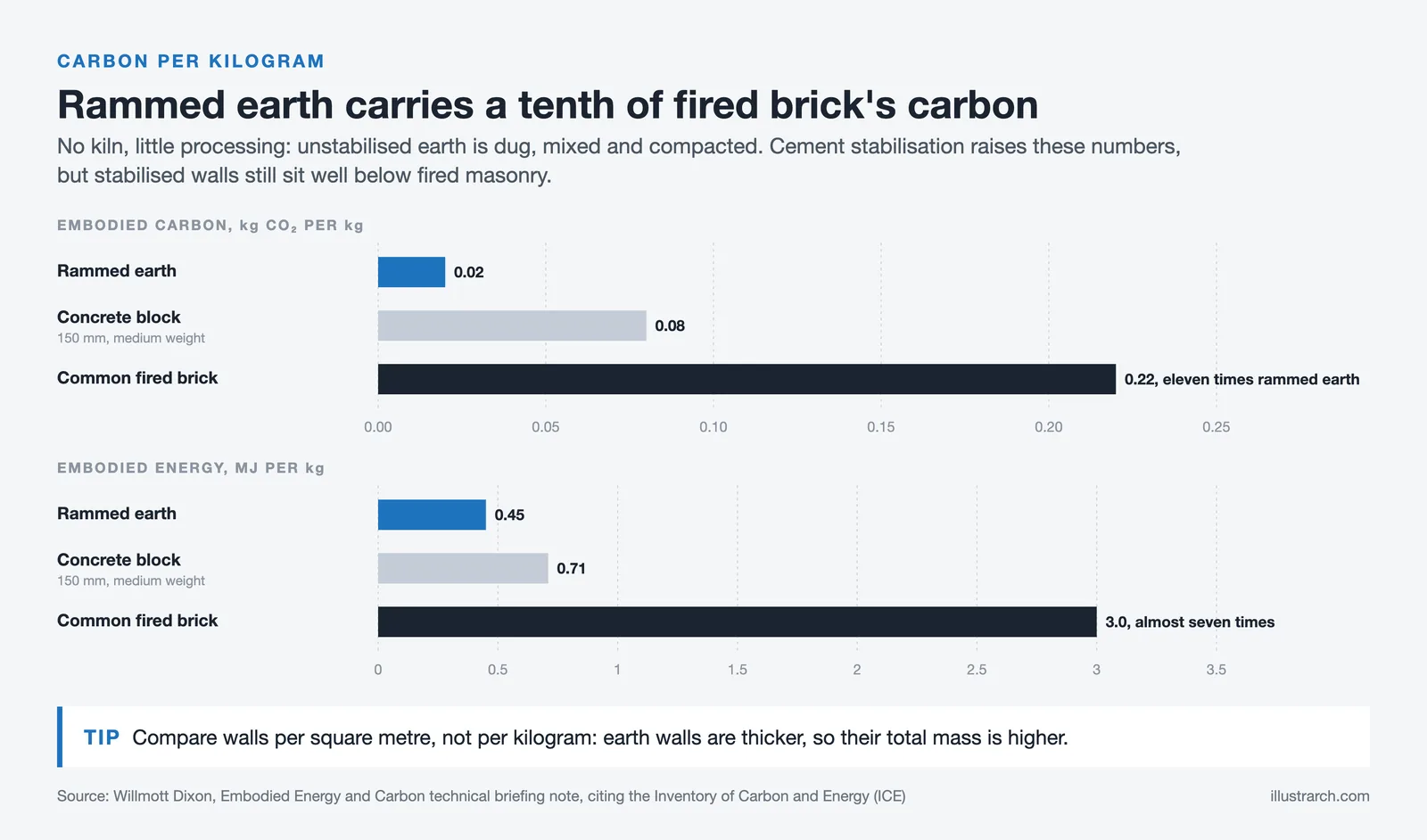
- Rammed earth has an embodied carbon of approximately 0.02 kg CO₂/kg, compared to 0.08 kg CO₂/kg for medium-weight concrete block and 0.22 kg CO₂/kg for common fired bricks (Willmott Dixon Embodied Energy & Carbon TBN, citing the Inventory of Carbon and Energy)
- Approximately 10% of UNESCO World Heritage List sites incorporate earthen architecture, including rammed earth and adobe (UNESCO World Heritage Earthen Architecture Programme, 2011)
- Earthen buildings provide shelter for over a third of the world’s population (UNESCO WHEAP report)
Embodied Carbon and Sustainability
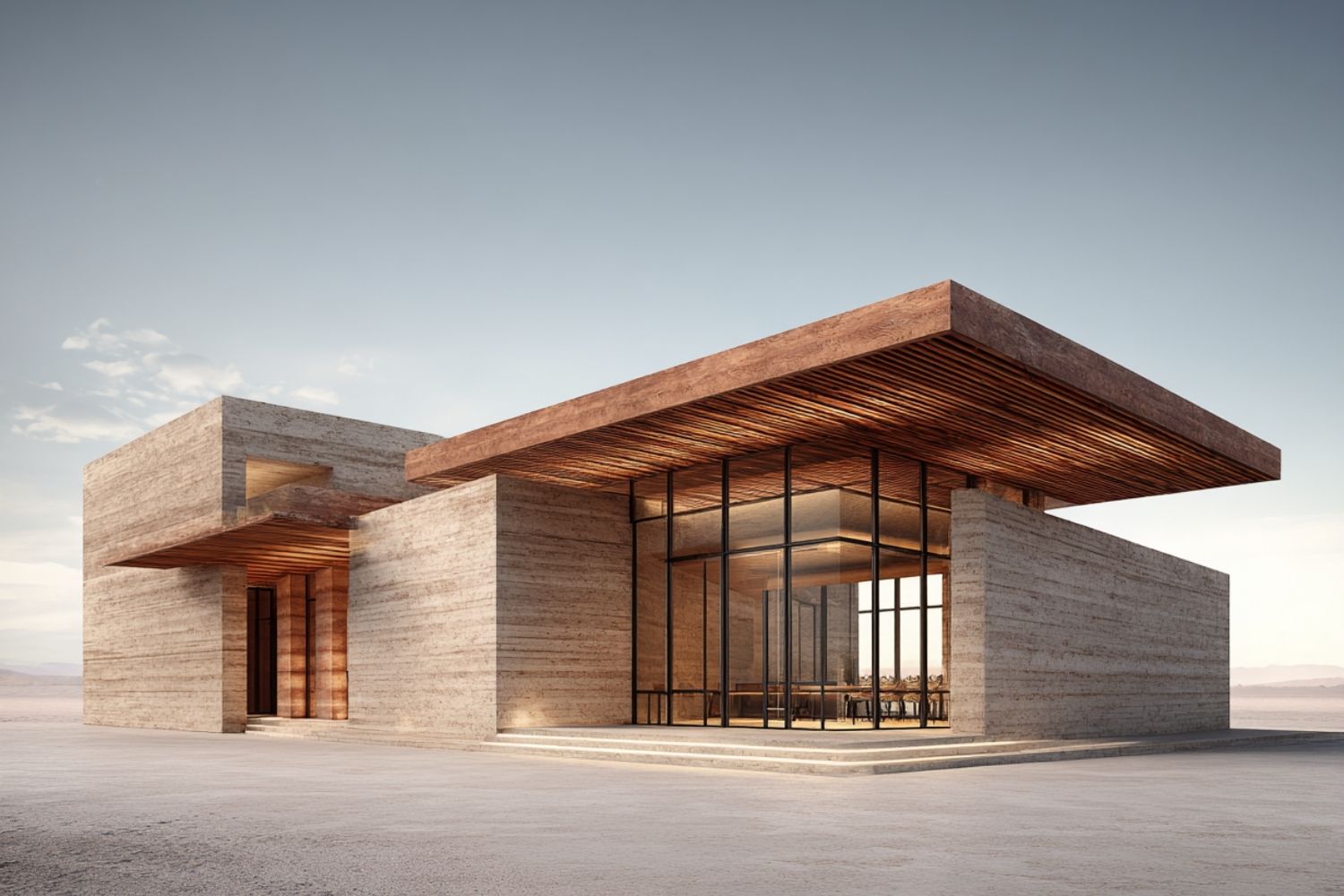
Sustainability is often the strongest argument for both techniques, and the data backs it up. Earthen walls use minimally processed, locally sourced material with very little embedded fossil energy. Production typically involves digging, mixing with water, and either compacting or moulding, with no kiln firing required.
The Inventory of Carbon and Energy (ICE) data summarised by Willmott Dixon shows rammed earth at roughly 0.45 MJ/kg of embodied energy versus 3.0 MJ/kg for common fired bricks, almost a sevenfold difference. Cement stabilisation pushes these numbers up, but even stabilised rammed earth typically performs far better than concrete or fired masonry on a like-for-like wall basis. According to a 2009 ScienceDirect study on embodied energy in cement stabilised rammed earth walls, in a cradle-to-gate analysis of different walls, the use of earthen building elements can result in reducing the potential environmental impacts in about 50%, when compared to the use of conventional ones.
Adobe sits in a similar low-carbon zone when produced traditionally with sun-drying. Stabilised adobe loses some of that advantage when Portland cement is added, but it remains far less carbon-intensive than fired brick or reinforced concrete. For deeper context on how material choices affect lifecycle emissions, see our piece on the top benefits of using eco-friendly materials in architecture and our overview of biomaterials in architecture.
Cost, Labour, and Construction Speed
The economics of rammed earth and adobe diverge sharply once you scale up. Rammed earth is generally faster on site once formwork is in place. A trained crew can compact several cubic metres of wall per day, and there is no waiting period before the next floor or roof can be built. The catch is that formwork is expensive, and skilled rammed earth contractors are rare in many regions, which pushes costs up.
Adobe is slower in absolute terms because of the brick-drying period, but it is much more forgiving of unskilled labour and small budgets. Bricks can be produced in batches over weeks, stored, and laid as time and money allow. This is why adobe has remained the dominant earthen technique in subsistence and self-build contexts across Latin America, North Africa, and the American Southwest, while rammed earth has tended to find its niche in higher-end architect-led projects.
Cost figures and construction speeds are approximate and vary substantially by region, soil quality, level of stabilisation, and project scope. Always consult a local earth-building specialist for project-specific budgeting.
⚠️ Common Mistake to Avoid
Many designers assume any clay-rich site soil can be used for either technique. In practice, the soil grading required for rammed earth and adobe is different, and the wrong mix produces brittle walls in rammed earth or cracking bricks in adobe. Always test the site soil for particle size distribution and plasticity before specifying either method, and budget for imported soil or amendments if the local material falls outside the acceptable range.
Durability, Seismic Behaviour, and Climate
Both techniques can last centuries when detailed correctly. The Great Wall of China contains long sections of rammed earth that have stood for over two thousand years. New Mexico’s San Miguel Chapel, with adobe walls dating to the 1620s, is one of the oldest surviving structures in the continental United States. The condition for that longevity is the same in both cases: a “good hat and good boots” approach where a generous roof overhang sheds water and a solid stone or concrete plinth keeps the wall base above splash zones.
Seismic performance is more complex. Earthen walls are heavy and brittle, which makes them vulnerable to lateral loads. Modern earthen buildings in seismic zones rely on engineered solutions like ring beams, internal reinforcement, and confined masonry techniques. According to a Frontiers in Built Environment review of earthen heritage structures, the main factors affecting earthen architecture include floods and earthquakes, industrialization, urbanization, modern building technologies, the disappearance of traditional conservation practices, and specific causes of decay and structural failure. California, for example, effectively ended unreinforced solid-wall adobe construction in the 1980s through seismic-driven changes to its building code, although post-and-beam adobe and adobe veneers are still permitted.
🏗️ Real-World Example
Ksar of Aït Benhaddou (Ouarzazate, Morocco): This fortified village, built almost entirely from a combination of rammed earth, adobe brick, and timber, has been inhabited for centuries and has been a UNESCO World Heritage Site since 1987. It demonstrates both techniques working together at urban scale, with rammed earth used for thicker defensive bases and adobe for upper-storey infill, all protected by deep eaves and continuous community maintenance cycles.
Where Each Technique Makes the Most Sense Today
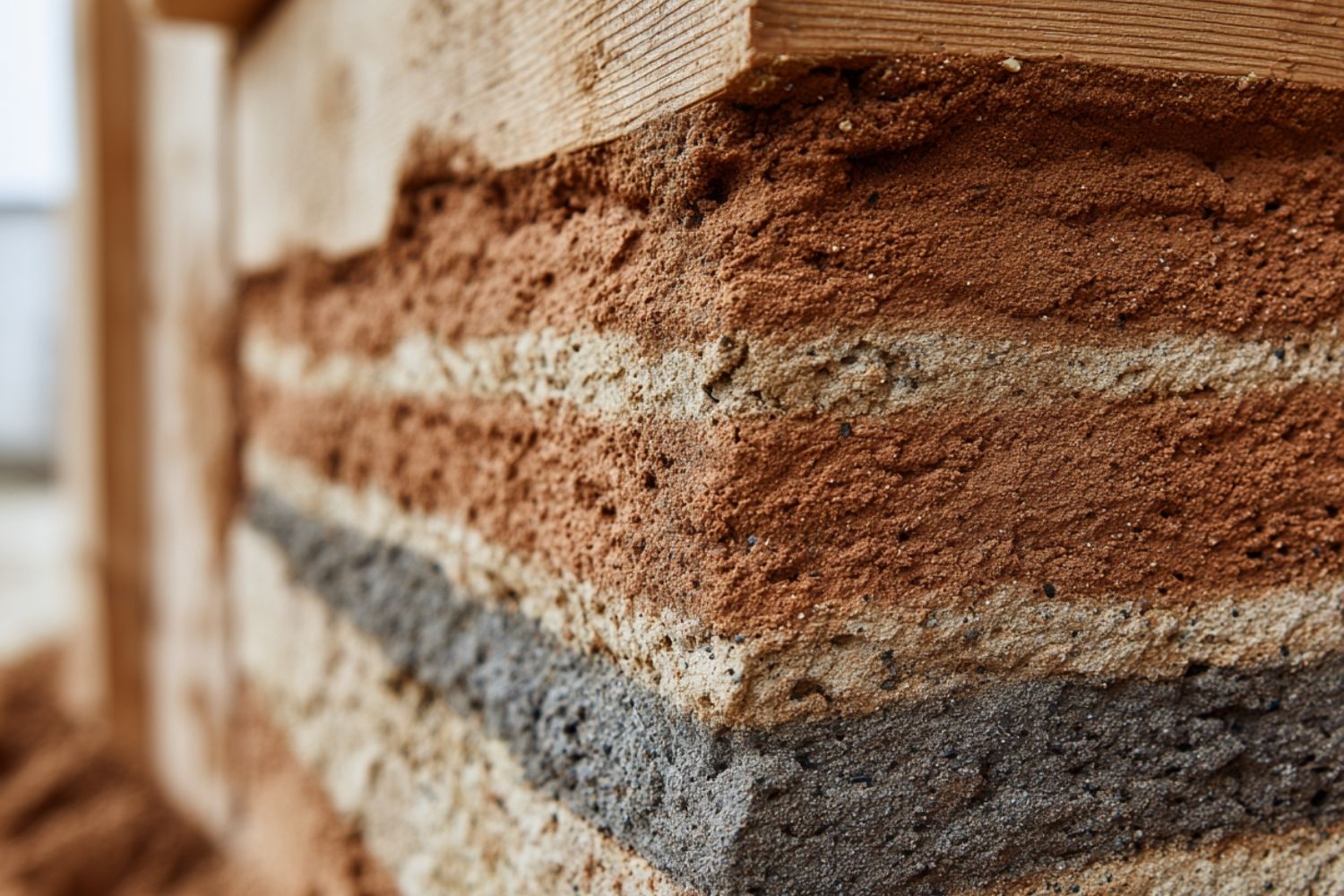
Choosing between rammed earth and adobe is really a question of climate, budget, labour, and design intent. Rammed earth tends to win in projects where exposed material is part of the design language, where a contractor with formwork experience is available, and where the client wants the structural shell and the finished surface to be the same thing. Architects working in Australia, parts of Europe, and the western United States have built a strong contemporary culture around it, and Luigi Rosselli Architects in particular has helped move it from the margins into mainstream Australian residential design.
Adobe makes the most sense in arid climates with strong solar drying, in regions with deep adobe traditions and skilled local labour, and on projects where slow incremental construction is acceptable or even desirable. It is also the more accessible technique for owner-builders and community-led builds, which is why it remains widely used in self-build housing across much of the developing world.
For larger sustainable projects that need to integrate earthen walls with modern thermal envelopes, glazing systems, and mechanical services, both techniques benefit from being paired with insulation and a clear moisture strategy. Our overview of the future of sustainable architecture covers how natural materials like rammed earth fit into broader low-carbon strategies, and our step-by-step guide to eco materials in house construction places earthen techniques alongside hempcrete, reclaimed wood, and bamboo.
Hybrid Use in Contemporary Projects
Some contemporary projects use both techniques in the same building, treating them as a palette rather than a choice. Atelier Associer’s reuse of a 1970s school in Paris into the Jean Quarré Media Library and Refugee House combines concrete, timber and earthen walls, with rammed earth serving as the thermal mass core; we covered the project in detail in our article on the James Baldwin Media Library and Refugee House by associer. This kind of hybrid approach reflects how most architects now treat earthen construction: not as nostalgia, but as one tool among many for cutting embodied carbon while keeping spatial and material quality high.
✅ Key Takeaways
- Rammed earth produces monolithic walls by compacting soil in formwork, while adobe uses sun-dried mud bricks laid with mud mortar.
- The two methods need different soil mixes: rammed earth uses lower clay and more aggregate, adobe uses more clay plus a fibrous binder like straw.
- Both techniques offer very low embodied carbon compared to concrete or fired brick, with rammed earth typically around 0.02 kg CO₂/kg.
- Rammed earth is faster on site once formwork is set up but more capital-intensive; adobe is slower but more accessible to small budgets and self-builders.
- Both rely on thermal mass rather than insulation, perform best in climates with strong day-night temperature swings, and need careful detailing to manage seismic and moisture risk.
Final Thoughts on Rammed Earth and Adobe
Rammed earth and adobe are not really rivals. They are two answers to the same question, asked in different climates and by different building cultures. Where rammed earth gives a project a precise, sculptural mass and a quick on-site rhythm, adobe brings a slower, more hand-built quality and a remarkable flexibility for sculpted forms. Both prove that buildings made from the ground beneath them can stand for centuries, and both deserve a serious place in the conversation about lower-carbon architecture as the construction sector tries to bring its emissions down.
For architects considering either technique, the most important first step is the same. Test the site soil, study the local climate carefully, and find a builder who has actually worked the technique before. The rest is design.


Groupwork Completes 10-Storey Loadbearing Granite Flats in London
Groupwork's Petra Heights on Finchley Road is a 10-storey block of 22...
 illustrarch Editoral Team2 Mins read
What Architecture Students Should Know About Structural Glass and Guardrail Code
Glass guards look minimal, but structural behavior, safety glazing, connections and guardrail...
illustrarch Editoral Team6 Mins read

Futuro House Production Revived in Finland After Decades-Long Hiatus
A Facebook listing for abandoned moulds led to the first new Futuro...
illustrarch Editoral Team3 Mins read
LTL Architects Builds a Compressed Straw House in New York
LTL Architects built a New York prototype house from 16 compressed straw...
illustrarch Editoral Team2 Mins read


Leave a comment