

Marina Bay Sands: Singapore’s Gravity-Defying Architectural Landmark
Marina Bay Sands stands as one of the most recognized integrated resorts on Earth, combining three tilted towers, a 340-meter SkyPark, the world's longest public cantilever, and the lotus-shaped ArtScience Museum into a single civic masterpiece designed by Moshe Safdie.
 Furkan Sen19 March 202610 Mins read387

Table of Contents Show
Marina Bay Sands is a 57-storey integrated resort in Singapore, designed by architect Moshe Safdie and completed in 2010. Three towers, each tilted at 26 degrees, support a 340-meter SkyPark that cantilevers 66.5 meters beyond the north tower’s edge — making it the world’s longest public cantilever. The project cost S$8 billion at opening and redefined what a single building could mean for a city’s identity, economy, and urban life.
The Concept Behind Marina Bay Sands Singapore

When Singapore’s Urban Redevelopment Authority called for proposals in the early 2000s, the brief was clear: the site on reclaimed waterfront land at Marina Bay had to become a new civic anchor for the city-state’s rapidly growing downtown. The winning proposal by Safdie Architects did not propose a single tower or a standard hotel block. Instead, Moshe Safdie envisioned a campus-scale development organized around a strong pedestrian spine — drawing inspiration from the thoroughfares of great Roman cities where civic life converged along a single organizing axis.
The concept was also shaped by a surprisingly simple analogy: a deck of playing cards. Two cards leaning against each other form an arch through mutual pressure; a third card laid flat across the top holds them in balance. This logic governed the geometry of the three hotel towers and the SkyPark connecting them. The result is a structure that appears at once precarious and completely resolved — which is precisely what makes the architecture of Marina Bay Sands so arresting in person and in photographs.
Safdie’s plan preserved open visual corridors toward the sea and allowed sunlight to filter between the towers at street level. Rather than creating a wall of development that would disconnect the waterfront from the city, the resort weaves together public promenades, gardens, retail paths, and civic spaces at multiple levels. This layered approach to urban design was unusual for a large hospitality project at the time and remains one of its most admired qualities.
💡 Pro Tip
When studying the planning strategy behind Marina Bay Sands, pay close attention to its ground-level organization rather than the skyline silhouette. The project’s real architectural innovation lies in how Safdie threaded public walkways, gardens, and civic spaces through and underneath the resort’s podium — a lesson in integrating large-scale hospitality into the urban fabric without severing pedestrian connections.
How the Three Towers Defy Gravity

From a distance, the three towers of the Marina Bay Sands hotel appear to lean slightly inward toward each other. Up close, the geometry is more complex. Each tower curves and tapers as it rises, with an asymmetric arrangement of three internal legs: two legs that lean outward and one curved leg that runs against them. This configuration required a temporary system of struts and tension cables to hold each tower’s structure during construction; once the trusses linking the legs were installed, the struts were removed and the cables were buried behind concrete walls.
The structural engineering was led by Arup, who designed reinforced concrete cores and shear walls within each tower to manage the considerable lateral forces produced by the tilted geometry. Building the towers required a construction sequence calibrated to the millimeter, tracking differential settlements and movements at every stage as the structures took on load. One hotel floor was completed every four days during peak construction — a remarkable pace given the geometric complexity involved.
🔢 Quick Numbers
- Total project cost: S$8 billion (US$6.88 billion) at opening in 2010 — the world’s most expensive standalone casino property at the time (Wikipedia / Marina Bay Sands)
- SkyPark length: 340 meters, wider than the Eiffel Tower is tall, housing 250 trees and 650 plants at 200 meters above ground (Safdie Architects / Arup project documentation)
- World’s longest public cantilever: 66.5 meters extending beyond the north tower edge, with the SkyPark weighing over 7,000 tons (Arup, 2010)
- Total floor area: 845,000 square meters across the integrated resort, including 2,560 hotel rooms in three towers (Safdie Architects project page)
What Is the SkyPark and Why Does It Matter?

The SkyPark is the defining element of the marina bay sands architecture — a 340-meter-long platform that spans the three towers like a ship set adrift in the sky. At 200 meters above street level, it holds a 150-meter infinity pool (capable of holding approximately 1.5 million liters of water), jogging paths, restaurants, gardens with 250 trees and 650 plants, and a public observation deck. The SkyPark is open to the public on its observation level and has become one of the most visited elevated platforms in Asia.
Structurally, the SkyPark presented challenges that had no direct precedent. The platform had to span three towers while allowing each tower to move independently — towers of this height expand, contract, and sway with temperature change and wind loading. Arup solved this by designing a series of large tuned mass dampers housed within the SkyPark’s belly, functioning like shock absorbers, combined with expansion joints that let the three towers breathe separately while the platform above remains stable. The 14 prefabricated steel segments of the SkyPark were then lifted and joined in the air during an intensive 13-week assembly sequence.
🎓 Expert Insight
“It’s not just a hotel. It’s a city and a garden.” — Moshe Safdie, Architect
This statement reflects Safdie’s design philosophy across all his major works: architecture should not simply house a program but create a living public environment. At Marina Bay Sands, this meant integrating promenades, museums, event spaces, and gardens into a structure that most developers would have treated as a pure hospitality asset.
The ArtScience Museum: Architecture as a Blooming Lotus

The ArtScience Museum sits at the tip of the Marina Bay Sands promontory, extending out toward the water on an axis that separates it from the hotel towers. Safdie designed the building as a lotus flower — ten asymmetric petals fanning outward, each housing its own gallery space. The central oculus at the top of the structure captures rainwater and channels it down through the building as a 35-meter indoor waterfall, with the collected water recycled for use throughout the resort. The system gathers approximately seven million liters of water annually, combining sustainable performance with architectural drama.
The museum’s geometry presented its own engineering puzzle. The lotus form is inherently asymmetrical, and the foundations beneath it had to address the same deep marine clay soils that complicated the tower construction. Arup used advanced 3D modeling — pushing the software of the day to its limits — to resolve the complex geometric conditions and optimize the structural design. The result is a building that feels both sculptural and intimate, anchoring the waterfront edge of the resort with a form that reads entirely differently from every angle.
For more on how architecture in Singapore is pushing boundaries at an institutional level, see our coverage of the RIBA Asia Pacific Awards, which have highlighted a new wave of projects reshaping the built environment across the region.
📌 Did You Know?
The SkyPark at Marina Bay Sands is longer than the Eiffel Tower is tall. At 340 meters, the platform is wide enough to park four Airbus A380 aircraft side by side. The cantilever section alone — 66.5 meters extending past the north tower — is longer than a standard city block and was, at the time of completion in 2010, the longest public cantilever ever built anywhere in the world. (Arup / Marina Bay Sands official documentation)
How Safdie Integrated Art Into the Resort’s Architecture
One of the less discussed aspects of the marina bay sands singapore architecture is Safdie’s conviction that art must be a structural part of the public experience, not an afterthought. He selected five artists — James Carpenter, Antony Gormley, Ned Kahn, Sol LeWitt, and Chongbin Zheng — to create eight monumental site-specific installations across the resort. Each work was commissioned to respond to environmental forces: light, water, and wind. These pieces are woven into the public walkways, lobbies, and event plazas rather than placed in a dedicated gallery or displayed as decorative additions.
This integration of art and architecture reflects a broader approach to civic design. Safdie has argued throughout his career that architecture’s highest function is not to enclose space but to create shared public experience. At Marina Bay Sands, that philosophy manifests at every scale: from the grand sweep of the SkyPark to the specific positioning of Gormley’s human-scale figures along the waterfront promenade. It is worth comparing this ambition with the program at Singapore’s Gardens by the Bay, the adjacent project that extends the public garden vision east along the waterfront.
Sustainability and Engineering Innovation

Marina Bay Sands was designed with environmental performance integrated into the architecture rather than bolted on. The double-glass facade on the towers reduces heat gain and lowers the energy demand for air conditioning — significant in Singapore’s tropical climate. The SkyPark itself acts as a natural shading device for the floors immediately below, reducing direct solar gain on the upper levels of the hotel. The rainwater harvesting system collects and recycles water from the ArtScience Museum’s roof and elsewhere across the site, and the resort’s fire engineering represented some of the most complex life-safety work ever carried out on a single building at the time of construction.
Arup’s engineering team designed the basement levels of the resort in deep marine clay — the same unstable soil that challenges almost every major construction project along Singapore’s reclaimed waterfront — using a cast-in-situ approach to stabilize the ground before the towers rose above it. The structural engineering challenges at every level of the project pushed the boundaries of what available software could model, requiring Arup to develop custom workflows and analysis methods to verify designs that had no established precedent.
📐 Technical Note
The SkyPark’s tuned mass dampers were designed to address two independent dynamic challenges: wind-induced sway across the 340-meter platform span and vibration induced by the movement of crowds. Both are particularly difficult to predict because the structural contribution of finishes — flooring, railings, planters — changes the system’s natural frequencies. Arup carried out large-scale vibration testing on completed sections of the SkyPark to verify the damper design before public opening. The dampers function on the same shock-absorber principle used in supertall skyscrapers such as Taipei 101.
What Is Marina Bay Sands’ Impact on Singapore’s Skyline and Economy?

Before Marina Bay Sands opened in 2010, the Marina Bay waterfront was a construction site on reclaimed ground, largely disconnected from the Central Business District. Within the first three years of operation, the resort attracted tens of millions of visitors and contributed meaningfully to Singapore’s tourism revenue — the government’s explicit goal in issuing the Integrated Resort license. The project also demonstrated that a single building complex, designed with sufficient civic ambition, could anchor and catalyze an entire new urban district rather than simply occupy a plot.
The impact on global architectural practice has been equally significant. Marina Bay Sands directly inspired a wave of “integrated resort” projects across Asia and the Middle East, where developers sought to replicate the density of program — hotel, casino, retail, museum, convention center, and public garden — within a single coherent architectural composition. None have matched the civic quality of Safdie’s original, but the building’s influence on how developers think about mixed-use hospitality projects is undeniable. For a deeper look at how tall buildings shape urban identity more broadly, the article on skyscrapers and identity on illustrarch explores this dynamic across multiple cities and eras.
The building won the CTBUH 2010 Best Tall Building Award (Finalist, Asia and Australasia Region) and has since become a standard case study in university architecture programs worldwide, cited for its integration of structural engineering, civic design, and hospitality programming at a scale that had not been attempted before.
💡 Pro Tip
If you are studying Marina Bay Sands for a design project or thesis, focus on the section drawings rather than the elevations. The way Safdie resolves the ground-level transition between the public promenade, the casino podium, the hotel lobbies, and the underground MRT connections shows a level of sectional thinking that the dramatic roofline tends to overshadow. The real complexity of the project lives in its vertical circulation and the way it stitches public and private space together across multiple floors.
Marina Bay Sands Architecture in Context: Moshe Safdie’s Broader Vision

To understand the marina bay sands hotel architecture fully, it helps to place it in the context of Safdie’s career. His breakthrough project was Habitat 67 in Montreal — a modular housing complex built for the 1967 World Exposition that stacked prefabricated concrete units into a cascading, interlocking structure intended to bring the qualities of suburban living (private gardens, fresh air, views) to high-density urban housing. The same core ambition runs through Marina Bay Sands: making the high-density urban condition genuinely liveable, green, and connected to the sky and the ground simultaneously.
Safdie’s other major Singapore project, Jewel Changi Airport (completed 2019), applies the same principles at an airport scale — a domed garden at the center of one of the world’s busiest transit hubs, with a 40-meter indoor waterfall at its core. The National University of Singapore, which trains many of the region’s architects and has long engaged with Safdie’s work as a pedagogical model, is profiled in our guide to top architecture universities in Asia. The university’s own tropical urbanism research connects directly to the challenges Safdie addressed at Marina Bay Sands.
The singapore marina bay sands project stands as one of the most referenced examples in contemporary discussions of what integrated urbanism can look like when a government client, a developer, and a design team align around a shared civic ambition. For a broader picture of how iconic buildings define their cities’ identities, the illustrarch article on the world’s most iconic buildings places Marina Bay Sands in global company. And for those interested in the engineering history of tall buildings more generally, the guide to skyscraper architecture provides essential context.
✅ Key Takeaways
- Marina Bay Sands was designed by Moshe Safdie and completed in 2010 as a civic-scale integrated resort on reclaimed waterfront land in Singapore, costing S$8 billion at opening.
- The three towers tilt at 26 degrees and were built using a temporary strut-and-cable system; their geometry was inspired by a deck of playing cards leaning against each other.
- The SkyPark is 340 meters long, cantilevers 66.5 meters beyond the north tower, and holds the world’s longest public cantilever — a record that required Arup to design large tuned mass dampers and carry out large-scale vibration testing.
- The ArtScience Museum’s lotus-petal form collects approximately seven million liters of rainwater annually through a central oculus, channeled as a 35-meter indoor waterfall.
- The project catalyzed Singapore’s Marina Bay district and directly influenced a global wave of integrated resort developments, while remaining a standard case study in university architecture programs worldwide.
Visiting Marina Bay Sands: What Architects Should See
For architects visiting singapore marina bay sands, the public observation deck on the SkyPark is the obvious starting point, but the most instructive experience is at ground level. Walk the full length of the waterfront promenade from the ArtScience Museum through the Crystal Pavilions to the hotel lobbies, paying attention to how the resort manages the transition between interior and exterior, between grand civic scale and human-scaled detail. The art installations by Gormley and LeWitt reward close attention. The basement level, where underground pedestrian corridors connect to the Bayfront MRT station, shows how deeply the resort integrates with Singapore’s public transit infrastructure.
Marina Bay Sands is located at 10 Bayfront Avenue, Singapore. The SkyPark observation deck is ticketed and accessible to non-hotel guests. The ArtScience Museum has a separate admission. The official Marina Bay Sands architecture page provides detailed information on visiting. For those researching the project academically, the ArchDaily project page includes original drawings and photography. Arup’s project documentation, referenced throughout this article, is available at arup.com.



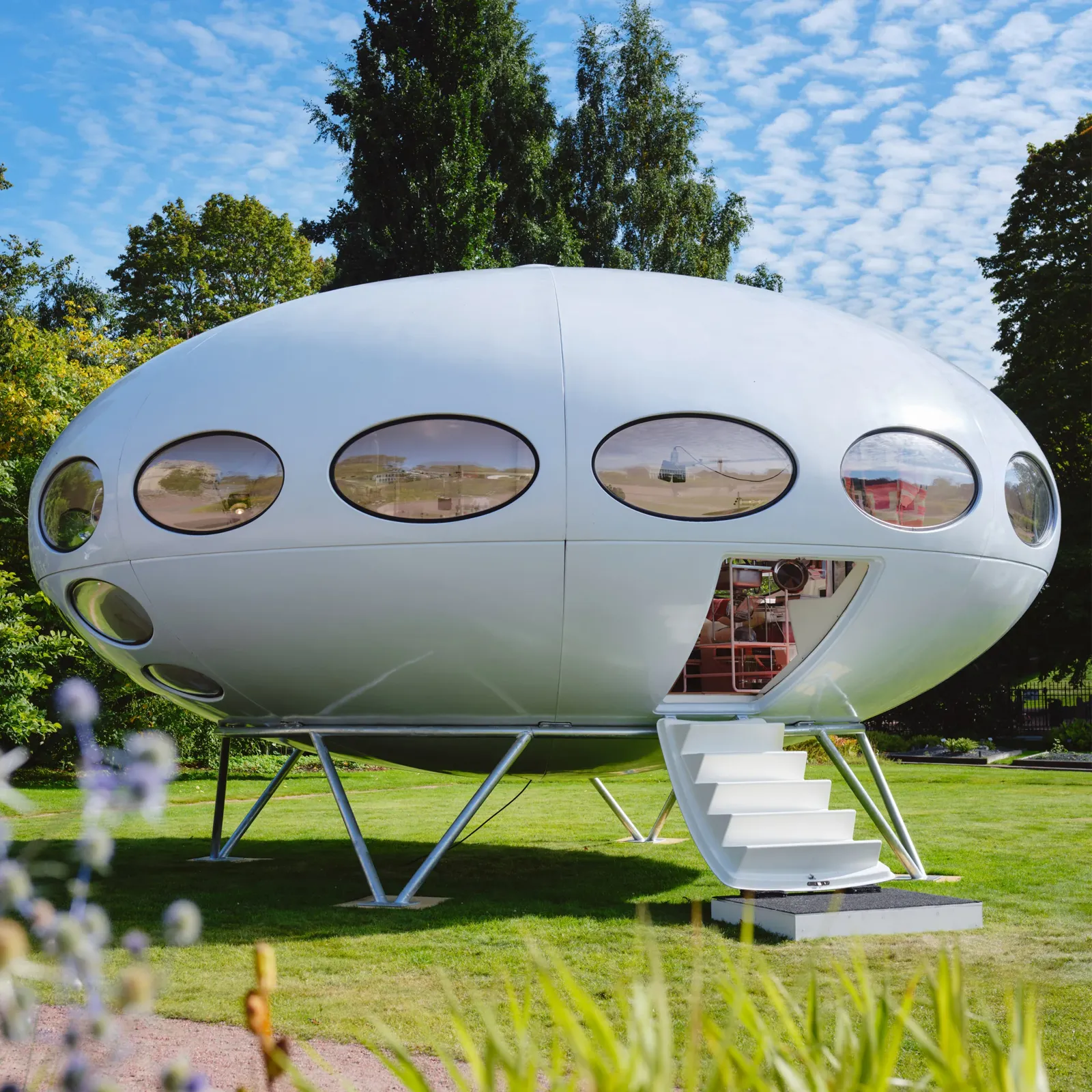
Futuro House Production Revived in Finland After Decades-Long Hiatus
A Facebook listing for abandoned moulds led to the first new Futuro...
 illustrarch Editoral Team3 Mins read
Building Your Dream Home in NSW: What You Should Know About Montgomery Homes
Montgomery Homes has been building across Sydney, Newcastle, the Hunter, Wollongong and...
illustrarch Editoral Team4 Mins read
Designing a Home Theater: Where Drapery Fits Into the Plan
In a media room the curtains are a performance layer, not decoration....
illustrarch Editoral Team3 Mins read
Oscar Niemeyer’s Cathedral of Brasília: The Hyperboloid Concrete Hymn
The Cathedral of Brasília reads as a single gesture, yet it stood...
Furkan Sen7 Mins read


Leave a comment