

Peter Zumthor: Philosophy of Space, Silence, and the Senses
Peter Zumthor's design philosophy goes far beyond form and function. This article explores how he approaches space, material, and atmosphere, drawing on works like Therme Vals and Bruder Klaus Chapel to show what phenomenology looks like in built form.
 Elif Ayse Sen27 March 202610 Mins read397

Table of Contents Show
Peter Zumthor is one of the most philosophically rigorous architects working today. Where many designers chase novelty or formal complexity, Zumthor builds from the inside out, starting with what a space should feel like before deciding what it should look like. His approach, rooted in phenomenology and a craftsman’s respect for materials, has produced a small body of work that carries enormous weight in contemporary architectural thinking. The Pritzker Architecture Prize jury, which awarded him the prize in 2009, described him as “a master architect admired by his colleagues around the world for work that is focused, uncompromising and exceptionally determined.”
What Is Peter Zumthor’s Architecture Philosophy?
Peter Zumthor’s architecture philosophy holds that buildings must be experienced physically and emotionally, not just understood visually or conceptually. In Thinking Architecture, his most widely read book, first published by Birkhäuser in 1998, Zumthor writes that architecture has its own realm, one with a special physical relationship to life. For him, a building is not primarily a message or a symbol. It is a sensitive container, a background for the lives of the people inside it.
This position sets him apart from most of his contemporaries. At a moment when much of the architectural world was producing buildings that read well in photographs and theoretical texts, Zumthor was asking a quieter question: what does it actually feel like to be here?
💡 Pro Tip
When studying Zumthor’s work, resist the temptation to analyze photographs alone. His buildings are designed around sensory sequences that only reveal themselves through movement: temperature shifts, sound changes, the weight of stone underfoot. Reading his project descriptions alongside floor plans gives a much richer picture than images alone can offer.
Central to the Peter Zumthor architecture philosophy is the concept of atmosphere. He dedicated an entire lecture to this idea, later published as Atmospheres (2006, Birkhäuser). Atmosphere, in Zumthor’s terms, is the immediate aesthetic impression a building makes on a person who enters it. It is emotional, pre-rational, and completely real. He describes it as something a building radiates in the first few seconds of encounter, before the visitor has time to think.
The Role of Materiality in Peter Zumthor Architecture
Materials are not a finishing choice in Zumthor’s process; they are the starting point. He has said that when he begins a project, his first idea is with the material. Architecture, for him, is about space and material, not paper and forms.
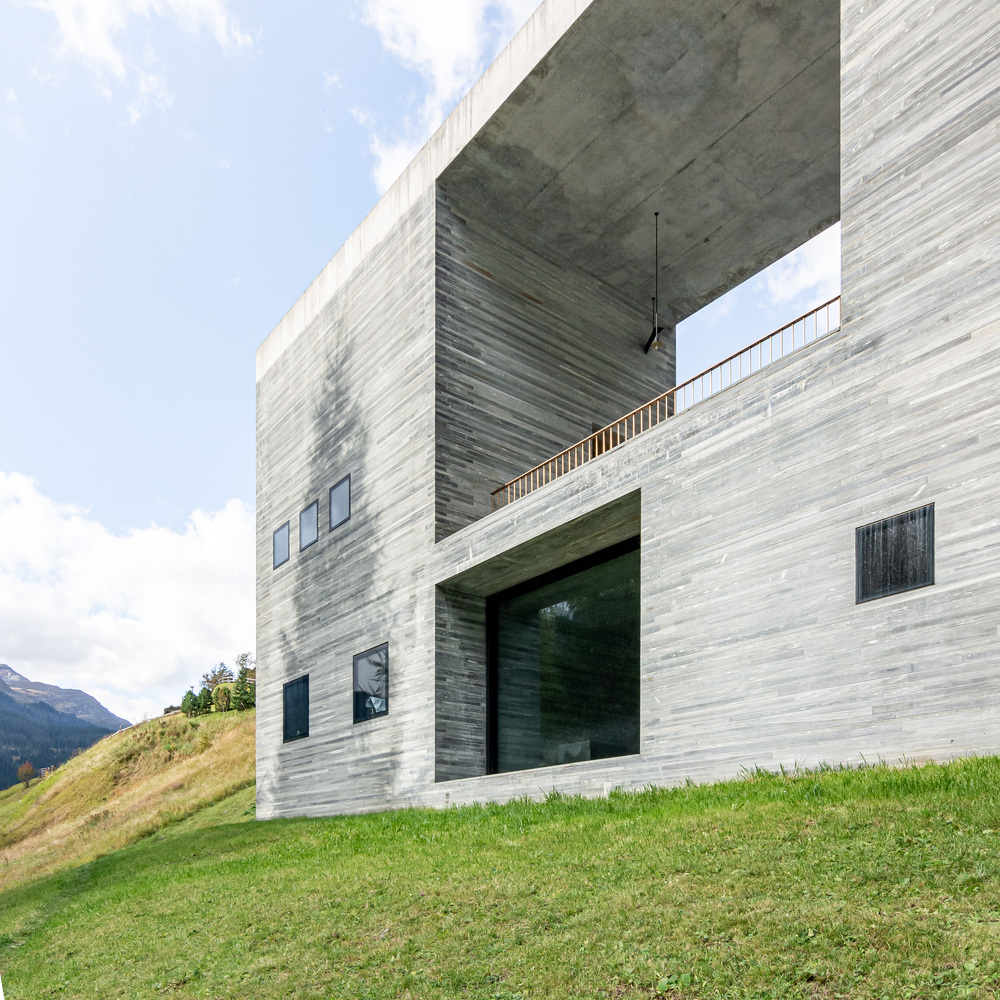
This belief plays out most clearly in the Therme Vals, completed in 1996 in Graubünden, Switzerland. The building is constructed almost entirely from locally quarried Valser quartzite, a greenish-grey stone native to the valley. Zumthor selected it not only for its visual character but for its tactile weight, its geological relationship to the site, and its capacity to absorb and hold heat. The roughly 60,000 slabs were laid in precise horizontal courses, their joints cut to let slivers of natural light into the bathing chambers below. The stone walls of therme vals peter zumthor architecture are not decoration; they are the building’s entire phenomenological argument. The project is extensively documented on ArchDaily, one of the most thorough open-access records of the building available.
🏗️ Real-World Example
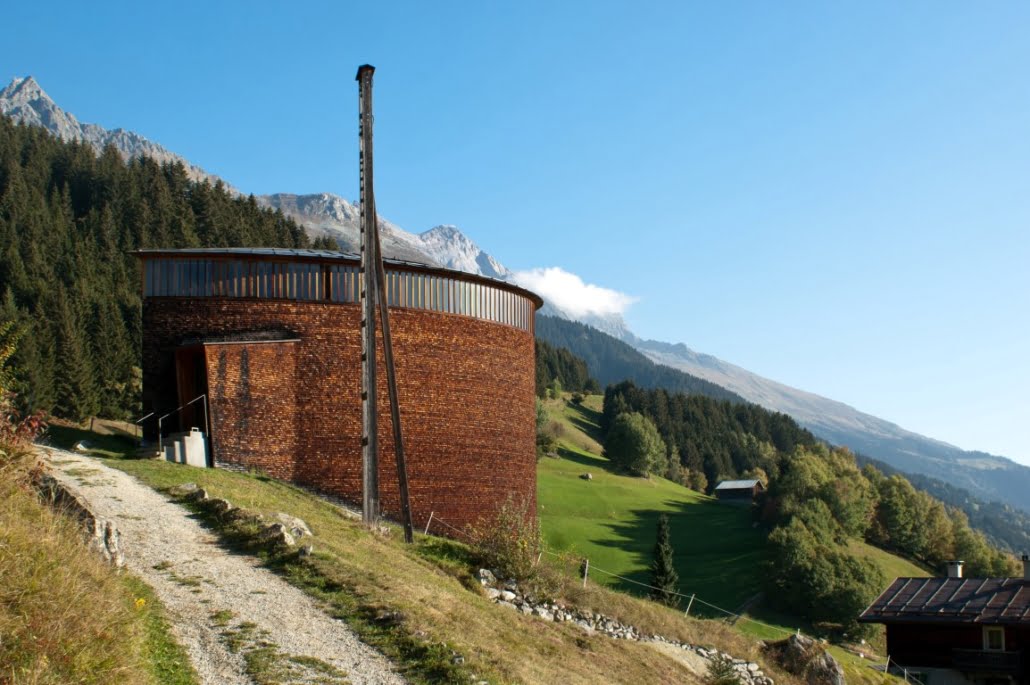
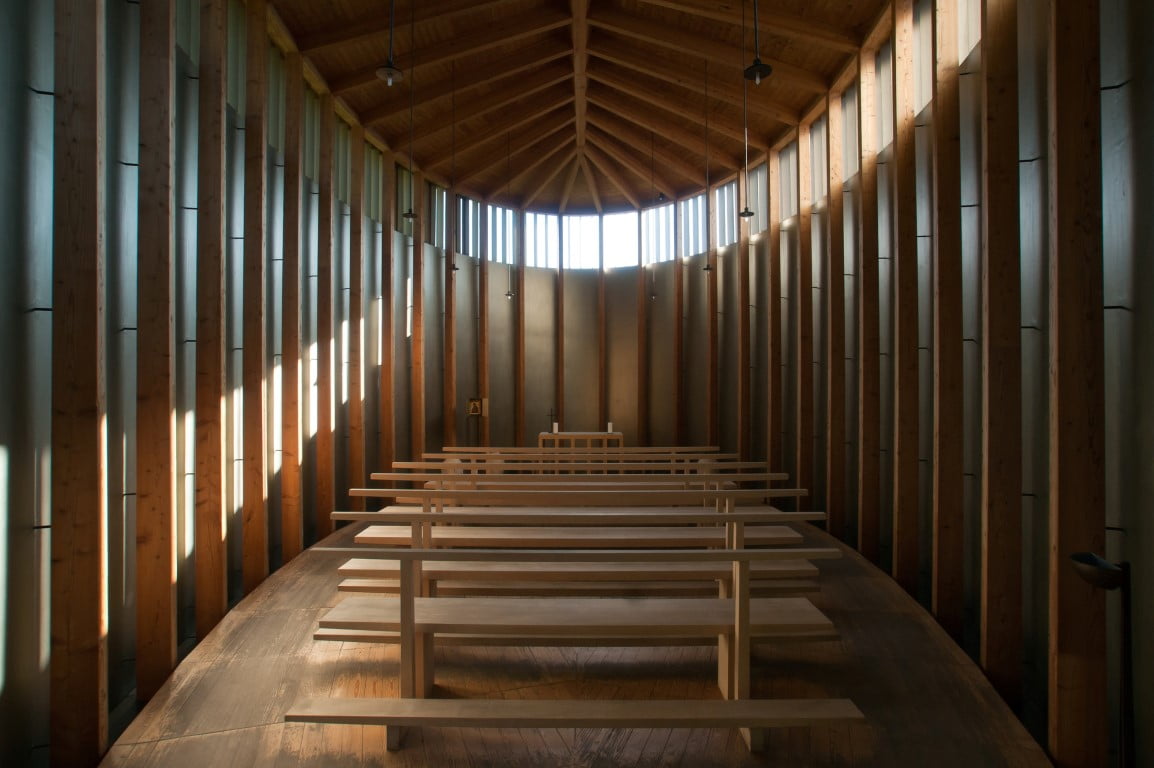
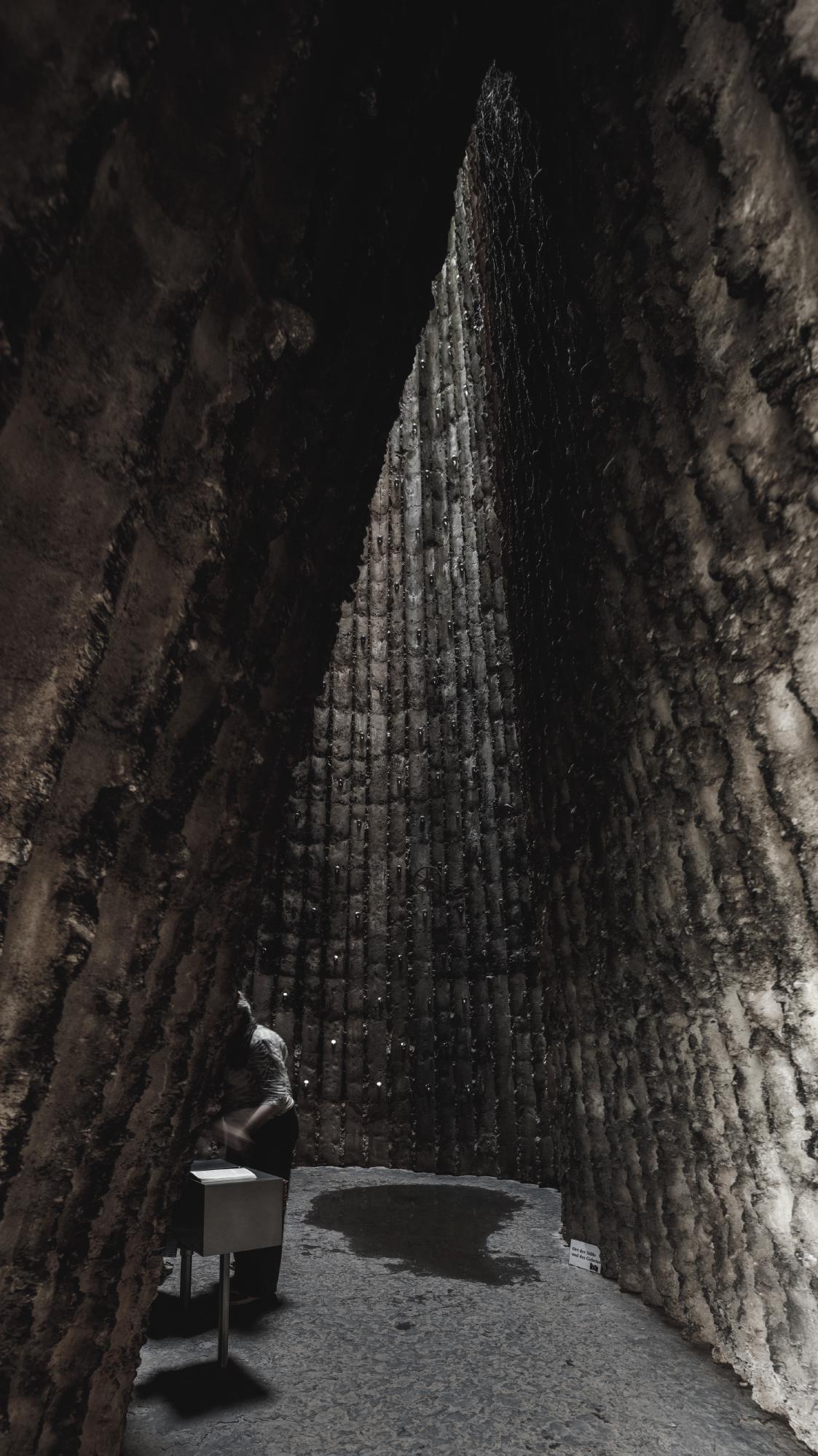
Bruder Klaus Field Chapel (Mechernich, Germany, 2007): Zumthor built this chapel by stacking 112 young fir tree trunks into a tent-like form, then pouring concrete around them and burning the wood out. The interior walls are charred black, and a triangular opening at the apex lets in a single shaft of light. The floor was cast from melted lead poured in situ. Every material decision was tied directly to the act of contemplation the space was meant to support.
For Zumthor, materials carry memory. Stone, timber, and concrete each bring with them a history of use, a sensory identity, and a set of associations that shift depending on context. He does not think of these materials as neutral or interchangeable. Each one, placed in a meaningful situation, can take on what he calls a poetic quality, becoming part of the language through which architecture communicates with its occupants.
Peter Zumthor Phenomenology Architecture: Thinking Through the Body
Phenomenology, in philosophical terms, is the study of structures of experience and consciousness. In architecture, it describes an approach that prioritizes lived, embodied experience over visual representation or abstract form. Zumthor’s work sits squarely in this tradition, shaped in part by thinkers like Maurice Merleau-Ponty and Juhani Pallasmaa, who argued that architecture must engage the whole body, not just the eye.
The practical consequence of this for Peter Zumthor phenomenology architecture is that every sensory dimension of a space becomes a design decision. Sound matters: the acoustic texture of stone differs from that of wood, and both carry emotional charge. Temperature matters: the contrast between a cold stone threshold and the warm water of a thermal bath is itself a form of spatial punctuation. Even smell and the quality of light as it changes through the day are considered part of the architectural experience.
🎓 Expert Insight
“I believe that architecture today needs to reflect on the tasks and possibilities which are inherently its own. Architecture is not a vehicle or a symbol for things that do not belong to its essence. In a society that celebrates the inessential, architecture can put up a resistance, counteract the waste of forms and meanings, and speak its own language.”
Peter Zumthor, Thinking Architecture (Birkhäuser, 1998)
This passage from Zumthor’s own writing captures the ethical dimension beneath his aesthetic choices. Resisting the inessential is not a stylistic preference; for him, it is an architectural responsibility.
This is not a purely theoretical position. Zumthor trained first as a cabinetmaker, then studied at the Kunstgewerbeschule in Basel and at the Pratt Institute in New York. He spent years working as a conservationist for the canton of Graubünden, documenting and restoring historic buildings. That apprenticeship in how things are actually made gave him a grounding in material reality that most formally educated architects lack. He has been critical of contemporary training for producing architects who want to be philosophers or artists while losing contact with what he calls the real business of building.
How Does Zumthor Think About Space and Place?
For Zumthor, every building belongs to a specific place, time, and community. These three facts are not constraints to be overcome but the very substance from which a building grows. His practice, formally known as Atelier Peter Zumthor and Partners, has been based in the remote Alpine village of Haldenstein since 1979. Working with a small team of around 30 people, deliberately removed from the major centers of architectural culture, he accepts only projects where he feels a deep affinity for the program and the site. The practice operates with no public website, a deliberate choice that reflects Zumthor’s long-held belief that architecture must be experienced firsthand rather than mediated through digital representation, as documented in his Wikipedia profile.
The Peter Zumthor architecture office model is itself an expression of this philosophy. Its small size is not a limitation but a commitment. Each project gets the same sustained attention, the same overseeing of every detail through to completion. This slowness and selectivity are inseparable from the quality of what gets built.
📌 Did You Know?
The Therme Vals was listed as a protected building just two years after its completion in 1996, an extraordinary distinction for a contemporary structure. Zumthor was at that point a relatively unknown architect, but the building’s singular atmospheric quality was recognized almost immediately as something worth preserving. It remains one of the few living architects’ projects to hold protected status in Switzerland.
Place, in Zumthor’s terms, is not simply a location on a map. It is the accumulated presence of landscape, history, climate, and human activity. His work on historic preservation in Graubünden taught him to read buildings as documents, as physical evidence of how people have lived in a particular landscape over centuries. When he designs a new building in that context, he is not trying to blend in stylistically. He is trying to respond to something deeper: the spirit of the place, what the Romans called genius loci.
Silence, Memory, and the Design Process
Zumthor has spoken extensively about silence as a condition for productive thinking. He works from Haldenstein specifically because the distance from major architectural centers allows him to concentrate without constant pressure from professional opinion. Finding mental silence, the ability to think without interruption, is, for him, essential to the design process.
Memory functions similarly. His writing is full of specific spatial recollections: the feel of a door handle, the sound of gravel underfoot, the quality of light in a particular corridor. These are not nostalgic indulgences. They are the raw material of design. Zumthor believes that producing inner images, associative and sensory pictures of architecture that does not yet exist, is the core of the design act. Good architecture, for him, must first be imagined whole, not assembled from components.
💡 Pro Tip
Architecture students often approach Zumthor’s work through Thinking Architecture, but Atmospheres (2006) is a more direct entry point to his method. It began as a single lecture and is short enough to read in one sitting, but it contains the clearest account of how he translates spatial feeling into built form. Read it before visiting any of his buildings if you can.
This commitment to mental wholeness connects to his critique of contemporary architectural culture. He is skeptical of buildings that are primarily conceived as images for reproduction, structures that perform well in photographs but fail to inhabit their sites with any depth. The visual bias of contemporary media, he argues, has distorted what architects are trained to prioritize.
What Is Peter Zumthor’s Architecture Style?
The Peter Zumthor architecture style is often described as minimalist, but that label is misleading if it suggests emptiness or austerity for its own sake. Zumthor’s restraint is not decorative; it is the result of removing everything that does not contribute to the experience of being in the space. What remains is never sparse. It is dense with sensory information: the grain of a material, the temperature of a surface, the behavior of light over time.
His buildings tend to share certain formal qualities: horizontal massing, integration with landscape, a preference for heavy materials over light ones, and a strong sense of threshold between interior and exterior. But these are habits of thought, not a trademark. The 8 most iconic Peter Zumthor projects demonstrate enormous variation in program and context while maintaining a consistent depth of attention.
The full range of Zumthor’s architecture career spans small chapels and memorial sites through major cultural institutions, with the recently opened David Geffen Galleries at LACMA marking the largest commission he has undertaken. In each case, the question driving the design is the same: what should this space feel like for the person who enters it?
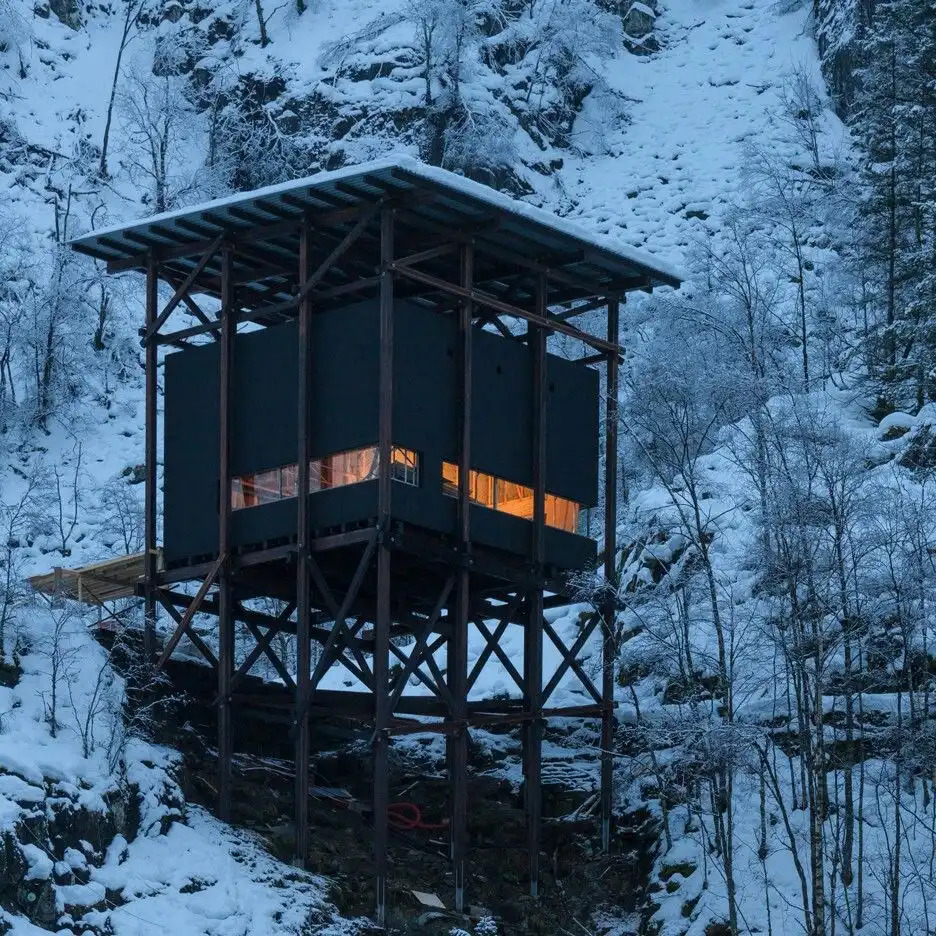
Zumthor and the Idea of Architectural Integrity
One of the most consistent threads in zumthor peter thinking architecture is the concept of integrity, by which he means alignment between a building’s purpose, its materials, its construction, and the experience it creates. A building of integrity, in his terms, does not deceive. It does not pretend to be made of things it is not, or to occupy a landscape it has not earned its place in.
This extends to the way buildings age. Zumthor has said that a good building must be capable of absorbing the traces of human life and taking on a specific richness as it does so. He sees patina not as deterioration but as a form of depth, the material record of occupation and use. Architecture and emotion are, for him, inseparable from this capacity to carry the evidence of lived experience.
⚠️ Common Mistake to Avoid
A common misreading of Zumthor’s work is to treat his philosophy as anti-technology or anti-intellectual, a retreat to craft nostalgia. In practice, his buildings are technically demanding, involving precise structural engineering and highly controlled environmental performance. His skepticism is not directed at technical sophistication but at the tendency to make technology the protagonist of the design rather than a means toward a human experience.
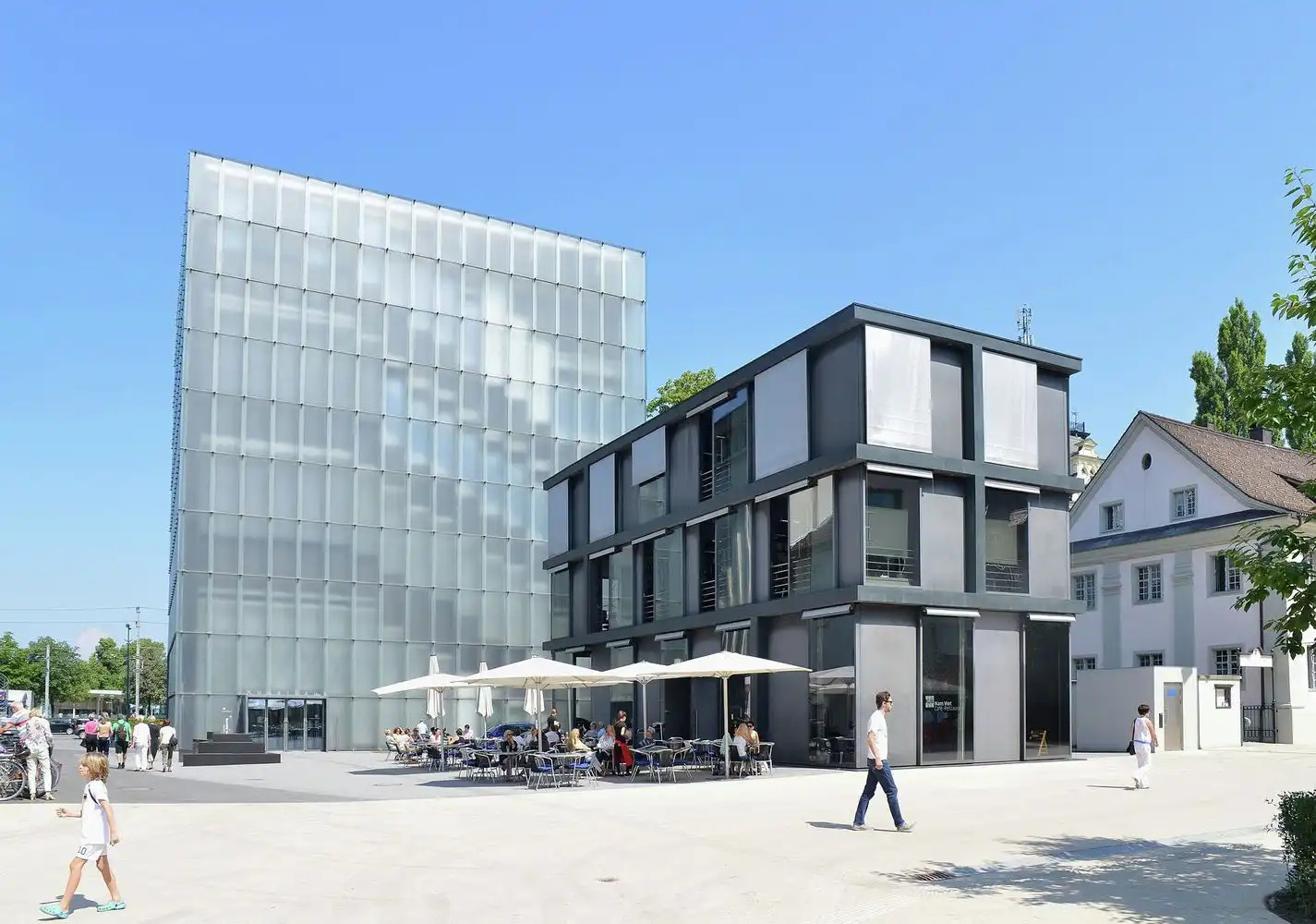
The Kolumba Museum in Cologne, completed in 2007, is perhaps the most complete expression of this principle. Zumthor built on the ruins of a bombed Gothic church, incorporating surviving medieval walls, archaeological excavations, and a delicate contemporary structure into a single building. The museum does not erase its history or celebrate it sentimentally. It holds all of its layers simultaneously, allowing visitors to move between centuries within a single room. The Kolumba Museum’s official website gives a sense of the building’s program and how the institution inhabits the space Zumthor created. You can also read about the design secrets behind Zumthor’s key projects for a closer look at how this multilayered thinking plays out in practice.
Recognition and Influence: The Pritzker Prize and Beyond
Peter Zumthor received the Pritzker Architecture Prize in 2009, the award widely regarded as architecture’s highest honor. The jury described his work as focused, uncompromising, and exceptionally determined, noting that his buildings combine clear and rigorous thought with a genuinely poetic dimension. He received the RIBA Royal Gold Medal in 2013. In 2023, on the occasion of his 80th birthday, the Frankfurter Allgemeine Zeitung called him the great magician of minimalism.
The Peter Zumthor LACMA project, the David Geffen Galleries, opened in April 2026, marking both the most publicly visible and the most ambitious commission of his career. The building targets LEED Gold certification and brings his ideas about atmosphere, material, and sensory experience to a civic scale in Los Angeles.
His influence on architectural education and practice has been substantial, particularly on architects interested in phenomenology, material honesty, and the experiential qualities of space. His two short books, Thinking Architecture and Atmospheres, are widely taught in schools of architecture and remain among the most cited primary sources in contemporary design discourse.
For those exploring how space shapes architectural experience more broadly, Zumthor’s framework offers a rigorous and practically grounded set of questions to bring to any building, not only his own.
✅ Key Takeaways
- Peter Zumthor’s architecture philosophy centers on atmosphere and sensory experience rather than visual spectacle or formal complexity.
- Materials are the starting point of his design process, chosen for their tactile, acoustic, and contextual properties, not just their appearance.
- His phenomenological approach makes every sensory dimension of a space, including sound, temperature, and smell, a conscious design decision.
- Zumthor’s practice model, small, slow, and selective, is itself a philosophical position: sustained attention to each project is inseparable from the quality it produces.
- Thinking Architecture (1998) and Atmospheres (2006), both published by Birkhäuser, are his two essential texts and together offer the clearest account of how his ideas translate into built form.
Where to Go from Here
Zumthor’s buildings cannot be fully understood at a distance. If you have the opportunity to visit the Therme Vals, the Kolumba Museum, or the Bruder Klaus Chapel, the experience will communicate things about his work that no text or photograph can. For those who cannot travel to these sites, his own writing remains the best guide.
Broader architectural conversations about how buildings tell stories through space and aesthetic storytelling in design find their most rigorous expression in Zumthor’s practice. His work does not promise ease or spectacle. What it offers instead is something rarer: the sense that a building has been thought through to its core, that every surface, threshold, and shadow is there because someone asked what it should feel like to be here and kept asking until the answer was honest.
- Peter Zumthor architecture
- peter zumthor architecture firm
- peter zumthor architecture office
- peter zumthor architecture philosophy
- peter zumthor architecture style
- peter zumthor phenomenology architecture
- peter zumthor thinking architecture
- therme vals peter zumthor architecture
- zumthor peter thinking architecture




Futuro House Production Revived in Finland After Decades-Long Hiatus
A Facebook listing for abandoned moulds led to the first new Futuro...
 illustrarch Editoral Team3 Mins read

Building Your Dream Home in NSW: What You Should Know About Montgomery Homes
Montgomery Homes has been building across Sydney, Newcastle, the Hunter, Wollongong and...
illustrarch Editoral Team4 Mins read
Designing a Home Theater: Where Drapery Fits Into the Plan
In a media room the curtains are a performance layer, not decoration....
illustrarch Editoral Team3 Mins read
Oscar Niemeyer’s Cathedral of Brasília: The Hyperboloid Concrete Hymn
The Cathedral of Brasília reads as a single gesture, yet it stood...
 Furkan Sen7 Mins read


Leave a comment