

Venice Biennale 2026: A Guide to In Minor Keys, National Pavilions & Collateral Events
The 61st Venice Biennale opened on May 9, 2026, with In Minor Keys, a deeply personal exhibition shaped by the late curator Koyo Kouoh. Featuring 111 artists across the Giardini and Arsenale, 100 national pavilions, 31 collateral events, and seven first-time participating countries, this edition is one of the most emotionally charged in the Biennale's 131-year history.
 Elif Ayse Sen19 May 202612 Mins read350
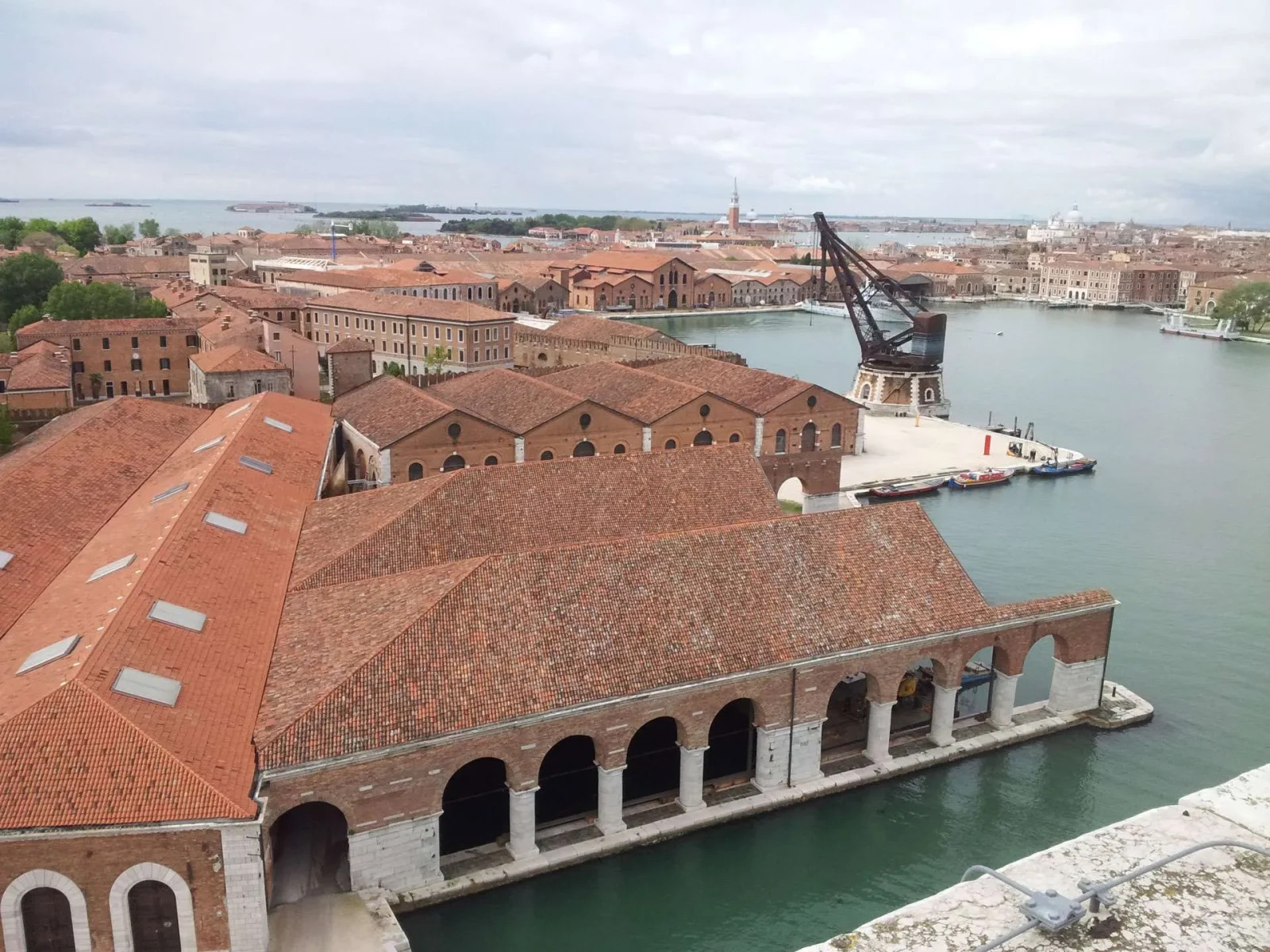
Table of Contents Show
The Venice Biennale 2026, officially titled In Minor Keys, is the 61st International Art Exhibition organized by La Biennale di Venezia. Running from May 9 to November 22, 2026, across the Giardini, the Arsenale, and venues throughout Venice, this edition brings together 111 artists, 100 national pavilions, and 31 collateral events under a curatorial vision shaped by the late Koyo Kouoh.
Kouoh, the first African woman to curate the Venice Art Biennale, passed away in May 2025 after developing nearly every aspect of the exhibition. Her team of five collaborators carried the project forward exactly as she conceived it. The result is an exhibition tuned to quieter emotional registers, one that favors intimacy, reflection, and collective memory over spectacle. Below is a detailed look at what defines this edition, from the central exhibition and its scenography to standout national pavilions and collateral events worth visiting.
What Is the Theme of Venice Biennale 2026?
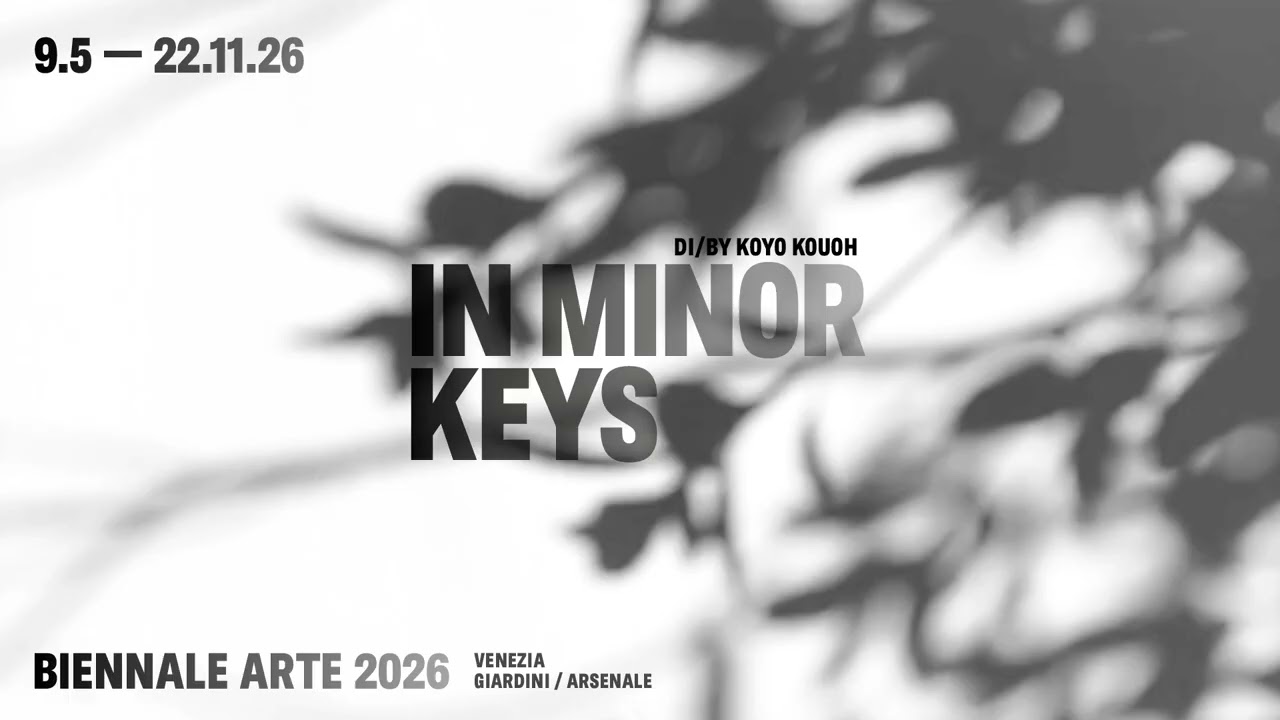
The title In Minor Keys borrows directly from music theory. In a musical context, minor keys are associated with melancholy, strangeness, and emotional depth. They rarely dominate a composition, but they shape its feeling. For Kouoh, this concept became a curatorial framework built around listening, relation, and affect. She described the exhibition as an invitation to connect with “the songs of those producing beauty in spite of tragedy” and to find “harmonies that oppose the cacophony of the present.”
The curatorial text, submitted by Kouoh on April 8, 2025, laid out the philosophical foundation for the show. Rather than offering commentary on world events or avoiding global crises, In Minor Keys proposes what Kouoh called “a radical reconnection with art’s natural habitat and role in society: that is the emotional, the visual, the sensory, the affective, the subjective.” Literary references run through the exhibition’s DNA. Toni Morrison’s Beloved and Gabriel Garcia Marquez’s One Hundred Years of Solitude served as conceptual touchstones for the curatorial team.
The exhibition is organized not through rigid thematic sections but through what the team calls “undercurrent priorities.” These strands include Shrines (tributes to two central artists), Processions, Schools (artist-led institutions), and Oases (rest spaces for mental and physical repose). Each strand weaves across the venues, creating an intergenerational and cross-geographic path through the works.
💡 Pro Tip
If you’re visiting the Arsenale, plan at least three to four hours for the central exhibition alone. The show is designed around slow transitions and moments of pause, and rushing through it defeats the curatorial intent. Start early in the morning when crowds are thinnest to experience the indigo-banner thresholds as Kouoh intended.
Who Was Koyo Kouoh, the Curator Behind Venice Biennale 2026?
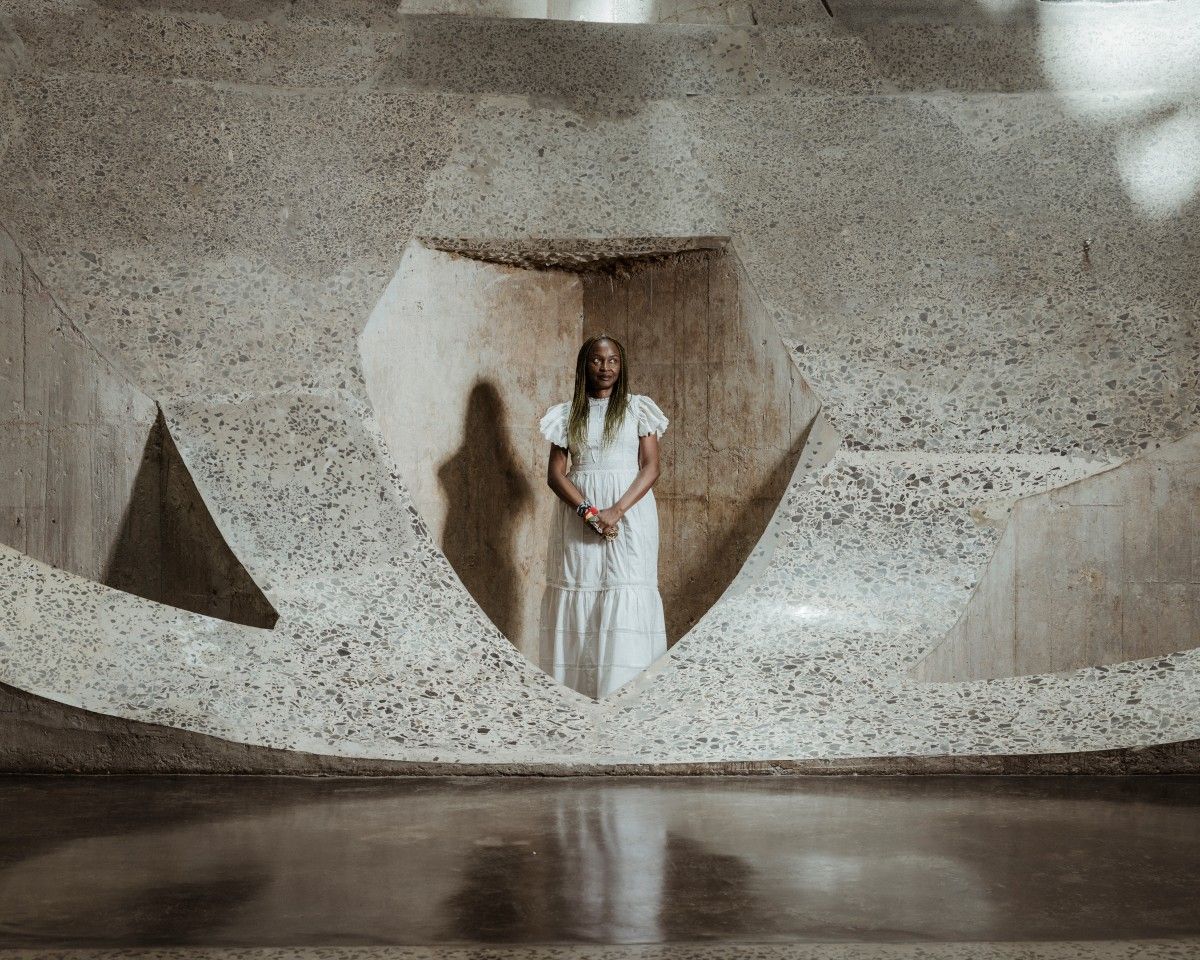
Koyo Kouoh was a Cameroonian-born, Dakar-based curator and cultural leader who founded RAW Material Company, a center for art, knowledge, and society in Senegal. She was appointed Artistic Director of the Visual Arts Department at La Biennale di Venezia in December 2024, becoming the first African woman to hold the role in the institution’s 131-year history.
Before her sudden passing in May 2025, Kouoh had already completed the exhibition’s conceptual framework, artist selection, scenography plans, graphic identity, and catalogue structure. She finalized many of these details during a working session in Dakar in April 2025 at RAW Material Company. Her collaborative ethos shaped every dimension of the project. Five team members she personally selected carried the exhibition to completion: Gabe Beckhurst Feijoo, Marie Helene Pereira, and Rasha Salti (advisors), Siddhartha Mitter (editor-in-chief), and Rory Tsapayi (research assistant). They were named “la squadra di Koyo Kouoh” and presented the full concept at Ca’ Giustinian in Venice on February 25, 2026.
One significant detail sets this edition apart from its predecessors: there are no Golden Lion lifetime achievement awards this year. Kouoh had not yet made those selections before her death, and the Biennale chose not to make them on her behalf.
📌 Did You Know?
This Venice Biennale features significantly fewer artists than the previous edition. The 2024 Biennale, curated by Adriano Pedrosa, included 330 artists. Kouoh selected 111, a deliberate choice reflecting her emphasis on depth of engagement over breadth of survey. Among these, 105 are individual artists or collectives and six are artist-led organizations, a category rarely included in the central exhibition.
Venice Biennale 2026 Artists: Who Is in the Central Exhibition?
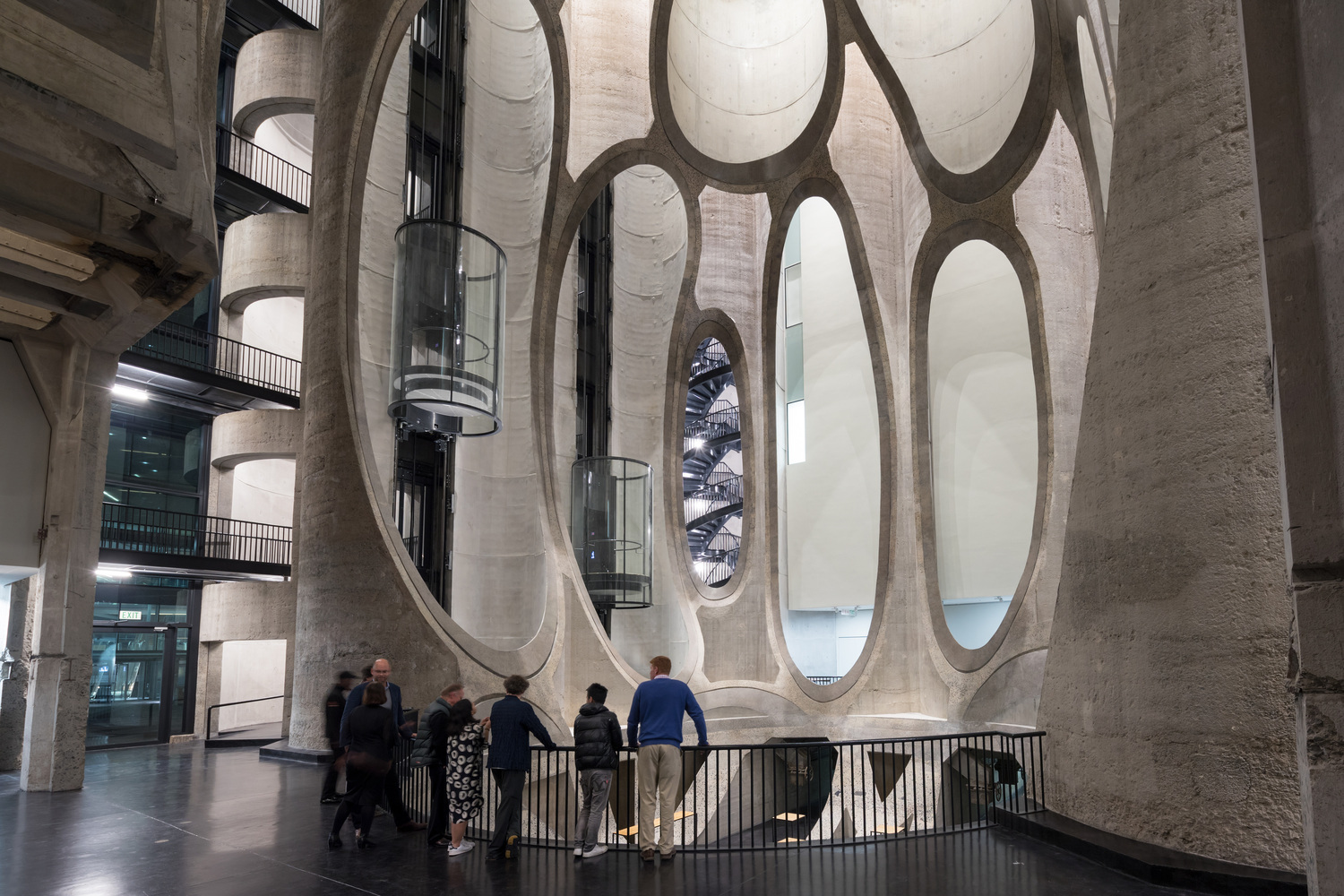
The 111 participants in In Minor Keys span multiple continents, with a strong representation from the Global South. Unlike recent editions that included many deceased artists, this Biennale features a notable increase in living practitioners. The artist list reflects what the organizers describe as “a relational geography of encounters” built over Kouoh’s lifetime of curatorial work.
Several names anchor the exhibition’s narrative. Nick Cave (the American artist, not the musician) presents Two Points in Time, At Once across the Arsenale, a monumental installation that moves through seven stages inspired by cycles of grief and remembrance. Bronze figures, floral motifs, vintage serving trays, and needlepoint self-portraits create environments that shift between silence, mourning, and joy.
Two “Shrines” occupy a central role in the exhibition’s architecture. These are dedicated to Issa Samb (1945-2017), a Senegalese artist, writer, and performer, and Beverly Buchanan (1940-2015), an American sculptor known for her “shack” sculptures inspired by improvised vernacular architecture in the rural southern United States. For Kouoh, these artists represented modes of practice that exceeded individual authorship and engaged directly with community, memory, and place.
Other notable participants include Pio Abad, whose drawings reactivate looted colonial artifacts by placing them in domestic settings; Philip Aguirre Y Otegui, whose Gaalgui Shelter in the Arsenale draws from traditional Senegalese fishing boats used for clandestine crossings toward Europe; Laurie Anderson; Alvaro Barrington; Torkwase Dyson; Ebony G. Patterson; and Daniel Lind-Ramos. Six artist-led organizations also participate, including Denniston Hill (New York), Black Star Lines (Accra), and RAW Material Company (Dakar), reflecting Kouoh’s commitment to non-market spaces of learning.
🎓 Expert Insight
“In Minor Keys positions the Biennale Arte 2026 not as an encyclopedic survey, but as a living, breathing composition, one that asks audiences to tune in, rather than look on.” — Whitewall Art Magazine, 2026 Venice Biennale Guide
This observation captures the shift in tone that defines the 2026 edition. Where previous Biennales often aimed for maximum inclusion and encyclopedic scope, Kouoh’s approach favors resonance and affinity between practices, even when the artists come from vastly different geographies.
Exhibition Design and Scenography by Wolff Architects
The spatial experience of In Minor Keys was designed by Wolff Architects, a Cape Town-based practice appointed by Kouoh in early 2025. Their approach centers on the threshold as both a spatial and symbolic device. Across the recently renovated Central Pavilion at the Giardini and the Arsenale, sweeping indigo textile banners descend from the rafters to the floor, marking transitions between different zones of the exhibition.
These banners are not merely decorative. They modulate tempo and atmosphere, calming the senses at the conclusion of one phase and signaling the opening of another. The design team described their approach as providing “generosity to each artist’s universe and to the sensorial experience that can open up between constellations of practices.” In the Sala Chini, the vocabulary of the Shrines is introduced, setting the tone for the rest of the exhibition’s journey.
Rest spaces, or “Oases,” are distributed throughout the show. Kader Attia provides one such space with an installation that invites physical and mental repose. At Forte Marghera on the Venetian mainland, artists Temitayo Ogunbiyi, Uriel Orlow, and Fabrice Aragno extend the exhibition’s atmosphere into site-responsive installations that encourage wandering, play, and relaxation.
The Central Pavilion renovation, completed in March 2026 after 16 months of construction and a 31 million euro investment, played a key role in making this scenographic vision possible. The renovation by Labics and Fabio Fumagalli reorganized circulation, restored Carlo Scarpa’s original window fixtures, and introduced photovoltaic skylights, all while targeting LEED Gold certification.
📐 Technical Note
The renovated Central Pavilion spans approximately 5,450 square meters within the 51,000-square-meter Giardini complex. The 2026 edition uses all three primary venue clusters: 29 national pavilions in the Giardini, 25 in the Arsenale, and 46 spread across Venice’s historic center, plus installations at Forte Marghera on the mainland.
Venice Biennale US Pavilion 2026: Alma Allen’s Call Me the Breeze
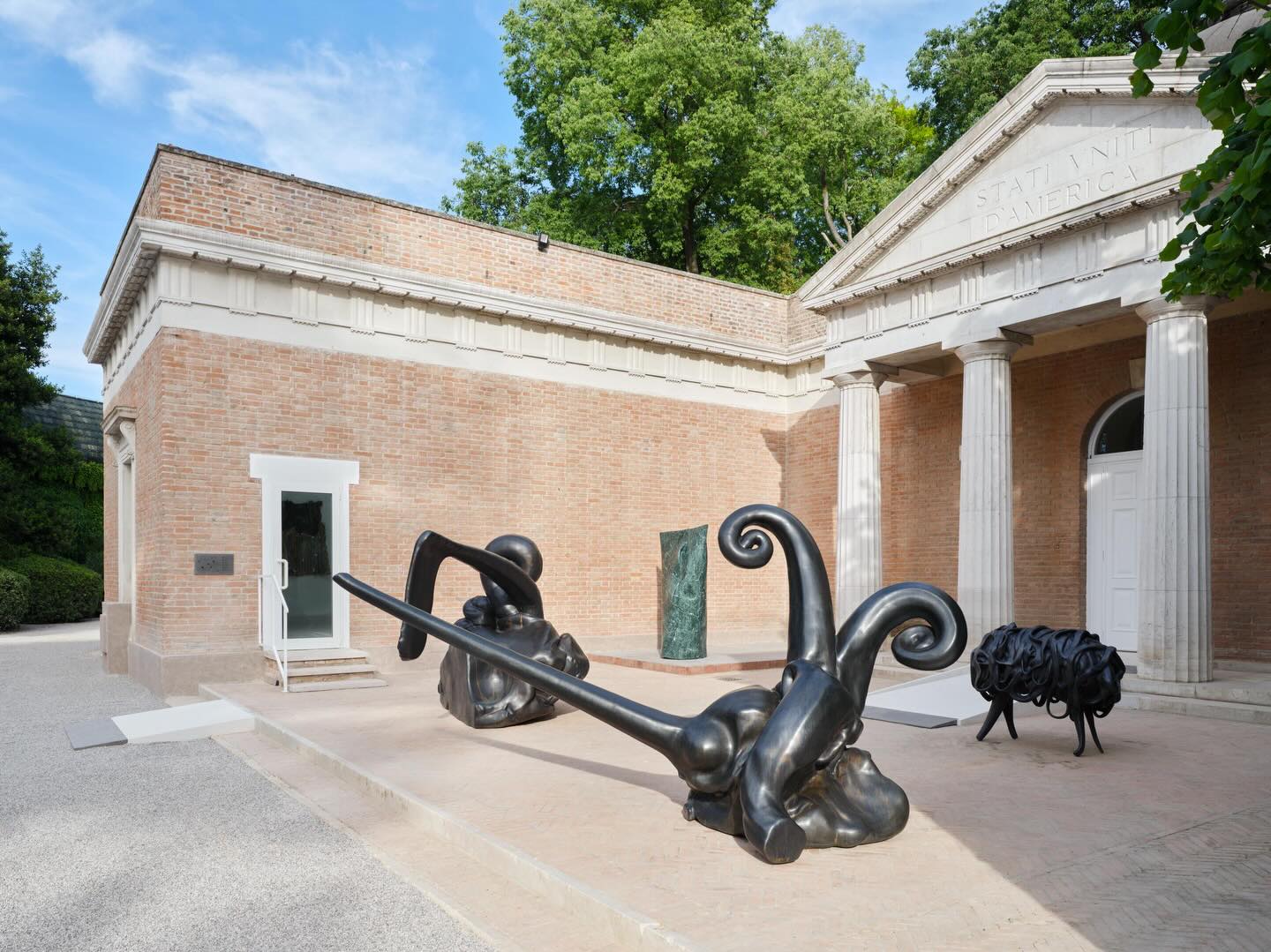
The Venice Biennale US Pavilion 2026 features sculptor Alma Allen with an exhibition titled Call Me the Breeze, curated by Jeffrey Uslip. Allen works with stone, wood, and bronze sourced from across the Americas, combining hand-carving techniques with advanced fabrication technologies to create biomorphic forms that appear both grounded and in motion.
The selection process for this pavilion drew significant attention. After the State Department’s Bureau of Educational and Cultural Affairs excluded National Endowment for the Arts experts from the process, the American Arts Conservancy, led by Jenni Parido, was entrusted with the appointment. Curator Uslip reportedly approached Barbara Chase-Riboud and William Eggleston before landing on Allen, a Utah-born sculptor based in Mexico.
The pavilion itself features a series of untitled sculptures in materials including Colorado Yule marble (the same stone used for the Lincoln Memorial), bronze, and wood. Allen’s process is notably tactile: he shapes forms with his fingers without looking, then scales successful pieces into large works. Critical reception has been polarized. Some reviewers praised the sensual fluidity of his sculptural language, while others found the work lacked the political depth of recent US presentations by Simone Leigh (2022) and Jeffrey Gibson (2024).
Standout National Pavilions at the 2026 Venice Biennale
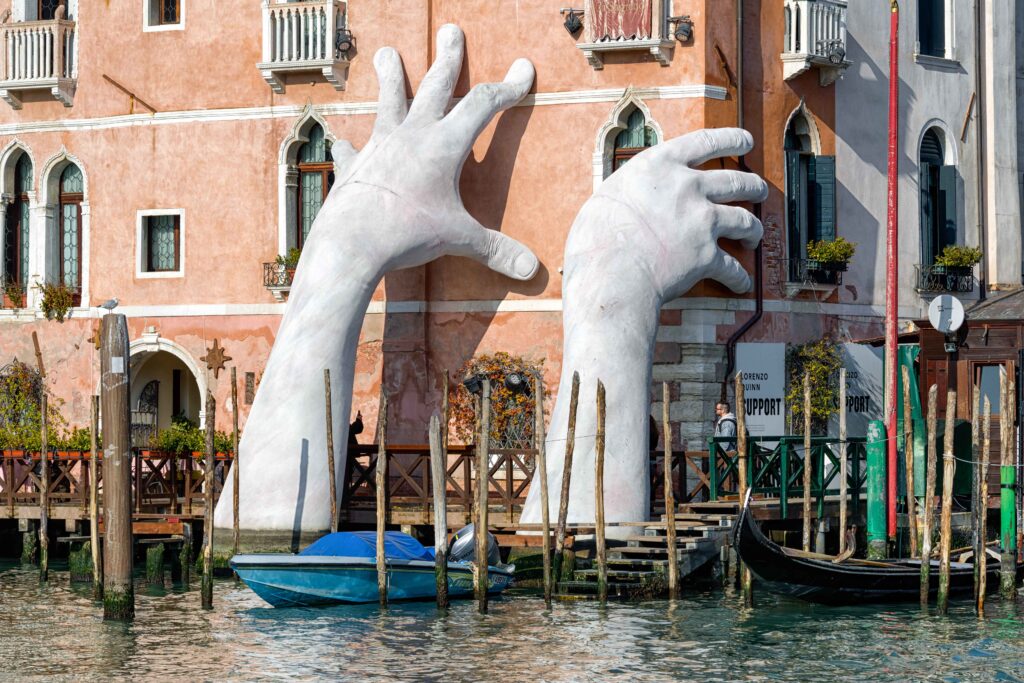
With 100 national participations, including seven countries exhibiting for the first time, the 2026 Venice Biennale offers an extraordinary range of perspectives. Here are some of the most talked-about pavilions.
First-Time Participants
Seven nations are making their debut at the Biennale Arte this year: the Republic of Guinea, the Republic of Equatorial Guinea, the Republic of Nauru, Qatar, the Republic of Sierra Leone, the Federal Republic of Somalia, and the Socialist Republic of Vietnam. El Salvador is also participating with its own pavilion for the first time.
The Somalia Pavilion has drawn particular attention. Titled SADDEXLEEY and spanning three floors of the historic Palazzo Caboto, it builds a triadic rhythm from three women artists across three mediums. Ayan Farah’s textile and sediment works embed land and memory into pieces of quiet beauty. Asmaa Jama contributes film and performance, while Warsan Shire’s spatialized poetry speaks to displacement.
British Pavilion: Lubaina Himid
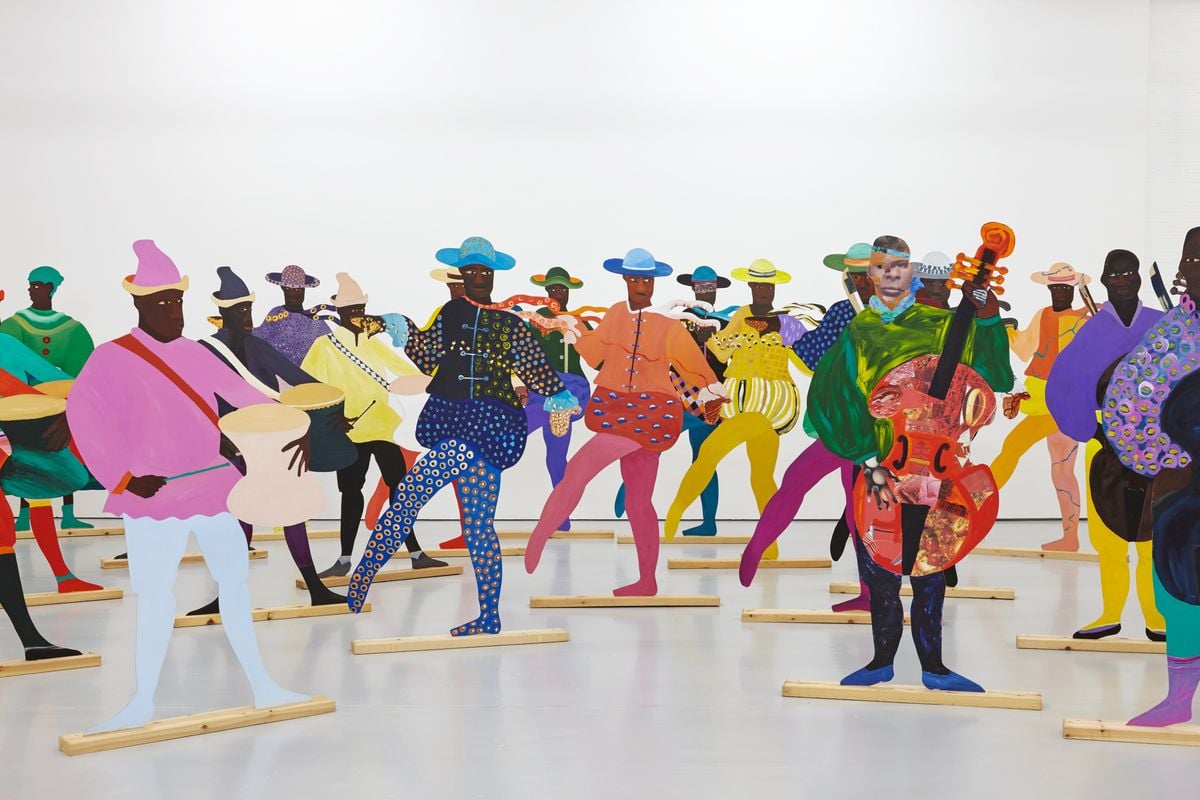
Turner Prize winner Lubaina Himid presents Predicting History: Testing Translation, an immersive exhibition about belonging, migration, and the complexity of making a home beyond one’s origins. Large-scale, multi-paneled paintings in vivid colors construct surreal environments populated by imagined characters. A layered soundscape developed with Magda Stawarska extends the work into spatial installation.
India Pavilion: Geographies of Distance
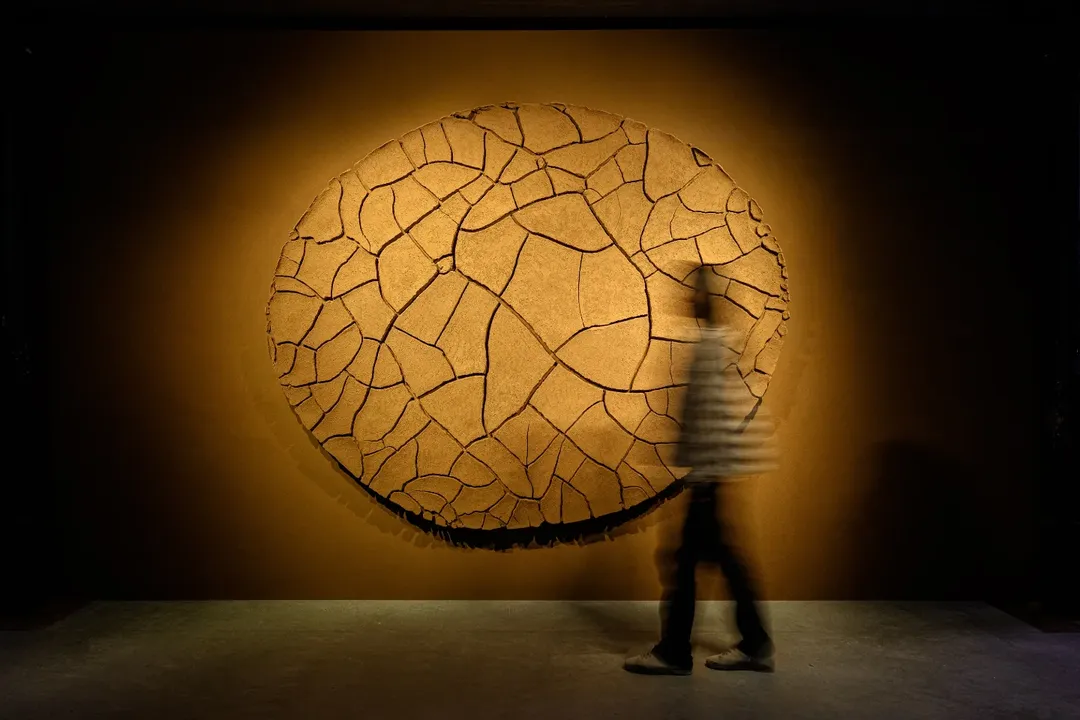
India’s first national presentation since 2019, Geographies of Distance: Remembering Home, transforms the Isolotto warehouse in the Arsenale into a series of explorations of memory and belonging. Curated by Amin Jaffer and presented by India’s Ministry of Culture in partnership with the Nita Mukesh Ambani Cultural Centre, the show features works by Alwar Balasubramaniam, Sumakshi Singh, Ranjani Shettar, Asim Waqif, and Skarma Sonam Tashi.
Canada Pavilion: Abbas Akhavan
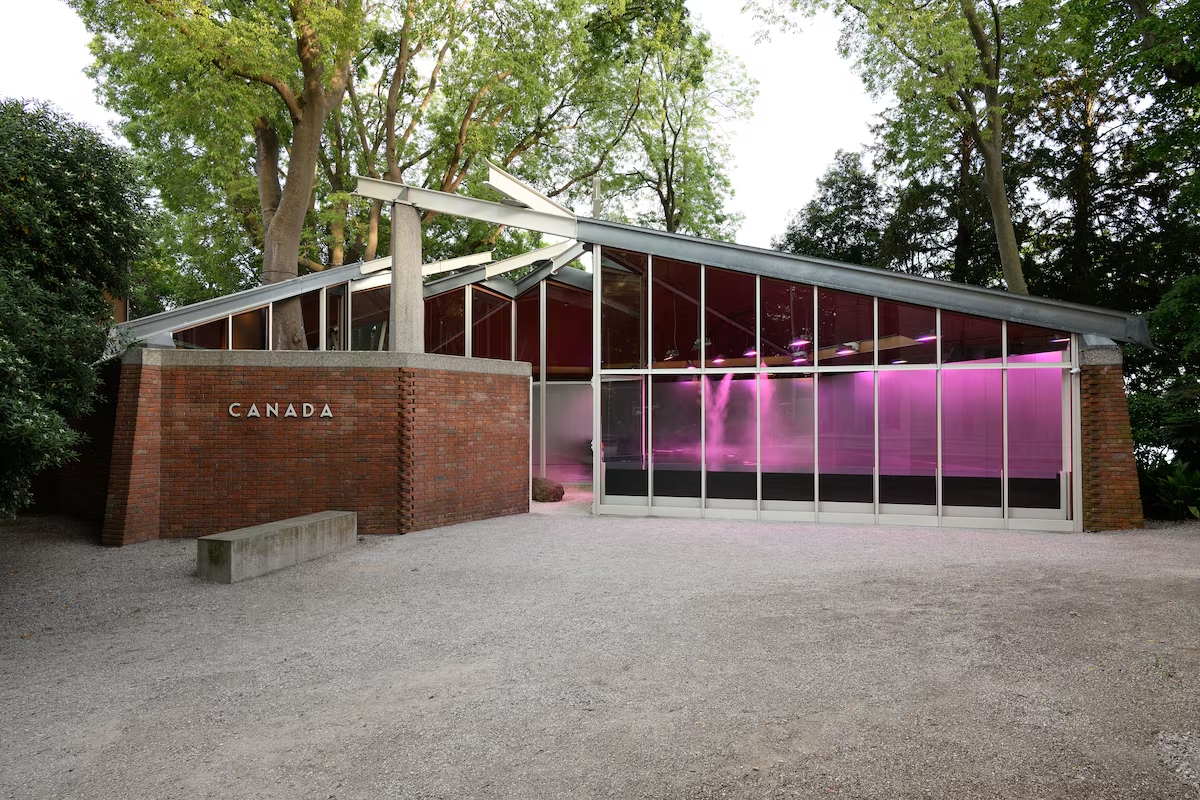
Artist Abbas Akhavan fills the brick and glass-walled Canada Pavilion with grow lights, water misters, and a 6,000-gallon water tank containing living Victoria water lilies. Titled Entre chien et loup, the installation references Victorian-era Wardian cases used to transport foreign plants to Kew Gardens. During the Biennale’s run, the lilies are expected to blossom and then perish, turning the pavilion into a living meditation on displacement, colonialism, and ecological fragility.
Greece Pavilion: Escape Room
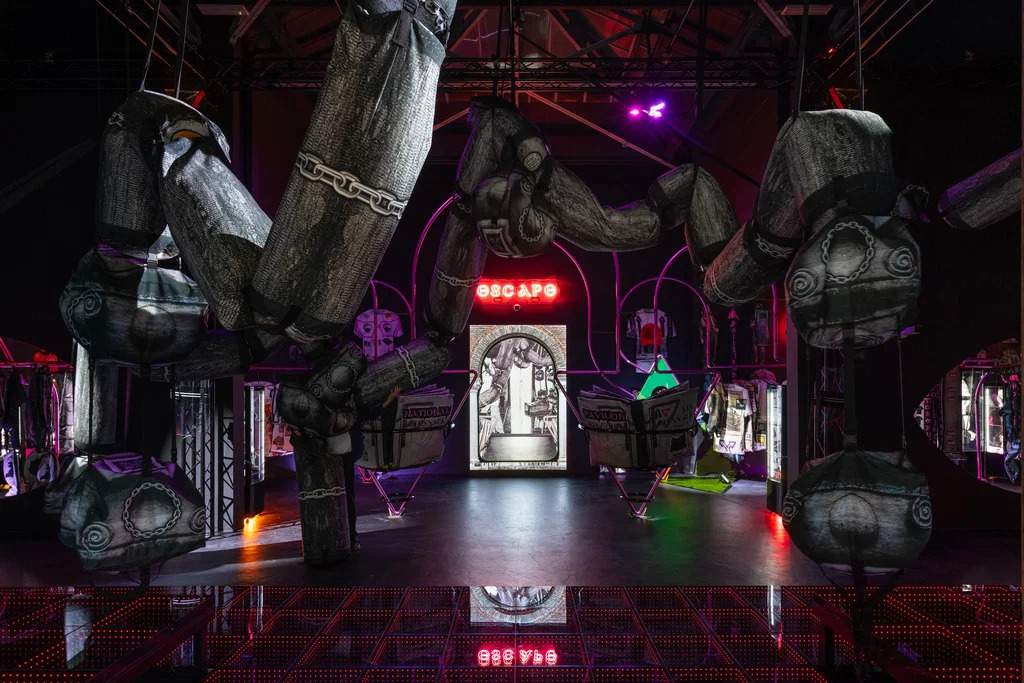
Visual artist Andreas Angelidakis transforms the neo-Byzantine Greek Pavilion in the Giardini into what he describes as “a post-digital Platonic Cave.” The immersive installation addresses post-truth politics and right-wing populism by translating ideas of nationalism and national identity into a digital aesthetic of replicas, projections, and algorithmic illusions. The aesthetic has been described as post-punk and confrontational toward the building’s own fascist-era architectural references.
💡 Pro Tip
National pavilions scattered across Venice’s historic center often have shorter queues and more intimate viewing conditions than those at the Giardini. Budget a full day for pavilion-hopping in Dorsoduro and Castello. Carry a printed map from the Biennale website, as some locations are tucked into palazzi that are easy to miss.
Video: Biennale Arte 2026 Official Presentation
This official video from La Biennale di Venezia features President Pietrangelo Buttafuoco and Koyo Kouoh’s curatorial team presenting the concept and framework for In Minor Keys at Ca’ Giustinian in Venice.
Collateral Events at Venice Biennale 2026
Beyond the central exhibition and national pavilions, the 2026 Venice Biennale includes 31 officially admitted collateral events. These are promoted by non-profit national and international bodies and institutions, and they occupy venues across Venice’s historic center. Several stand out for their ambition and relevance.
Marina Abramovic: Transforming Energy at the Gallerie dell’Accademia marks the first time a living woman artist has been honored with a major exhibition at this historic Venetian institution. Jenny Saville presents more than thirty canvases and works on paper at Ca’ Pesaro, tracing her career from the 1990s to the present in dialogue with the great Venetian painters of the past.
Leandro Erlich: Hybrids, curated by Marcello Dantas and presented by Associazione Arte Continua in collaboration with FAI, features approximately twenty sculptural works at a historic Venetian venue. The Bangkok Art Biennale Foundation presents The Spirits of Maritime Crossing 2026 at Palazzo Rocca Contarini Corfu, a group exhibition of 20 artists from Southeast Asia exploring identity, displacement, and spiritual resilience.
Other collateral events include Tadeusz Kantor: Emballage, Cricotage and Madame Jarema at the Procuratie Vecchie (the first exhibition of the Polish master at Biennale Arte since 1960), Nalini Malani’s large-scale multichannel installation at Magazzini del Sale commissioned by the Kiran Nadar Museum of Art, and David Cerny’s Artocalypsa, a survey of the provocative Czech artist’s 30-year career.
A special collaboration between La Biennale di Venezia and the Victoria and Albert Museum in London produced the Applied Arts Pavilion in the Arsenale, where Gala Porras-Kim examines museum conservation and classification systems through drawings, sculptures, and video.
2026 Venice Biennale Dates and Visitor Information
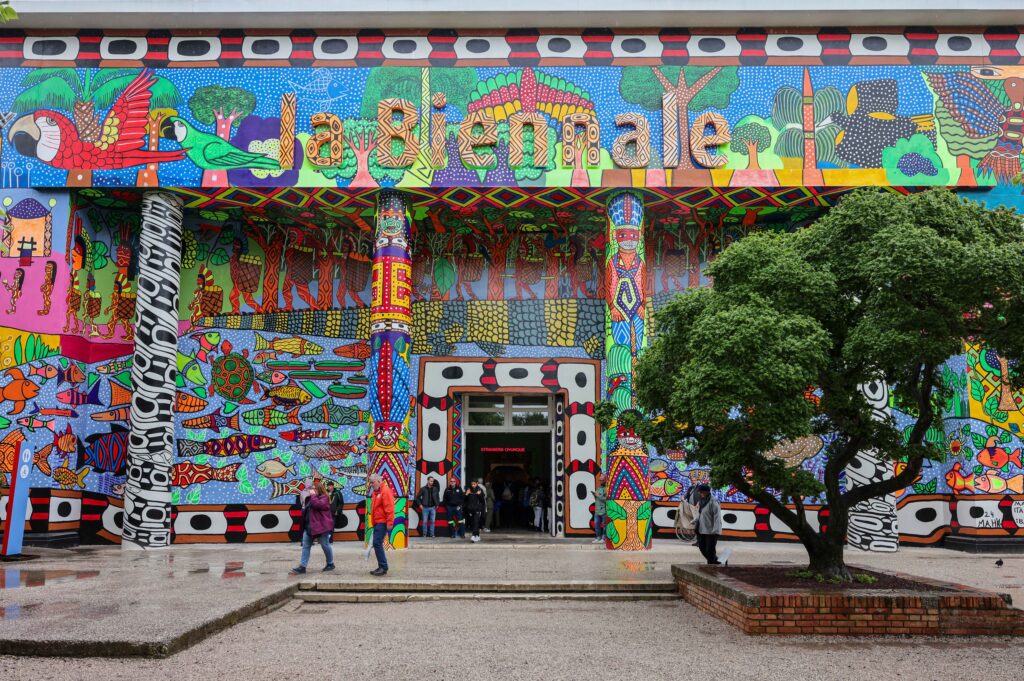
Here are the essential details for planning a visit to the 2026 Venice Biennale.
Key Dates
| Event | Date |
|---|---|
| Pre-opening / Preview Days | May 6, 7, 8, 2026 |
| Awards Ceremony & Inauguration | May 9, 2026 |
| Public Opening | May 9, 2026 |
| Exhibition Closes | November 22, 2026 |
The opening day attracted approximately 10,000 visitors, a 10% increase compared to the 2024 edition. Tickets are available through the official La Biennale di Venezia website. Biennale Sessions, a dedicated program for universities and research institutions, is available for groups of 50 or more participants with free seminar spaces and logistical support.
Venues
The exhibition occupies three primary clusters: the Giardini della Biennale (29 national pavilions plus the Central Pavilion), the Arsenale di Venezia (25 national pavilions plus the central international exhibition), and 46 pavilions and collateral events spread across Venice’s historic center. Installations at Forte Marghera extend the exhibition to the mainland for the first time in this configuration.
⚠️ Common Mistake to Avoid
Many visitors try to see the entire Biennale in a single day. This is not realistic. The Giardini and Arsenale alone require a full day each, and the city-wide pavilions demand additional time. Plan at least two to three days for a thorough visit, and check individual pavilion schedules in advance, as some collateral events close earlier than the main exhibition dates.
What Makes This Venice Art Biennale Different?
Several factors distinguish the 2026 edition from recent ones. The most obvious is its origins: this is a Biennale realized posthumously, with every major decision already made by a curator who did not live to see the show open. La Biennale di Venezia chose not to alter Kouoh’s project or appoint a replacement, a decision that carries both artistic and institutional weight.
The scale is also different. With 111 artists instead of the 330 featured in 2024, the biennale Venice 2026 favors focused engagement. The inclusion of artist-led organizations alongside individual practitioners blurs the line between exhibition and institutional critique, while the absence of Golden Lion lifetime achievement awards marks a respectful acknowledgment of curatorial boundaries.
The scenography by Wolff Architects introduces a spatial language that prioritizes sensory experience over visual spectacle. The indigo banners, rest spaces, and procession-like circulation create an environment more akin to a musical composition than a traditional art survey. A procession of poets in the Giardini, inspired by Kouoh’s 1999 Poetry Caravan from Dakar to Timbuktu, adds a performative dimension that connects the exhibition to oral tradition and collective memory.
For those interested in the broader relationship between art, space, and curatorial design, the principles of designing architectural exhibitions offer useful context. The way In Minor Keys translates a curatorial concept into physical spatial experience aligns closely with how architecture exhibitions use narrative, sequencing, and material choices to shape visitor engagement.
🏗️ Real-World Example
Estonia Pavilion, Venice 2026: Merike Estna’s The House of Leaking Sky occupies the gymnasium of the former Church of Santa Maria Assunta, where basketball hoops remain alongside an early 20th-century ceiling fresco by Giuseppe Cherubini. The installation creates a continuous artistic gesture that responds directly to the layered history of the space, demonstrating how contemporary art practice can activate architectural heritage rather than simply occupying it.
Venice Architecture Biennale 2026: A Note on the Art vs Architecture Editions
A common question concerns the difference between the Venice Architecture Biennale and the Art Biennale. La Biennale di Venezia alternates between the two: art exhibitions are held in odd-numbered calendar years (the 61st Art Exhibition falls in 2026), while architecture exhibitions are held in even-numbered years. The most recent Architecture Biennale took place in 2025, curated by Carlo Ratti under the theme “Intelligens.” The next Venice Architecture Biennale is expected in 2027.
While the 2026 edition is an Art Biennale, architecture plays a significant role. The Central Pavilion renovation, Wolff Architects’ scenography, and several pavilion designs that engage architectural space as a medium (the Greece Pavilion, Lebanon Pavilion by East Architecture Studio, and Canada Pavilion) all blur the boundary between art and spatial practice. For a broader look at how art and architecture intersect, the two disciplines share deep roots in form, space, and creative expression.
Final Thoughts
The Venice Biennale 2026 is more than an exhibition. It is the realization of a vision left behind by a curator who believed that art could restore something essential in a fractured world. Koyo Kouoh’s In Minor Keys does not seek to overwhelm or categorize. It asks visitors to slow down, to listen, and to find meaning in what is quiet, persistent, and often overlooked.
With 100 national pavilions (seven appearing for the first time), 31 collateral events, and a central exhibition designed around emotional resonance rather than curatorial spectacle, this edition offers an experience that rewards patience and attention. Whether you visit in person or follow the Biennale Arte 2026 from a distance, the themes it raises about memory, healing, community, and the role of art in society will continue to resonate well beyond November.
✅ Key Takeaways
- The Venice Biennale 2026, titled In Minor Keys, runs May 9 to November 22, 2026, across the Giardini, Arsenale, and venues throughout Venice.
- Curator Koyo Kouoh, the first African woman to curate the exhibition, passed away in May 2025 but had already completed the project’s full framework.
- 111 artists participate in the central exhibition, organized around themes of intimacy, memory, and collective healing rather than comprehensive survey.
- Wolff Architects’ scenography uses indigo banners as spatial thresholds, creating a procession-like experience that connects the exhibition’s musical metaphor to physical space.
- 100 national pavilions participate, with seven countries (Guinea, Equatorial Guinea, Nauru, Qatar, Sierra Leone, Somalia, and Vietnam) making their Biennale debut.
- Plan at least two to three full days for a thorough visit, and check individual pavilion schedules as some collateral events close before November 22.




Ai Weiwei Installs 500 Cast-Iron Helmets Outside Sydney Museum
Ai Weiwei's 500 cast-iron helmets opened outside Sydney's MCA on 25 September,...
 illustrarch Editoral Team2 Mins read
Isamu Noguchi at Lever House Traces Sculptor’s Decades-Long Collaboration with Bunshaft
Lever House's new exhibition pairs Noguchi sculptures with unbuilt garden designs made...
illustrarch Editoral Team2 Mins read
Relocated Maya Structures at Mexico’s Balam Tun Memory Park Face Legal Challenge
INAH archaeologists have filed a complaint against 26 officials over Balam Tun...
illustrarch Editoral Team2 Mins read

Heather Roberge, UCLA Architecture Professor and Murmur Founder, Dies at 55
UCLA professor and Murmur founder Heather Roberge, a 2026 AIA LA Educator...
illustrarch Editoral Team2 Mins read


Leave a comment