

Top 10 Examples of Parametric Architecture Around the World
Parametric architecture is reshaping global design through computational tools that generate fluid forms, efficient structures, and environmentally responsive buildings. These ten iconic projects reveal how architects use parametric methods to redefine space, structure, and experience across the world.
 Elif Ayse Sen11 December 20257 Mins read368

Table of Contents Show
Parametric architecture has transformed the way buildings are conceived, engineered, and experienced. Enabled by advanced computational tools, it shifts design away from fixed forms and toward dynamic systems that can adapt to structure, performance, and context. From fluid cultural centers to complex urban landmarks, parametric design allows architects to explore geometries that were once impossible to model or construct. This approach has not only expanded the boundaries of architectural expression but has also introduced new relationships between material, form, and environmental behavior. The following selection highlights 10 exemplary projects from around the world that demonstrate how parametric thinking has reshaped contemporary architecture. Each example reveals how computation can generate innovation—whether through structural efficiency, environmental responsiveness, or sculptural identity.
| # | Project | Architect | Location | Year | Typology | Key Parametric Feature |
|---|---|---|---|---|---|---|
| 1 | Heydar Aliyev Center | Zaha Hadid Architects | Baku, Azerbaijan | 2012 | Cultural Center | Fluid continuous surfaces, curved steel ribs |
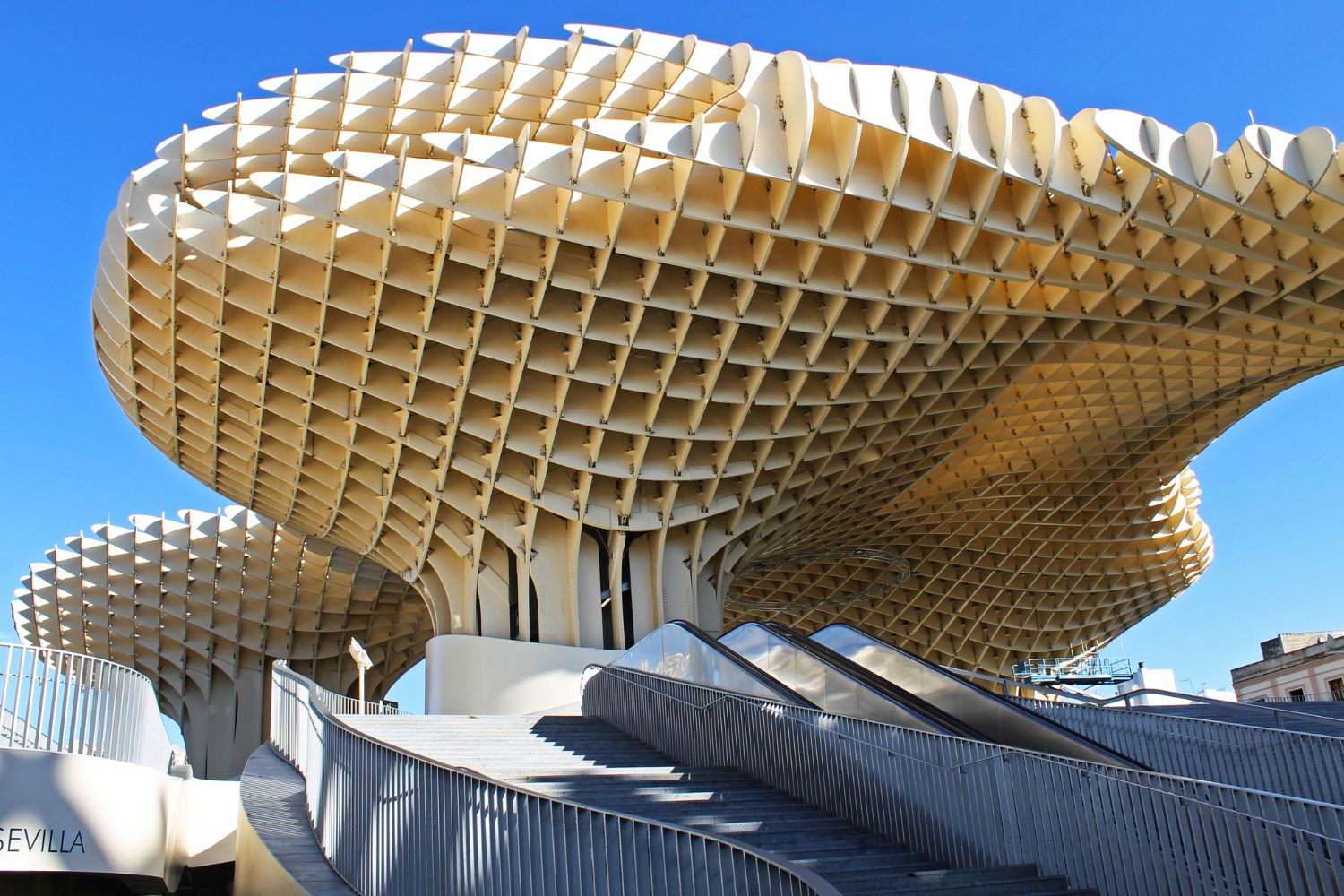
| 2 | Metropol Parasol | J. Mayer H. Architects | Seville, Spain | 2011 | Urban Structure / Public Space | Parametric timber lattice canopy |
| 3 | Yas Hotel (W Abu Dhabi) | Asymptote Architecture | Abu Dhabi, UAE | 2009 | Hotel / Hospitality | Grid-shell facade, 5,800 diamond glass panels |
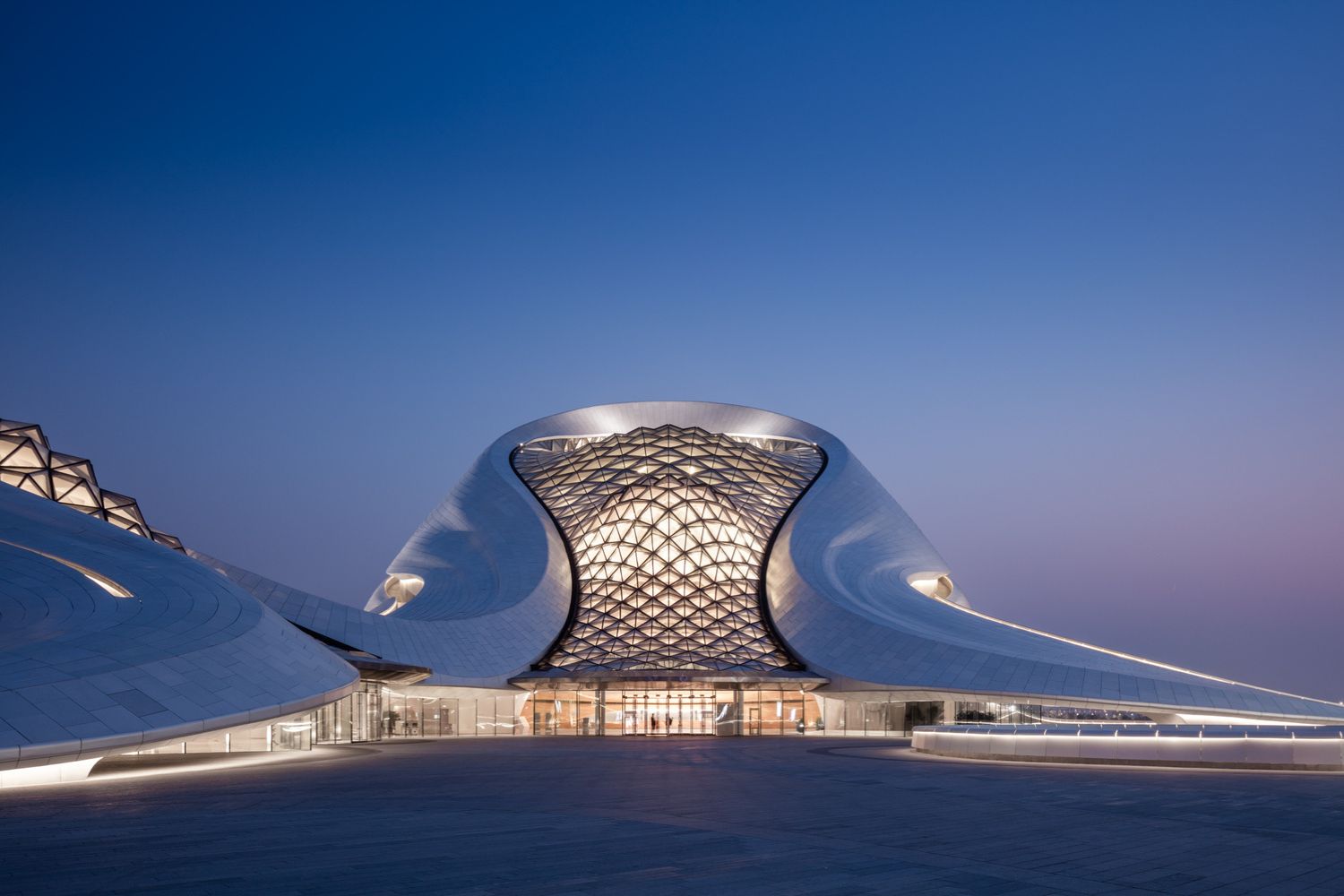
| 4 | Harbin Opera House | MAD Architects | Harbin, China | 2015 | Cultural / Performing Arts | Algorithmic landscape-like massing |
| 5 | Galaxy SOHO | Zaha Hadid Architects | Beijing, China | 2012 | Mixed-Use Commercial | Fluid non-orthogonal volumes |
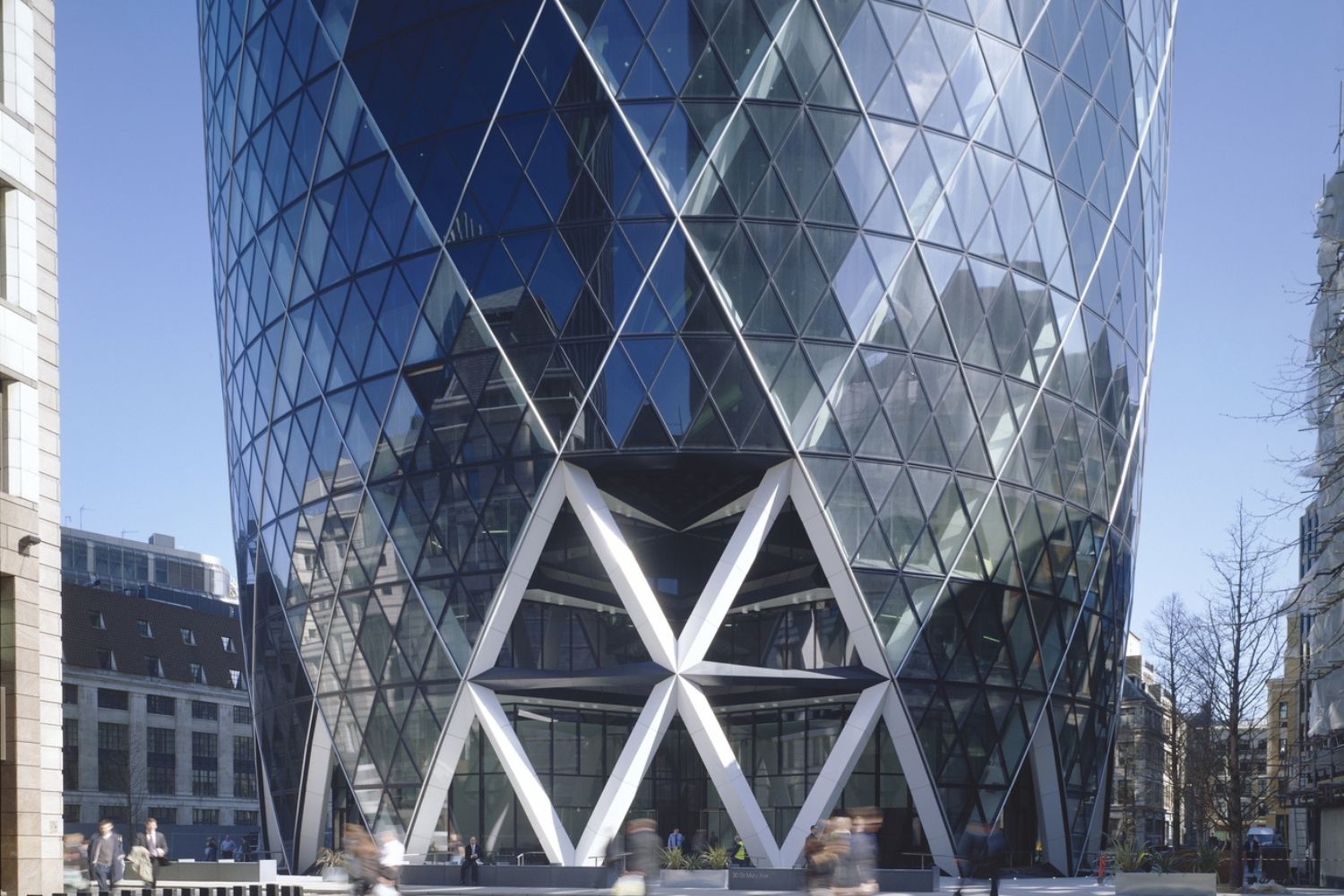
| 6 | 30 St Mary Axe “The Gherkin” | Foster + Partners | London, UK | 2004 | Office Tower | Aerodynamic form, diagonal structural grid |
| 7 | Morpheus Hotel | Zaha Hadid Architects | Macau, China | 2018 | Hotel / Hospitality | Free-form exoskeletal structure |
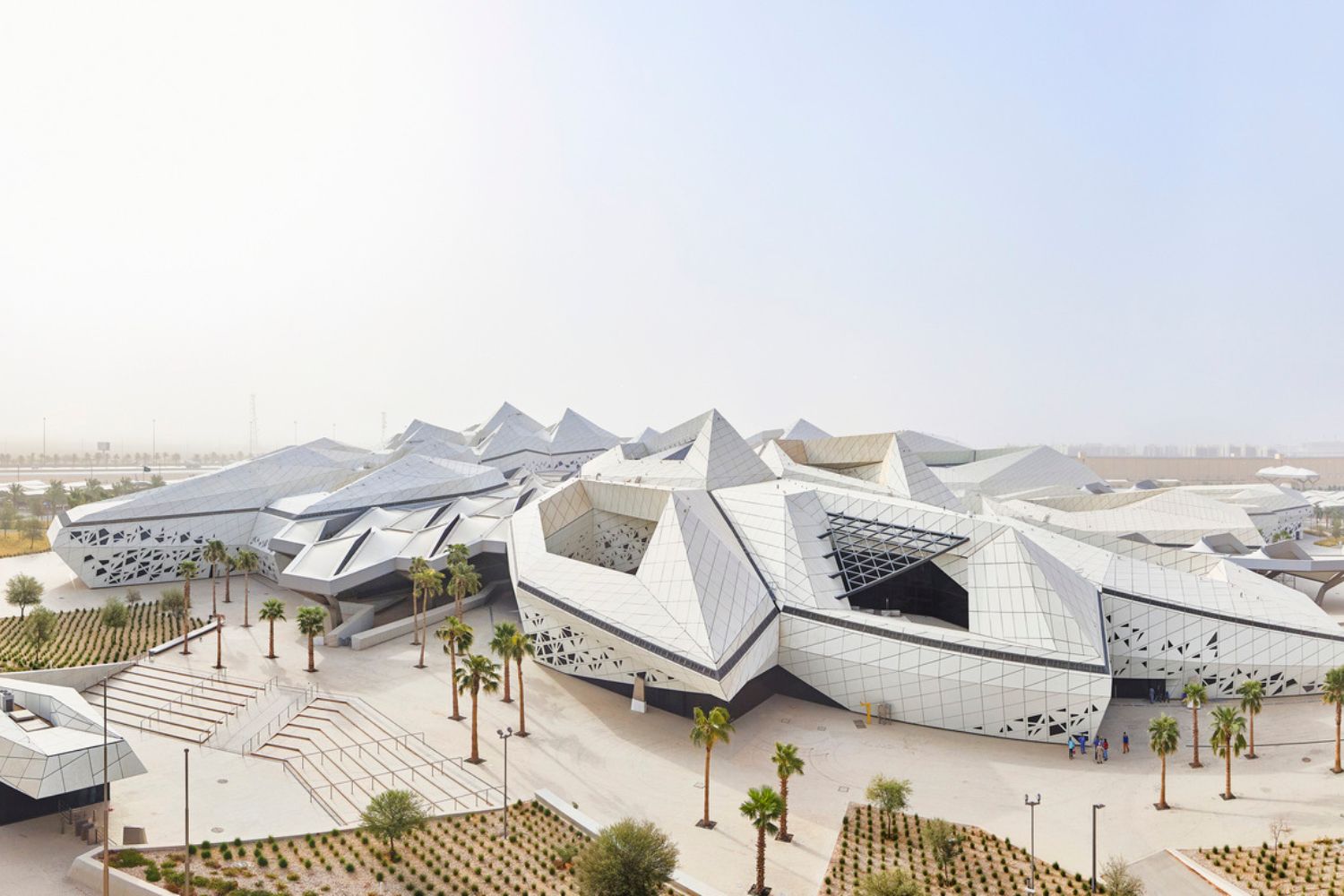
| 8 | KAPSARC | Zaha Hadid Architects | Riyadh, Saudi Arabia | 2017 | Research Center | Parametric hexagonal grid system |
| 9 | KAFD Metro Station | Zaha Hadid Architects | Riyadh, Saudi Arabia | 2024 | Transportation / Infrastructure | Wave-like structural ribs, sine-wave facade |
| 10 | Louvre Abu Dhabi Dome | Ateliers Jean Nouvel | Abu Dhabi, UAE | 2017 | Museum | 8-layer perforated dome, “rain of light” |
1. Heydar Aliyev Center by Zaha Hadid Architects
The Heydar Aliyev Center, completed in 2012 in Baku, stands as one of Zaha Hadid Architects‘ most iconic parametric works. Its fluid, continuous surfaces were generated through advanced parametric modeling to form a seamless envelope without visible joints, symbolizing openness and cultural transformation. The building’s structure uses curved steel ribs and complex geometries that could only be coordinated through computational tools. As a landmark of contemporary design, it demonstrates how parametric systems can merge architecture, engineering, and sculptural expression into a single coherent form.

2. Metropol Parasol by J. Mayer H. Architects
Metropol Parasol, completed in 2011, redefined Seville’s Plaza de la Encarnación through a vast timber lattice generated using parametric modeling. Designed by J. Mayer H. Architects, the project uses a free-form, mushroom-like canopy composed of interlocking timber components precisely fabricated with digital tools. Its parametric structural logic distributes loads efficiently while creating shaded public space in a hot climate. As one of the world’s largest wooden structures, it illustrates how parametric design enables unconventional materials to perform at large urban scales.
3. Yas Hotel by Asymptote Architecture
Completed in 2009, the Yas Hotel Abu Dhabi by Asymptote Architecture features a striking grid-shell facade made from over 5,800 diamond-shaped glass panels. The parametric skin dynamically responds to the building’s curvature and spans across two hotel towers connected by a bridge over the Formula 1 racetrack. Using computational coordination, the facade generates a shimmering, responsive pattern that changes with light and movement. This project is an early milestone in parametric architecture, showcasing how digital geometries can transform hospitality and entertainment experiences.

4. Harbin Opera House by MAD Architects
Completed in 2015, the Harbin Opera House by MAD Architects is shaped through parametric algorithms that model the building as a landscape-like extension of its riverfront site. Its smooth, flowing aluminum exterior and twisting wooden interior surfaces were optimized through digital tools. The sculptural massing interacts with snow, wind, and natural light, reflecting the building’s northern climate. As one of the most poetic examples of computational design, it demonstrates how parametric methods can support atmospheric, site-sensitive architectural expression.

5. Galaxy SOHO by Zaha Hadid Architects
Galaxy SOHO, completed in 2012, consists of four smoothly connected volumes generated through parametric modeling to ensure continuity between circulation, massing, and skylights. Its white, flowing surfaces reflect Zaha Hadid Architects’ signature approach to spatial fluidity. The parametric geometry allows the volumes to shift, merge, and wrap around courtyards, creating dynamic interior experiences. The project shows how commercial complexes can adopt landscape-inspired, non-orthogonal forms made possible through computational tools.

6. 30 St Mary Axe “The Gherkin” by Foster + Partners
Completed in 2004, The Gherkin by Foster + Partners is a pioneering example of early parametric design applied to skyscraper architecture. Its aerodynamic shape and diagonal structural grid were developed through computational optimization to reduce wind loads and improve energy efficiency. The spiraling atria and natural ventilation system came from parametric environmental studies, making it one of London’s most sustainable towers of its time. It paved the way for performance-driven skyscraper design worldwide.
7. Morpheus Hotel by Zaha Hadid Architects
Completed in 2018, the Morpheus Hotel features an exoskeletal structure formed through parametric algorithms that merge architecture and engineering into a continuous 3D composition. Zaha Hadid Architects created a free-form void system carved through the tower’s mass, enabled by computational modeling and digitally fabricated steel nodes. The facade expresses the building’s structural logic, eliminating internal columns. It is a benchmark in showing how parametric architecture can reinvent high-rise typologies.

8. KAPSARC by Zaha Hadid Architects
The King Abdullah Petroleum Studies and Research Center (KAPSARC), completed in 2017, is based on a parametric hexagonal grid system that adapts to climate, program, and orientation. Zaha Hadid Architects designed crystalline volumes optimized for daylight, shading, and energy efficiency. Each cell of the honeycomb pattern is parametrically adjusted to form courtyards, shaded paths, and wind-controlled outdoor spaces. It is a leading example of environmentally responsive parametric planning.
9. KAFD Metro Station by Zaha Hadid Architects
The KAFD Metro Station features a rhythmic, wave-like structural system generated through parametric algorithms that coordinate geometry, passenger flows, and structural ribs. Its fibrous structure, fabricated with digital precision, emerges from computational modeling of movement patterns across intersecting metro lines. As a major infrastructure project, it demonstrates how parametric design can manage spatial complexity with architectural clarity.

10. Louvre Abu Dhabi Dome by Ateliers Jean Nouvel
Completed in 2017, the Louvre Abu Dhabi Dome is one of the most advanced parametric structures ever built. Its 180-meter perforated dome consists of eight superimposed layers of steel and aluminum, each arranged through parametric algorithms to create the iconic “rain of light” effect. Inspired by mashrabiya patterns, the geometry provides natural shading while allowing filtered sunlight into the galleries. It is a landmark example of culturally driven computational design at monumental scale.

| Project | Total Area | Height / Span | Primary Materials | Structural System |
|---|---|---|---|---|
| Heydar Aliyev Center | 57,500 m² | 74 m (height) | Steel, GFRC, concrete | Two-layer space frame with continuous shell |
| Metropol Parasol | ~11,000 m² (canopy) | 28.5 m (h) / 150 × 75 m | Engineered timber (Kerto LVL), concrete | Parametric timber lattice grid |
| Yas Hotel | 85,000 m² | 217 m (grid-shell span) | Steel, glass (5,800 panels), LED | Grid-shell monocoque canopy |
| Harbin Opera House | ~79,000 m² | 56 m (height) | Aluminum cladding, Manchurian ash wood | Free-form shell with curved steel trusses |
| Galaxy SOHO | 330,000 m² | 67 m (height) | Aluminum cladding, concrete, glass | Interconnected flowing volumes with bridges |
| 30 St Mary Axe | 76,400 m² | 180 m (height) / 41 floors | Steel, glass (5,500 diamond panels) | Diagonal diagrid exoskeleton |
| Morpheus Hotel | 150,000 m² | 160 m (height) / 40 floors | Steel exoskeleton, glass, aluminum | Free-form exoskeleton (world’s first) |
| KAPSARC | 70,000 m² | Low-rise campus | GFRC, concrete, steel canopy | Modular hexagonal honeycomb grid |
| KAFD Metro Station | 8,150 m² | 5 levels above grade | UHPC panels, steel, GFRG | Opposing sine-wave lattice envelope |
| Louvre Abu Dhabi Dome | 24,000 m² (museum) | 180 m (dome ⌀) / 36 m (h) | Stainless steel, aluminum (7,850 stars) | 8-layer perforated dome on 4 hidden piers |
| Project | Parametric Design Strategy | Environmental / Sustainability Features | Awards & Certifications |
|---|---|---|---|
| Heydar Aliyev Center | Surface continuity modeling; seamless form generation through computational geometry | Landscape integration reducing heat island effect; natural daylight optimization | Design Museum – Design of the Year 2014 |
| Metropol Parasol | Digital fabrication of interlocking timber components; parametric load distribution | Passive solar shading; sustainable engineered timber construction; urban heat reduction | Red Dot Design Award; RIBA International Award shortlist |
| Yas Hotel | Computational coordination of 5,800 unique pivoting glass panels; curvature-responsive skin | Environmentally responsive facade; LED-integrated lighting reducing energy waste | — |
| Harbin Opera House | Algorithmic landscape modeling; form generation responding to terrain and climate data | Climate-responsive massing; natural light and ventilation optimization; wetland integration | ArchDaily Building of the Year 2016 (Cultural) |
| Galaxy SOHO | Continuous surface modeling; parametric courtyard and skylight optimization | Natural ventilation through courtyards; daylight penetration via parametric skylights | Emporis Skyscraper Award 2013 (3rd place) |
| 30 St Mary Axe | CFD-based aerodynamic optimization; parametric environmental performance studies | 50% energy reduction vs. typical towers; spiraling atria for natural ventilation; reduced wind loads | RIBA Stirling Prize 2004; Emporis Skyscraper Award 2003 |
| Morpheus Hotel | Full parametric model integrating aesthetic, structural & fabrication parameters; void carving algorithms | Column-free interiors maximizing usable space; high-performance glazing | Prix Versailles – World’s Most Beautiful Hotel 2023; TIME World’s Greatest Places 2018 |
| KAPSARC | Hexagonal grid adaptation for climate, program and orientation; modular cell growth logic | 45% energy reduction; rooftop solar PV (5,000 MWh/year); 100% water recycling on site | LEED Platinum Certification |
| KAFD Metro Station | Traffic-flow-driven form generation; sine-wave frequency variation from daily movement data | High-efficiency cooling; intelligent climate control; renewable energy integration | LEED Gold Certification |
| Louvre Abu Dhabi Dome | Multi-layer parametric star geometry for controlled light filtration; 7,850 unique star elements | 98% solar heat gain elimination; 42% reduction in solar gain; passive cooling design | Aga Khan Award for Architecture 2019; LEED Silver |
The examples presented here illustrate how parametric architecture has evolved into a globally influential design methodology capable of redefining entire building typologies. Whether expressed through fluid envelopes, adaptive façades, or algorithmically optimized structures, these projects show how digital tools empower architects to merge creativity with precision. More importantly, they highlight architecture that responds intelligently to climate, site, circulation, and cultural context. As computational design continues to advance, parametric architecture will remain a catalyst for innovation, inspiring future architects to push the boundaries of what is possible.
- advanced geometry in architecture
- algorithm-driven architecture
- algorithmic architecture
- computational design in architecture
- contemporary architecture case studies
- digital fabrication architecture
- iconic parametric buildings
- innovative architectural structures
- Parametric Architecture
- Zaha Hadid parametric works





Computational Design Architecture: Should Architects Learn to Code, and Which Language?
A practical look at whether architects need to write code, and which...
 Furkan Sen6 Mins read
Computational Design Architecture: Should Architects Learn to Code?
Not every architect needs to become a programmer, but computational design has...
Furkan Sen6 Mins read

Top 10 Parametric Architecture Firms You Should Know in 2026
A focused look at 10 parametric architecture firms pushing the limits of...
 Sinan Ozen8 Mins read
Biomimicry Architecture vs Parametric Design
Biomimicry architecture looks to living systems for design solutions, while parametric design...
Furkan Sen7 Mins read


Leave a comment