

The Best Airbnb Houses for Architecture Lovers
Discover the best Airbnb houses for architecture lovers: where to find standout stays, what details to look for, and pro tips on booking, etiquette, and care.
 Sinan Ozen11 December 20257 Mins read224
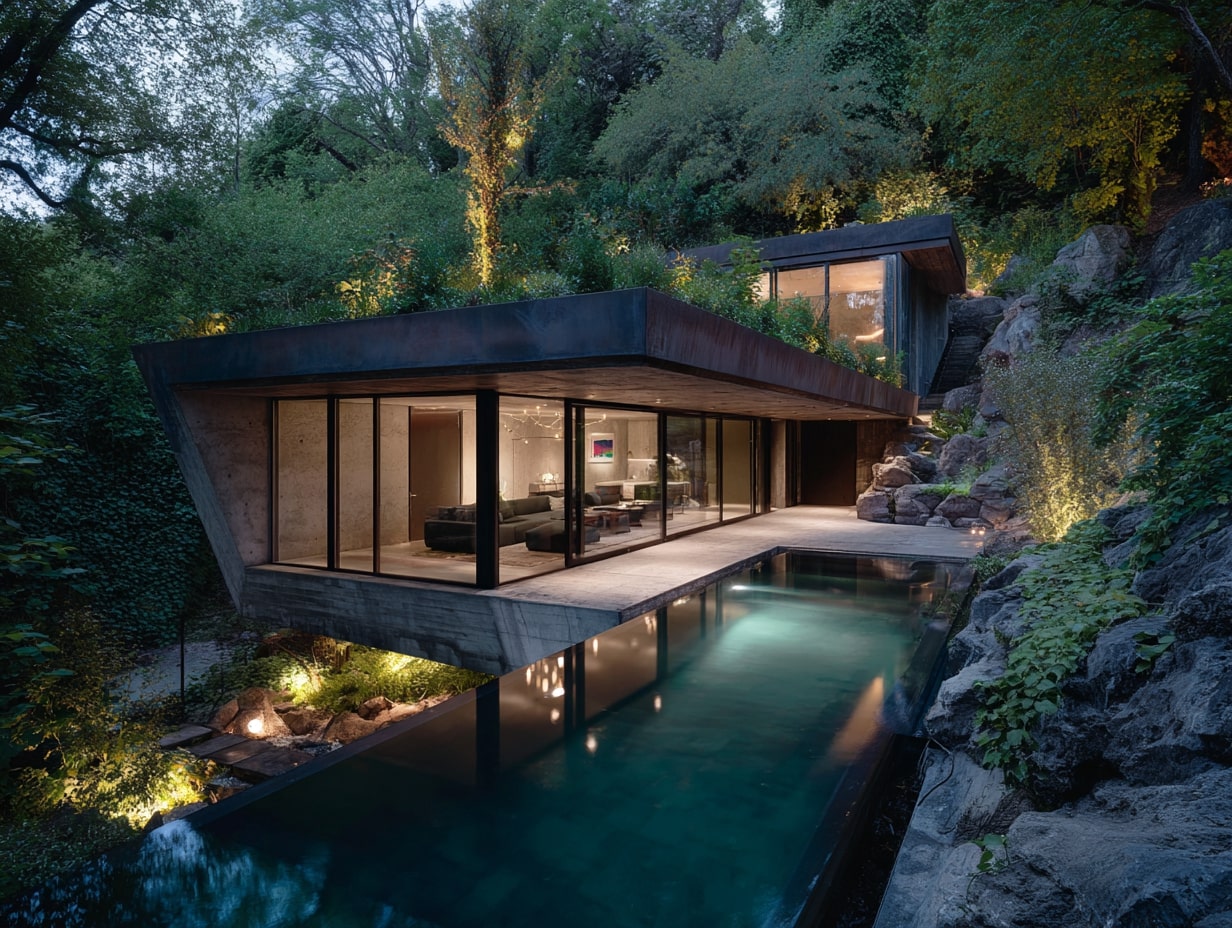
Table of Contents Show
If your camera roll fills up with stair details and shadow studies, we’re in the right club. This guide to the best Airbnb houses for architecture lovers maps out what to look for, where to find it, and how to book, and behave, like design insiders. From crisp modernist pavilions to soulful adaptive reuse, we’ll help you choose stays that are as thoughtfully designed as the trips themselves.
What Makes A Stay Architecturally Remarkable
Spatial Qualities And Materials
We notice it the moment we step in: proportions that breathe, light that lands where it should, and circulation that feels intuitive. Look for legible plans (no maze of doors), generous thresholds, and a clear hierarchy between public and private zones. Materials matter, too. Honest palettes, board-formed concrete, oiled timber, clay plaster, corten, age gracefully and photograph beautifully. Bonus points if the listing mentions custom details: site-built millwork, integrated seating, or hand-finished hardware.
Context, Site, And Views
Great houses converse with their setting. In listings, scan for phrases like “oriented to sunrise,” “prevailing breeze,” or “framed view.” We favor homes that use topography to choreograph the experience: descending to a courtyard, glimpsing landscape through a slot window, or aligning a dining table to a valley axis. Coastal? Ask about salt-mist durability and wind protection. Urban? Seek acoustic strategies (double glazing) and privacy screens that still let in light.
Authorship, Documentation, And Provenance
If a property is by a notable architect, or a skilled local practice, the host will usually say so. We check whether drawings, a story of the build, or publication credits are included in the listing. Provenance isn’t about name-dropping: it’s about understanding design intent, which helps us appreciate, and care for, the place while we stay.
| Quality Indicator | What To Look For In The Listing | Why It Matters |
|---|---|---|
| Spatial Quality | Open plan photos, visible ceiling heights, clear circulation paths | Indicates intentional design rather than generic floor plans |
| Material Honesty | Board-formed concrete, oiled timber, clay plaster, corten steel | Ages gracefully, photographs beautifully, signals craft |
| Custom Details | Site-built millwork, integrated seating, hand-finished hardware | Shows architect involvement beyond basic construction |
| Site Response | “Oriented to sunrise,” “prevailing breeze,” “framed view” | The house converses with its landscape, not just sits on it |
| Provenance | Architect name, publication credits, build story, drawings | Understanding design intent deepens the stay experience |
| Furniture Curation | Named designer pieces, built-ins, cohesive palette | Interiors match architectural rigor rather than random decor |
Modernist And Minimalist Masterpieces
Signature Features To Seek
The best Airbnb houses for architecture lovers often lean modernist: open plans, long rooflines, deep eaves, and glass that erases inside-out boundaries. In minimalist stays, we look for disciplined detailing, flush baseboards, concealed tracks, integrated lighting. Furniture should match the rigor: think Alvar Aalto stools, a Barcelona daybed, or well-crafted built-ins rather than random decor.
Where To Find Standouts
Hotbeds include Southern California’s desert enclaves (steel-and-glass pavilions), Mexico City and Oaxaca for refined concrete and wood, and Scandinavia for light-first cabins. In Japan, search for cedar-clad micro-houses with impeccable joinery. Filters help: “architect-designed,” “mid-century,” “Case Study, inspired,” or “minimalist retreat.” When in doubt, read reviews, guests often call out spatial magic you can’t see in photos.
| Region | Architectural Style | Signature Materials | Search Keywords |
|---|---|---|---|
| Southern California & Joshua Tree | Desert Modernism, Mid-Century | Steel, glass, concrete | “mid-century,” “desert modern,” “Case Study” |
| Mexico City & Oaxaca | Tropical Brutalism, Contemporary | Board-formed concrete, tropical wood | “architect-designed,” “concrete pavilion” |
| Scandinavia (Norway, Finland, Sweden) | Nordic Minimalism | Light timber, glass, steel | “minimalist cabin,” “Nordic design” |
| Japan | Minimalist, Micro-House | Cedar cladding, tatami, shoji screens | “architect house,” “minimalist retreat” |
| Portugal & Southern Europe | Contemporary Mediterranean | Whitewash, stone, cork, tile | “design villa,” “contemporary farmhouse” |
| Hudson Valley & New England, USA | Eco-Modern, Organic | Reclaimed wood, glass, green roofs | “architect-designed,” “sustainable retreat” |
| Costa Rica & Central America | Tropical Modern | Concrete, hardwood, living walls | “jungle villa,” “architect-designed” |
| Australia (Tasmania, Victoria) | Bush Modernism | Blackened timber, rammed earth, zinc | “design cabin,” “architect retreat” |
Adaptive Reuse And Historic Gems
Industrial Conversions Worth Booking
Warehouses, barns, and schoolhouses offer volume and patina you can’t fake. We look for adaptive reuse that leaves traces of the original, trusses on display, brick with limewash, old loading doors transformed into glazing. Comfort counts: radiant floors tame big volumes, and acoustics need soft surfaces so conversations don’t echo.
Heritage Homes And Sensitive Restorations
A good restoration respects era and craft while updating systems. Indicators of quality: repaired, not replaced, windows; historically accurate hardware; and mechanical upgrades tucked out of sight. In reviews, we scan for notes on temperature control and water pressure, old buildings can be beautiful and functional with the right upgrades.
| Building Type | Architectural Appeal | Comfort Considerations | What To Ask The Host |
|---|---|---|---|
| Warehouse / Loft | Double-height ceilings, steel trusses, industrial patina | Acoustics (soft furnishings needed), radiant floor heating | Noise levels, heating system, natural light sources |
| Barn Conversion | Timber frame, vaulted ceilings, rural setting | Insulation quality, draft-proofing, humidity control | Year of conversion, heating type, closest amenities |
| Schoolhouse | Large windows, open floor plans, community history | Room divisions, privacy between sleeping areas | Original features preserved, soundproofing between zones |
| Church / Chapel | Stained glass, stone walls, dramatic volumes | Temperature regulation, bathroom additions | Listed status, restoration architect, lighting at night |
| Heritage Townhouse | Period mouldings, original hardware, aged timber floors | Water pressure, window seals, stair accessibility | Repaired vs. replaced elements, mechanical upgrades |
| Mill / Waterside Industrial | Stone or brick walls, water features, machinery remnants | Dampness control, ground-floor temperature | Flood history, moisture management, waterway access |
Vernacular Craft And Regional Expression
Timber, Stone, And Earth Traditions
Some of our favorite stays are humble: rammed-earth cottages, dry-stacked stone farmhouses, blackened timber cabins. These places translate local know-how into architecture that feels inevitable. Details to love: pegged joinery, lime plaster that regulates humidity, and deep reveals that temper heat.
Indigenous And Local Design Ethics
We look for hosts who credit Indigenous or local craftspeople and demonstrate fair collaboration. That might mean locally harvested materials, community-built elements, or interpretive notes about cultural context. It’s not just ethical, it deepens the experience when the house teaches us where we are.
| Construction Tradition | Regions Commonly Found | Key Material | Comfort & Climate Benefit |
|---|---|---|---|
| Rammed Earth | Morocco, Australia, American Southwest | Compressed soil, clay, gravel | High thermal mass: cool in summer, warm at night |
| Dry-Stacked Stone | Ireland, Scotland, Southern France, Puglia | Local fieldstone, limestone | Excellent mass, natural humidity regulation |
| Blackened Timber (Shou Sugi Ban) | Japan, Scandinavia, Pacific Northwest | Charred cedar or cypress | Pest-resistant, weather-durable, low maintenance |
| Adobe | New Mexico, Mexico, North Africa | Sun-dried mud bricks, straw | Thermal insulation, passive cooling in arid climates |
| Lime Plaster | Mediterranean, Middle East, India | Lime putty, sand, natural pigments | Breathable walls, regulates indoor humidity |
| Pegged Timber Frame | Japan, Germany, England, New England | Hardwood timber, wooden pegs | Structural flexibility, no metal fasteners to corrode |
Sustainable And Off-Grid Innovations
Passive Strategies And Low-Impact Systems
Energy performance can be elegant. South-facing glazing with shading, cross-ventilation, thermal mass, and high R-values do more than any thermostat. Off-grid listings should clearly outline systems: solar arrays sized for typical loads, battery capacity, rainwater catchment, and composting toilets that are genuinely odor-free when used correctly. If the listing mentions Passive House principles or blower-door results, that’s a green flag.
| Sustainable Feature | What The Listing Should Mention | Green Flag | Red Flag |
|---|---|---|---|
| Solar Energy | Array size (kW), battery storage capacity (kWh) | Sized for full household load; battery backup stated | Vague “solar powered” with no capacity details |
| Water System | Rainwater catchment volume, filtration type | Multi-stage filtration; storage capacity in litres/gallons | No mention of filtration or backup supply |
| Passive Heating/Cooling | South-facing glazing, thermal mass, cross-ventilation | Passive House certification or blower-door test results | Claims “naturally cool” without explaining how |
| Insulation | R-value or U-value, insulation material type | R-40+ walls, triple-glazed windows, thermal breaks | Draughty reviews, no mention of insulation upgrades |
| Waste Management | Composting toilet brand/type, greywater system | Named system (e.g., Nature’s Head); odor-free reviews | No instructions provided; guest complaints about smell |
| Heating Backup | Wood stove, heat pump, or radiant system | Efficient wood stove with seasoned wood supplied | No backup for cloudy days or cold snaps |
Remote Sites, Dark Skies, And Stargazing Architecture
Remote stays can be transcendent if they’re designed for night. We seek roof decks, observatory hatches, low-glare exterior lighting, and blackout options for sleep. Check access notes, graded roads, snow conditions, and ask about emergency coverage. The best hosts provide star maps and guidance on light discipline so the Milky Way shows up on cue.
Planning And Booking Tips For Design-Forward Stays
Reading Listings Like An Architect
- Study the plan via photos: count bays, spot structure, trace circulation.
- Zoom into junctions, baseboards, door heads, sill details, to gauge craftsmanship.
- Cross-check sun path with the orientation shown in images: morning vs. golden hour tells you a lot.
- Message hosts with specific questions: glazing type, heating/cooling, desk dimensions if you’ll work there.
| Airbnb Category / Filter | What It Surfaces | Best For |
|---|---|---|
| Design | Homes selected for outstanding architecture and interiors | Modernist pavilions, iconic residences, curated interiors |
| Historical Homes | Listed or heritage-grade properties with period character | Sensitive restorations, heritage townhouses, period villas |
| Luxe | Extraordinary homes inspected for quality, often architect-designed | High-end stays with concierge-level service and detailing |
| Tiny Homes | Compact, cleverly designed micro-dwellings | Space-efficient design, Japanese-inspired minimal living |
| Earth Homes | Underground, rammed-earth, or earth-sheltered dwellings | Vernacular craft, thermal mass, eco-forward stays |
| Off-the-Grid | Self-sufficient homes with solar, rainwater, and composting systems | Sustainable architecture, remote retreats, dark-sky sites |
| OMG! | Unique, unconventional structures (geodesic domes, treehouses) | Experimental architecture, conversation-starting forms |
| A-frames | Classic triangular-form cabins | Mid-century nostalgia, mountain and forest settings |
Respecting And Protecting Fragile Details
Design-forward homes often have delicate finishes. We pack felt pads for luggage, use trivets and coasters religiously, and keep suitcases off softwood floors. If there’s a built-in or art piece that looks precious, ask before moving anything. Leave the place better than we found it.
Photo Etiquette, Permissions, And House Rules
We love to shoot, but we ask first if we plan to publish beyond personal socials. Credit the architect and host when known, avoid sharing door codes or exact addresses, and follow drone rules. Some homes restrict commercial photography: it’s fair, the house is someone’s work, not a free backdrop.
Conclusion
Architectural travel rewards curiosity and care. When we slow down to read a house, its structure, light, and story, we get more than a pretty stay: we get a lesson in place. Use these cues to find the best Airbnb houses for architecture lovers, ask smart questions, and treat each space like the one-off project it is. The result? Trips that linger long after the keys are back in the lock.




Electrical planning as part of better home design
Table of Contents Show Good rooms need electrical thinking from the sketch...
 illustrarch Editoral Team4 Mins read

Why Open Floor Plans Still Have Hot and Cold Spots
You knock down the partition walls, open up sightlines from the kitchen...
illustrarch Editoral Team4 Mins read

High-Value Interior Design Strategies That Will Turn Your Property from Ordinary to Extraordinary
High-value interior design strategies focus on balancing aesthetics and functionality through intentional...
 Begum Gumusel4 Mins read

Which Style Fits Your Home: Scandinavian vs Mid-Century Modern Design
Compare Scandinavian and mid-century modern design across color palettes, materials, furniture, lighting,...
Sinan Ozen7 Mins read


Leave a comment