

A Multi – Sensory Experience
The proposal by Gridi Himçi, Isra Hyka, and Nerina Baçi aims to revitalize co-living in Tirana's Jordan Misja neighborhood through a network of integrated housing and public.
 illustrarch Editoral Team9 November 20211 Mins read471
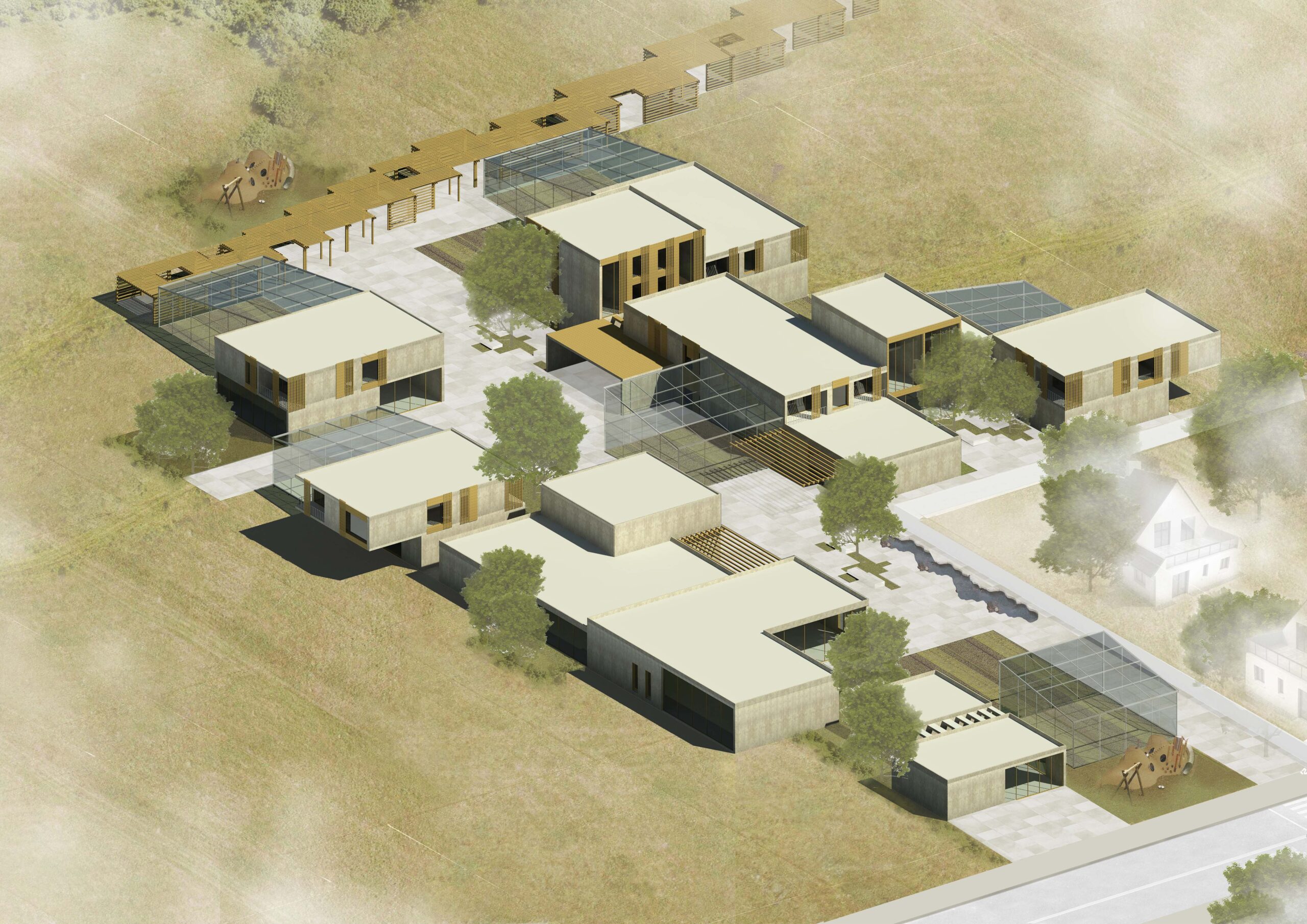


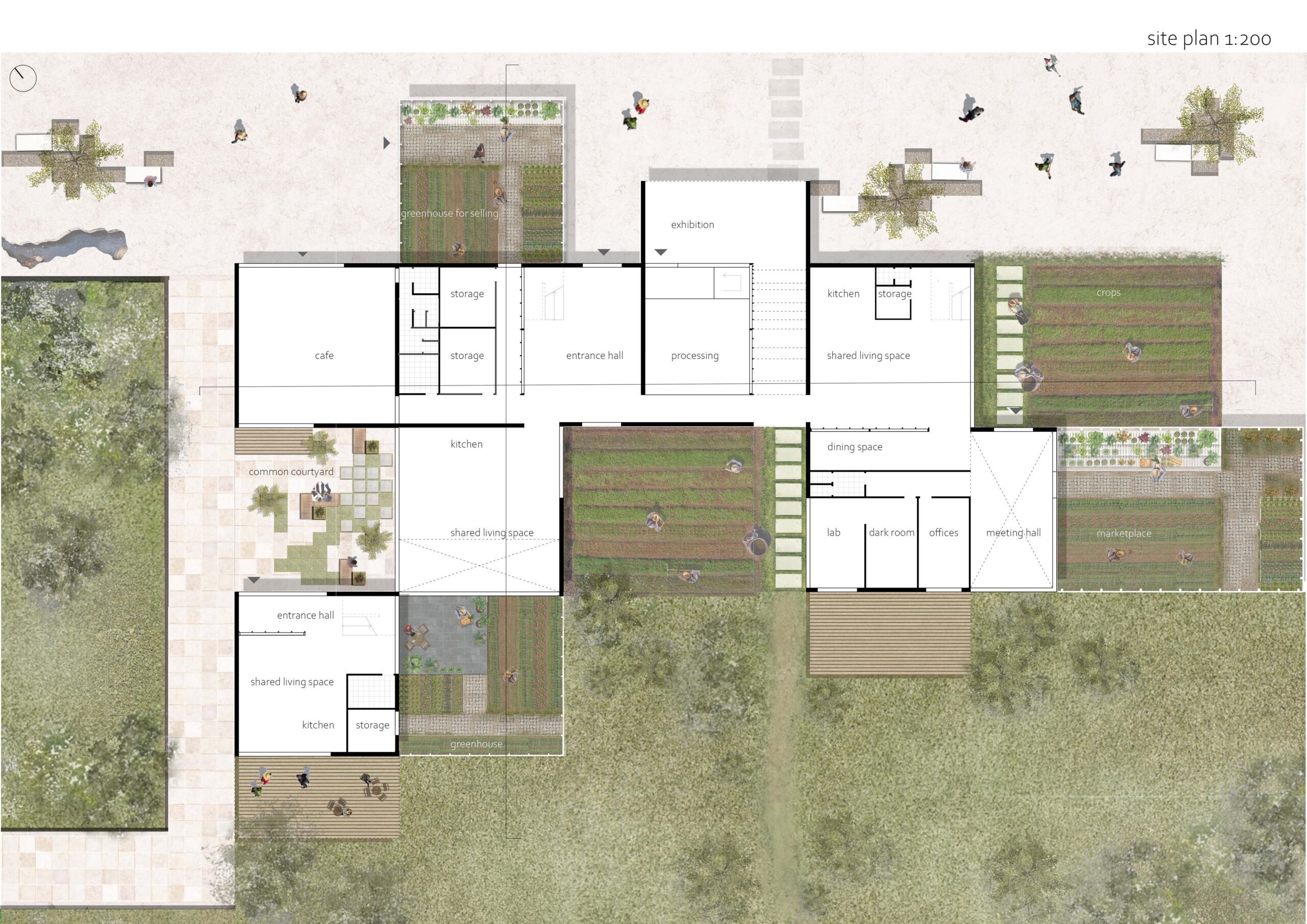


A Multi-Sensory Experience is an urban and architectural studio proposal by Gridi Himçi, Isra Hyka, and Nerina Baçi that sets out to revitalize the idea of co-living and a socializing habitat in the Jordan Misja neighborhood of Tirana, Albania. The work begins from a careful reading of the spirit of the place, identifying the physical and social patterns that either encourage or discourage shared living in this part of the city. From that analysis the team proposes a system of spaces, activities, and relationships within a defined area, weaving a variety of functions and users into a working community.
Housing is one of the most demanding building types to design well, because it has to hold private life and collective life in balance at the same time. The cohousing approach taken here addresses that tension directly. New residential units are paired with a layer of plus programs: common spaces and shared services that range from commercial and co-living educational activities to recreational and entertainment uses. These complementary functions are different in character yet support one another, forming a small living habitat for the neighborhood rather than a set of isolated apartments.
Public Space as a Connecting Network
The proposal treats open space as the structuring element of community life. A system of different public open spaces acts as a connecting network and generates a range of activities across the sub-districts, including playing, sitting, watching, gathering, events, and sports. Larger open spaces are integrated into this same network so that each responds to the needs of a particular target group while still belonging to a continuous whole. This reading of the street and the courtyard as social infrastructure is central to the project, and it draws on a long tradition of thinking about how people actually use the spaces between buildings.
That tradition is made explicit through the integration of principles from Christopher Alexander, Jan Gehl, and the soft city idea, all of which argue that the quality of daily urban life depends on human-scaled, mixed, and walkable environments. You can read more about the broader ideas behind the design in the entries on cohousing and A Pattern Language, and about the setting in the article on Tirana. By layering housing, shared programs, and a generous public realm, the scheme offers a model for how an existing Tirana neighborhood might grow into a richer collective life.



Living Typologies by Stela Boldur
Living Typologies by Stela Boldur is a student masterplan for the former...
illustrarch Editoral Team2 Mins read

Tidsmaskinen After-School Center by BBP Arkitekter
BBP Arkitekter add a heptagonal tower and a greenhouse to a 1918...
illustrarch Editoral Team2 Mins read

The Entwine Confluence by Sara Fernandes
The Entwine Confluence is Sara Fernandes's unbuilt community center for Gresham: meeting...
illustrarch Editoral Team3 Mins read

KAFD Metro Station by Zaha Hadid Architects
Zaha Hadid Architects' KAFD Metro Station ties three Riyadh Metro lines together...
illustrarch Editoral Team4 Mins read


Leave a comment