

COMSATS University Campus, Department of Architecture
COMSATS University’s Department of Architecture features a layout that separates spaces to enhance movement and interaction, fostering a vibrant educational environment.
 illustrarch Editoral Team16 February 20191 Mins read475


The COMSATS University campus Department of Architecture in KSK, Lahore treats each space as a separate entity, set apart from its neighbours so that no function overlaps another and every part keeps room to grow over time. Designed by Warda Naeem in 2019, the scheme spreads its spaces across the site at deliberate distances, a move that encourages people to walk, pause, look around, and meet one another along the way. The result is a layout where movement itself becomes part of the daily life of the school.
Architecture is often seen as the art of a thinking mind that arranges, organizes, and establishes relationships between the parts and the whole. Within that interaction, the exploration and discovery of the built environment gives a more meaningful and personal experience. Here the idea of departmental placement carries both visual and physical interconnection, so that every space relates to the next. The departments are arranged to face one another, forming a close link that gathers almost everything within a single circle. Circulation routes, pathways, and a connecting deck weave the separate volumes back into one coherent site.
Designing for an architecture school
Buildings made for teaching architecture carry a particular demand: they must work as both a place of learning and a living example of the discipline they teach. Studio culture depends on long hours, shared workspaces, and the easy exchange of ideas between students and across years, so the spaces between rooms matter as much as the rooms themselves. By pulling functions apart and then stitching them together with deck and pathway, the campus turns circulation into a chance for encounter rather than a corridor to hurry through. This thinking sits close to the wider tradition of educational architecture, where the goal is to support both concentration and community.
The approach also reflects a careful reading of Lahore and the kind of open, connected environment a campus on its edge can offer. Spreading the program allows light, air, and shaded outdoor routes to filter between volumes, a quietly practical response to local conditions. Such organizing of parts into a legible whole is one of the oldest concerns of architecture, and Naeem’s project shows how distance and connection can be balanced to shape a campus that asks its users to keep moving and keep meeting.




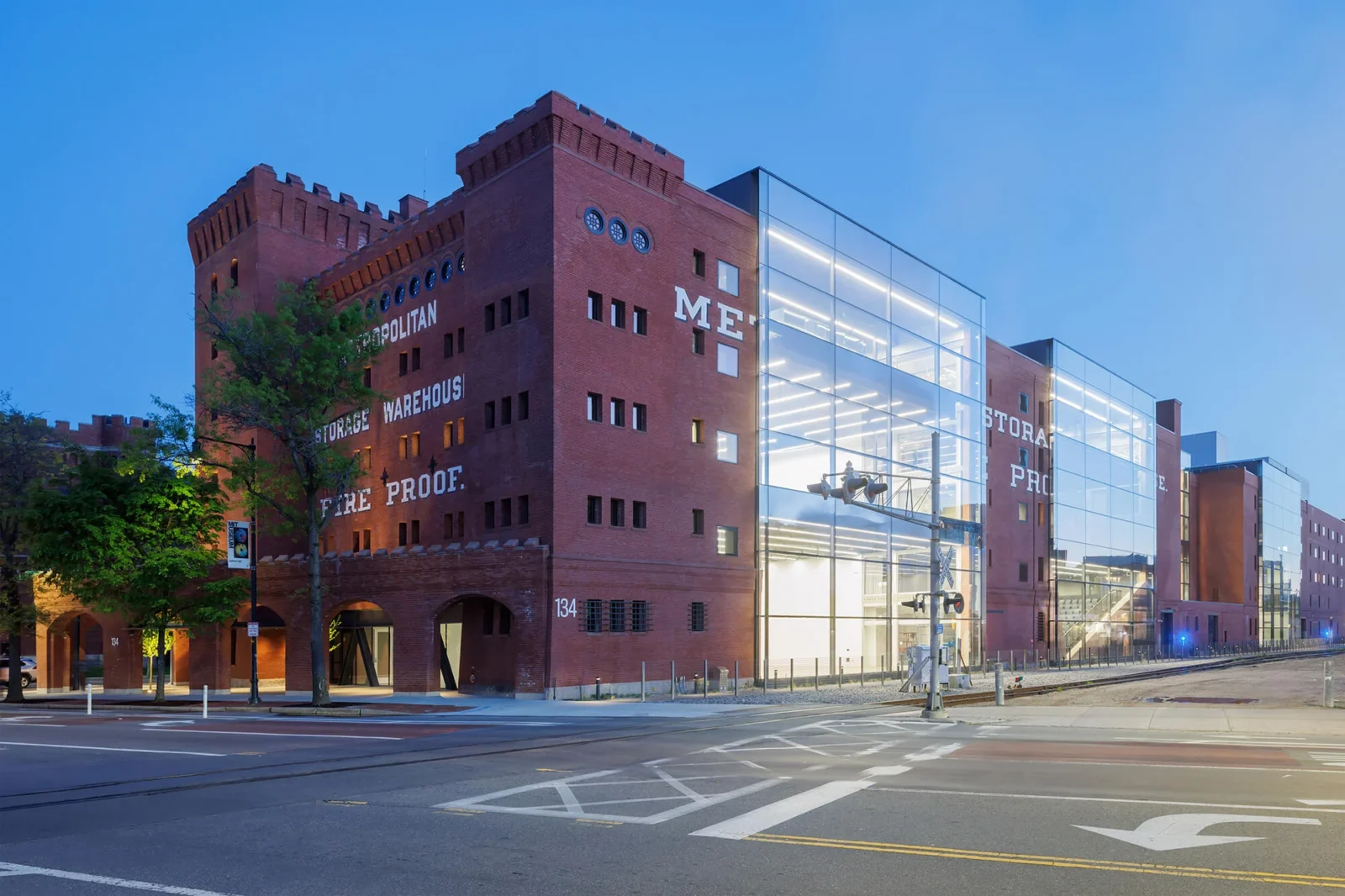
MIT Architecture School Moves Into DS+R-Converted Metropolitan Storage Warehouse
MIT's architecture school has moved into a DS+R-converted 1894 warehouse in Cambridge,...
illustrarch Editoral Team3 Mins read

SENA Tunja Training Center by TAP Arquitectura
TAP Arquitectura's unbuilt competition proposal for SENA in Tunja wraps a 4,400...
illustrarch Editoral Team2 Mins read
Best Software in Architecture School: 8 Tools to Learn First
A practical look at the best software to learn in architecture school,...
 Elif Ayse Sen6 Mins read

Paul Doumer School Complex by AT architectes
The Paul Doumer School Complex by AT architectes transforms a constrained renovation...
 Begum Gumusel4 Mins read


Leave a comment