

Bio Capsule
Bio Capsule is a convertible micro-house designed by Shohreh Rafatpanah that expands from 29 to 46 square meters to accommodate varying space needs for its occupants.
 illustrarch Editoral Team25 July 20202 Mins read424
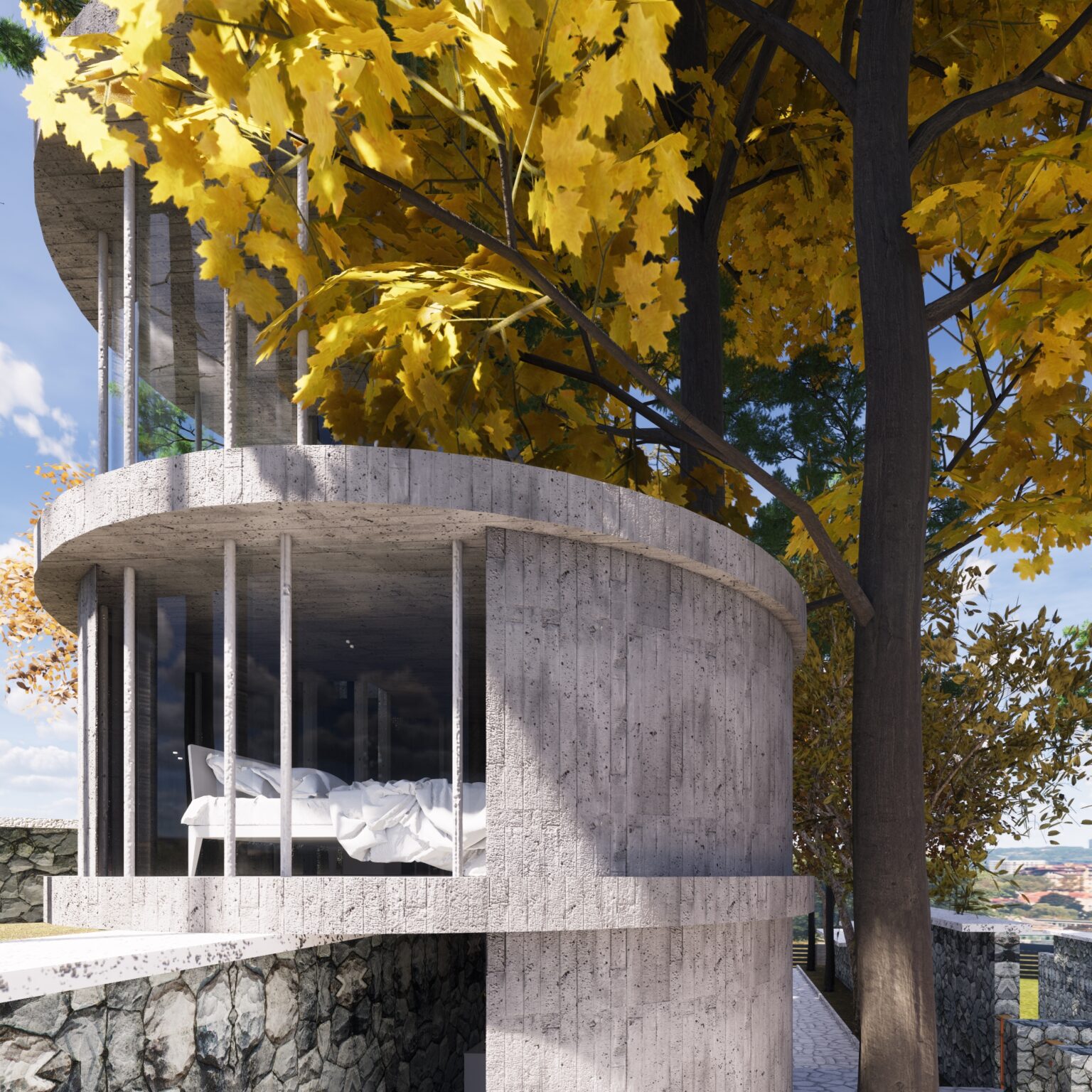

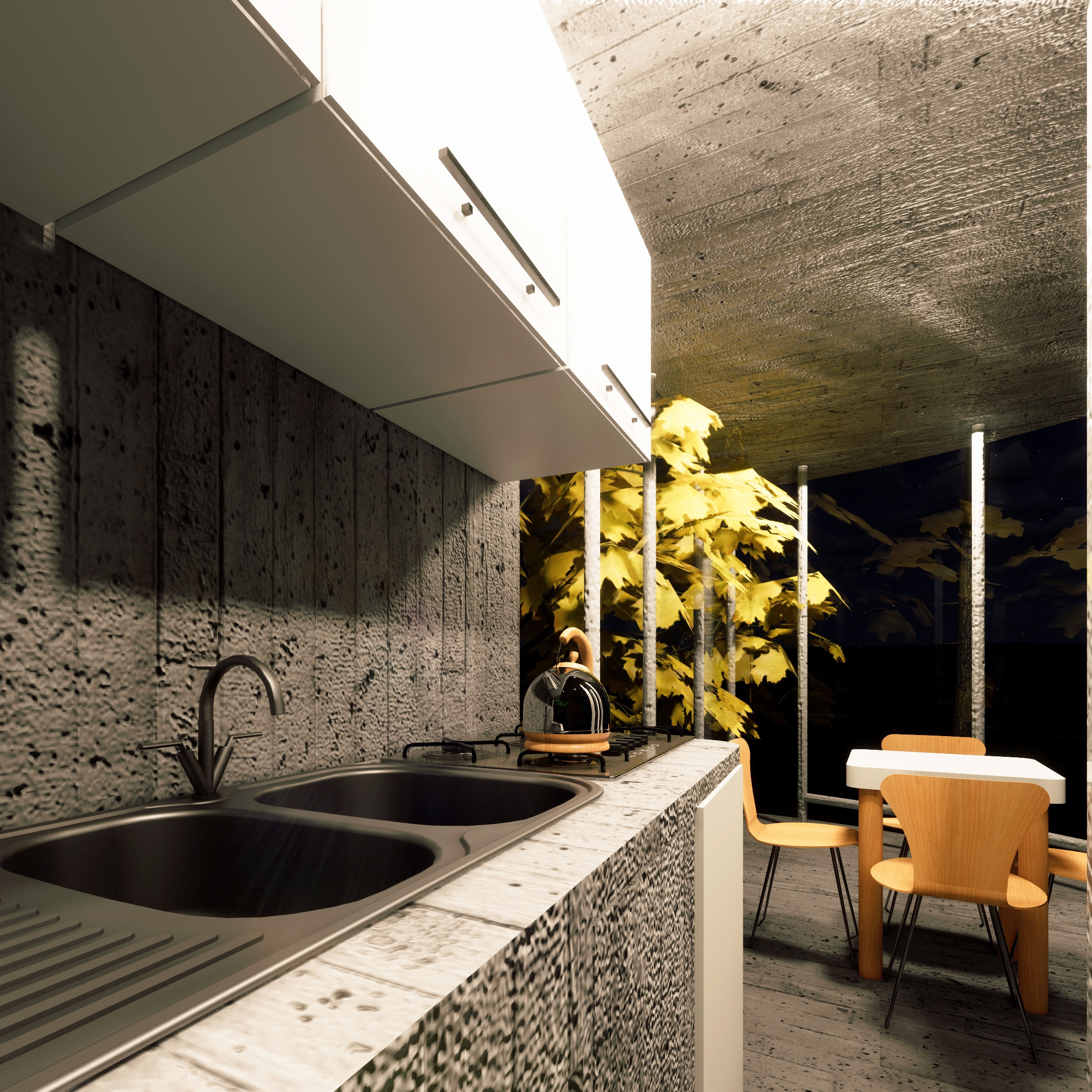


Bio Capsule is a convertible micro-house by Iranian architect Shohreh Rafatpanah that grows in size when its occupant needs more room. Designed in 2019 for a riverside plot south of Tajrish Square in Tehran, Iran, the project answers a question that more cities are asking: how can a very small home stay comfortable for one or two people without feeling cramped? Its solution is movement. By extending, the house adds usable area on demand, shifting from a trim footprint of about 29 square metres to roughly 46 square metres when fully open.
The compact mode holds the essentials for daily life: a small kitchen meant for preparing food, a bathroom, and a mini hall. These 29 square metres represent the minimum space the design treats as enough for living. When the capsule extends, the kitchen gains room to sit and eat, and a dedicated sleeping zone appears. The growth happens across two levels, one resting on a raised platform and the other on the ground. A run of steps links the ground level to the first level and then to a second level, and those same steps can flatten into a level plane that hands even more floor area back to the occupant.
A house that adapts to its site and its user
Two layers define the envelope. The first is a curtain panel for moments when privacy is not needed, opening the interior toward the surroundings. The second is a solid wall that screens the occupant from view when seclusion matters, and both can be used together. This pairing reflects a long tradition in small house design, where every surface earns its keep by serving more than one purpose. Convertible and transformable interiors have become a recurring strategy in dense urban housing, since flexible furniture and shifting partitions let a modest area perform like a larger one.
Context shaped the plan as much as program did. The site sits beside the river, with residential houses to the west and a park to the east, so the capsule mediates between built fabric and green space. Existing trees were left untouched, and the design carves out a special space for two of them rather than clearing the ground. That restraint, common in thoughtful work across Tehran, keeps the small structure in conversation with its setting. Bio Capsule reads less like a fixed object and more like a tool the resident can open, close, and reshape as the day requires.




Living Typologies by Stela Boldur
Living Typologies by Stela Boldur is a student masterplan for the former...
illustrarch Editoral Team2 Mins read
Residential Architecture Face-Off: Co-Living vs Traditional Apartment for Urban Housing
Co-living and traditional apartments represent two distinct approaches to residential architecture in...
 Furkan Sen8 Mins read

Designing a Liminal Space Where Urban Meets Coastal
The Liminal House by Mcleod Bovell Modern Houses in West Vancouver is...
 Elif Ayse Sen5 Mins read
House in Nakano: A 96 m² Tokyo Architecture Marvel by HOAA
House in Nakano, designed by HOAA, creatively addresses urban density challenges by...
 Bahattin Duran6 Mins read


Leave a comment